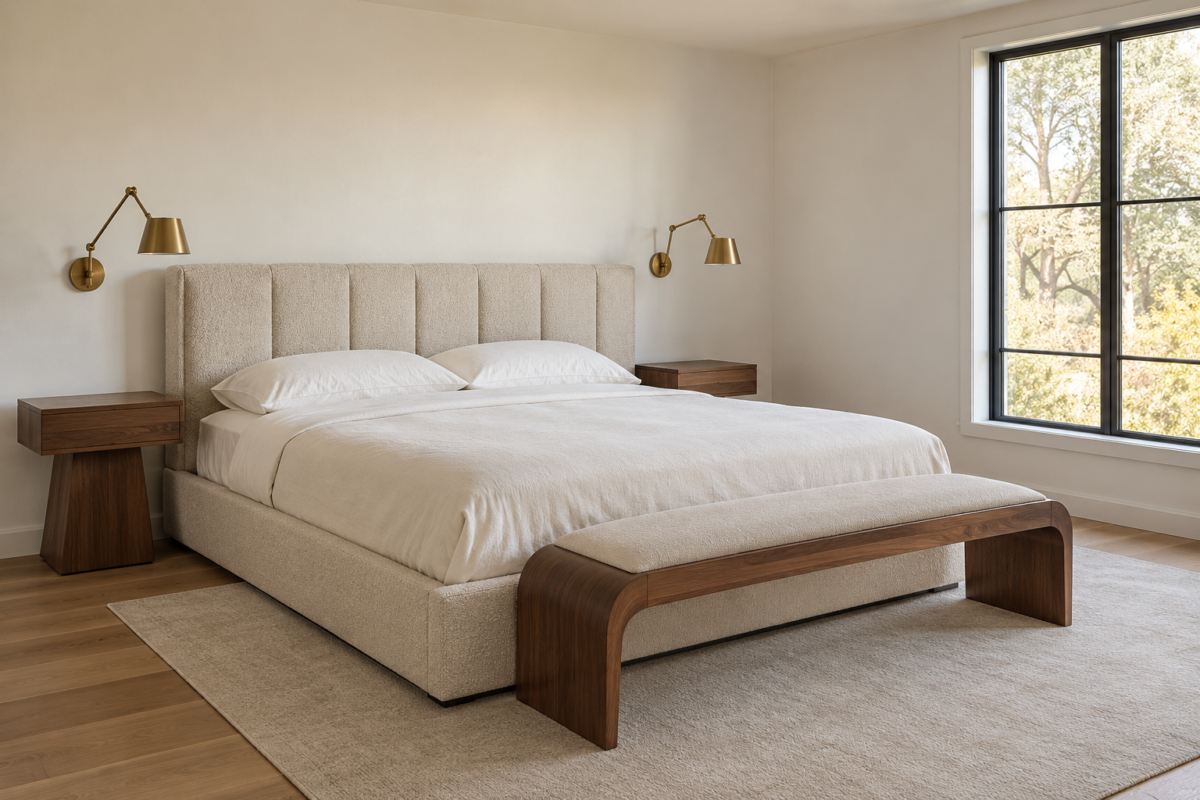
A bedroom carries less daily traffic than a living room and fewer functions than a kitchen, which is exactly why it tends to get decorated last and thought through least. What arrives instead is whatever showed up first, a matched furniture set, a rug that happened to be on sale, curtains cut to the width of the window instead of the wall.
The ideas below are not one look. Some solve a small room’s own limits, too little floor space for a full furniture set, a ceiling too low to ignore, a window too narrow to read as generous on its own. Others are about making one confident decision, a color, a fabric, a single older piece, and letting it carry more weight than several smaller choices would.
Pick the ones that fit the room in front of you, not the one in the photo.
Let the Headboard Wall Do the Work
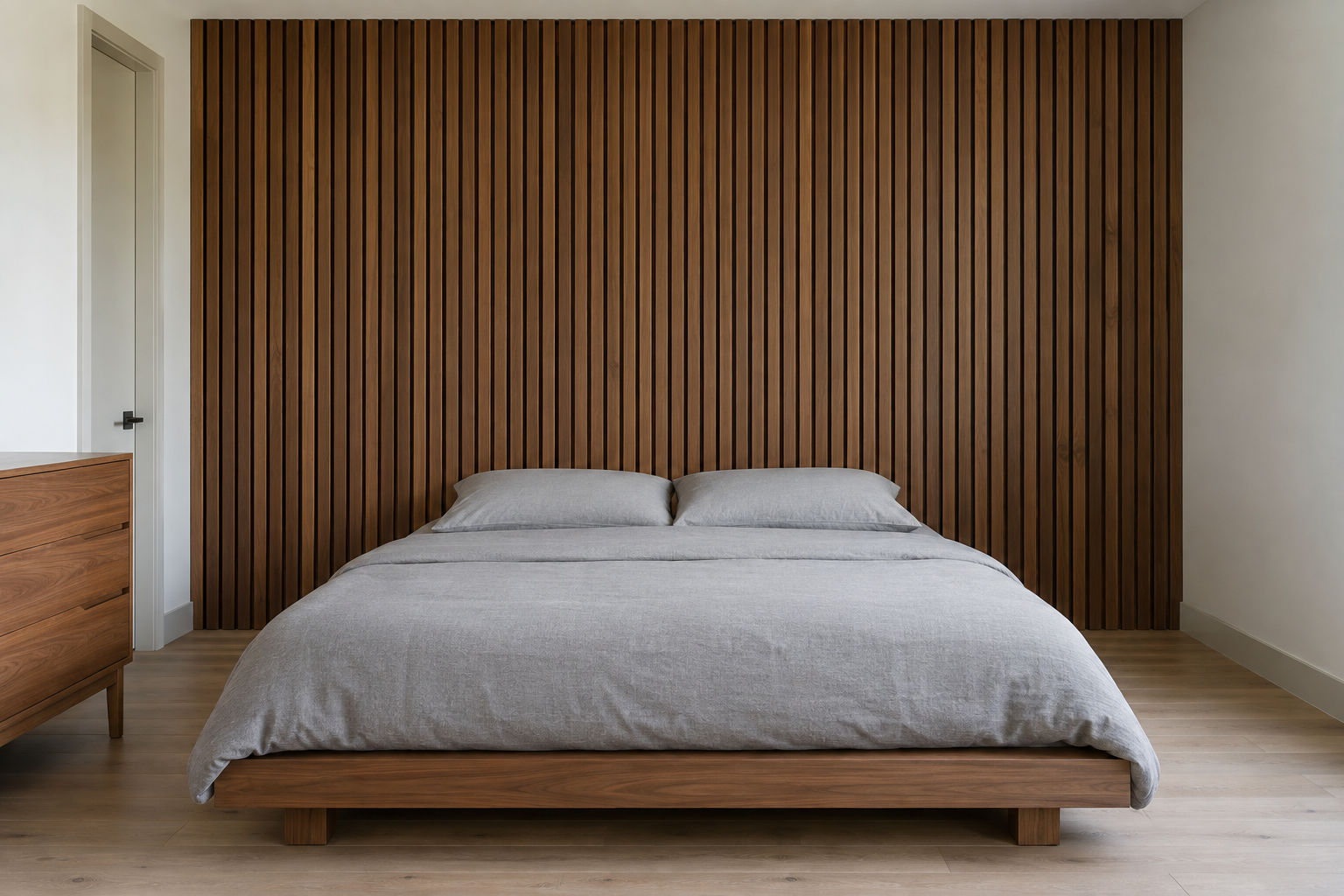
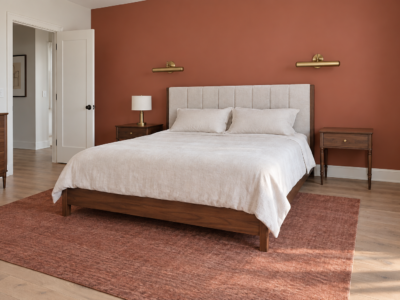
A bedroom usually has one wall that matters more than the rest, the one behind the bed. Paneling it, painting it a deeper tone than the rest of the room, or running a simple set of vertical wood battens up to the ceiling turns that wall into the room’s architecture instead of a backdrop for the headboard. Tongue-and-groove millwork or a straightforward run of stained battens does this without touching the floor or the ceiling itself.
The advantage over a large piece of art or a single accent color is permanence. Paneling and millwork read as built, not decorated, so the room still looks finished on the days the bed is unmade and everything else is cluttered. Keep the rest of the room quieter than this one wall. A headboard wall this considered does not need a matching accent color repeated across the curtains and the rug to feel intentional.
Pick One Confident Color and Build Around It
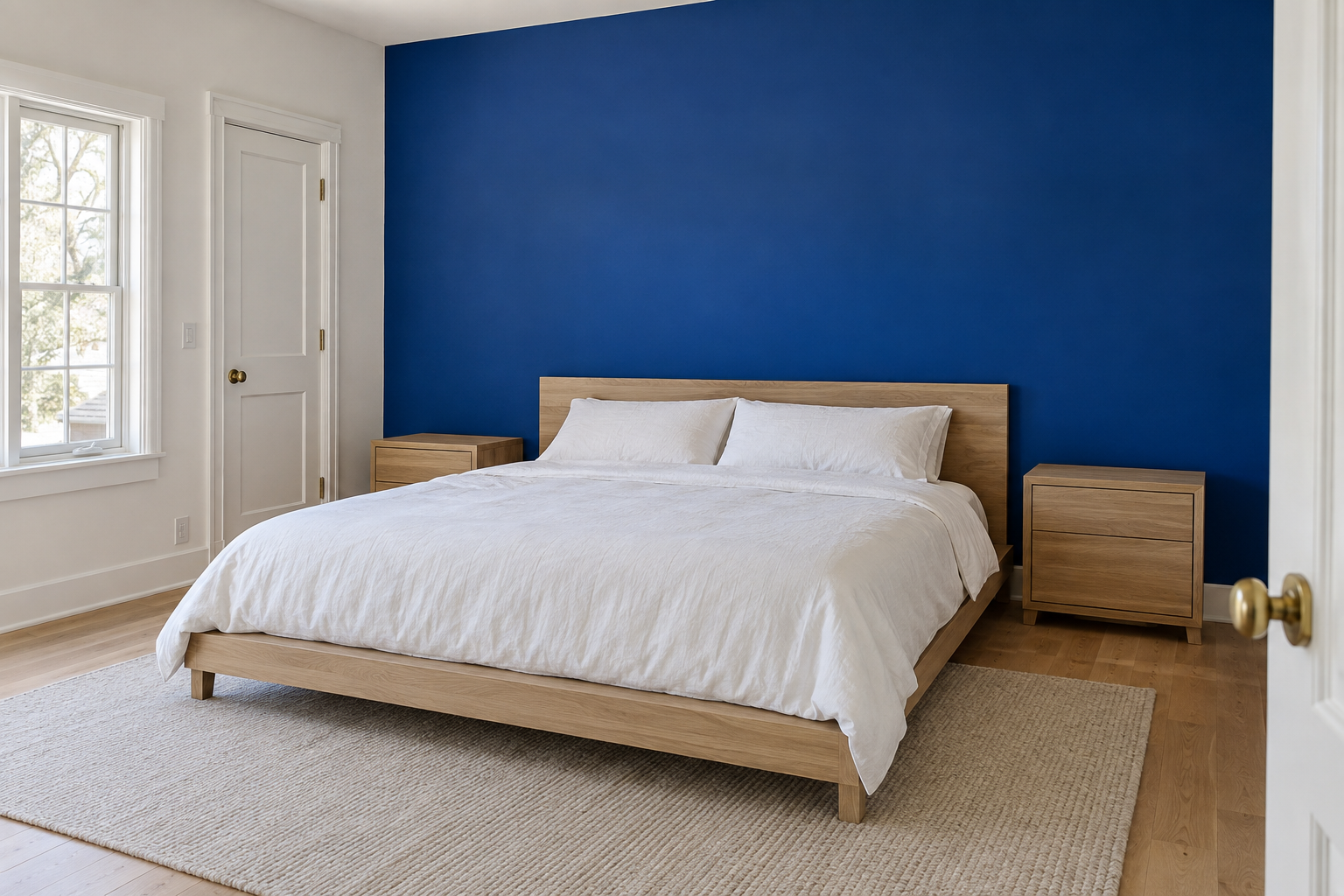
Bedrooms often end up neutral by default, not by decision, because a bold color feels riskier in the one room where a person stops and looks at the walls. A fully saturated wall color, cobalt, ochre, forest green, does more for a room than a neutral wall with one colorful pillow, because the color becomes the room’s structure instead of an accessory sitting on top of it.
Keep the furniture and floor simple when the wall carries this much color, pale wood, plain trim, unpatterned bedding, so nothing else competes with the decision that’s already been made. A bedroom’s smaller, more enclosed proportions are part of why strong color reads as confident here rather than overwhelming, in a way the same color might not in an open living room. If green is the color that ends up making sense, 17 sage green bedroom ideas goes further into what that specific palette pairs well with.
Add Height With a Canopy or Four-Poster Frame
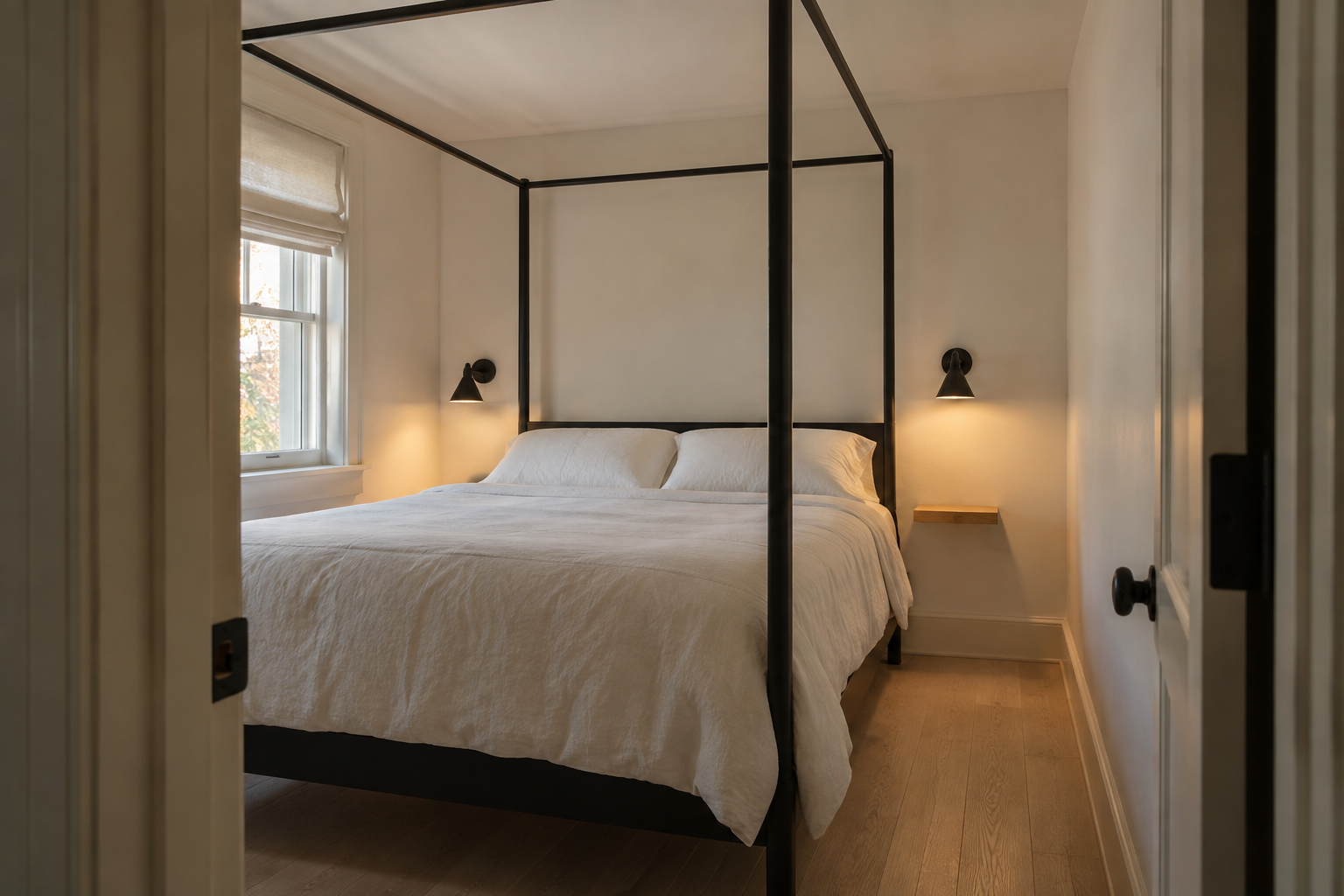
A small bedroom with a low-feeling ceiling has one dimension it can still use, the space directly above the bed. A four-poster or canopy frame draws the eye upward instead of across the room’s limited floor area, which makes the ceiling read taller than it measures.
This works best in a room that can spare the extra footprint the posts themselves take up. Working out how much bed a specific room can actually hold matters more here than with a standard frame, since the posts add real width a plain platform bed does not. Keep the canopy fabric minimal, or skip it entirely, and let the frame’s own lines do the work. A heavily draped canopy in a room this size can crowd the exact space the frame was meant to open up. A slim, dark metal frame reads lighter in a small room than a wide upholstered one.
Mix Two Wood Tones Instead of Matching the Set
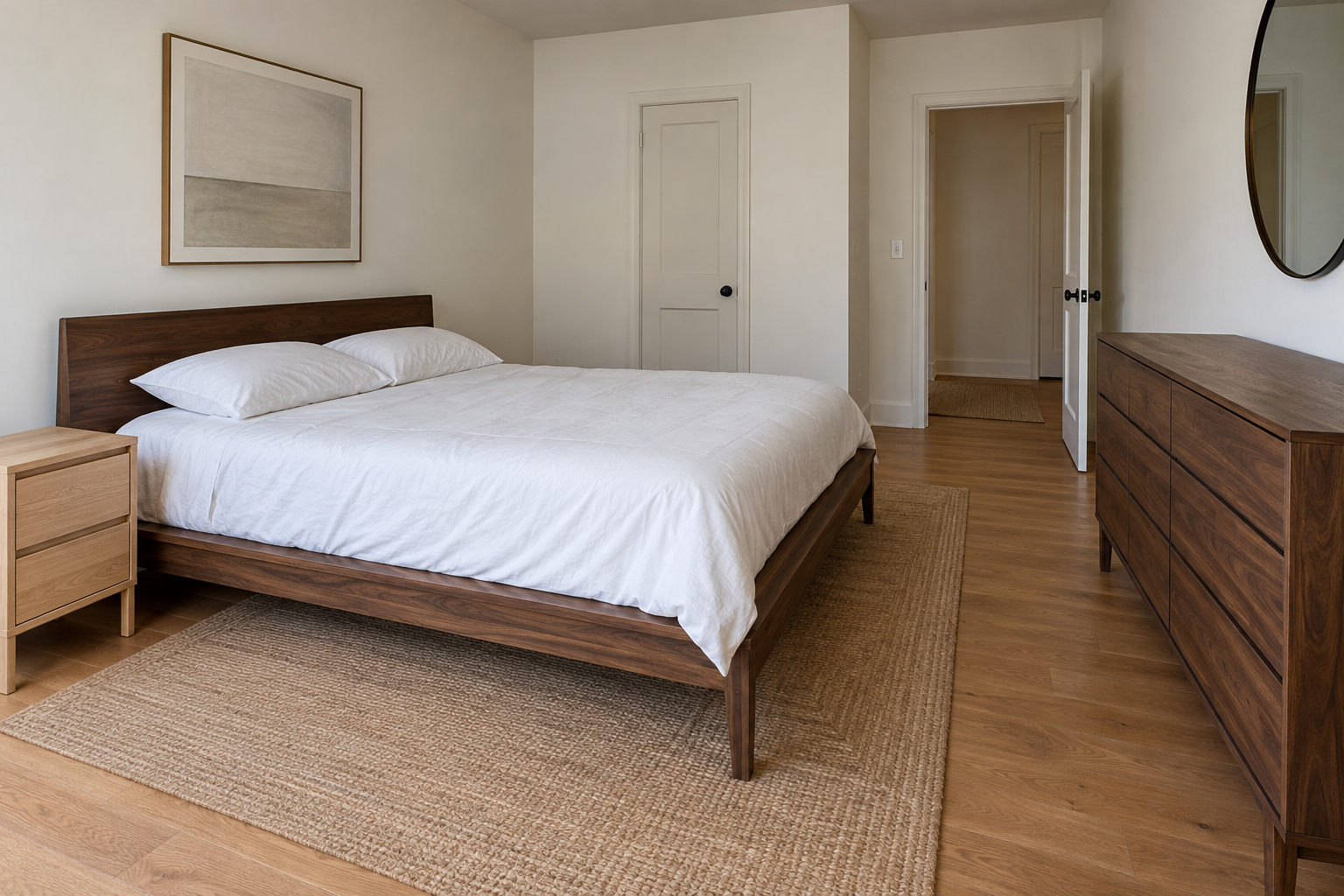
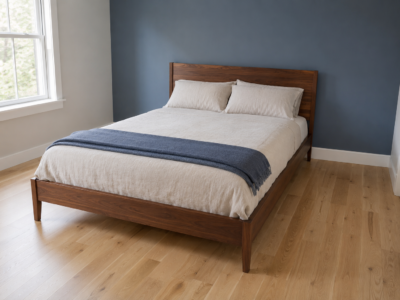
A matched bedroom set, one wood tone across the bed, both nightstands, and the dresser, reads as furniture bought all at once rather than a room assembled with any real intention. Mixing two wood tones, a pale nightstand with a darker dresser, or a mid-tone bed frame with a lighter bench, gives the room the same visual logic a mix of new and inherited furniture would have naturally.
The two tones should still relate. A warm mid-tone oak and a warm dark walnut sit together comfortably; a cool gray-washed wood next to an orange-toned pine usually does not. Two tones is generally enough. A third or fourth wood tone in the same small room starts to look accidental instead of deliberate. Anchor the mix with a floor or rug in a tone neutral enough not to compete with either wood directly.
Treat the Nightstands as Furniture, Not Filler
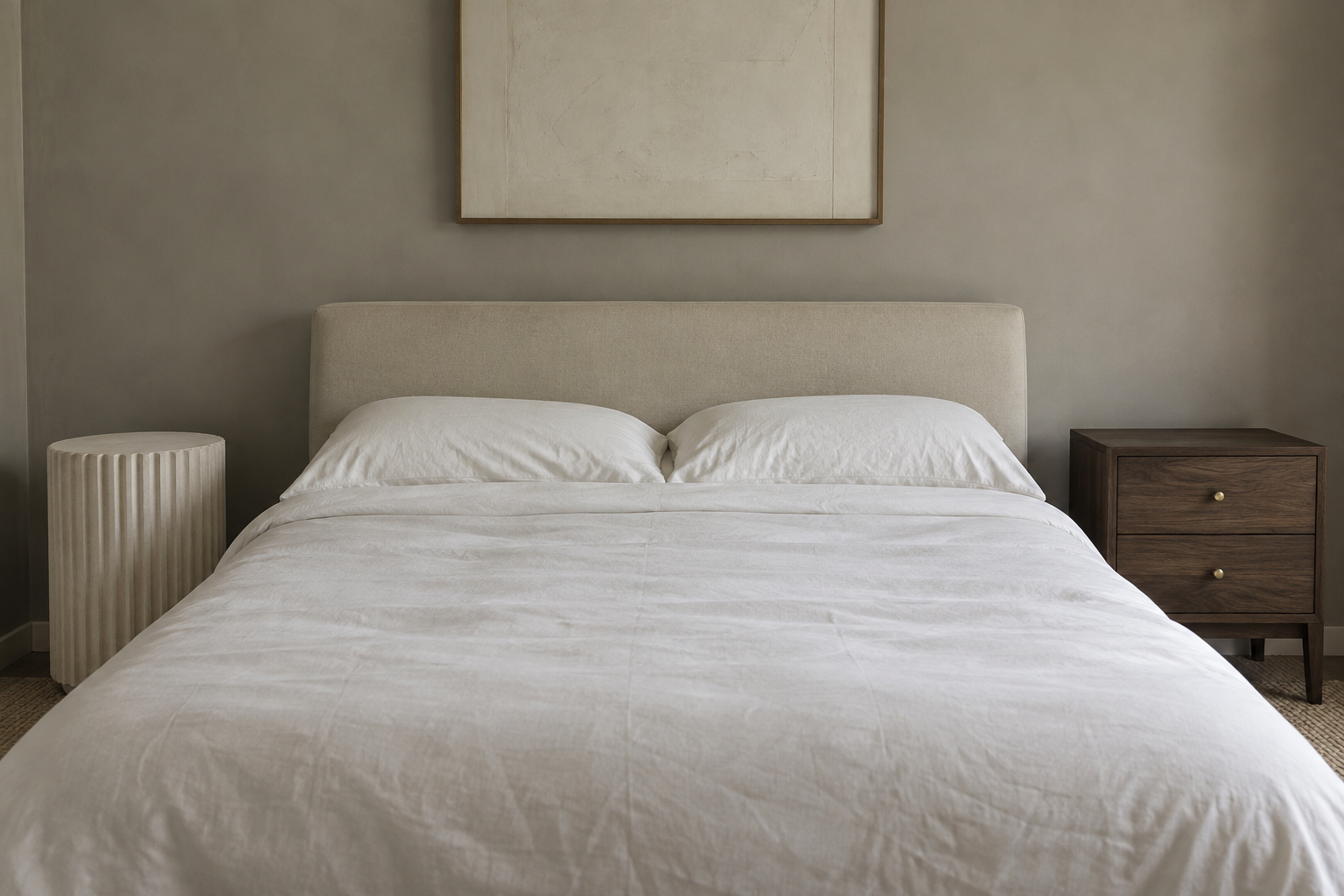
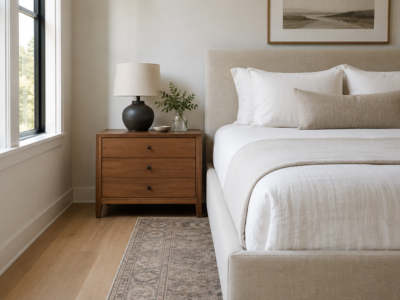
Matching cube nightstands from a bedroom set are the single most common piece of furniture bought without much thought behind them. A pair that is not identical, a fluted pedestal on one side of the bed and a small wood chest on the other, reads as considered, not mismatched, provided both pieces land at a workable height for reading in bed and reaching an alarm clock.
Two visually different nightstands work better in a room where the bed sits asymmetrically, a door or window closer to one side than the other, than in a perfectly symmetrical layout. Keep the materials related even when the shapes differ. Two pieces sharing the same wood species, or the same metal finish, still read as a pair despite their different forms.
Layer at Least Three Light Sources
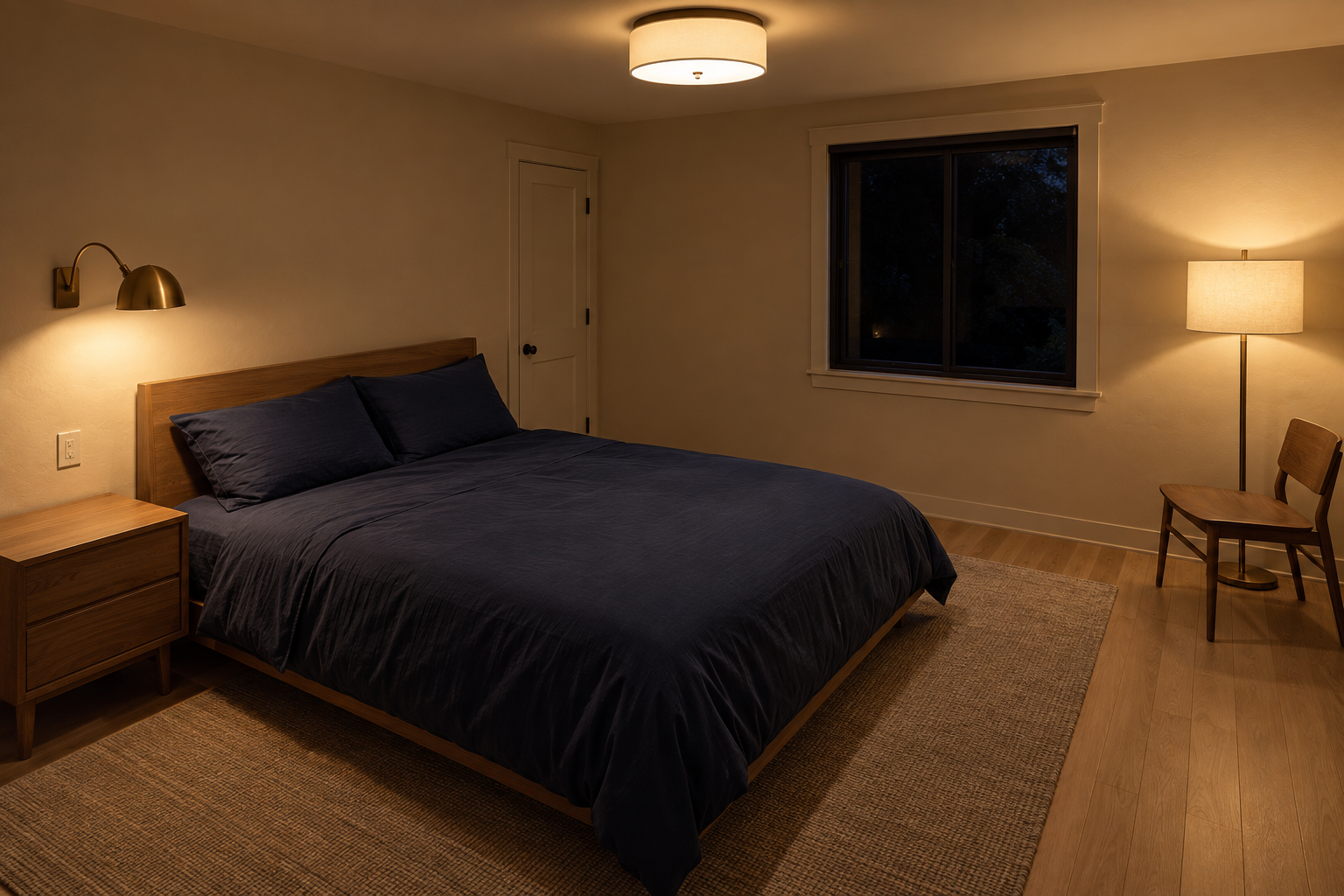
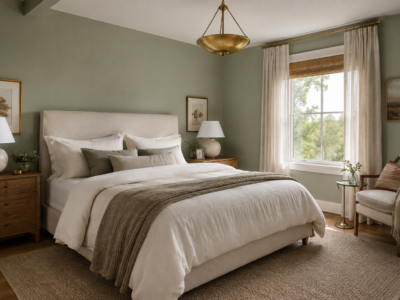
A single ceiling fixture lights a bedroom the way it lights a hallway: evenly, flatly, with nowhere for the eye to settle once the sun goes down. A bedroom benefits from a ceiling fixture for general light, a sconce or lamp at each side of the bed for task light, and one additional low light, a floor lamp in a corner or a plug-in sconce near a dresser, for the hours after the overhead light goes off entirely.
Wall-mounted sconces free up nightstand surface that a table lamp would otherwise take, which matters more in a small room where every flat surface is already doing double duty. Warm-toned bulbs, generally somewhere in the 2700 to 3000 Kelvin range, keep that evening layer feeling like a bedroom instead of a waiting room.
Put Pattern on a Surface Other Than the Bed
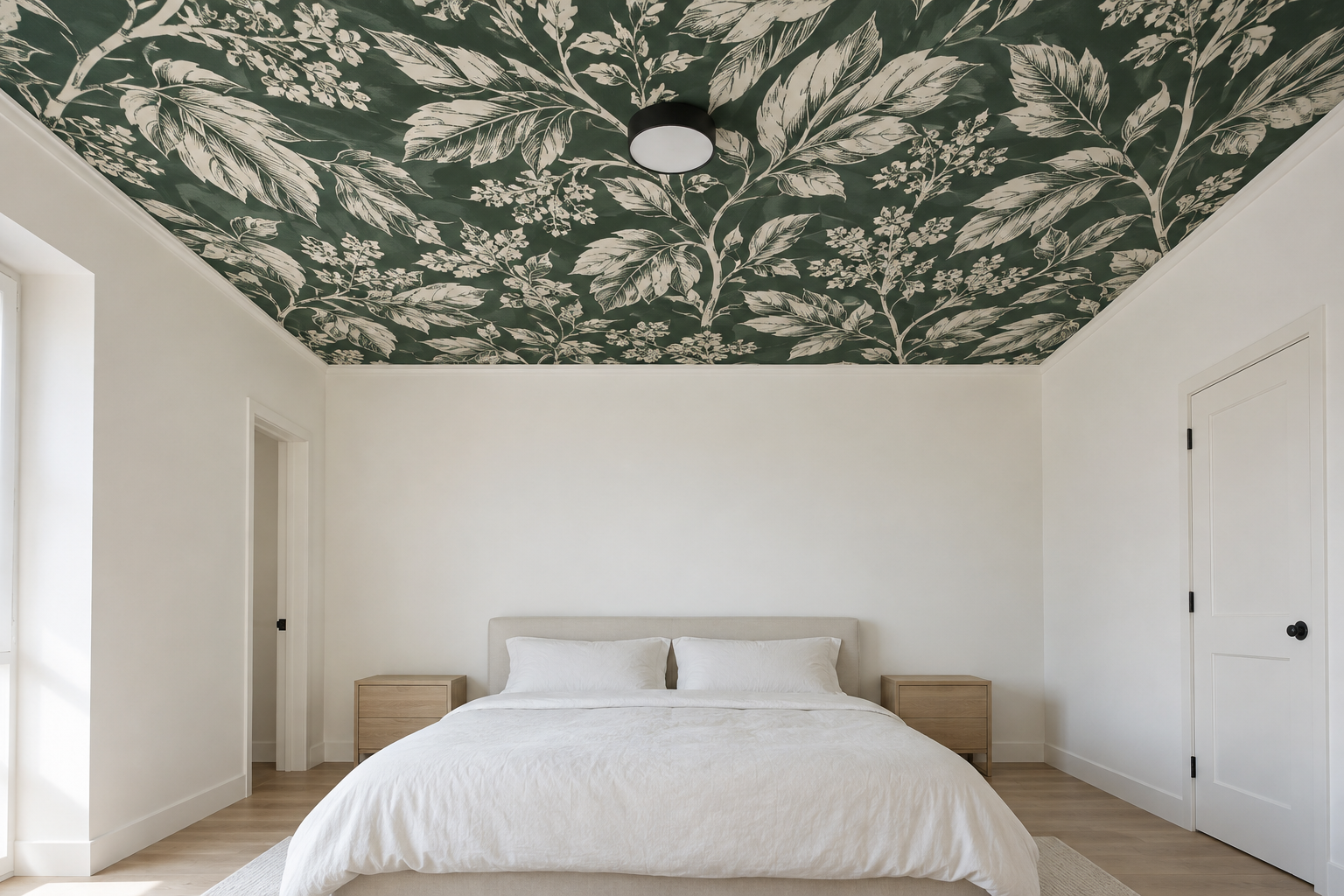
Pattern in a bedroom usually lands only on the bedding, a printed duvet or a few patterned pillows over a plain wall and a plain floor. Moving that pattern to the ceiling instead, wallpapering the one plane in the room nobody else decorates, keeps the bed itself simple and washable while still giving the room a real design moment.
A patterned ceiling reads as more considered than a patterned duvet cover because it can’t be swapped out with the seasons the way bedding can, so it signals a standing decision, not a temporary one. Keep the walls and floor quiet when the ceiling is carrying pattern, and keep the pattern’s scale large enough to read clearly from bed height, not a small print that turns busy and indistinct overhead.
Hang Curtains Higher and Wider Than the Frame
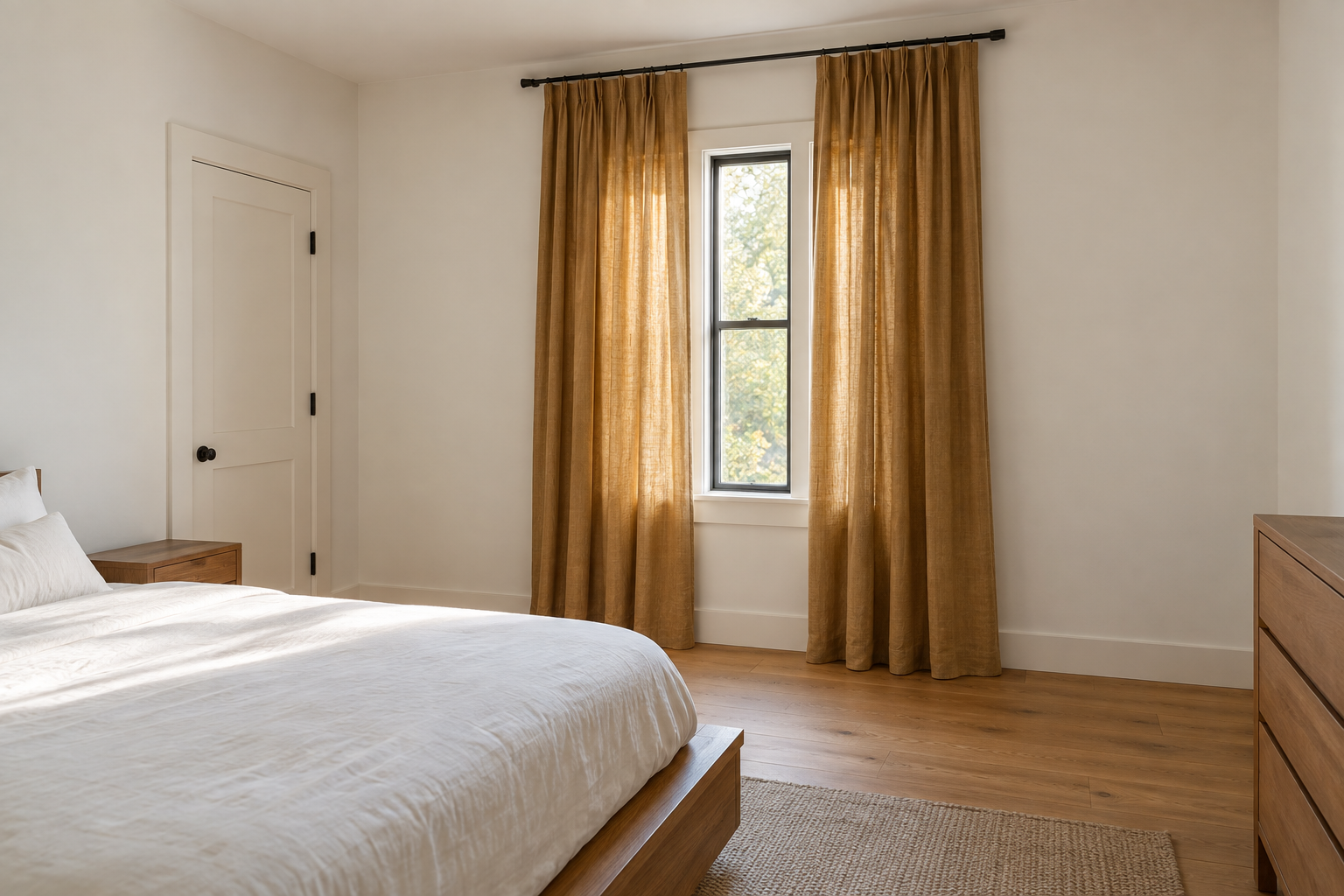
A curtain rod mounted at the top of the window frame and sized to the window’s own width makes a room’s ceiling look exactly as short as it measures. Mounting the rod closer to the ceiling and extending it several inches past each side of the frame lets the curtain panel imply a taller, wider window than the one installed, with no construction involved.
This matters most in a room with a lower ceiling or a narrower window, which describes more bedrooms than it describes a formal living room. Choose a curtain length that clears the floor cleanly, floor-skimming or just breaking at the floor rather than a full puddle, so the illusion reads as a deliberate proportion trick, not a panel that simply doesn’t fit the rod.
Let the Rug Do the Color Work the Walls Don’t
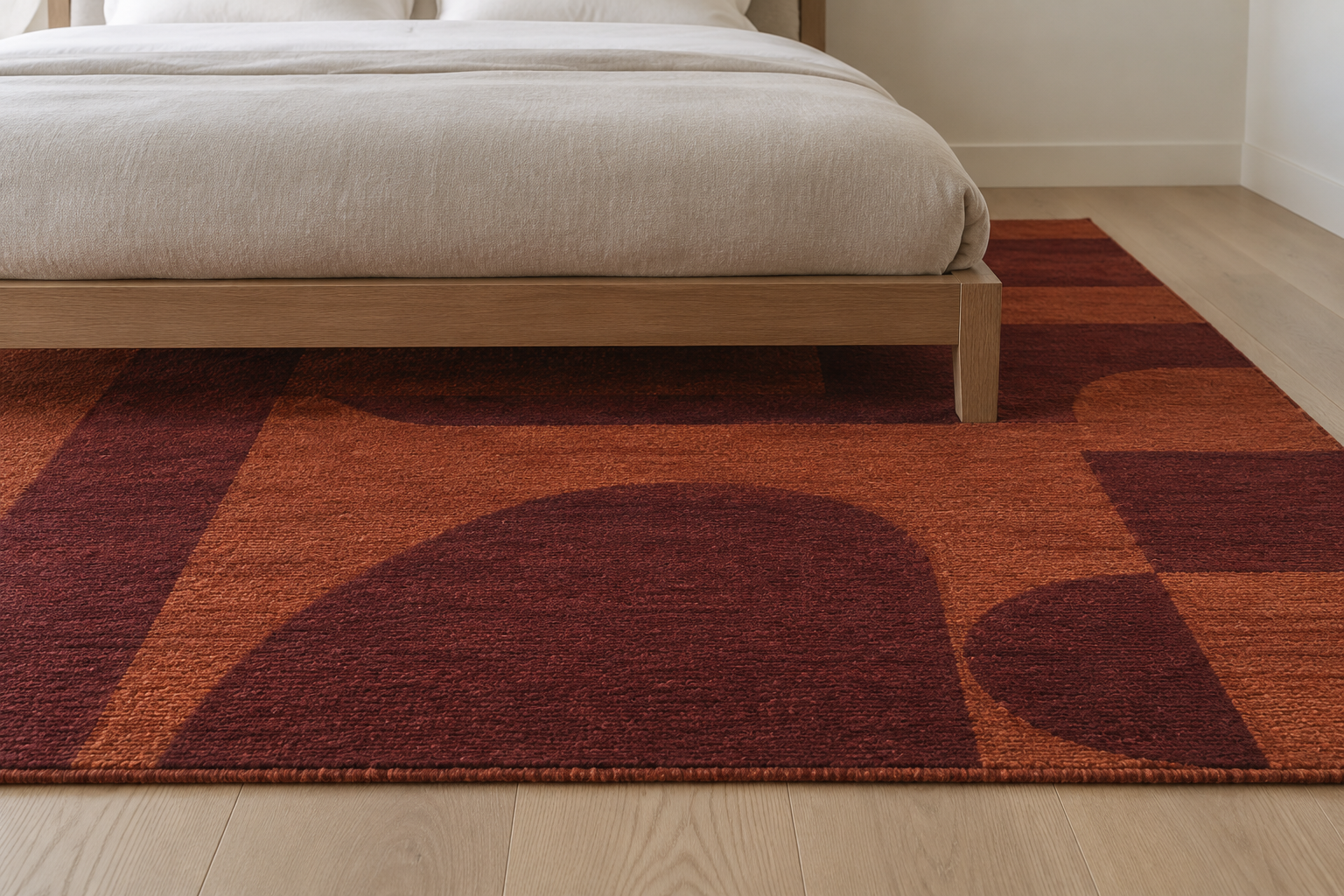
A neutral bedroom with a beige or cream rug leaves color entirely to the bedding and the art, both of which are easy to swap out and rarely carry a room’s identity for long. A rug with a strong graphic pattern or a saturated color, rust or deep burgundy, not oatmeal, gives a neutral room a fixed anchor that doesn’t change every time the bedding gets washed and something different goes back on.
This works especially well in a rented bedroom, where the walls have to stay a landlord-approved neutral. The rug becomes the one large surface where a real color decision is still possible. Choose a rug substantial enough to sit under the front third of the bed and reach both nightstands, so it reads as the room’s floor, not a mat placed near it.
Choose One Substantial Piece Over Several Small Ones
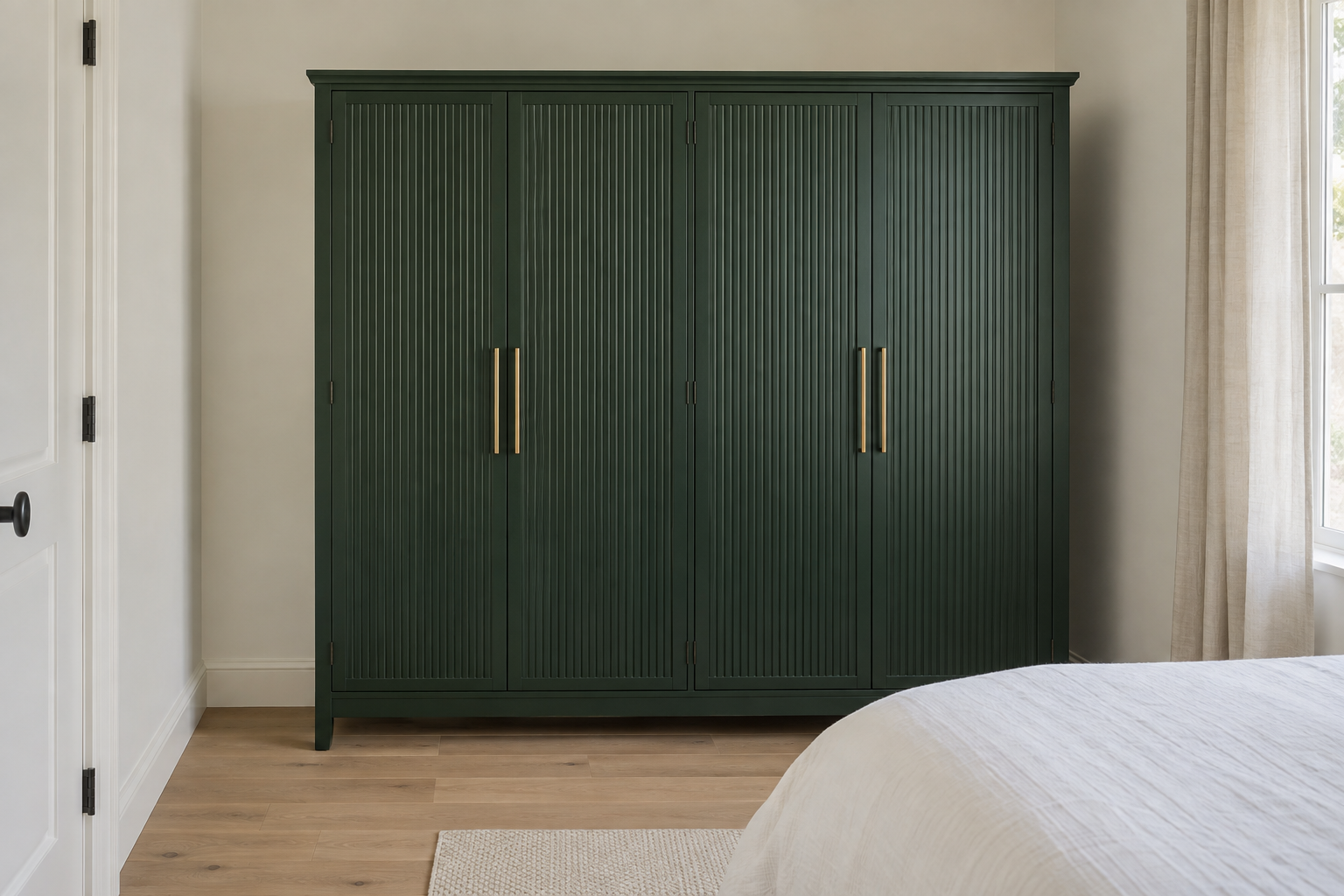
A small bedroom filled with several small pieces, a narrow dresser, a slim bookshelf, a small accent chair, often ends up feeling more crowded than a room with one large, well-chosen piece instead. A single tall armoire or a wide dresser provides the same total storage with fewer separate silhouettes competing for floor and wall space at once.
This only works when the one piece is sized honestly for the room. A large armoire in a genuinely small bedroom still needs clear floor space in front of its doors to open fully, which means measuring the swing radius before buying, not just the footprint against the wall. A single substantial piece in a bold color or a deep wood tone can carry storage and visual weight at once, doing the job several smaller pieces would otherwise split between them.
Group Art Instead of Centering One Piece
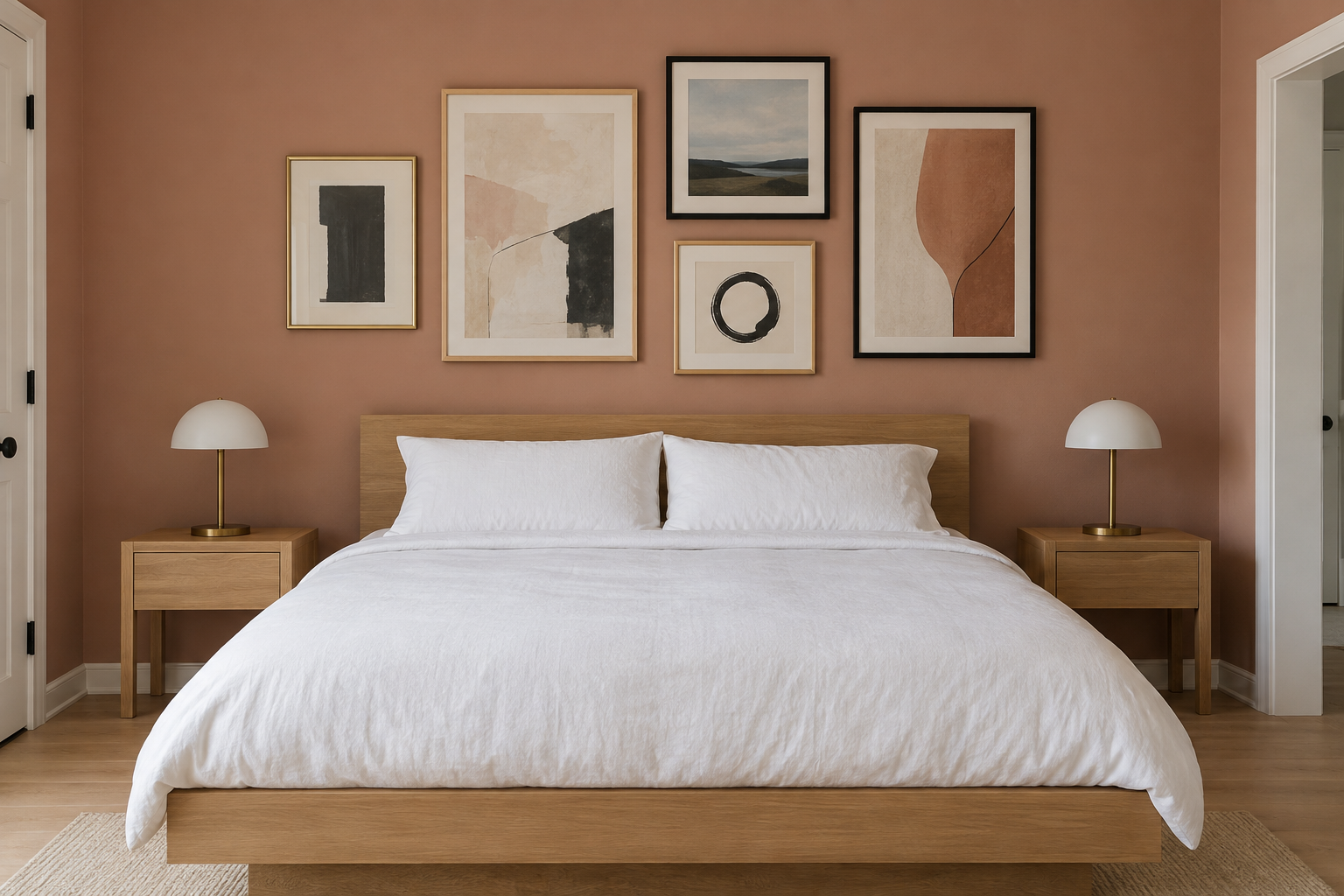
One piece of art centered above the headboard is the default because it’s the easiest decision, not because it’s the best one. A cluster of four or five smaller pieces, mixed frame sizes and finishes but a consistent color story, gives the same wall more to look at without requiring one large, expensive piece to anchor it.
Keep the grouping’s outer edges roughly aligned, even when the individual frames vary in size, so the cluster reads as one considered arrangement rather than pieces added over time with no plan. Hang the top of the grouping at roughly standing eye level, not centered on the headboard’s own height, the same principle that governs art height above a sofa, so it reads correctly whether the bed is made or covered in pillows. A gallery arrangement also forgives an off-center headboard wall better than a single piece does, since there’s no one exact point the whole grouping has to hit.
Pick a Headboard Fabric That Can Take Contact

An upholstered headboard gets touched more than almost any other piece of furniture in the house: leaned against while reading, brushed against getting in and out of bed, pressed into every night. A performance fabric or a tightly woven boucle holds up to that contact better than a delicate linen or a pale silk blend, which tends to show oil and wear at exactly headboard height within a year of regular use.
Channel tufting or vertical tufting also hides everyday wear better than a flat upholstered panel, since the seams and texture already break up the surface before any wear starts to show. A deep, saturated color, aubergine, chocolate, forest green, hides the marks a pale headboard fabric would show first.
Let One Older Piece Carry the Room’s Character
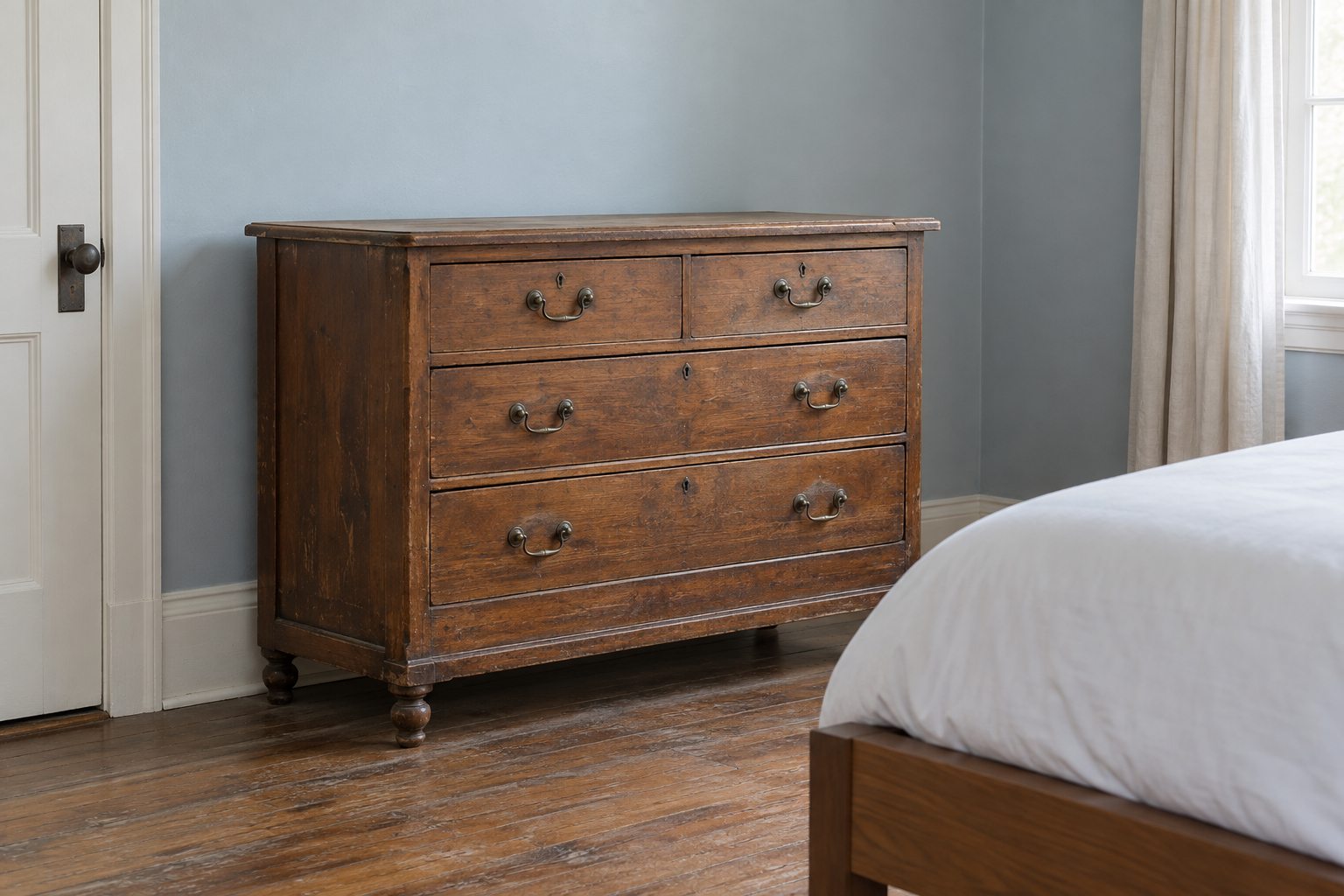
A bedroom furnished entirely with pieces bought at the same time, in the same style, from the same retailer, often reads as competent but impersonal. One older piece, a vintage dresser with real hardware wear, an inherited mirror, a chair that doesn’t match anything else in the room, gives the space a sense of having been lived in longer than it actually has.
This works best when the older piece is different in material or era from everything around it, not a close match. The contrast is what makes it register as intentional instead of accidental. A dresser with real wear and slightly mismatched original hardware needs less styling around it than a brand-new piece would, since the wear itself is already doing the work a stack of styled objects would otherwise need to do.