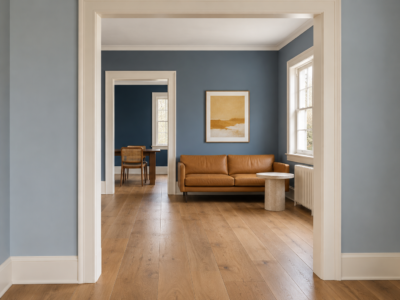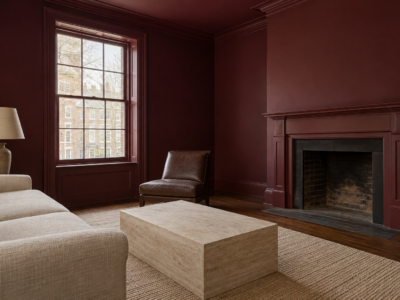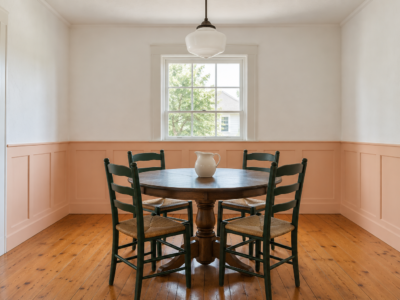
In most rooms the ceiling is the largest single surface, larger than any wall and usually larger than the floor that shows between the furniture, and it’s the one most often painted flat white and forgotten. Light from the windows and lamps bounces off it back into the room, so whatever is on it shapes how bright or close a room feels.
A treatment overhead does one of a few things. Color lowers or softens a room, sheen and pale finishes send light back down, and lines (boards, beams, a grid) give the eye a direction.
A Colored Ceiling Over Pale Walls
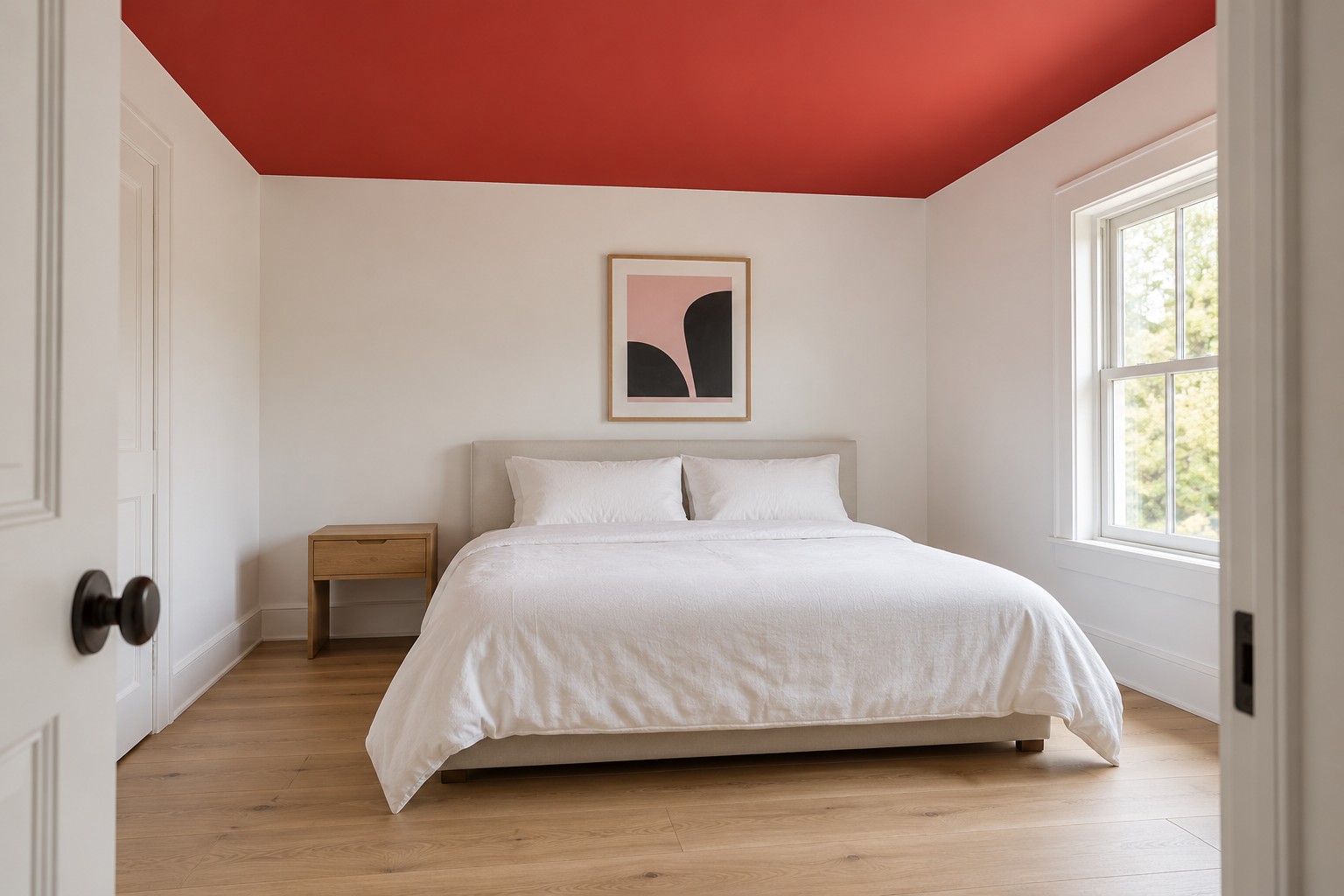
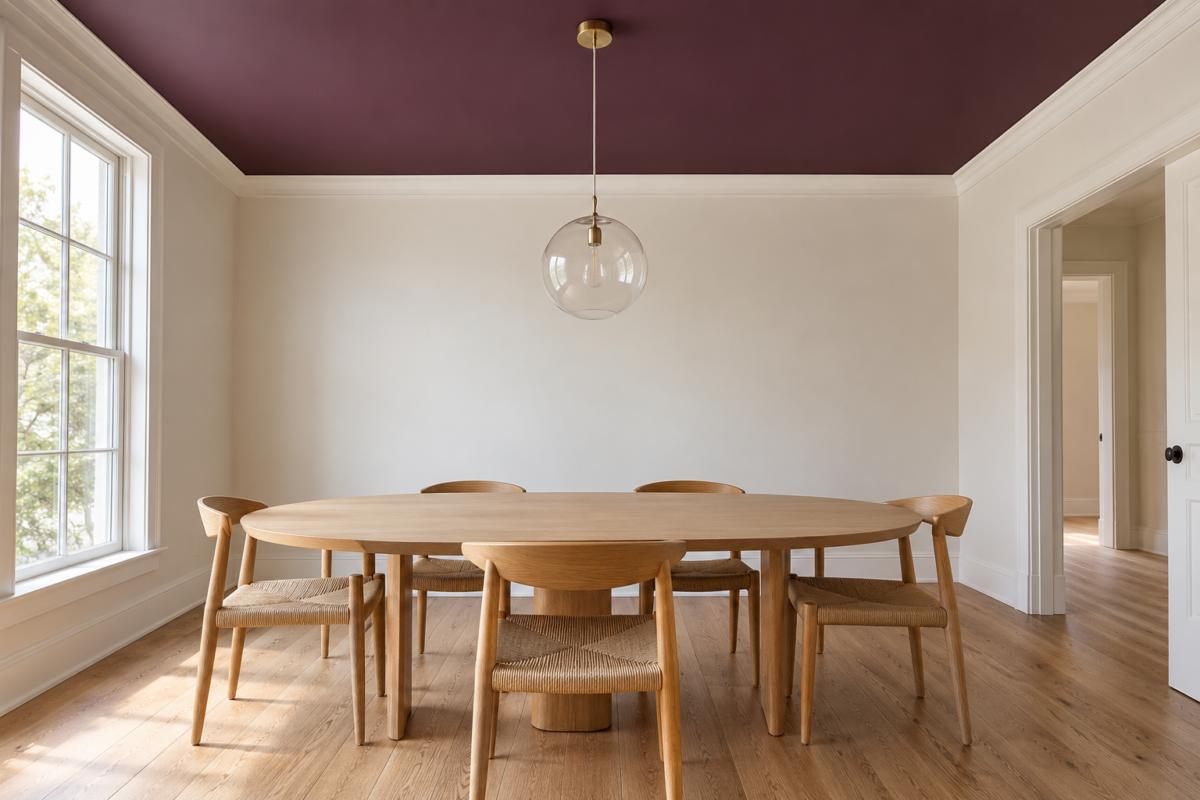
A ceiling painted darker than pale walls sits over the room like a lid of color, and it makes a tall room feel closer and more enclosed. In a dining room or a bedroom, used mostly in the evening, that closeness suits what happens there, and under lamplight a deep plum, red, or brown looks warmer than white ever does.
Keep the line at the top of the walls crisp. Where there’s no crown moulding, a straight edge cut with tape is what makes the color look chosen, and a wavering one is what people notice first. Carrying one color over walls and ceiling alike does the opposite, hiding that line instead of drawing it.
Lacquer the Ceiling
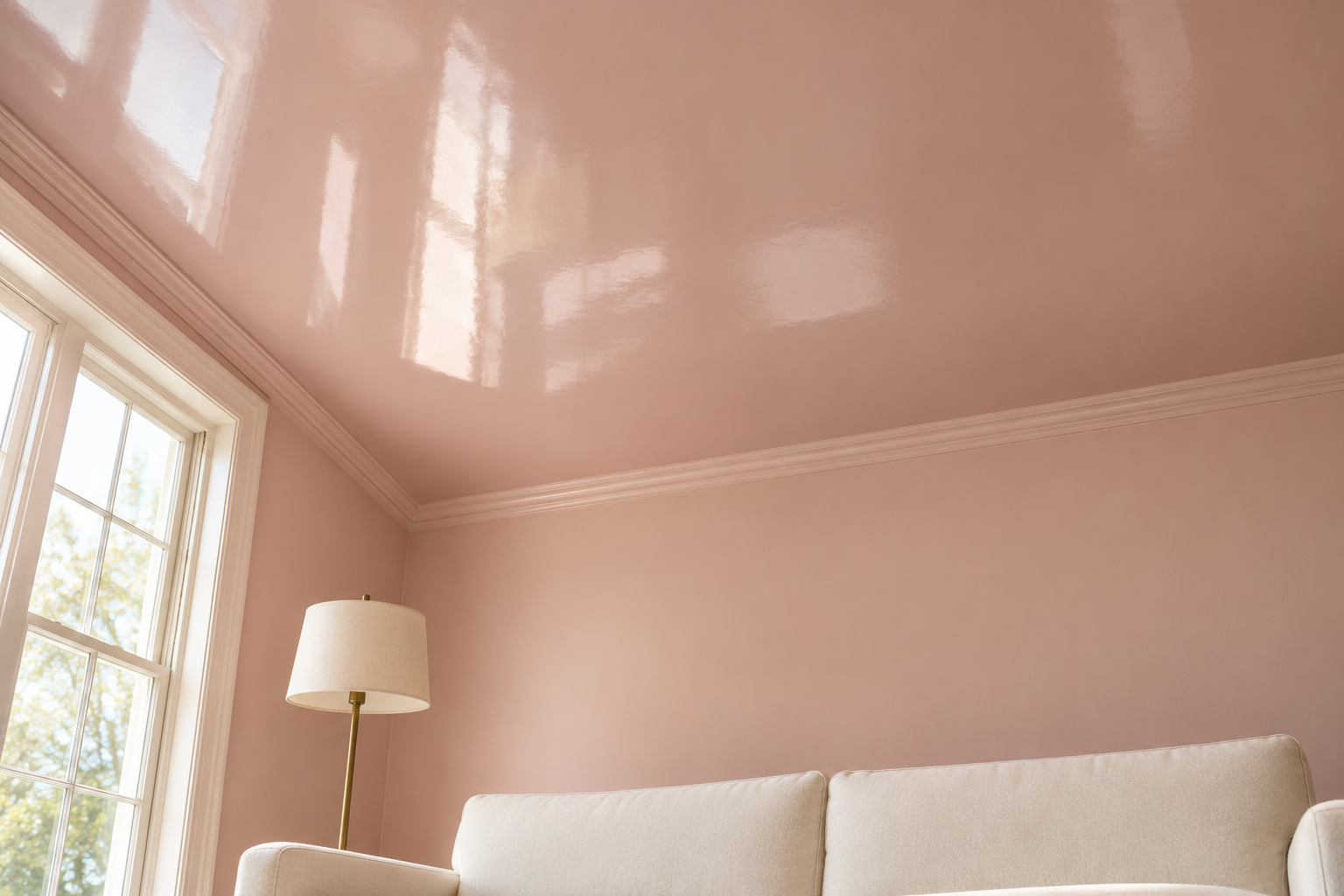
A ceiling painted in high gloss reflects the room’s light back down, and a pale color in gloss can make a low room look a little taller, because the eye reads the soft reflections as depth. Gloss and flat paint on the same color look like two different finishes, so a gloss ceiling over flat walls in the same pink or blue is a quiet change that still shows.
Gloss shows every flaw in the plaster, every patch and ridge, so it needs a smooth ceiling and careful preparation, more than any other finish here.
Wallpaper Overhead
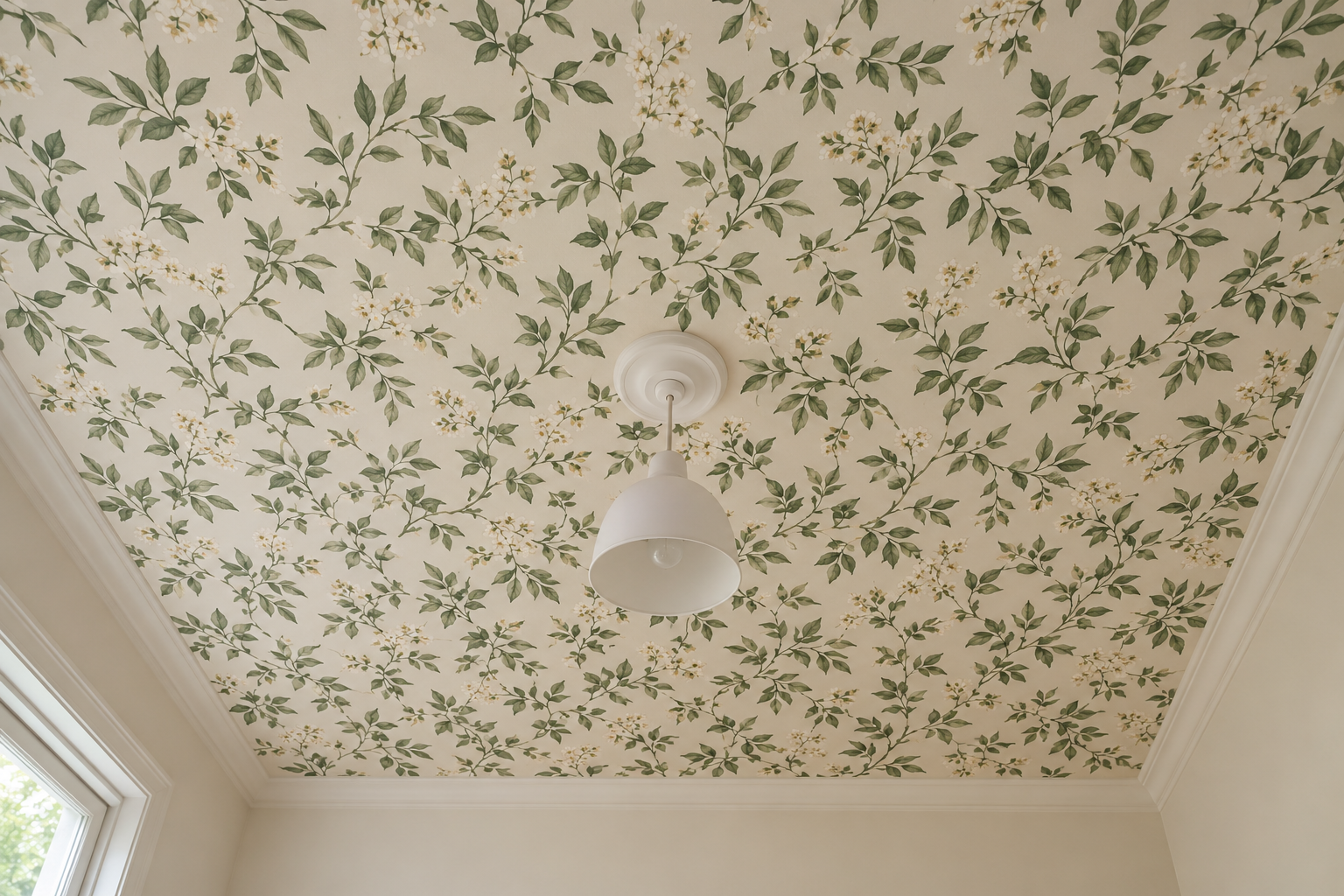
Paper on the ceiling, with plain walls below, puts the pattern where it doesn’t compete with furniture, art, or windows, and in a bedroom it’s what you see from the pillow. A pattern with no clear up or down, such as scattered leaves or a small geometric, works from every side of the room.
Hanging paper overhead is harder than on a wall. The strips run across the shorter dimension, and the job usually goes to a decorator, since an unseen gap on a wall becomes a visible line on a ceiling.
Wood Boards Across the Ceiling
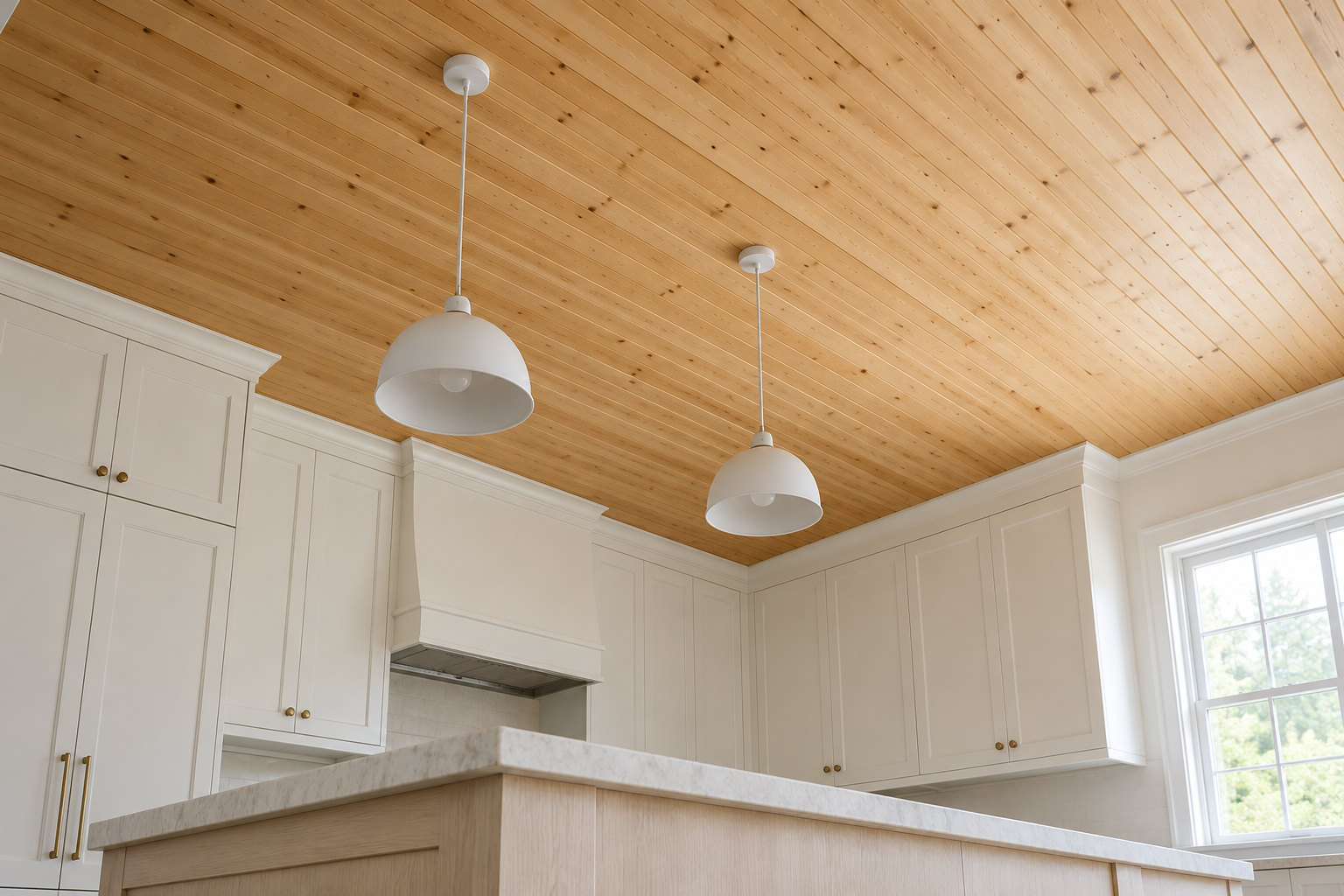
Tongue-and-groove boards on a ceiling bring warmth and a direction. Run across a narrow room, they make it look wider. Run along it, they draw the eye toward the far end. In a kitchen, honey pine or oak overhead warms a room of white cabinets and stone without adding another color at eye level.
Boards add a little weight to the room’s look. In a low room, painting them white keeps the lines without darkening the ceiling.
Beams, Dark or Pale
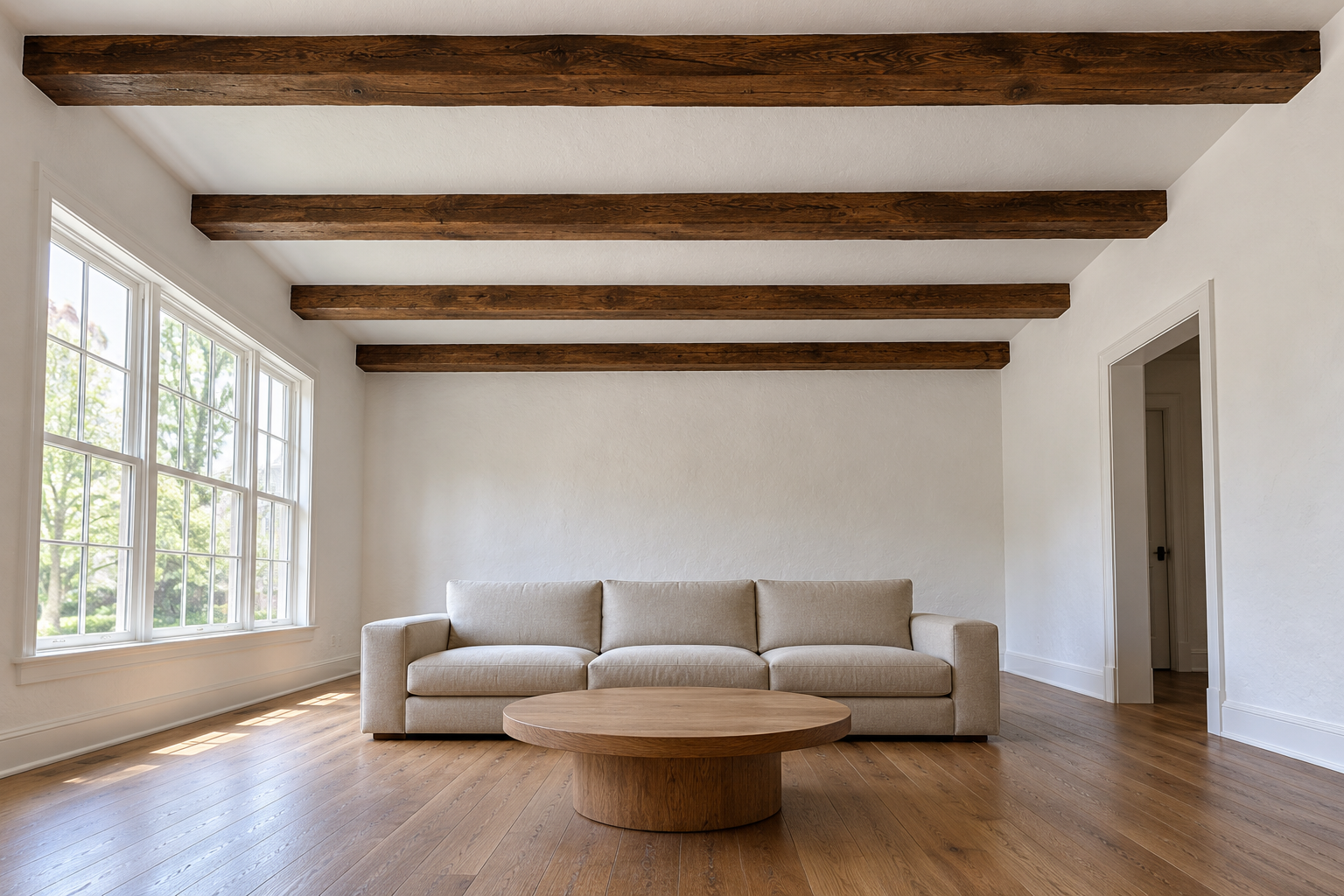
Beams across a ceiling divide it into bays, and their color decides how much. Dark beams on white plaster make a strong pattern that lowers the room visually, which suits a large or tall space. Beams painted or limewashed the same color as the ceiling keep the rhythm while the ceiling stays light.
Structural beams stay where they are. Added beams are often hollow boxes fixed to the ceiling, and they look most convincing at a spacing and size that a working structure would use, not crowded close together.
A Coffered Grid
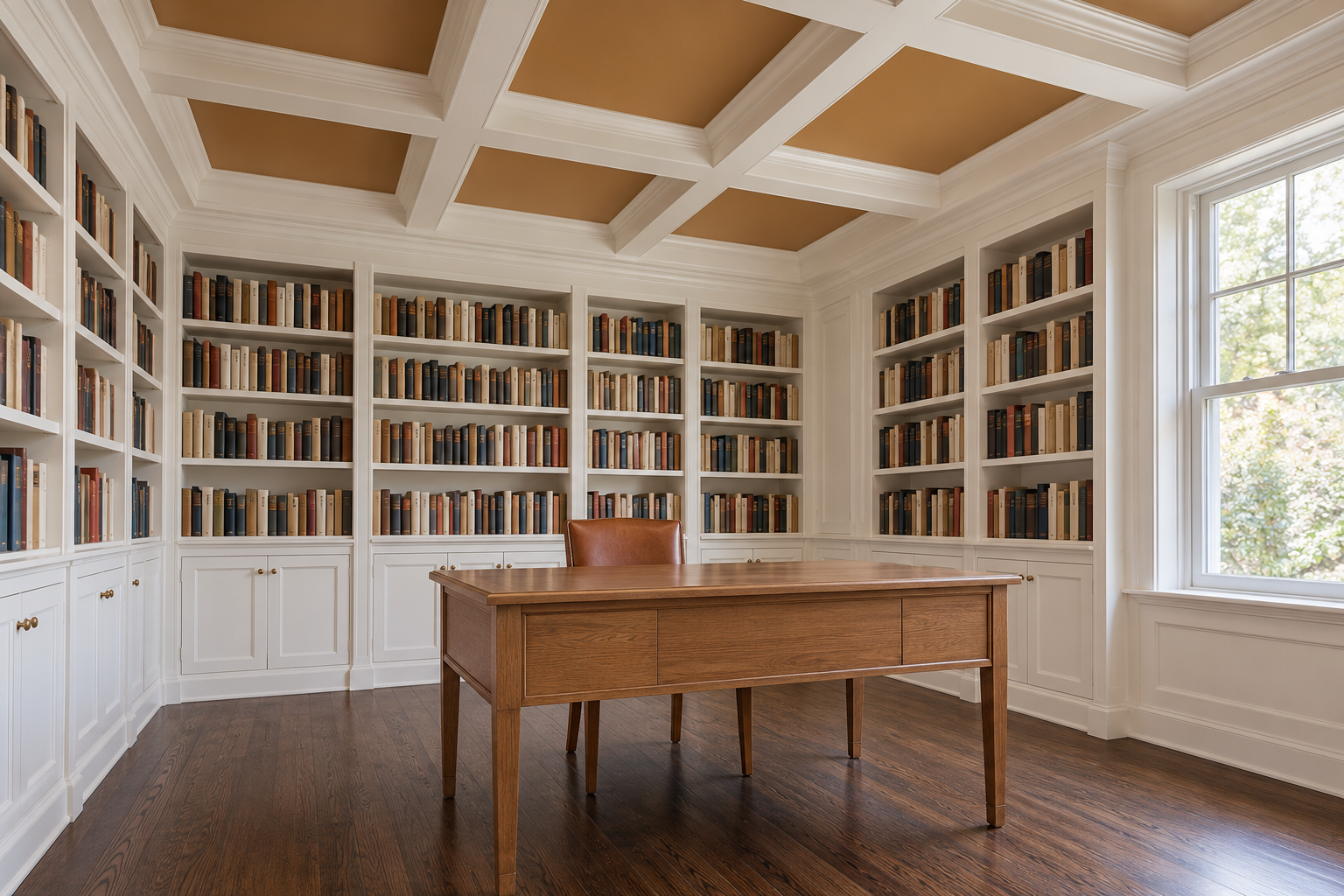
A coffered ceiling is a grid of beams with recessed panels between them, and it brings the formality of a library or a dining room to a plain ceiling. Painting the panels a color and the beams white, or the reverse, makes the grid read clearly from below.
Coffers take height, since the beams drop several inches below the ceiling. They look right in rooms with ceilings around 9 feet or more, and they make an 8 foot room feel lower than it is.
Light the Tray From the Recess
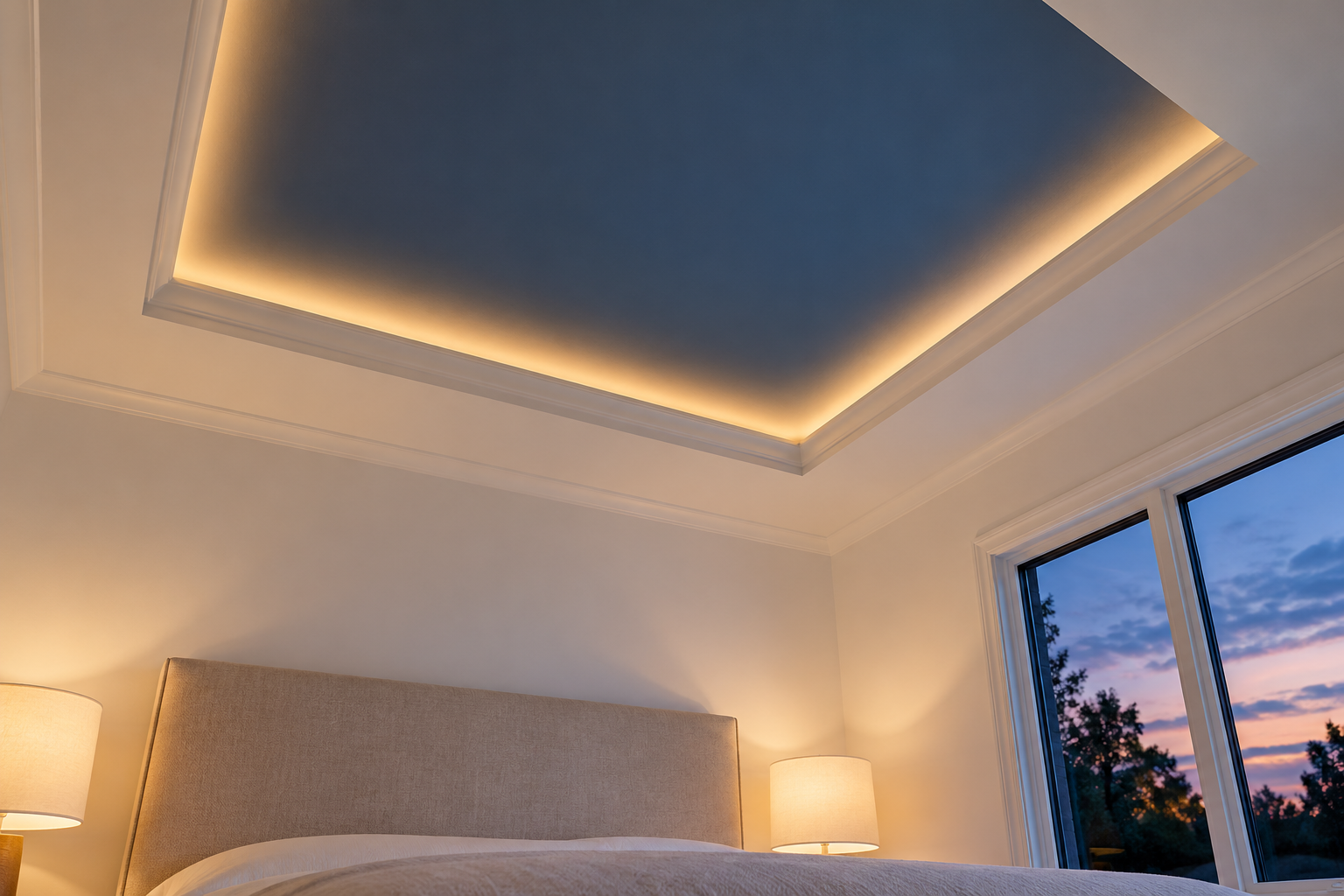
A tray ceiling, a raised center recessed above the main ceiling, has a ledge around its edge where a strip of light can hide. Lit from there, the light washes up onto the tray and down the walls with no fitting in sight, a soft evening light for a bedroom or a dining room.
Paint the inside of the tray a color and the cove light makes it glow. A deep blue or green inside a white surround becomes a pool of color overhead once the room’s other lamps are low.
Cornice and a Ceiling Rose
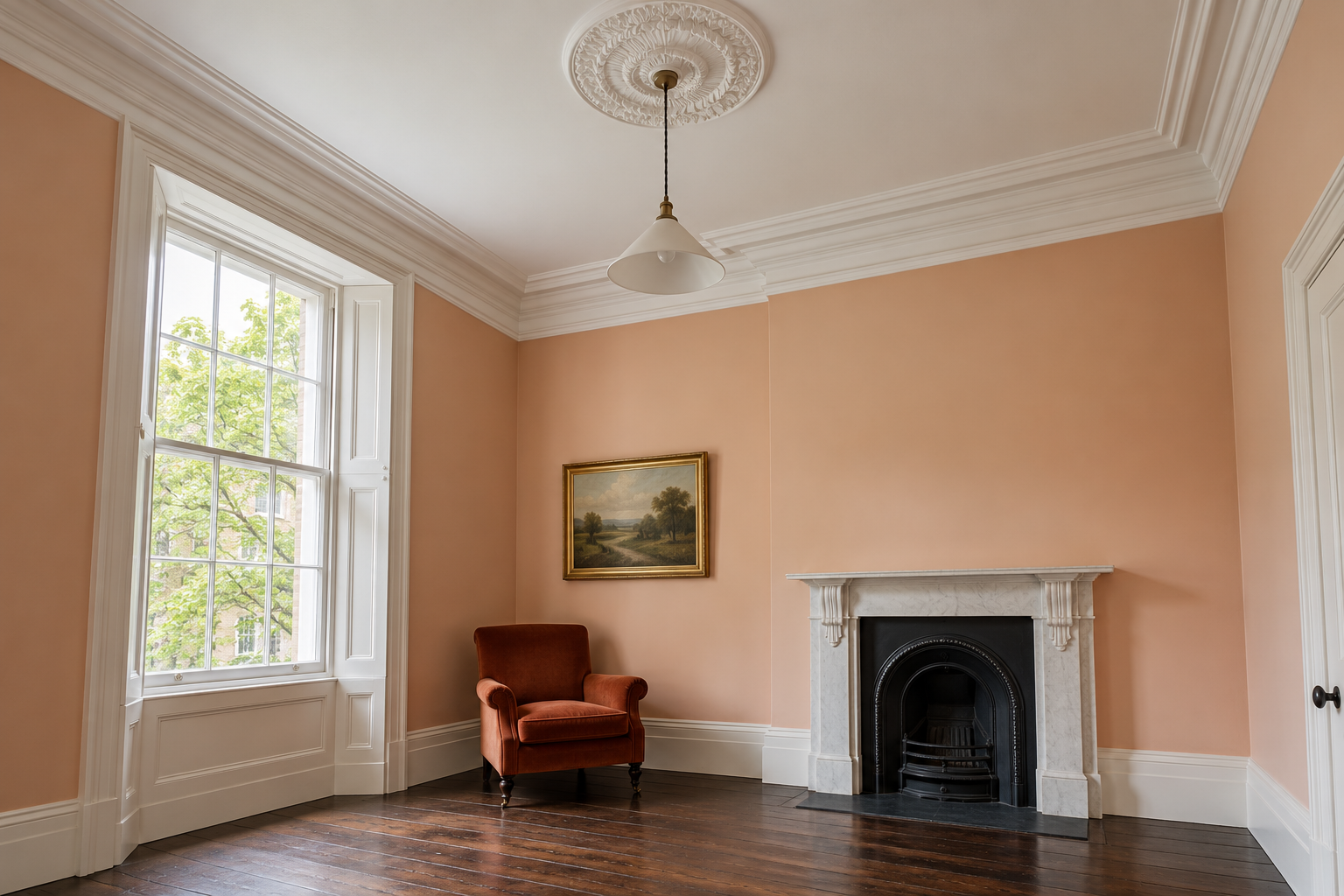
In an older house, the plaster cornice where wall meets ceiling and the rose in the middle are what make a tall room feel proportioned. Restored and painted white, they draw a clear outline around the ceiling, and they suit a colored wall below, which makes their shadows easier to see.
Where a cornice is missing, a deep plaster or plaster-look profile, sized to the room’s height, brings it back. A shallow strip of trim on a high ceiling looks thin, so a taller room takes a deeper profile.
Limewash Overhead
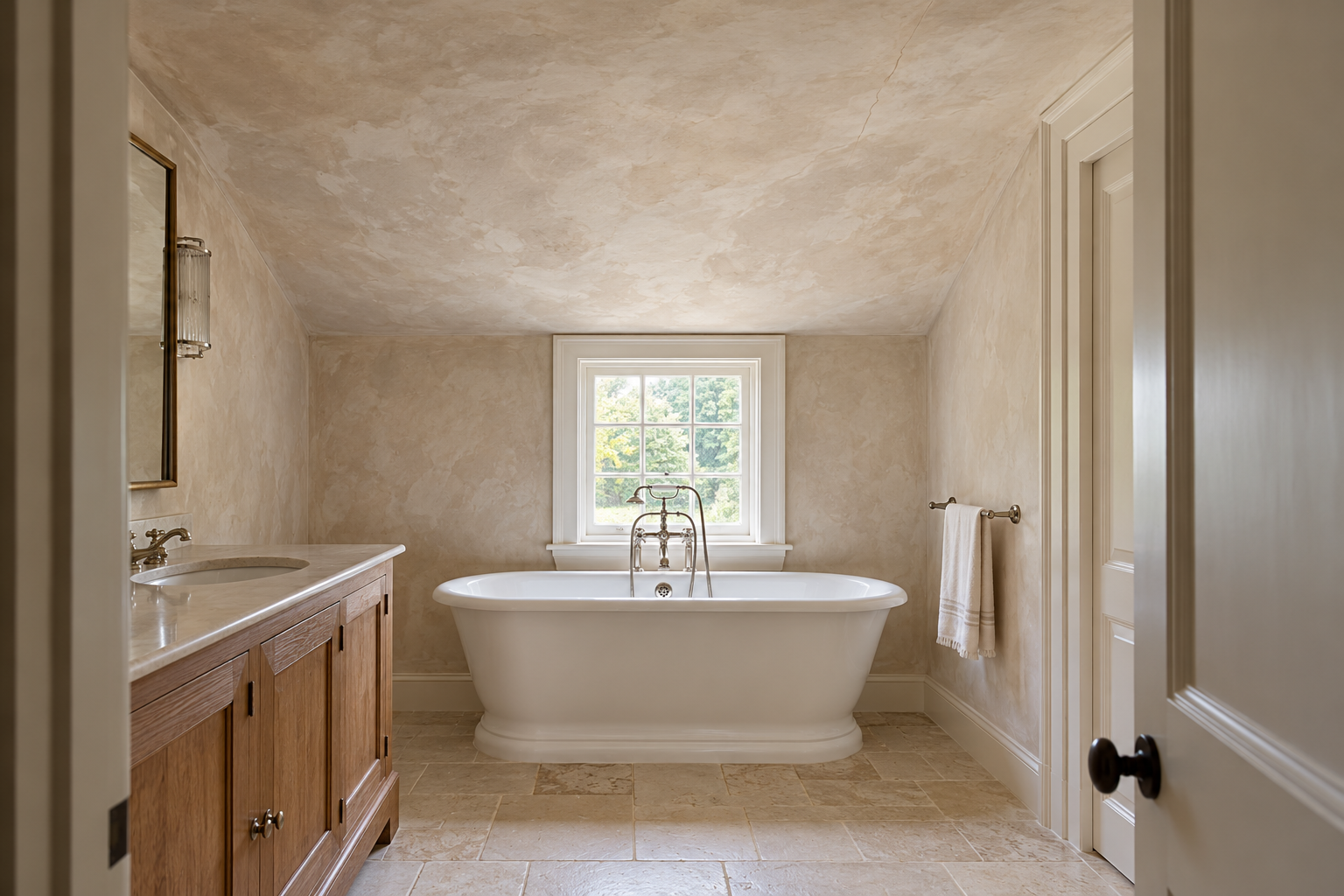
Limewash on a ceiling gives it a clouded, moving surface, darker and lighter where the brush went, and that movement shows as the light changes through the day. In an old house with a ceiling full of filled cracks, it disguises the repairs that a flat paint would outline.
Limewash suits plaster and other mineral surfaces. In a bathroom, check that the product is made for damp rooms and that the room has a working fan, since steam on any ceiling finish causes problems without ventilation.
A Pale Blue Porch Ceiling
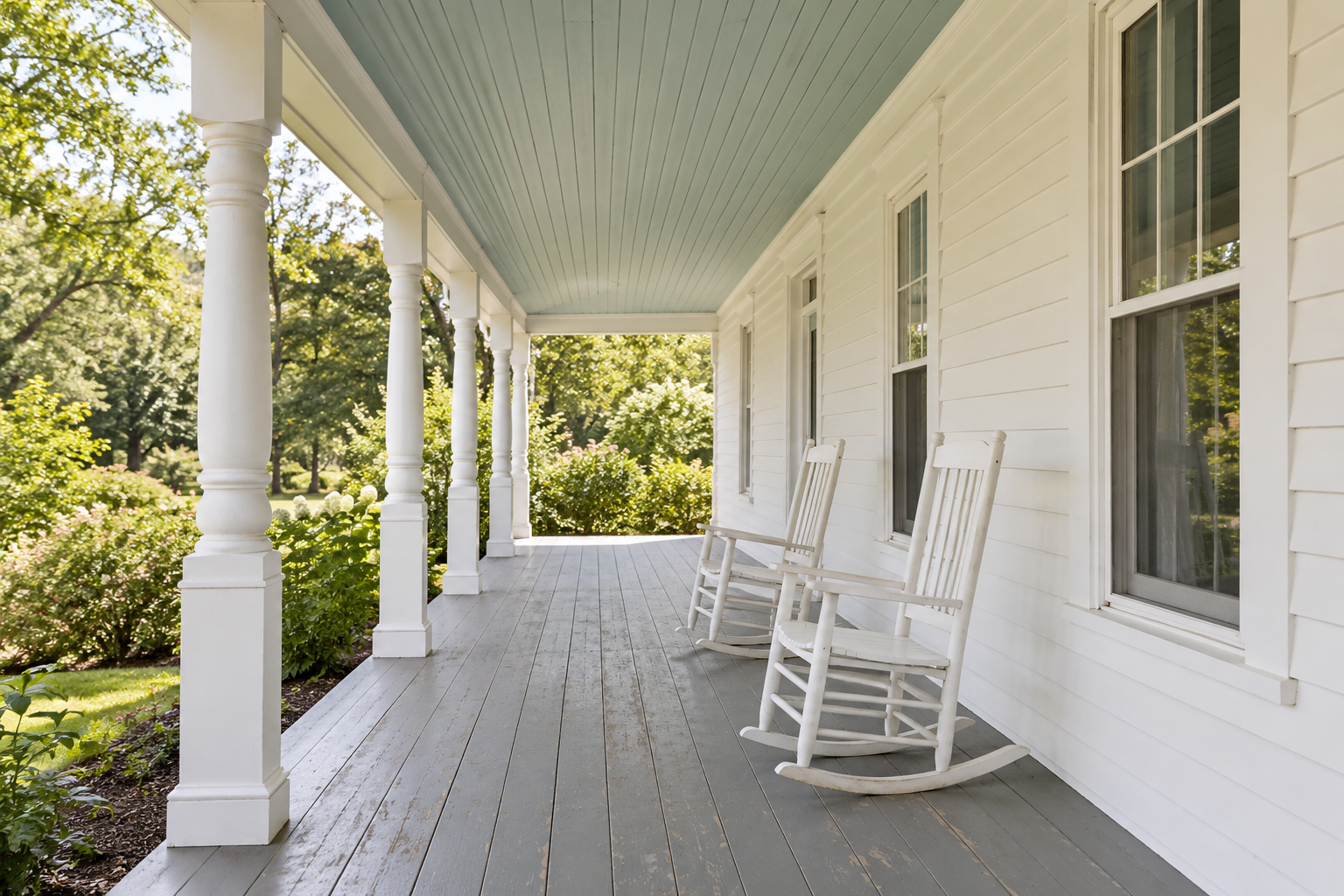
Painting a porch ceiling a pale blue-green, often called haint blue, is a long tradition in the American South, and it gives an open porch a ceiling the color of a sky. Under the shade of a porch roof, the pale blue keeps the ceiling from looking dark against the bright garden beyond it.
Any exterior paint suits the job, in a shade that still looks blue in shadow and not gray. A sample brushed on the boards and looked at in the afternoon shows which one does.
Bring the Ceiling Color Down to the Picture Rail
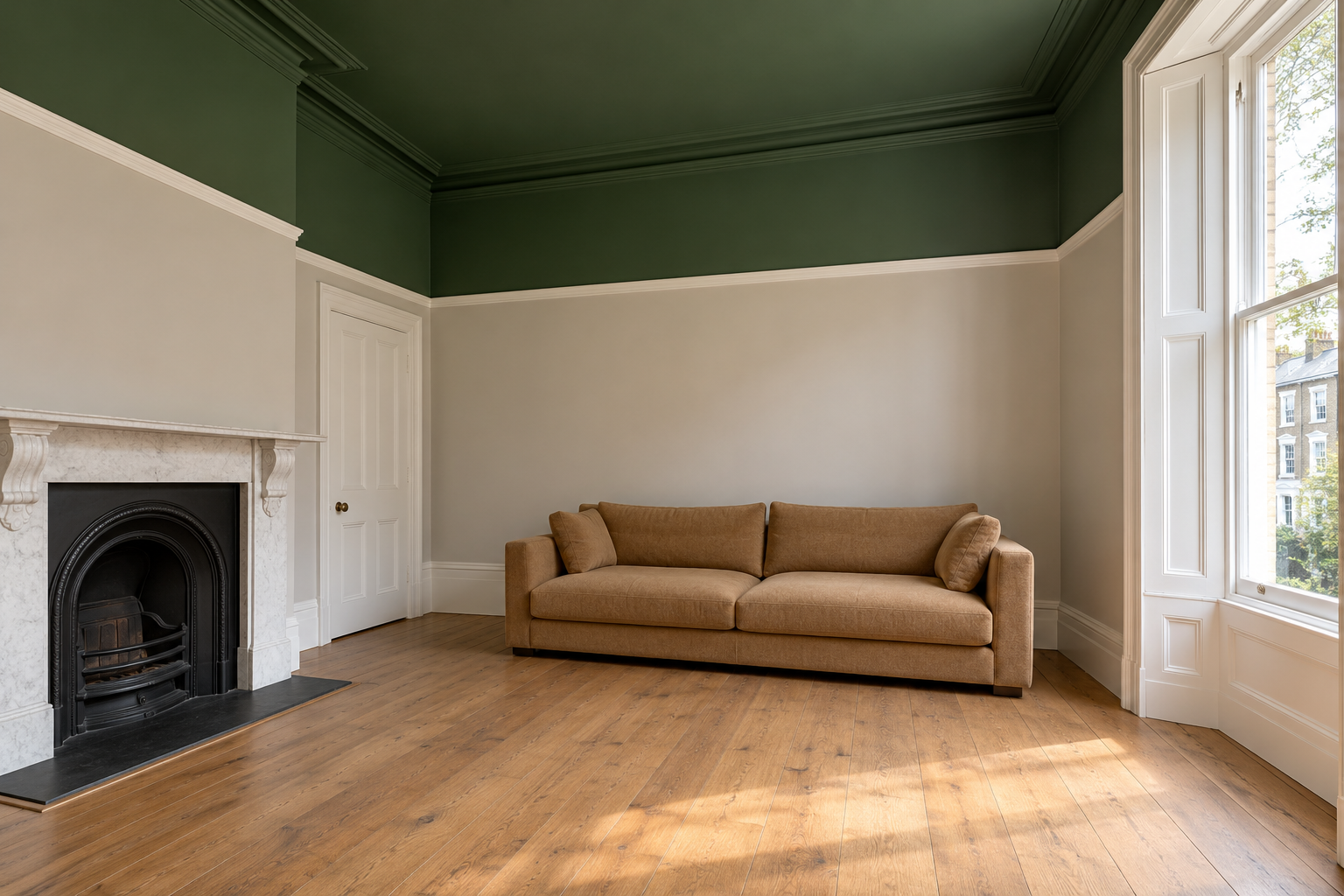
In a room with a picture rail, painting the ceiling and the strip of wall above the rail one color brings the ceiling down visually to the rail, which makes a tall room feel more intimate while the walls below stay pale. A deep color above a pale one gives the room a canopy, and it’s a way to use a strong color without covering the walls in it.
Where there’s no picture rail, a narrow wood strip fixed level all round does the same job, about a foot to 18 inches below the ceiling in a room around 9 feet tall.
Paint a Pattern Overhead
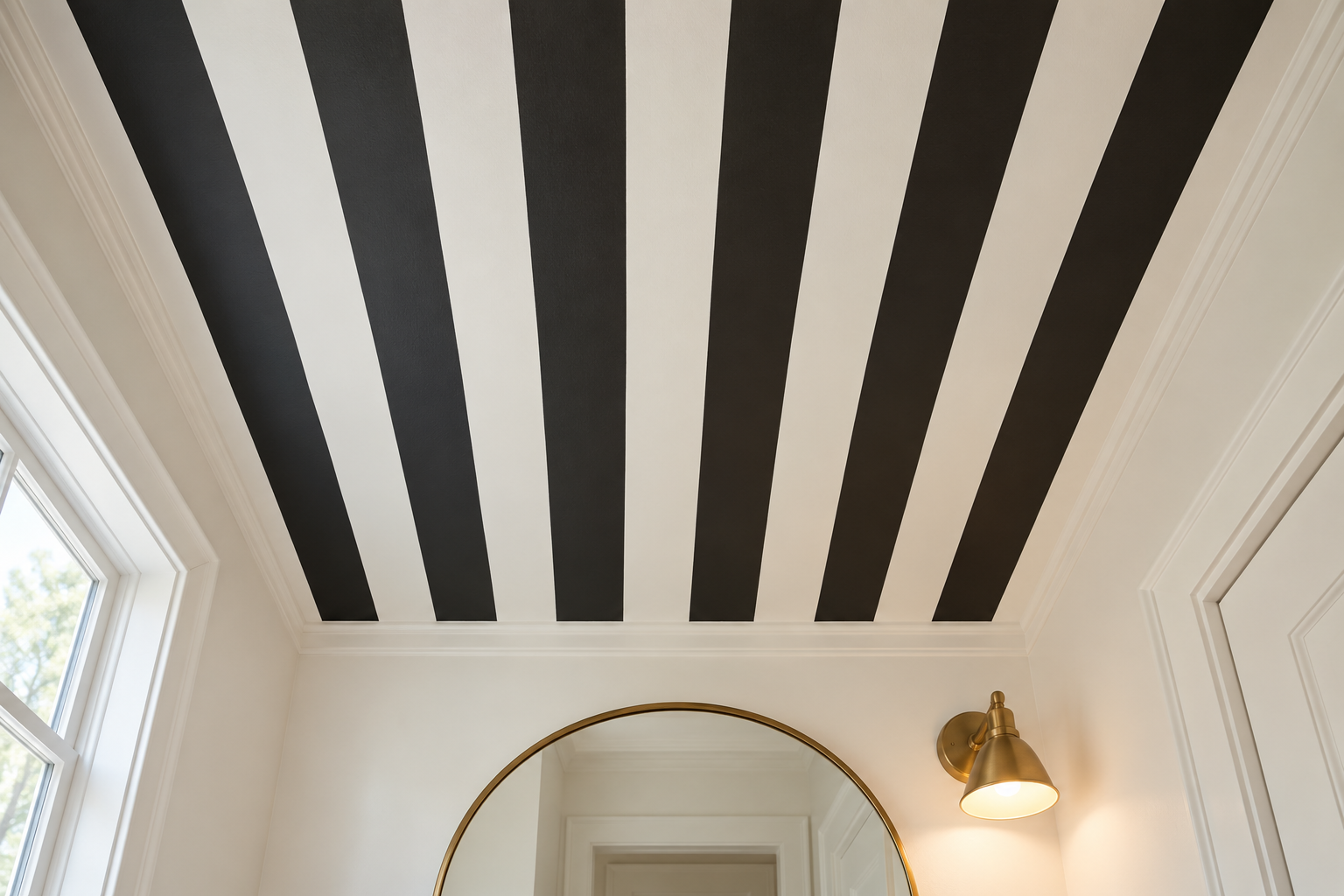
A small room (a powder room, a hall, or a closet) can take a bold pattern on its ceiling, since the room is passed through, not sat in. Stripes or checks in two colors, laid out with tape and a level, give a strong graphic ceiling without any paper to hang.
Run stripes along the room’s length to make it look longer, or across to widen it. Measure them out from the center so the edges finish evenly on both sides.