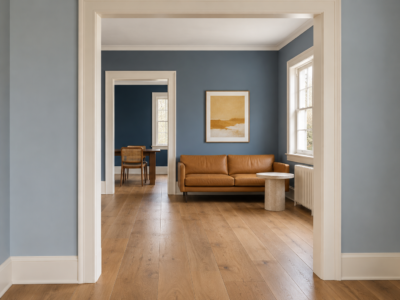
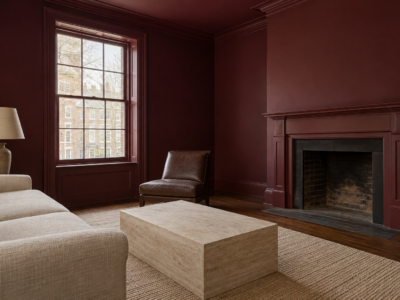
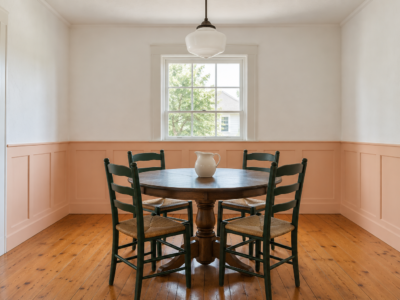
A gallon of interior wall paint covers about 350 to 400 square feet in one coat on a smooth, primed wall, and most rooms need two coats. A 12 by 12 foot bedroom with 8 foot ceilings, one door, and two windows has about 330 square feet of wall, so two coats take 2 gallons.
That figure goes up on new drywall, on textured walls, and where a light color covers a dark one. Ceilings and trim take different paints, so they’re measured and bought separately.
Measure the Walls
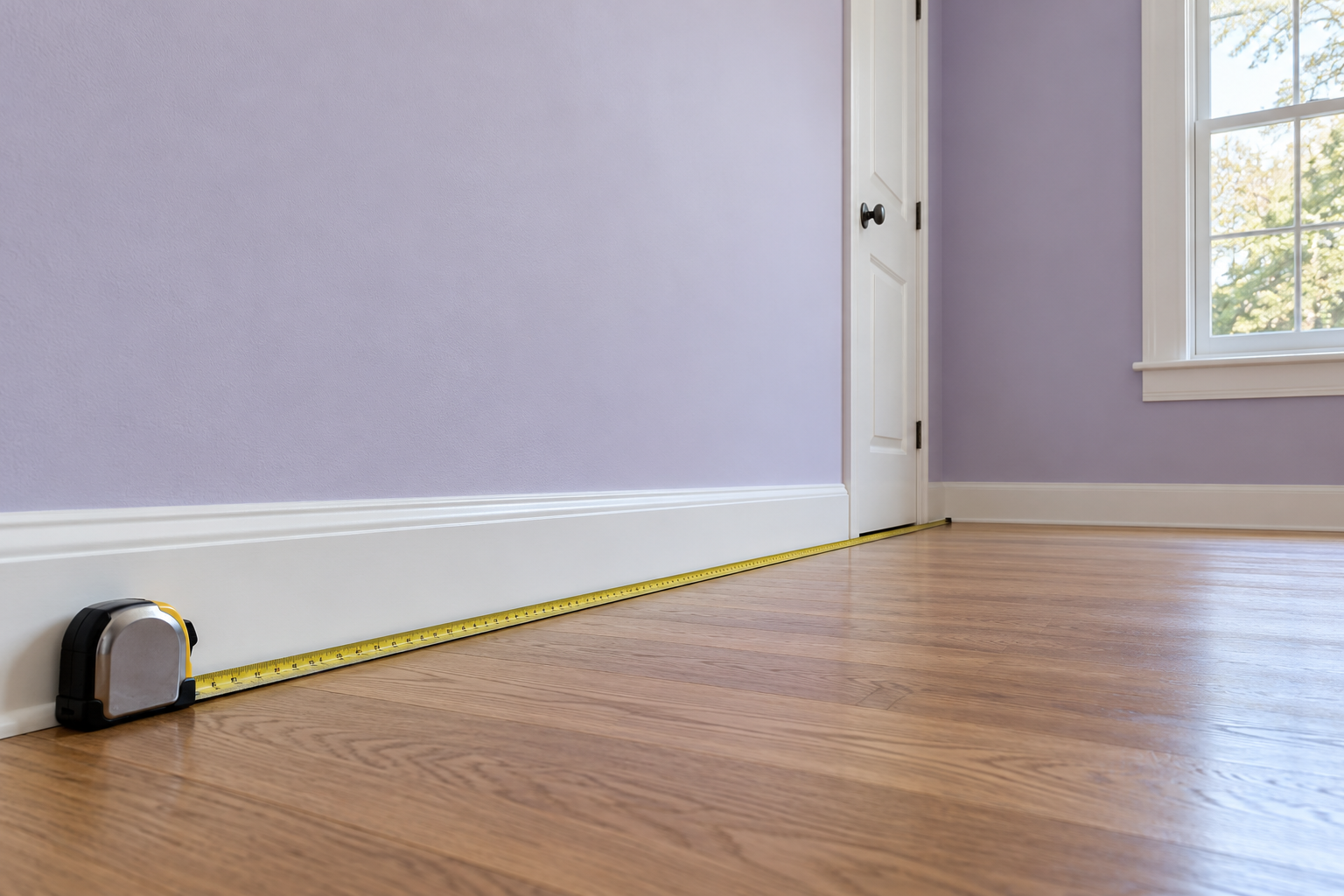
Add the lengths of all the walls and multiply by the height from floor to ceiling. For the 12 by 12 foot bedroom, that’s 48 feet of wall times 8 feet, or 384 square feet. Measure each wall along the baseboard, corner to corner, and include the short returns of a closet or a chimney breast, which are easy to leave off a rough sketch.
Then take off about 21 square feet for each standard door and about 15 for each average window. For the bedroom, 384 minus 21 and 30 leaves 333 square feet. Measure a patio door or a large window as its opening, width times height, and add the walls of a closet if it’s getting painted too.
Two Coats, and When One Is Enough
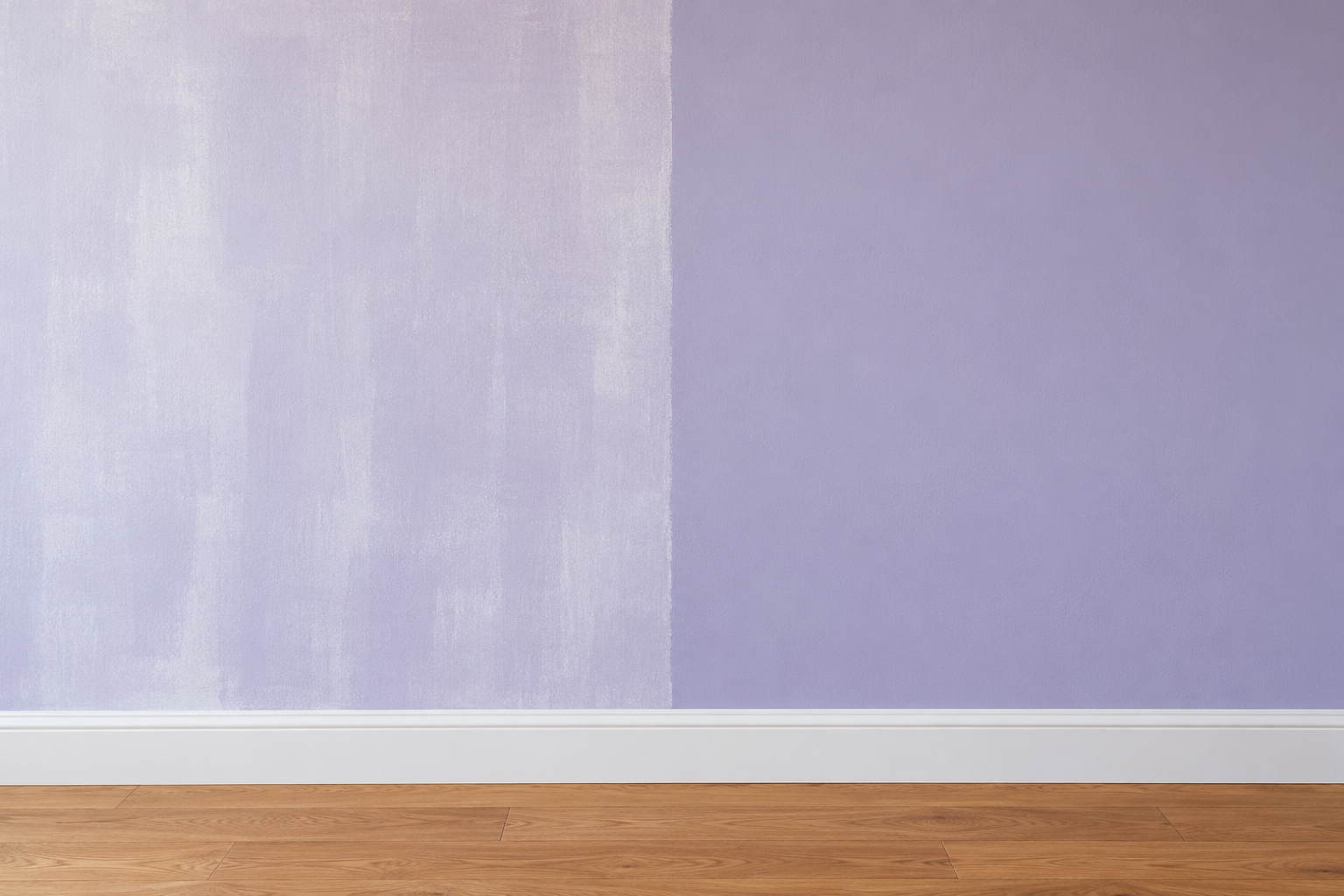
Multiply the wall area by the number of coats, then divide by the coverage on the can. Labels usually give a range, and the lower figure is the safer one to plan with, since rollers and trays waste some paint. For the bedroom, 333 square feet times two coats is 666, and 666 divided by 350 is 1.9, so buy 2 gallons.
A second coat evens out the color and sheen, and most repaints need one. A single coat can be enough when the new color is close to the old one, the wall is sound and clean, and the paint is one its maker rates for one-coat coverage.
Primer, Dark Colors, and Texture
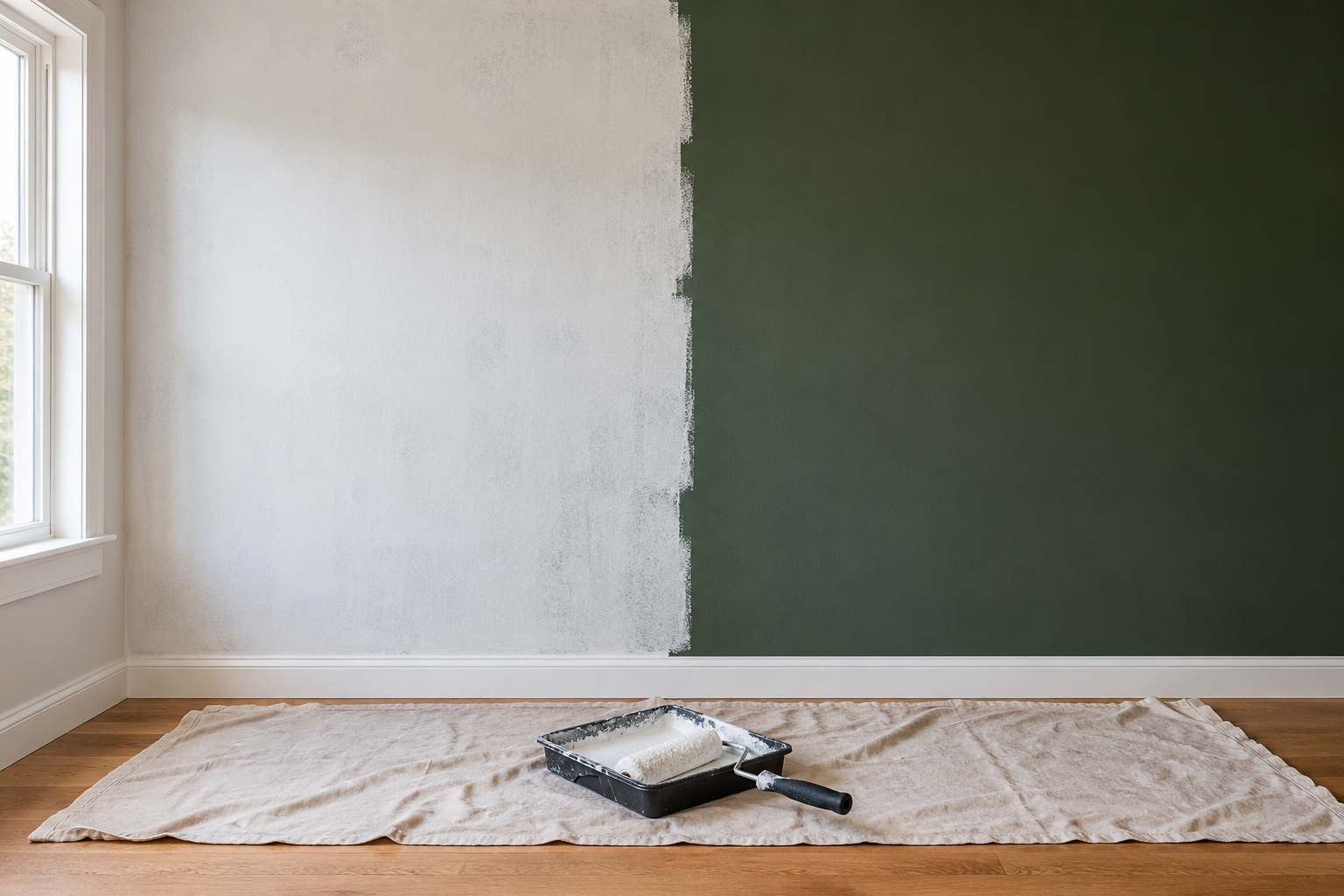
New drywall soaks up the first coat unevenly, so it needs a coat of primer before two coats of color. A light color going over a dark one usually needs primer too, and can still take a third coat. A deep, saturated color often goes on over a gray-tinted primer to reach its full shade in fewer coats.
Texture adds surface. An orange-peel or knockdown wall can bring coverage down to around 250 to 300 square feet per gallon, so plan with that figure. Primer is bought separately, by the same arithmetic, for one coat.
Ceilings and Trim
A ceiling is measured like the floor, length times width, so the bedroom’s ceiling is 144 square feet, a little under half a gallon per coat. Ceiling paint is usually a flat white sold on its own, and one gallon covers a ceiling this size in two coats.
Trim takes little paint by area. A quart of semi-gloss or satin usually covers the baseboards and the door and window casings of an average room in two coats. Painting the doors themselves adds about a quart for each door, both sides, two coats.
Gallons by Room Size
These figures assume walls 8 feet high unless noted, one door, two windows, two coats, and 350 square feet per gallon, rounded up to what’s sold. They cover the walls only.
| Room | Wall area after openings | Paint for two coats |
|---|---|---|
| 10 by 10 feet | about 270 sq ft | 2 gallons |
| 12 by 12 feet | about 330 sq ft | 2 gallons |
| 12 by 15 feet | about 380 sq ft | 2 gallons and 1 quart |
| 15 by 20 feet | about 510 sq ft | 3 gallons |
| 15 by 20 feet, 10 foot ceilings | about 650 sq ft | 4 gallons |
Buy the wall color at once, from one batch, so every can matches, and keep what’s left with its lid sealed for touch-ups.