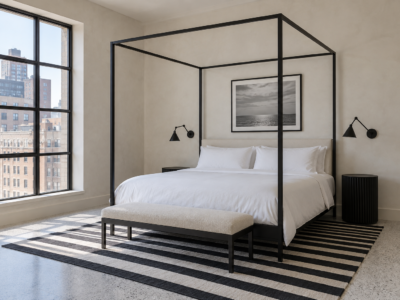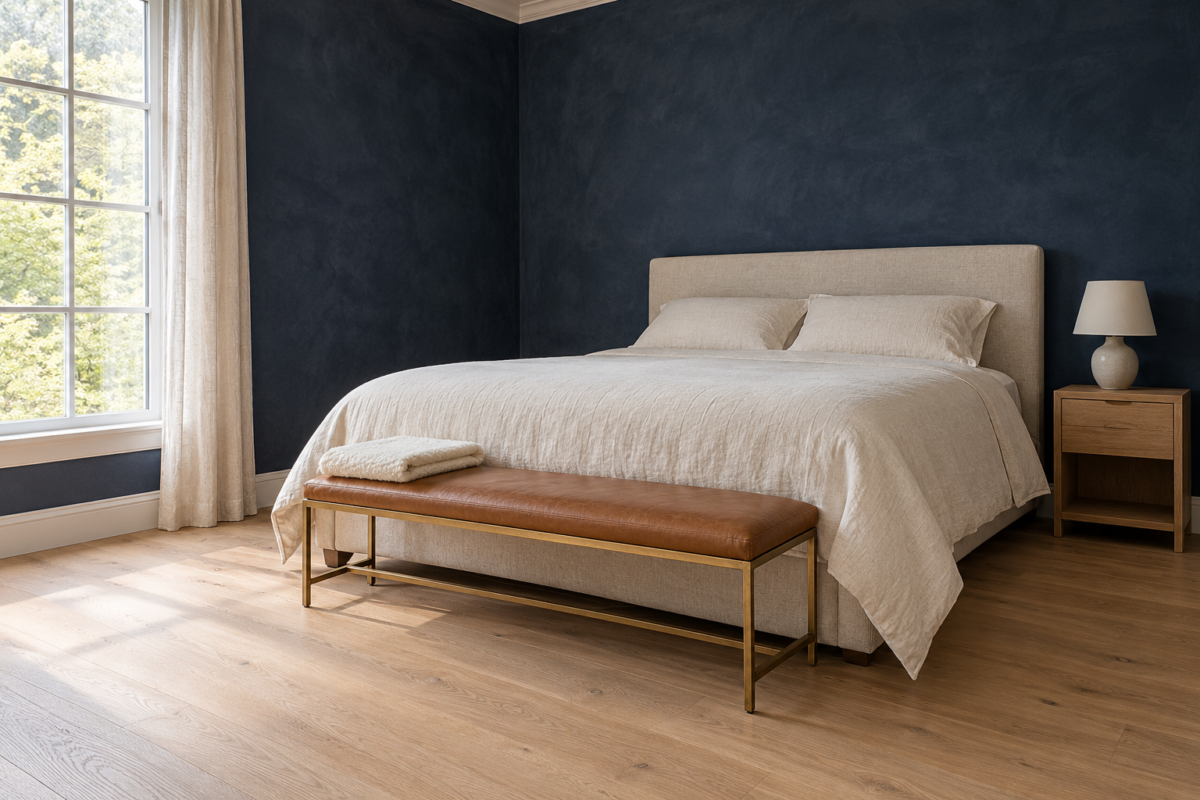
In many bedrooms the strip of floor at the foot of the bed is the busiest part of the room, the route from the door to the closet or the dresser. A bench there takes some of that floor, and gives back somewhere to sit and put on shoes, to lay out tomorrow’s clothes, or to rest a suitcase the night a guest arrives.
Choose one about two thirds to four fifths as long as the mattress is wide, with its seat a few inches below the top of the mattress and a depth of 14 to 18 inches. Then check the floor in front of it. Keep about 30 inches clear where people walk, and about 36 where a dresser drawer opens toward it.
Length From the Mattress Width
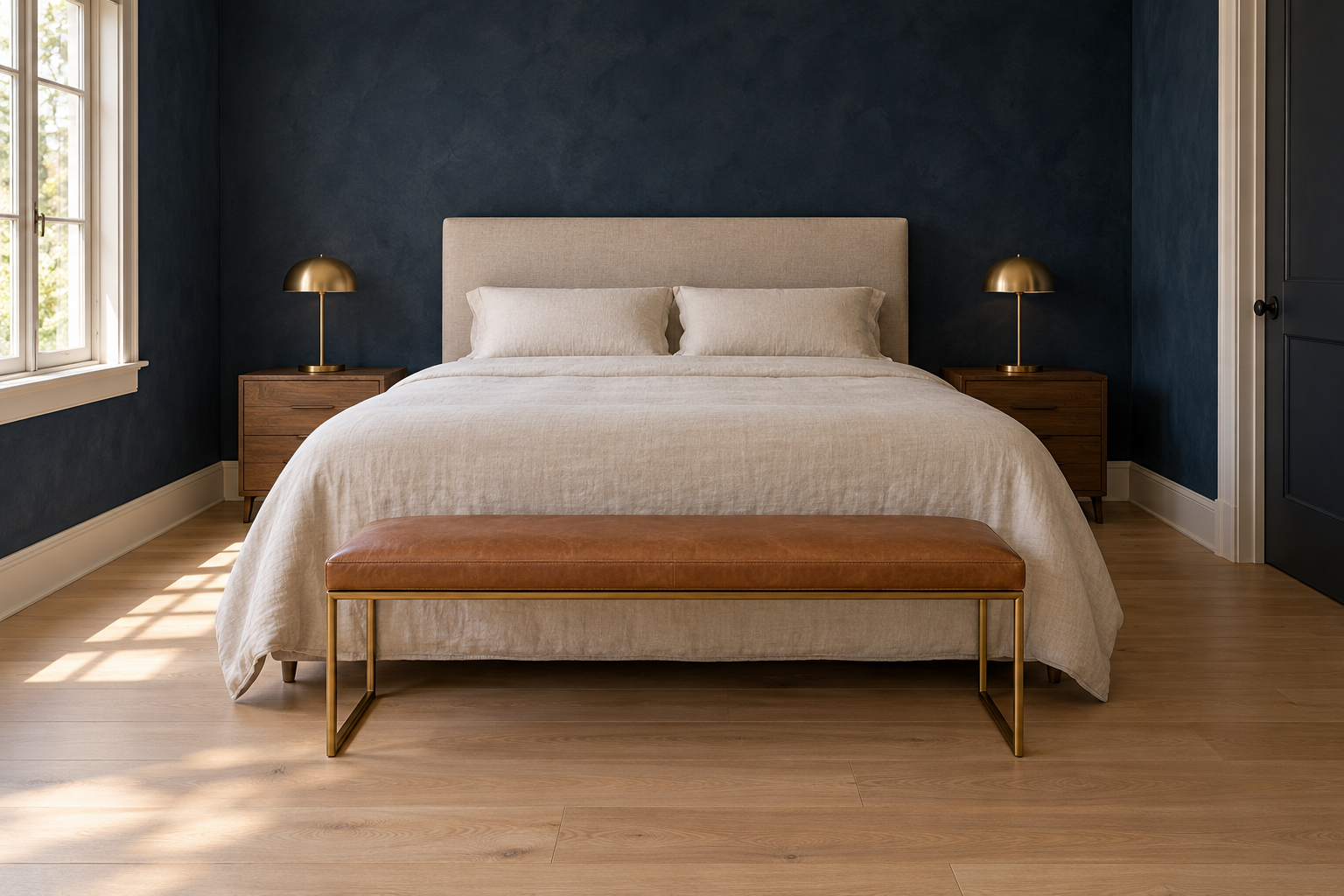
Measure the mattress across its top, not the bed frame, since a frame or upholstered rail can add several inches. A bench two thirds to four fifths of that width sits inside the bed’s outline with a few inches of mattress showing at each end, so the corners of the bed stay clear to walk around and to tuck the bedding. For standard US mattresses, that works out as follows.
| Mattress | Width | Bench length |
|---|---|---|
| Twin | 38 inches | 25 to 30 inches, or a stool |
| Full | 54 inches | 36 to 43 inches |
| Queen | 60 inches | 40 to 48 inches |
| California king | 72 inches | 48 to 58 inches |
| King | 76 inches | 51 to 61 inches |
Toward the shorter end, a bench leaves more room at the corners and suits a bed with posts. Toward the longer end, it seats two people side by side. A bench longer than the mattress is wide sticks out past the bed’s corners, where shins find it in the dark.
A Seat Below the Top of the Mattress
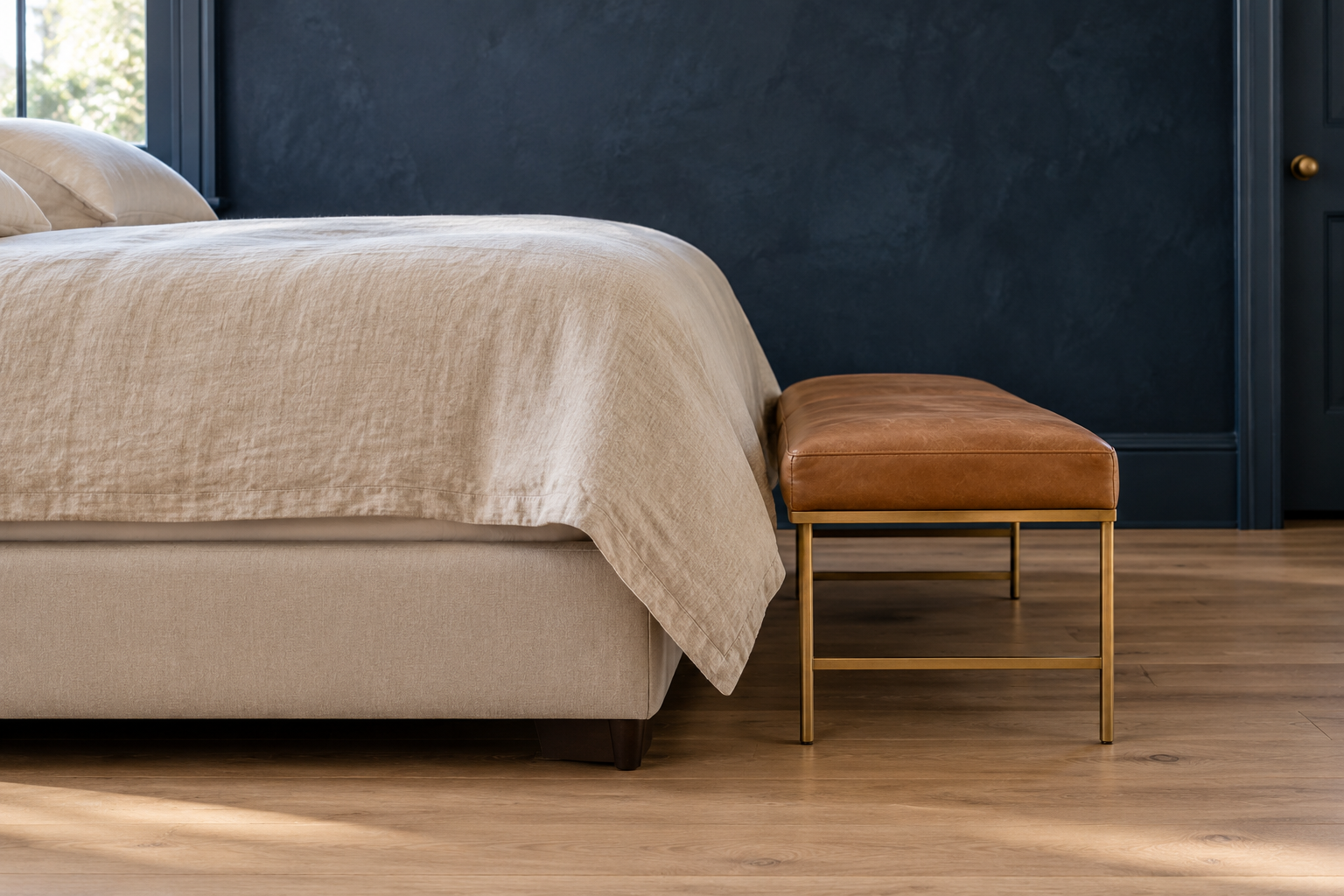
Measure from the floor to the top of the made mattress at its foot. On a standard frame that is usually 22 to 25 inches, and most benches have a seat 17 to 19 inches high, which puts the seat a few inches lower. That is the relation to keep. A seat lower than the bed’s edge lets the duvet hang down over the foot of the mattress without resting on the bench.
A low platform bed changes the numbers. With the mattress top at 18 to 20 inches, a standard bench comes up level with it or higher, so a lower bench, around 14 to 16 inches, or a low stool suits it better. A footboard sets its own limit. Keep the bench seat below the top rail, or skip the bench if the footboard already blocks the foot of the bed.
Depth and the Floor in Front
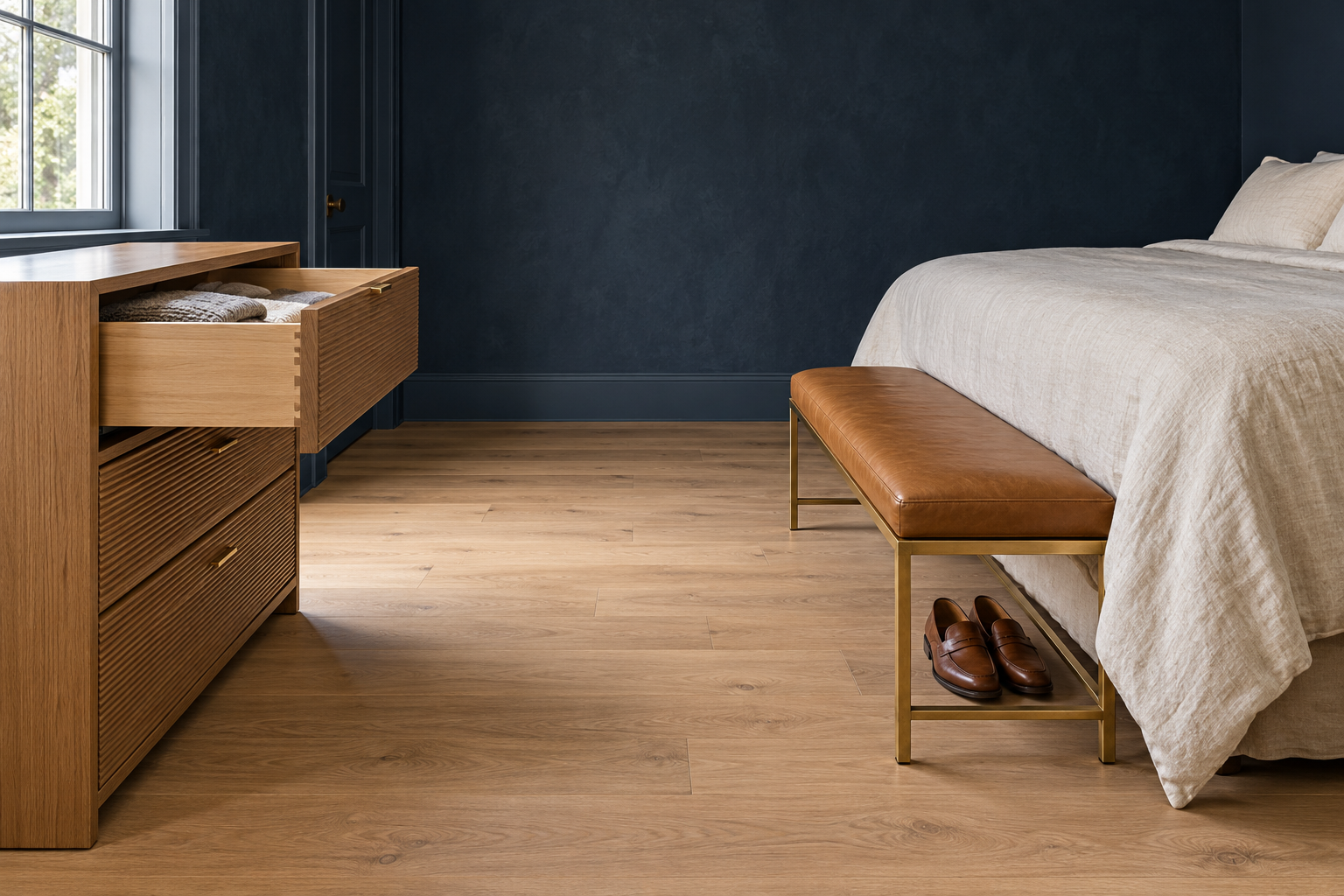
A depth of 14 to 18 inches seats a person comfortably. In a narrow room, a bench 12 to 14 inches deep still works as a perch and a place for a folded blanket, and takes several inches less of the floor.
In front of the bench, leave about 30 inches of clear floor where it faces a route through the room, the same as the walking space beside the bed. Where a dresser stands opposite, measure to the front of a fully opened drawer, not to the dresser. A drawer and a person standing at it need about three feet in front of the dresser.
Take, as an example, a bedroom 12 feet (144 inches) from the headboard wall to the dresser wall. A queen bed with its headboard takes about 84 inches, then a gap of 2 inches, a bench 16 inches deep, and a dresser 20 inches deep. That adds up to 122 inches and leaves 22 in front of the dresser, too little for a drawer and someone standing at it. Without the bench, the same room has 40 inches in front of the dresser. Here a bench doesn’t fit, unless the dresser moves to another wall.
A Storage Bench Needs Room to Open
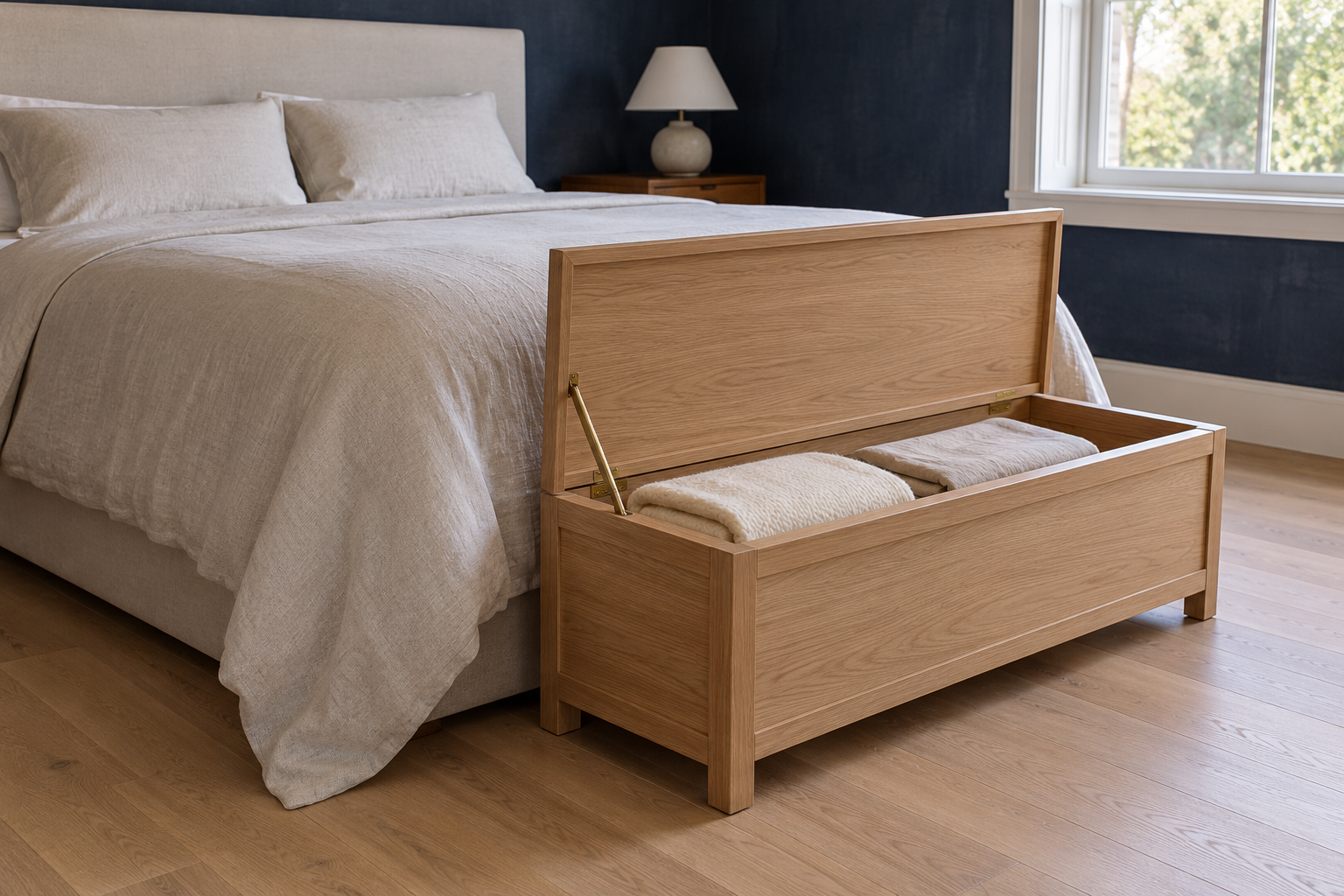
A lift-up lid is hinged at the back, so it swings up toward the bed. Pushed tight against the mattress, it stops short of upright and falls closed while you reach in. Leave a gap of a few inches behind the bench, or choose a lid with a stay that holds it upright, so it stands clear of the bed and the hanging duvet.
A bench with drawers opens the other way, into the floor in front. Add the drawer’s travel, usually most of the bench’s depth, to the space you need in front of it, the same as for a dresser.
Two Stools at a King Bed

At a king bed, two stools or small ottomans can take the place of one long bench. Each is easy to pull out to sit on or to move to a desk or window, and the gap between them leaves a path to the foot of the bed for making it. Keep both stools inside the mattress width, with the same few inches clear at each corner.
Where the worked example above comes out short, a bench is the piece to leave out. A chair by the window or a hook behind the door does the bench’s job of holding clothes without taking the floor in front of the bed.