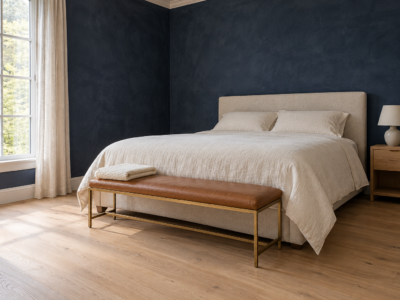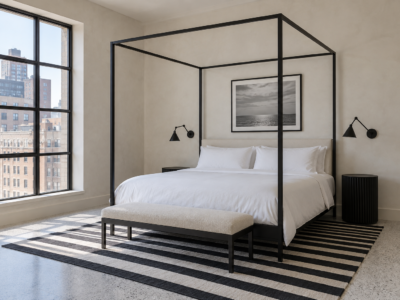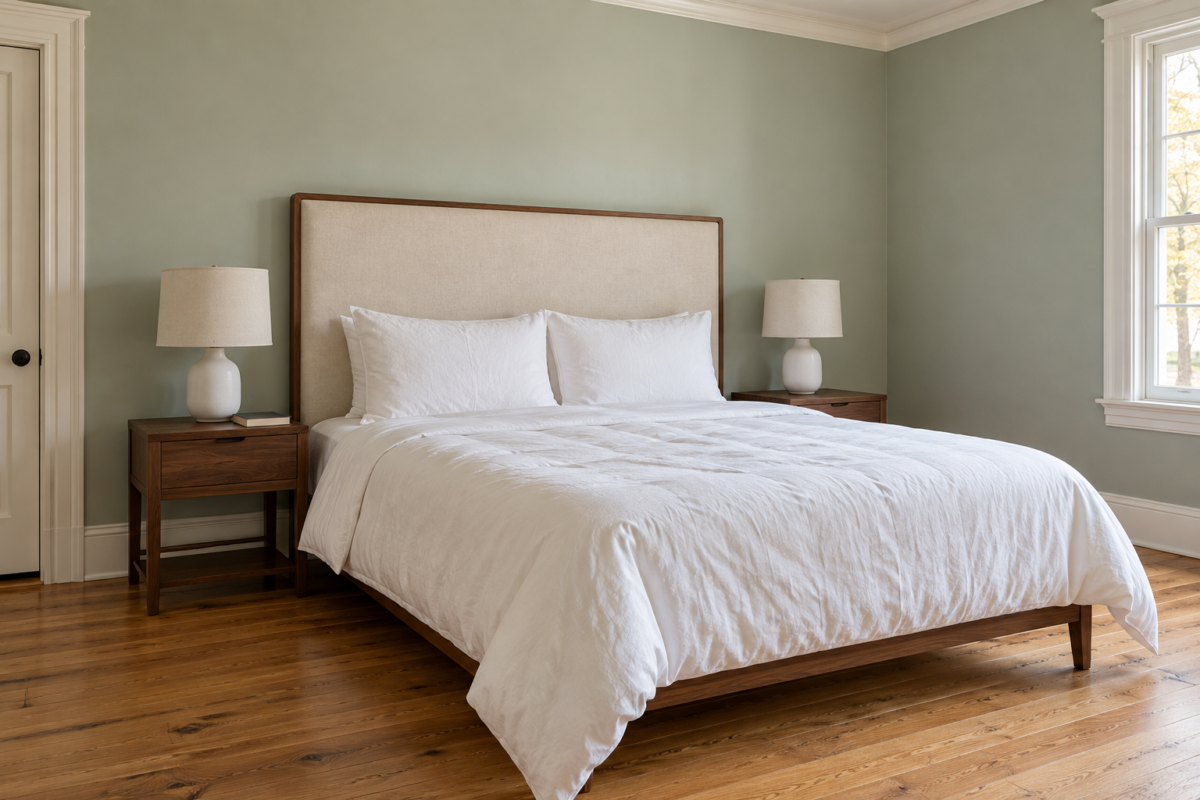
Sitting up in bed, the headboard is what takes your weight. If its top is below your shoulders, you end up leaning on the wall above it. If it doesn’t come down behind the mattress, the pillows slide into the gap at the wall. And from across the room it is the largest shape at the head of the bed, so its top has to sit comfortably below a window, a pair of wall lights, or a picture.
For most beds that means a headboard an inch or two wider than the mattress on each side, with its top 20 to 30 inches above the mattress. All of these figures come from the bed you have, so measure the mattress and the pillows before looking at any listing.
Width by Bed Size

Headboards are usually sold a little wider than the mattress they belong to, by 2 to 4 inches overall, so the edge of the mattress doesn’t stand out past the panel.
| Bed | Mattress width | Typical headboard width |
|---|---|---|
| Twin | 38 inches | About 41 inches |
| Full | 54 inches | About 56 inches |
| Queen | 60 inches | About 62 inches |
| King | 76 inches | About 80 inches |
| California king | 72 inches | About 74 to 76 inches |
Two cases change the number. A bed frame with thick side rails can be wider than the mattress, and the headboard should match the frame, not the mattress, or the rails will stick out past it. Measure the frame from the outside of one rail to the outside of the other. And a headboard can be made deliberately wide, running behind the nightstands too. In that case add the width of the bed, both nightstands, and any gap between them, and keep the headboard centered on the bed rather than the wall.
Tall Enough to Lean Against

Sitting up to read, an adult’s shoulders are roughly 20 to 24 inches above the mattress, depending on their height and how far they slide down. A headboard whose top is lower than that can’t be leaned on. The upper back meets the wall instead, or the pillows have to be stacked to make up the difference.
The pillows give the second check. A standard pillow is 20 by 26 inches, so two standing on their long edges reach about 20 inches above the mattress, and euro pillows reach about 26. The top of the headboard should rise clearly above whatever stands against it, by a few inches, or the pillows hide it.
Put together, most headboards suit a top 20 to 30 inches above the mattress. With a mattress top 25 inches from the floor, that is a headboard 45 to 55 inches tall in total, close to the 48 to 56 inches many are sold at. A thick mattress on a tall frame needs a taller headboard to give the same height above the mattress, so check the listing against your own mattress height. The height of the nightstands follows the same mattress top.
Hanging One on the Wall
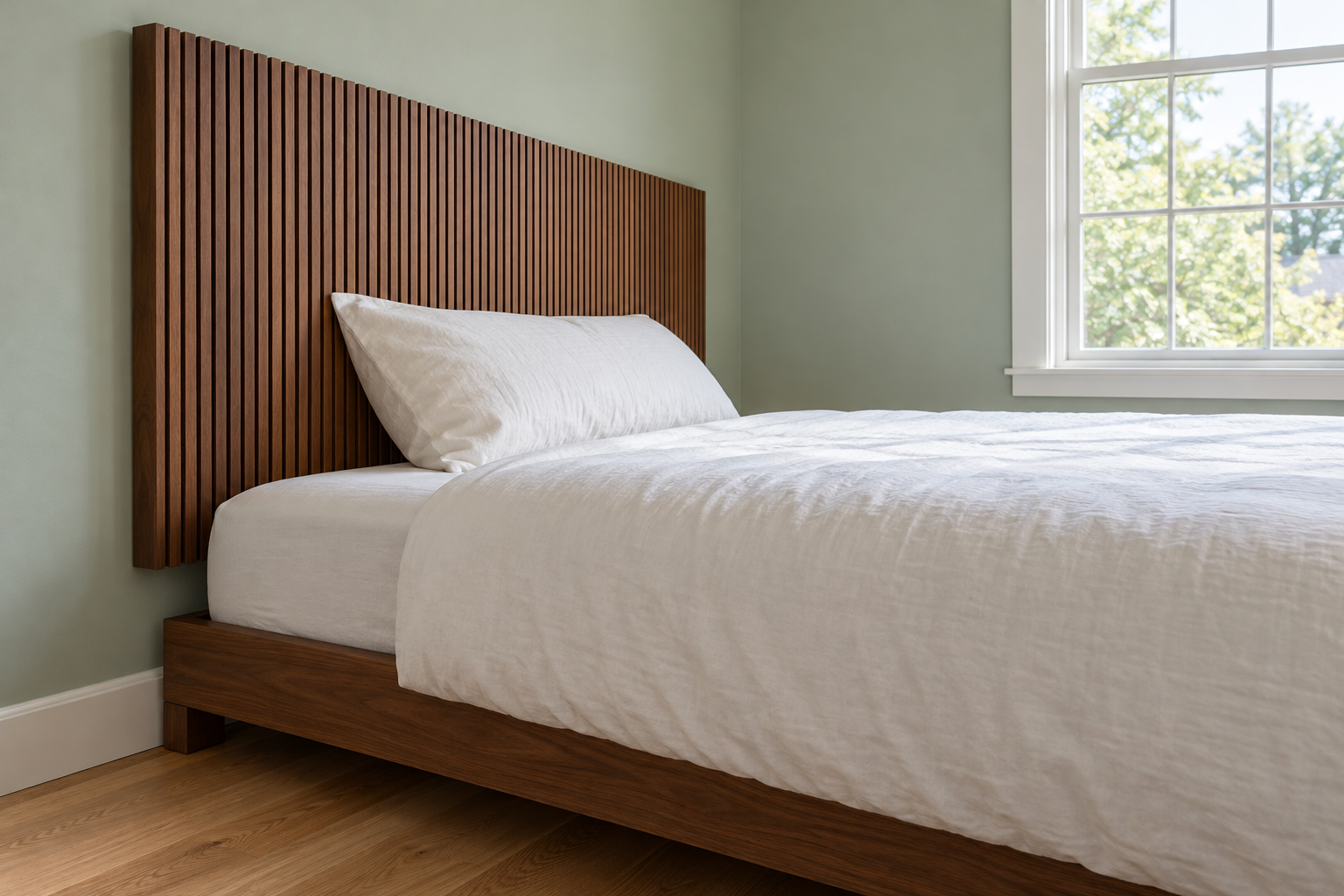
A headboard fixed to the wall, with no legs, is placed by its bottom edge. That edge has to sit below the top of the mattress, or pillows will slip into the gap between them.
- With the bed made, measure from the floor to the top of the mattress.
- Subtract 4 to 6 inches. That is the height of the headboard’s bottom edge, so it overlaps the mattress by that much.
- Add the headboard’s own height to find its top, and check the top against the window, lights, and art above it (the next two sections).
- Mark both edges on the wall with tape, centered on where the bed will stand, and push the bed against the wall to check the overlap.
- Fix the headboard into studs or with anchors suited to the wall, and keep it clear of outlets and switches, or move them first.
On a mattress top 25 inches from the floor, the bottom edge goes at 19 to 21 inches. A 30 inch panel then has its top at 49 to 51 inches. A bed on casters can roll away from a wall mounted headboard and open the gap again, so a bed frame that stays put suits this kind of headboard better.
Under a Window
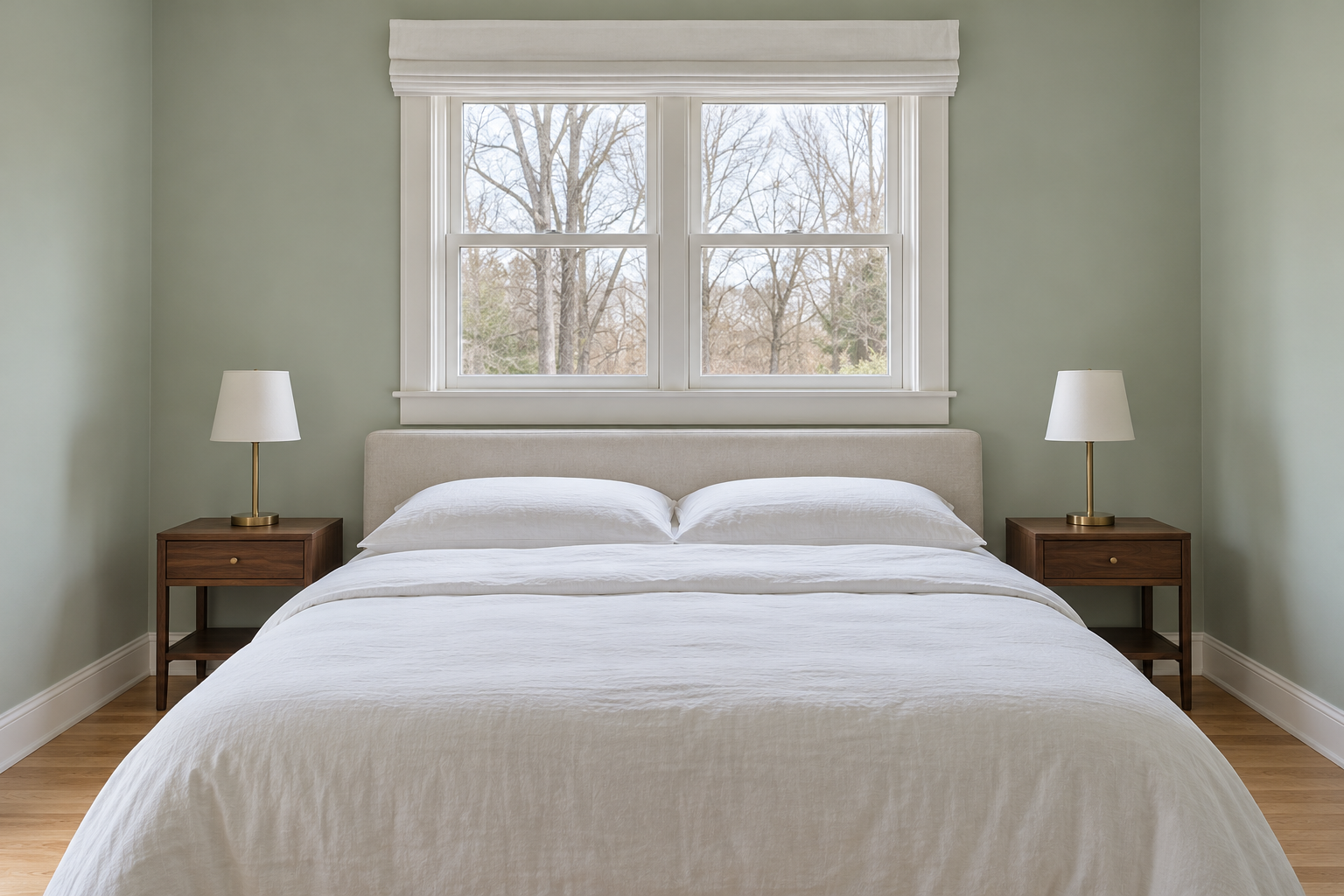
When the bed has to go under a window, keep the top of the headboard below the windowsill, with a few inches of wall between them. A headboard that reaches into the window blocks part of it, and from outside it shows as the back of a panel in the glass. Measure from the floor to the sill, subtract 2 or 3 inches, and that is the highest the headboard’s top can go. Sills vary a lot, so do the arithmetic before shopping: a sill 40 inches from the floor over a mattress top at 25 leaves room for a headboard about 12 inches above the mattress, and a lower sill leaves less.
That is lower than the leaning height in the section above, which is the tradeoff of the position. Pillows propped against a low headboard and the wall above it make up some of the difference. The other choice is to move the bed so it isn’t under the window, and keep the tall headboard.
Leave Room for Lights and Art Above It
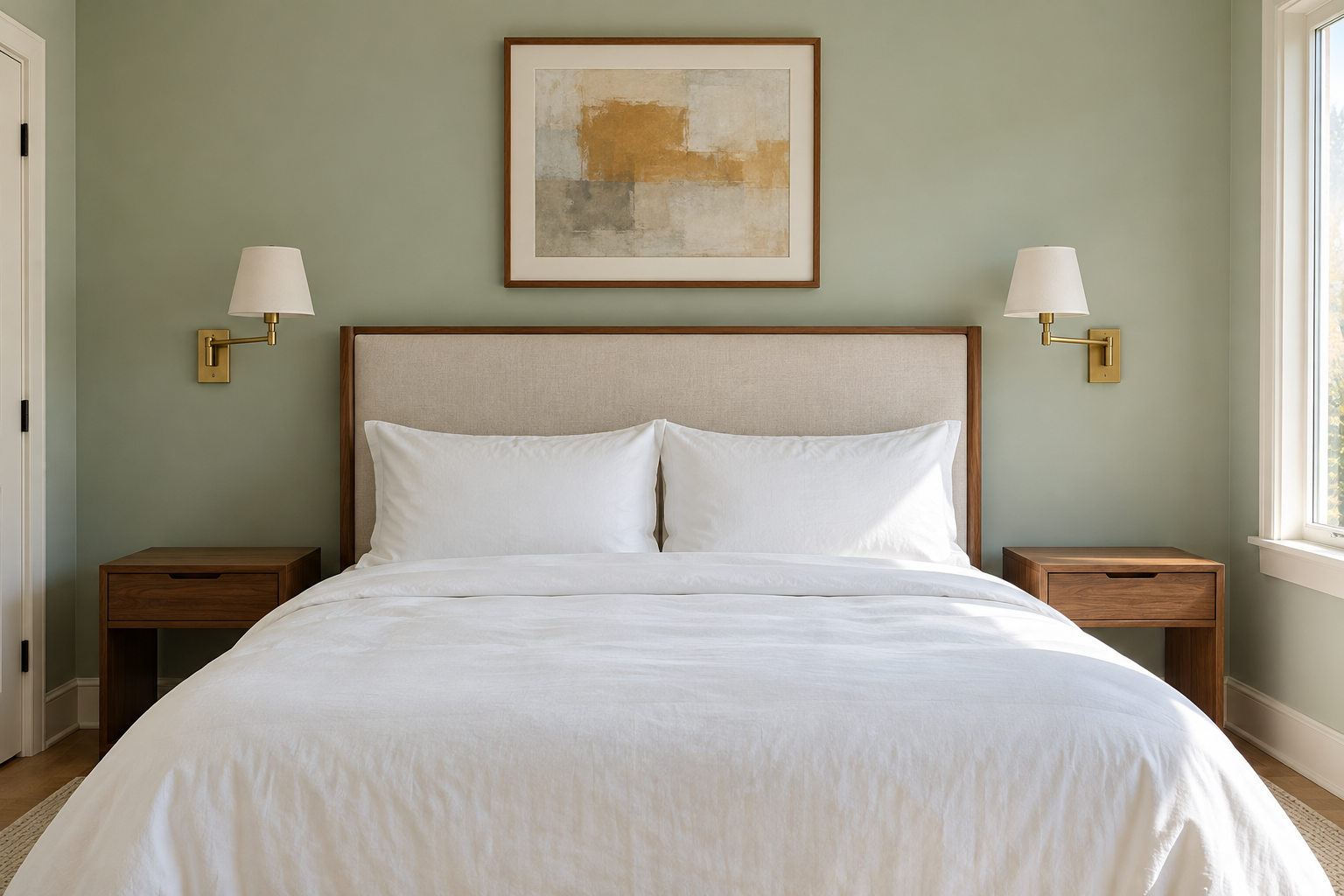
Reading lights beside a bed usually go with the bottom of the shade 30 to 36 inches above the mattress, which is roughly 55 to 62 inches from the floor on an ordinary bed. That is just above the top of most headboards. Mounting the lights on the wall beside the headboard, rather than above it, keeps the headboard from crowding them, and the arm or shade then sits beside your head when you sit up.
A tall headboard reaching 60 inches or more from the floor will meet the lights. With one that tall, choose wall lights on arms that can reach past its edge, or lamps on the nightstands.
A picture above a headboard follows the same gap as art above a sofa, about 6 to 8 inches from the top of the headboard to the bottom of the frame. On a 52 inch headboard that puts the bottom of the frame at 58 to 60 inches. Measure from the headboard rather than the floor, since moving the bed or changing the headboard moves the right height for the art.