Art hung too high above a sofa is one of the most common, most fixable mistakes in a living room. It happens for an understandable reason: eye level for someone standing is higher than eye level for someone sitting on the sofa the art is meant to relate to. The gap between the sofa and the art is a small detail. But it’s the one that decides whether the piece reads as connected to the furniture below it, or like it drifted up the wall on its own.
The Center-Height Rule Most Rooms Should Follow
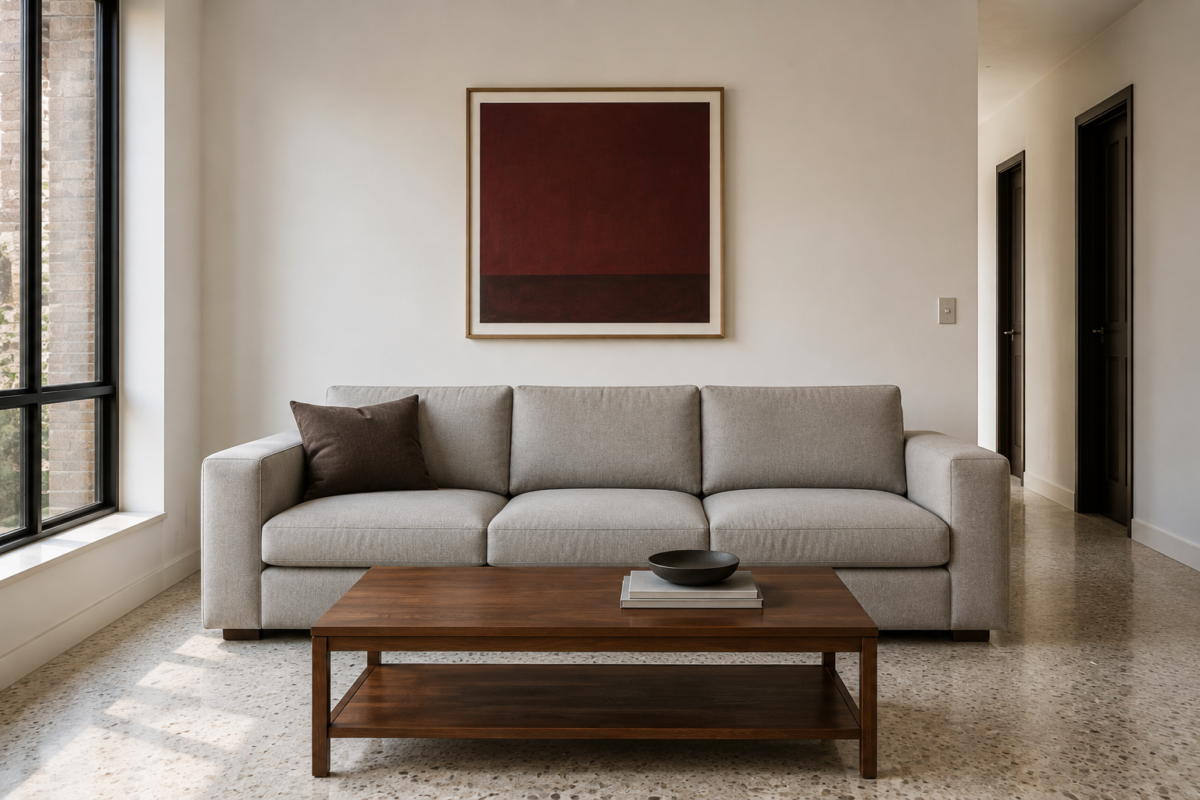
The most reliable standard hangs a piece so its center point lands 57 to 60 inches from the floor, a height that works for a standing viewer’s eye level in most rooms. Above a sofa specifically, an equally useful check is the gap itself. Six to 8 inches of space between the top of the sofa’s back cushions and the bottom edge of the frame keeps the art visually connected to the furniture, instead of floating separately above it. A lower-profile sofa, with a back around 28 to 30 inches, can support a slightly larger gap, up to 10 to 14 inches, while still reading as connected.
Why Too High Is the Most Common Mistake
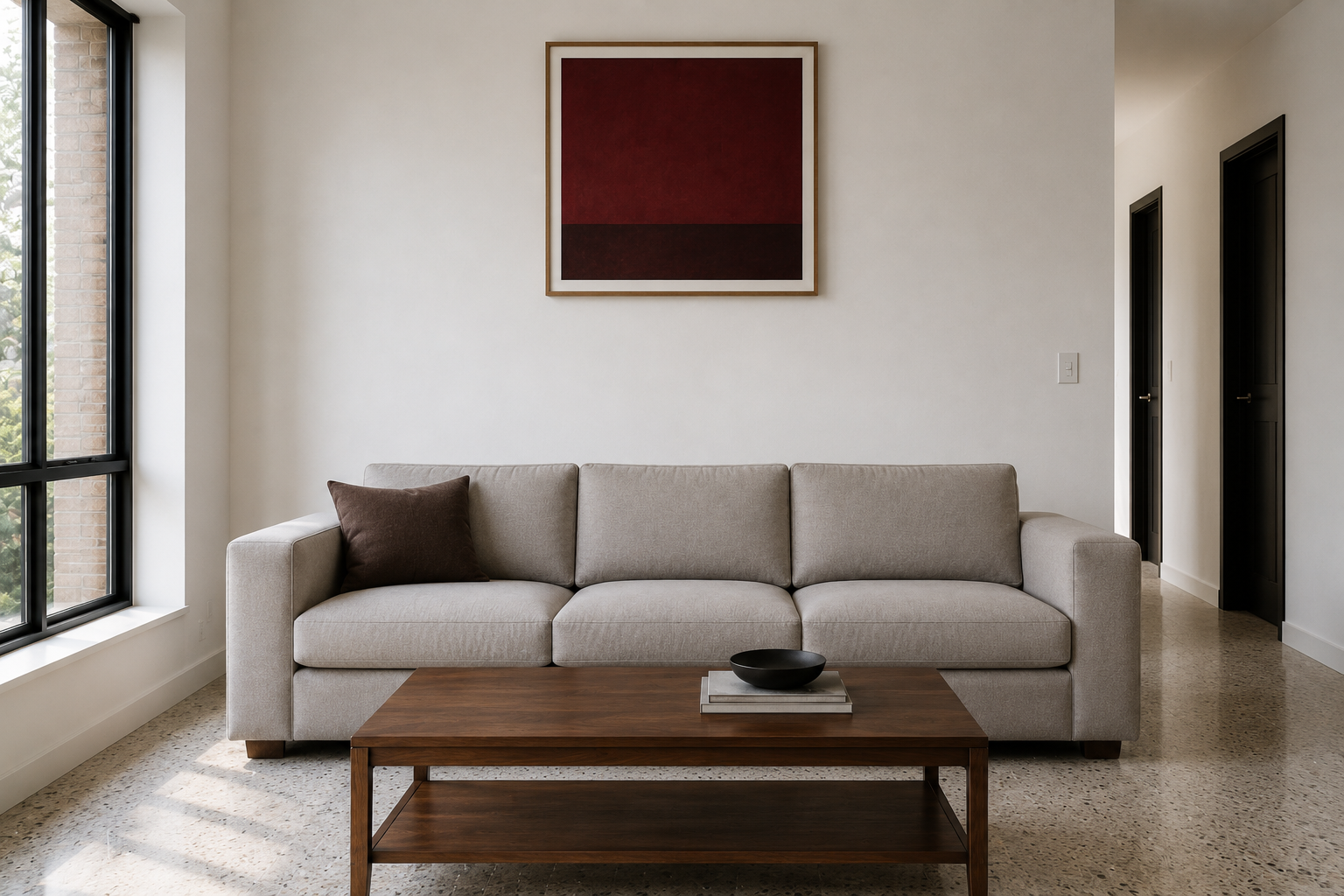
Art hung using the standing-eye-level rule alone, without checking the gap above the sofa, tends to end up too high in a room where people mostly experience the space while seated. The piece stops relating to the sofa entirely once the gap grows past roughly a foot. The wall above starts to read as two separate zones, furniture below and art above, rather than one composed wall. This is the single most common wall-art mistake in a living room. It’s also the easiest to fix, since it only requires rehanging the piece a few inches lower.
Sizing the Piece to the Furniture Below It
Width matters as much as height for the piece to read as intentional. A single work of art, or a gallery grouping treated as one visual block, should span roughly two-thirds to three-quarters of the sofa’s width for the most balanced look. Anything narrower starts to look small and adrift above a wide piece of furniture. Anything wider than the sofa itself can work too, but only as a deliberate choice, not an accident of buying whatever size happened to be available.
The two numbers worth checking before hanging anything above a sofa: a 6-to-8-inch gap between the sofa back and the art, and a width around two-thirds to three-quarters of the sofa’s own width. Both matter more than the standing-eye-level rule alone, since a living room is mostly experienced from a seated position, and the art should relate to that view first.
Frequently Asked Questions
Does the rule change for a gallery wall?
The center-height rule still applies to the grouping as a whole, treating the full arrangement as one visual block rather than each piece individually. The 6-to-8-inch gap above the sofa should measure to the bottom edge of the lowest pieces in the grouping, not to an average across the arrangement.
What if my ceiling is unusually tall?
A tall ceiling can support hanging art higher, 12 to 18 inches above the sofa instead of the standard 6 to 8. Or choose a single tall vertical piece that climbs further up the wall. The goal in a tall room is filling the extra height above the sofa, not leaving it bare, which the standard gap alone wouldn’t address.