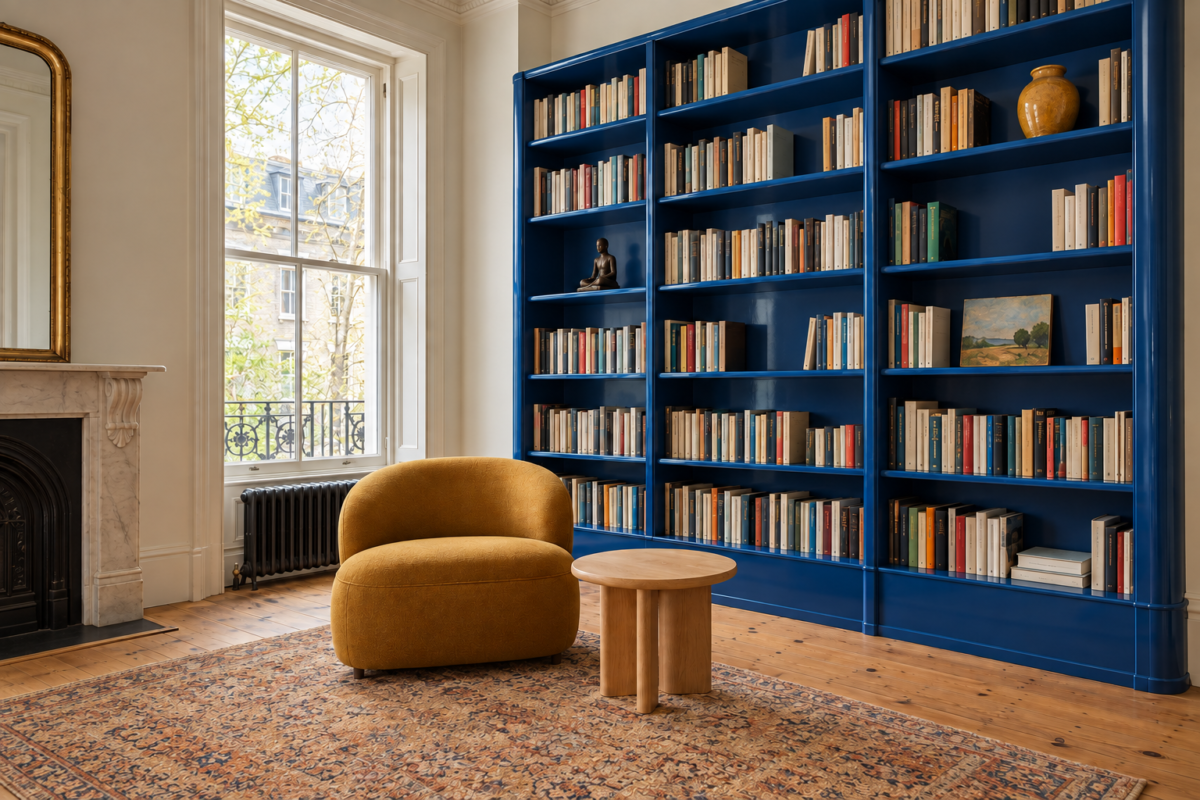
Photographs of styled bookshelves often have very few books in them. A handful of spines lie sideways under a vase, a bowl sits alone in the middle of a shelf, and the rest is objects spaced out like a shop display. That looks tidy in a photograph and odd in a house where people own books and read them, because it hides the thing a bookshelf is for.
It works better the other way around. Start with the books, get them into rows and stacks that suit the shelves, and then add a few objects among them. The sections below go in that order. They start with clearing the shelves and arranging the books, move on to objects, light, and color, and apply to a single bookcase or a whole wall of built-ins.
Take Everything Off First
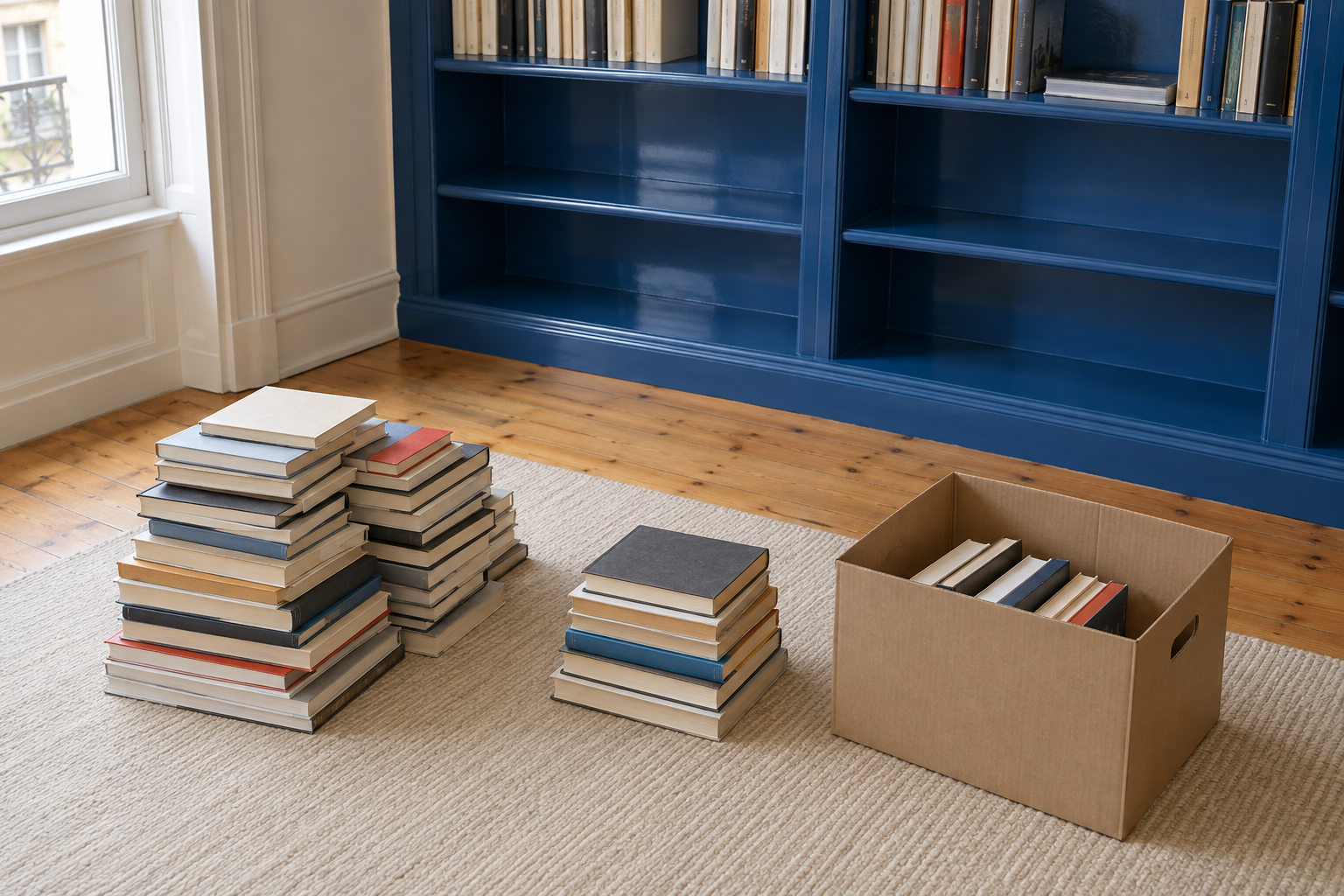
Styling around what’s already there only moves the clutter from one shelf to another. Empty the whole bookcase and sort the books into three piles: keep on show, keep somewhere else, and give away. The books you reread and the reference books you reach for stay. Old magazines, manuals, and second copies can go to a cupboard or a donation box. The same pile-by-pile approach used for decluttering a whole room works here.
While the shelves are bare, look along each one for a dip in the middle. Long shelves bend under rows of hardcovers, and a shelf that already sags will sag further once the books go back. Move the heaviest books to the shortest spans, or add a support under the middle.
Mix Upright Rows With Short Stacks
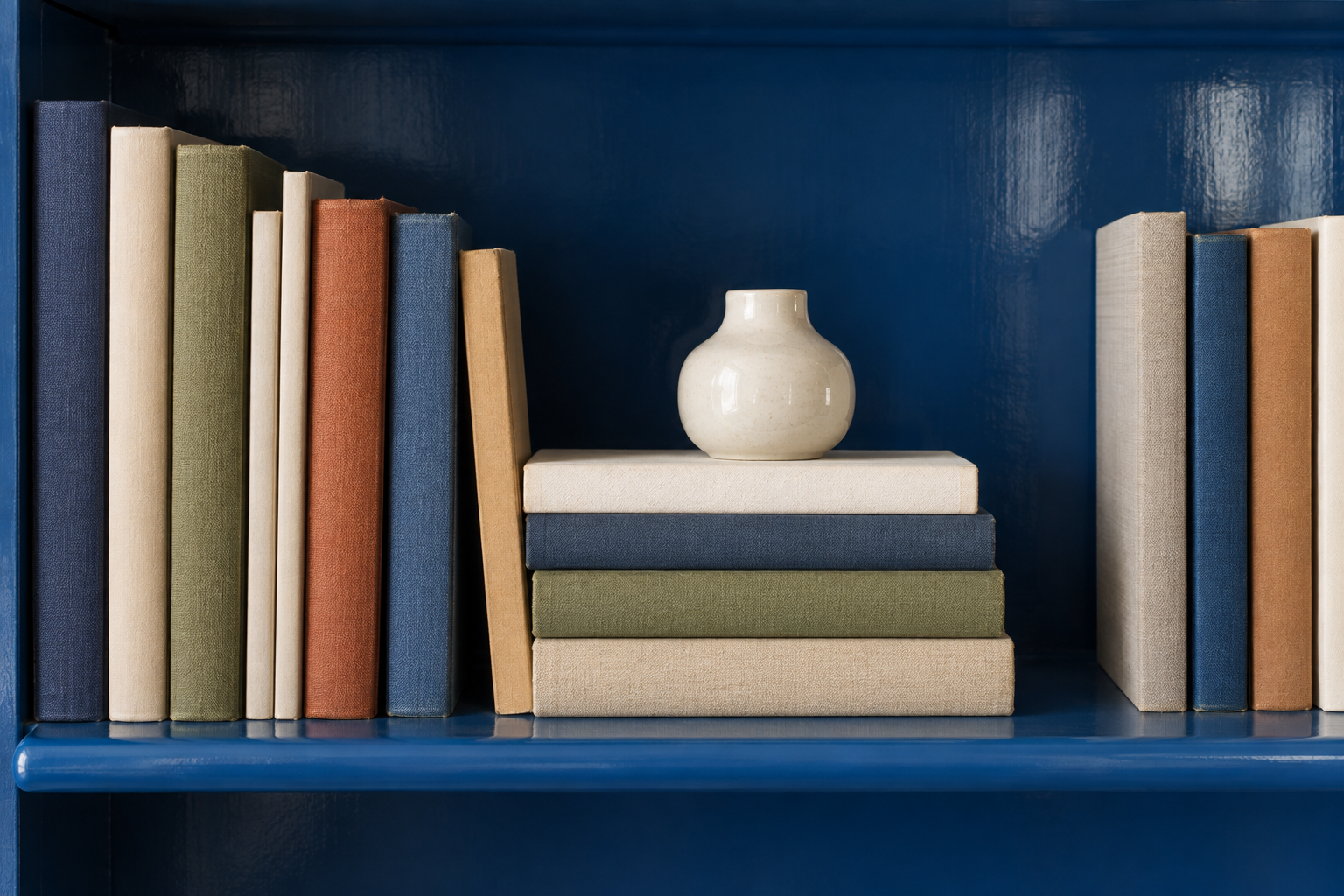
A shelf where every book stands in one long row looks like a single block of spines. Break it up by laying some books flat in short stacks of three to five. A stack works as a bookend for the upright row leaning against it, and its top becomes a small platform for an object. Vary where the stacks sit from shelf to shelf, at the left end of one and the right end of the next, so the rows don’t line up in a grid down the case.
Large art and photography books suit the stacks, since many won’t stand upright on an ordinary shelf anyway. Stacks look settled on the lower shelves, where their bulk sits close to the floor, while upright rows keep the upper shelves lighter.
Order the Books So You Can Find Them
Group books by subject or author first, so whoever is looking can find what they’re after. Within each group, stand them roughly by height, with the tallest at the outer end. A row that steps down gradually looks calmer than one that jumps from a tall hardcover to a paperback and back again.
Sorting by spine color makes a striking pattern, and it suits a shelf of books that are looked at more than read. On a working bookcase, it makes every book harder to find. Turning the spines to face the wall hides the titles and the color together, and leaves a wall of pale page edges with nothing to read.
Leave Room on Every Shelf
A few inches of open shelf at the end of a row, or a gap between two groups, lets the eye separate one group from the next. Without any gaps, even well-ordered books merge into one wall of spines. The gaps don’t need to be equal or regular. Some shelves can be nearly full while others hold a short row and an object.
How much space to leave depends on the room. A library wall packed floor to ceiling is a legitimate look in its own right, and it suits a room built around reading. Gaps matter more on a single bookcase in a living room, where the shelves also do some of the room’s decorating.
Add Objects Between the Books
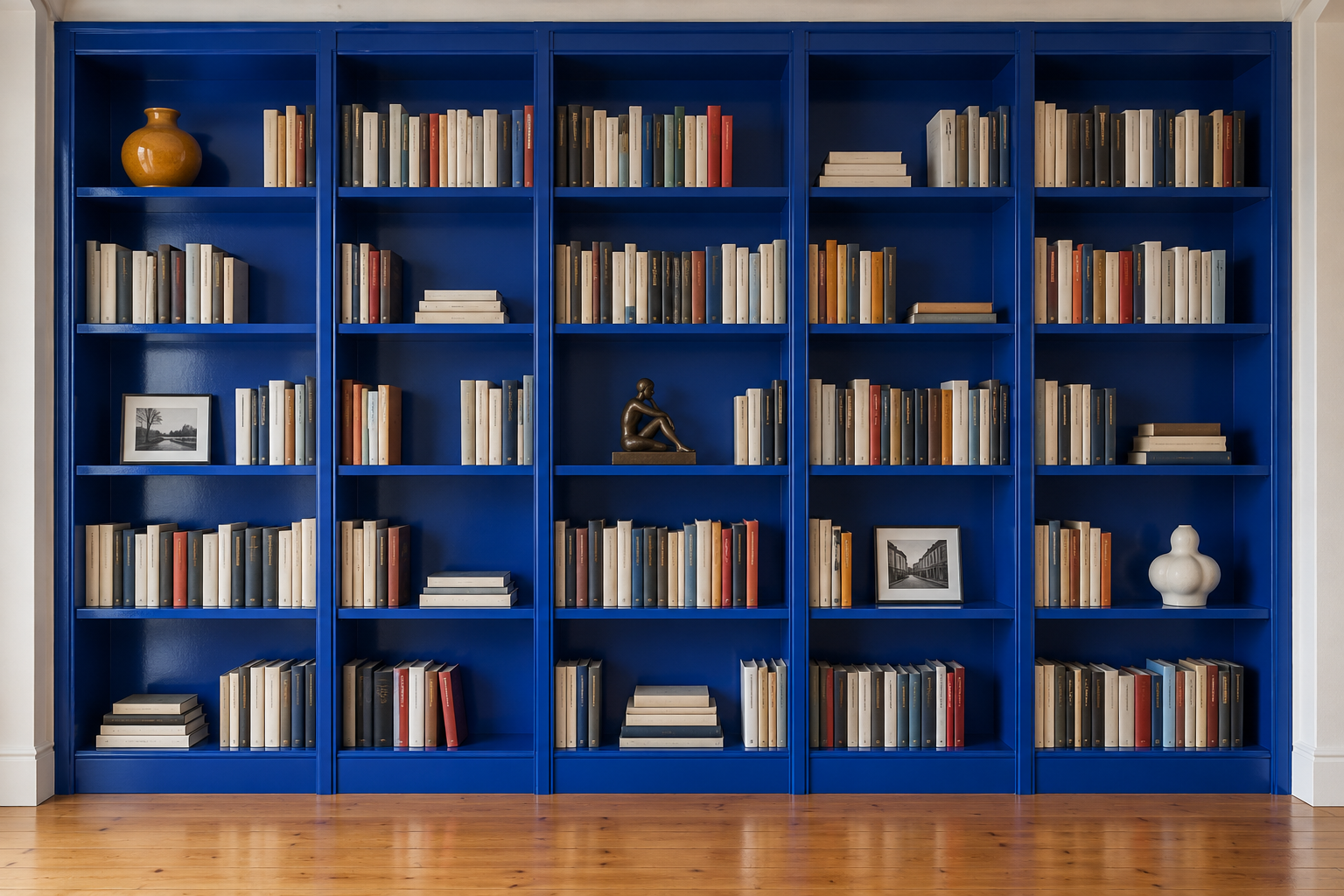
Choose a few objects with some weight and height, such as a glazed ceramic vessel, a small sculpture, a framed photograph, or a small painting leaned against the back of a shelf. Objects of that size hold their own beside a row of books. Small trinkets get lost among the spines, and scattered along every shelf they look like clutter.
Place them on a loose diagonal, with one on a high shelf at the left, one lower in the middle, and one near the bottom at the right, so the eye moves across the whole bookcase instead of stopping at one crowded shelf. Repeating one material, such as two or three pieces of glazed ceramic, links the shelves without every object matching.
Light the Shelves
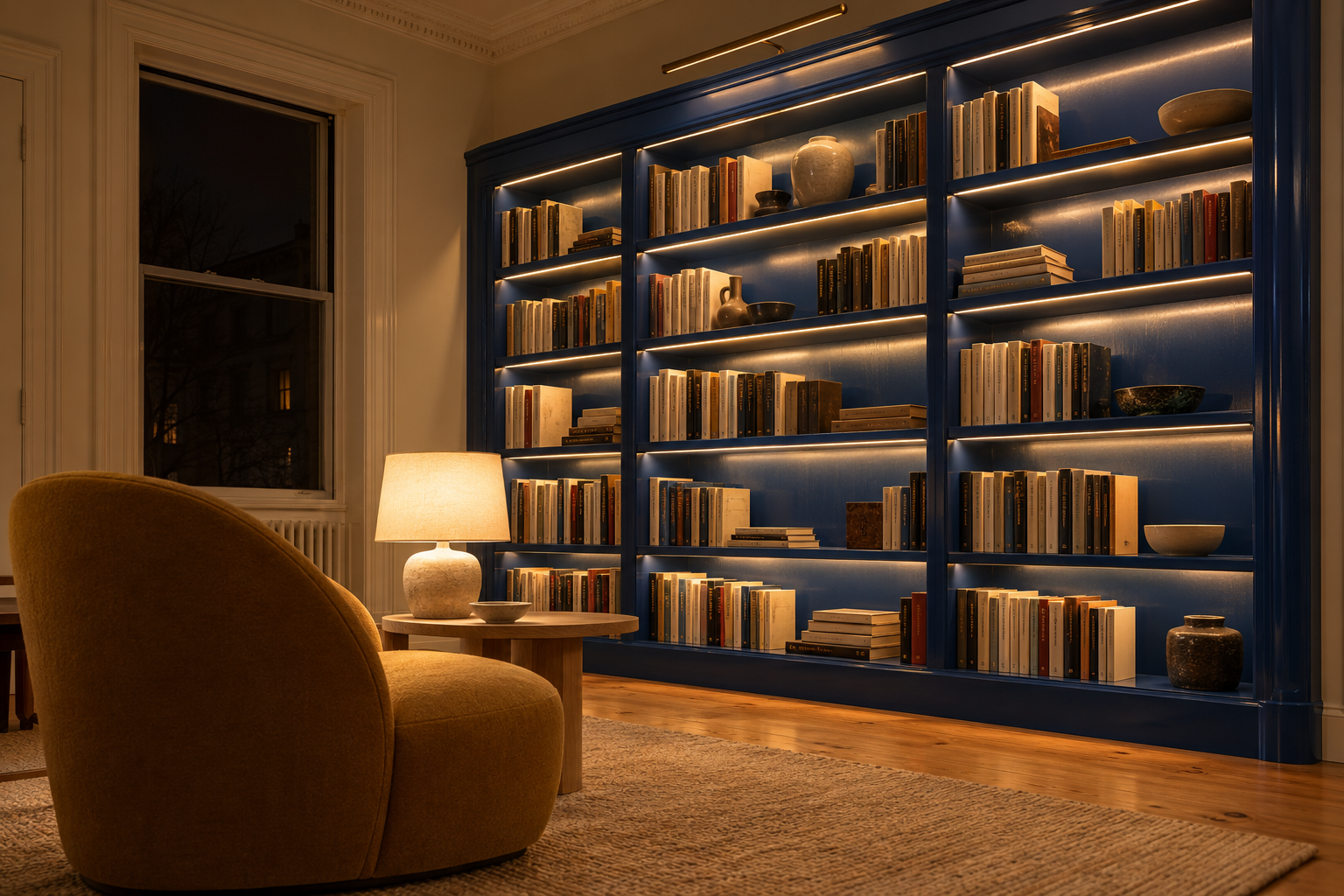
At night, a bookcase without its own light turns into a dark block against the wall. A picture light mounted above the case, LED strips under the front edge of each shelf, or a small lamp standing on one shelf brings the spines and objects back. Warm white light around 2700K suits the paper and cloth of book spines and matches the room’s lamps. This is accent light, the kind a layered lighting plan uses to pick out what’s worth looking at.
Tuck strips toward the front edge of each shelf and aim them back, so the light falls on the spines and not into the eyes of someone sitting across the room.
Consider Color on the Back
Painting the back panel of a bookcase, or the wall behind open shelves, changes how everything on it reads. A dark back makes the gaps between groups recede, so books and objects stand forward. A pale one sets objects in silhouette, which suits sculptural pieces with a strong outline. A strong color, such as cobalt or a deep green, makes the bookcase a feature of the room even when its contents are ordinary.
Test the color in the shadow of the shelves, not on an open wall. Behind a row of books, most colors look a shade or two darker than they do on the chip.
Frequently Asked Questions
How do you style a bookshelf without many books?
Give the books one or two shelves and group them there, instead of spreading a few across every shelf. Use the other shelves for fewer, larger objects, lidded boxes for anything that needs hiding, and a small framed picture leaned against the back. Leave more open space than a full bookcase would have, so the shelves look arranged and not half empty.
What do you do with very deep shelves?
Deep shelves can take a double row. Set the back row on a simple riser, such as a length of wood, so its spines show above the front row, and keep the books you reach for most at the front. The extra depth also suits objects standing behind a low stack, or lidded boxes that stop the space behind the books filling with loose things.