Curtains and blinds solve the same basic problem: covering a window. But they solve it differently enough that picking one over the other changes how a room actually functions, not just how it looks. Curtains bring softness, height, and better light-blocking. Blinds bring a cleaner line, easier maintenance, and a better fit in a tight or moisture-prone space. Neither is the universally right answer. The room usually decides which one earns its place on a specific window.
Where Curtains Win
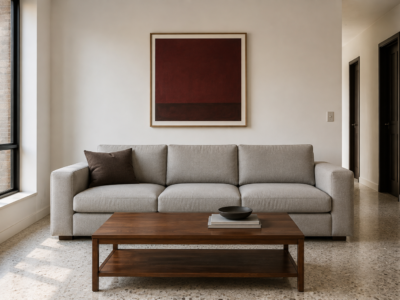
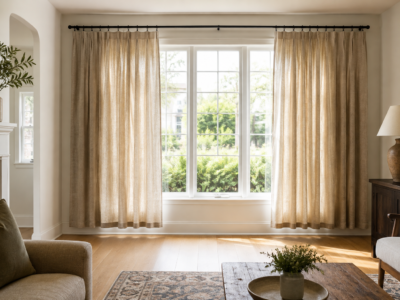
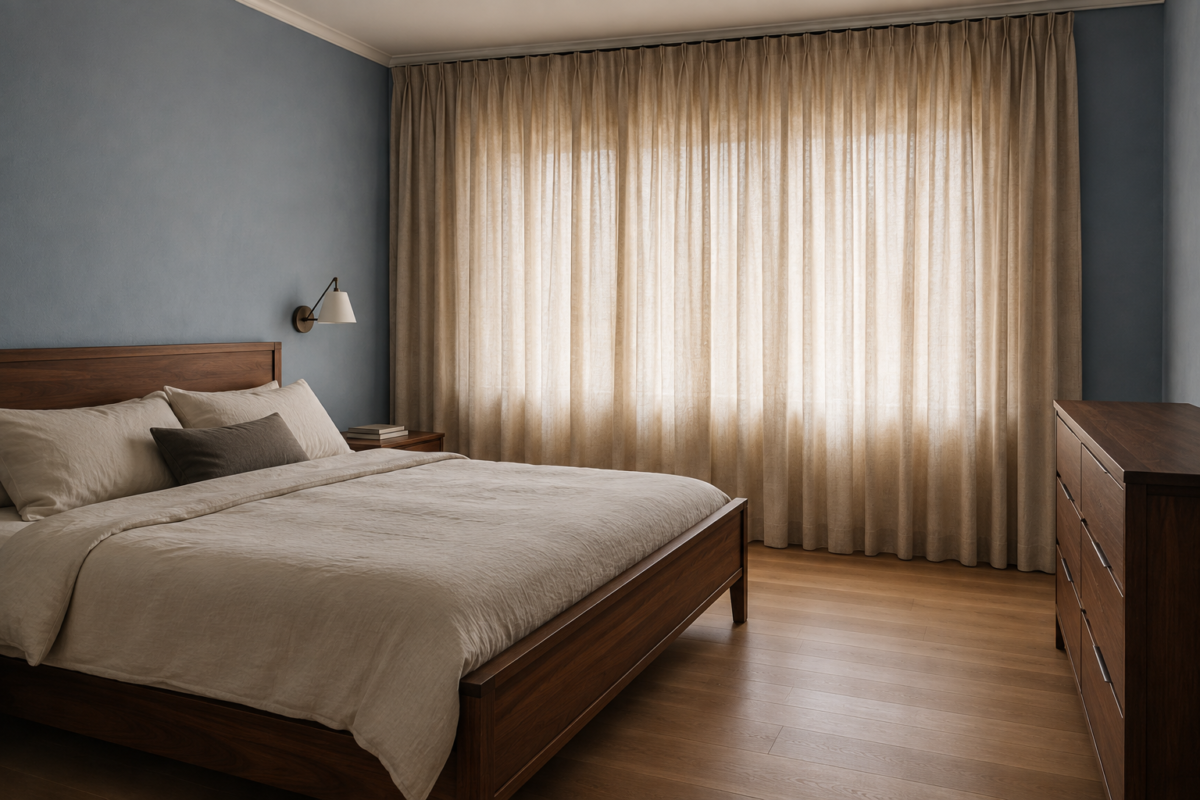
A bedroom is the clearest case for curtains over blinds. Real privacy and genuine room-darkening depend on fabric that blocks light at the edges, something blinds alone rarely do as completely. Blackout-lined curtains hung close to the ceiling, ideally into a pelmet or recess that stops light leaking in from above, deliver both the privacy and the darkness a bedroom needs for sleeping. Most living rooms lean the same direction. Floor-to-ceiling curtain panels add warmth and make a room feel taller and more finished than a bare window or blinds alone typically achieve.
Where Blinds Win
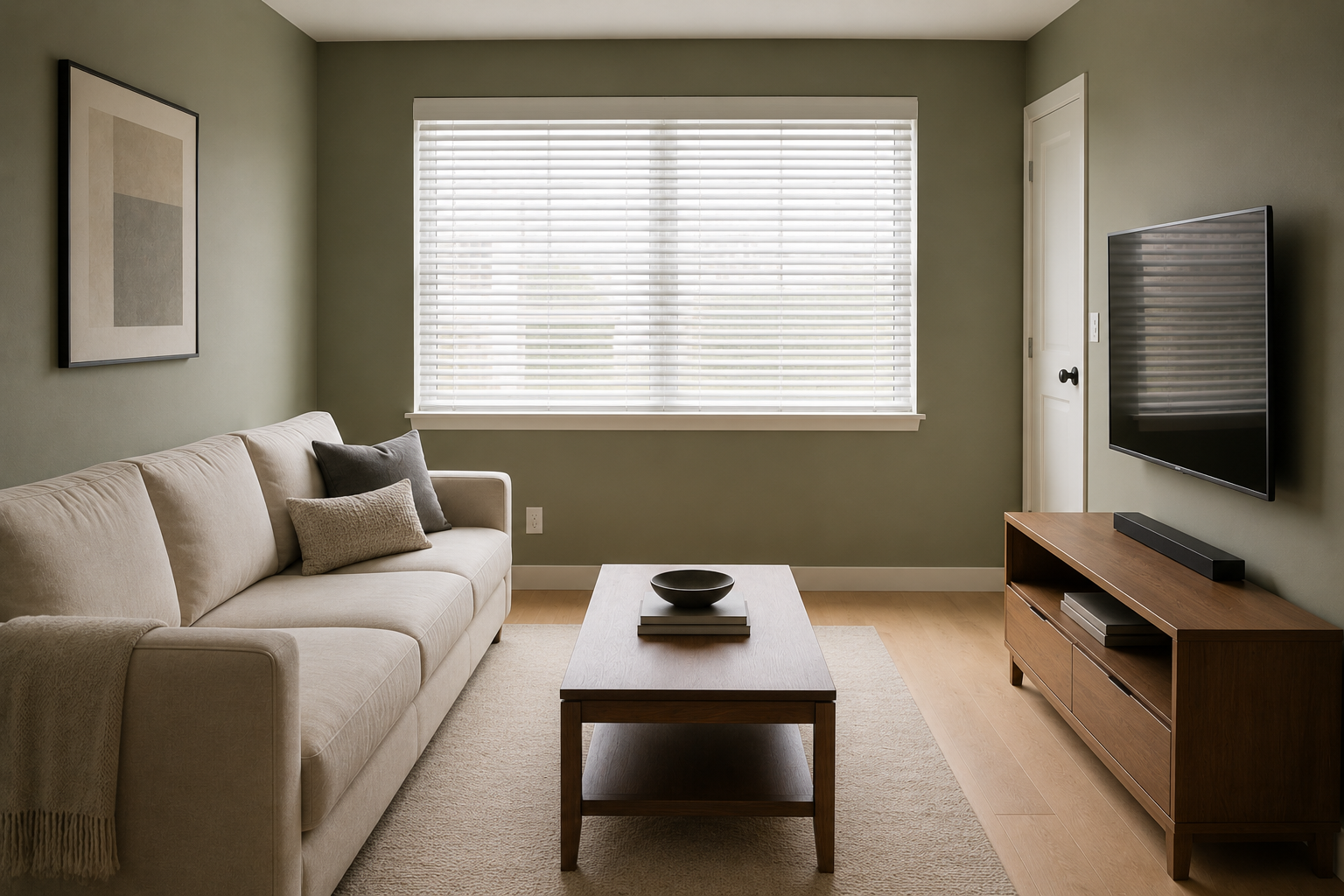
A small room is the strongest case for blinds instead. Their flat, minimal profile doesn’t take up the same visual or physical space that a curtain panel does when it’s pushed to the side of a window. Bathrooms and kitchens favor blinds for a more practical reason: moisture resistance and easier cleaning matter more there than the softness curtains add, and fabric near a shower or a stovetop is its own maintenance problem. A room that wants a clean, modern, low-maintenance look generally reads better with blinds, regardless of size.
When to Use Both Together
Layering a blackout roller shade underneath curtain panels solves the tension between the two options instead of forcing a choice. The shade handles genuine light control and privacy, closed fully when needed. The curtain panels stay open along the sides for softness and style during the day, adding warmth a bare shade alone doesn’t provide. This combination costs more than choosing one option. But it’s the way to get real blackout performance in a room that also wants the finished look curtains bring.
The decision comes down to what a specific room actually needs more of. Privacy and warmth point toward curtains. A clean, minimal look and easier maintenance point toward blinds. Bedrooms and most living rooms tend to favor curtains. Small rooms, bathrooms, and kitchens tend to favor blinds. A room that genuinely needs both can layer a shade under curtain panels, rather than treating it as an either-or choice.
Frequently Asked Questions
Do blinds work in a bedroom?
Yes, especially in a smaller bedroom or one with a minimal aesthetic. They won’t block light as completely at the edges as a well-fitted blackout curtain, though. A roller or cellular shade mounted inside the window frame comes closest to blinds’ version of genuine room-darkening. But a true blackout curtain still outperforms it for a bedroom that needs full darkness.
What about privacy without giving up light?
Sheer curtains or light-filtering blinds, cellular shades in particular, let daylight through while still obscuring a clear view into the room from outside. This works well for a room that wants natural light during the day without feeling exposed. It’s a different goal from the full blackout and privacy a bedroom typically needs at night.