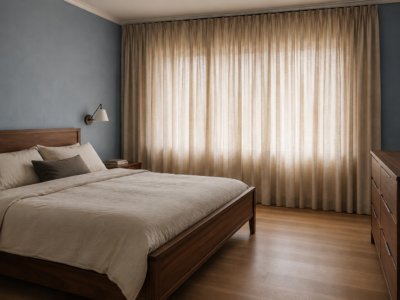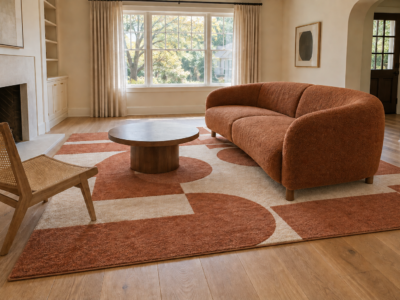
A curtain that hangs a few inches short of the floor is one of the most common, most fixable mistakes in a room, and it usually happens by accident: a rod hung slightly too low, a panel bought a size too short, a length chosen without measuring the window first. The gap between the hem and the floor is small, but it’s the single detail that decides whether a curtain reads as intentional or just slightly wrong.
There are three standard lengths worth knowing, and each one has a room type it suits best.
Float: The Safest Default for Most Rooms
A float length, where the hem hangs about half an inch above the floor, is the most practical choice for a room that gets daily use. It keeps the fabric off the floor, away from foot traffic and vacuum cleaners, while still reading as a full, deliberate length rather than a short one. This is the right default for kitchens, living rooms with kids or pets, and most bedrooms. When in doubt, float is the length least likely to look wrong.
Break: A Slightly Softer Alternative to a Hard Float
A break length lets the curtain hang just slightly longer, enough that the fabric touches the floor and creates a soft fold, similar to how a well-tailored pant leg breaks over a shoe. It’s a small step up in formality from a float without the maintenance of a true puddle. This works well in a living room or dining room that wants to feel slightly more considered without going fully formal.
Puddle: Reserved for Rooms That Won’t Take Daily Traffic

A puddle length adds one to three inches of extra fabric that pools on the floor, and it reads as the most formal, most deliberate of the three options. It also collects dust and gets walked on if it’s anywhere near a doorway or a high-traffic path, which is why it belongs in rooms that don’t see constant use: a formal living room, a primary bedroom, a dining room reserved for occasions. A puddle length in a mudroom or a kids’ playroom is a maintenance problem waiting to happen.
Measure the Actual Window, Not the Curtain Rod
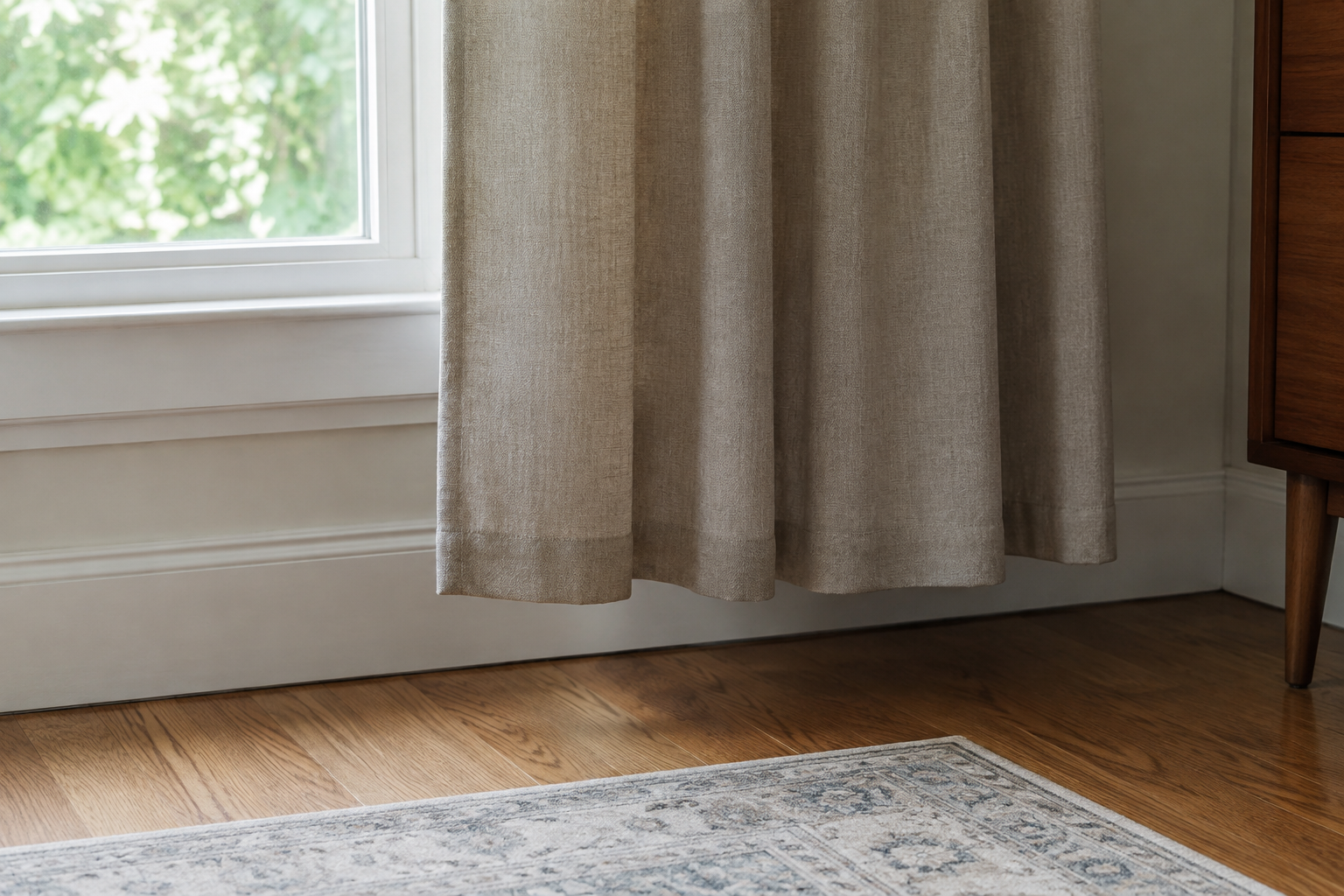
Most too-short curtain problems start with measuring from the wrong point. Measure from where the rod will sit, typically four to six inches above the window frame, down to the floor, not from the top of the window frame itself. Standard curtain lengths run 63, 84, 96, 108, and 120 inches; a window with an 8-foot ceiling usually needs at least a 96-inch panel to reach a genuine float length, and shorter stock lengths are the most common reason curtains end up hanging too high off the floor.
The three inches between a float, a break, and a puddle aren’t interchangeable, and picking the wrong one for a high-traffic room creates more upkeep than the length is worth. Measure the actual rod-to-floor distance before buying, and default to float unless a specific room genuinely calls for more.
Frequently Asked Questions
What are the standard curtain lengths sold in stores?
Most retailers carry panels in 63, 84, 96, 108, and 120 inches. Standard 8-foot ceilings with a rod mounted just above the window frame usually need at least 96 inches to reach a floor-length float; taller ceilings or a rod mounted higher on the wall often require 108 or 120 inches.
Do kitchens and bathrooms need floor-length curtains at all?
Not necessarily. Shorter, practical lengths, sill-length or just below the sill, work better in kitchens and bathrooms, where floor-length fabric is more likely to end up near water, heat, or foot traffic. Floor-length is really a living room and bedroom convention, not a universal rule.