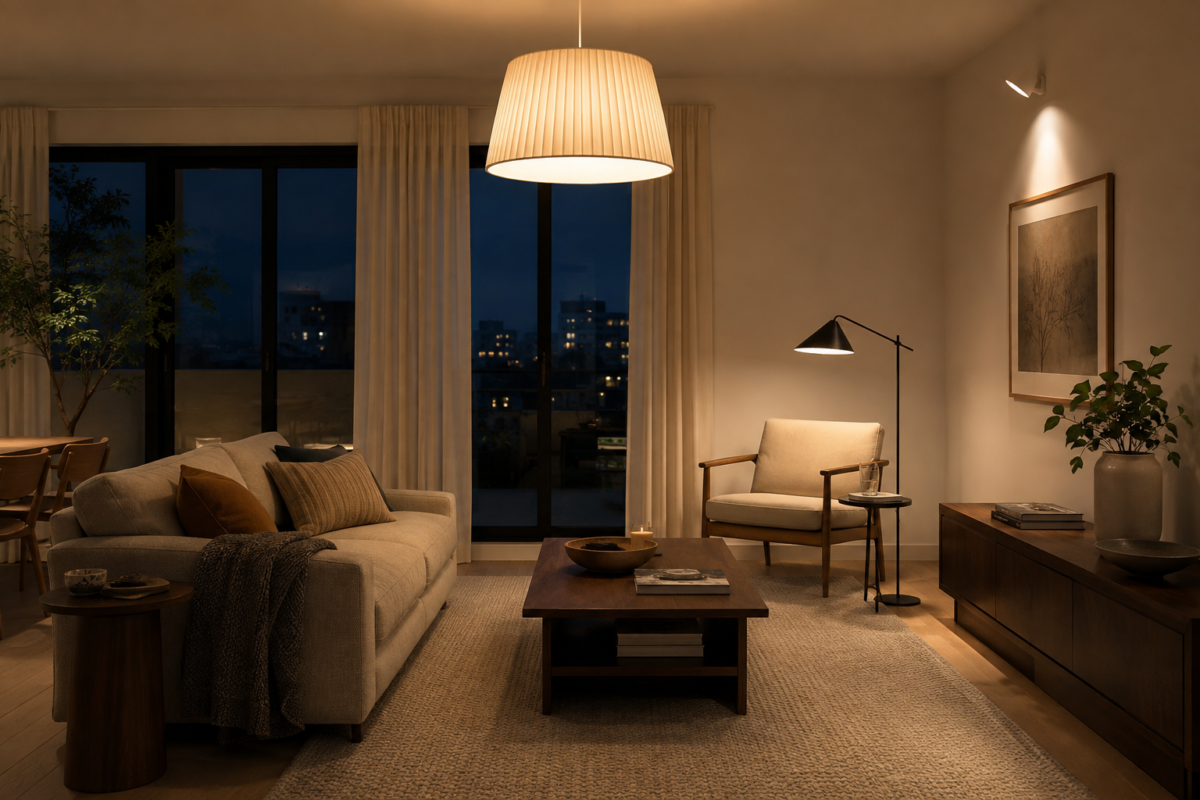
Most living rooms have one light source doing all the work: a single overhead fixture, or one lamp in the corner turned on out of habit. That’s usually why a room feels flat after dark even when the furniture and color are right. A room lit by one source, however bright, tends to look flat and slightly institutional once the sun goes down, no matter how well everything else in it is chosen.
Layering fixes this, but layering doesn’t mean buying five new lamps and hoping. It means giving the room three distinct kinds of light, ambient, task, and accent, each doing a specific job, and knowing when to stop adding sources before the room starts to look like a showroom display. This is less about accumulating fixtures and more about understanding what each one is for.
Start With Ambient Light, But Don’t Rely on It Alone
Ambient light is whatever fills the room generally, usually an overhead fixture, a flush mount, or a large pendant. It needs to be diffused rather than direct, using a shade or a frosted glass that spreads light across the ceiling and walls rather than throwing one hard pool of brightness onto the floor below it. A single ambient fixture is enough to make a room usable at night, but on its own it tends to flatten everything under it, since one source directly overhead removes most of the natural shadow that gives a room’s furniture and textures depth.
Add Task Light Where People Actually Read or Work
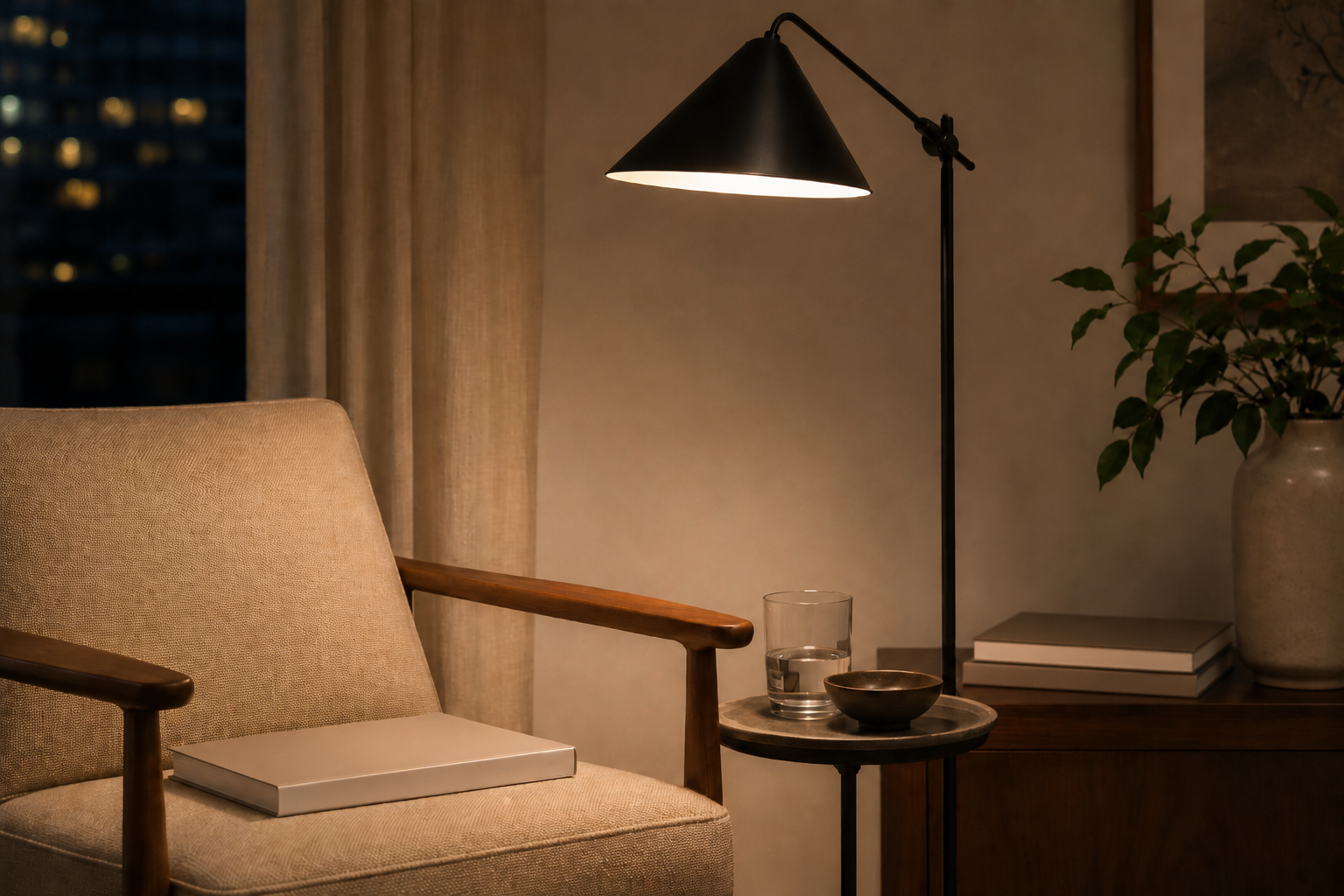
Task light is the light aimed at a specific activity, such as a table lamp beside the spot where someone reads, a floor lamp next to a favorite chair, a small light near a desk tucked into a living room corner. The test is simple: if a lamp sits somewhere no one sits to read or work, it’s decorative, not task lighting, and doesn’t count toward this layer. A room can have plenty of lamps and still lack real task lighting if none of them sit where people use the room.
Use Accent Light to Point at What’s Worth Looking At
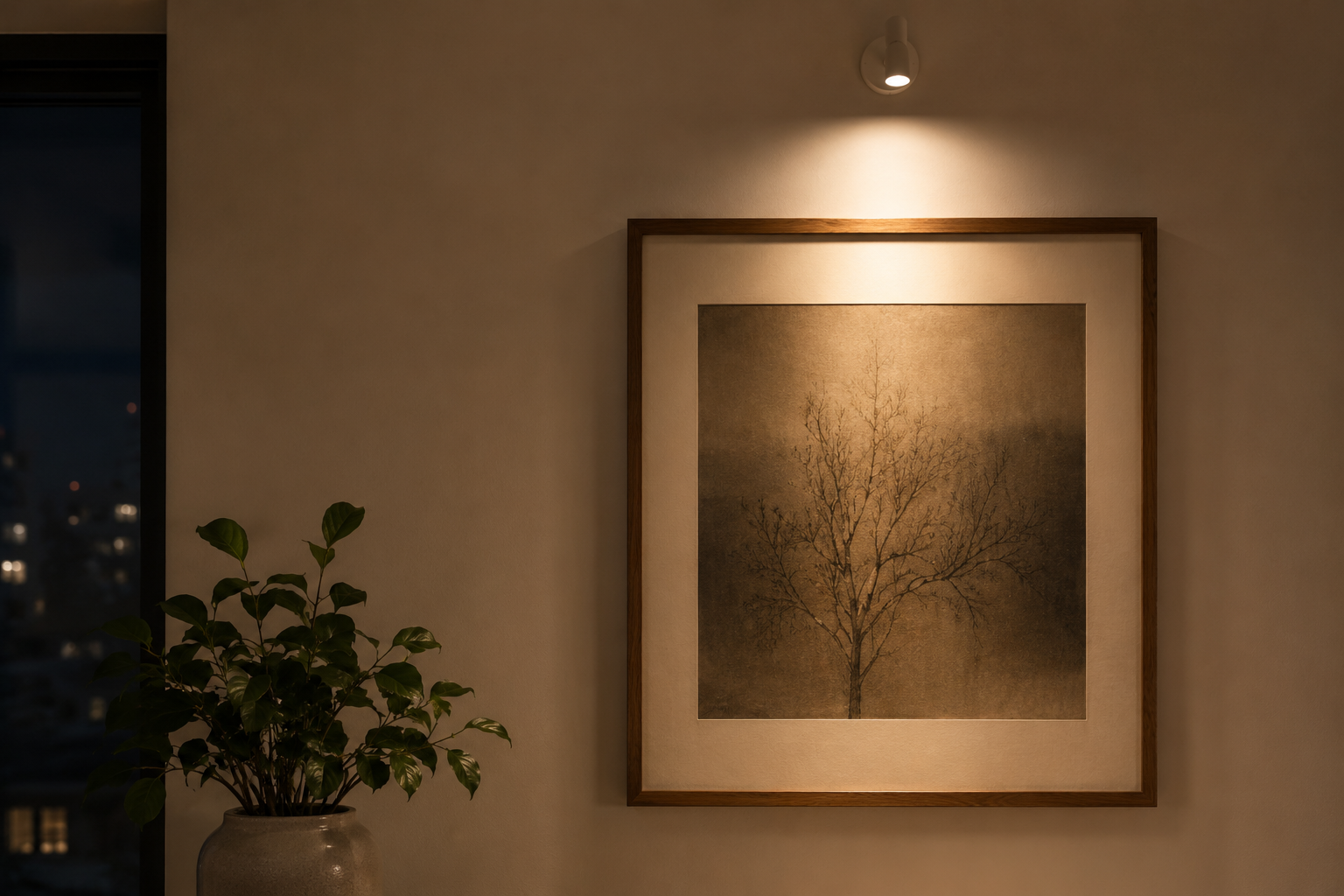
Accent light is the layer most rooms skip entirely, and it’s usually the one that makes the biggest visual difference. A small picture light over art, an uplight behind a plant, or a spotlight aimed at a textured wall pulls the eye toward something specific instead of letting ambient light spread evenly and go unnoticed. One or two accent sources are usually enough in a normal-sized living room; more than that starts to compete with itself, and nothing ends up looking more important than anything else.
Choose One Warm Bulb Temperature Across the Room
Mixing bulb temperatures, a warm 2700K lamp next to a cooler 4000K overhead fixture, is one of the fastest ways to make a layered room look accidental rather than considered. A living room almost always reads warmer and more comfortable around 2700K to 3000K, close to the color of an incandescent bulb, across every fixture in the room. It’s a small detail that’s easy to overlook when buying bulbs separately over time, but it’s usually the actual reason a “layered” room still looks slightly off.
Put the Main Fixture on a Dimmer
A room lit for reading at 7pm and a room set for a quiet evening at 10pm shouldn’t need the same brightness, and a dimmer on the main ambient fixture is the cheapest way to let one room do both. Task and accent lamps are usually already lower-wattage and don’t need the same adjustment, but the main overhead or pendant fixture is almost always worth wiring to a dimmer if the room doesn’t already have one. It’s a small update with a large effect on how the room feels at different times of day.
Know When to Stop Adding Sources
A living room rarely needs more than one ambient source, two to three task sources, and one or two accent sources to feel fully layered. Adding a fourth or fifth lamp past that point usually doesn’t add warmth, it adds clutter and cord management problems. If a room still feels flat after hitting those numbers, the issue is more likely bulb temperature or fixture placement than a genuine shortage of light sources.
Layered lighting isn’t about the number of fixtures in a room, it’s about whether each one is doing a distinct job. A room with three well-placed, consistently warm sources usually looks more finished than one with six mismatched lamps competing for attention.
Frequently Asked Questions
Do I need a separate lamp for every layer?
Not necessarily. A single well-placed floor lamp with a shade that diffuses light upward and out can function as both ambient and task light in a smaller room, and a dimmable overhead fixture can sometimes cover ambient and part of accent duty on its own. The three-layer framework describes the jobs that need doing, not a minimum fixture count. A smaller room can genuinely layer light with three or four total fixtures.
What if my living room only has one overhead fixture and no other wiring?
Plug-in lamps handle task and accent duty without any electrical work: a floor lamp for task light, a smaller accent lamp with a directional shade aimed at art or a plant for accent light. The overhead fixture stays as ambient light. It’s a common starting point, and it’s usually possible to add real layering to it without touching the wiring at all.