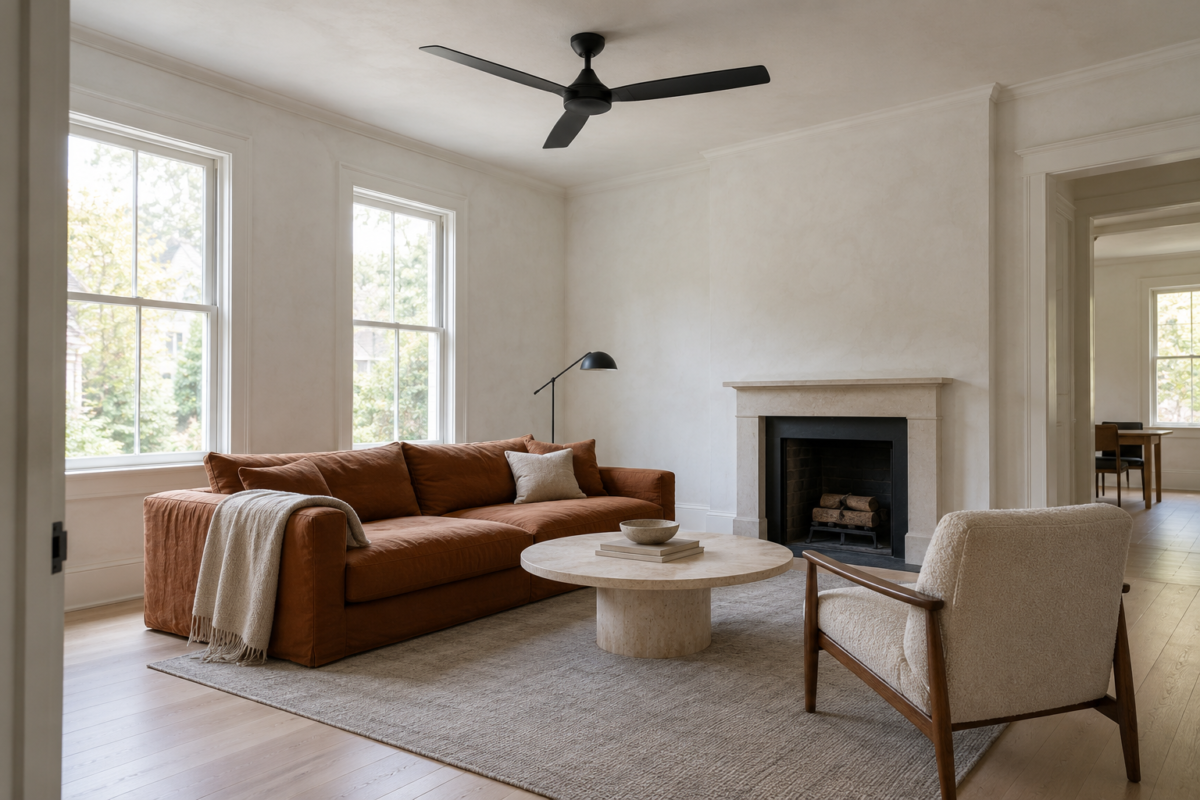
A ceiling fan is sized by two measurements that have nothing to do with each other. The floor area of the room decides the blade span. The height of the ceiling decides how far down the fan hangs. A bedroom of 12 by 15 feet takes a fan with a span of 44 to 50 inches, and under an 8 foot ceiling that fan sits tight against the ceiling, where under a 12 foot one it would hang on a rod 3 feet long.
One number is fixed. Fan makers require at least 7 feet between the floor and the lowest edge of the blades. The other figures here are typical recommendations, and the fan’s own installation manual overrides them where it differs.
Blade Span From the Floor Area
Multiply the room’s length by its width in feet to get the floor area in square feet, and find the span in the table.
| Floor area | Typical blade span | Example room |
|---|---|---|
| Up to 75 sq ft | 29 to 36 inches | 7 by 10 feet |
| 76 to 144 sq ft | 36 to 42 inches | 10 by 12 feet |
| 145 to 225 sq ft | 44 to 50 inches | 12 by 15 feet |
| 226 to 400 sq ft | 50 to 54 inches | 16 by 20 feet |
| Over 400 sq ft | 56 inches and up, or two fans | 20 by 24 feet |
Makers’ charts differ by a few inches at the edges of each band, so a room that sits on a boundary can go either way. A fan too small for the room moves air mostly in a small circle under itself. One too large for a small room crowds the ceiling and can be hard to place far enough from the walls.
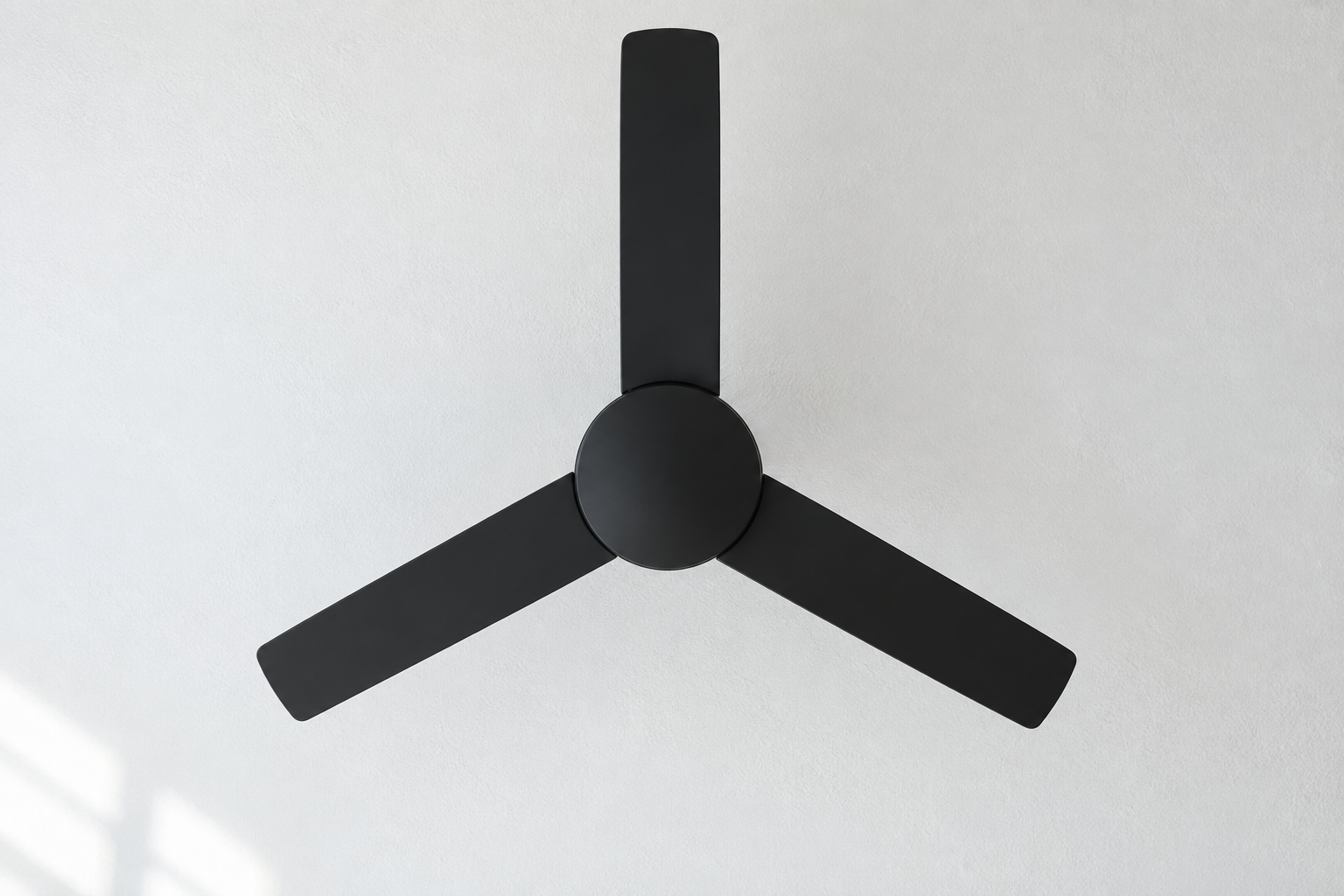
Blade span is the diameter of the circle the blade tips sweep, measured through the center. On a fan with four blades it’s the distance from one tip to the tip opposite. With three or five blades no tip sits opposite another, so measure from the center of the fan to the end of one blade and double it.
Two Fans for a Long Room
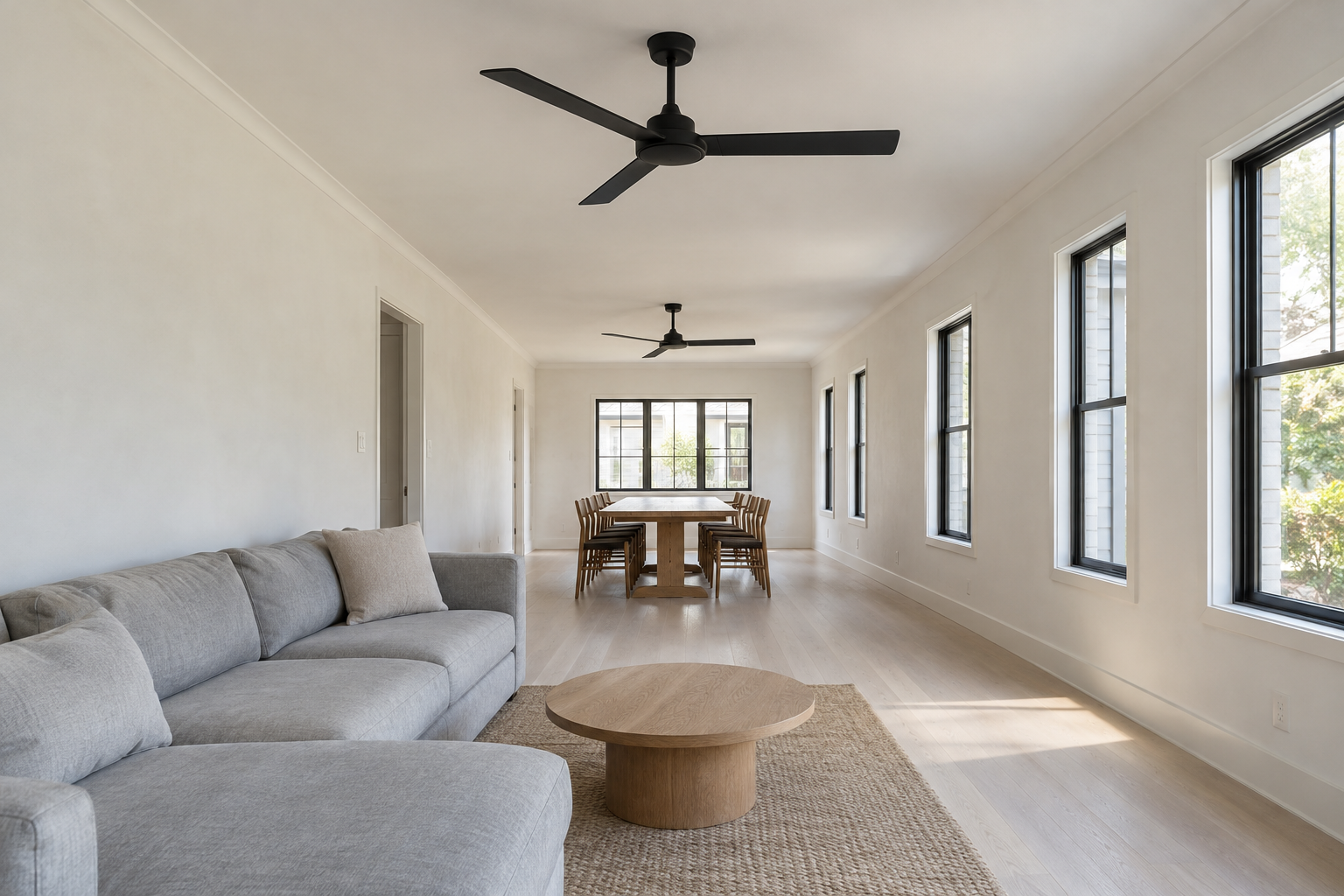
The table assumes a room roughly as wide as it is long. A long room fits it badly. Take, as an example, a combined living and dining room 12 feet wide and 24 feet long. Its 288 square feet points to one fan of 50 to 54 inches in the middle, which would hang over the empty floor between the sofa and the table and do less for the people sitting at either end.
Two fans do better. Treat each half as its own room of 12 by 12 feet, 144 square feet, and hang a fan of 36 to 42 inches centered over each, one above the sitting area and one above the table, about 12 feet apart. Use the same model at the same height for both, so they match from either end of the room. The same logic places a single fan in a room where everyone sits at one end. Center it over the seating, not over the room.
Seven Feet Under the Blades
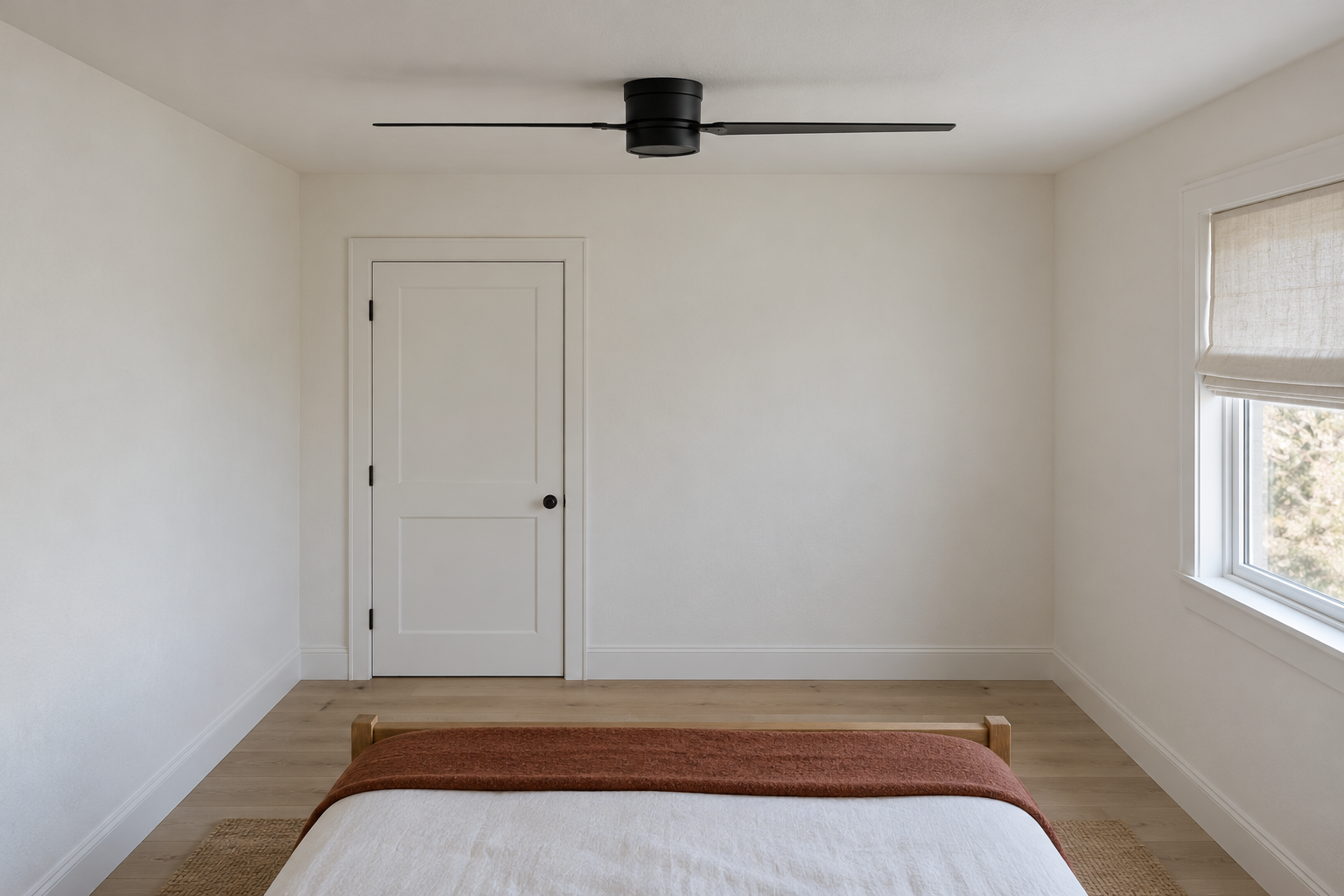
The 7 foot minimum is measured from the floor to the lowest edge of the blades, and it’s a requirement, written into fan makers’ installation instructions. Above that, 8 to 9 feet is the usual recommendation, close enough to the room to move air across it and high enough to stay clear of raised arms.
A low ceiling leaves little room. Under an 8 foot ceiling, a flush fan, built with no rod so its body sits tight to the ceiling, is the usual choice. If its blades sit 10 inches below the ceiling, they end at 7 feet 2 inches, just over the limit and a few inches above the top of a standard door. Check the fan’s stated height from the ceiling to the blades before buying. Below a ceiling of about 7 feet 10 inches, few fans can keep their blades at 7 feet.
The 7 feet assumes people standing on the floor. Over a bunk bed or a loft bed, someone sitting up on the top bunk is far closer to the blades, so a fan doesn’t belong above one.
Downrods for Tall and Sloped Ceilings

Under a ceiling above 9 feet, a rod brings the fan down into the room. The aim is to put the blades at about 8 feet, so the rod length is the ceiling height, less 8 feet, less the height of the fan’s own body below the rod, typically about a foot. The table is a common guide.
| Ceiling height | Downrod length |
|---|---|
| 8 feet | None (flush fan) |
| 9 feet | The short rod most fans include |
| 10 feet | 12 to 18 inches |
| 11 feet | 18 to 24 inches |
| 12 feet | 36 inches |
| 13 feet | 48 inches |
| 14 feet | 60 inches |
| 15 feet | 72 inches |
A worked check: under a 12 foot ceiling, a 36 inch rod and a fan body of about 12 inches put the blades 4 feet down, at 8 feet.
On a sloped or vaulted ceiling, measure the height at the point where the fan will hang, not at the ridge or the low wall. The canopy needs a mount made for a slope, and the manual gives the steepest pitch it accepts. A longer rod also helps the blades clear the slope itself, since on a steep pitch the ceiling on the low side comes down toward the blade tips.
Room Around the Blades
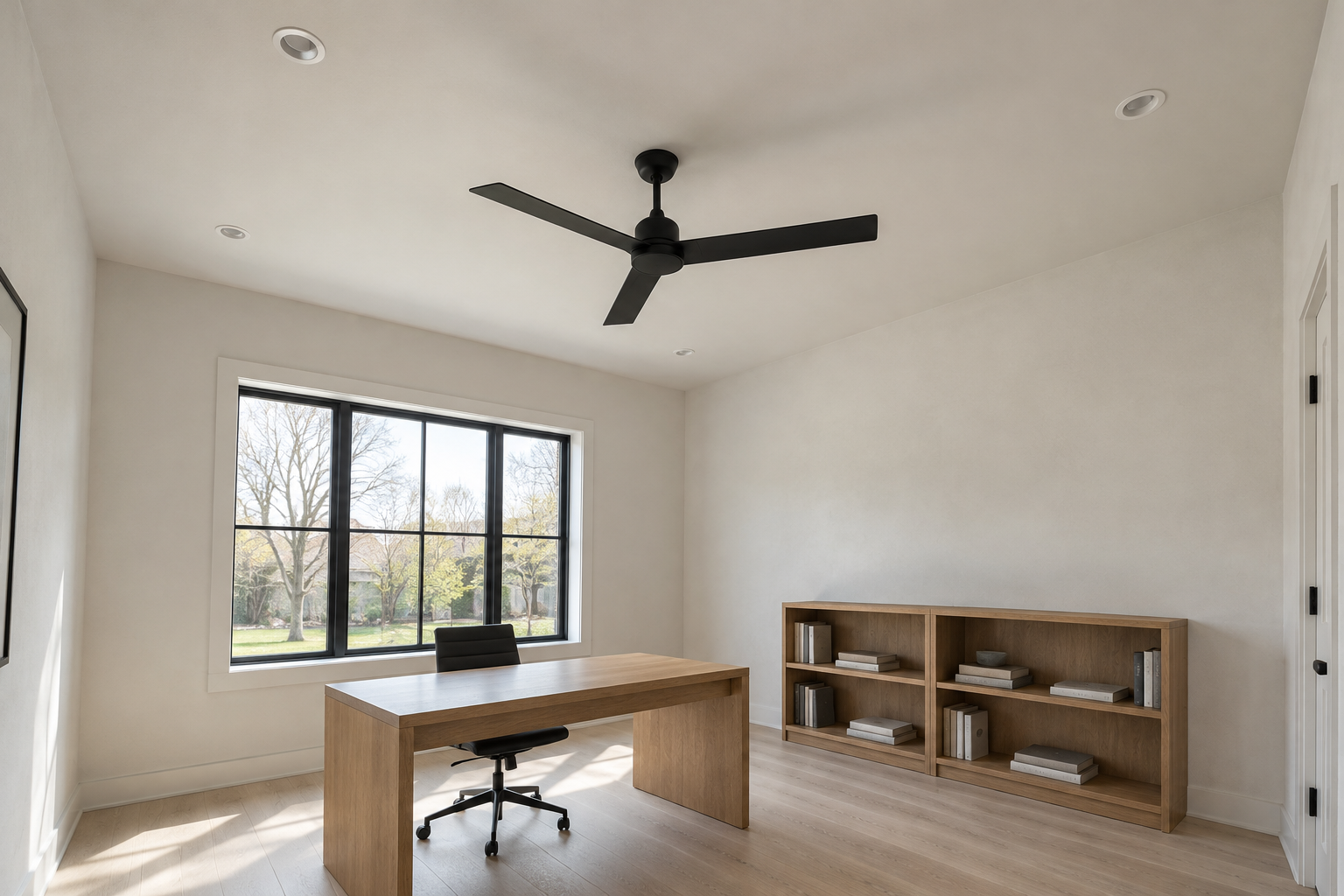
The blade tips need space from the walls and from anything sloping down near them. Installation manuals set this distance, and it varies, often 18 inches and in some cases 30, so check the one for the fan in question. A room that can’t give a large fan that space takes a smaller one.
Lights in the ceiling are the other thing to plan around. A downlight or ceiling fixture above the blades shines through them as they turn and throws a flickering shadow across the room. Place the fan so no light sits inside the circle its blades sweep, or leave the lights near it off while it runs. A pendant hung near a fan has the same problem and can also swing into the blades, so the two need a clear gap between the pendant and the blade tips.