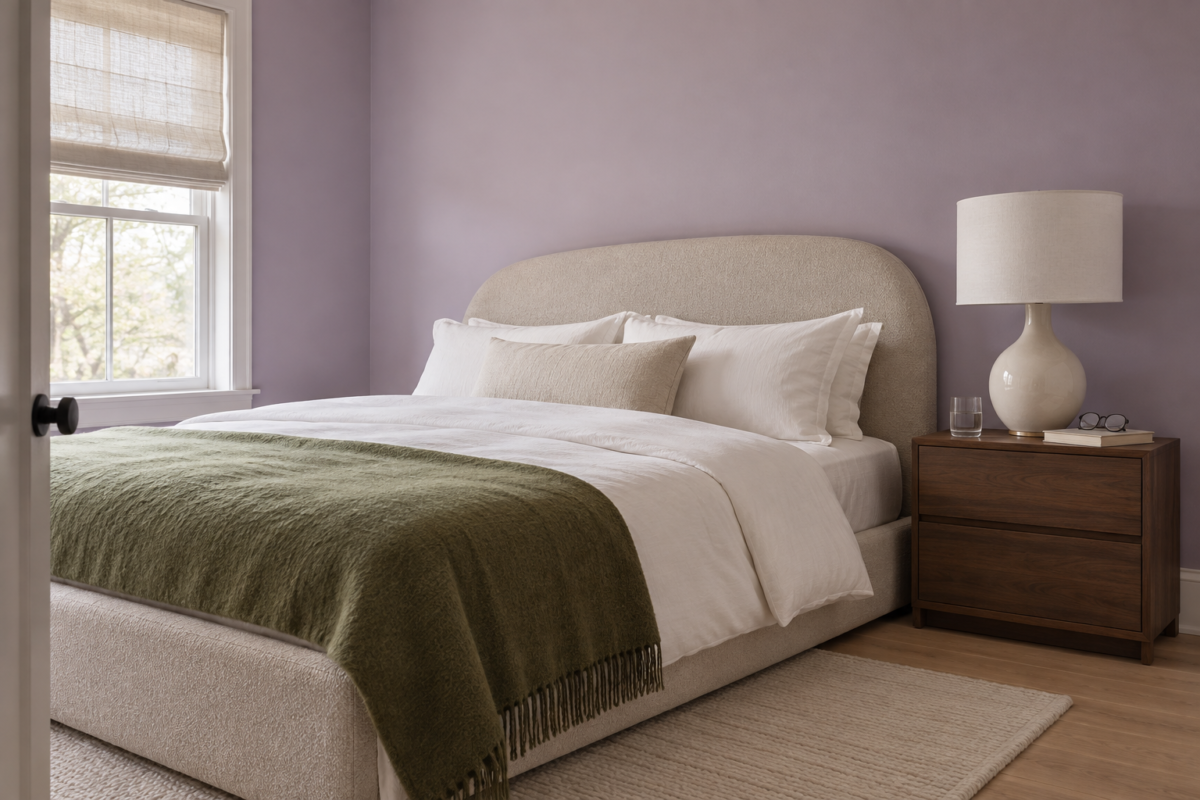
Most badly sized lamps give themselves away from the pillow or the sofa. A short lamp puts its light below the page, so the reader leans toward it or turns on the ceiling light. A tall one puts a bare bulb right at eye level, and the glare makes the rest of the room look darker. Both usually came home because they looked right in a store, on a shelf, with nobody sitting beside them.
Getting the size right starts with the person, then the table, then the lamp itself. This guide goes in that order, from the height of the shade to its width, its proportion to the base, and the light it gives, and ends with the switch.
Align the Bottom of the Shade With Your Eyes
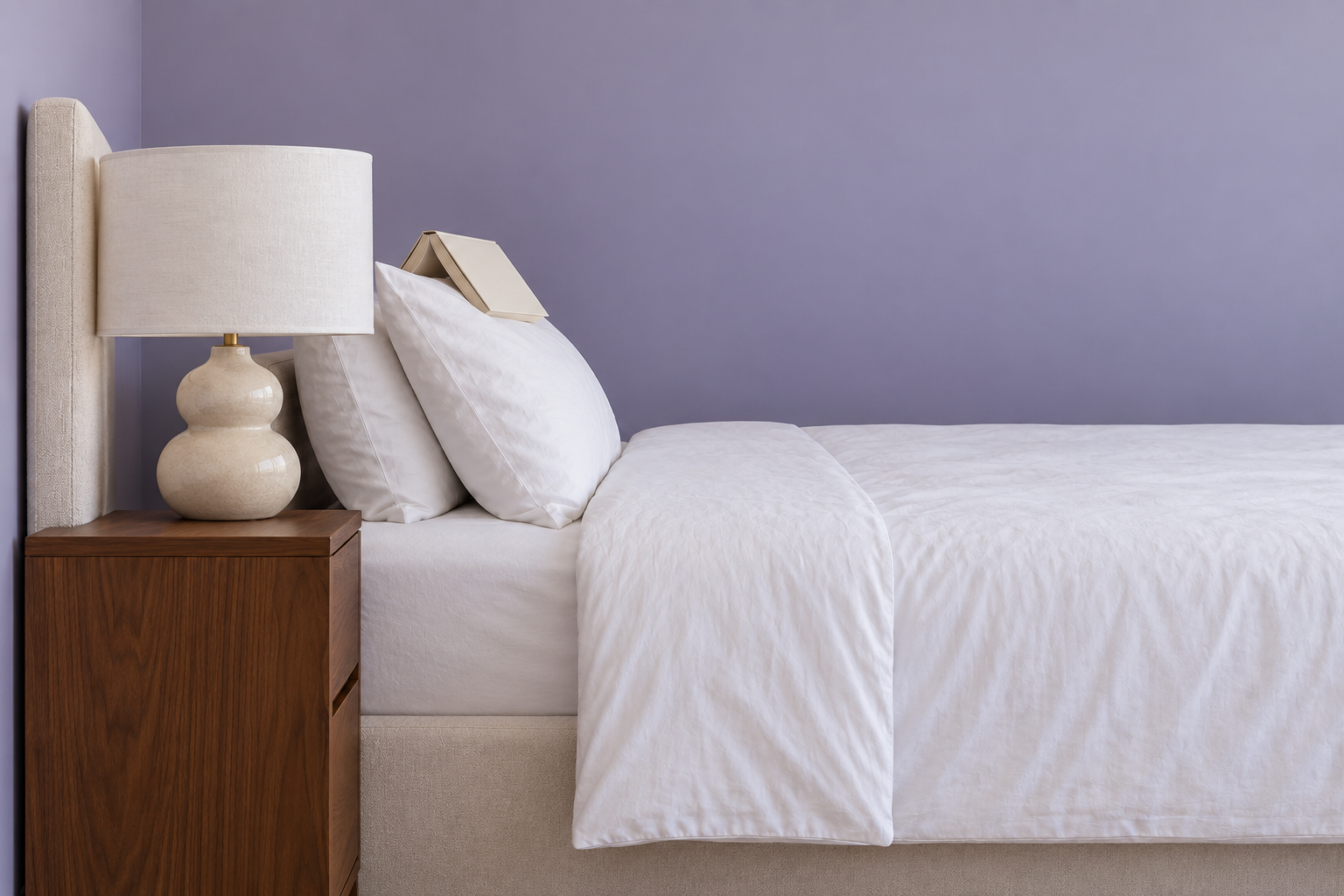
For reading, the lower edge of the shade should sit close to the reader’s eye level. Higher, and the bulb shows beneath it. Lower, and the light falls short of the page and the shade blocks the view across the room. Checking each lamp from the seat is the quickest test in a room that’s already furnished.
For a new lamp, measure. Sit where you’ll read, propped against the pillows in bed or back on the sofa, and have someone measure from the floor to your chin. Subtract the height of the table, and the result is roughly the height the bottom of the shade should reach above the tabletop. A nightstand usually sits at about mattress height, which the nightstand guide covers, and a sofa table at about the height of the arm. On tables at those heights, most people end up with a lamp about 24 to 30 inches tall overall. A tall headboard or a high mattress pushes it toward the top of that range.
Size the Shade to the Tabletop
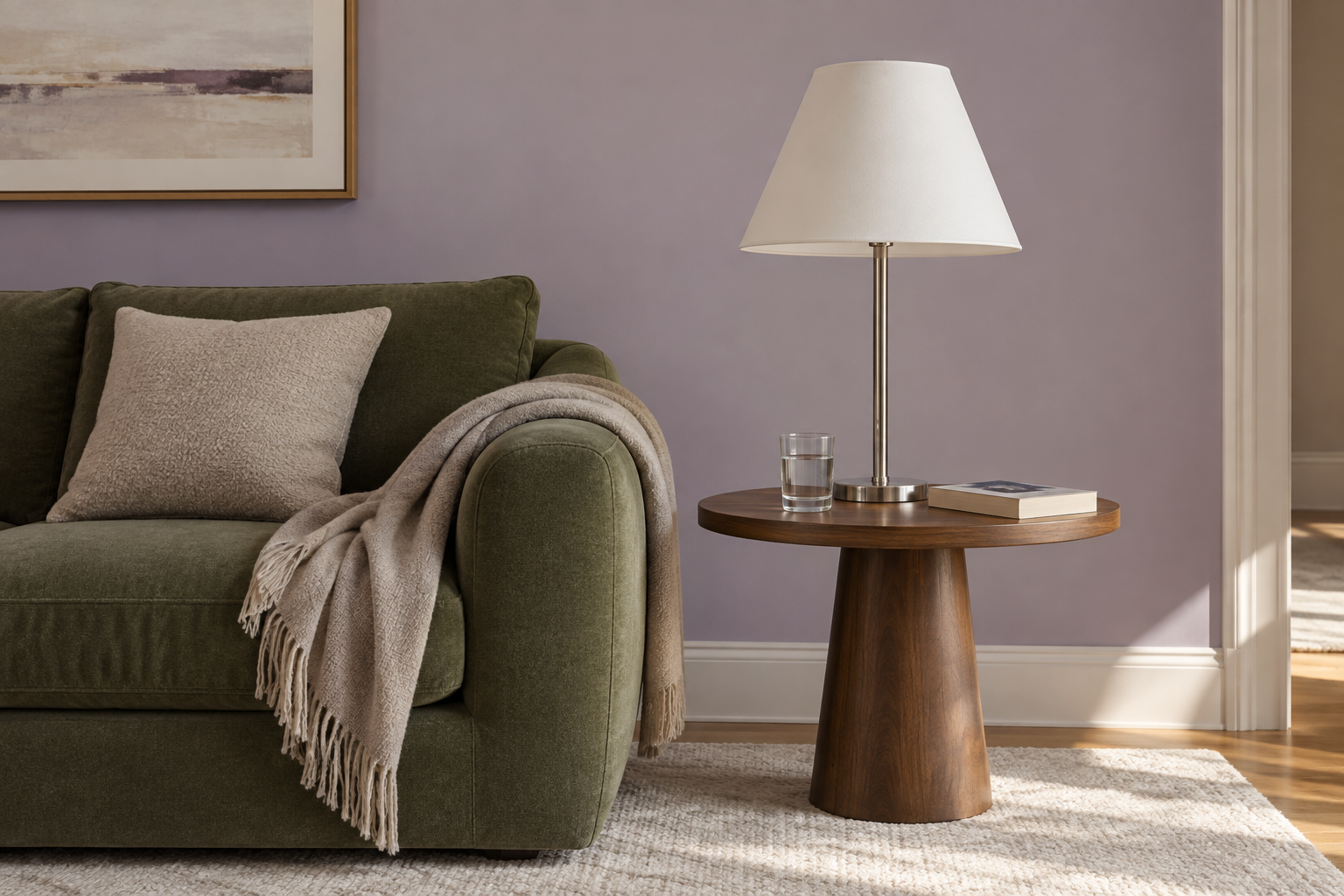
A shade that hangs over the edge of the table gets knocked every time someone reaches past it, and it makes the table look too small. Keep the shade’s widest point inside the edges of the tabletop, ideally with a couple of inches to spare on each side. That usually means a shade about 14 inches across on a small nightstand and 16 to 18 inches on a side table of about 24 inches.
The table also has to hold whatever gets used beside the lamp, like a glass of water, a phone, reading glasses, or a book. If a shade wide enough to light the bed leaves no room for any of that, a smaller table lamp won’t solve it. A swing-arm wall light over the nightstand lights the page and frees the whole top.
Proportion the Shade to the Base
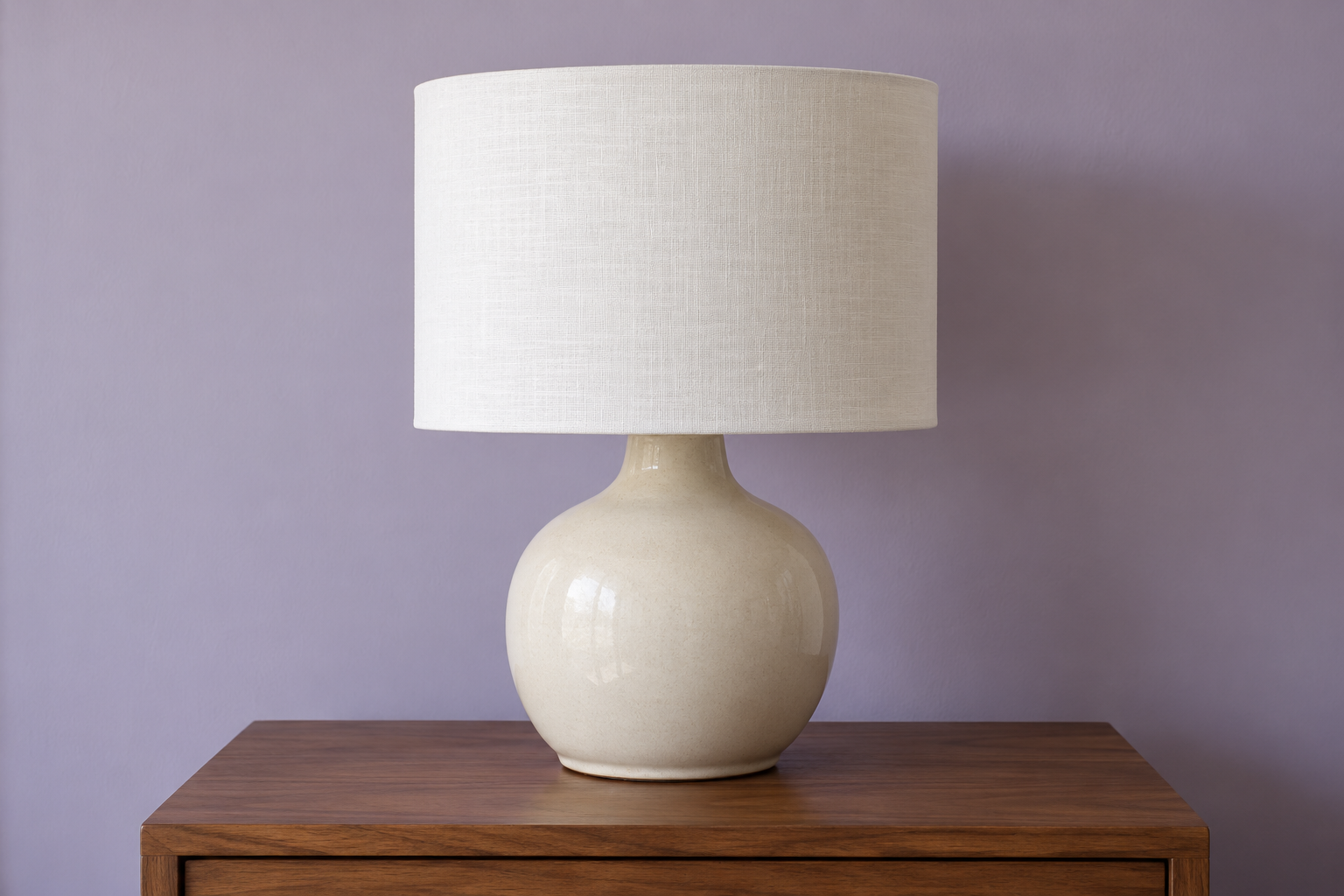
A shade too small for its base makes a lamp look pinched, a big body under a small hat, and it usually leaves the socket and bulb showing. A shade too large swallows the base and looks like it could tip. As a starting point, the shade should be about two thirds as tall as the base, measured from the table to where the shade begins, and about as wide at the bottom as the base is tall.
Look at the lamp from where you’ll sit, not from above. From a pillow or a sofa cushion, the shade should cover the socket and the harp completely. If the metal shows, the shade is too short or sits too high, and a taller shade or a lower harp fixes it.
Scale the Lamp to the Bed or Sofa Beside It
A lamp is always seen next to something larger. A tall upholstered headboard dwarfs a short lamp, so it needs a taller one, or a lamp with more visual weight in a solid ceramic or stone base. A low platform bed or a low, deep sofa suits a lower, wider lamp whose shade still clears the eye line.
Lamps on either side of a bed or sofa don’t have to match. What matters is that their shades end at about the same height, within an inch or two, and that the two have similar visual weight, so one side doesn’t look heavier than the other. Two very different lamps with matching shade heights look planned. Two similar lamps at different heights look like a mistake. For where each lamp sits in a room’s wider lighting plan, layering lighting in a living room covers the rest.
Let the Shade Material Decide Where the Light Goes
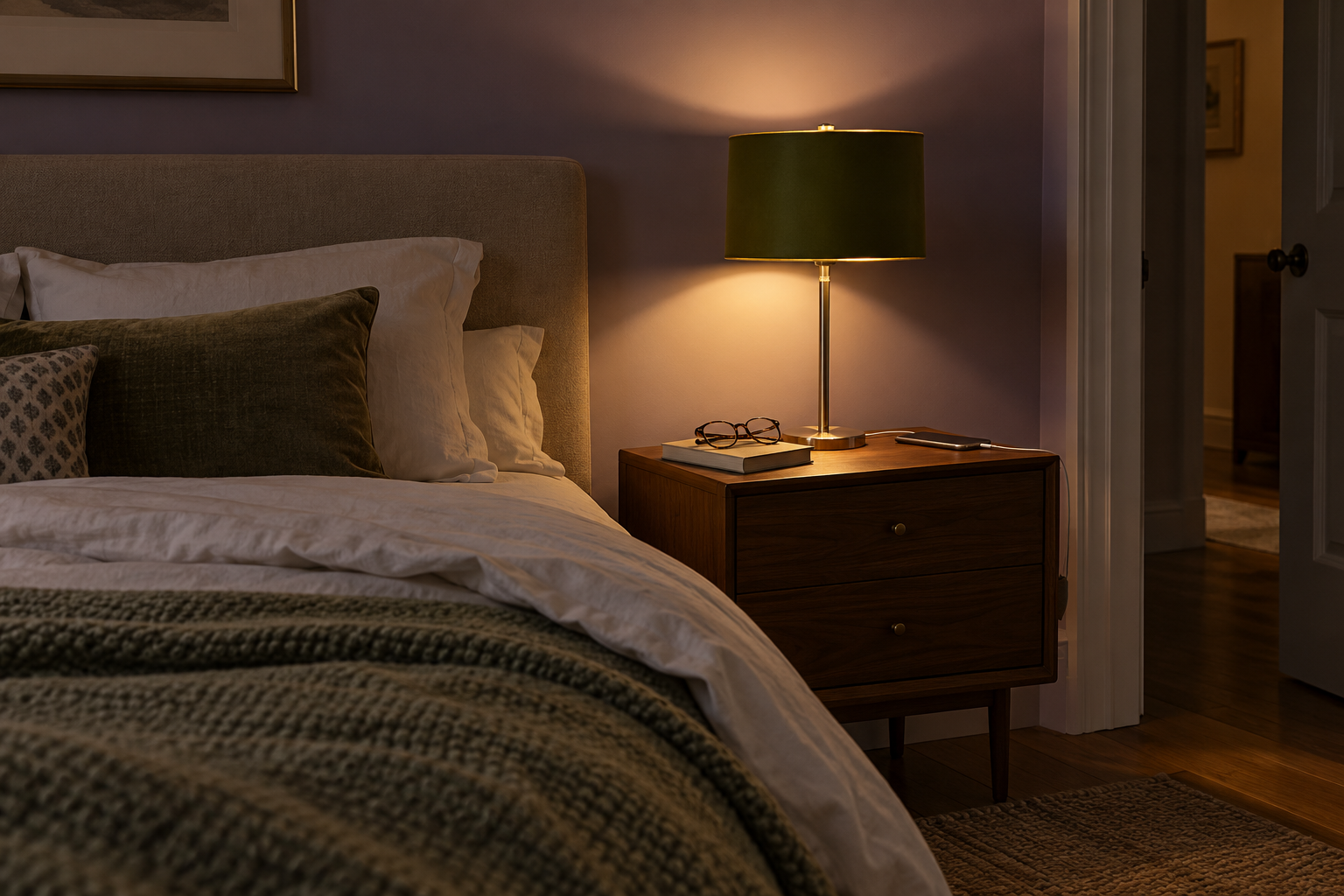
A translucent shade in white linen or paper glows all over, lighting the room around it as well as the page. That suits a living room, or a bedroom where one person reads alone. An opaque shade, in card, metal, or a fabric with a dark lining, sends light only down onto the table and up the wall, and keeps glare off a partner who’s trying to sleep.
Shape changes the spread too. A drum or straight-sided shade throws a wide circle of light, while a tapered shade, narrow at the top, concentrates it downward. For reading, a bulb of about 800 lumens, labeled as a 60-watt equivalent, is a common starting point, with around 450 lumens enough for a lamp that’s mostly for mood.
Check the Switch From the Pillow
Before choosing a bedside lamp, think about how it turns off. A switch on the base or the cord can be reached lying down. A small knob or a pull chain under the shade is hard to find in the dark and means sitting up to reach it. A touch base or a dimmer on the cord works well if a light gets turned down more often than off.
Plan the cord as well. A lamp on a nightstand should reach an outlet behind the table without a cord stretched across the floor. If the outlet is on the other side of the bed, a lamp is the wrong fixture, and a plug-in wall light with a cord cover is often easier.
Frequently Asked Questions
How tall should a lamp be for a 24-inch nightstand?
Usually about 24 to 28 inches. That puts the bottom of a typical shade roughly 16 to 18 inches above the tabletop, around chin height for most adults sitting up against pillows on a bed of the same height. Measure your own seated height if the headboard is tall or you read sitting well upright.
Do bedside lamps have to match?
No. Two different lamps look deliberate when their shades end at about the same height and they carry a similar amount of visual weight. Matching pairs give a room a more formal symmetry, which suits some bedrooms and not others.
What size lamp goes on a console table?
A console behind a sofa or in a hallway is taller than a side table, usually 30 to 34 inches, and nobody reads beside it. A lamp there can be taller and slimmer, about 26 to 34 inches, with a shade narrower than the console’s depth so it doesn’t overhang. Sizing a console table covers the table itself.