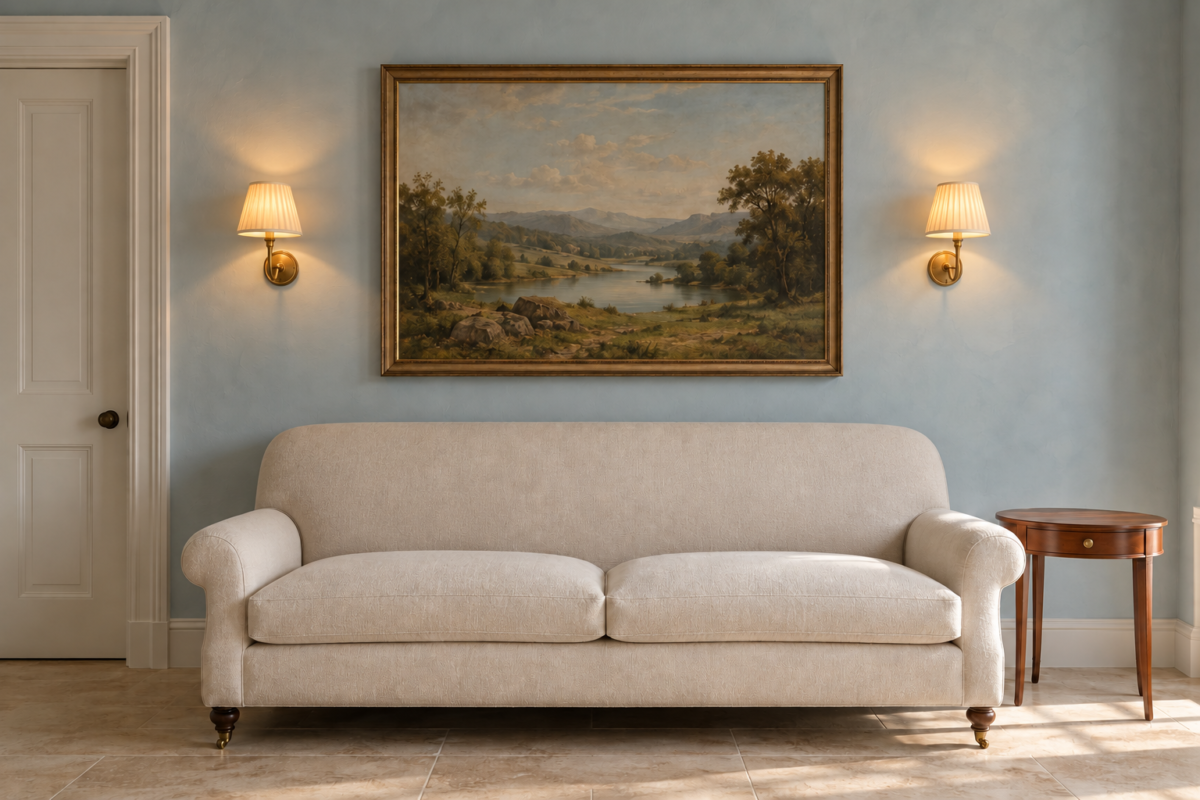
A wall sconce hangs at the height of people’s faces. A ceiling fixture is overhead and a table lamp is usually below a standing eye, but a sconce is level with it, close enough to look straight into. So its height is set by one aim. From wherever people usually are, the shade should hide the bulb.
That is why the figure changes between a hallway, where everyone is on their feet, and a bedside, where the person using the light is sitting against a headboard. The heights below are from the finished floor to the center of the light source, meaning the bulb or the middle of the shade around it.
60 to 66 Inches Where People Stand
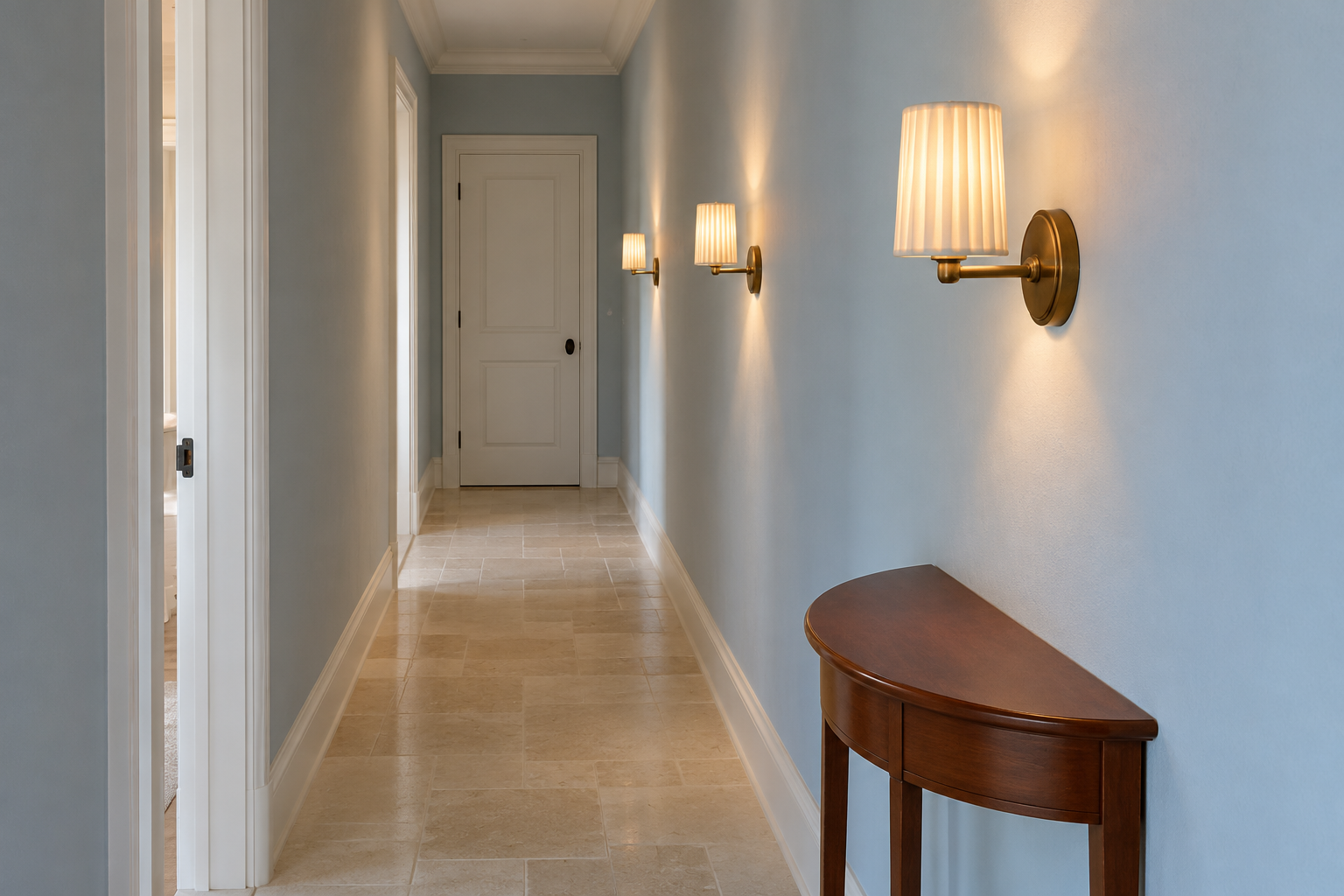
In a hallway, an entry, or a living room where the sconces light the room in general, the center of the light goes 60 to 66 inches from the floor. Most adults’ eyes are within a few inches of that when standing. With the middle of the shade at eye level, a person walking past sees the side of the shade and the glow on the wall, and the bulb stays out of sight.
This is a typical recommendation and it flexes with the household. Tall people, or a fixture with a long shade, sit better toward 66. Lower than 60, an adult looks down into the top of the shade. Much above 70, and they look up into the bottom of it.
Where You Sit
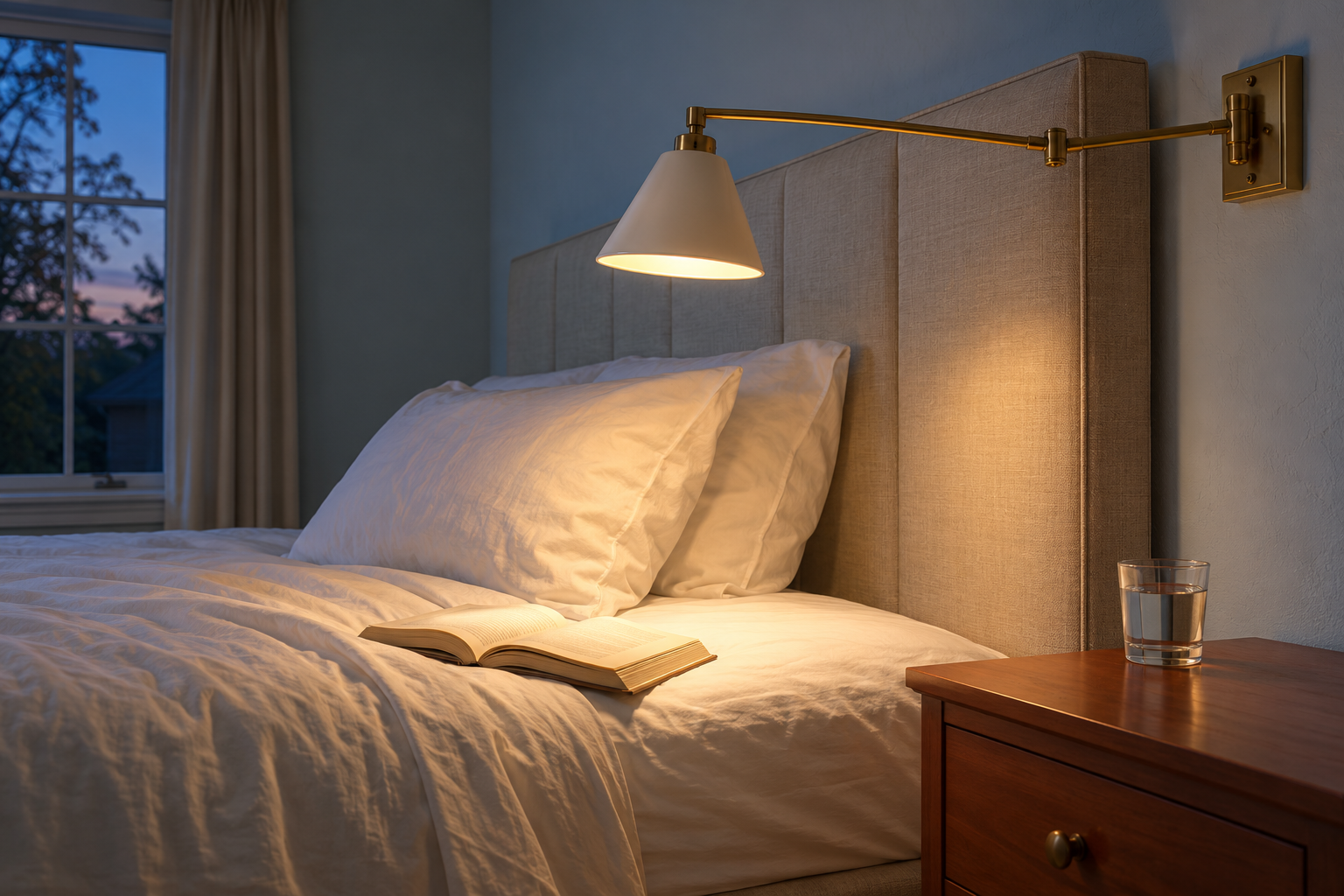
A sconce meant for reading follows the seated person. Beside a bed, the usual height puts the bottom of the shade 30 to 36 inches above the top of the mattress. A mattress top is commonly 24 to 26 inches from the floor, so that works out to roughly 55 to 62 inches. The figure lands close to the hallway one because the bed has already lifted the reader two feet. A bedside light on an arm can then be pulled over the page.
Beside a sofa or a reading chair the number does drop. Seated eye level is around 40 to 44 inches, and the bottom of the shade belongs a little above the top of the head, so the light falls on a book and the bulb is hidden from the seat. Measure it directly. Sit where you read, have someone mark the wall a hand’s width above your head, and set the bottom of the shade there. On most seating that mark falls between 48 and 54 inches.
What the Shade Does to the Number
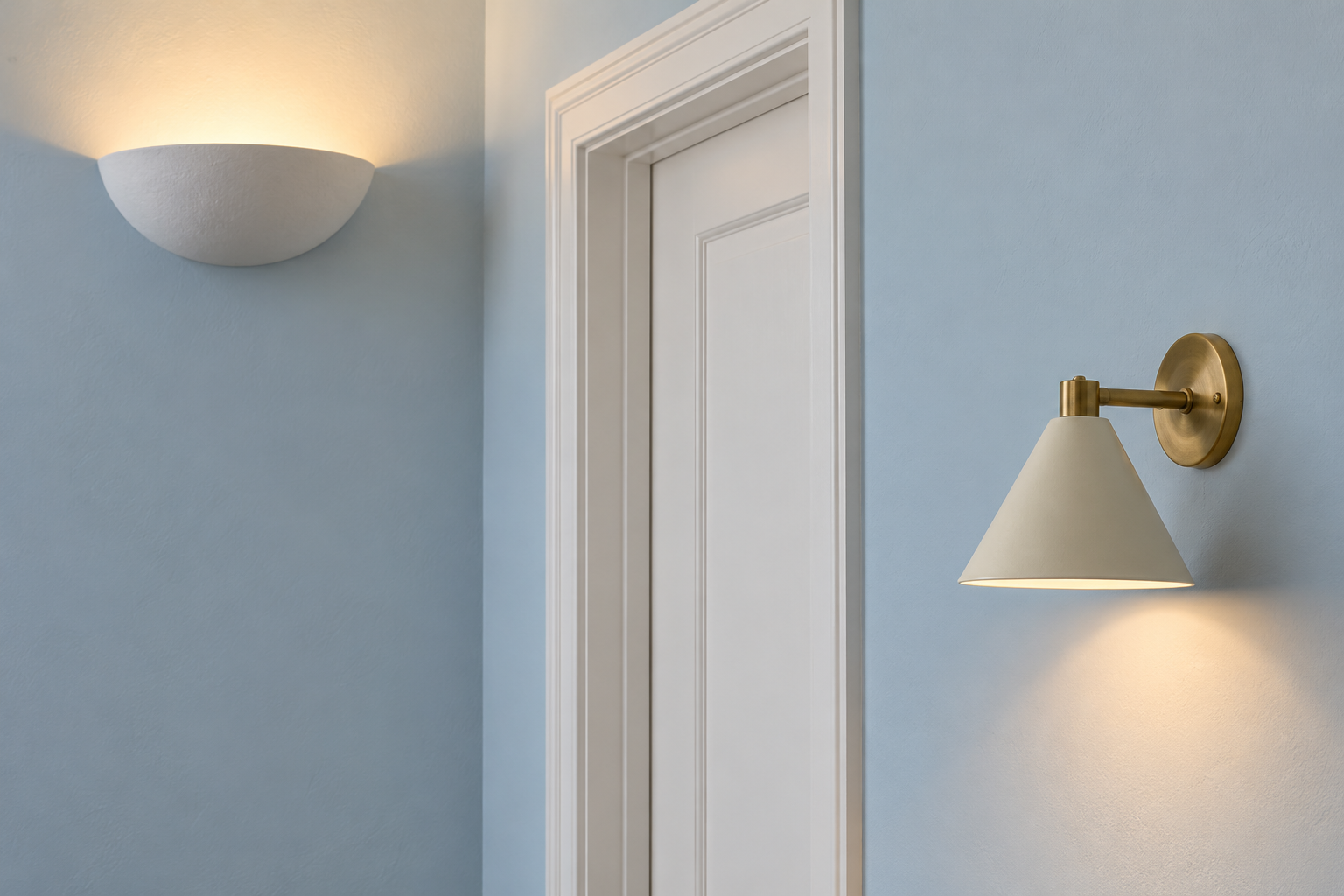
The same height suits a closed shade and exposes the bulb in an open one, so look at where the fixture is open.
| Fixture | Where it is open | Height of the center from the floor | Why |
|---|---|---|---|
| Fabric or glass shade, closed at the sides | Top and bottom | 60 to 66 inches | At eye level only the side of the shade shows |
| Uplight (a bowl or trough) | Top only | 66 to 72 inches | Above the eye, nobody can look down into it |
| Downlight (a cone or hood) | Bottom only | 58 to 64 inches | At or below the eye, nobody can look up into it |
| Clear glass or bare bulb | Everywhere | 60 to 66 inches | Nothing hides the bulb, so fit a low output, frosted, or dimmed one |
The ranges are typical recommendations for standing height. Where the sconce is for reading, the seated method above replaces them.
Where the Box Goes
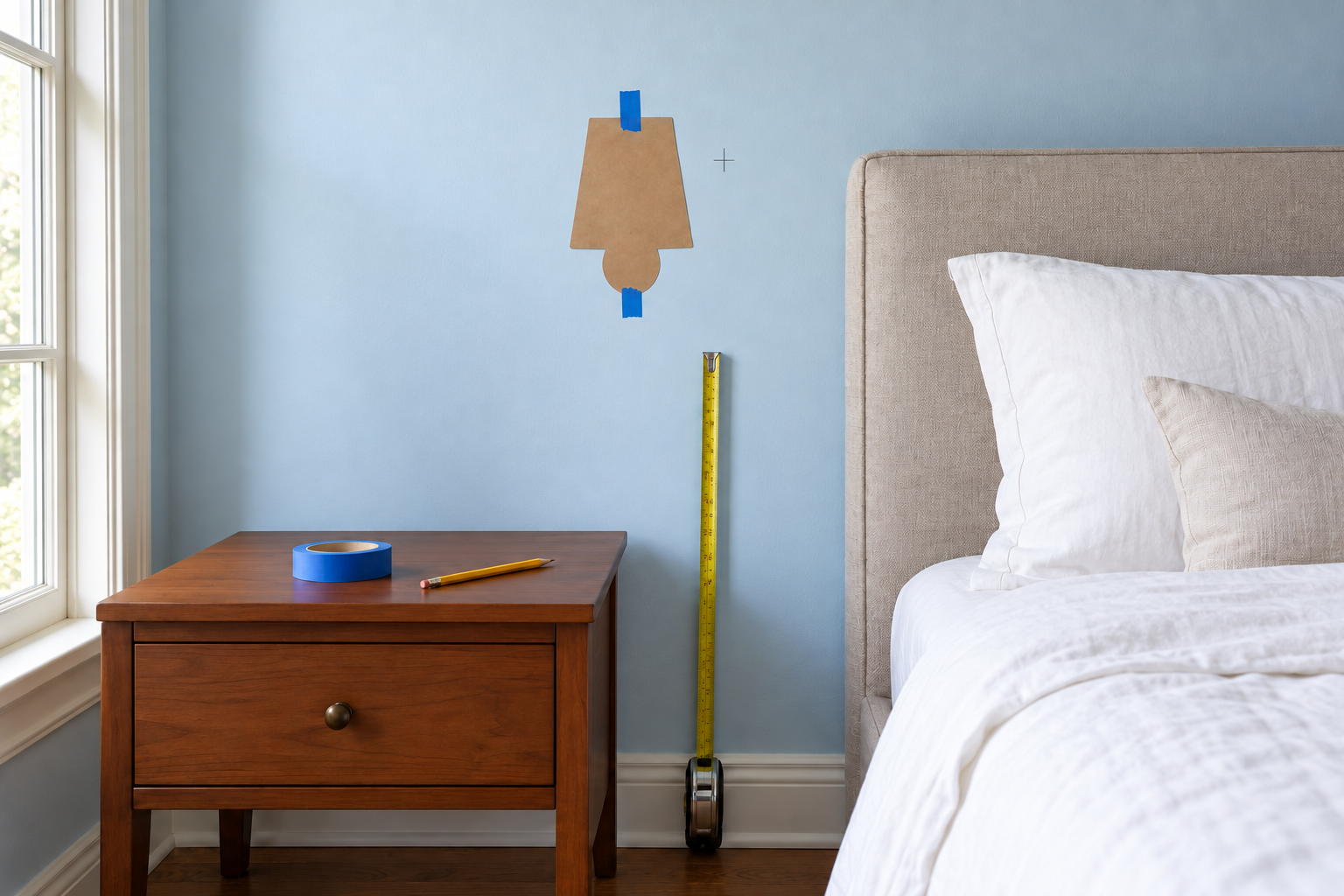
The electrical box in the wall is rarely behind the middle of the light. On many sconces the backplate sits above or below the shade, sometimes by several inches, so a box set at 64 inches can leave the shade at 58 or 70. This is why the fixture has to be chosen before the wiring is done.
Measure on the fixture itself, from the middle of the backplate to the middle of the shade. Then cut the outline of the fixture from paper, tape it to the wall at the height worked out above, and look at it from where people will be: standing in the doorway, sitting on the sofa, lying against the pillows. When it looks right from each, mark the box that measured distance away from the center of the paper shade. A fixture that plugs in avoids the question, and can be moved an inch or two after a week of use.
Beside a Mirror, a Mantel, or a Picture
Sconces that flank something take their height from it as well as from the floor. A pair on each side of a painting or a mirror looks settled when the center of each shade is level with the middle of the frame, or a little above the middle. With the art hung so its center is near eye level, that agrees with the standing range anyway. At a bathroom vanity the same logic holds, with the shades at the height of the face in the mirror.
Above a fireplace mantel, the shelf is usually around 54 inches, and a sconce centered at 60 would sit only a few inches over it. Raise the pair until the bottom of each shade clears the shelf by 8 to 12 inches, which often puts the center near 70. That’s a matter of proportion, and it is acceptable here because people view a mantel from across the room, where the angle up to the bulb is small. Leave about 6 inches between a shade and the edge of any frame.
On Stairs and Under High Ceilings
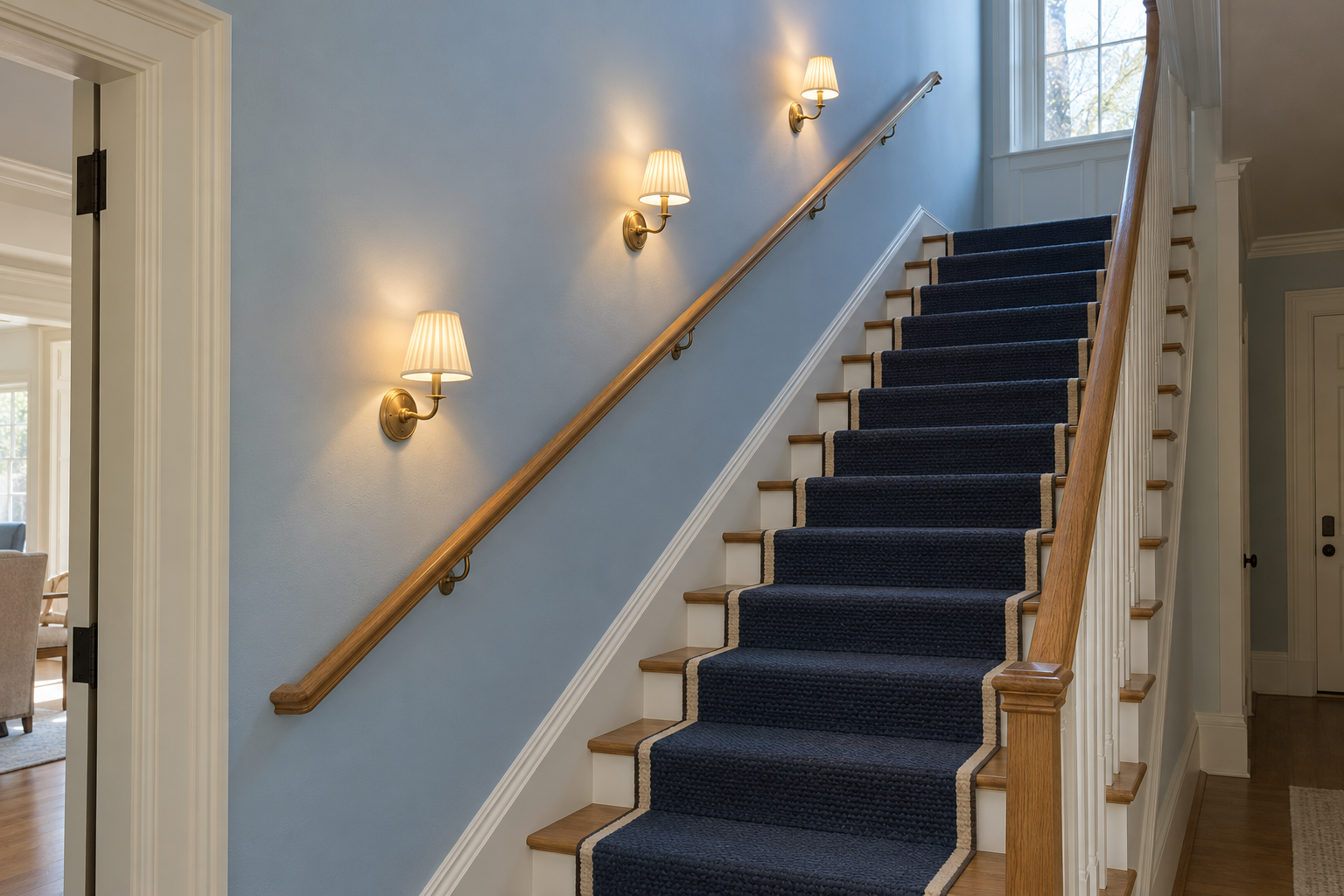
On a staircase the floor rises, so measure from the front edge of the step directly below each sconce and use the same height for all of them. The shades then climb in a line parallel to the handrail. Check the view from the top of the flight as well as the bottom. Someone coming down looks into the tops of the lower fixtures, so a shade closed at the top, or a small diffuser over the bulb, is the better choice on a stair.
A ceiling of 10 feet or more can take sconces a few inches higher, toward 68 or 70, so that they don’t appear to hang low on a tall wall. The reason to hide the bulb still applies, so use the shade table to choose a fixture that suits the extra height.
Along a Hallway
Sconces down a hall are commonly spaced 6 to 8 feet apart, measured center to center. Closer than that in an ordinary hall and the pools of light tend to merge into a stripe. Further apart and dark stretches open up between them. Keep each one at least 6 inches clear of a door frame.
Depth matters in a narrow hall as much as height. Accessibility rules for public buildings limit anything fixed to a corridor wall, between 27 and 80 inches from the floor, to 4 inches of projection. A house isn’t bound by that rule, but it’s a sensible test where the hall is under about 40 inches wide. A shoulder passes at about sconce height, and a slim fixture is the one that doesn’t get knocked.