A bathroom vanity light almost always goes in after the mirror, which means its height is really the second half of a decision, not a fresh one. Most guides skip that order and hand over a single number as if the wall above every mirror has the same amount of room to work with. It doesn’t. What determines the light’s height is how much wall your mirror already leaves above it.
Start With 72 to 80 Inches Off the Floor
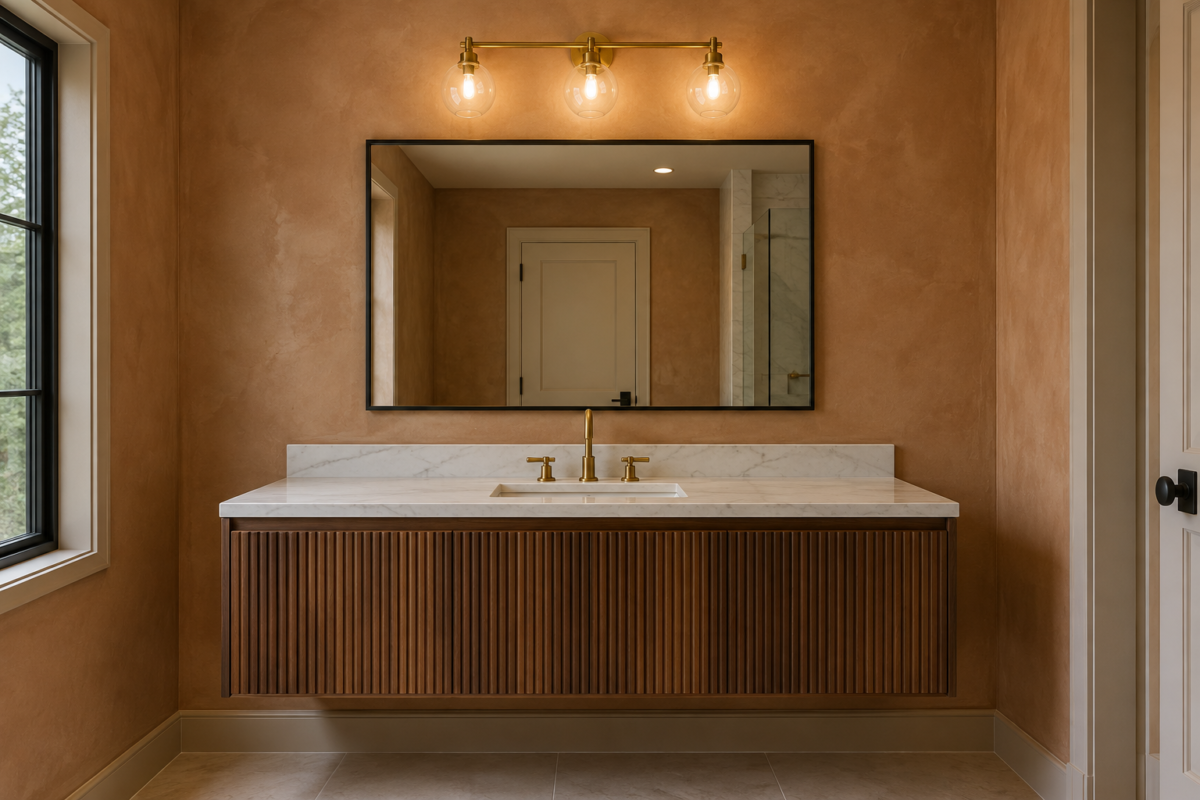
For a horizontal bar light centered above the mirror, a useful starting point is a centerline somewhere between 72 and 80 inches off the floor, adjusted up toward the higher end for a taller ceiling or a taller household. This isn’t an electrical code requirement. Code governs things like GFCI protection and clearance around a wet zone, not how high a decorative fixture sits on a wall, so treat this range as a strong convention rather than a rule with a citation behind it.
That centerline also assumes a specific gap: roughly 5 to 10 inches between the top of the mirror and the fixture. Below that, the light crowds the frame. Above it, the fixture starts to drift toward the ceiling and loses its relationship to the mirror entirely.
Check Whether the Mirror Leaves Room Above It
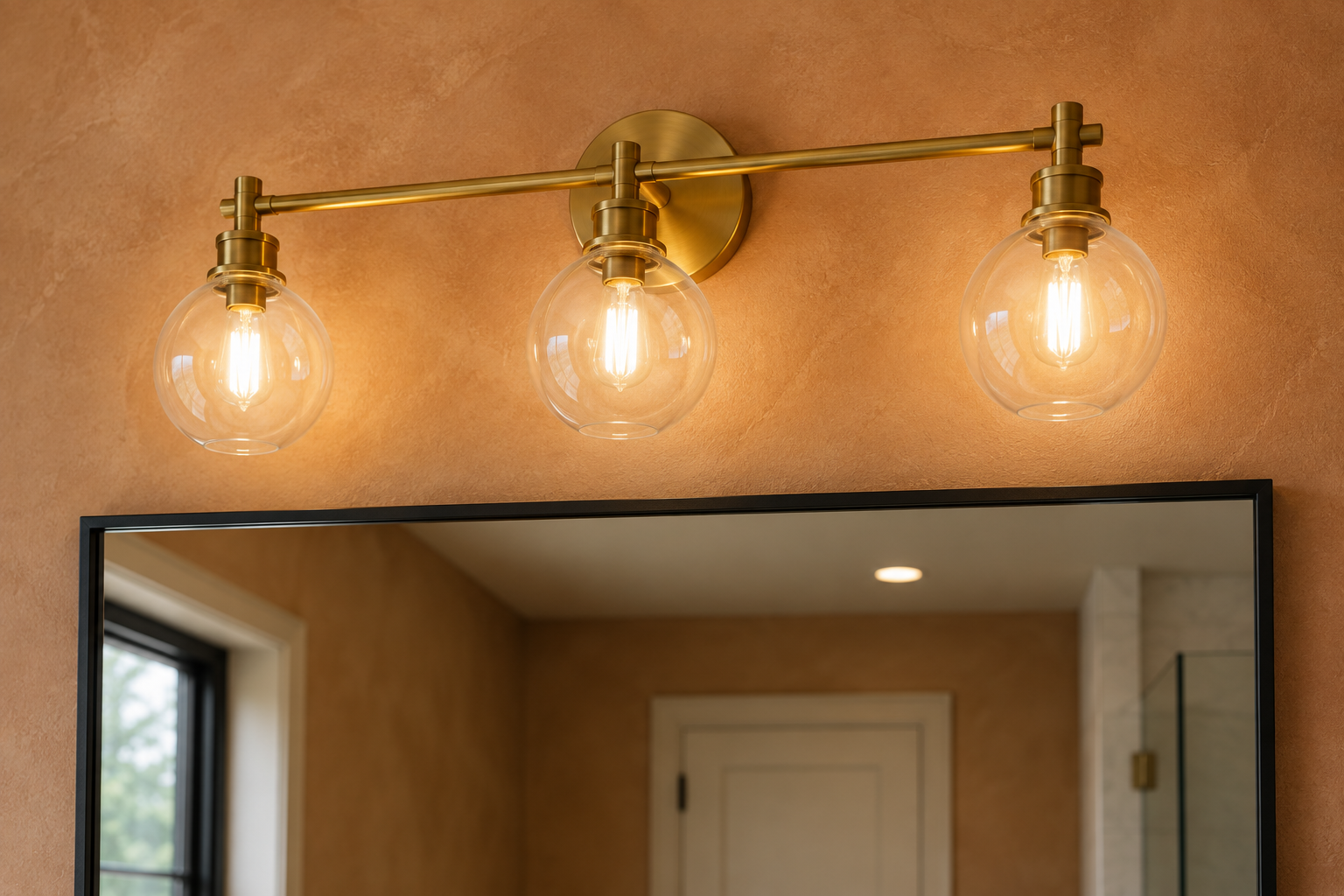
Here’s where the single-number advice falls apart. A mirror sized correctly to its vanity often ends up taller than people expect, and a taller mirror eats directly into the space a bar light needs. Measure from the mirror’s actual top edge to the ceiling before assuming a bar light will fit. If that gap is less than about 10 inches, the standard centerline height either won’t clear the mirror or will crowd the ceiling, and the fixture stops being the right choice.
This is a genuinely common outcome, not an edge case. A mirror that already runs 32 to 36 inches tall, hung correctly at 5 to 10 inches above the sink, can easily leave less than a foot of wall before the ceiling starts on an 8-foot bathroom.
Side Sconces Solve the Mirror That Runs Out of Room
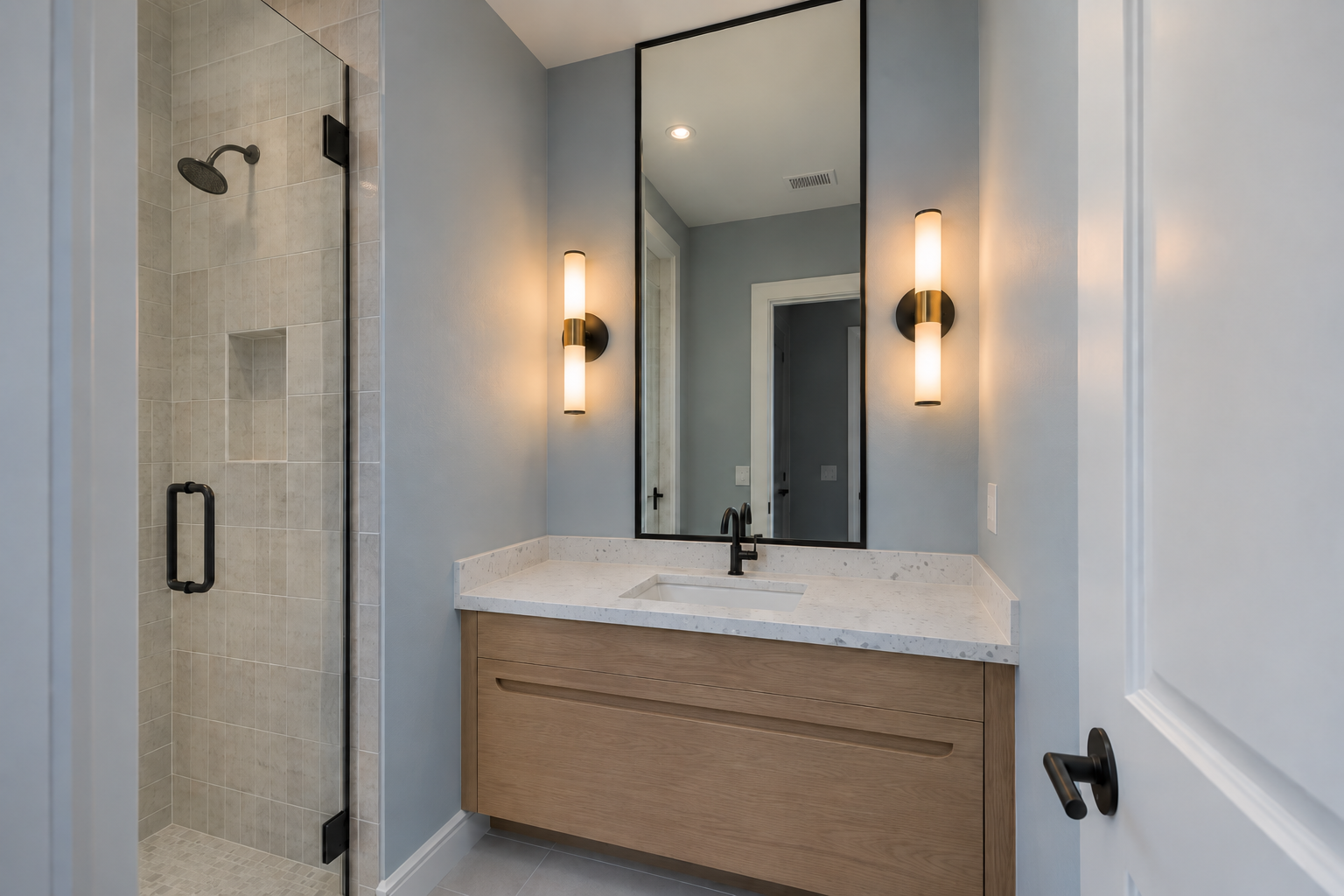
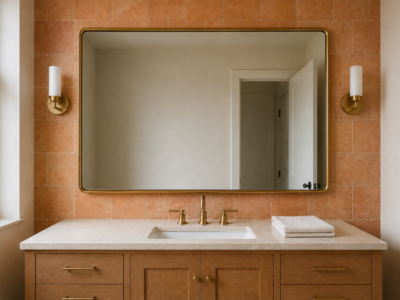
When the math above doesn’t work, side-mounted sconces flanking the mirror are the better answer, not a compromise. Mounted at roughly 60 to 70 inches off the floor, at or near eye level, a pair of sconces lights the face directly from both sides, which a single bar light mounted too high or too close to the ceiling can’t do as evenly anyway.
Sconces also solve a narrow-wall problem a bar light can’t. A vanity wall too tight for a wide fixture above the mirror usually still has room on either side of it, especially once the mirror itself is sized to the vanity’s actual width rather than stretched to fill the wall.
Mark the Height Before You Drill
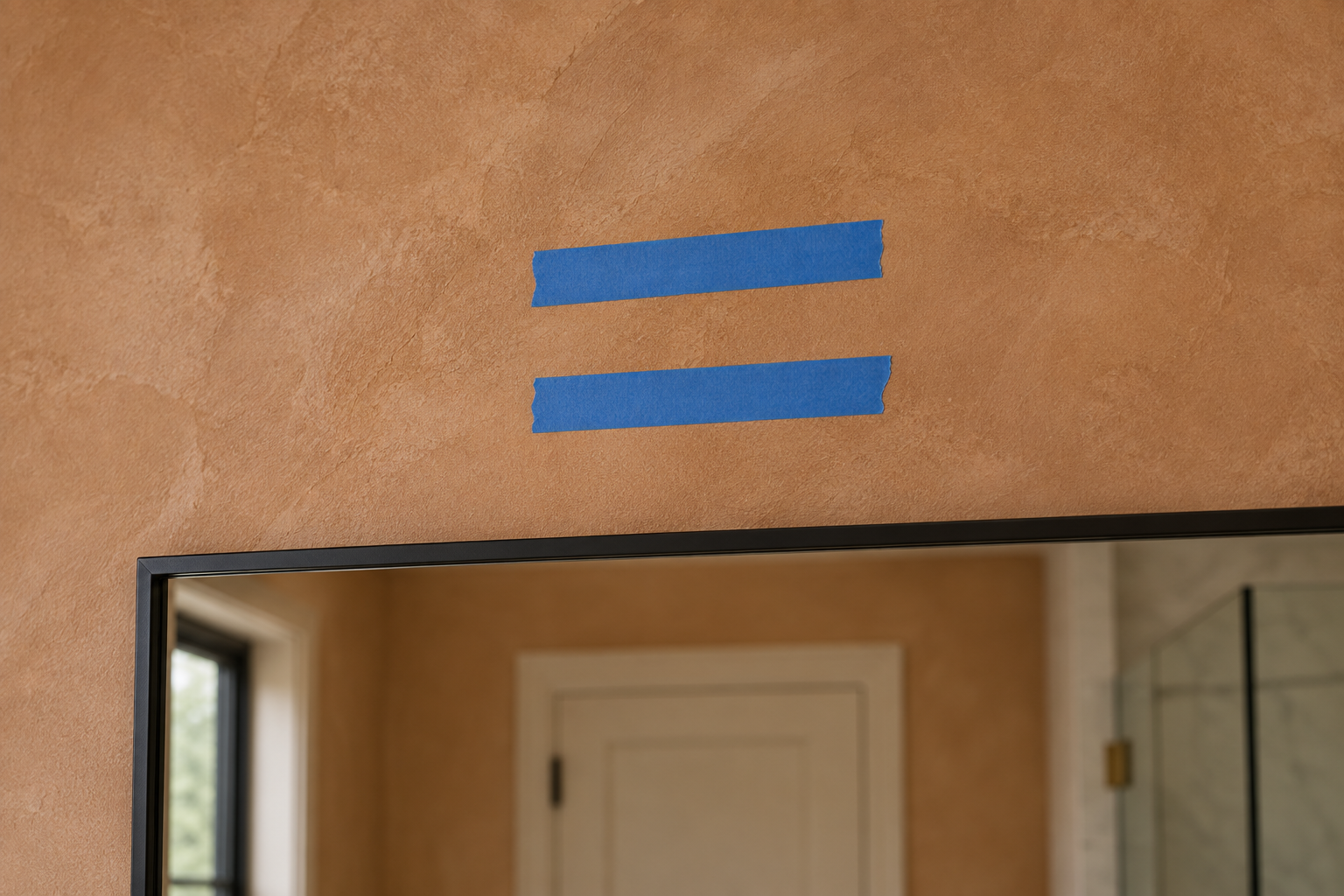
Before committing to a junction box location, tape two candidate heights directly onto the wall, a few inches apart, and look at them while standing where someone will use the sink. A number on a page doesn’t account for an unusually tall mirror frame, a lower-than-standard ceiling, or a household that’s noticeably taller or shorter than average. Fifteen minutes with painter’s tape settles all three at once, before an electrician shows up or a hole gets patched.
Frequently Asked Questions
Is there an electrical code minimum for vanity light height?
No. Electrical code addresses things like GFCI protection near water and clearance from a shower or tub, not the height of a decorative fixture on a dry wall. The 72-to-80-inch and 60-to-70-inch ranges here are practical lighting conventions, not code language.
Can a bar light and side sconces be used together?
Yes, and it’s a reasonable choice on a wider vanity with two sinks, where a single bar light can leave the outer edges of a double mirror dimmer than the center. It’s added light, not a replacement for getting either fixture’s own height right on its own terms.
What if the mirror is mounted unusually low?
Recheck the mirror height against the standard mirror-height guidance before adjusting the light around it. A mirror that’s already too low is worth fixing directly rather than compensating for with an unusually high or low light placement.