A bedroom is lit for three different things in one evening. There’s getting dressed or undressed, there’s reading, and there are the last few minutes before sleep, when the only light wanted is one that turns off without getting up. A single ceiling fixture handles the first and is poor at the other two.
Most of what follows adds a second, third, or fourth light and puts each one where it’s used. None of it needs a new ceiling, and most of it can be done with a plug.
A Wall Light on Each Side of the Bed
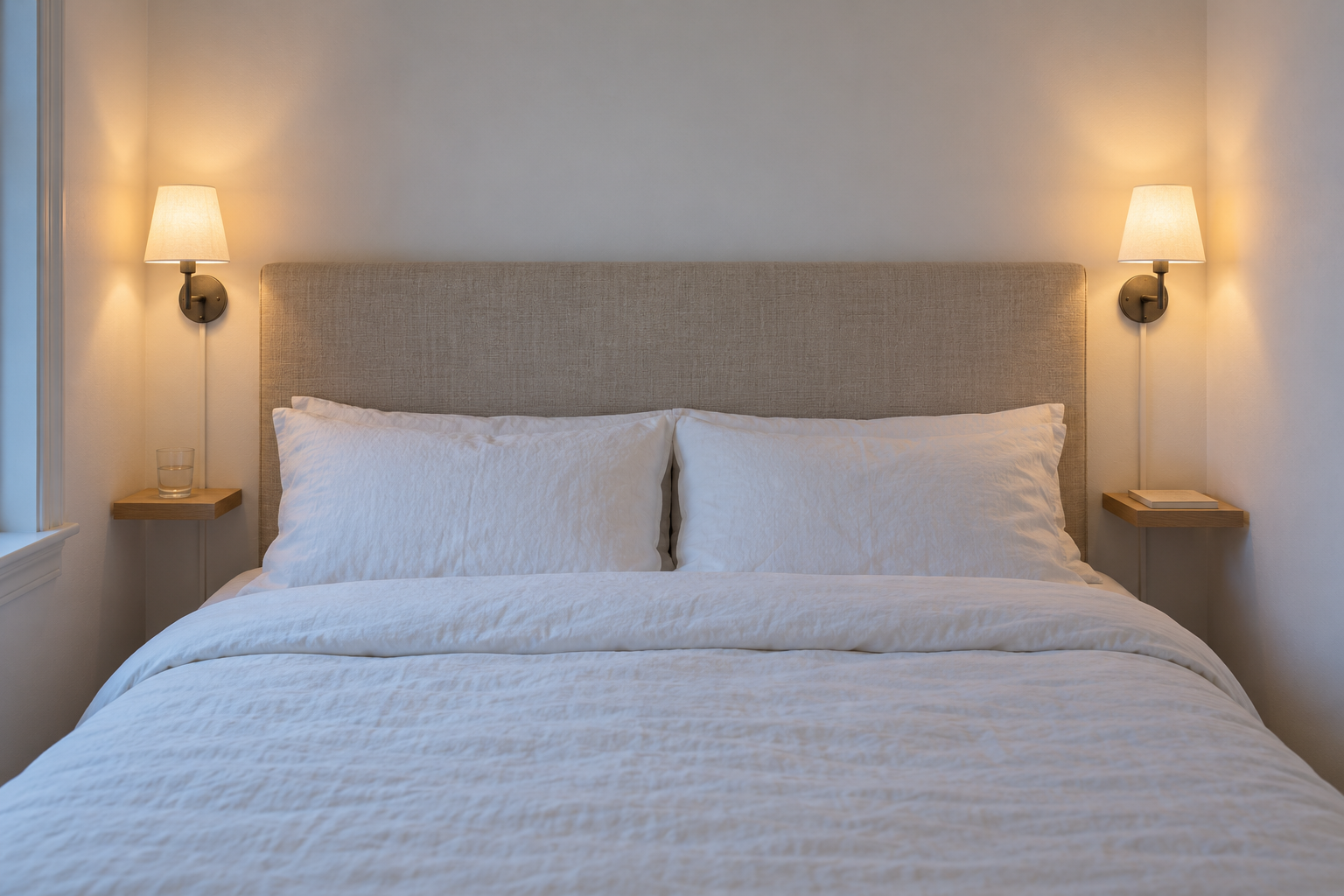
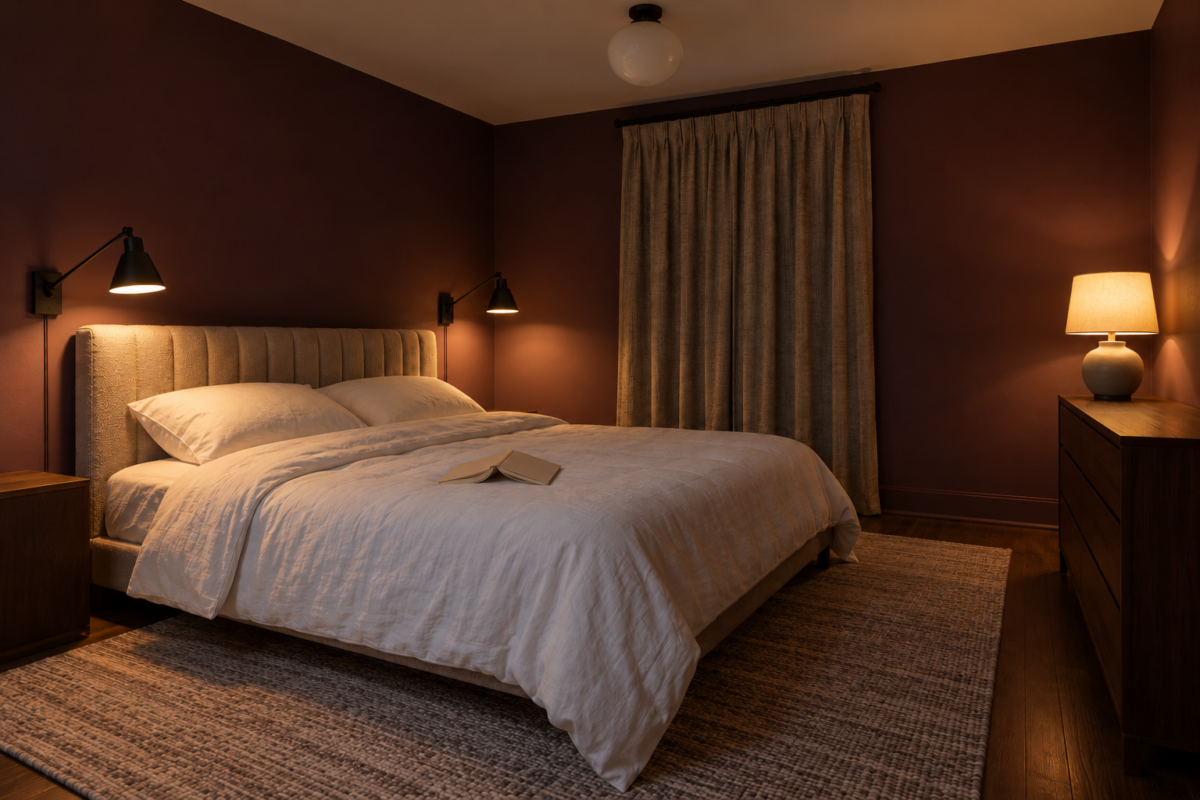
A lamp on a nightstand takes up most of a small tabletop, and its cord runs behind the bed. A wall light does the same job from above and leaves the table for a book, a glass, and a phone. Where the nightstands are narrow, or there’s room for only a shelf, it can be the one way to get a reading light on both sides.
The usual height puts the bottom of the shade 30 to 36 inches above the top of the mattress, which for most beds is 55 to 65 inches from the floor. Check it by sitting up against the headboard. The light should come from a little above shoulder height. A hardwired fixture needs an electrical box in the wall. A plug-in one hangs from two screws, and a cord cover painted the wall color takes care of the wire.
A Switch Within Reach of the Pillow
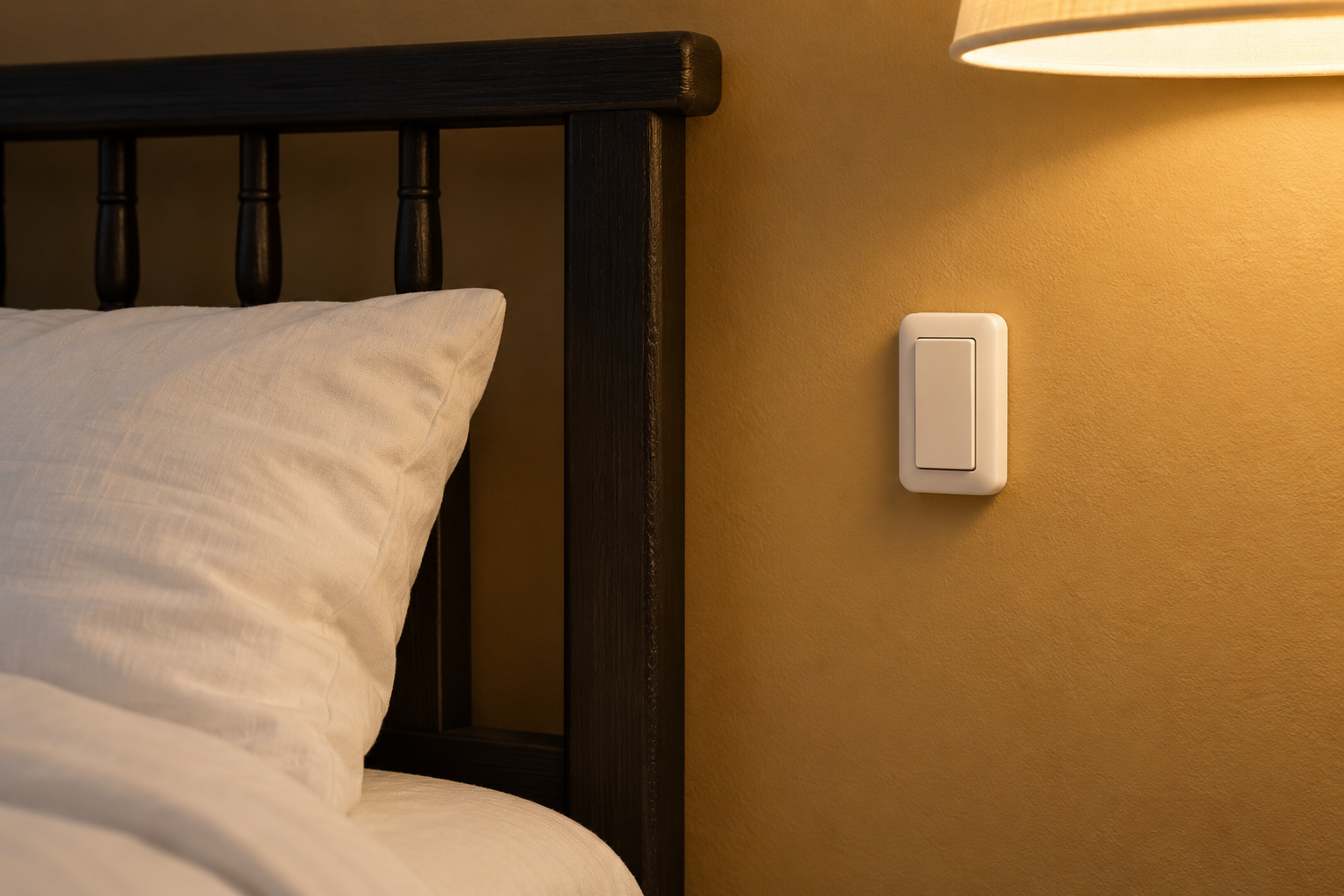
The last light on in a bedroom should be one that turns off from the bed. A lamp with a switch on its base or cord does that already, and so does a wall light with a switch on its backplate. The ceiling light is the difficult one, because its switch is by the door.
There are three ways around it. An electrician can add a second switch beside the bed, wired so that either one works the light. A smart bulb with a wireless switch stuck to the wall by the headboard does the same without new wiring. Or the ceiling light goes off at the door and a bedside light takes over for the walk to bed, which costs nothing.
Aim the Reading Light at the Page
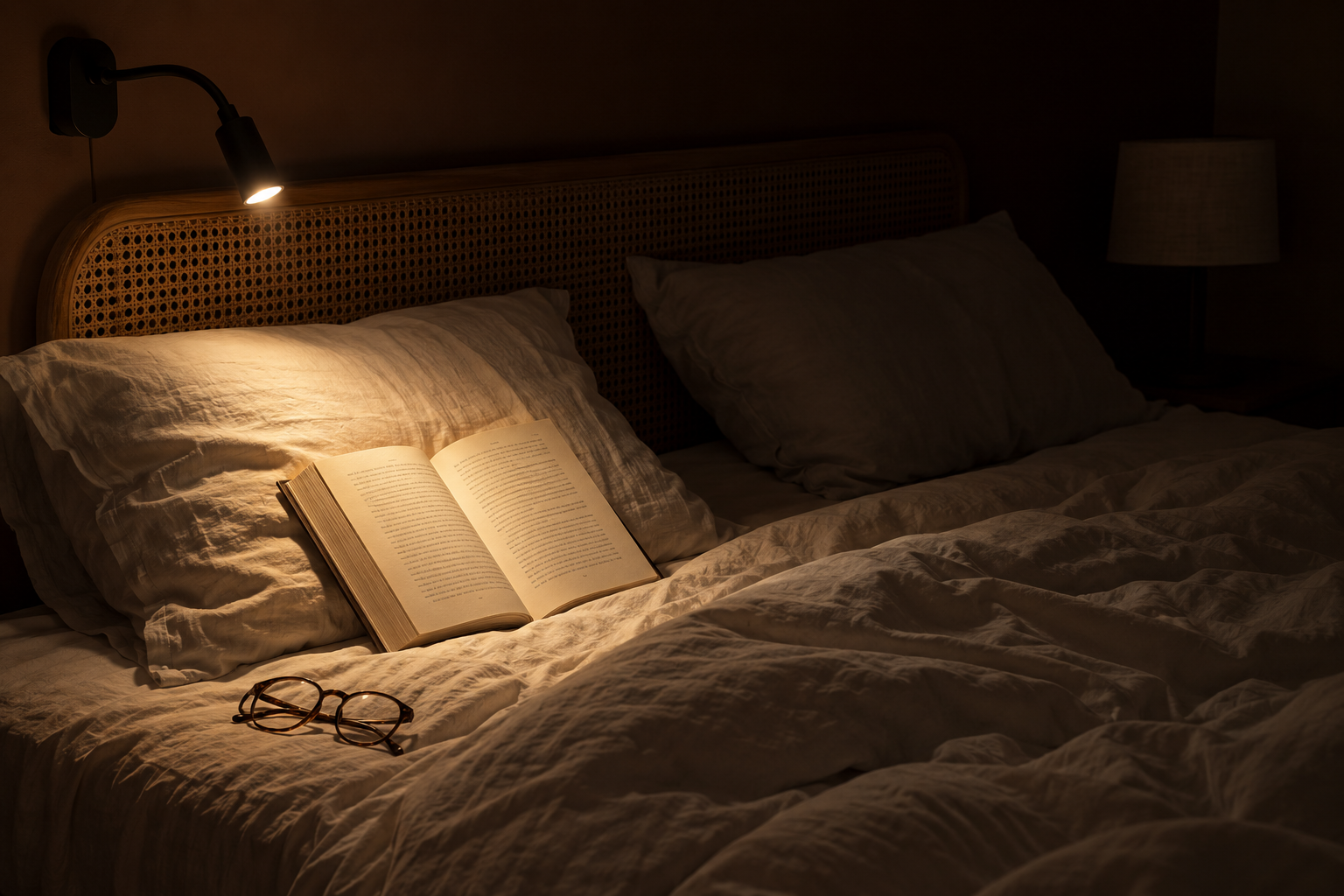
A shaded lamp lights the pillow, the wall, and the other half of the bed. A small directional light on a swing arm or a flexible stem puts its light on the book and very little anywhere else, so one person can read while the other sleeps. The head turns, and the beam follows the page.
It belongs beside a shaded light, not in place of one. The shaded lamp or wall light gives the room its general evening light, and the small one is for the last half hour.
Keep Every Bulb the Same Warmth
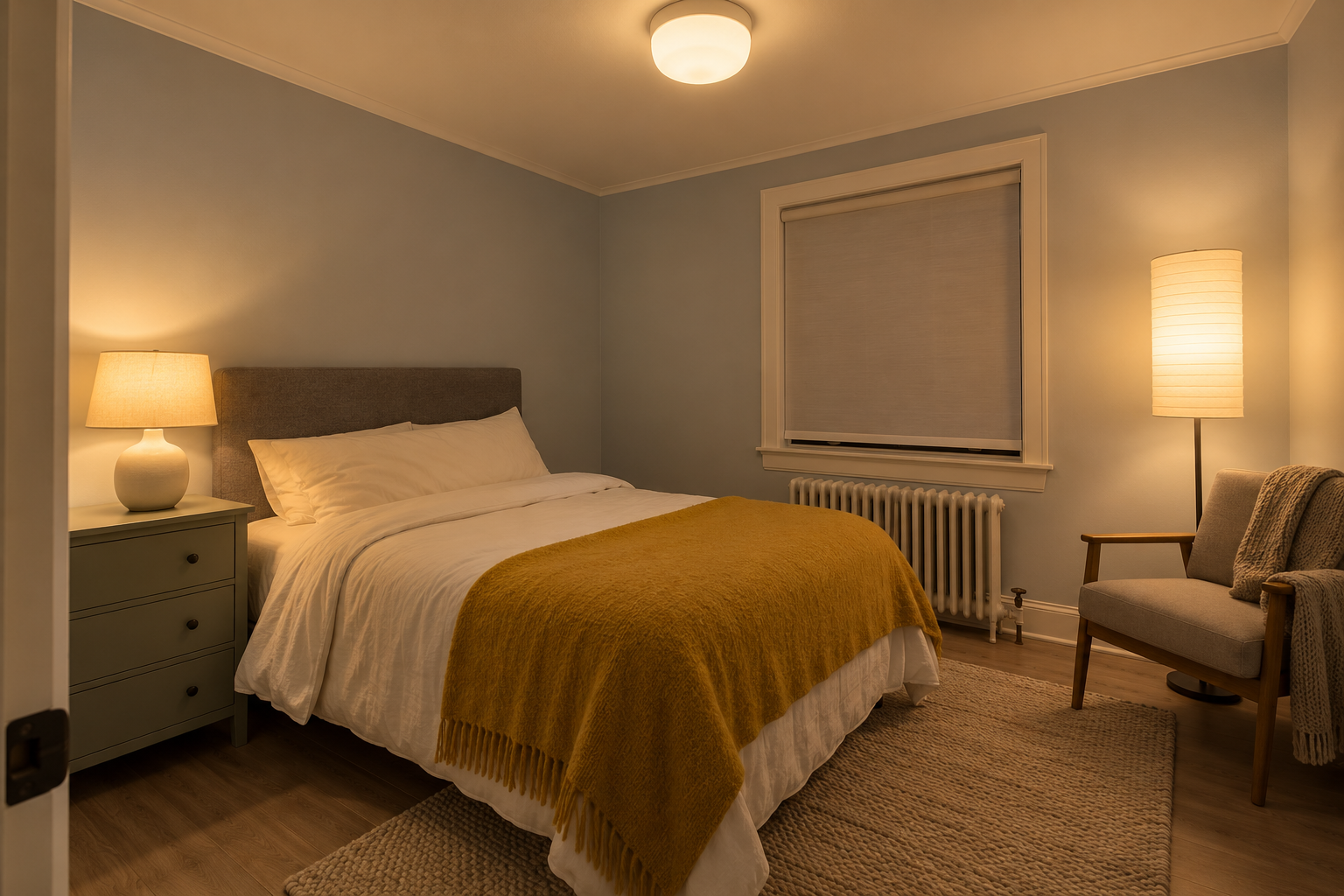
Bulbs are labeled with a color temperature in kelvins. Around 2700K is the warm, slightly yellow light of an old incandescent bulb, and 4000K and above is the cooler white of an office. In a bedroom the lights are close together and all in view from the bed, so mixed temperatures show at once. A cool ceiling fixture over two warm lamps makes the lamps look orange and the ceiling light look blue.
Buying 2700K for every fixture, the closet included, avoids that, and the same goes for a living room.
Put the Ceiling Light on a Dimmer
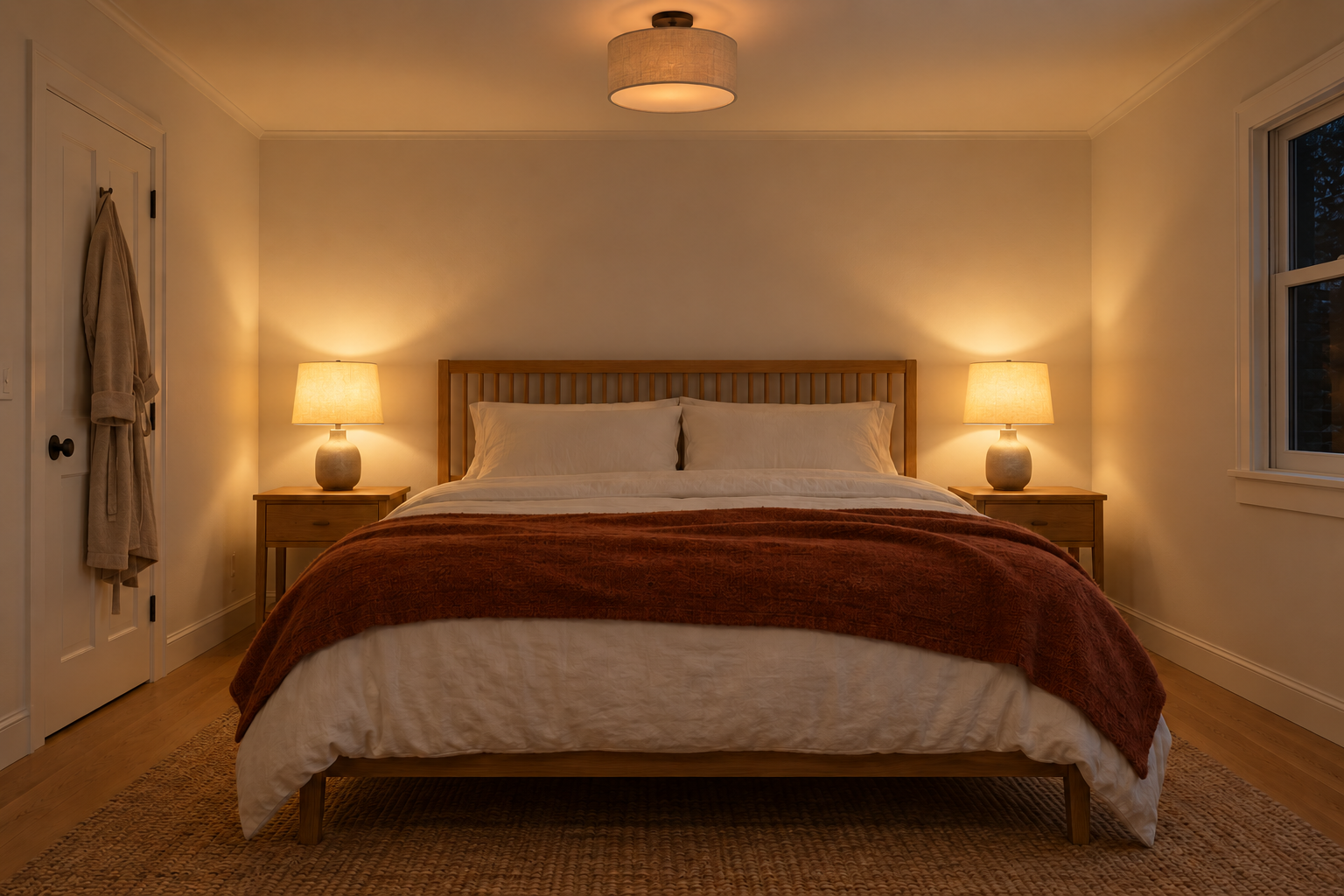
At full brightness a ceiling fixture is right for making the bed, packing a suitcase, and finding a lost earring. For the rest of the evening it’s too much, and the usual response is to leave it off. A dimmer makes the same fixture usable at a quarter of its output, as a soft general light under the lamps.
The bulbs have to be dimmable, which is printed on the box. An older dimmer can make LED bulbs flicker or hum, and if it does, it needs replacing with one made for LEDs.
A Low Light for the Middle of the Night
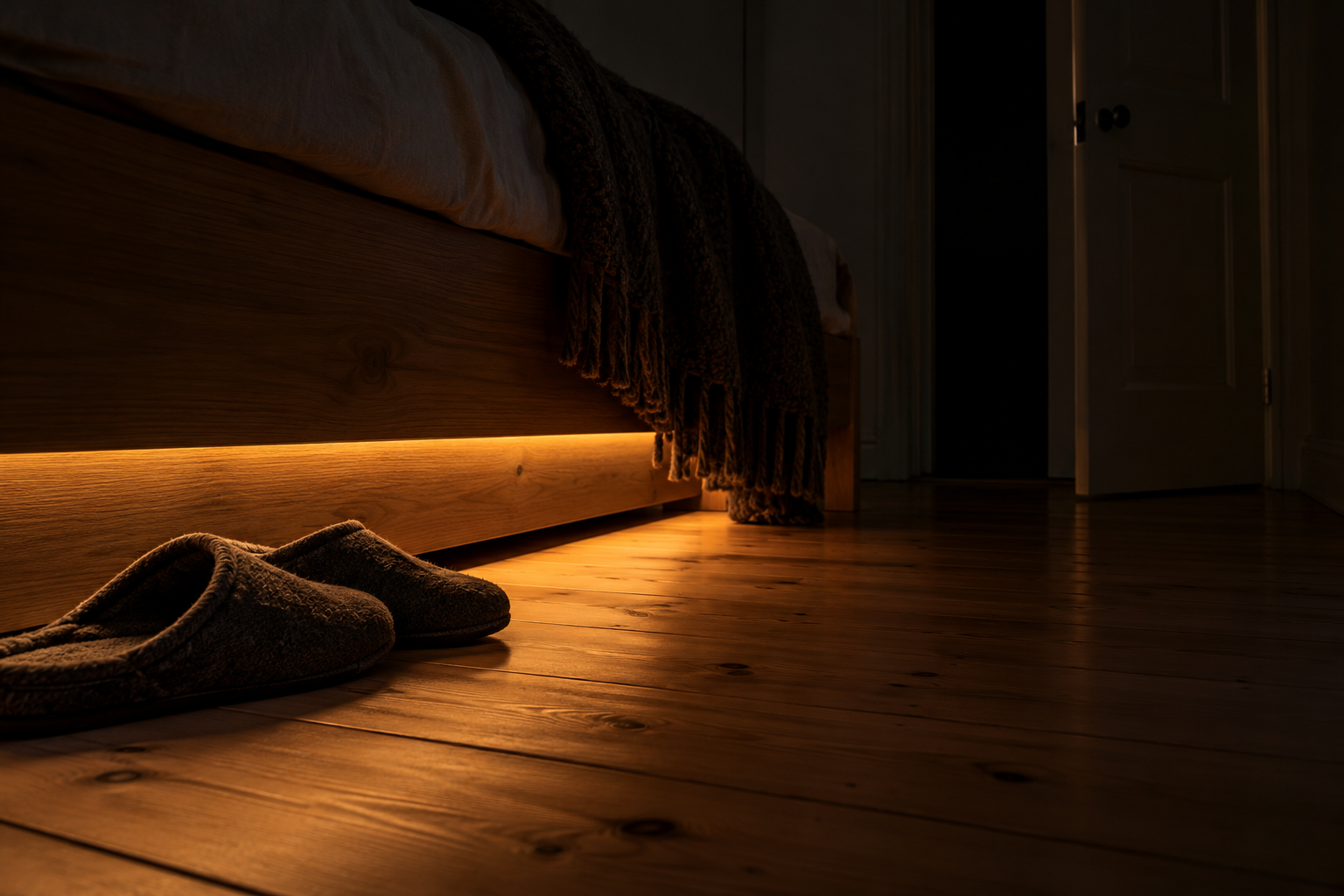
For a trip to the bathroom at 3 a.m., a lamp is more than the job calls for. Enough light to see the floor and the door frame will do, from a source low enough to stay out of everyone’s eyes. A small motion-sensing light under the bed frame, or plugged in near the baseboard, does this and switches itself off.
A warm, dim one is less disturbing than a bright white one, both for the person walking and for the one still asleep.
A Lamp on a Timer for Dark Mornings
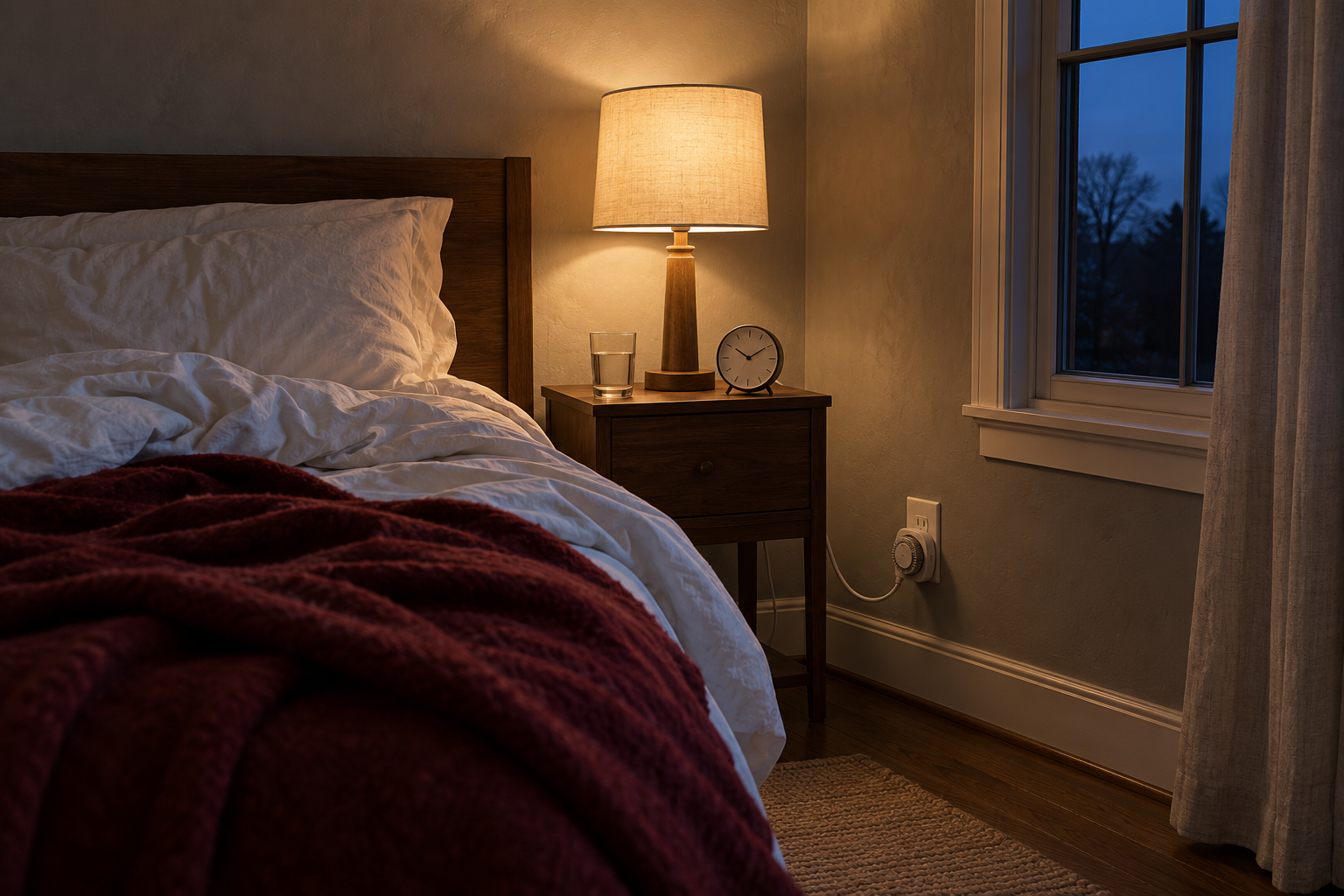
In winter, many alarms go off before sunrise. A bedside lamp on a plug-in timer or a smart plug, set to come on ten or fifteen minutes before the alarm, means the room is already lit when it rings. A wake-up light does the same thing gradually, brightening over about half an hour.
Whether that makes getting up easier varies from person to person. It does remove the moment of reaching for a switch in the dark.
Hang a Pendant Where the Lamp Would Stand
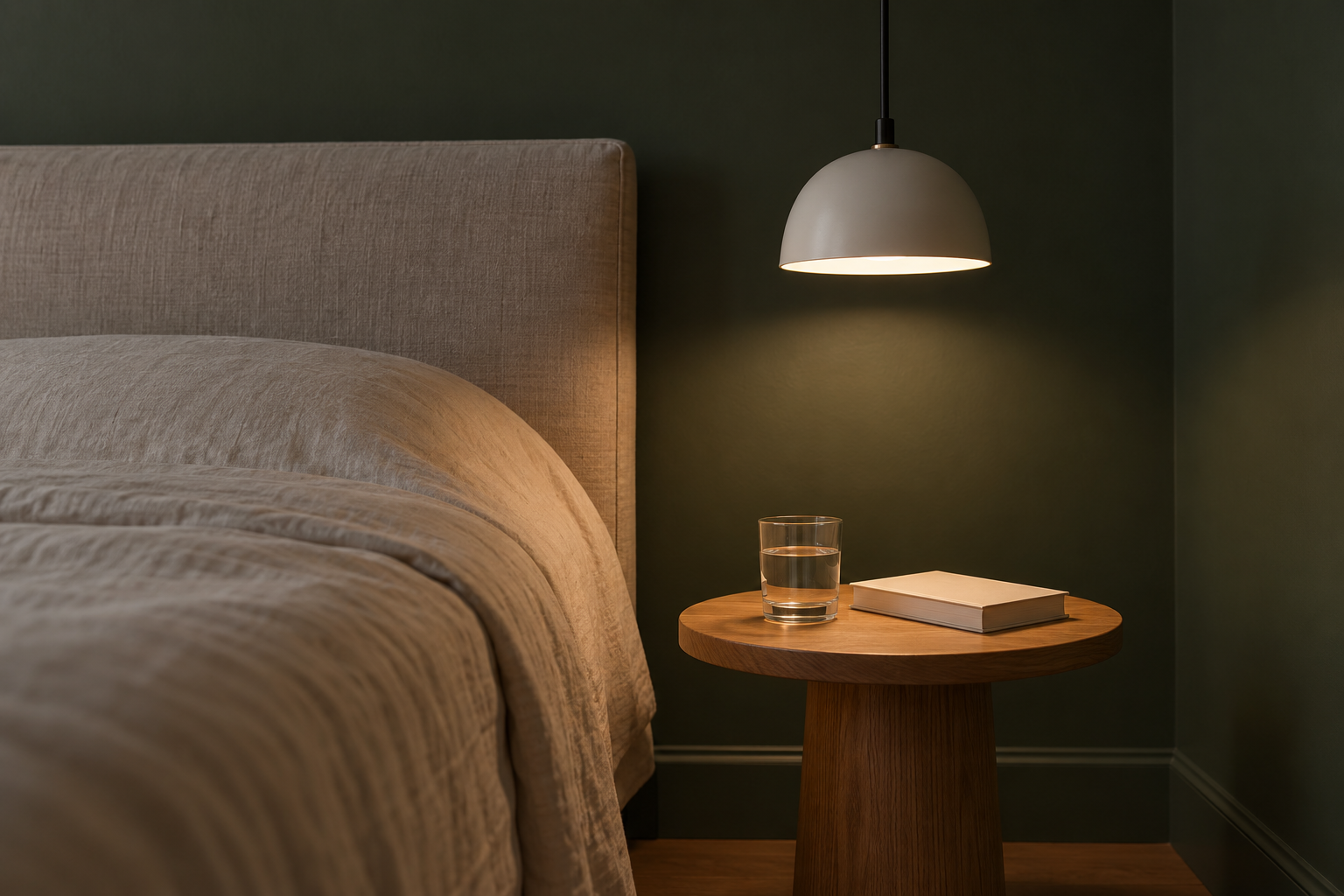
A small pendant hung beside the bed, low over the nightstand, gives the light of a table lamp with no base on the table. It also draws a vertical line beside the headboard, which a lamp doesn’t, and a pair of them frames the bed.
It’s the least flexible idea here. A hardwired pendant fixes the position of the bed, and if the bed moves six inches the pendant hangs over the pillow. A plug-in pendant on a ceiling hook can be shifted. Either way, the bottom of the shade should sit at about eye level for someone sitting up, as with a table lamp, so the bulb stays out of view.
Light the Dresser and the Closet From the Front
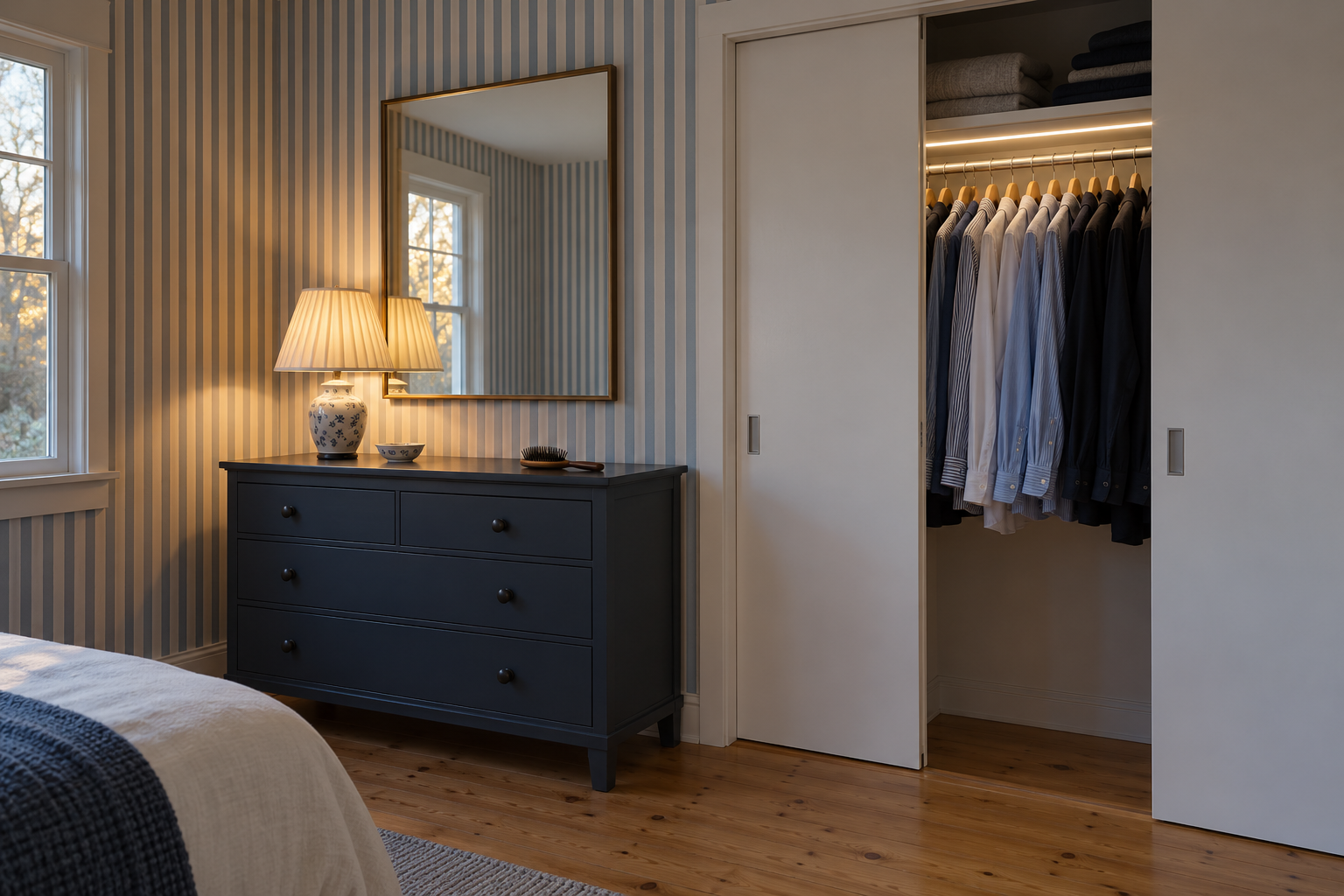
Getting dressed is the one job in a bedroom that needs good light, and the ceiling fixture is usually behind the person doing it. They stand in their own shadow at the mirror and at the closet. A lamp on the dresser, or a wall light beside the mirror, puts light on the face and the clothes from the front.
Inside a closet, a rechargeable LED strip under the shelf above the rod lights the clothes along their whole length. Navy and black are hard to tell apart in dim light, so the closet is where some extra brightness is worth having.
A Floor Lamp Beside the Chair
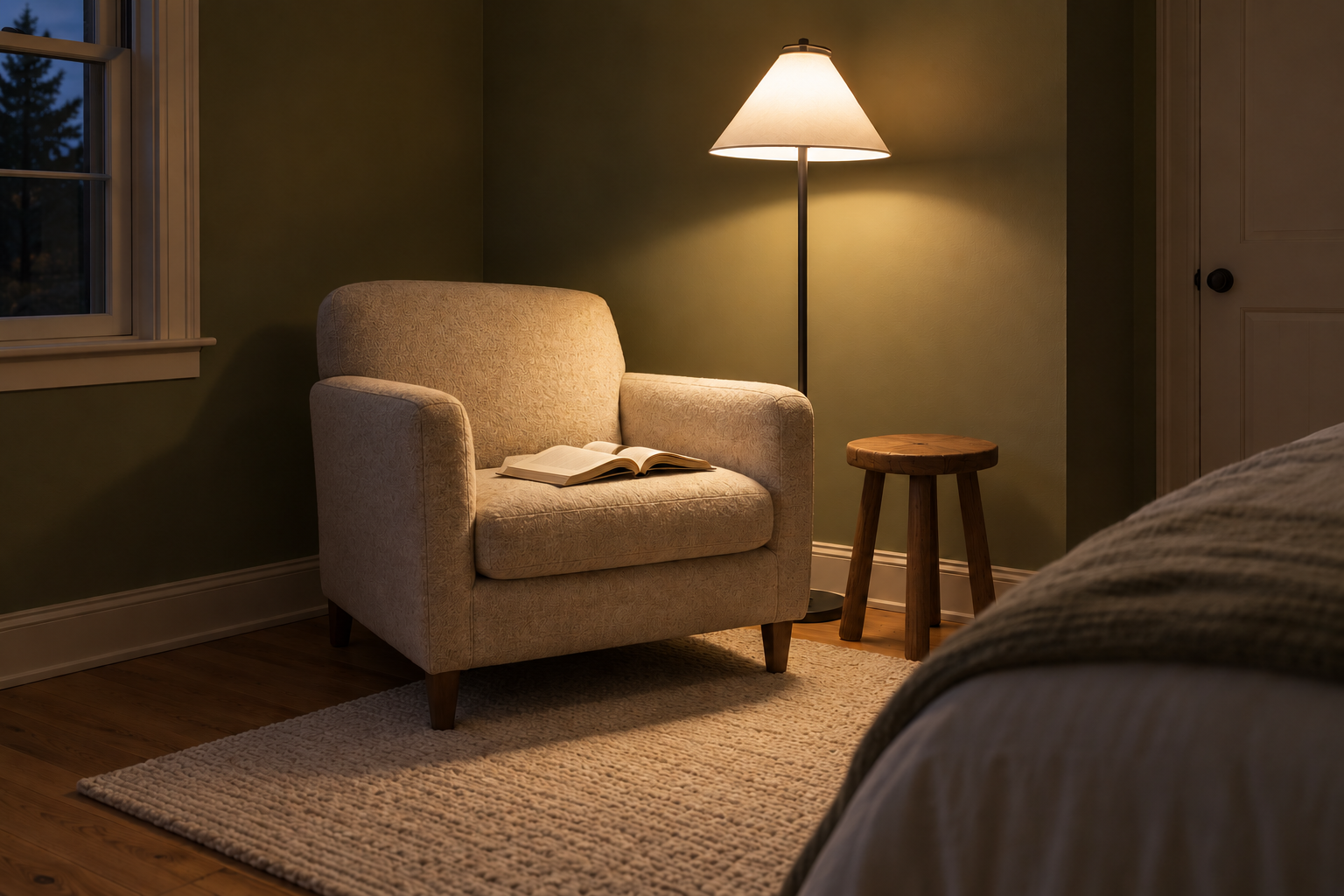
A bedroom chair is often poorly lit, standing away from both bedside lamps with nothing above it. A floor lamp placed just behind one shoulder of the chair puts light on a book or on the buttons of a shirt, and the chair becomes somewhere to sit as well as somewhere clothes land.
Wash the Wall Behind the Bed
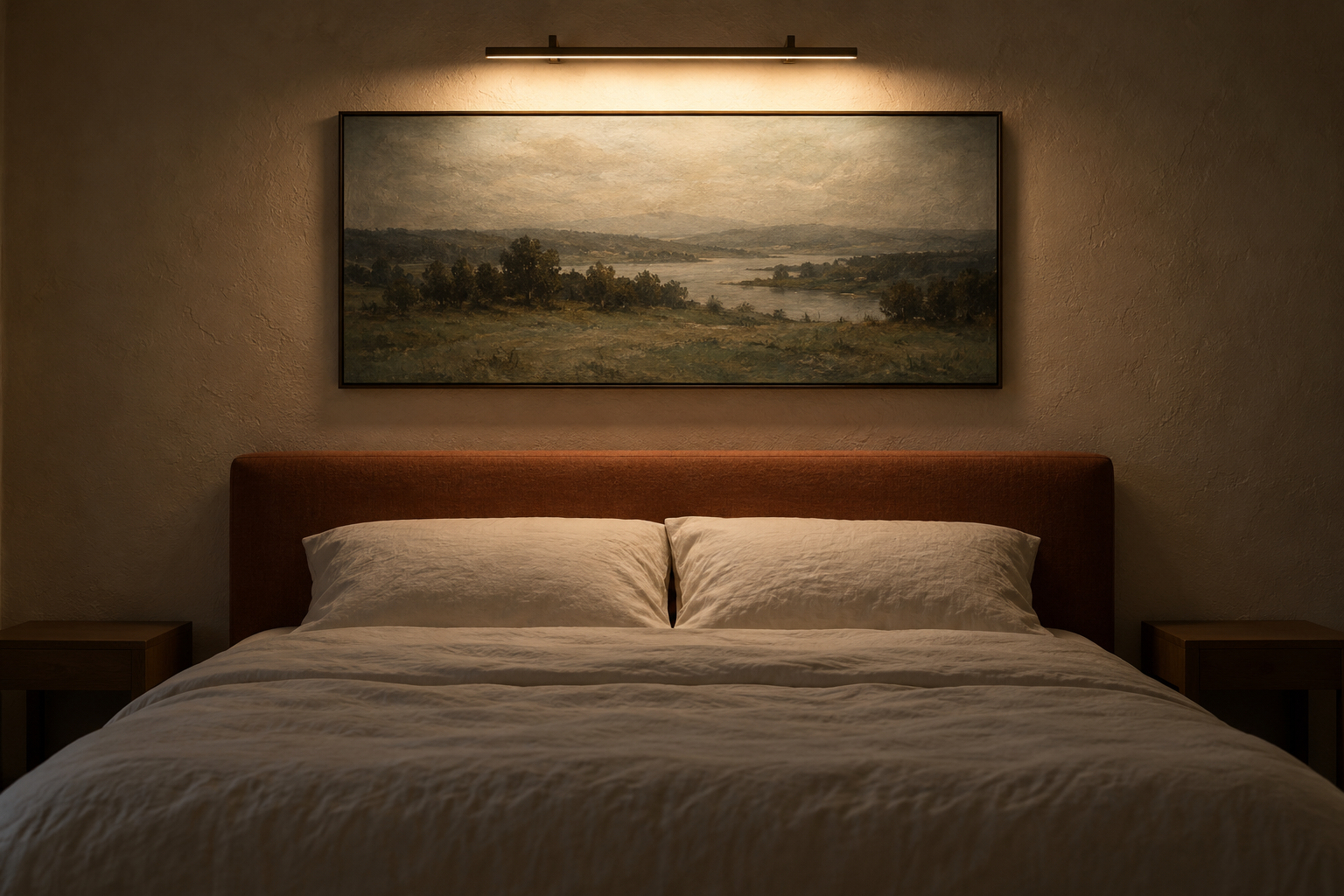
A light aimed at a wall is softer than one aimed into the room, because the wall becomes the source. A picture light over a painting above the headboard lights the wall behind the bed and nothing else directly, and so does a slim LED strip tucked behind the top of the headboard and pointed upward. From across the room the bed has a glow behind it, and from the pillow no bulb is visible.
It gives too little light to read by. It suits the hour before that, and a wall with a color or a texture worth showing.
Bounce Light Off a Low or Sloped Ceiling
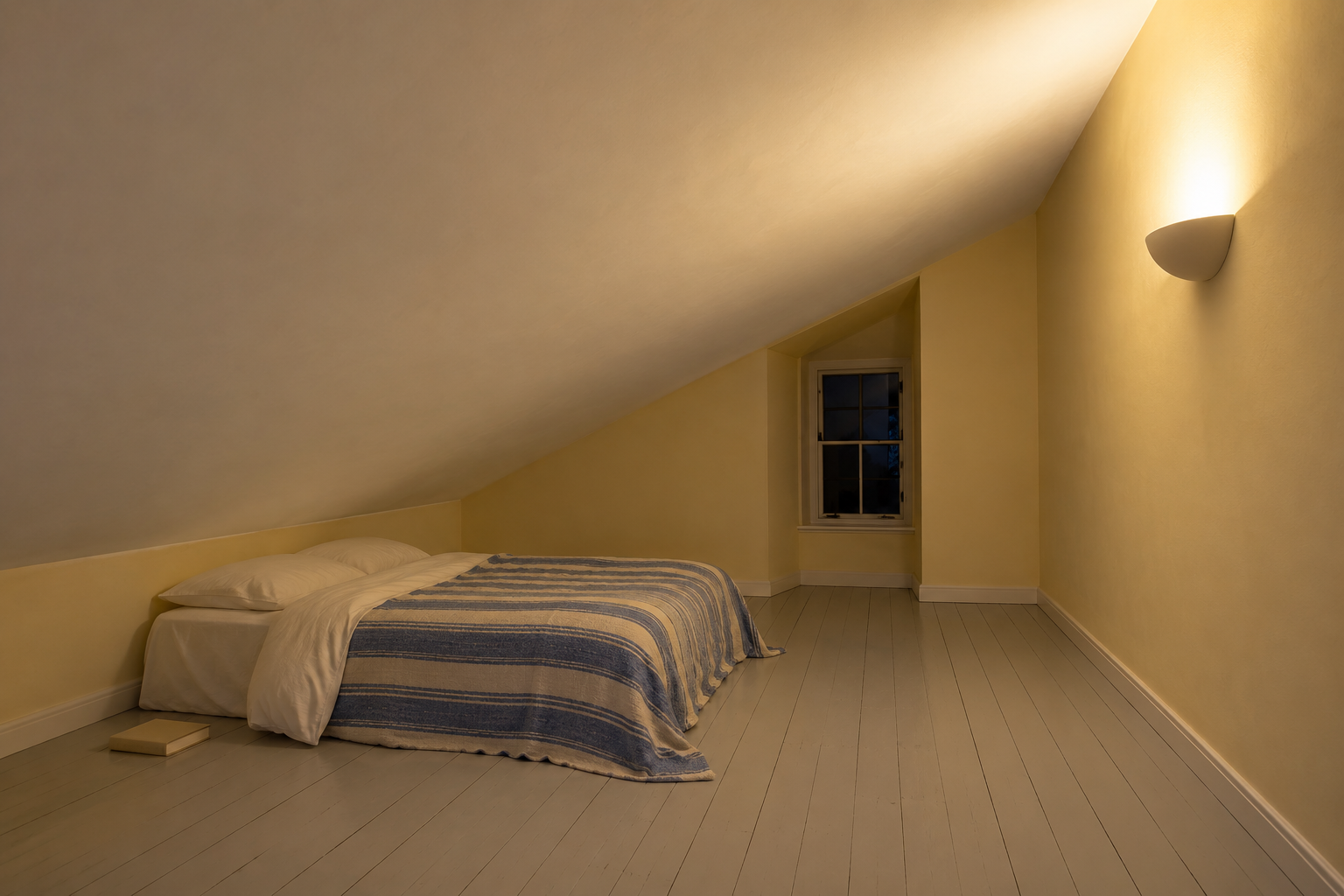
In an attic bedroom, or under a ceiling too low for anything to hang from, the ceiling itself can spread the light. A wall-mounted uplight, or a floor lamp with an open-topped bowl, lights the ceiling, and the ceiling returns the light to the room without glare. A pale ceiling gives back far more of it than a dark one. Under a slope, the light goes on the tall wall and points at the slope, which then glows along its whole length.
Check the Ceiling Fixture From Flat on Your Back
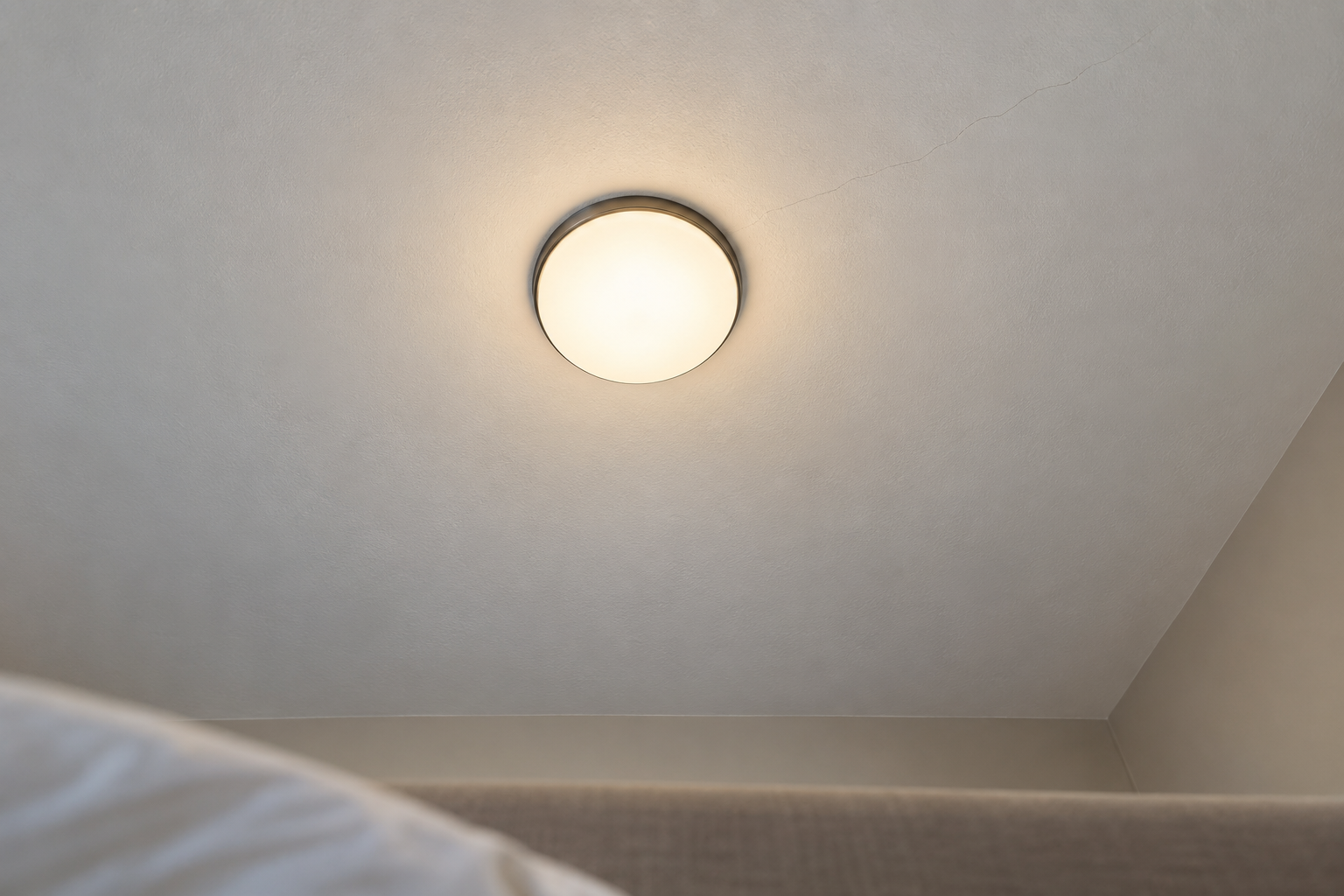
A bedroom is one of the few rooms where people look straight up. A fixture with bare bulbs under an open shade, or clear glass around them, can look fine from the door and glare from the pillow. Lie on the bed and look at it before deciding it stays.
A fixture with a closed diffuser on its underside, in opal glass or fabric, hides the bulbs from below. Under a ceiling of 8 feet or less, a flush or semi-flush fixture also stays clear of raised arms when someone is pulling on a sweater or shaking out a duvet.