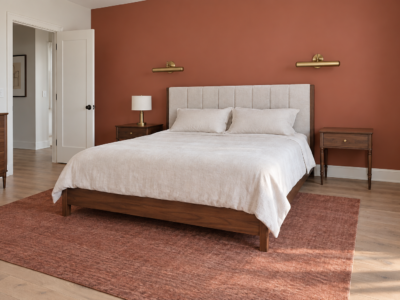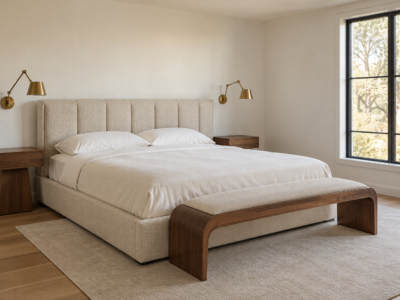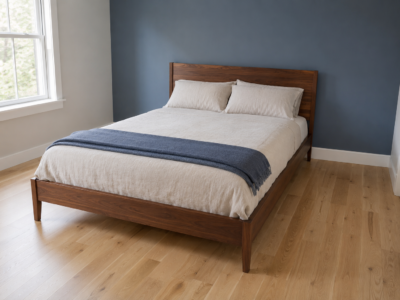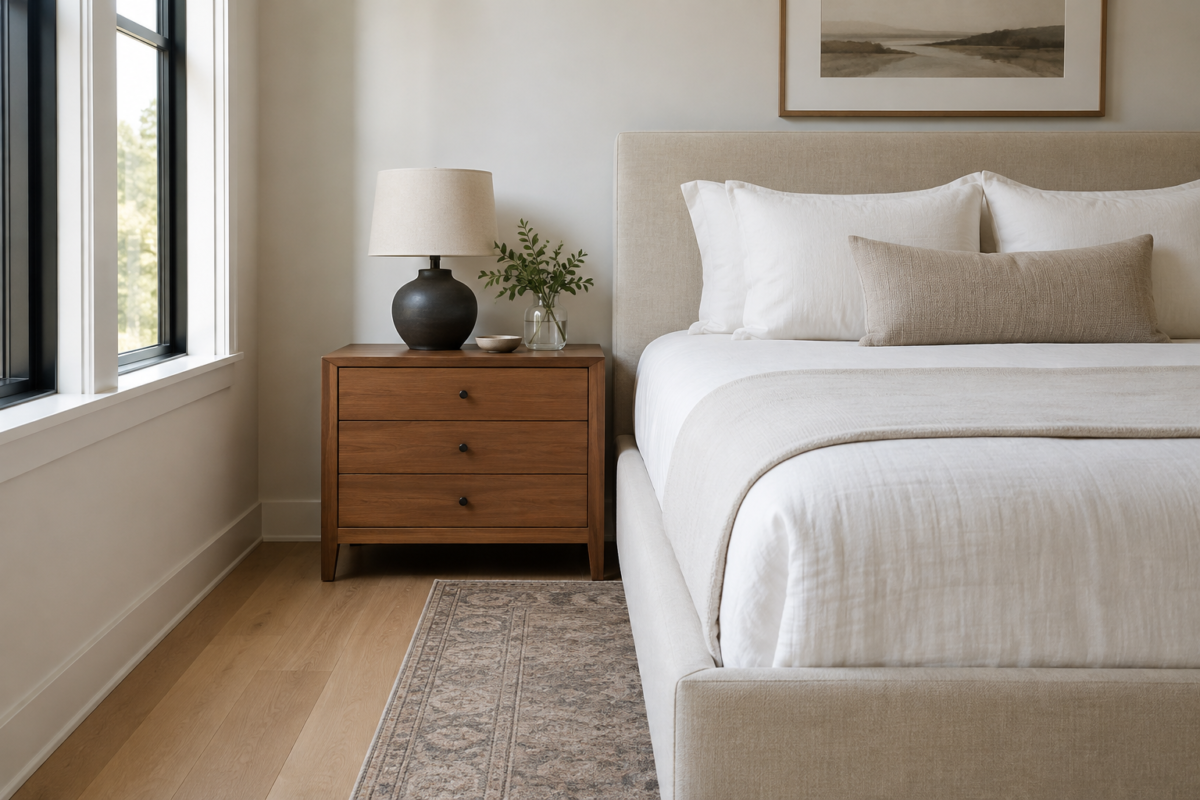
A nightstand gets chosen the same way most small furniture does: by look first, measurements never. That works fine until it’s sitting beside the bed and either too low to comfortably reach from a lying position, or so deep it juts into the path to the door every night. The fix isn’t complicated, but it depends on measuring the one thing most people skip: the height of the mattress it needs to sit beside, not a generic “standard nightstand height” pulled from a furniture listing.
Match the Top to Your Mattress, Not a Standard Number
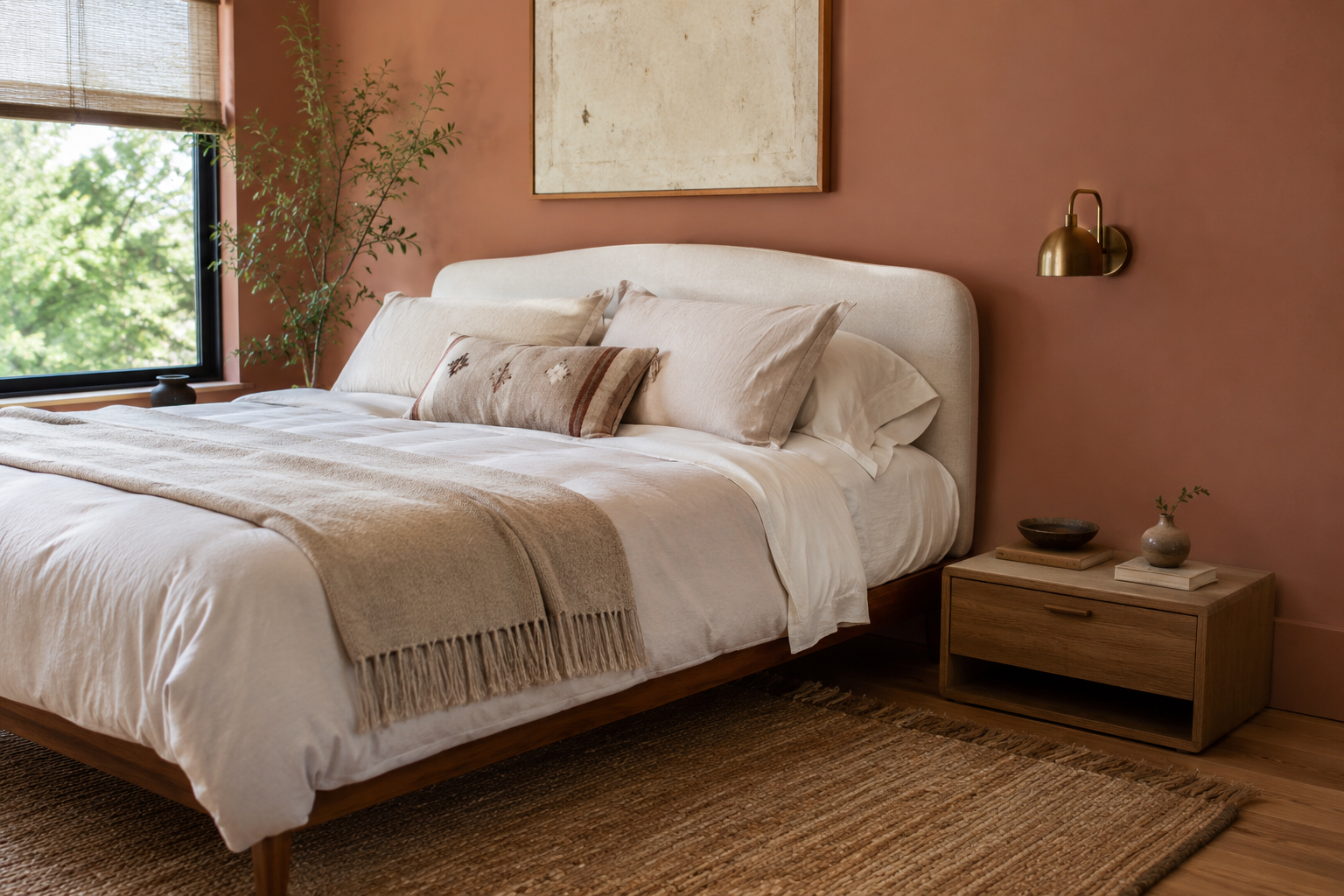
A nightstand’s top should land at or within an inch or two of the mattress top, not the bed frame, not the floor, and not a fixed “standard” height that ignores what’s sitting on the bed. A tall platform bed with a thick mattress might put the true sleeping surface at 26 inches; a lower frame with a slimmer mattress might land closer to 22. Measuring from the mattress top itself, tape measure in hand, matters more than trusting a nightstand’s listed height to be automatically correct.
Measure the Depth Before the Width
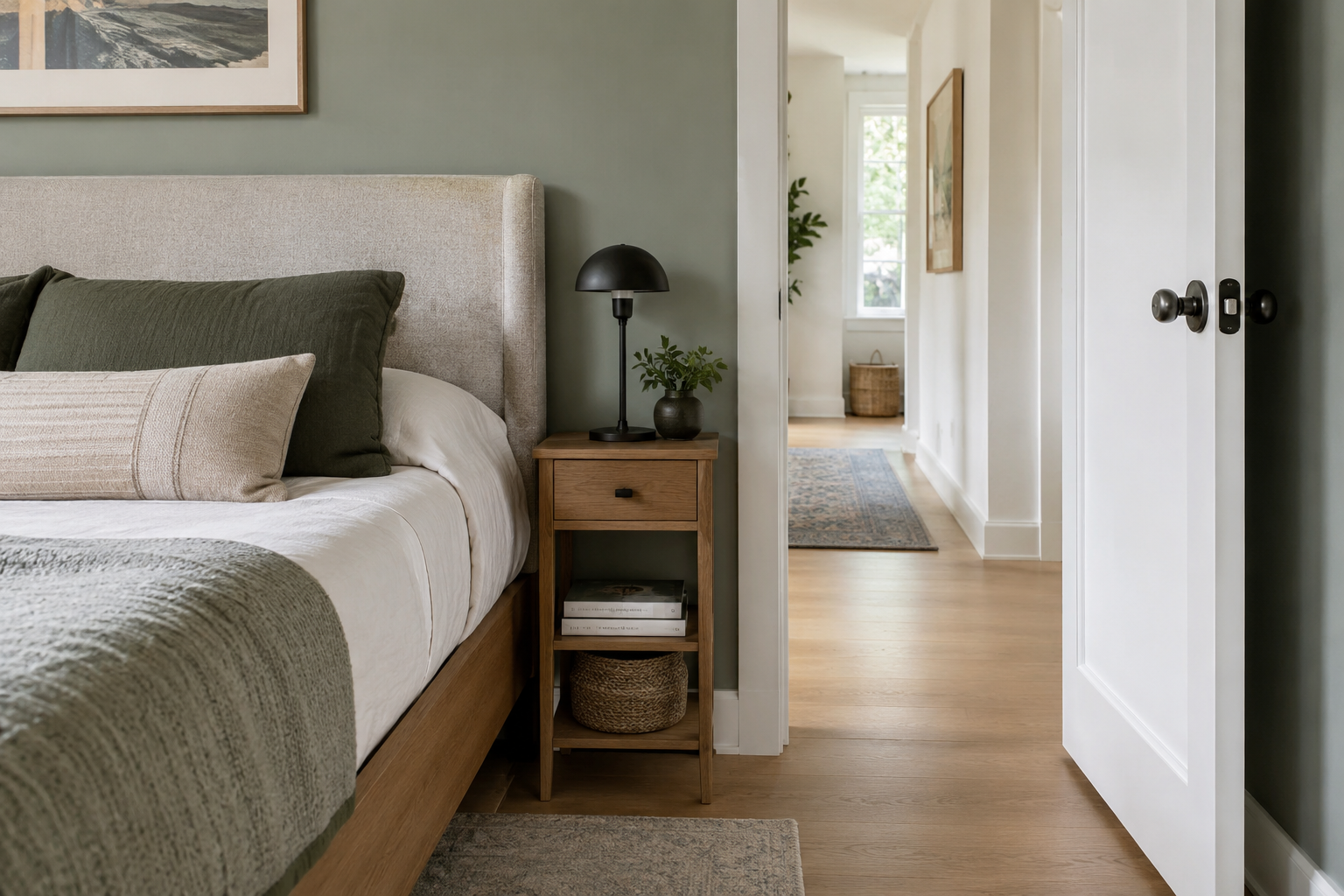
Nightstand depth causes more real problems than width, since a too-deep nightstand eats into the walking space beside the bed in a way a slightly narrow one never will. In a smaller bedroom, an 14-to-16-inch-deep nightstand is often the difference between a comfortable path to the door and a nightly obstacle course. Width matters mostly for how much surface space is available, a genuinely secondary concern to whether the piece physically fits the space it’s going into.
Leave Room for the Door to Actually Swing
A nightstand positioned without checking the door swing is a common, avoidable mistake, especially in smaller bedrooms where the bed sits close to the doorway. Open the door fully before placing the nightstand, not after, and make sure the swing path and the nightstand’s footprint don’t overlap. This is a five-second check that prevents a piece of furniture from becoming a permanent obstruction.
A Taller Bed Needs a Taller Nightstand, Not a Bigger One
Sizing up a nightstand to match a taller bed usually means reaching for a bigger piece overall, when height is really the only dimension that needs to change. A tall platform bed with a thick mattress pairs better with a nightstand that’s simply taller, not wider or deeper, since the goal is matching the mattress-top height, not scaling the whole piece up to look proportional. A large nightstand beside a tall bed can still end up at the wrong height if its top doesn’t reach the mattress line.
The right nightstand comes down to two measurements most buyers skip: the mattress-top height and the depth available beside the bed. Get those two numbers before shopping, and almost any style choice on top of them works.
Frequently Asked Questions
Do platform beds need a different nightstand height than a bed with a box spring?
Not a different rule, just a different number to measure. A platform bed sits lower to the floor overall, but the mattress-top height is still what matters, and it can vary significantly based on mattress thickness alone. Measure the mattress top on a platform bed the same way as any other, rather than assuming platform beds are automatically lower.
Do both nightstands in a bedroom need to match each other?
No, though most people default to matching pairs for a symmetrical look. Two different nightstands work fine as long as both are sized correctly for the same mattress height on their respective sides; the height rule matters far more than whether the two pieces are identical.