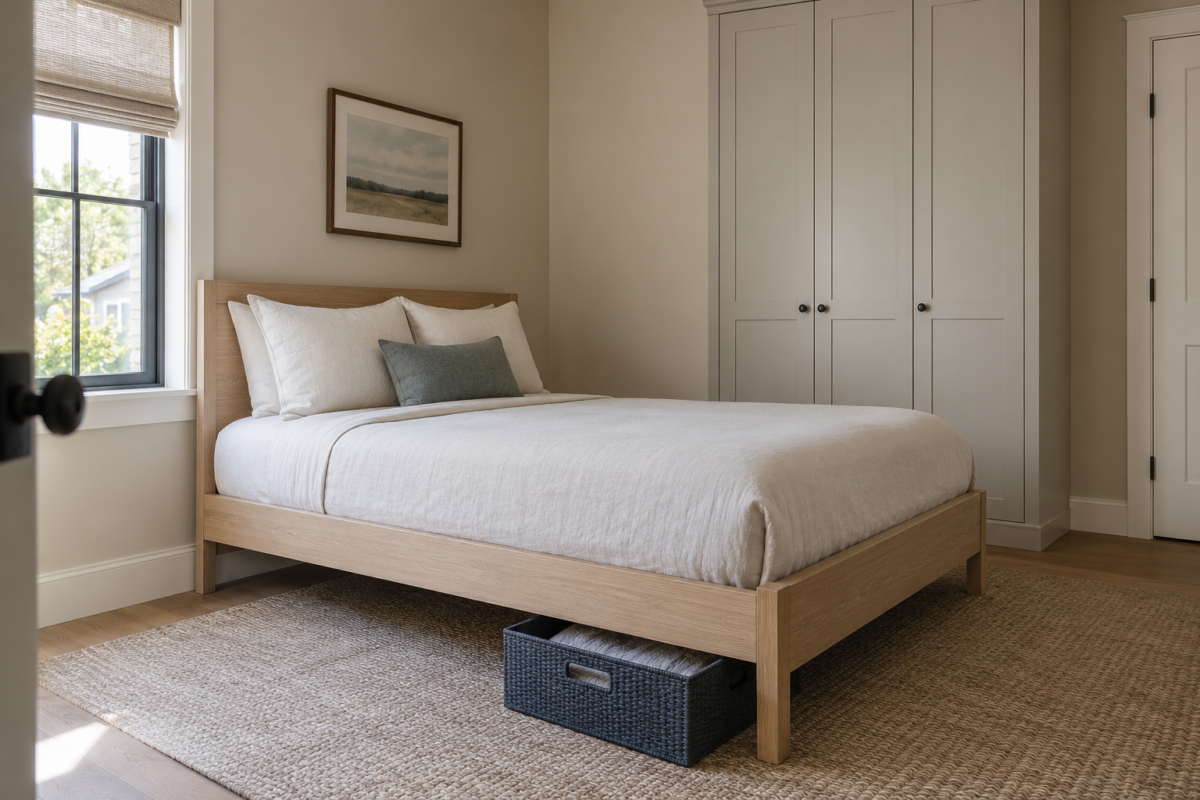
A small bedroom does not usually have a storage shortage. It has a floor-space shortage, and the two problems call for different fixes. Adding another dresser or a taller wardrobe often makes the room feel more crowded even when it holds more, since floor space and walking room disappear faster than storage capacity increases.
This guide works through five places a small bedroom actually has room to gain: under the bed, beside it, inside the wardrobe already installed, up the wall instead of across the floor, and built into furniture that’s already doing another job. None of it depends on buying more furniture. Most of it depends on using what’s already in the room differently.
Claim the Floor Space Under the Bed
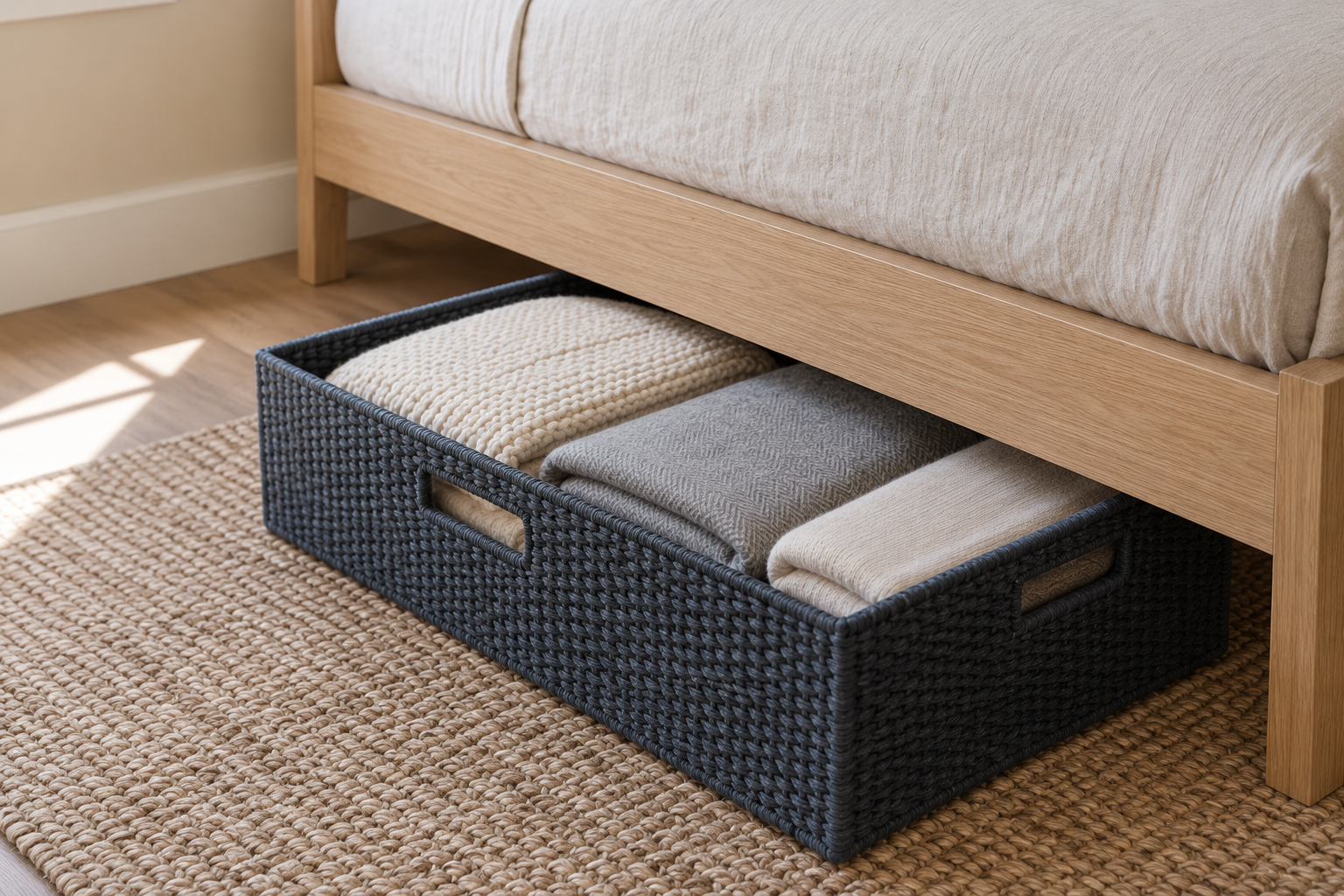
The floor under a bed is often the single largest unused storage area in a small bedroom, and claiming it costs nothing beyond a set of bins or drawers. A standard bed frame leaves about seven to nine inches of clearance, enough for a low, flat under-bed bin or a shallow drawer unit, but platform beds and low-profile frames often leave less than that, so measure before buying anything. Rolling bins work best for off-season clothing or spare bedding: items pulled out a few times a year, not something reached for every day.
A bed with drawers built into its base solves the clearance problem outright and is worth considering at the next bed purchase, though it adds cost and usually leaves less room underneath for a robot vacuum or a quick sweep. For a bed already in place, low bins on casters are the more realistic upgrade. They slide out fully, hold more than a shallow drawer, and need no tools to install. Either option works best for things retrieved a handful of times a year, since bending down and hauling out a bin isn’t something most people keep doing for daily items no matter how organized the system looked on day one.
Skip the Nightstand for Something Narrower
A full nightstand with drawers needs floor space, usually at least 16 to 18 inches deep, and in a small bedroom that footprint can crowd a walkway or block a closet door from swinging open. When the room can’t spare that much floor, a narrow wall-mounted shelf or a shallow console solves the same problem: somewhere to set a lamp, a phone, and a glass of water within reach of the bed, without the floor-standing bulk.
A floating shelf six to eight inches deep holds what a nightstand gets used for on a nightly basis. It won’t hold a stack of books or a drawer full of odds and ends, so pair it with a small wall hook or a shallow basket nearby for anything that needs to stay out of sight. Where the room allows a narrow table but not a full nightstand, matching its height to the mattress top rather than the floor keeps it usable without reaching up or down. The sizing logic in our nightstand height and size guide applies just as well in a tight room as a spacious one, since the mattress, not the square footage, sets the right height.
Make the Wardrobe Carry More Than It Does Now
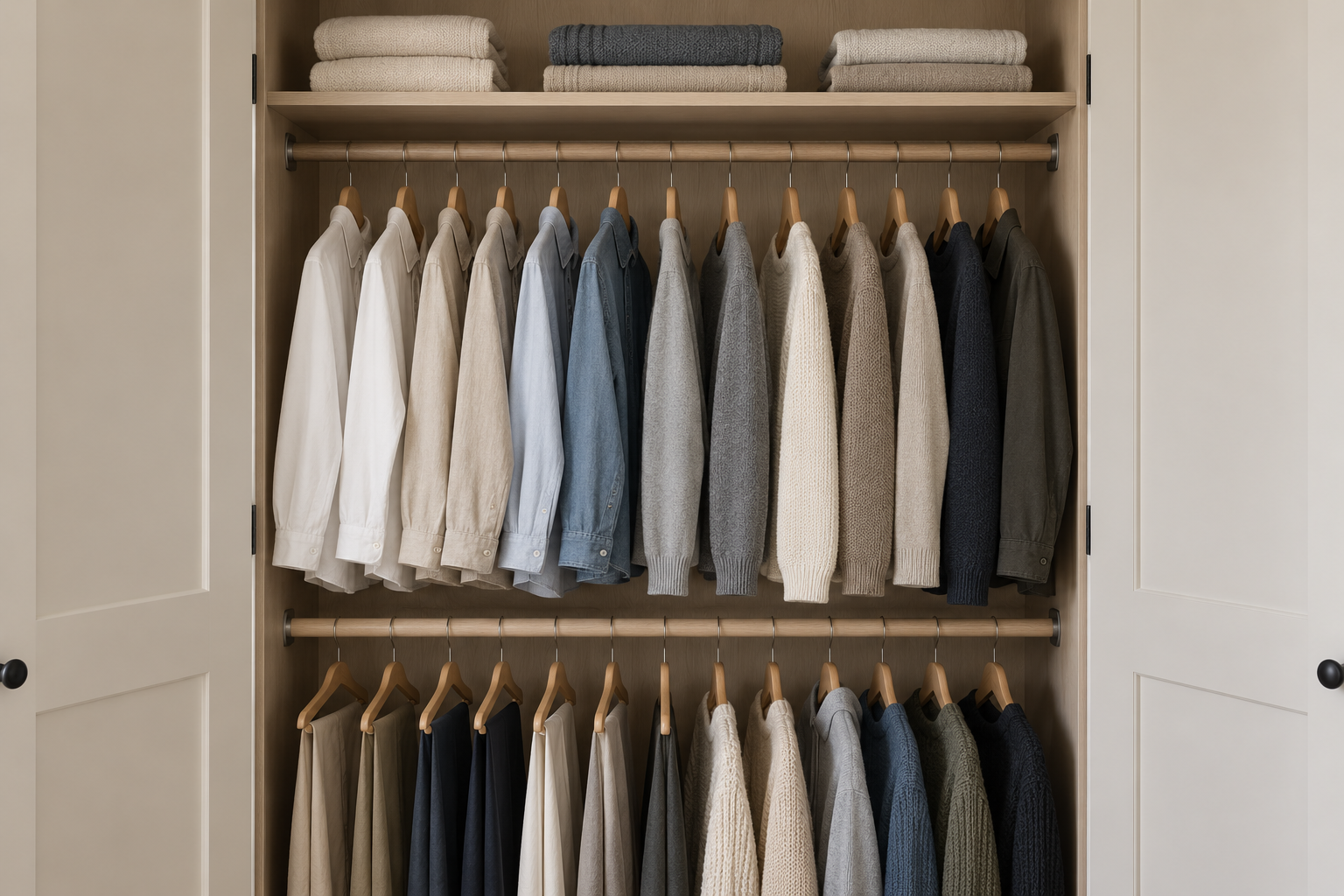
A wardrobe in a small bedroom usually has to hold everything a larger room would split between a closet and a separate dresser. How it’s built matters more here than almost anywhere else in the room. A built-in wardrobe that runs floor to ceiling and wall to wall uses every inch of wall a freestanding piece leaves behind, since it removes the gaps a boxed unit always keeps on either side. It costs more and can’t move with a renter. That makes a freestanding wardrobe the more practical choice for anyone who doesn’t own the space, or won’t stay long enough to justify built-in carpentry. Sliding or bifold doors are worth choosing over hinged ones on either type, since a hinged door needs floor clearance to swing open that a small room often can’t spare.
An awkward corner, too narrow for a normal dresser and too shallow for most furniture, is often the best home for wardrobe storage precisely because nothing else fits it well. A corner wardrobe or an angled unit built for that specific footprint claims space a rectangular floor plan would otherwise waste. Inside either type, a second hanging rod mounted below the first roughly doubles hanging capacity without adding an inch of footprint. A single rod leaves the space above shorter garments sitting empty, and a second rod puts it to use. Shelving above the hanging section, reached with a step stool for less frequent items, puts the height most closets and wardrobes leave unused to real use.
Go Up the Wall Instead of Across the Floor
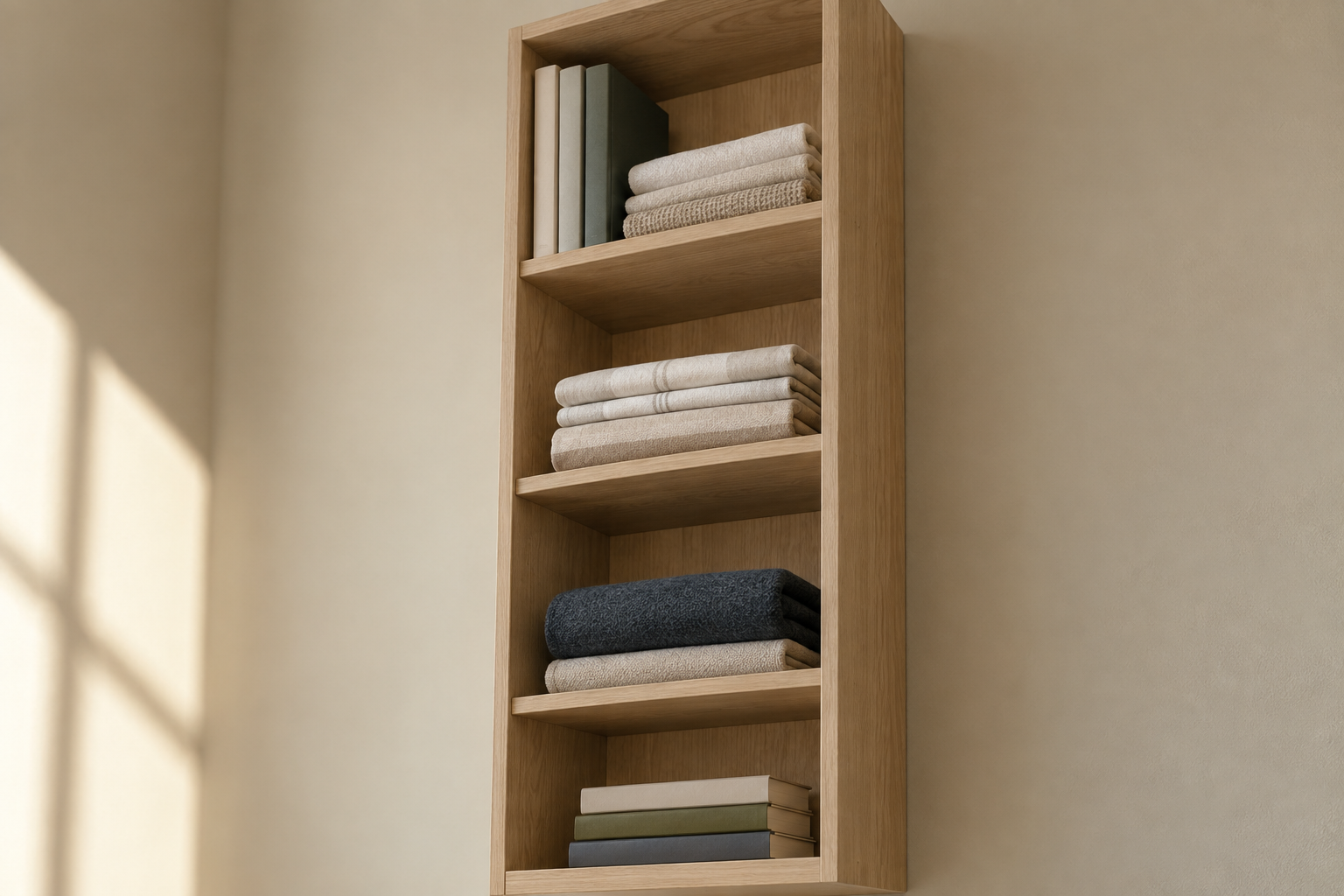
Floor space in a small bedroom is finite, but the wall above eye level almost never gets used at all. Tall, narrow shelving, ideally no more than 12 inches deep, holds books, folded items, or storage boxes without cutting into the walking path the way a wide dresser does. The narrower the footprint, the less it competes with the room’s real traffic pattern between the door, the bed, and the closet. A ladder-style leaning shelf accomplishes something similar without any wall-mounted hardware, a reasonable substitute where drilling isn’t an option.
Wall-mounted cabinets above a dresser or desk add a second layer of storage inside the same floor footprint that piece already occupies. The tradeoff is access. Anything stored above about six feet needs a step stool, so this space suits things pulled out occasionally, not something needed every day. Pairing a tall open unit lower down with closed cabinets higher up keeps daily items reachable while pushing overflow up where it’s out of the way instead of out of the room.
Let One Piece of Furniture Do Two Jobs
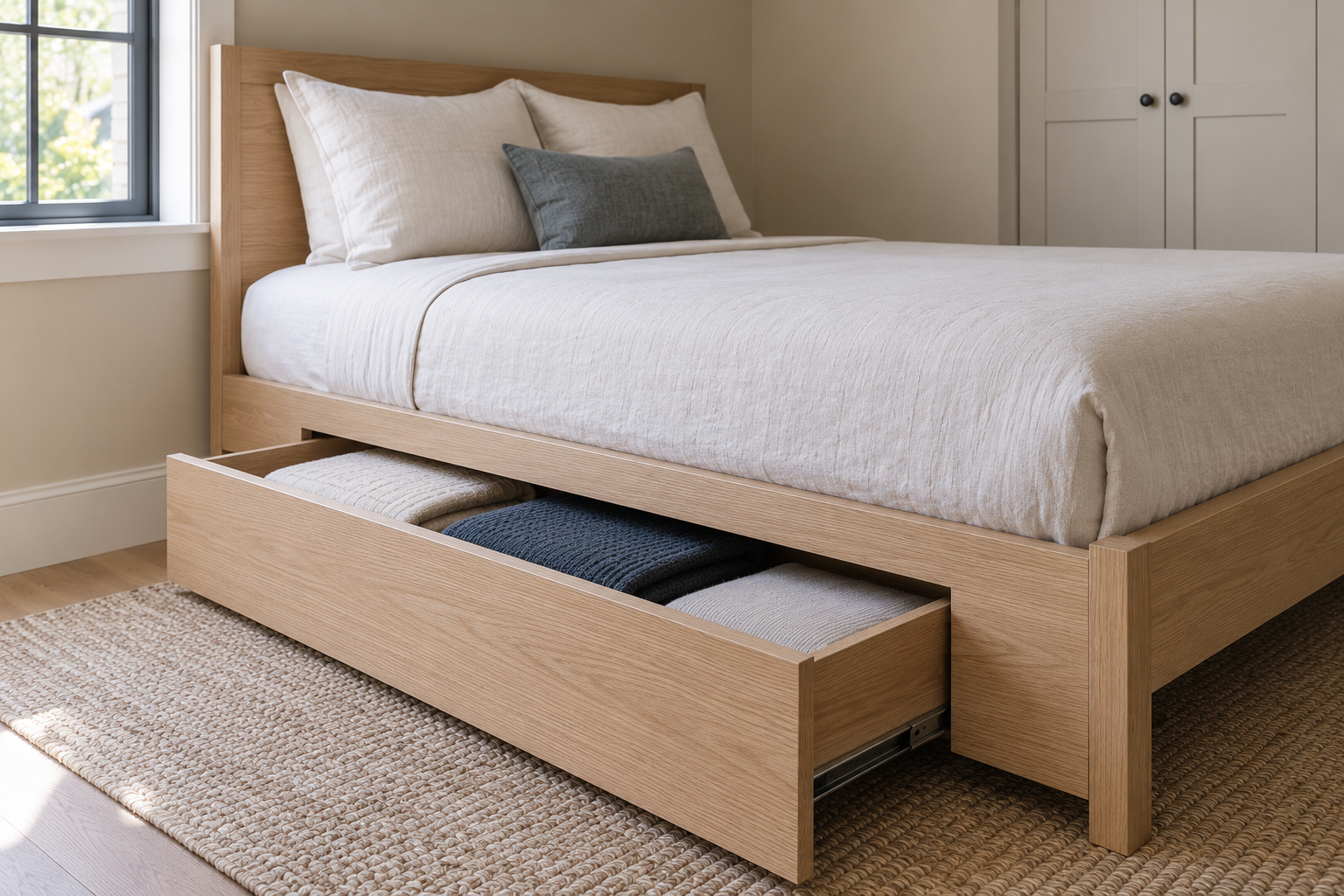
Storage doesn’t only come from bins and shelves. Some of the most useful capacity in a small bedroom comes from a single piece of furniture built to solve two problems instead of one. A bed frame with drawers built into its base, already mentioned above as one option for under-bed storage, is the clearest example. The storage and the furniture are the same purchase, which matters when the room can’t spare space for both a bed and a separate storage piece. Our bed size guide covers how to size that same frame to the room itself, since a storage bed too large for the space defeats its own purpose.
A headboard with built-in shelving or cubbies takes over the nightstand’s job in one wall-mounted piece, useful in a room too tight for a nightstand at all. The space above a doorway, almost always empty, holds a shallow shelf for infrequently used items like extra bedding or luggage, a spot most people never think to use because it sits above where anyone naturally looks. This doesn’t require rethinking the room’s layout. It only asks furniture and wall space already in the room to hold more than they currently do.
None of this depends on buying more furniture. It depends on the bed, the walls, the wardrobe, and the space above eye level all doing more work than they currently do, since more storage without more visual bulk is what actually keeps a small room from feeling more crowded than it already does.
Frequently Asked Questions
What if the closet is too small for a double rod?
A double rod needs about 80 inches of vertical clearance to split into two functional heights without crowding either row. In a closet shorter than that, a single rod paired with wall shelving above and a slim drawer unit below usually holds more than trying to force a second rod into too little height.
Is under-bed storage worth it if the bed sits low to the ground?
Not really, once clearance drops below about five or six inches, since almost nothing fits in that gap besides flat vacuum-seal bags for out-of-season clothing. In that case, vertical wall storage and a properly sized wardrobe will do more for the room than trying to force bins under a bed frame that wasn’t built for them.
Is any of this workable in a rental that won’t allow drilling into the walls?
Most of it. The ladder shelf mentioned above stands in for a wall-mounted unit, a low console can take the place of a floating nightstand shelf, and a freestanding wardrobe with a second interior rod covers the same ground as a built-in one. The one idea that genuinely needs hardware is the doorway shelf, since even a small bracket or ledge has to attach to the wall to hold any real weight.