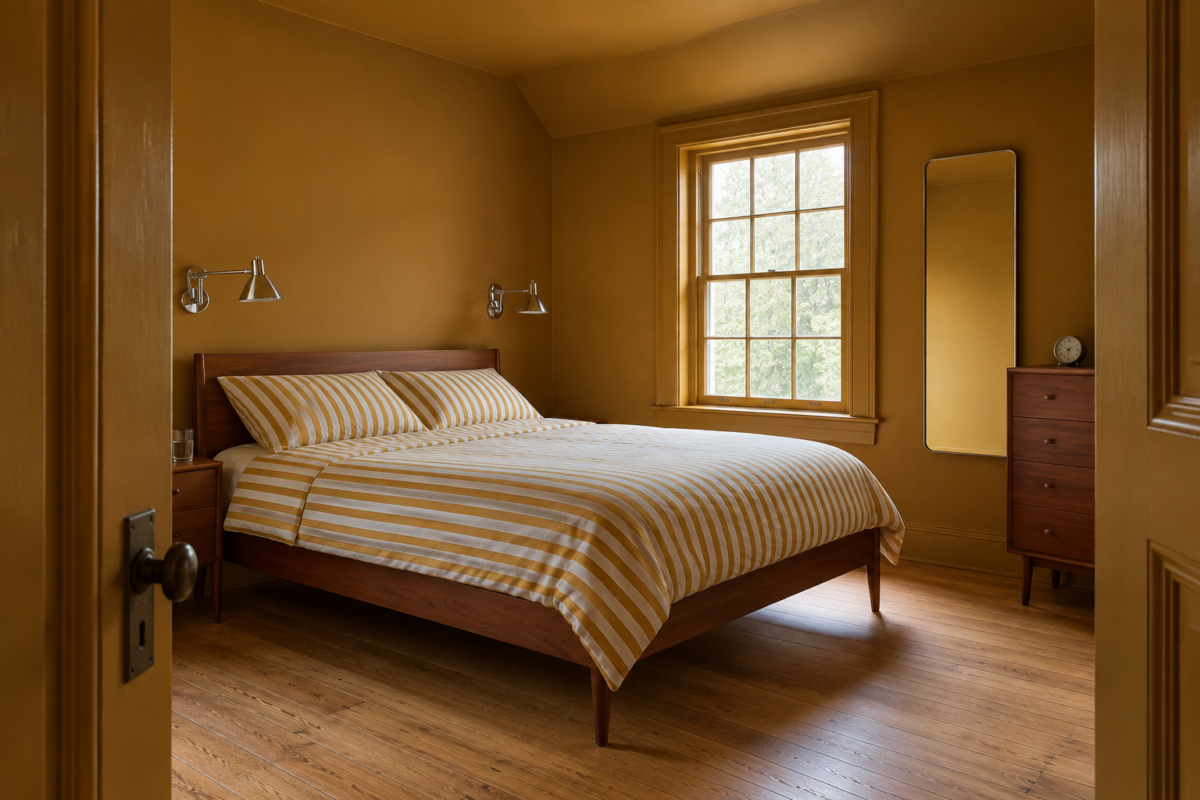
Two bedrooms of the same size can look a few feet apart. In one, the bed sits on a solid base, white trim and a white ceiling outline a pale gray box, and a single ceiling light leaves the corners dim. In the other, the floor runs under the bed to the wall, the walls and ceiling share one color, and a lamp lights the far corner. Nothing in the second room is smaller. There’s just less to tell the eye where the room stops.
Most of the difference comes from paint, light, and where things stand, not from new furniture. The ideas below start with the floor and the walls, move on to light and reflection, and finish with the three largest surfaces after the bed: the rug, the wardrobe, and the curtains.
Show More of the Floor
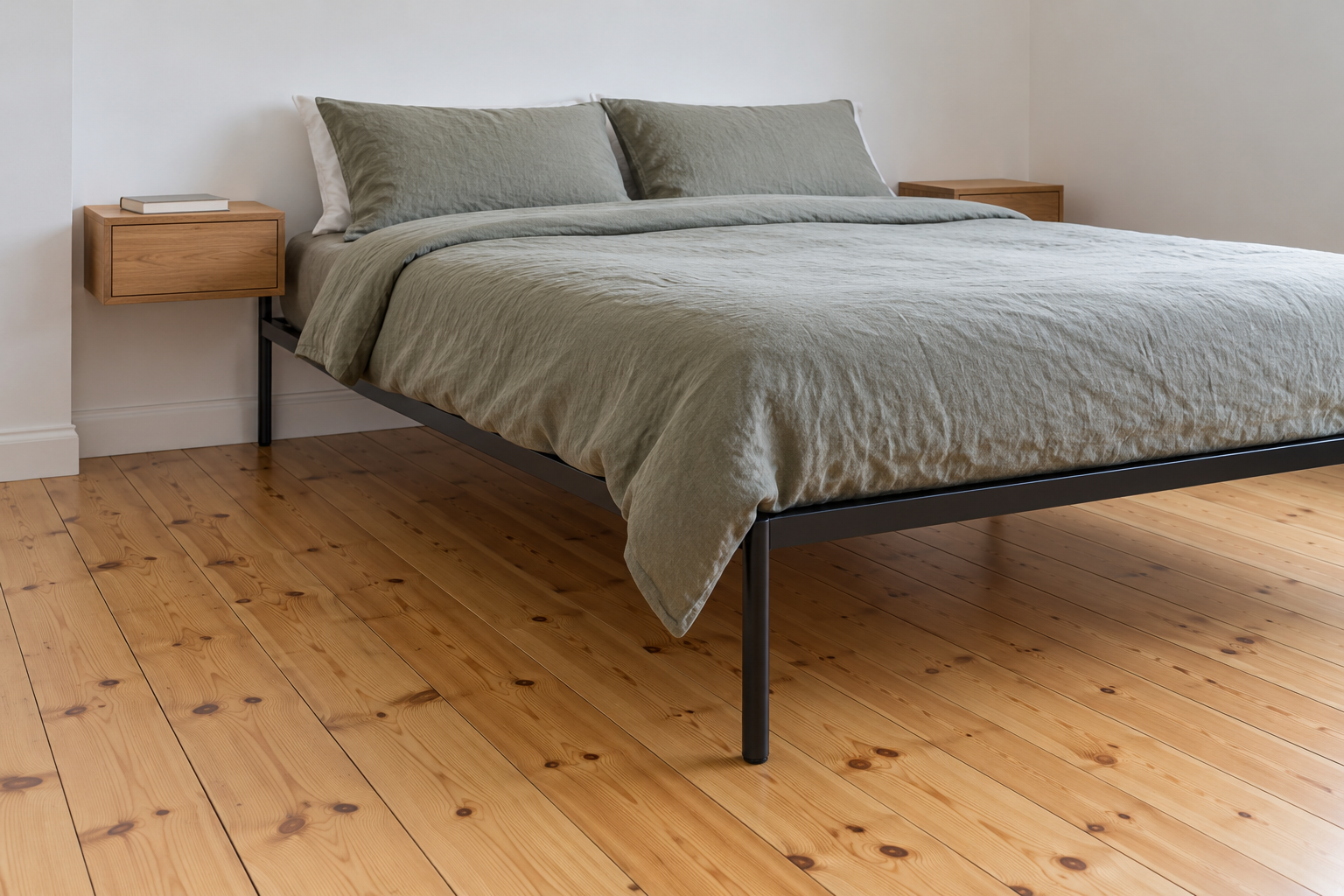
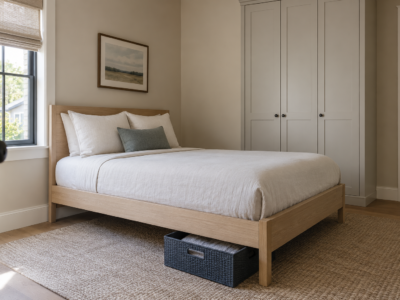
The amount of floor you can see is one of the first things the eye uses to judge a room’s size. A bed on a solid base, a chest that sits flat on the floor, and a skirted dressing table each hide a slab of it. Furniture on legs, even 6 inches of them, lets the floor run underneath to the wall, and the eye takes in the room’s full depth.
Nightstands fixed to the wall do the same on either side of the bed. If the space under the bed has to hold storage, storage usually wins in a small room. A drawer base in a color close to the floor stands out less than one in a contrasting wood.
Paint the Walls, Trim, and Ceiling One Color
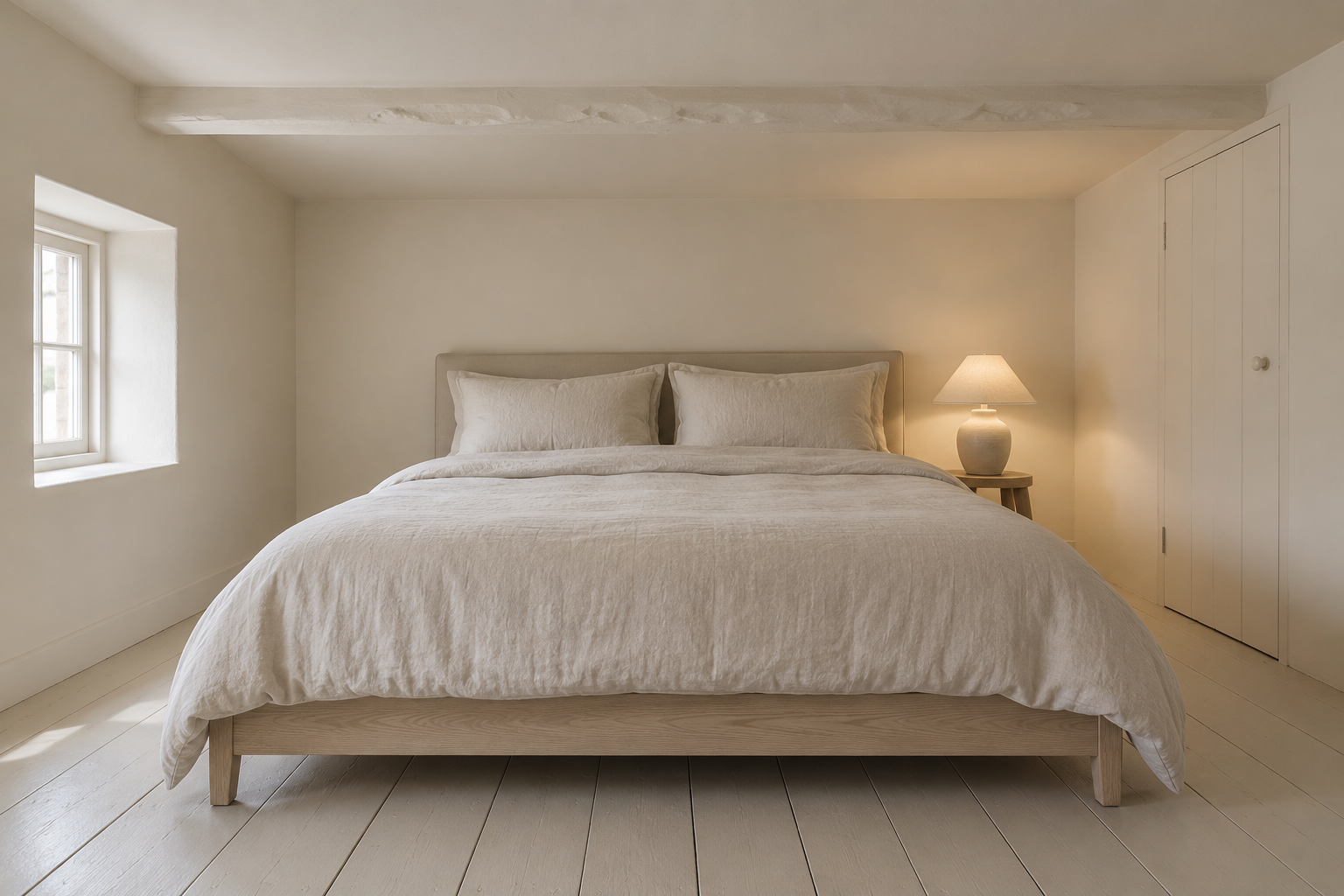
White trim and a white ceiling draw a line around every edge of a room, the corners, the top of the walls, and the door frame. In a small bedroom those lines spell out exactly how small it is. Painting walls, trim, and ceiling in one color takes the lines away, so the corners soften and the ceiling becomes harder to place.
It works with a pale color and with a deep one. An ochre or a dark blue on every surface blurs the corners, especially by lamplight, while the same color on the walls alone, under a white ceiling, makes the room look boxed in. Use a matte finish on the walls and ceiling and eggshell on the trim, so the trim differs in sheen and not in color. Matte or glossy paint covers how each finish wears.
Move Tall Furniture to the Door Wall
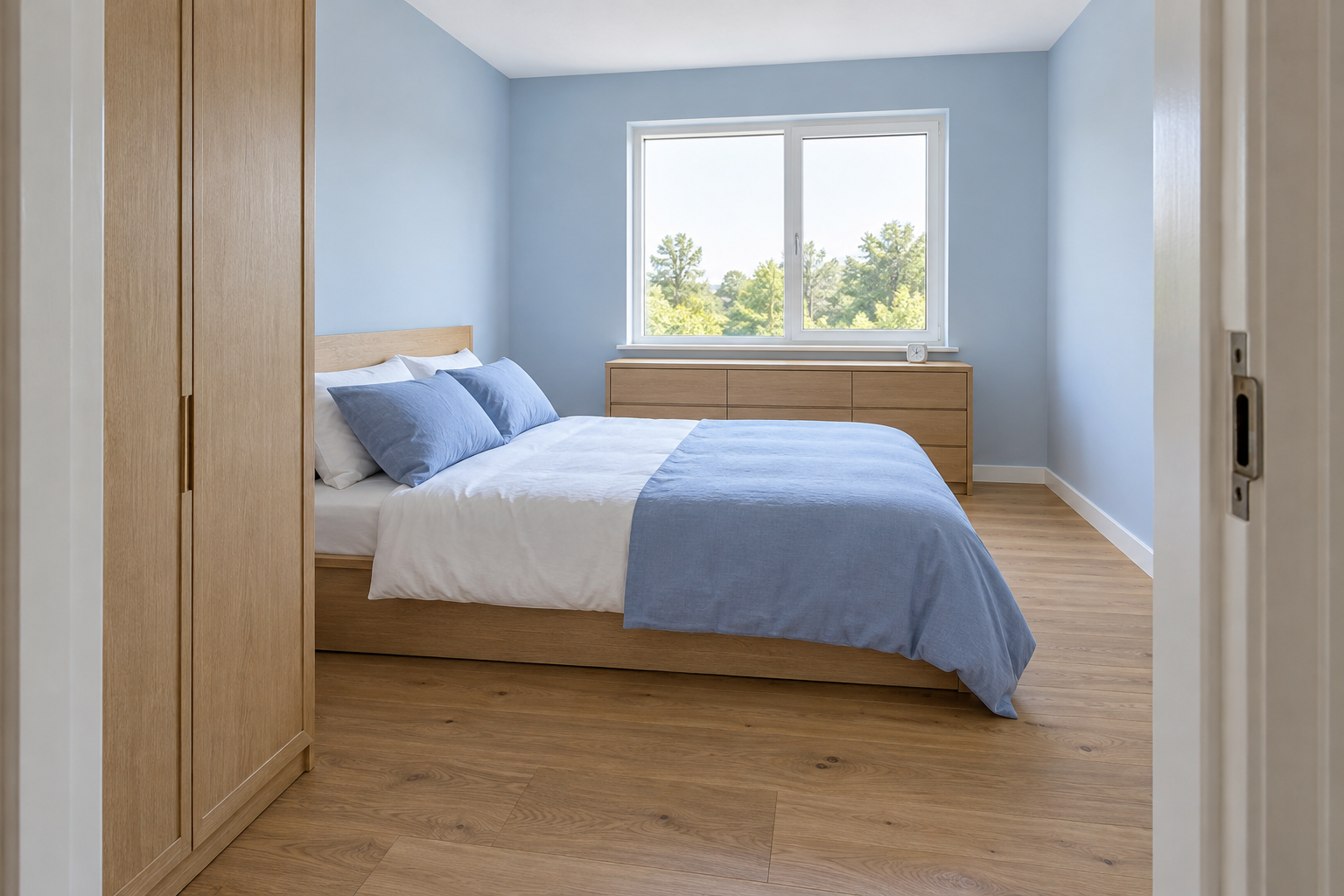
The first view of a bedroom is from the door, and it sets the impression of the room’s size. A wardrobe or tall chest on the wall with the door sits beside you as you walk in, out of that first view, and the eye travels straight to the far wall and the window.
Keep the far wall for low pieces, such as the bed, a low dresser, or a bench, so the window and the wall above them stay open. Check that the door still opens fully and that drawers can open past the bed. Bedroom furniture placement has the clearances.
Place a Mirror Where It Catches the Window
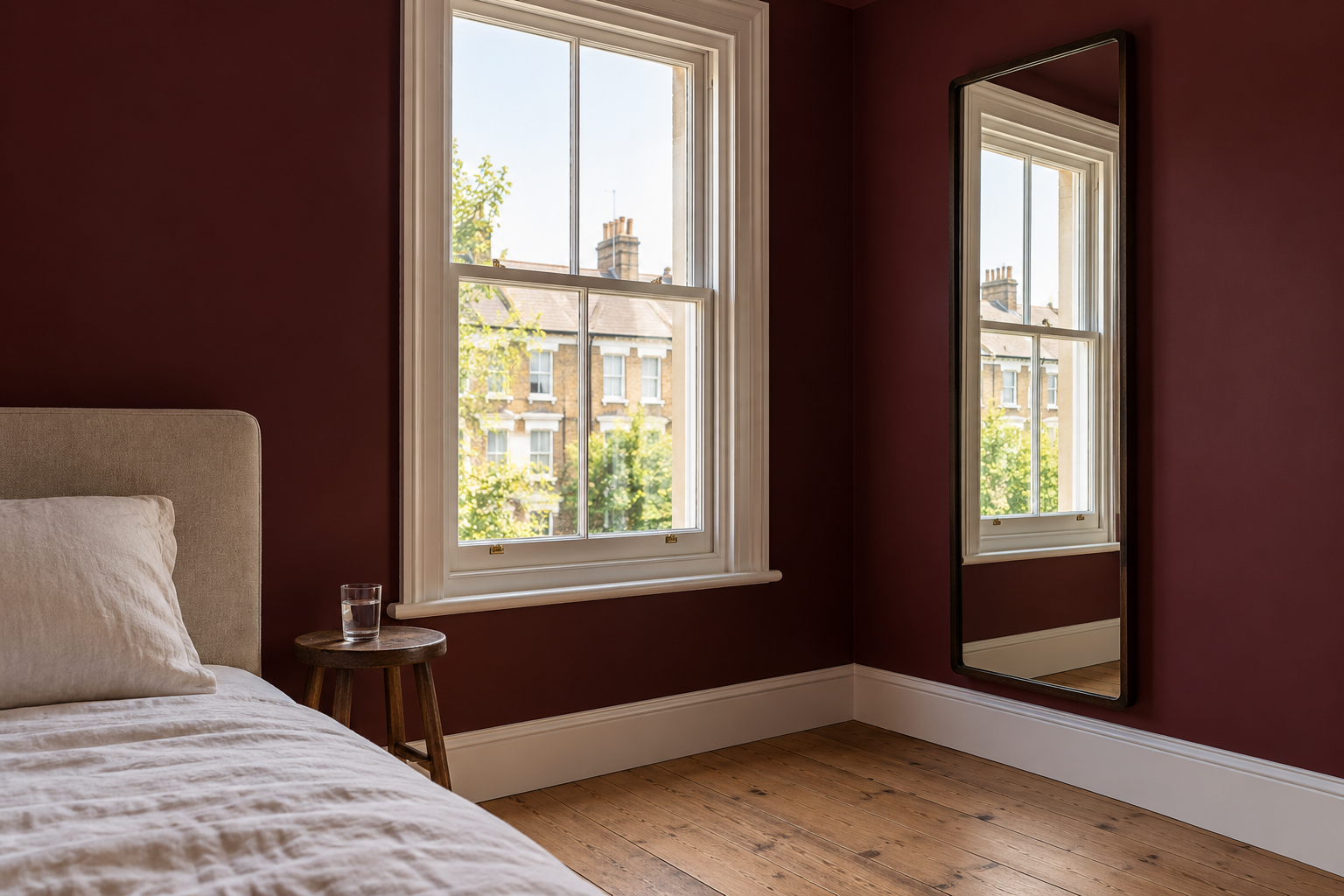
A mirror shows whatever faces it. Hung on the wall beside a window, at right angles to it, it picks up daylight and part of the view, almost like a second, narrower window. Facing the bed, it mostly shows more bed.
A tall, narrow mirror repeats the height of the room as well as the light, which helps in a bedroom with a low ceiling. A floor mirror leaning on the wall needs a fixing at the top, since it can slide or tip when someone brushes past it.
Put Light in the Corners
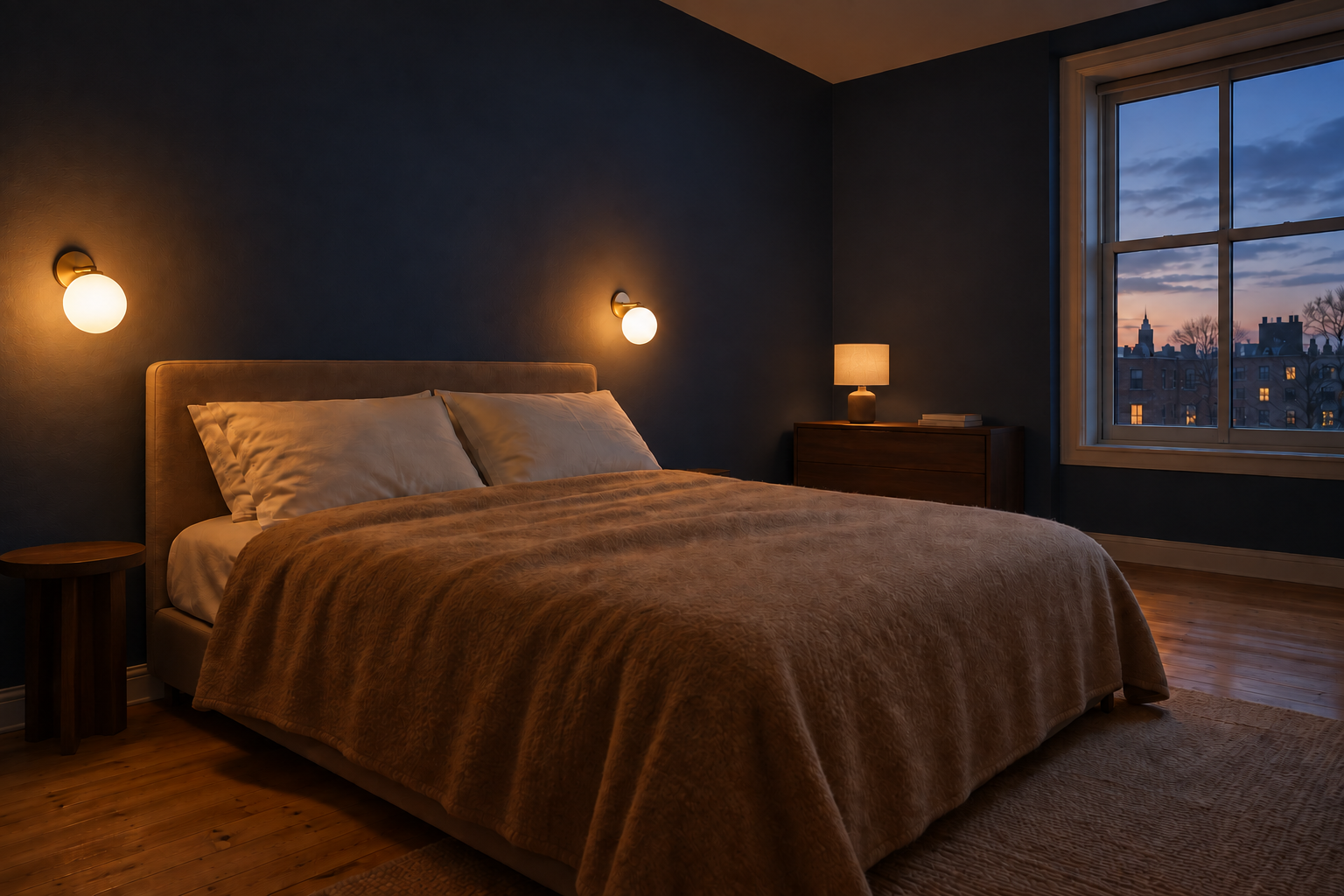
A single ceiling light brightens the middle of a room and leaves the corners dim. Dim corners make the walls look closer than they are. A lamp in one far corner, on a chest or the floor, and a pair of wall lights by the bed light the edges of the room, and the walls seem to sit further back.
Wall lights also clear the nightstands for a book and a glass. In a rental, plug-in wall lights with the cord run in a paintable cord cover need no new wiring. For a lamp on the nightstand instead, the table lamp size guide covers height and shade.
Lay One Rug Under the Bed
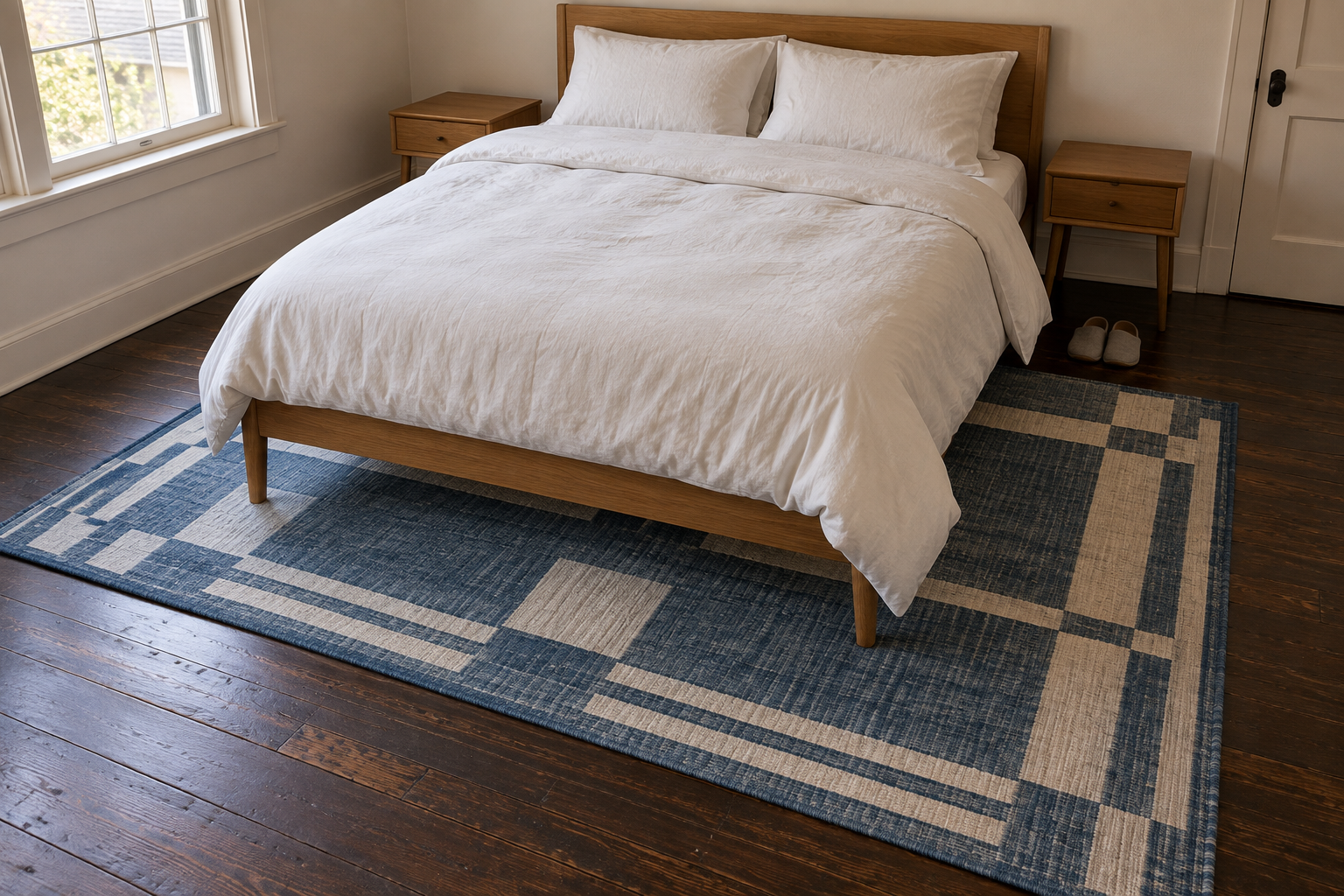
Two small rugs on either side of the bed, or a small one at its foot, cut the floor into pieces, and each piece adds another edge. One larger rug under the lower two-thirds of the bed makes the floor read as one surface with a margin around it. An 8-foot-wide rug laid across a 60-inch queen bed, for example, leaves about 18 inches on each side to step onto.
Where the room allows, leave a band of bare floor between the rug and the walls, so the rug sits inside the room instead of running up against the baseboards. Bedroom rug placement covers sizes for other beds and layouts.
Let the Wardrobe Disappear Into the Wall
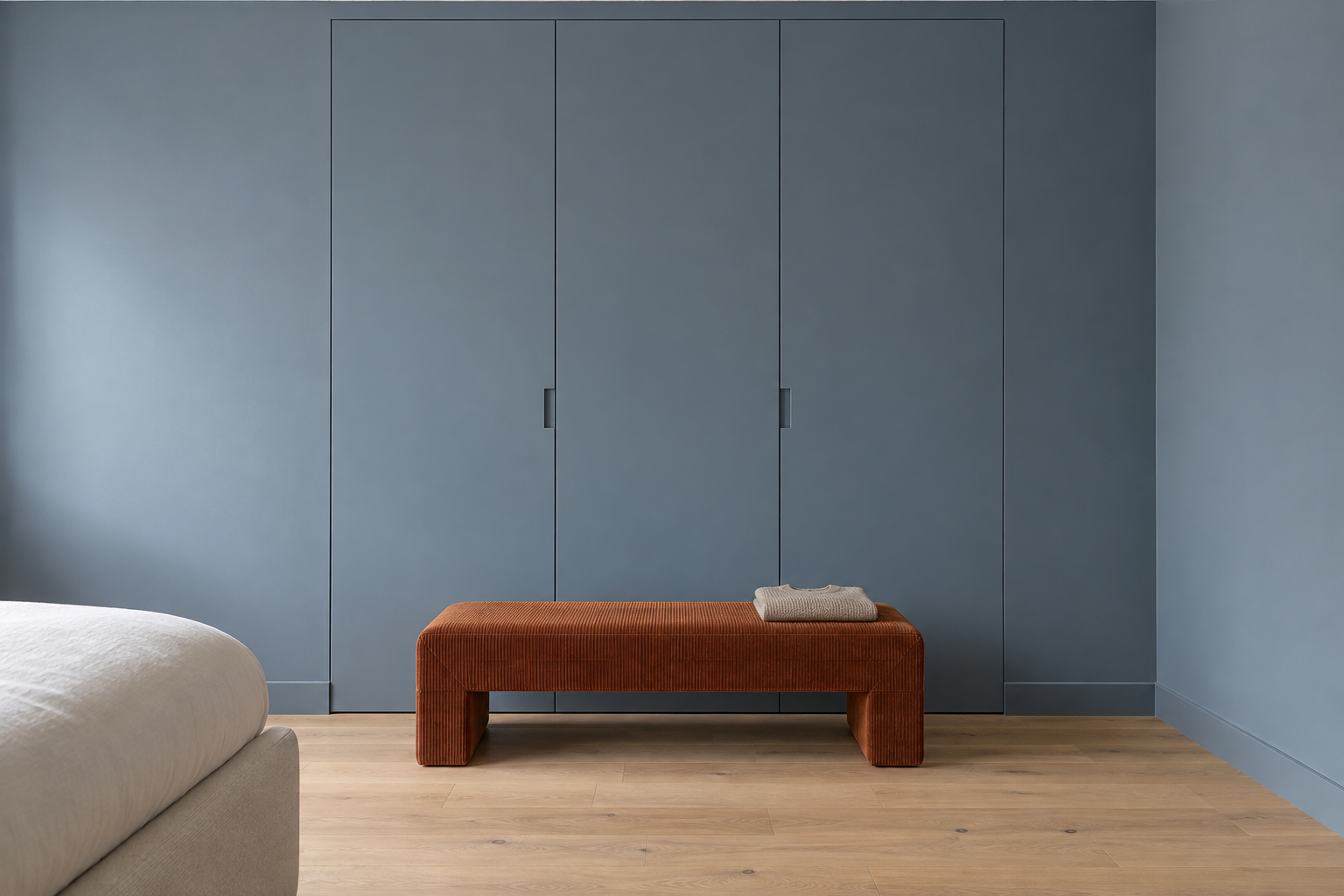
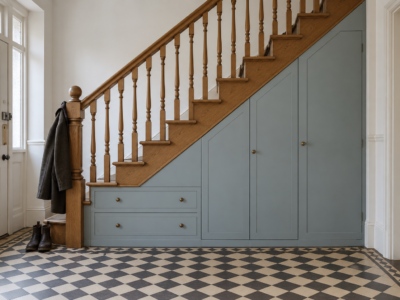
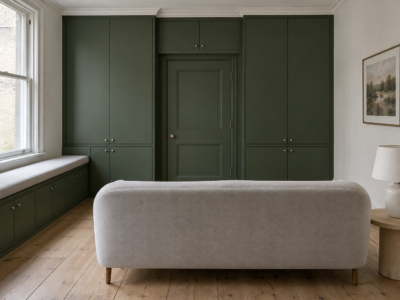
After the bed, a wardrobe is usually the largest single object in a small bedroom. In a dark wood against a pale wall, it looks like a block set in front of the wall. Painted the wall color, with flat doors and small or recessed pulls, it merges with the wall instead, and built-in closet doors take the same treatment.
A mirrored wardrobe door can work too, if it faces the window and not the bed. Getting more into the wardrobe itself is covered in small bedroom storage ideas.
Match the Curtains to the Walls
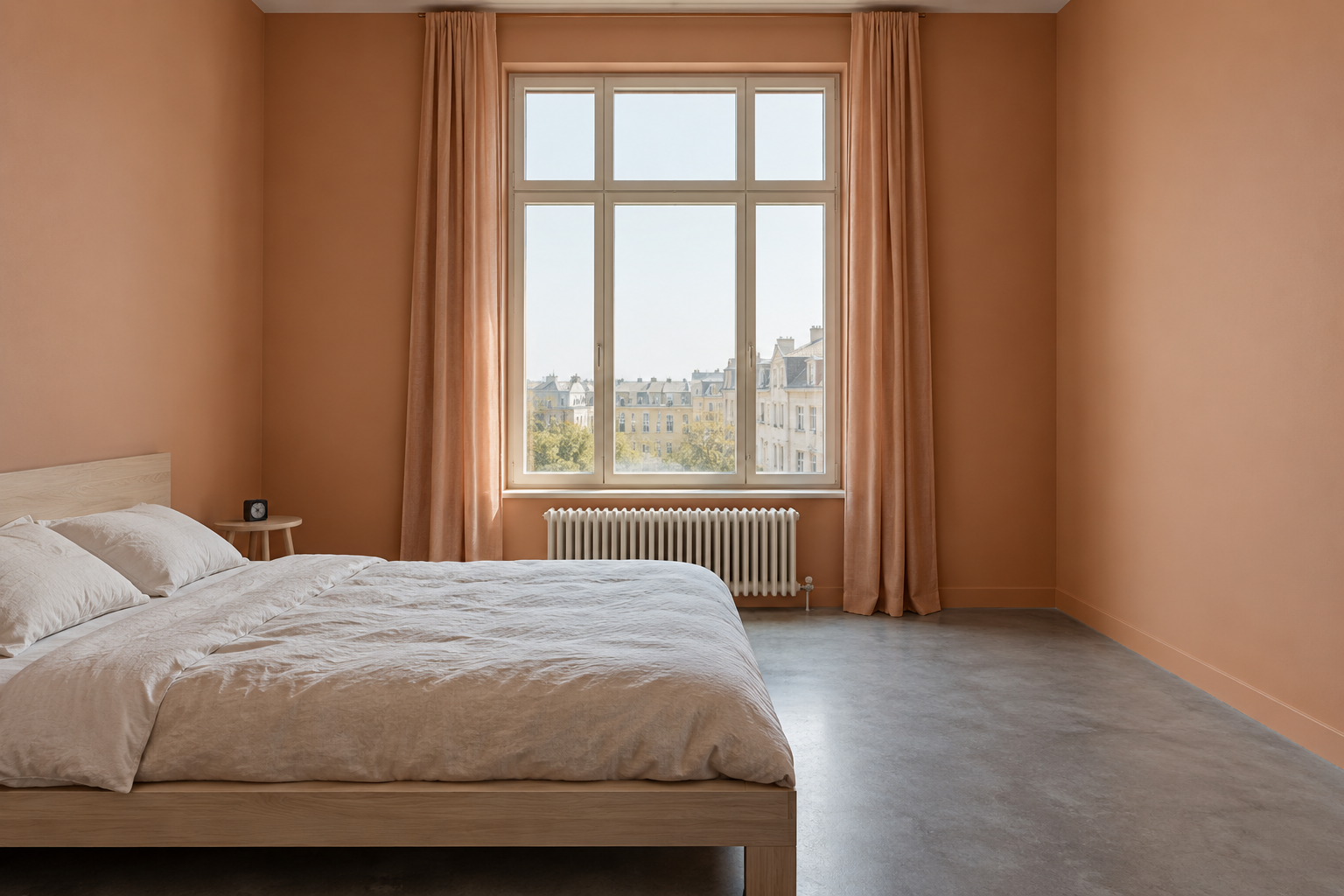
Curtains in a contrasting color outline the window as a separate shape, two strips of color on a plain wall. In the wall’s own color, or a shade lighter or darker, they blend into it, and the wall runs unbroken from corner to corner. Hung from close to the ceiling, they also carry the eye up, and the curtain length guide covers where they should end.
If the room needs pattern, a patterned duvet or a pair of cushions carries it on a smaller area than a window does.