A bedroom rug does one job before it does anything else: it tells the room where the bed’s zone starts and stops. Get that placement wrong and a good rug reads as an afterthought, half-covered by a nightstand or floating in the middle of the floor for no clear reason. There is not one correct placement. There are four, and which one is right depends on the room’s size relative to the rug’s size, not on taste.
If the room does not have a rug yet, working out the right size for the space comes before worrying about where it goes. Once a size is settled, one of the four placements below will fit.
Full Coverage Under the Bed
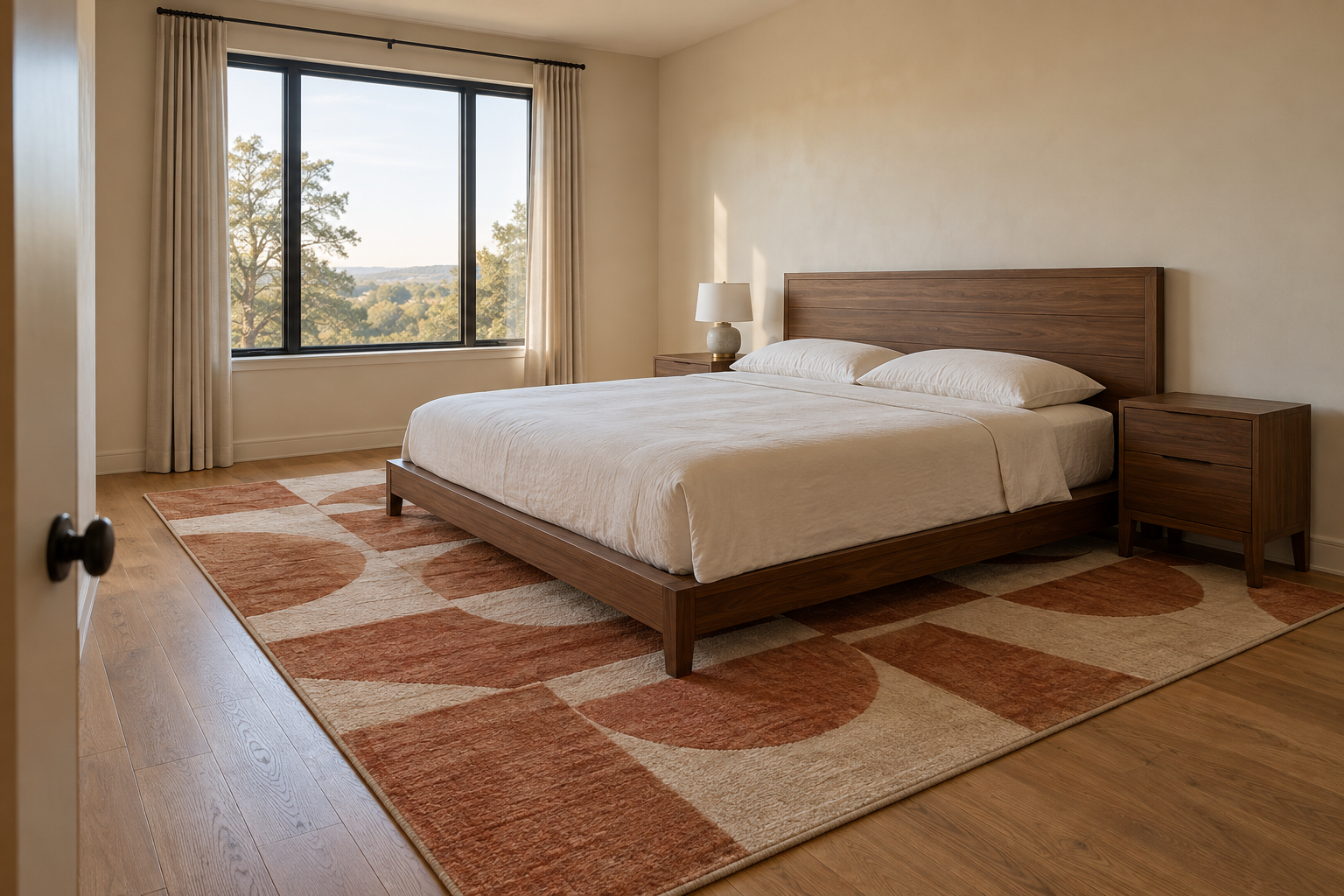
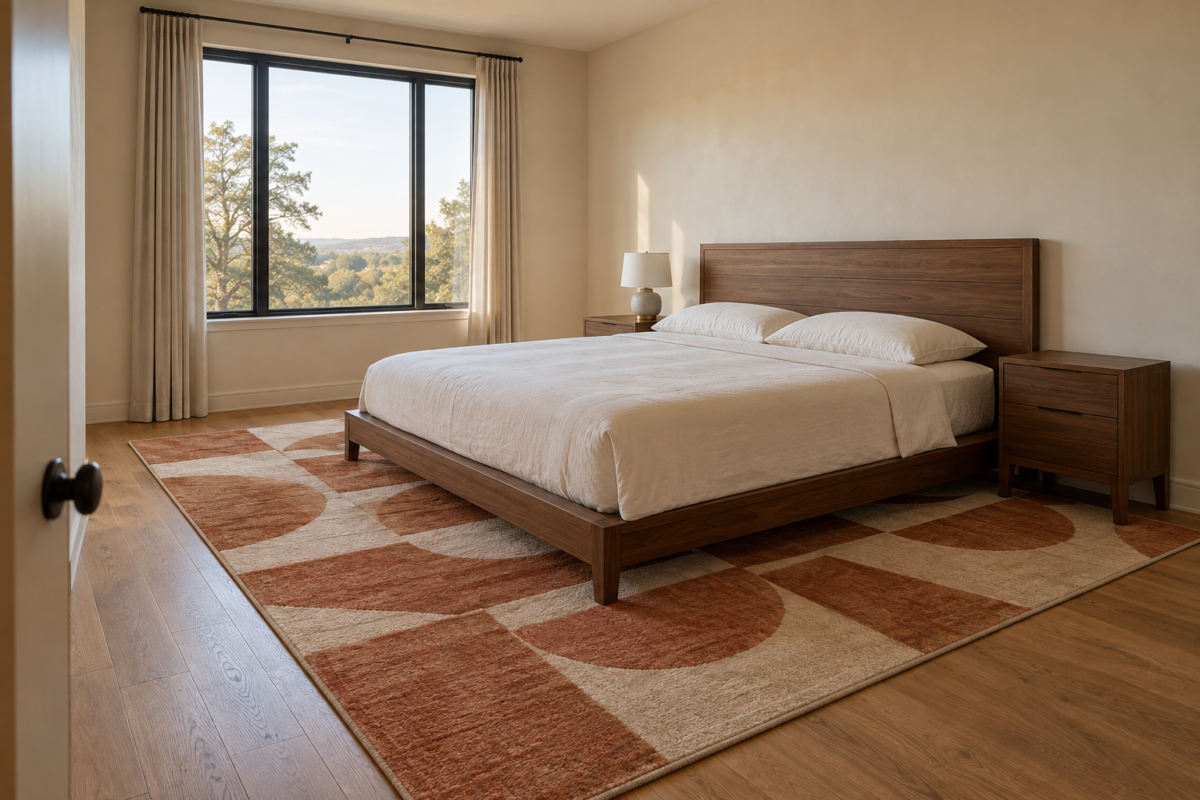
A rug large enough to sit entirely under the bed, extending well past the frame on every side, works when the room has real floor space to spare. In a primary bedroom on the larger end, an 8×10 or 9×12 rug can run under the bed and both nightstands at once, anchoring the whole sleeping zone as one piece. Before adding a rug this size, it is worth confirming the bed itself is sized correctly for the room, since a rug this large only makes the mismatch more obvious if the bed was already a stretch for the space.
The visual effect, when the room supports it, reads as finished and intentional: the rug becomes the floor of that zone rather than a mat that happens to sit near the bed. The tradeoff is cost and scale. A rug this large only makes sense once the room genuinely has room to spare on every side. In a smaller bedroom, the same size rug reads as a rug that ran out of room, wall to wall with the bed simply resting on top of it.
Two-Thirds Under the Bed
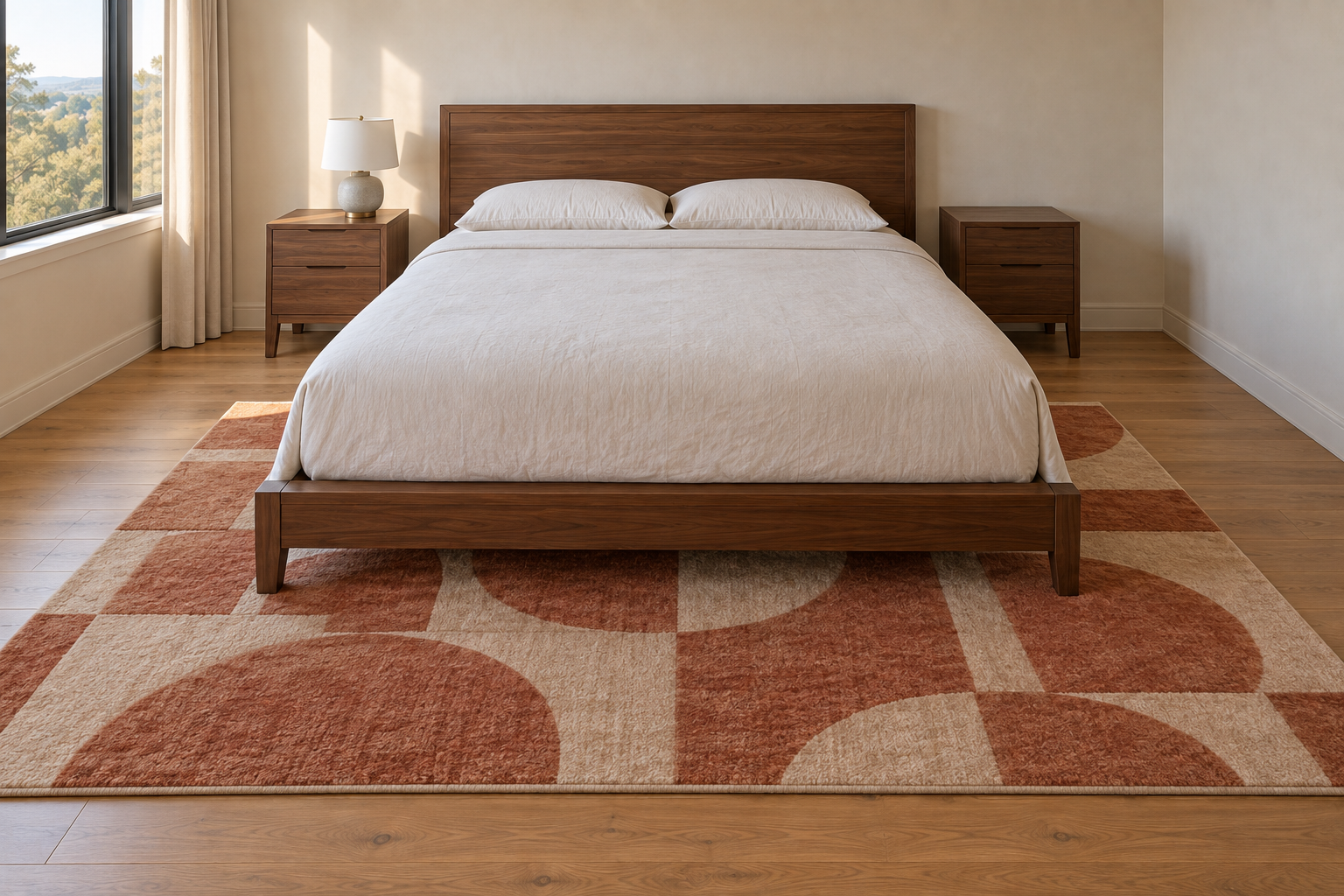
This is the most common placement, and the one that works across the widest range of bedrooms. The rug’s front third or so extends past the foot of the bed, while the rest disappears underneath. A useful starting point is letting the rug show roughly 18 to 24 inches beyond each side of the bed frame, enough to register as a real margin without requiring a rug so large it also has to run under the nightstands.
This placement gives a soft landing spot on both sides of the bed and at the foot, without needing wall-to-wall coverage or nightstand-width sizing. It is a common guideline, not a fixed measurement: a slightly narrower or wider margin still looks right as long as the rug does not read as barely peeking out from under the frame.
A Rug at the Foot of the Bed
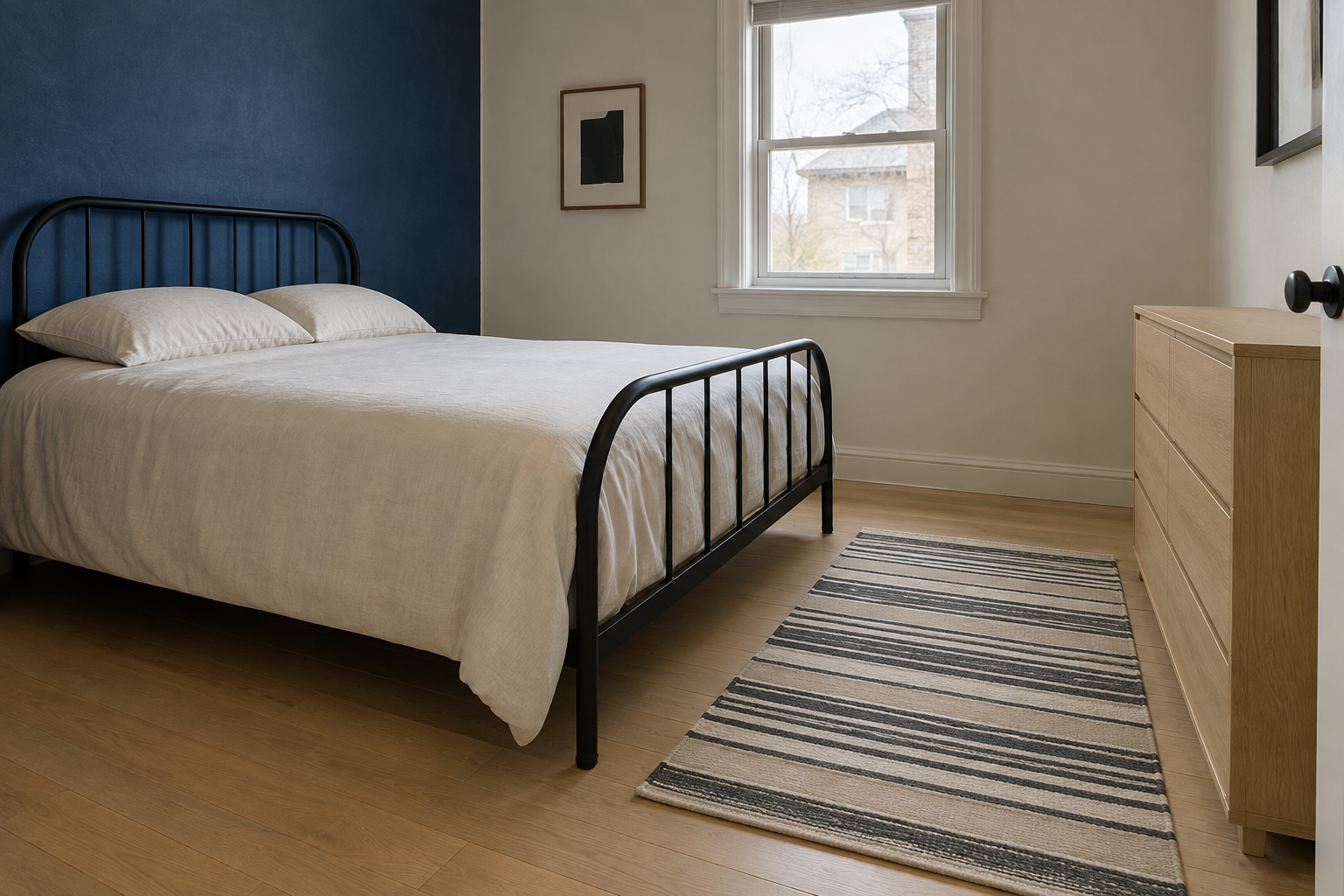
When the rug on hand is too small to run under the bed at all, foot-of-bed placement is the option that still looks planned rather than accidental. The rug sits just past the foot of the bed, not touching the frame, giving a landing spot for the first few steps out of bed without pretending to be a rug that spans the whole floor.
This fits a smaller secondary bedroom or a guest room especially well, where the bed already takes up most of the floor and there is no realistic way to fit a rug underneath it without pushing every other piece of furniture against the walls.
A Centered Rug That Does Not Touch the Bed
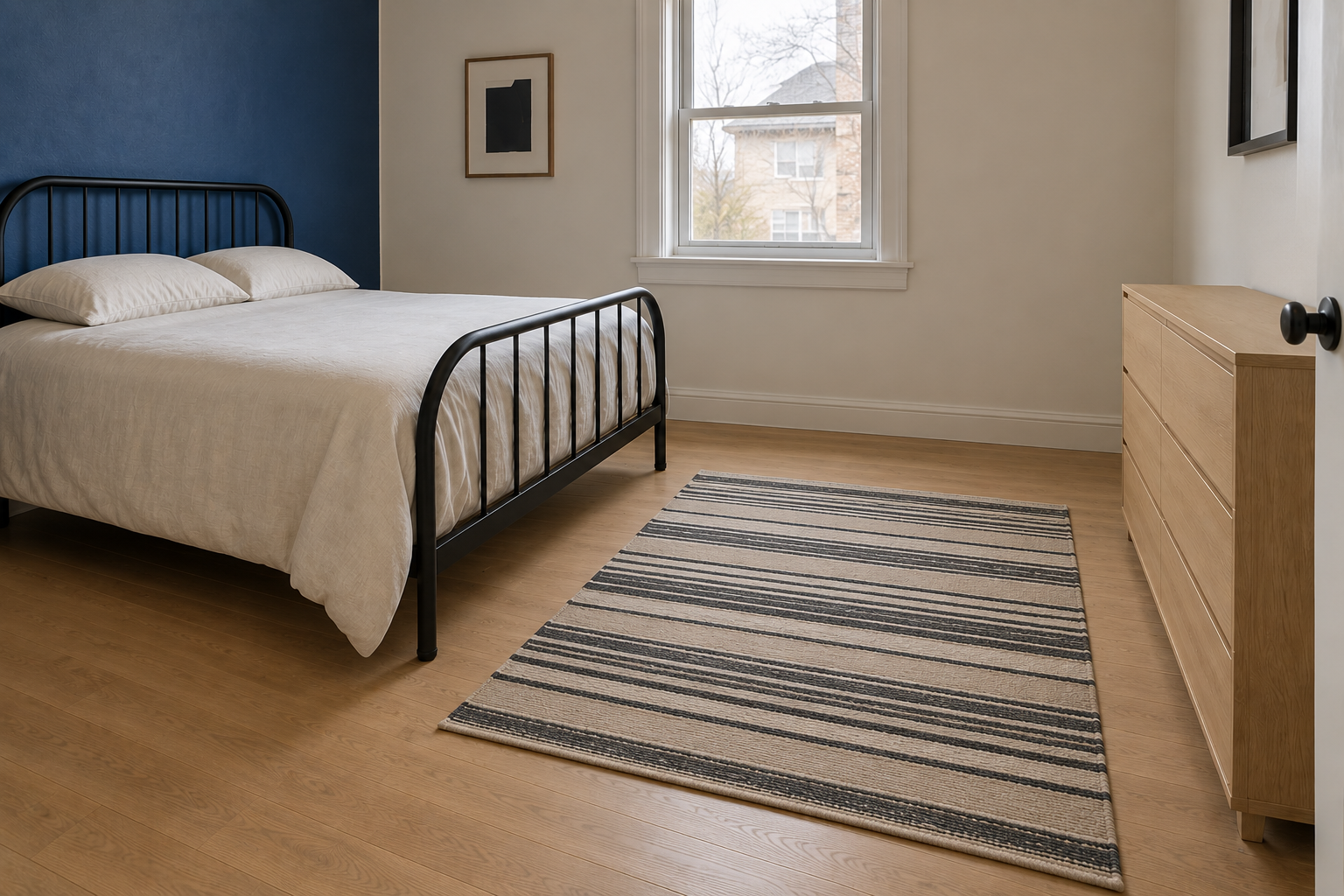
In a genuinely small bedroom, the better move is sometimes keeping the rug off the bed entirely and centering it in whatever open floor remains. A visible strip of floor around the rug’s edges, rather than a rug crammed edge to edge, tends to make a tight room read as larger, since the eye registers the floor continuing past the rug instead of stopping at a wall-to-wall edge.
This placement gives up the under-bed softness the other three provide. In exchange, it is often the only option that does not make an already small room feel more crowded than it already is.
Whichever placement fits the room, one rule applies to all four: keep the bed’s legs, and any nightstands or chairs near it, either all resting on the rug or all off it. A rug that catches two legs of the bed and misses the other two, or covers one nightstand but not the other, looks slightly wrong even when it is hard to say exactly why.