A wool rug and a polypropylene rug can look almost identical in a listing photo, the same cream ground, the same faded pattern, at very different prices. What separates them shows over the following months: how the pile stands up under the sofa’s feet, whether a spill of red wine lifts out, how much of the rug ends up in the vacuum.
The fiber decides most of that. Wool suits living rooms and bedrooms and lasts longest. Polypropylene is for kitchens, entries, pets, and patios, cotton for small rugs that go in the washing machine, and jute and sisal for texture where the floor stays dry. Viscose, sold for its sheen, belongs where nobody walks.
Wool
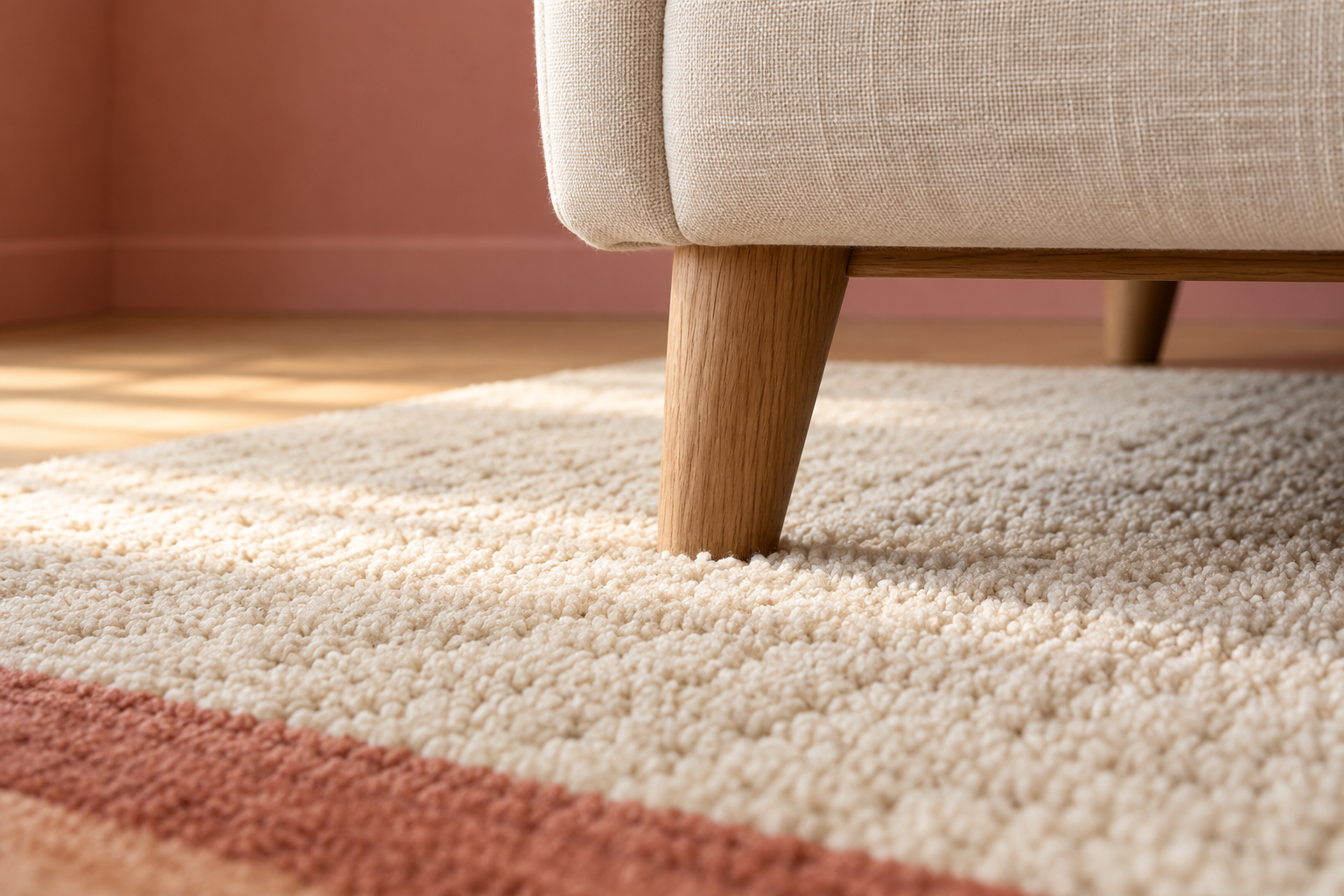
Wool fibers have a natural crimp that springs back after being pressed, so a wool pile recovers where feet and furniture weigh on it. The lanolin in the fiber helps it resist soil and slows a spill from soaking in, which is why wool is the usual choice for a living room or bedroom rug meant to last for years.
New wool rugs shed loose fibers for the first months, typically more in a hand-tufted rug than in a hand-knotted or flatweave one. Vacuum with suction only, or with the brush roll raised, until it settles. Wool costs more than synthetics of the same size and holds moisture longer, so a damp basement or a bathroom isn’t the place for it.
Jute and Sisal
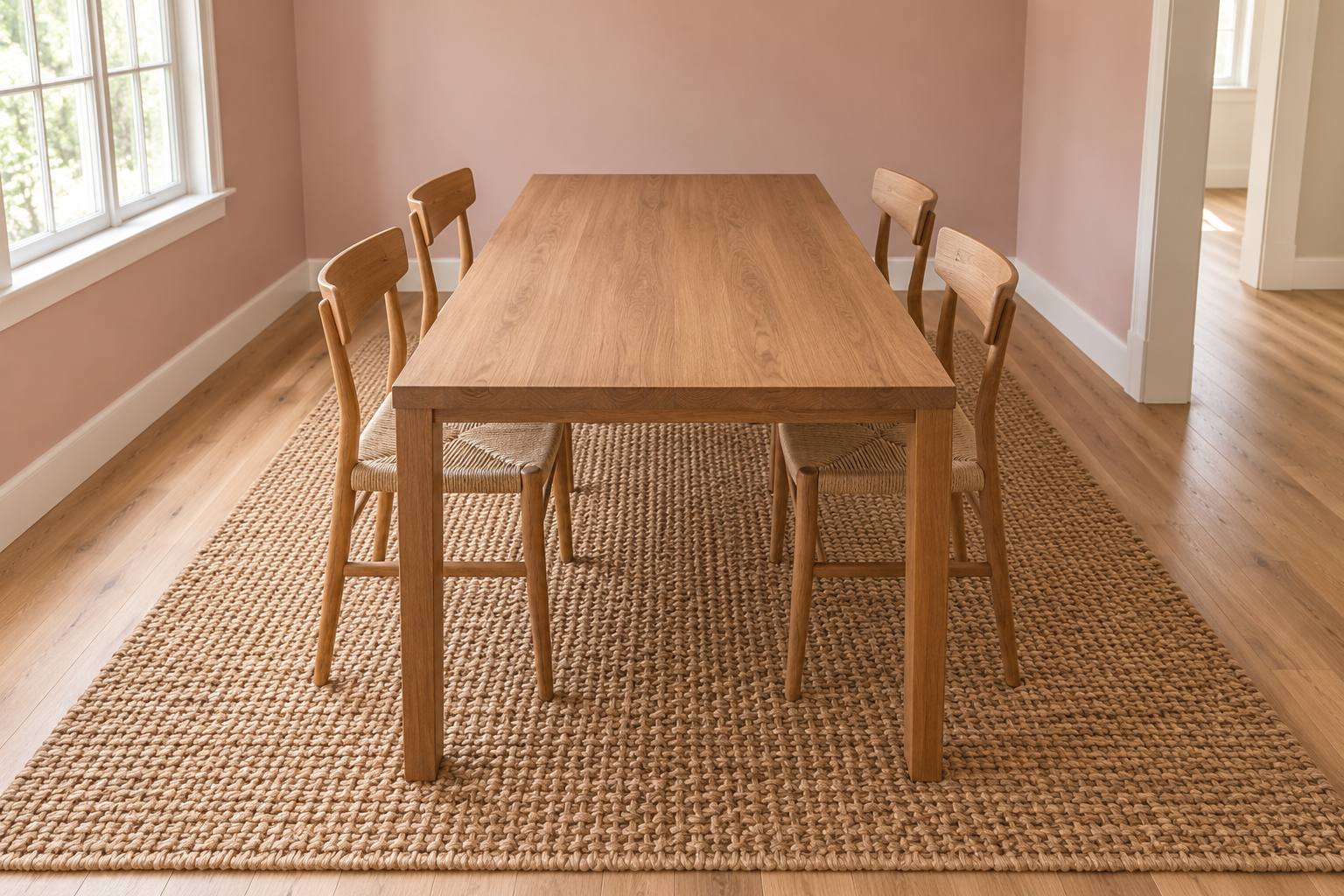
Jute is soft for a plant fiber, usually braided or woven in a chunky texture, and among the least expensive natural rugs. Sisal is harder and smoother and stands up better in a hallway or on stairs. Both bring a dry, earthy texture, and either works under a smaller patterned rug to stretch the footprint.
Water is their weakness. Plant fibers absorb it and can stain from a spill of plain water, and they’re hard to clean wet, so they belong in a living room, bedroom, or dining room, not by a sink or a back door. Jute sheds fine fibers, and both feel coarse to bare feet and to a crawling baby.
Cotton
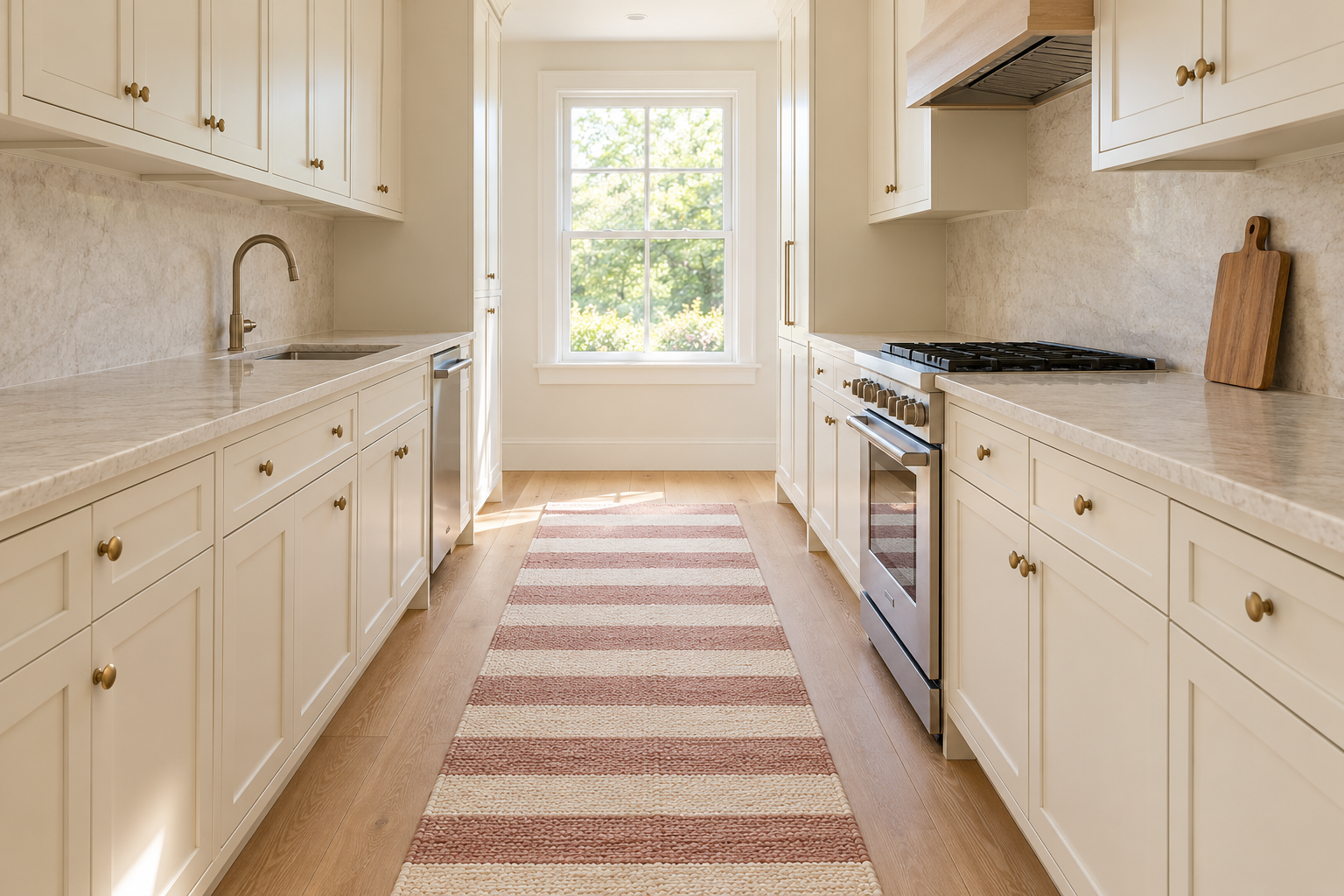
Cotton rugs are usually flatwoven or braided, light, and inexpensive, and many small ones can go through a washing machine. That suits a kitchen, a bathroom, a nursery, or a child’s room, and cotton comes in more colors and stripes than most fibers.
It wears and flattens faster than wool and slides on hard floors, so give it a non-slip pad and expect to replace it sooner. Read the care label before washing. Large sizes often won’t fit a home machine, and some cotton rugs are labeled spot clean only.
Polypropylene and Polyester
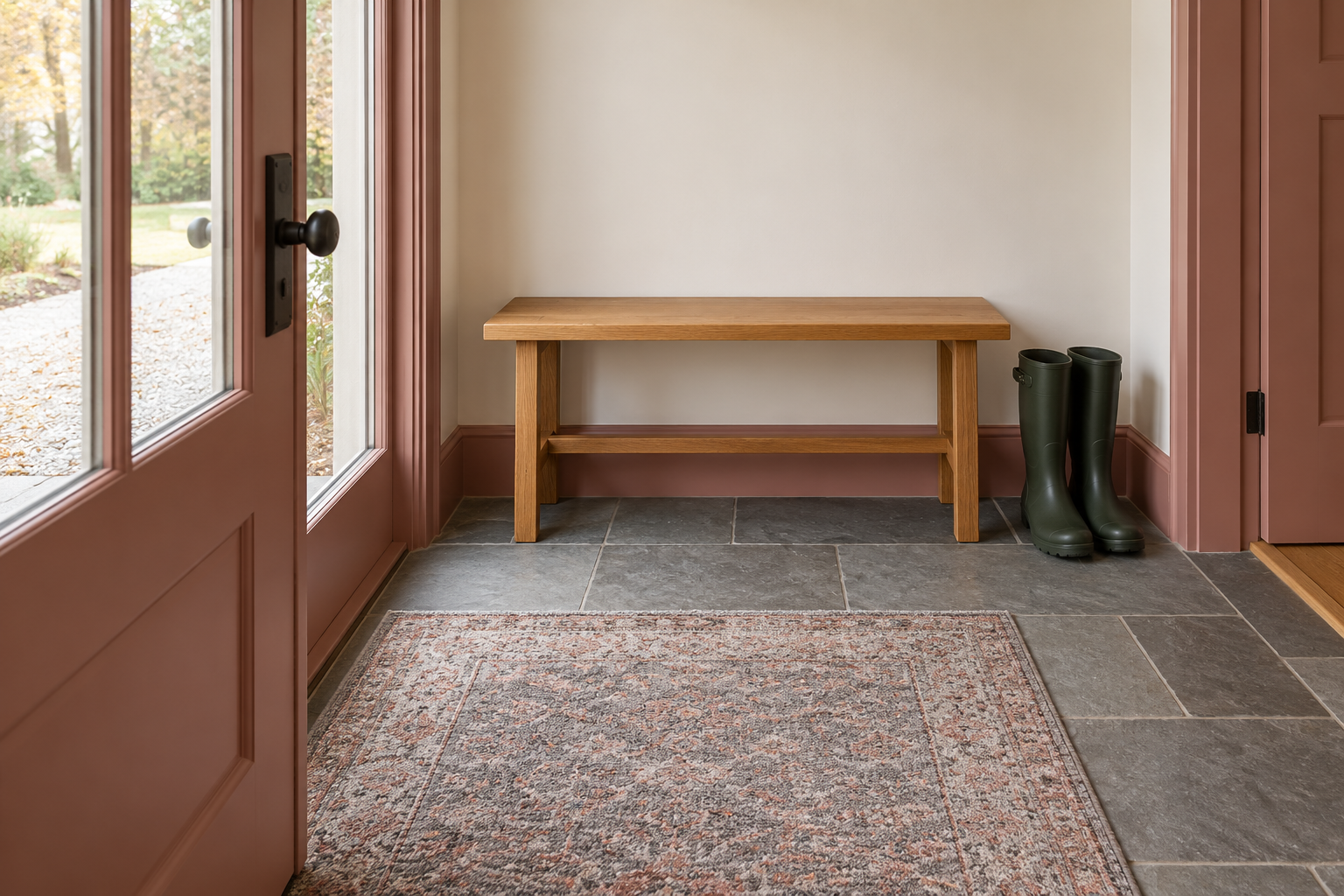
Polypropylene, also sold as olefin, is a plastic fiber usually colored before it’s spun, so the color runs through each strand and resists fading and cleaning products. It shrugs off stains and water, which makes it the practical rug for a kitchen, an entry, a dining room with young children, a house with pets, or a patio. It’s also among the least expensive.
It feels less soft than wool, and its pile crushes in the paths people walk without springing back. Polyester is softer and takes bright color well but mats down sooner. For a busy room where softness matters, a wool and synthetic blend sits between the two.
Viscose
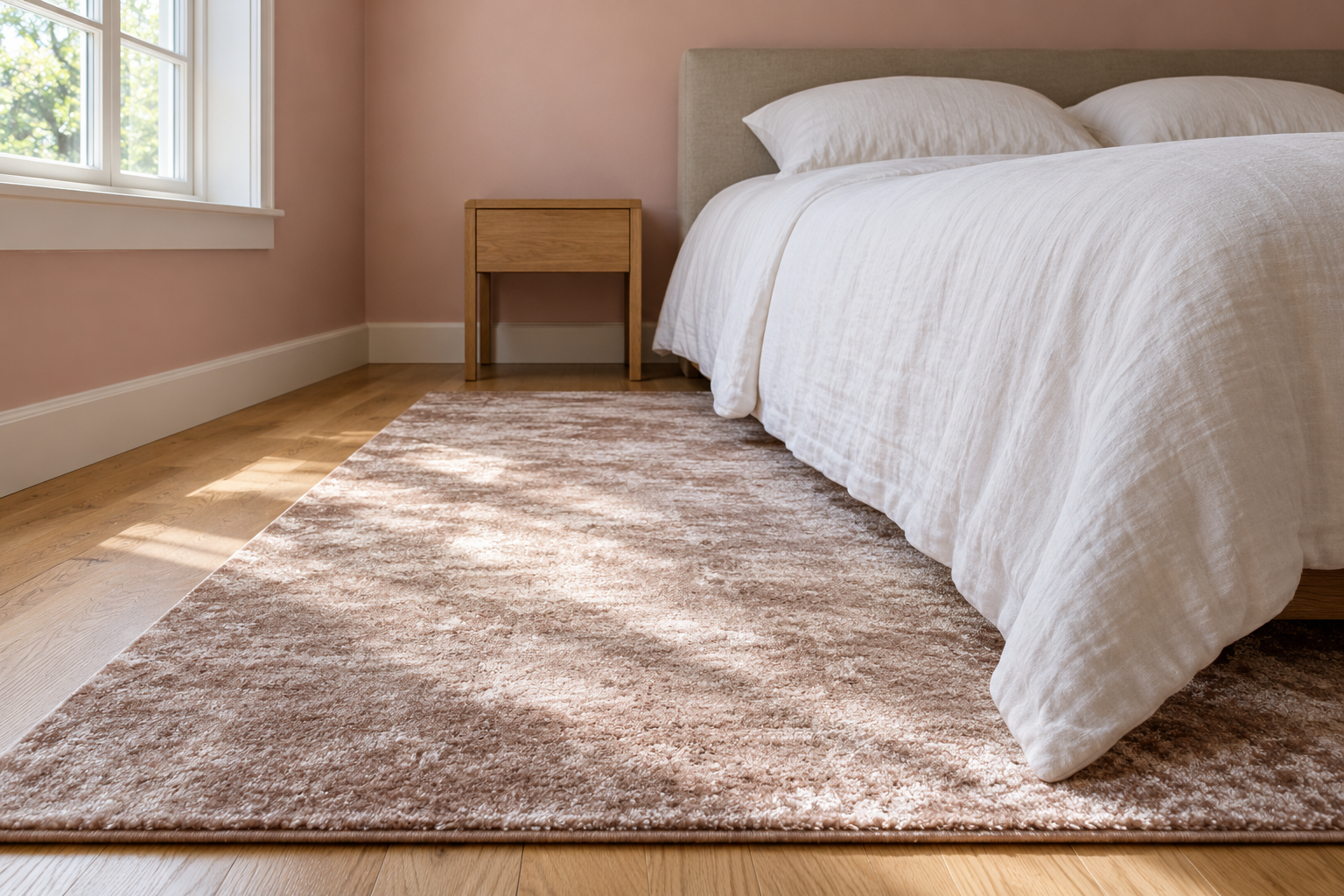
Viscose, also sold as art silk, rayon, or bamboo silk, is made from wood pulp and has a silky sheen at a fraction of silk’s price, which is why it photographs so well.
It’s also one of the weakest fibers when wet. Water makes it swell and lose strength, spills can leave brownish marks, and its pile flattens and breaks in a walkway. Keep viscose beside a bed or in a corner nobody crosses, or choose a wool rug with viscose highlights, where the wool takes the wear.
Matching the Fiber to the Room
How much traffic a room gets, what spills in it, and whether anyone sits on the floor decide most of the choice.
| Room | Fiber that suits it | Why |
|---|---|---|
| Living room | Wool, or polypropylene with pets | Springs back under furniture and feet |
| Bedroom | Wool, cotton, jute | Little traffic, bare feet |
| Dining room | Polypropylene, flatweave wool | Food spills, chairs slide on a flat weave |
| Kitchen | Polypropylene, washable cotton | Water and grease |
| Entry or mudroom | Polypropylene | Wet shoes, grit |
| Bathroom | Washable cotton, polypropylene | Water, and it dries or washes |
| Patio | Polypropylene | Sun and rain |