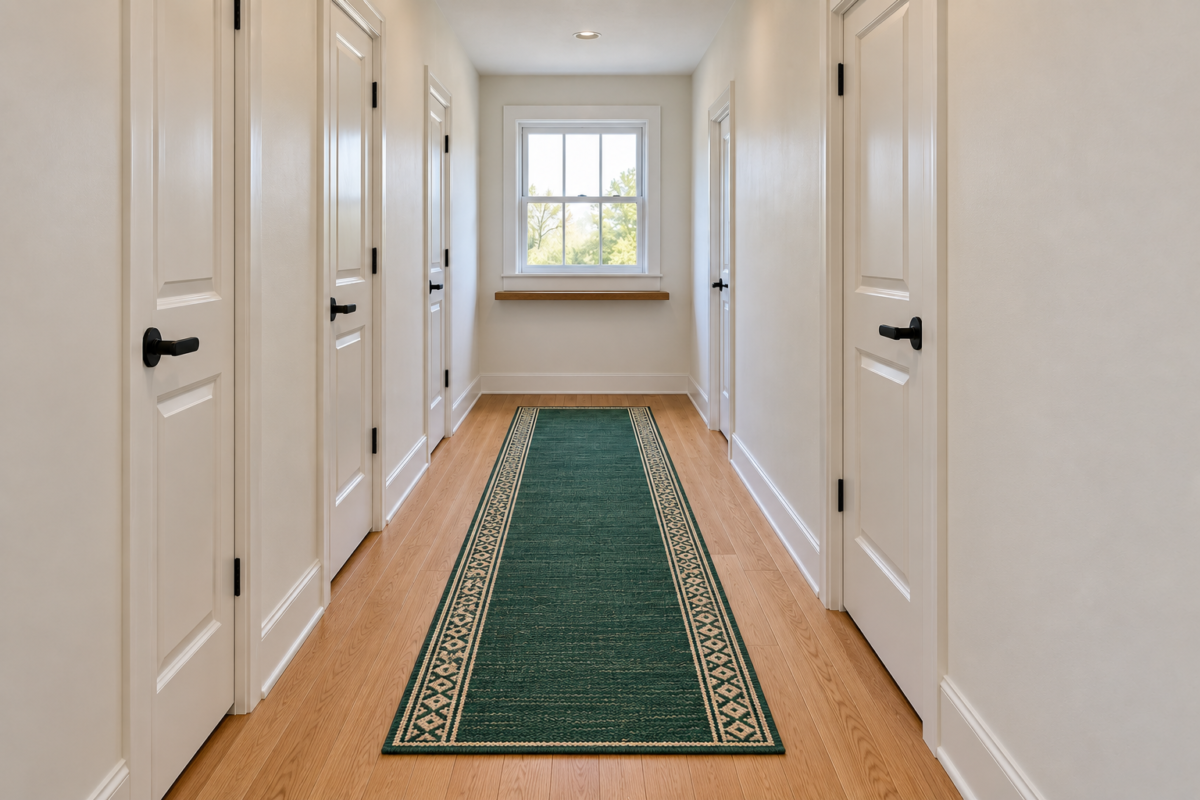
A runner that fits a hall has floor showing all the way round it. Measure the hall first, wall to wall across its width and end to end along its length, and work inward from those two numbers. Runners come in a few standard widths and in lengths that step up by 2 feet, so the aim is the closest standard size that leaves the right margins.
Leave 4 to 6 Inches of Floor on Each Side
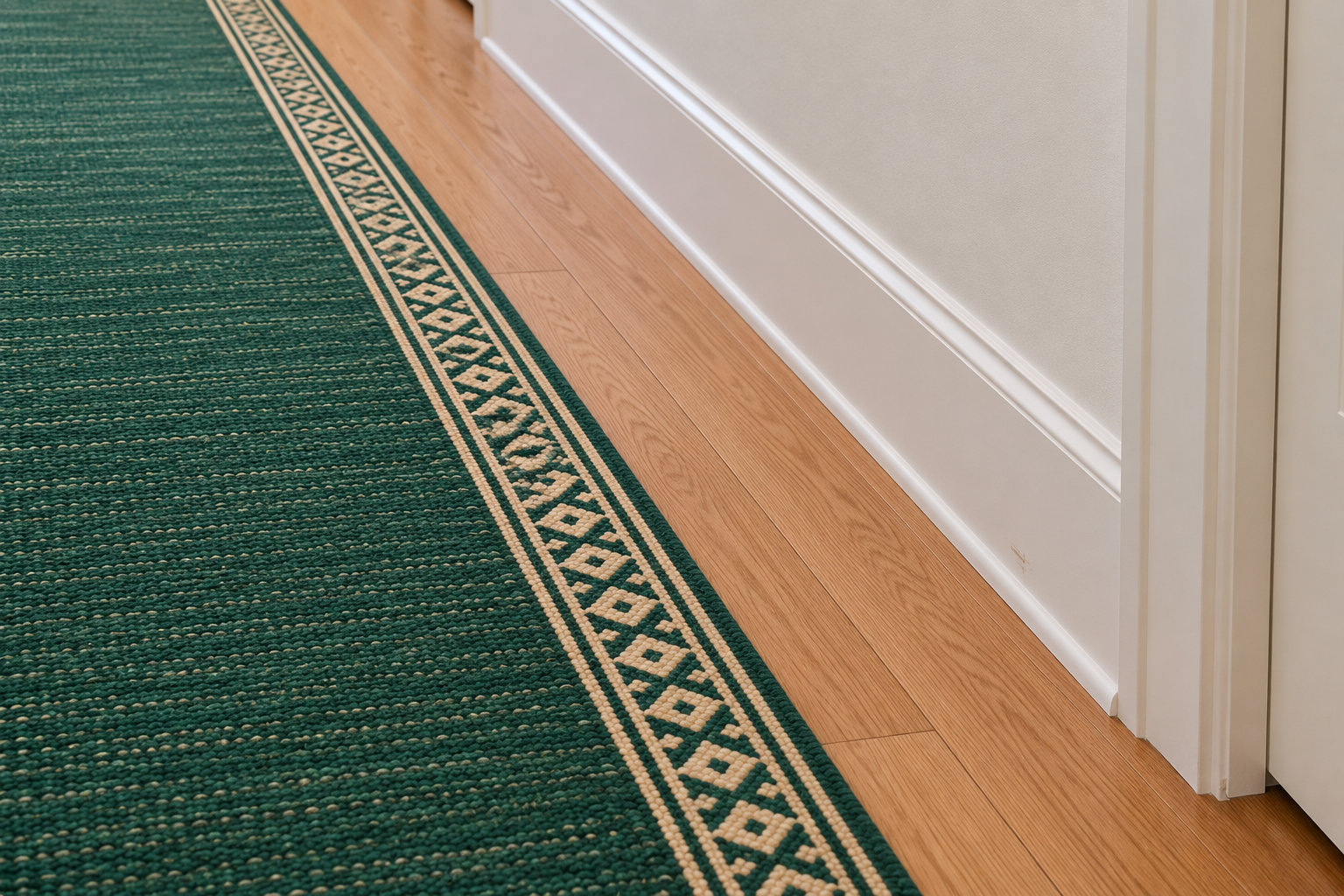
The margin is measured from the long edge of the runner to the baseboard, and it should be the same on both sides. Four to 6 inches is the usual amount. In a hall under 3 feet wide it can drop to about 3 inches. With less than that, the strip of floor is too thin to be seen as a margin.
| Hall width, wall to wall | Runner width | Floor showing each side |
|---|---|---|
| 36 in | 2 ft 3 in (27 in) | 4.5 in |
| 42 in | 2 ft 6 in (30 in) | 6 in |
| 48 in | 3 ft (36 in) | 6 in |
| 60 in | 3 ft or 4 ft | 12 in or 6 in |
Where a console table or a radiator stands against one wall, center the runner on the open floor that’s left, not on the hall.
Stop 6 to 12 Inches Before Each End
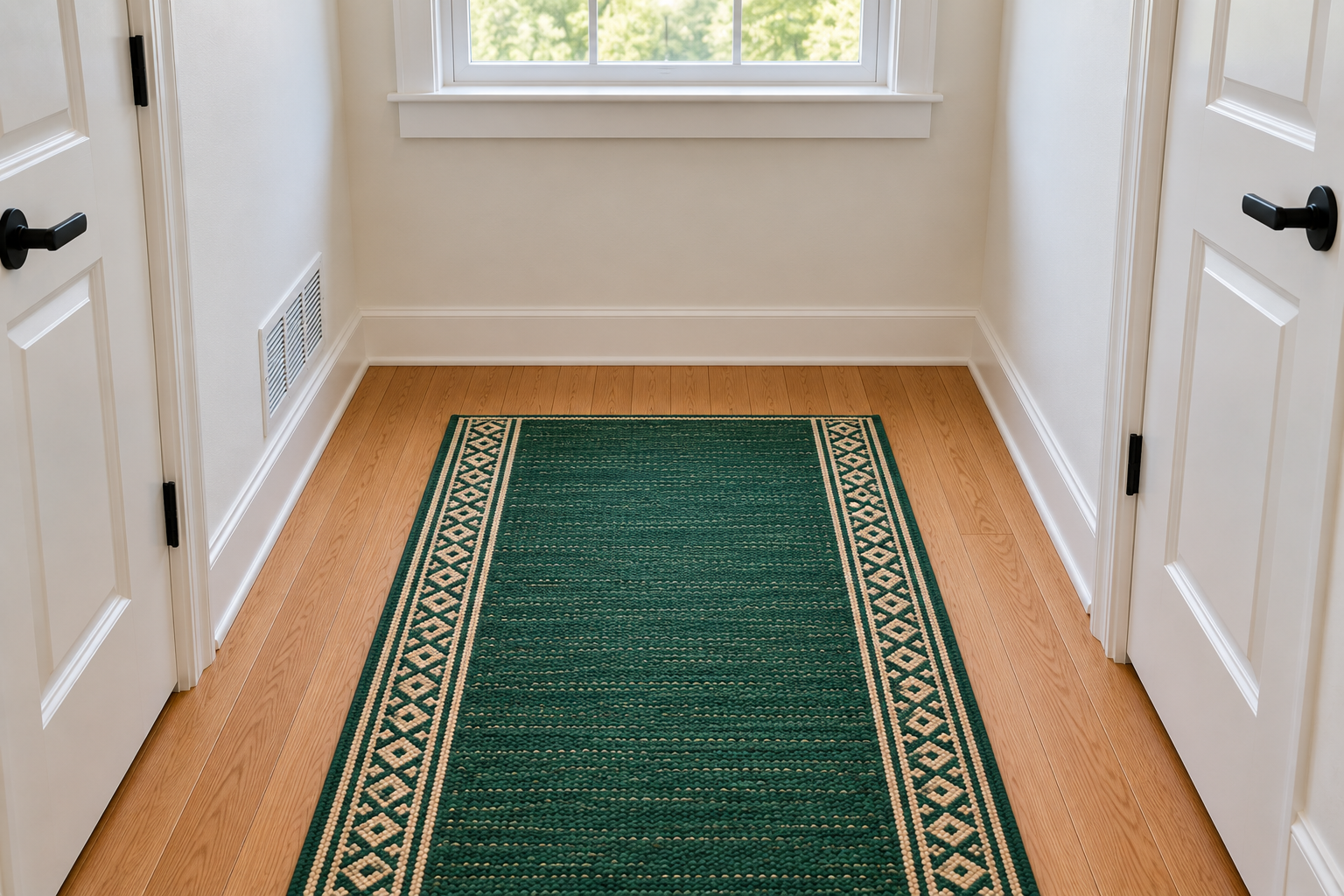
At each end of the hall, leave 6 to 12 inches between the end of the runner and the wall, the stair, or the doorway. The end margin can be a little larger than the side margin and shouldn’t be smaller.
Runners are sold in lengths of 6, 8, 10, and 12 feet, and longer. Take the hall’s length in inches, subtract 12 to 24, and pick the standard length nearest to the result. A hall 11 feet long is 132 inches. A 10 foot runner is 120 inches and leaves 6 inches at each end. An 8 foot runner would leave 18 at each end, half again as much as the range allows.
Open Every Door Over It
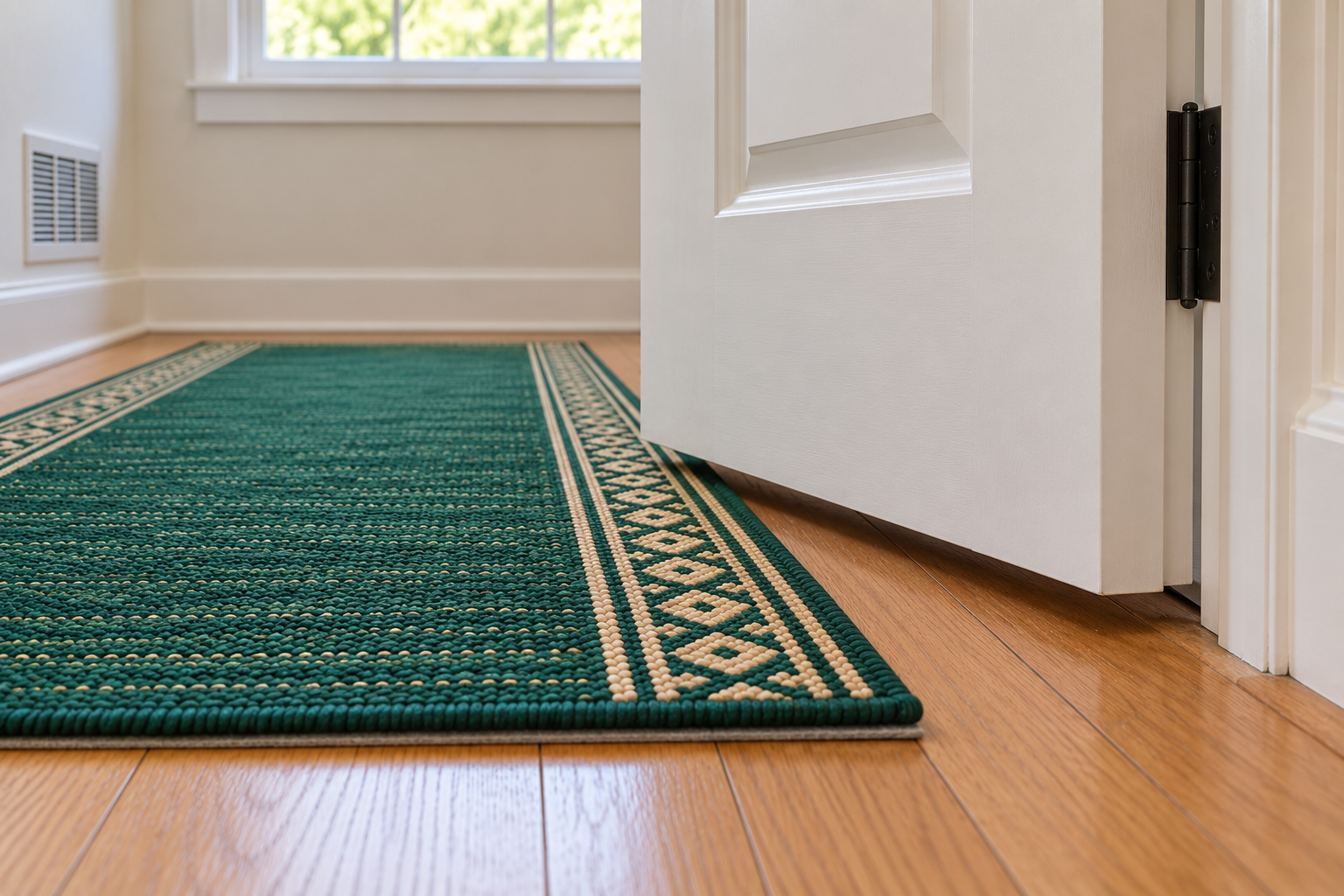
Most bedroom doors open into the room, away from the hall. Closet, linen, and basement doors often open into it, across the runner. The gap under an interior door is often only half an inch to an inch, and the runner and its pad together have to be thinner than that.
Check the runner’s pile height before buying, and check again with the runner down by swinging each door through its full arc. A flat-woven or low-pile runner on a thin pad clears most doors. A thick wool pile on a cushioned pad often doesn’t. If one door catches, a runner that stops just before that doorway is a better answer than trimming the door.
Two Runners in a Long or L-Shaped Hall
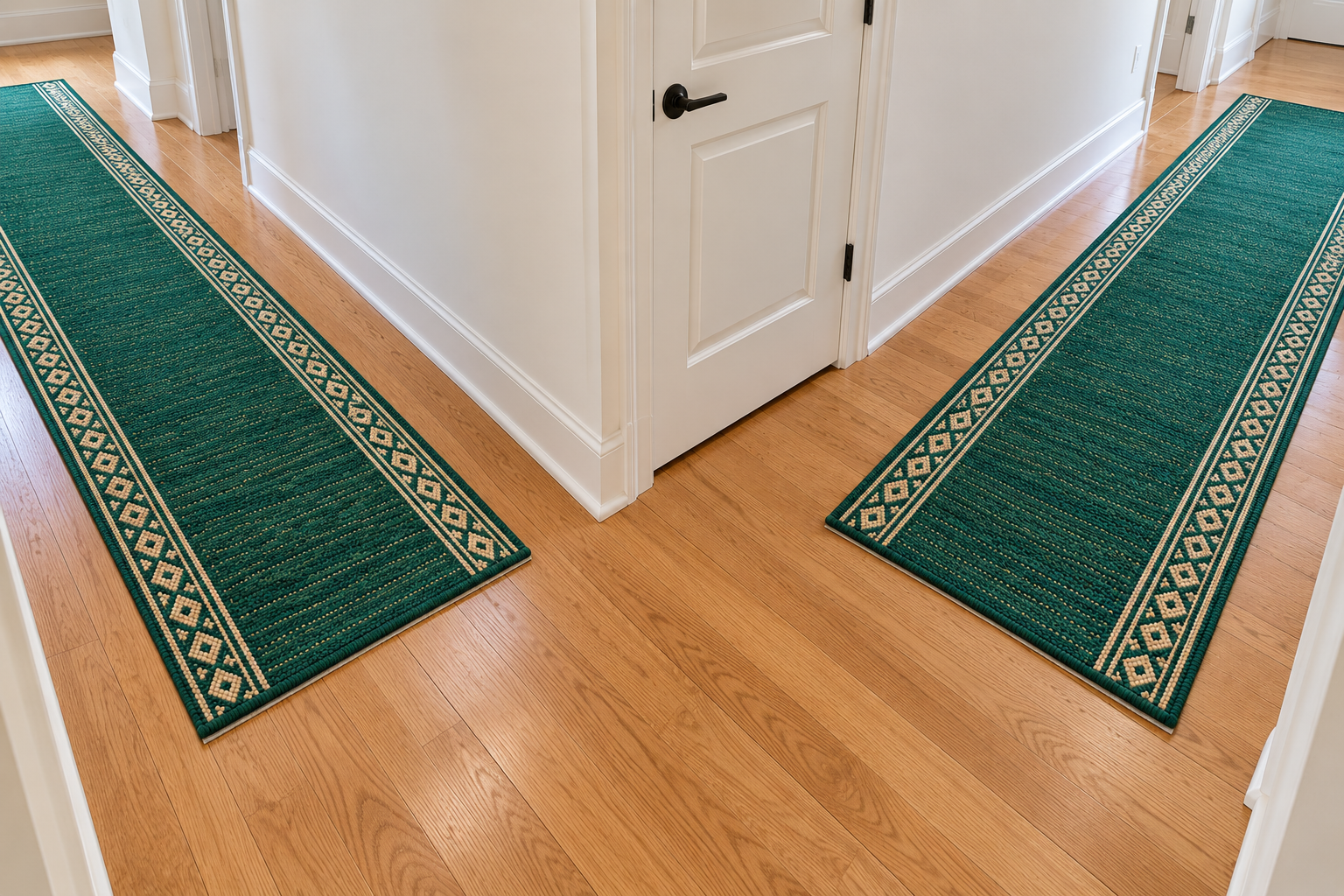
In a hall longer than the longest runner available, two matching runners with a stretch of bare floor between them do the job of one. Put the break at a natural pause, such as a doorway or the head of the stairs, and make it at least as wide as the end margins.
In an L-shaped hall, use one runner in each leg and leave the corner bare. Each runner stops 6 to 12 inches before the turn. Overlapped at the corner, two runners make a raised edge to trip on.
Put a Pad Under It
A runner on a wood or tile floor can slide underfoot, and a hall is walked through quickly. A non-slip pad underneath holds it in place. Cut the pad about an inch smaller than the runner on every side, so it doesn’t show at the edges. Rugs in other rooms are usually held by the furniture standing on them, and a runner has only the pad.