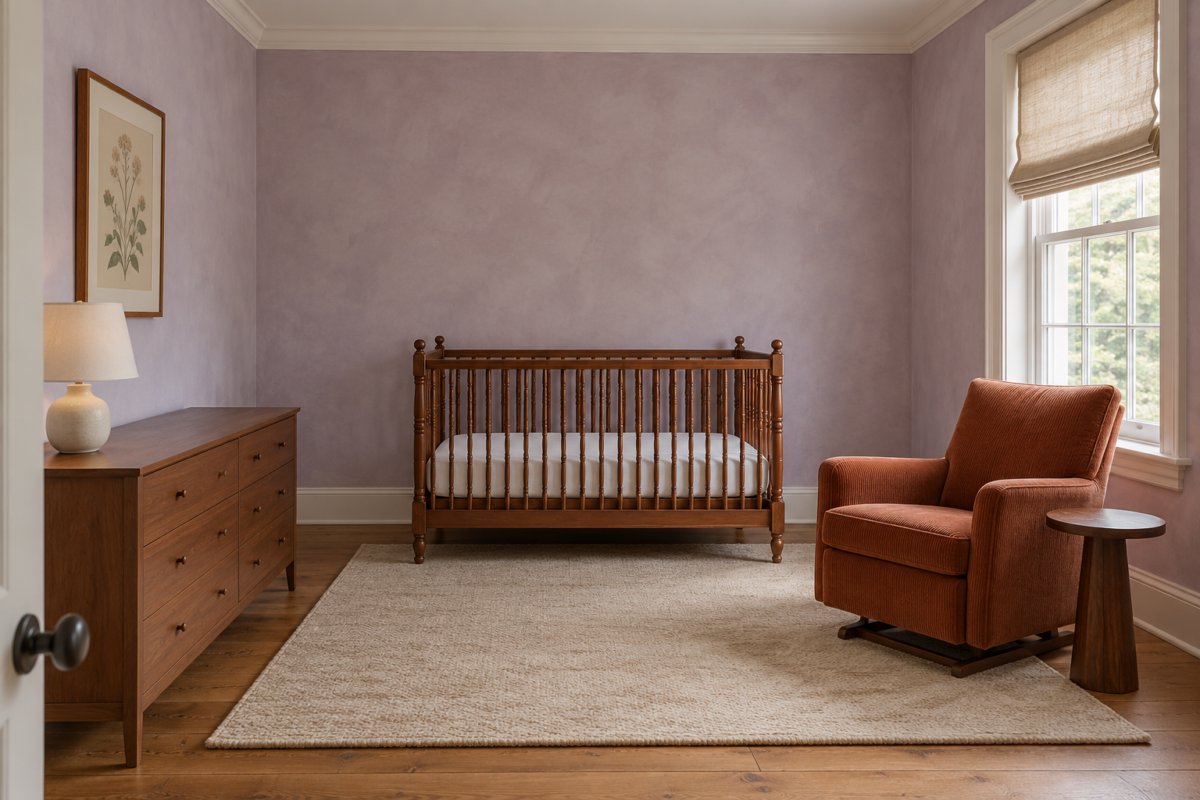
Most bedrooms get their softness from the bed, from the layers of linen, the pillows stacked against a headboard, a folded quilt at the foot. In a nursery the bed is the one thing that can’t be dressed. A crib for a sleeping baby holds a firm mattress and a fitted sheet and nothing else, with no bumper, pillow, quilt, or soft toy, and it looks much the same in every nursery: a frame of slats around a plain white rectangle.
So the color and warmth come from the rest of the room, from the walls and the ceiling, the finish of the crib itself, the chair, the rug, and the lamps. A nursery is also used at hours other rooms aren’t, in the dark at three in the morning and darkened again at two in the afternoon, which makes its light as much a design decision as its paint. When the crib is outgrown, the next room has its own set of decisions.
Give the Crib a Wall of Its Own
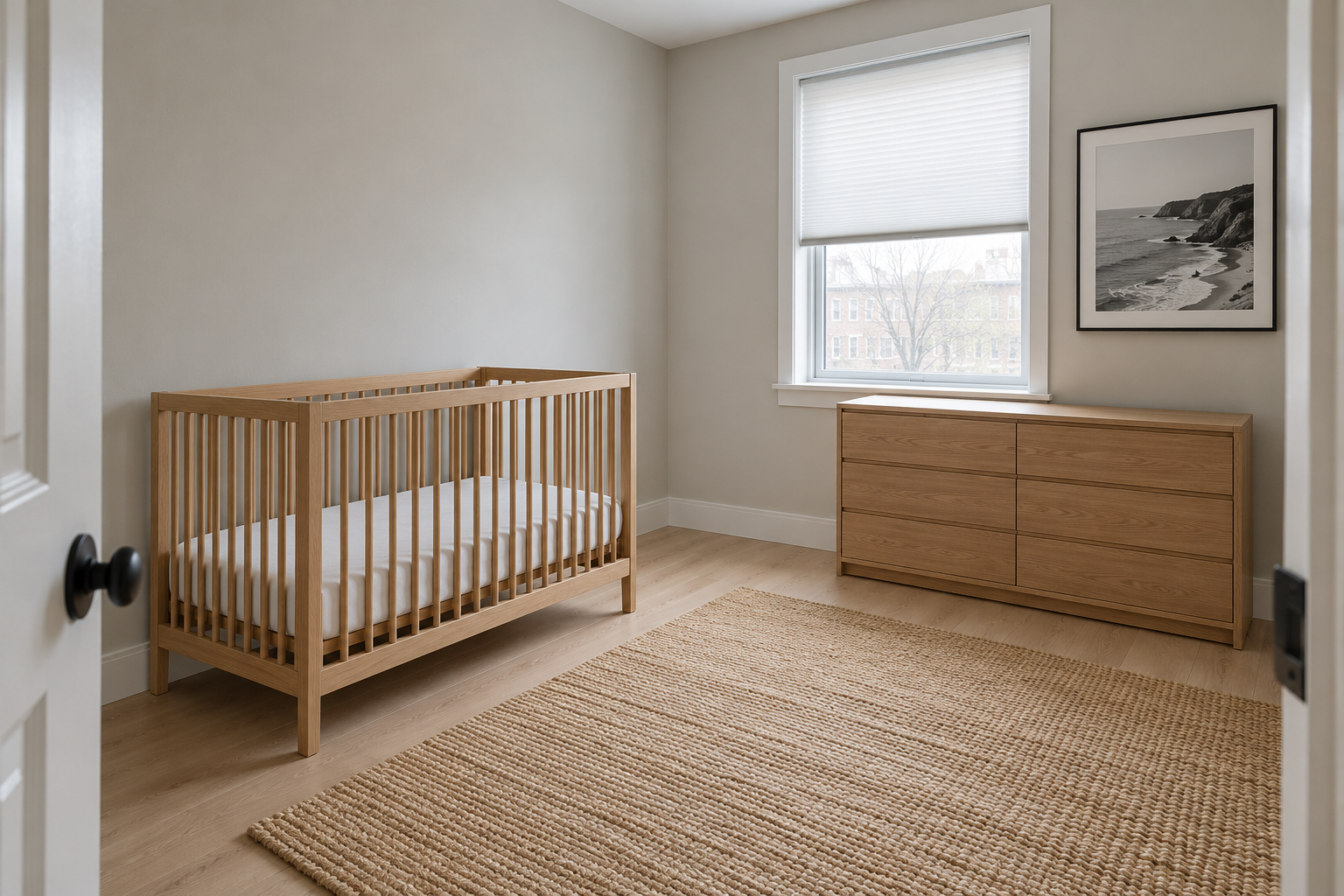
The wall behind the crib is the one to keep plain. Shelves, heavy frames, and mirrors can loosen and fall, and above a crib there is someone underneath, so the art and shelving go on other walls. That leaves the crib’s wall as a field of paint or paper with the slats in front of it, which looks calm and makes the crib the shape the eye finds first on entering.
Choose an inside wall, away from the window. A crib under a window puts blind and curtain cords within reach of a baby who can pull up to standing, and a window lets in drafts and early light. A crib on a wall facing the door also lets an adult see it from the doorway without stepping into the room.
A Crib in a Color
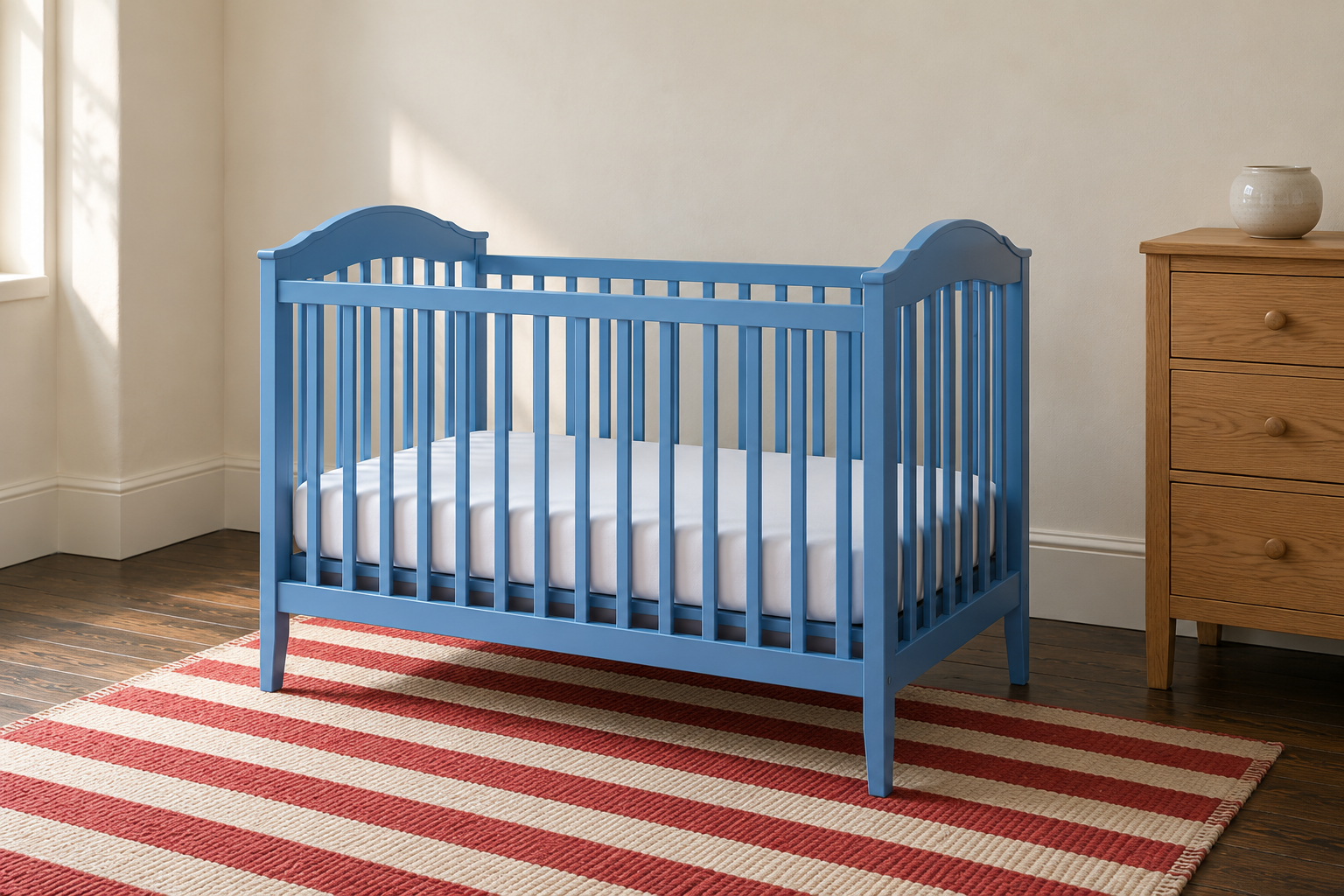
Most cribs are white or natural wood, which suits a crib that stays bare, since the empty mattress then looks like part of a quiet room. A crib painted a clear color does the opposite and becomes the most colorful object in the room, in cornflower blue, a soft red, or a deep green against a pale wall. Because nothing covers it, the painted frame is seen whole, every slat of it, which a made bed never shows.
Keep the wall behind it quiet, cream or white plaster, so the crib carries the color and the wall stays behind it. A satin finish wipes clean and shows the shape of the slats in raking light. A crib bought already painted will have a finish made for children’s furniture. Repainting an old one is a different matter, and a crib from before current safety standards is better kept as a family piece than used.
Color the Ceiling

A baby lying on its back looks up, and so does an adult in a feeding chair at three in the morning. The ceiling is the surface a nursery sees most and the one most often left white. A soft color overhead, apricot, pale pink, a powder blue, gives the room color where it is seen and keeps the walls free for paper or art.
It suits a room with a sloping ceiling especially well, since the slope comes down into view and the color hangs over the room like a canopy. Stop the color at a clean line where wall meets ceiling, so the edge is sharp. A flat matte finish overhead hides the roller marks and joints that show on a ceiling lit from the side.
Paint the Wall Below a Rail
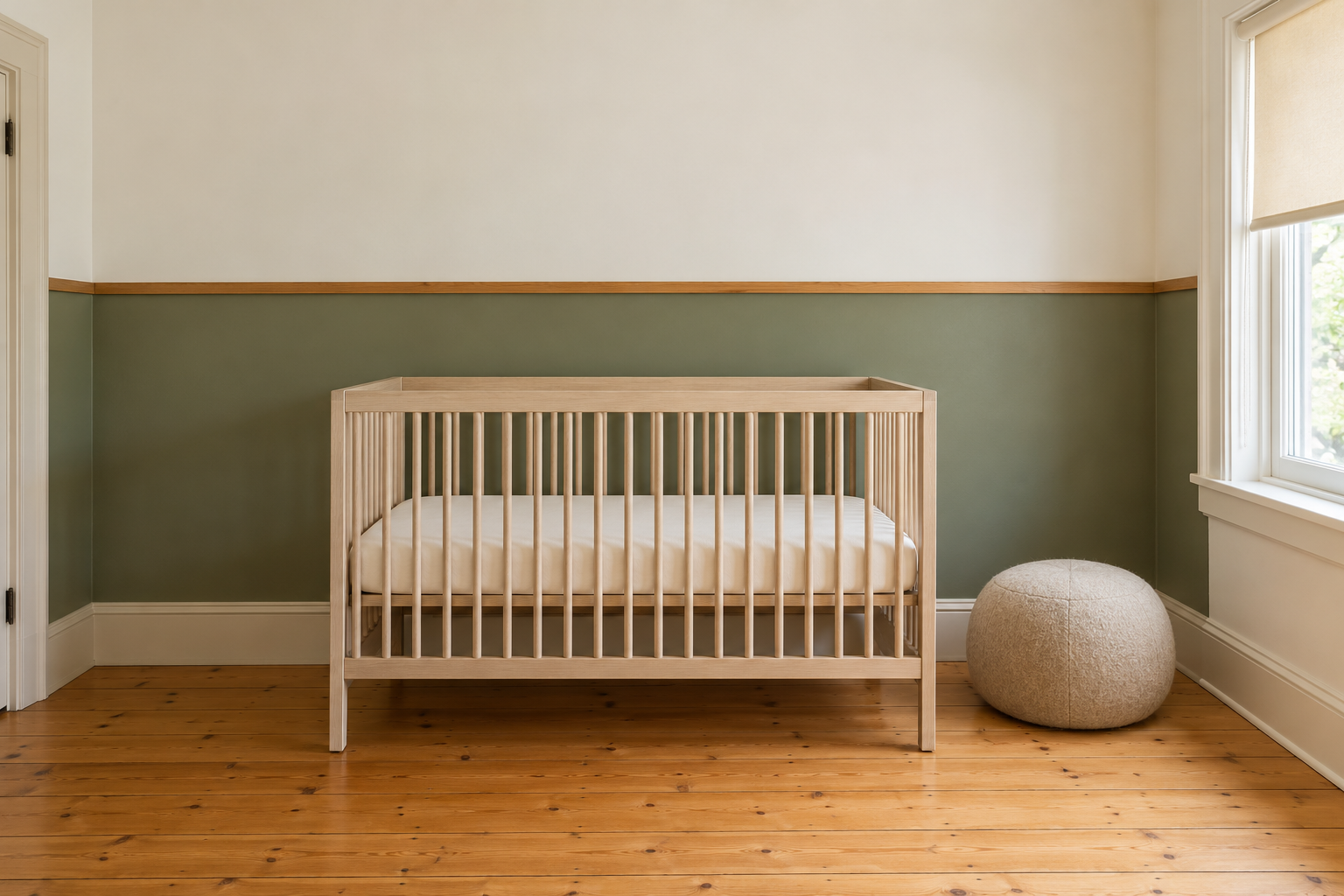
Painting the lower part of the wall a stronger color and the upper part pale gives a nursery its color at the height where most of the furniture stands, the crib, the dresser, the chair, and keeps the upper wall light. A narrow wooden rail along the dividing line gives the change a firm edge, and it takes the knocks of a crib being moved or a chair being pushed back.
Set the rail a few inches above the crib’s top rail, so the crib stands in front of the colored band with the wood just above it. Measure it from the floor and keep it level around the room, following the same method used for a chair rail. Olive, brick red, or a deep blue below suits a warm white above.
Paper the Room in a Large Print
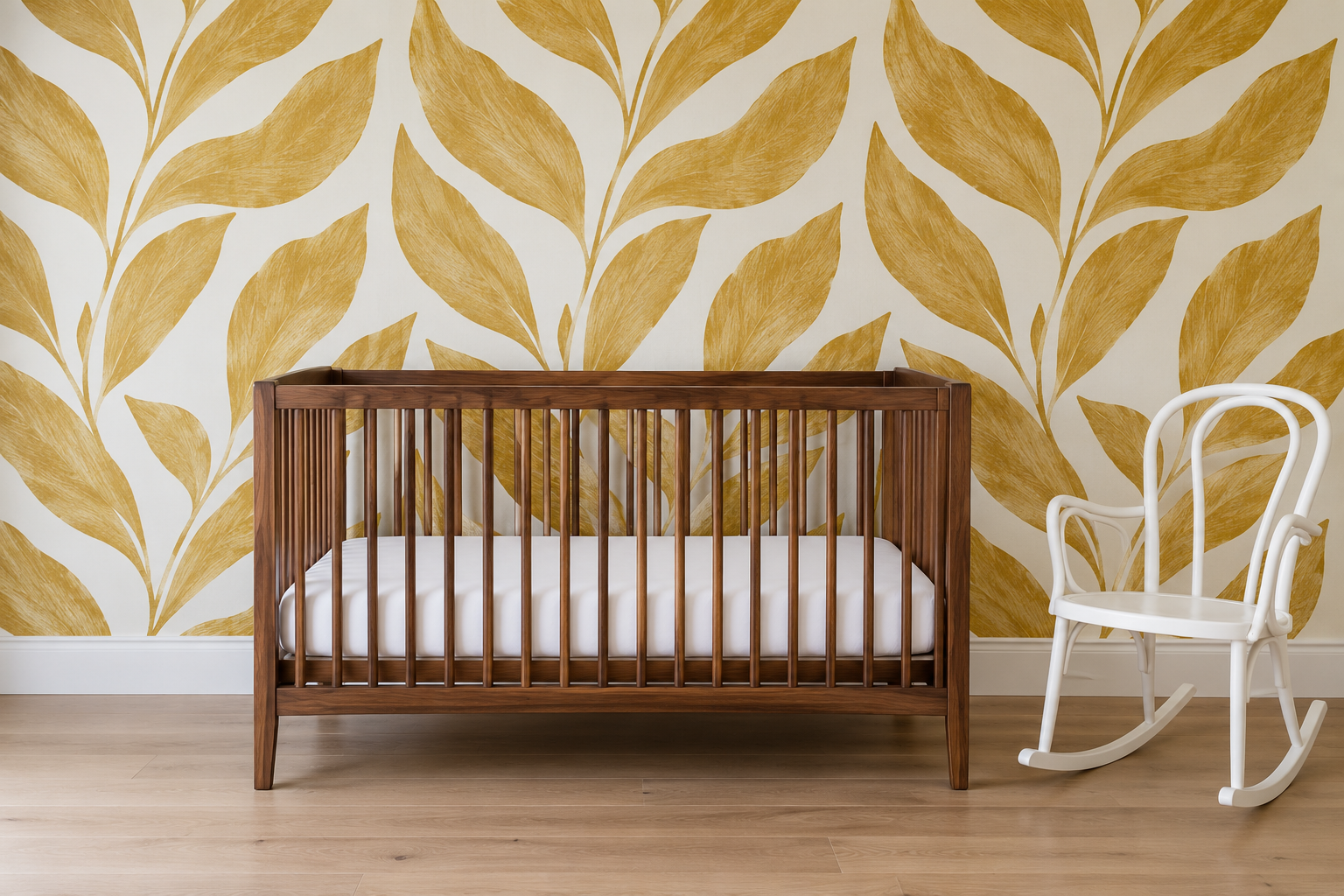
A large print gives a nursery a whole room of pattern while the crib in front of it stays plain. Scale matters more here than in other rooms, since the room is seen from the floor and from a chair as well as from standing. A leaf as long as a forearm, with only a few repeats across a wall, shows as a pattern from the doorway and as distinct shapes from the floor, where a small print turns to texture.
Papering all four walls avoids having to choose a feature wall and keeps the room even in the light. With a pattern this strong, nothing needs to hang on it. Ochre, rust, or green on white is calmer than it sounds at full scale, because the white ground takes up as much of the wall as the pattern.
Turn the Dresser Into the Changing Table
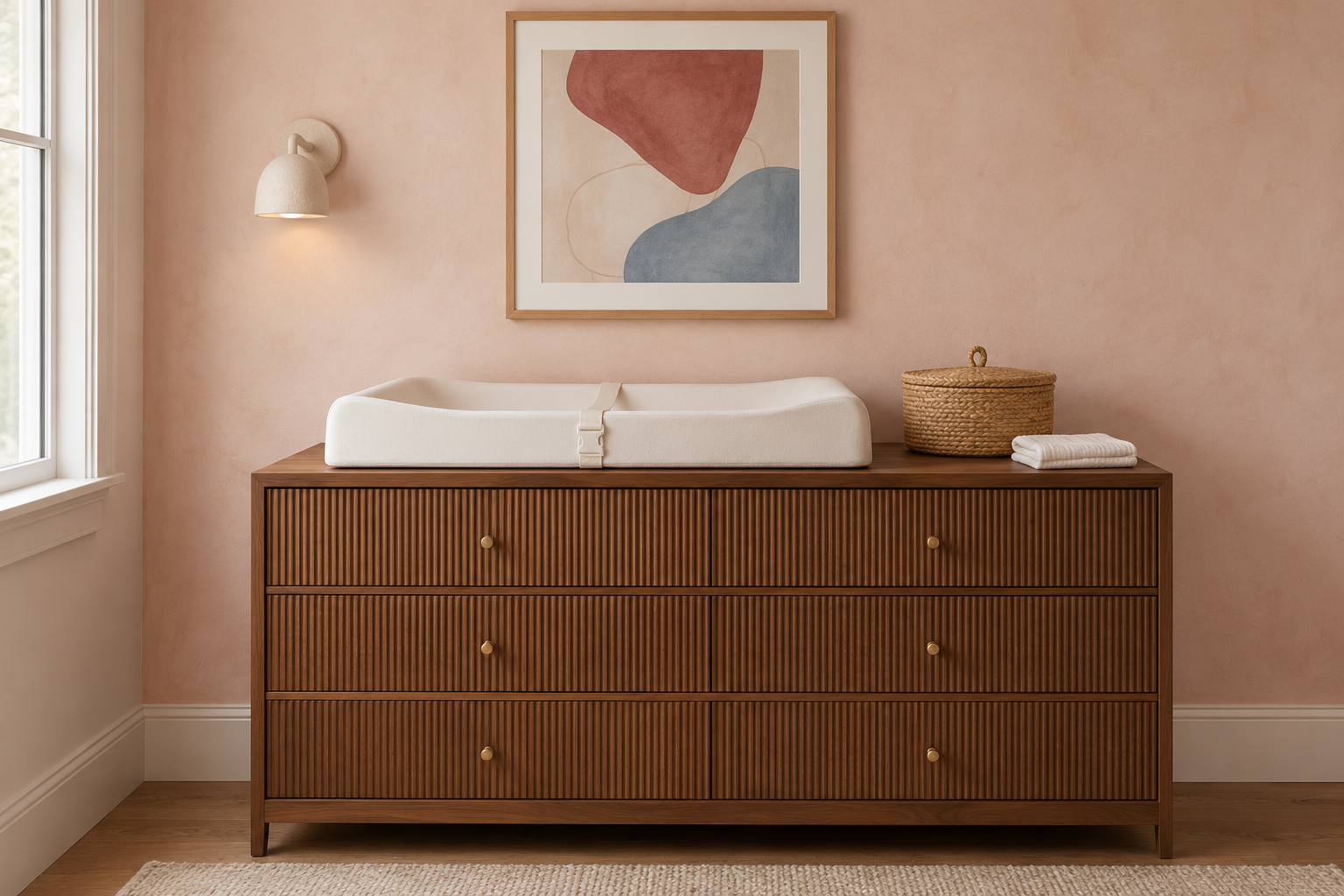
A dresser at about waist height works as a changing table with a contoured pad on top, and stays useful as a dresser for years after the changing stops. Look for one deep enough that the pad sits fully on the top with no overhang, and wide enough to leave room for a basket of supplies at one end, so nothing has to be fetched with one hand on the baby.
A dresser in a nursery needs to be anchored to the wall, as any tall or heavy chest in a house with small children does, since an open drawer climbed on can tip it. The wall above it is where the art can go, one print centered over the pad, and a wall light beside it leaves the top clear.
Put the Feeding Chair Within Reach of the Crib
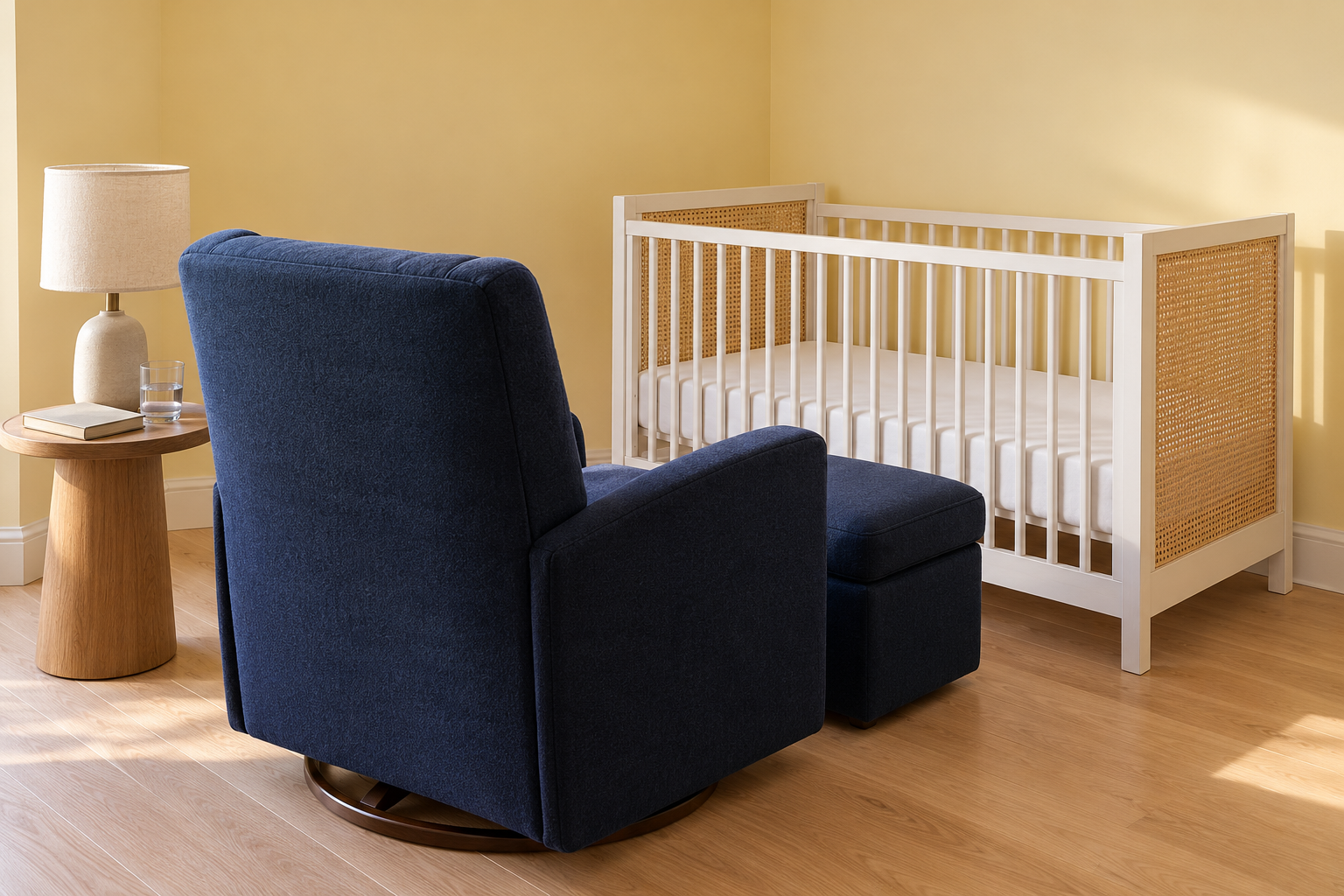
A glider or armchair set beside the long side of the crib means a baby can be lifted out or settled back without standing up first. Arm’s length is enough, and it keeps the walk at night to a turn of the body. A footrest helps during long feeds, and a small table on the chair’s other side holds a glass of water, a lamp, and a book.
Upholstery matters more than in a living room. The chair is used in the dark, in a hurry, with milk and spit-up nearby, so a wool or a tightly woven fabric in a darker color, navy, rust, or a deep green, shows marks less than pale linen or velvet. A chair wide enough to sit in sideways helps on the nights when one position stops being comfortable.
Light the Room Low for Night Feeds
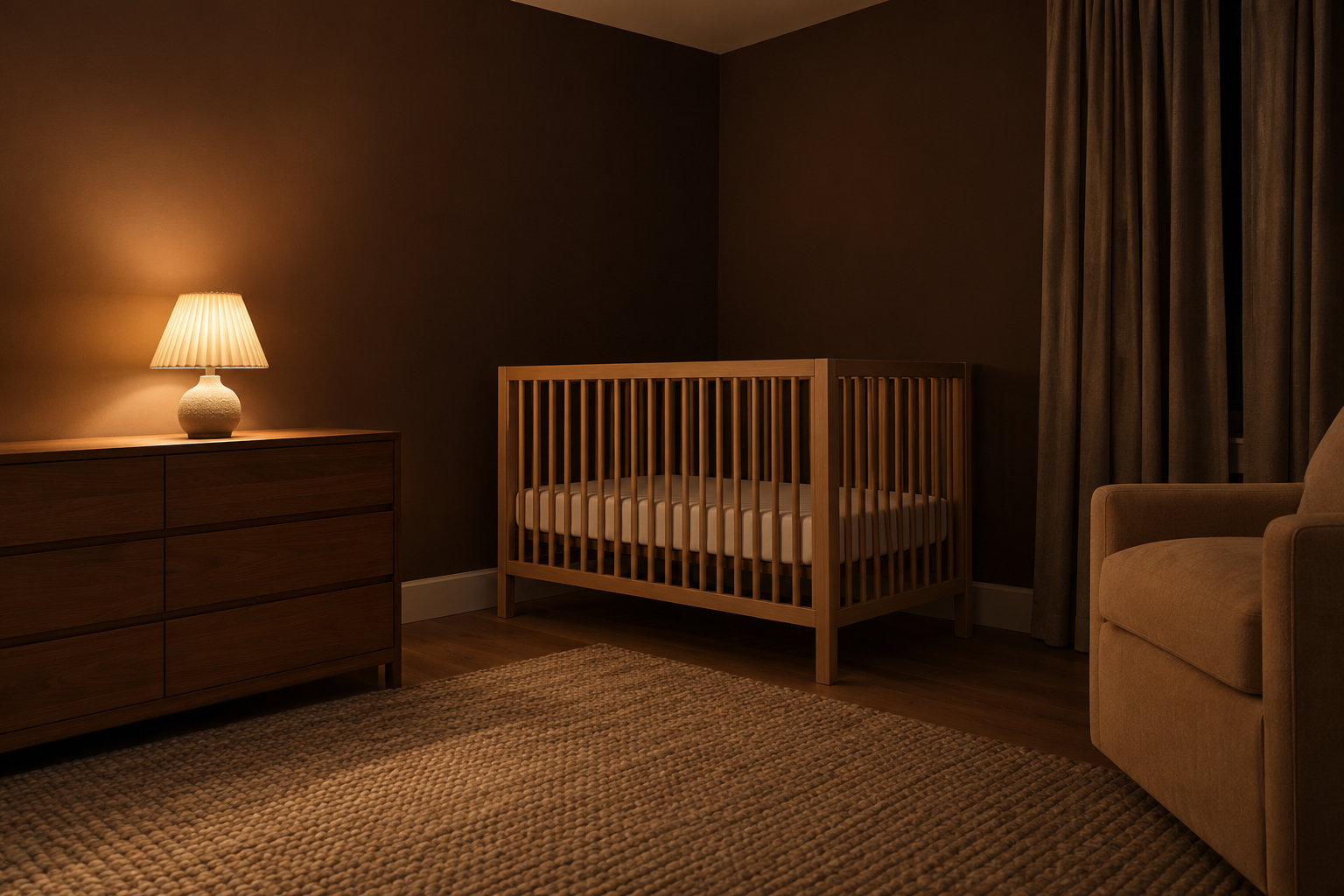
A night feed needs enough light to see a bottle, a button, or a diaper, and no more. A small lamp with a fabric shade on a low dresser or side table, below the eye level of a standing adult, lights what’s in front of you and leaves the rest of the room dim. A ceiling light switched on at night lights the whole room, crib included.
Put the lamp on a dimmer or use a warm, low bulb, and choose a pleated or lined shade that hides the bulb from every side. Dark walls hold that low light differently from pale ones. A chocolate brown or deep blue nursery looks enveloping at night with one lamp lit, where a white room bounces the same lamp’s light into every corner.
Line the Shades for Daytime Naps

A baby who naps at two in the afternoon is trying to sleep in full daylight, and a lined shade over the nursery window is the plainest way to darken the room. A blackout lining sewn to the back of a linen Roman shade keeps the linen’s look from inside the room while blocking most of the light. A shade mounted inside the window frame leaves a thin line of light at the edges, and one mounted outside the frame, overlapping it by a few inches on each side, closes that line further.
In a nursery the shade should be cordless or motorized. Loose cords from blinds and shades are a strangling hazard for small children, and a cordless shade removes the question entirely. Blackout curtains on a rod over the shade darken the room further where the light at the edges still wakes the baby.
Lay a Rug Big Enough to Sit On
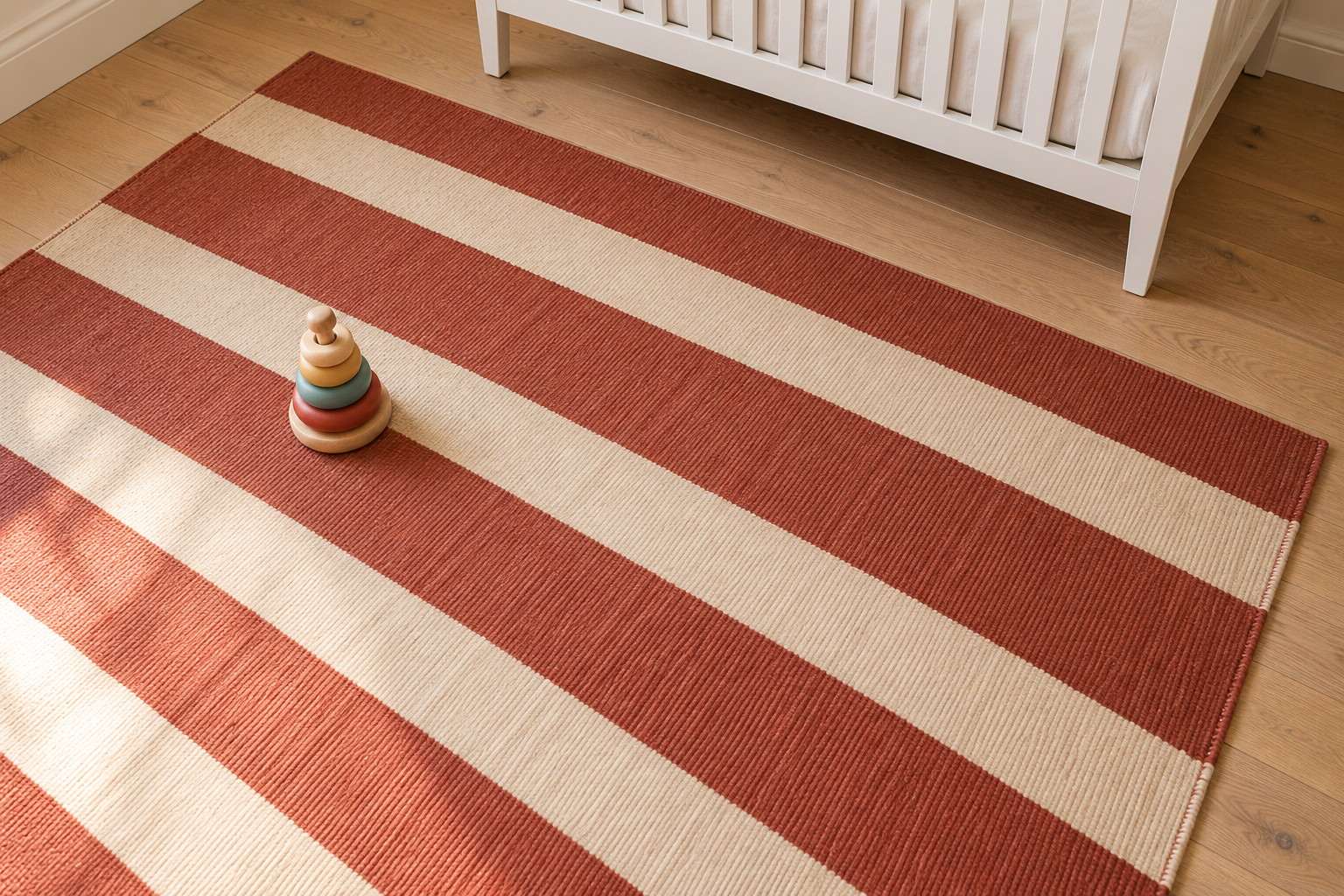
A nursery rug is sat on more than walked on. An adult and a baby on the floor need a surface big enough for both, which in most nurseries means a rug that covers the middle of the room, around 6 by 9 feet in a room of ordinary size, with the furniture standing at its edges.
A flat woven cotton rug or a dhurrie is easy to lift and wash, lies flat with no edge to trip on, and suits a room where milk and worse will reach the floor. A strong pattern, wide stripes in brick red and cream, hides marks and gives the room color at the level a baby sees it. Use a rug pad under it on a wooden floor so it doesn’t slide.
Face the Board Books Out on Low Ledges

Board books have bright, simple covers, and standing them face out on slim ledges turns them into a grid of color on the wall. Three ledges stacked low, the top one around the height of a seated adult’s shoulder, keep the books within reach of the feeding chair and away from the crib wall.
Face out also suits the way books are chosen at that age, by the picture on the front, since a board book’s spine is too narrow to recognize. Five or six books to a ledge leaves room to change which ones show. The ledges stay useful for picture books later, when the books get taller and the child can reach the bottom ledge alone.
Make a Crib Corner in Your Own Bedroom
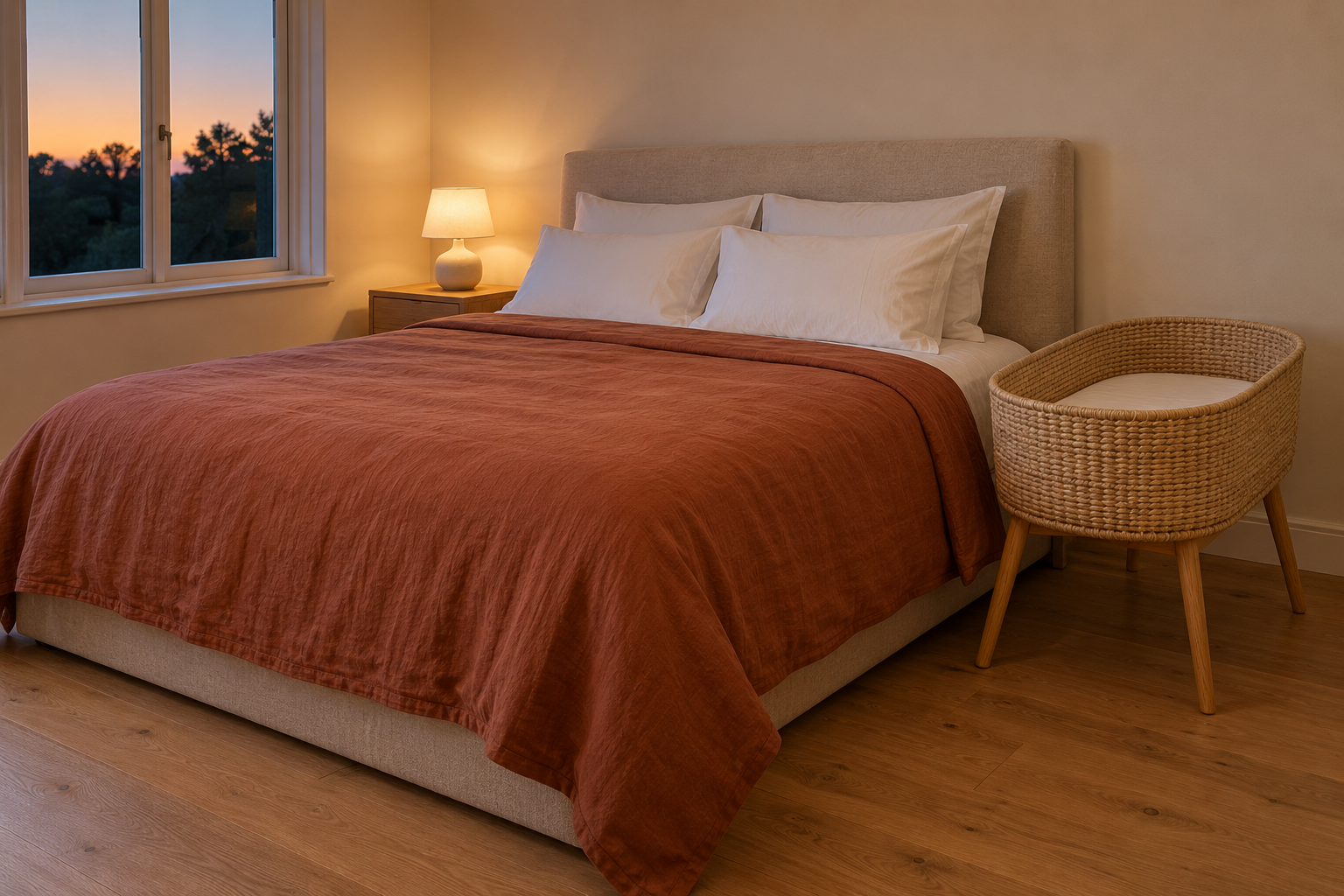
For at least the first six months, the recommended place for a baby to sleep is the parents’ room, on a separate surface: a bassinet or a crib beside the bed, never in it. That makes the first nursery a corner of an adult bedroom, and it can be designed as part of that room instead of as an intrusion.
A bassinet on wooden legs, in woven fiber or plain wood, sits beside the bed at about mattress height and looks like a piece of bedroom furniture. Keep the corner to the essentials, the bassinet and a small lamp on the nightstand, with the changing supplies in a basket that slides under the bed. The bassinet stays as bare as the crib, with a firm mattress, a fitted sheet, and nothing else.
Fit a Mini Crib Into a Small Room
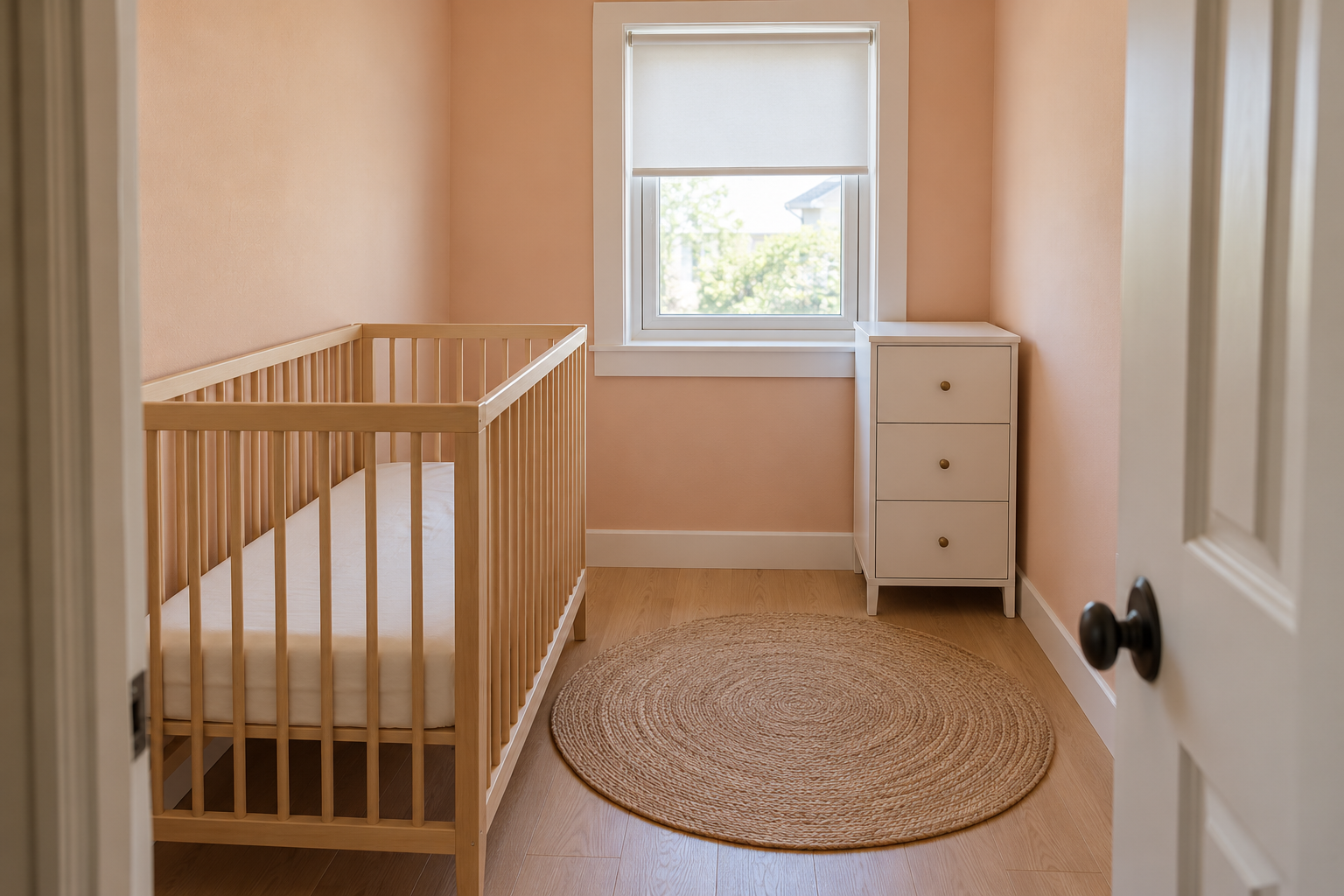
A full size crib takes a floor area of about 30 by 54 inches, and in a box room that leaves almost nothing else. A mini crib takes roughly two thirds of that, around 26 by 40 inches on the outside depending on the make, and fits a room where a standard crib would block the door or the window.
The trade is how long it lasts. A mini crib is outgrown sooner, by a baby’s height or weight limit set by its maker, so check that limit before buying. In a small room, keep the crib off the window wall, choose a narrow chest of drawers, and let the walls carry the color, since the floor has room for only a small rug.
Add a Daybed for the Nights Someone Stays
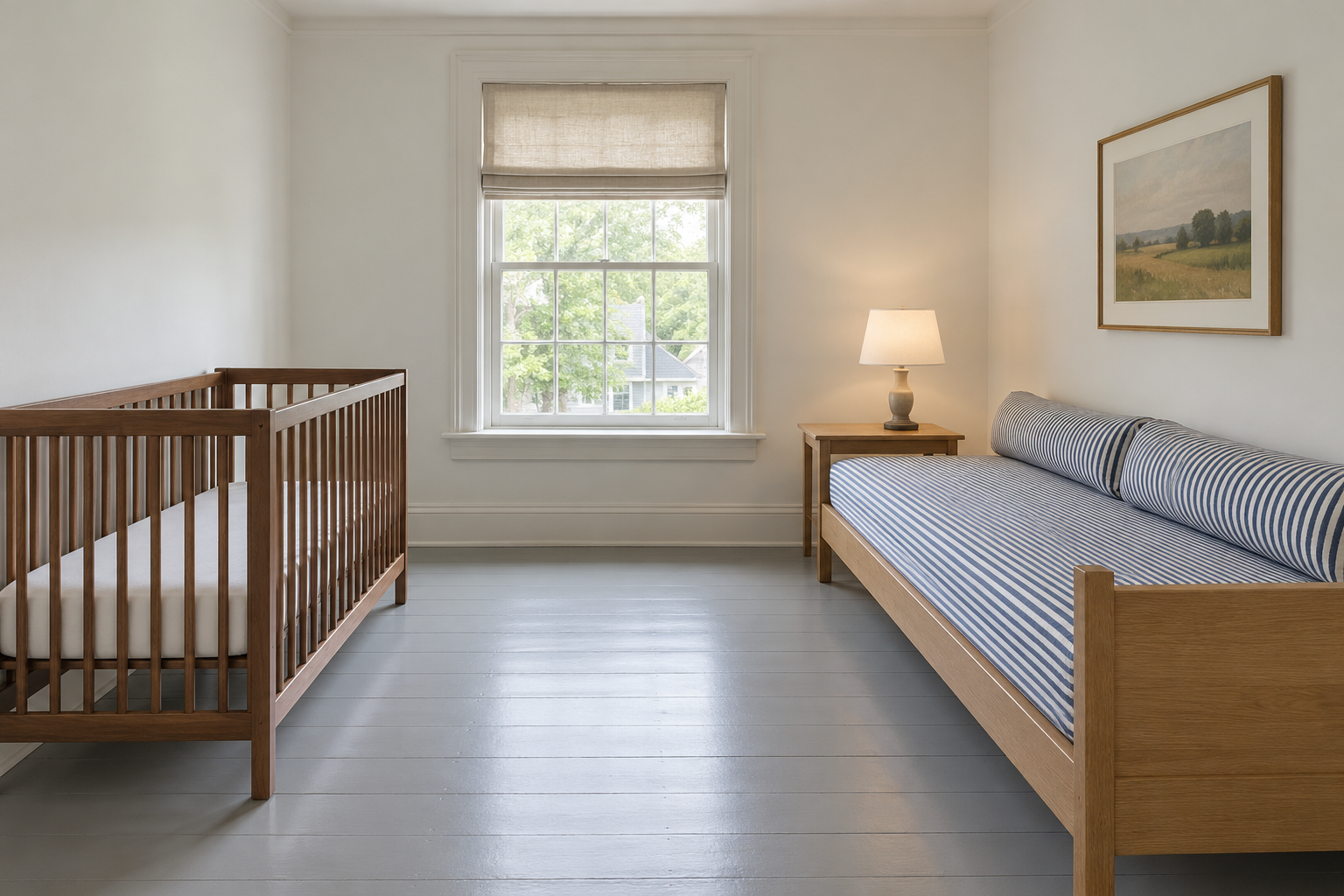
A twin daybed along one wall of a nursery gives a parent somewhere to sleep on a night of teething or illness, and gives a visiting grandparent a bed. It takes up the floor of a single bed but looks like a sofa during the day, with long bolsters against the wall and a fitted cover in ticking or linen.
Put it on the wall opposite the crib, with clear floor between, and a lamp beside it on a small table. The daybed also outlasts the nursery. When the crib goes, it becomes the child’s first bed or a seat for reading, so the floor it takes is still in use long after the first year.