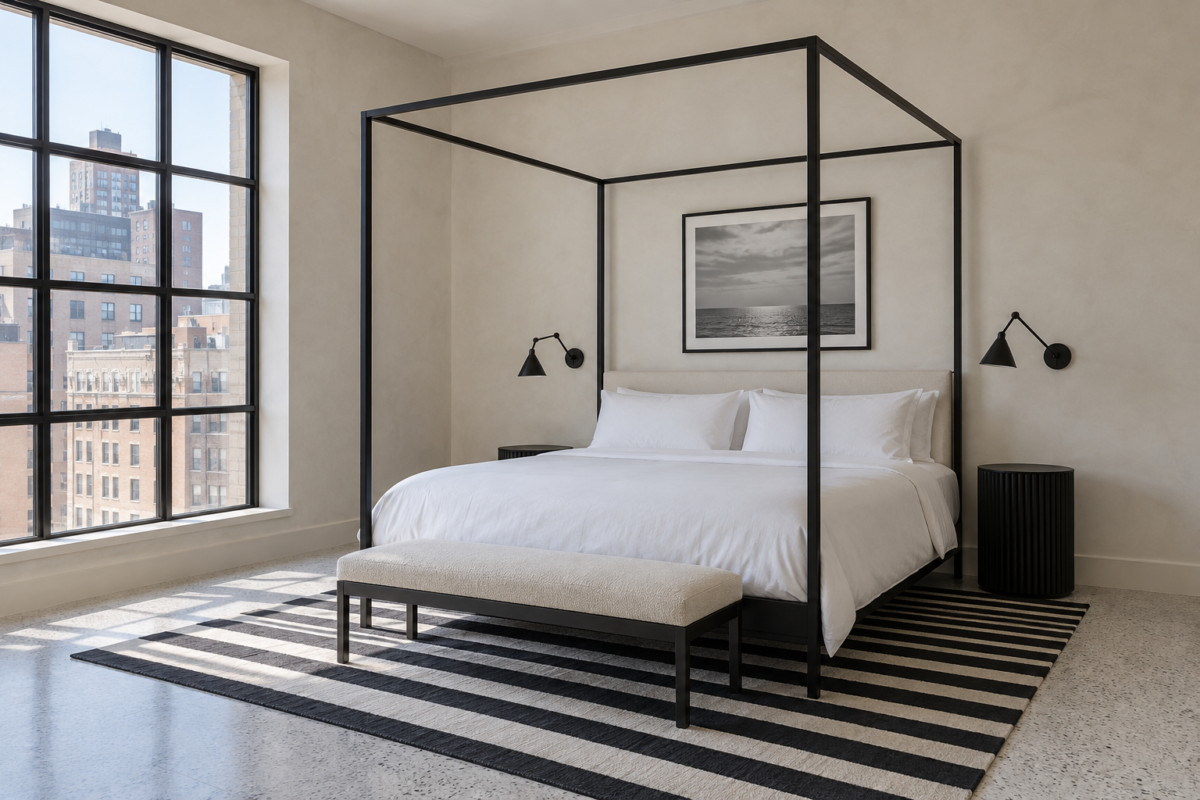
Most guest rooms are furnished from what’s left over: the old mattress, a lamp that didn’t suit the living room, a closet already full of winter coats. The room looks fine at noon with the door open. The trouble shows at eleven at night, when a visitor is feeling for a switch, a hook, or a spare pillow in a house they don’t know.
The twelve ideas here look at the room from that side, starting with the bed and working outward to the curtains, the closet, and the back of the door. None of them needs a large room, several cost very little, and one, the paint color, is worth settling before anything else goes in. The last idea is for rooms that also have to work as an office or a den.
Sleep on the Mattress Before Guests Do
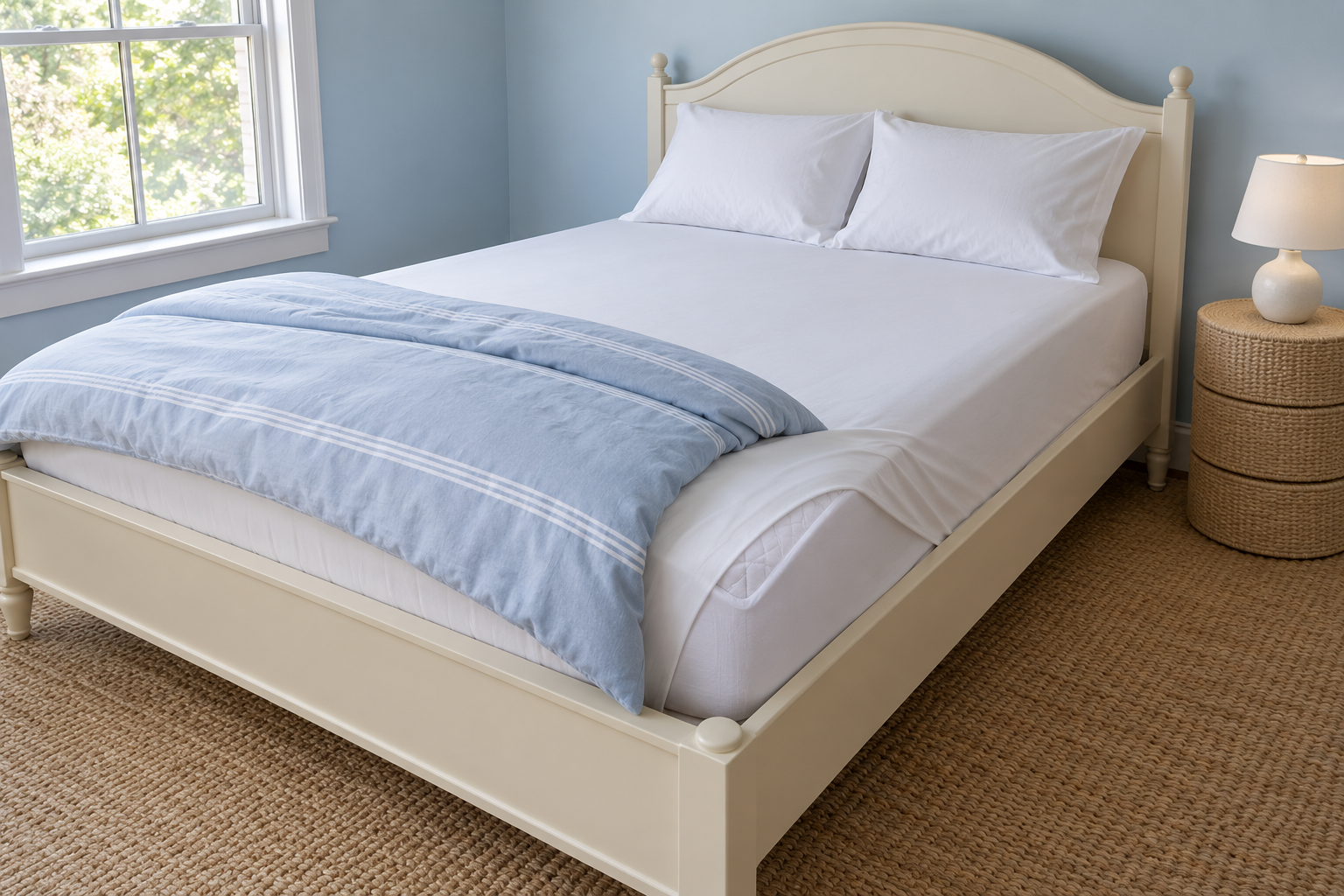
The guest mattress is often the one the household replaced, which means it was uncomfortable enough to retire. The only reliable test is a night on it yourself. A dip in the middle, a spring you can feel at the hip, or a surface firm enough to wake you at 4 a.m. are all things a polite guest won’t mention.
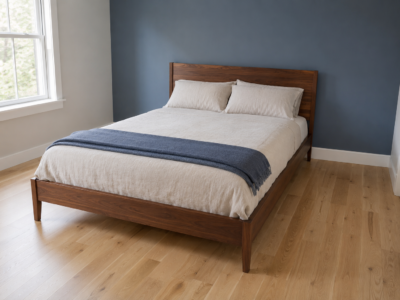
If it fails, a new mattress matters more than anything else on this list, and medium firmness is the most forgiving choice for sleepers you don’t know. A thick topper can rescue one that’s supportive but hard. With the duvet folded back, as here, the rest of the bed shows too, and a quilted protector and a fitted sheet that stays put at the corners matter as much as the mattress under them.
Consider Two Twin Beds That Join Into a King
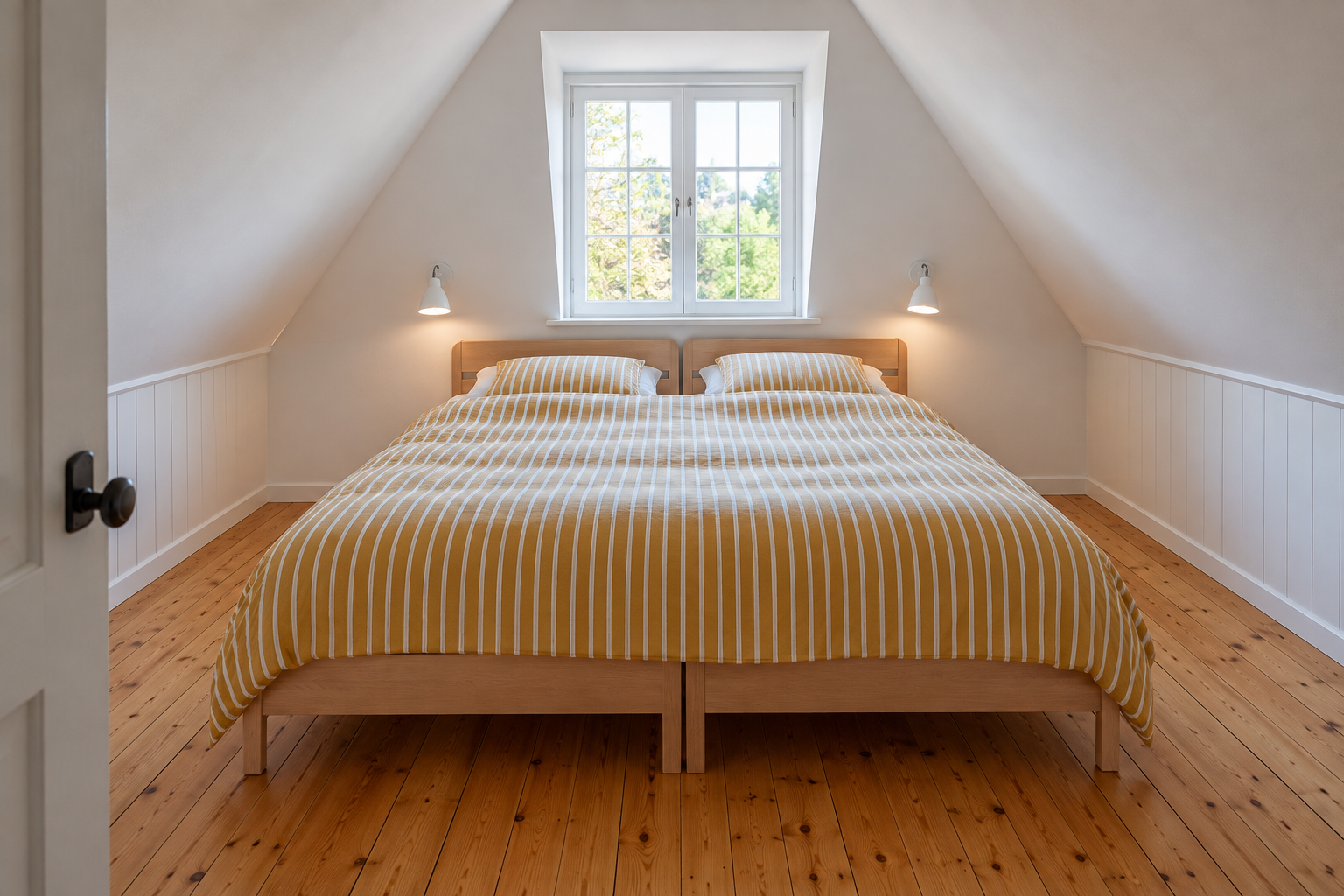
A double or queen bed suits a couple and hardly anyone else. Two twin beds suit two friends, a parent and child, siblings who won’t share, and a couple too, once the beds are pushed together. Twin XL mattresses measure 38 by 80 inches each, so a pair side by side matches a standard king. Add a king duvet and a foam bridge over the seam, and they make one bed. Regular twins work the same way but come out 5 inches shorter.
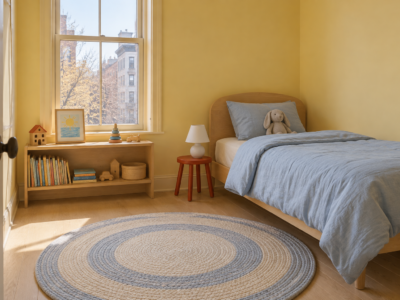
Kept apart, the beds need a path between them and along the outer sides, and the bed size guide’s walkway advice applies to each one. Twins also suit an attic room like this one, where the low slopes on either side would leave someone in a single large bed sitting up into the ceiling.
Put a Lamp and an Outlet on Both Sides
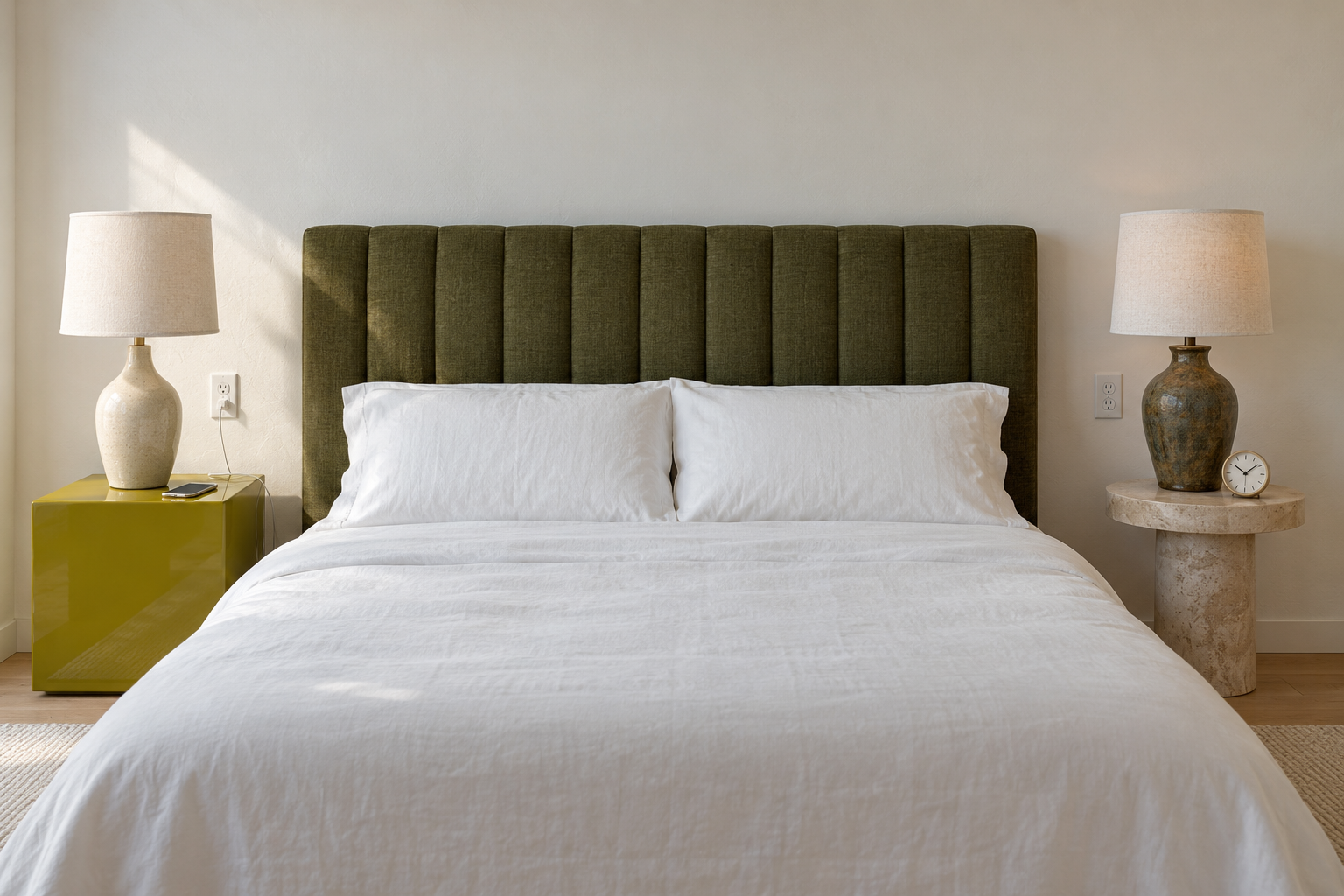
Someone waking in an unfamiliar room reaches for a light first. A lamp on each side of the bed, with a switch they can find without sitting up, spares them a walk to the wall switch in the dark. The lamps and tables don’t need to match. Here a chartreuse lacquered cube sits on one side and a small limestone pedestal on the other, and the pair looks planned because both shades sit at the same height, so the light falls at the same level across each pillow.
Plan an outlet on each side too, within reach from the pillow. Everyone arrives with a phone, and a charging cable stretched across the floor from the only free socket is easy to trip over at night. A lamp with a USB port in its base solves this without an electrician. For table heights against the mattress, see our nightstand guide.
Clear Half the Closet
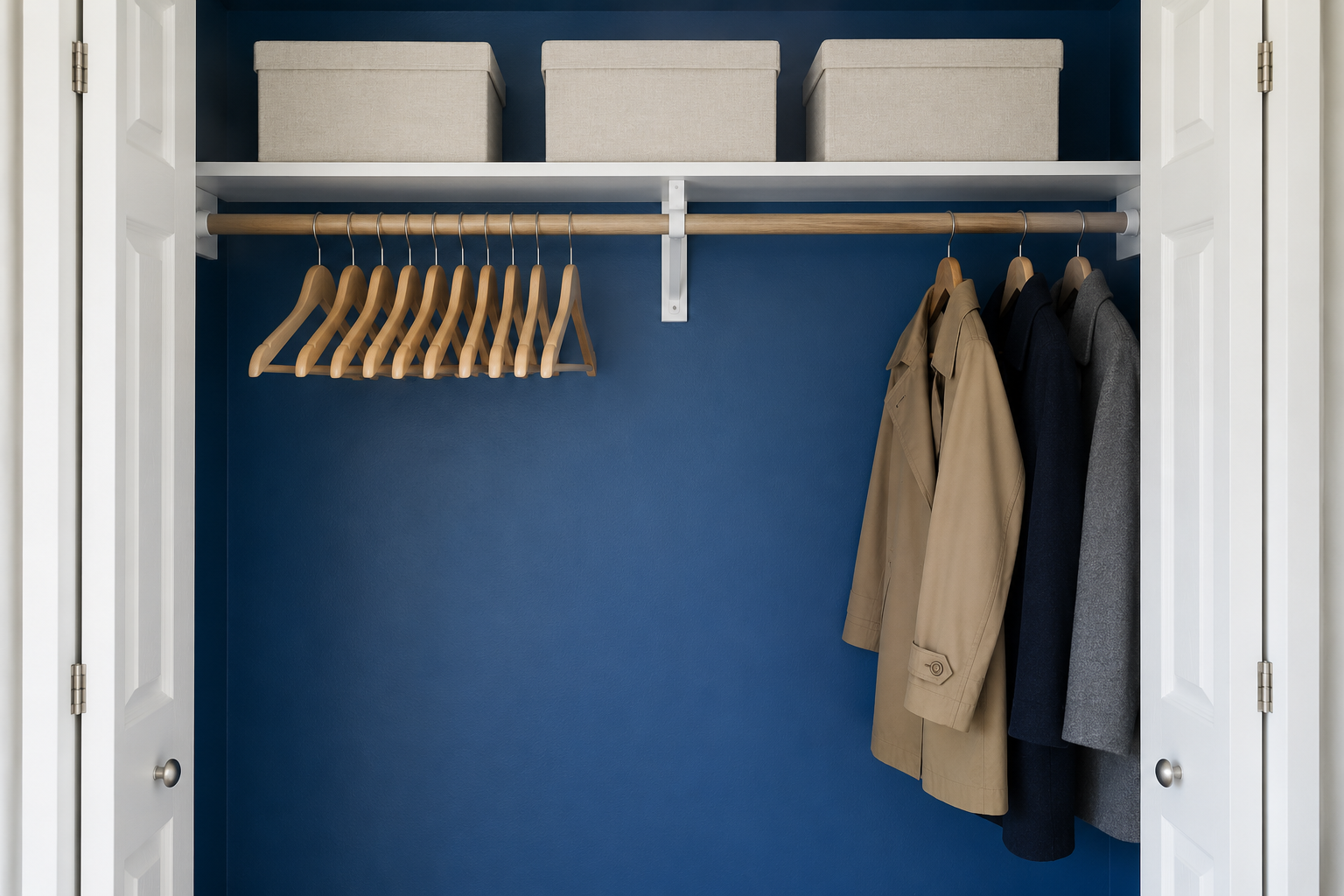
A guest living out of a suitcase for four days usually means the closet is full of someone else’s things. Emptying half of it, with a clear stretch of rail, eight or ten matching hangers, and one empty shelf or drawer, lets them unpack properly, and it takes about twenty minutes.
Wooden or flocked hangers hold a jacket or a dress without letting it slide to the closet floor. If the closet also stores household things, put what stays in lidded boxes on the top shelf, where nobody has to move them and they look tidy. Painting the inside of the closet, like the deep blue here, gives the cleared half a finish of its own, and it’s a bold color that only shows when the doors are open.
Give the Suitcase Its Own Spot
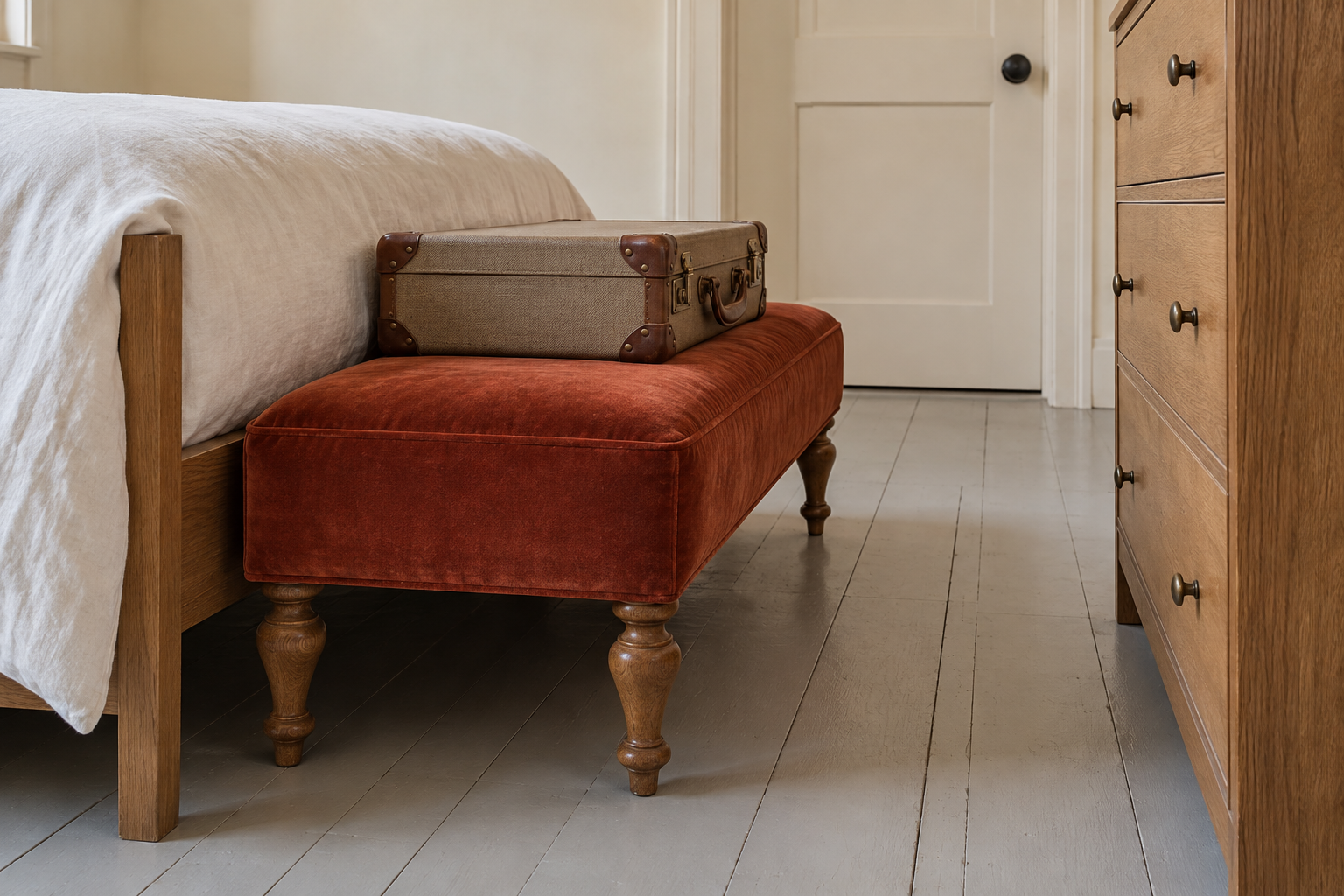
A suitcase opened on the bed has to be moved every night, and one opened on the floor turns a small room into a set of hurdles. A folding luggage rack, a bench at the foot of the bed, or the cleared top of a blanket chest gives it a place at a comfortable height, out of the walkway.
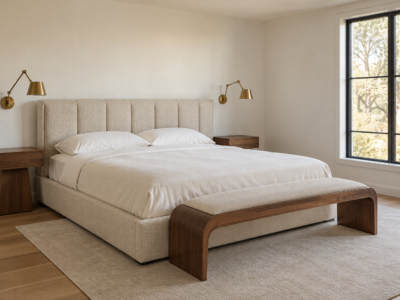
A bench does two jobs, as a seat for putting on shoes and a stand for the case. Make it at least 15 inches deep so a carry-on lying flat doesn’t hang over the edge. Velvet and leather seats scuff with use, so choose a color that hides it, like the rust velvet here.
Hang Curtains That Keep Out Morning Light
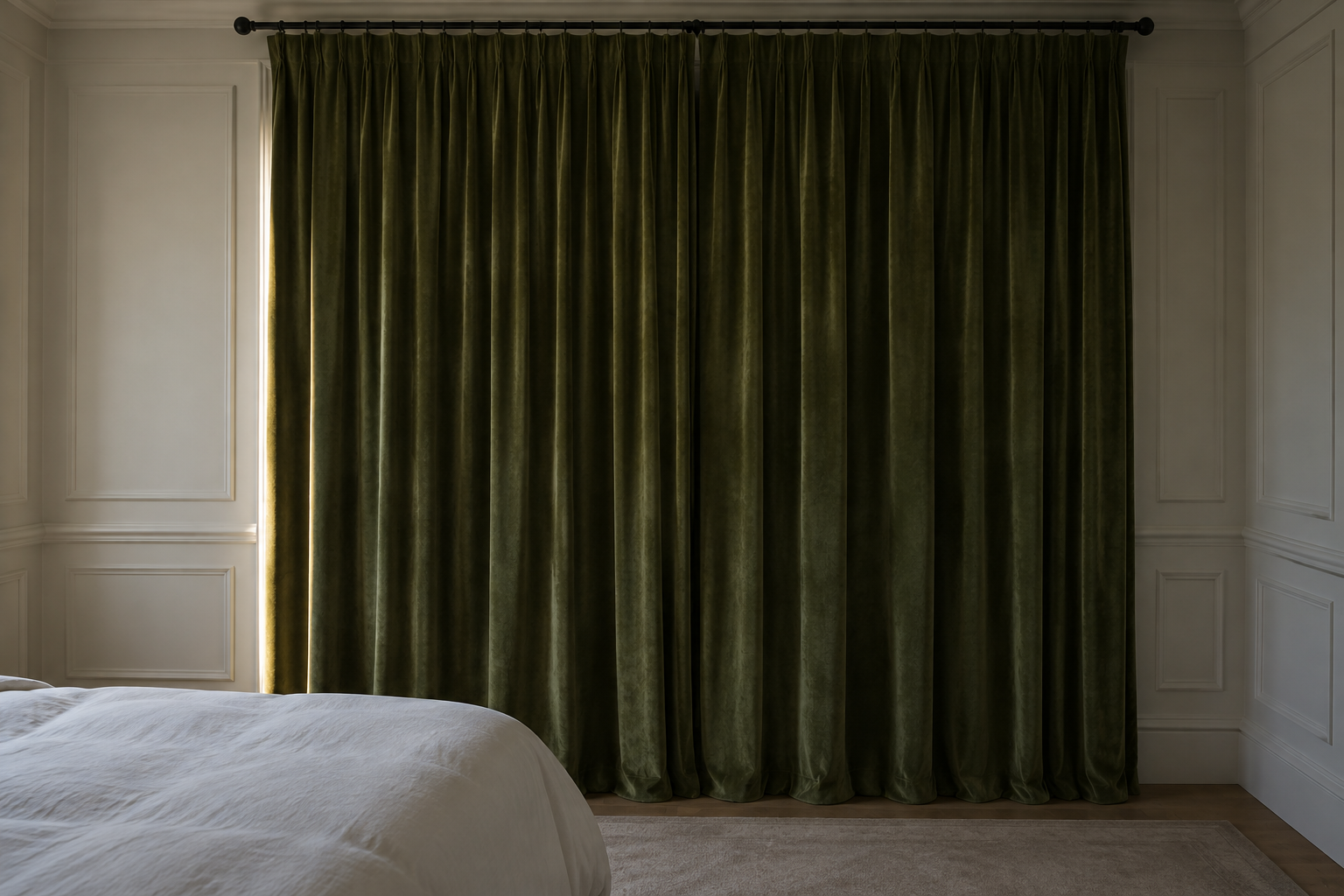
Guests don’t choose when the sun comes up, and an east window with thin curtains wakes them at dawn. Curtains with a blackout or thermal lining keep the room dark into the morning, and they’re easy to add later, since a separate lining can hook onto the existing curtain rings. Hang the rod wide and high so the fabric covers the whole window frame, because light leaking around the edges undoes the lining.
The face fabric can still carry the room’s color. Moss green linen velvet, as here, looks soft by day, and with a lining behind it the fabric never turns thin and yellowish against a bright window the way unlined linen does. For how far the curtains should fall, the usual rules apply.
Add Hooks Behind the Door
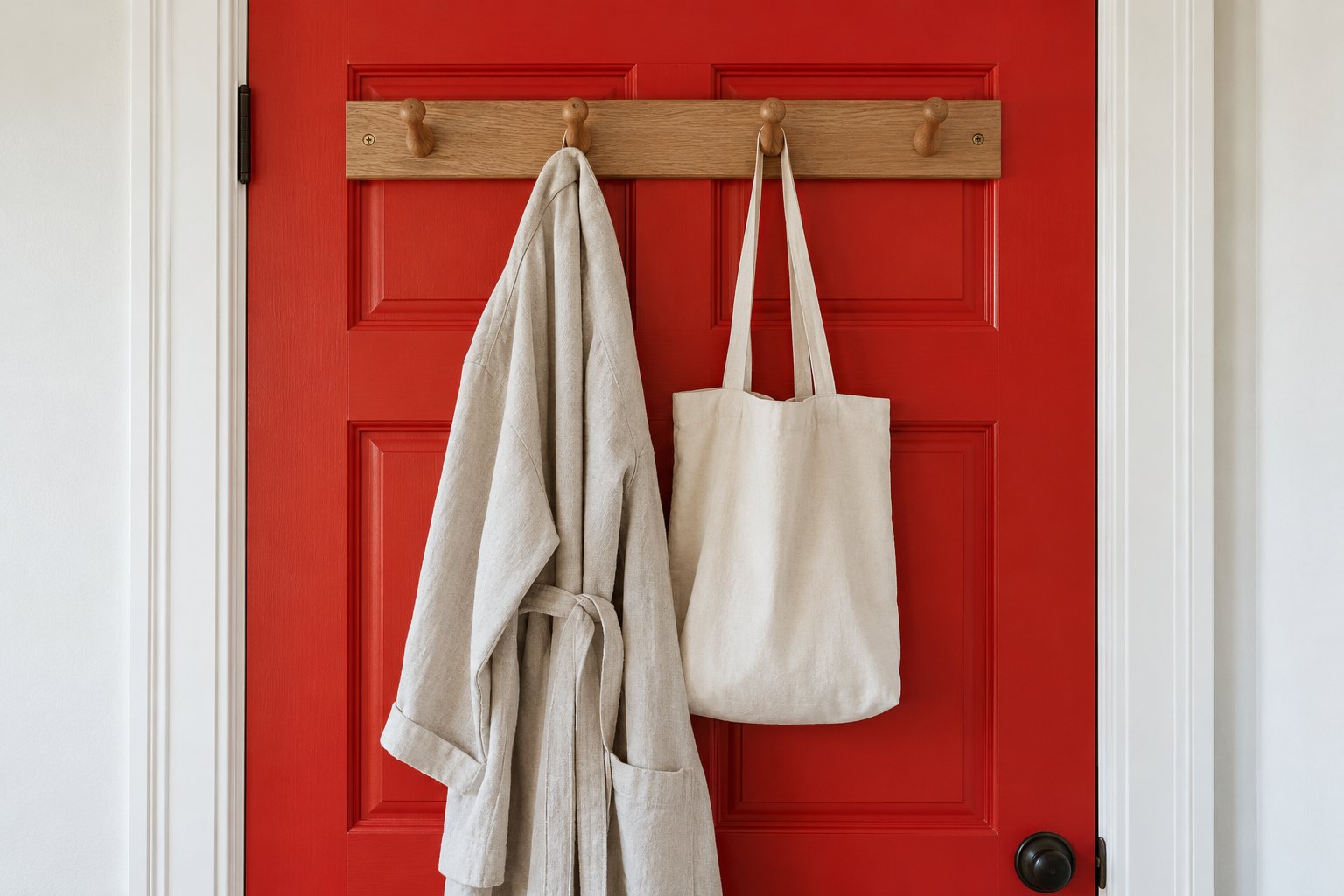
A row of hooks on the back of the door gives a guest somewhere to hang a robe, a coat, and a bag without opening someone else’s closet. Three or four pegs on a rail are enough. Mount them at about the same height as bathroom robe hooks, roughly 68 to 72 inches up, so a long coat clears the floor.
Screw the rail into the door’s solid top rail, or use hooks made for hollow doors, since ordinary screws pull out of a thin door skin. The back of a door is also an easy place for color. The tomato red here takes very little paint and faces the room only when the door is shut.
Find Room for a Full-Length Mirror
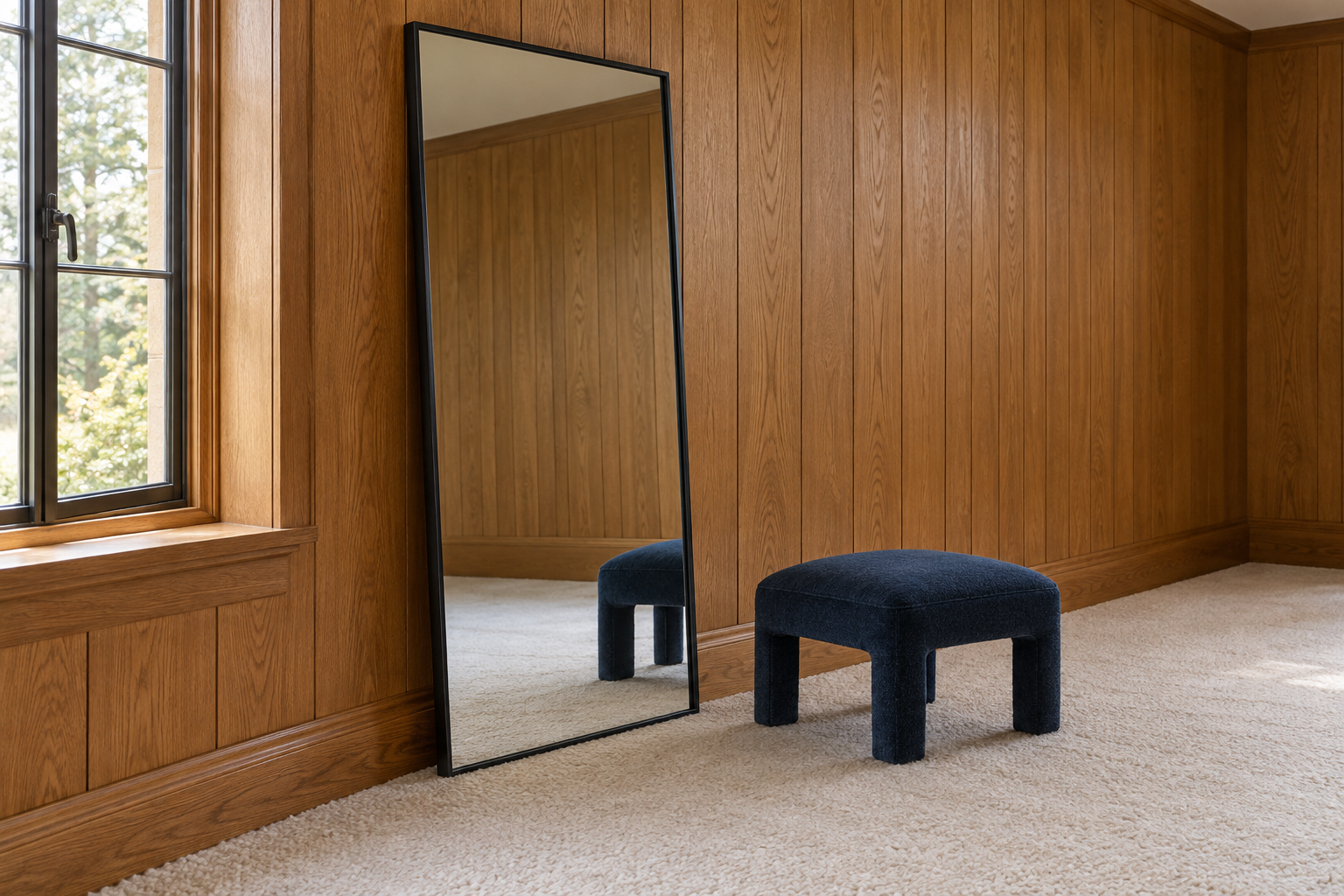
Guests get dressed in this room, and without a tall mirror they check an outfit in a bathroom mirror that shows them from the chest up. A full-length mirror leaned against a wall or hung on the back of the closet door takes almost no floor space. In theory a mirror half a person’s height shows them head to toe, but only when it hangs at the right height for that person. One around 5 feet tall works for guests of any height, leaned or hung.
Put it where daylight falls on the person standing in front of it, beside a window or on a wall at an angle to it. A mirror directly opposite a window puts the bright glass behind the person and leaves their face in shadow. In an oak-paneled room like this one, a thin blackened steel frame keeps the mirror from competing with the wood.
Fit a Chair Someone Can Read In
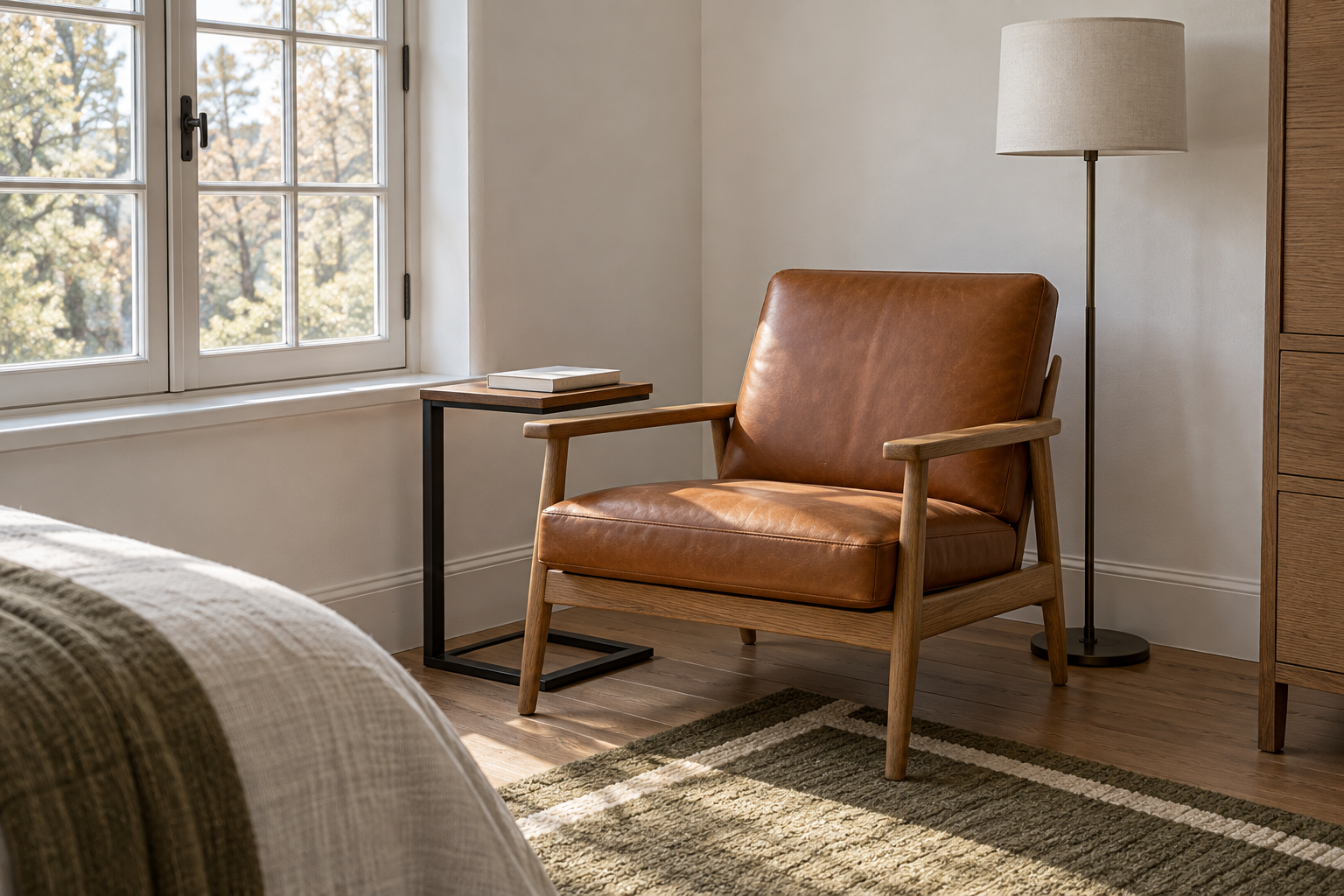
In most guest rooms the bed is the only place to sit, so reading, putting on shoes, and answering email all happen perched on its edge. One chair with a back and arms changes that, and a small table beside it gives a place to set down a cup or a phone. A floor lamp with its shade at shoulder height lets someone read without lighting the whole room.
Pick a chair a guest can get out of easily. A deep, low lounge chair looks inviting but is hard to rise from for an older visitor. A chair like this cognac leather one, with a firm seat and solid wooden arms to push against, holds you upright and lets you stand without effort.
Layer the Bed for Different Sleepers
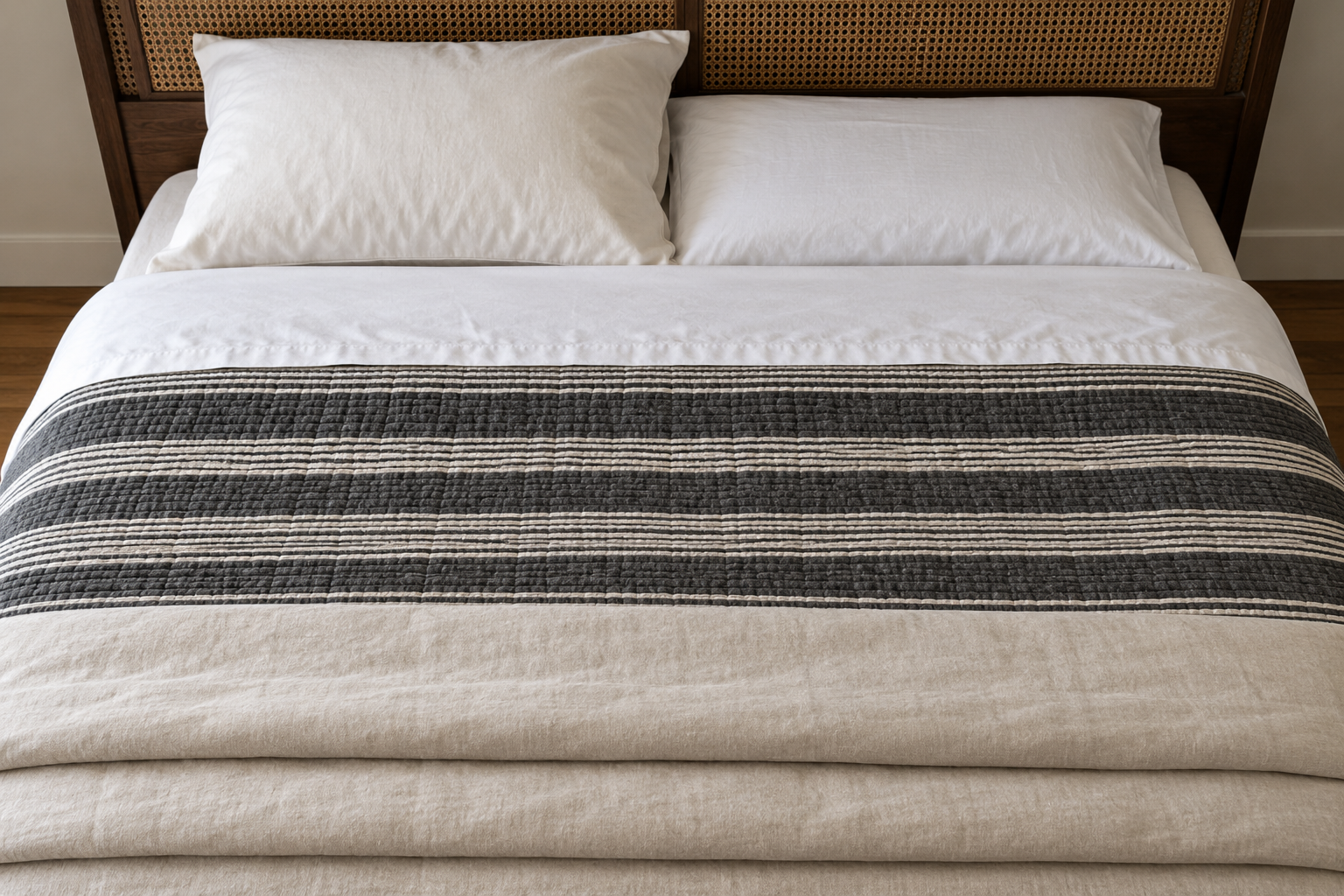
You won’t know whether the next guest sleeps hot or cold. Layering the bed lets them adjust it without asking: a sheet, a light quilt, and a duvet folded at the foot, each easy to push off in the night. Offer two kinds of pillow, one firm and one soft, and mention which is which.
Cotton percale and linen usually feel cooler than sateen or flannel, which helps in a room where the guest can’t control the thermostat. Everything should go through a home washing machine between visits, the quilt included, so skip anything that needs dry cleaning.
Choose Paint Color by Lamplight
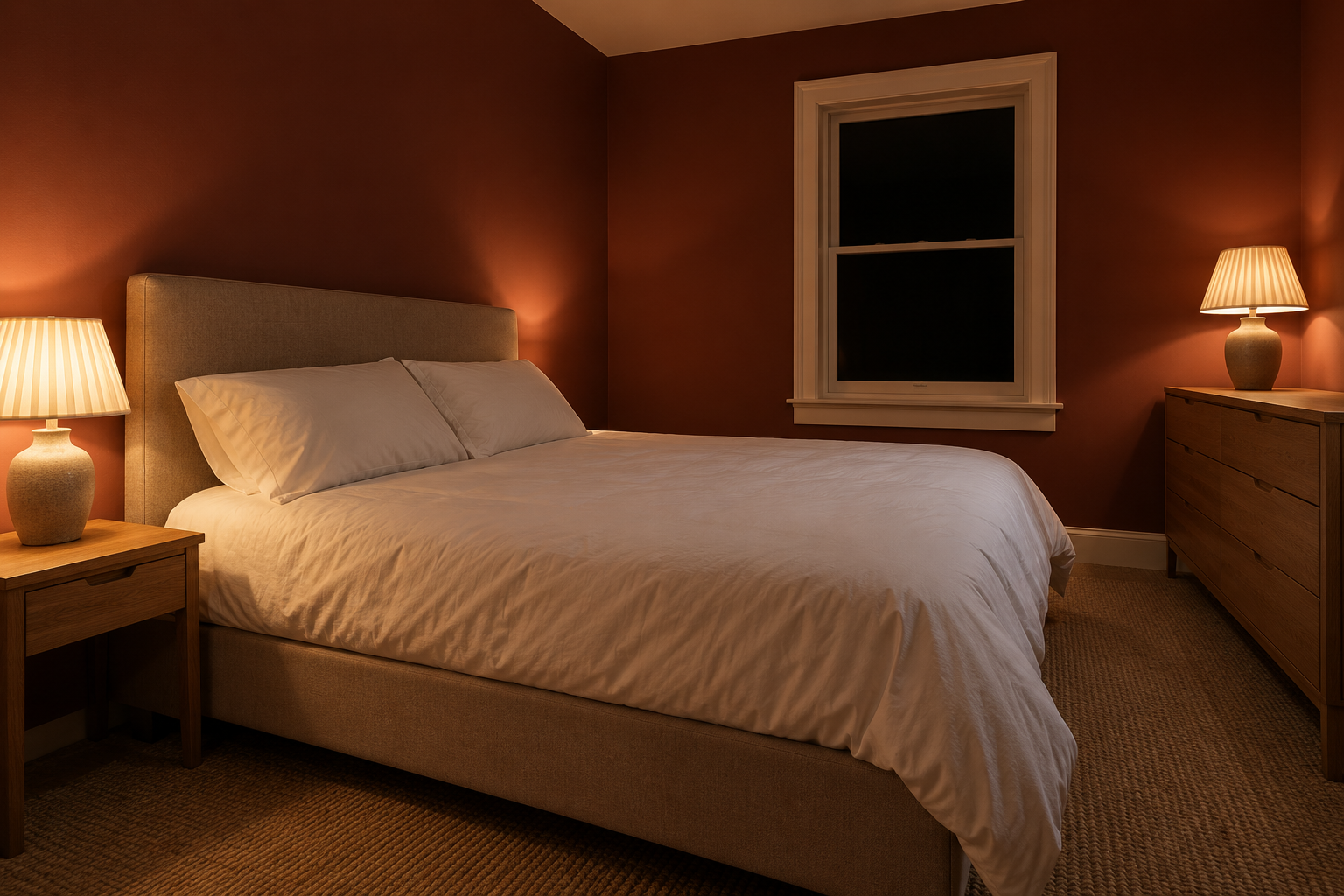
Guests mostly see this room in the evening and early morning, under lamps. Warm bulbs push every color toward yellow, so a cool gray that looks crisp on a sunny afternoon can turn muddy and greenish at night, and a pale pink can drift toward peach. Paint large swatches on two walls and look at them after dark, with the room’s own lamps on, before choosing.
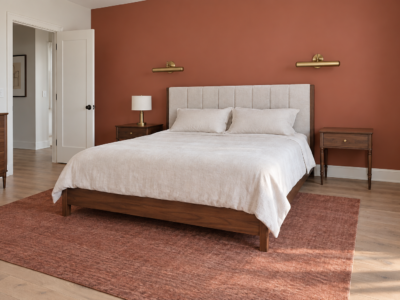
Deep colors often hold up better at night than pale ones. Under a warm lamp a dark wall looks rich and even, while a pale one can look dull and yellowed. The oxblood here turns a warm brown-red after dark, and white bedding stands out clearly against it. With greens in particular, the undertone decides how the color behaves under warm light.
Let the Room Keep Its Other Job
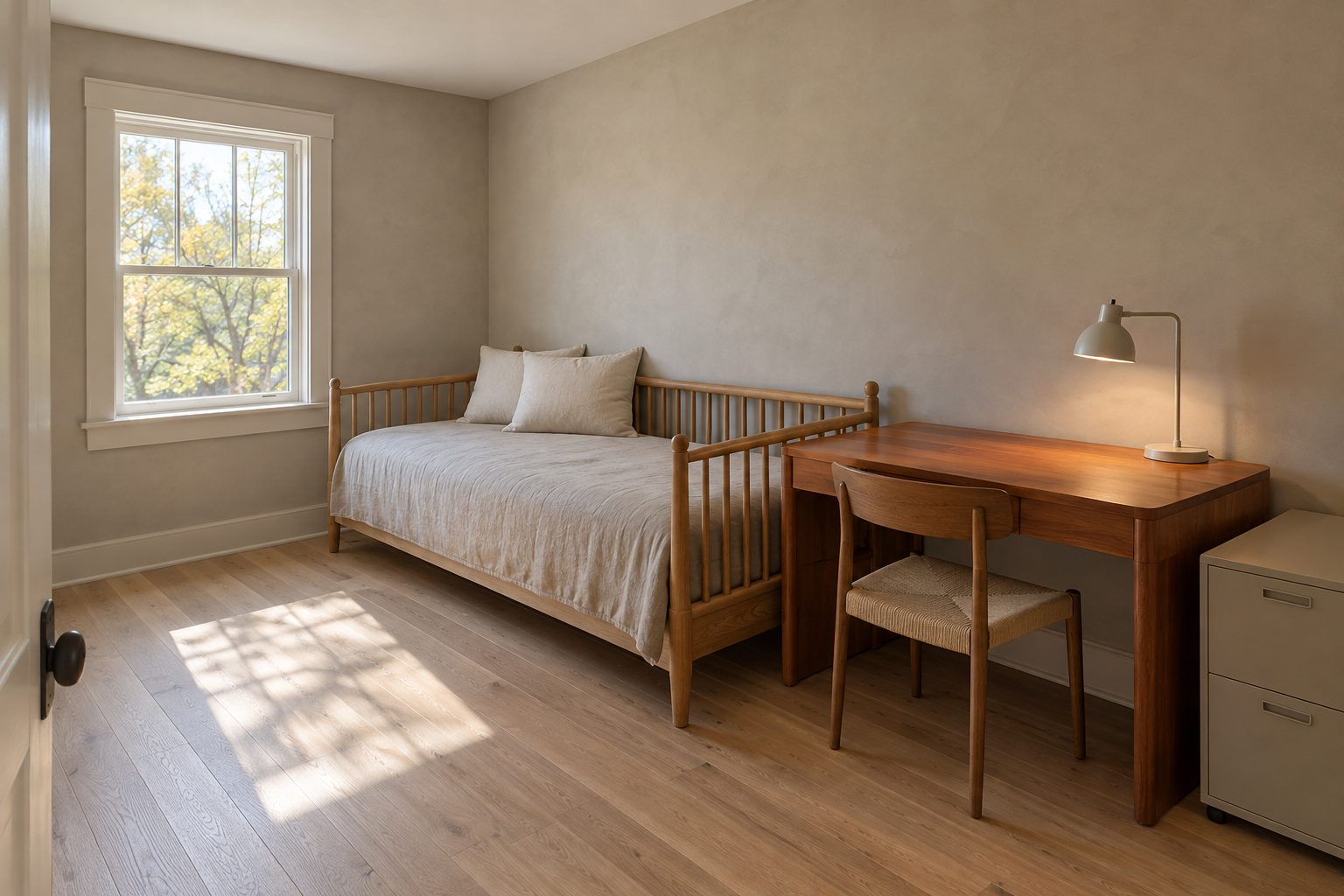
Plenty of guest rooms spend most of the year as an office, a sewing room, or a place for a rowing machine. The bed should stay ready to use without the other job spreading over it. A daybed along one wall works as a sofa during the day and a bed at night, and a desk can double as a bedside table if it sits beside the bed with a lamp on it.
Before guests arrive, clear the desk and put papers away in a closed cabinet, so the room looks set up for them. Our home office ideas include a desk that passes for bedroom furniture. If you’re choosing between a daybed, a sleeper sofa, and a wall bed, this comparison covers how each one fits and sleeps.