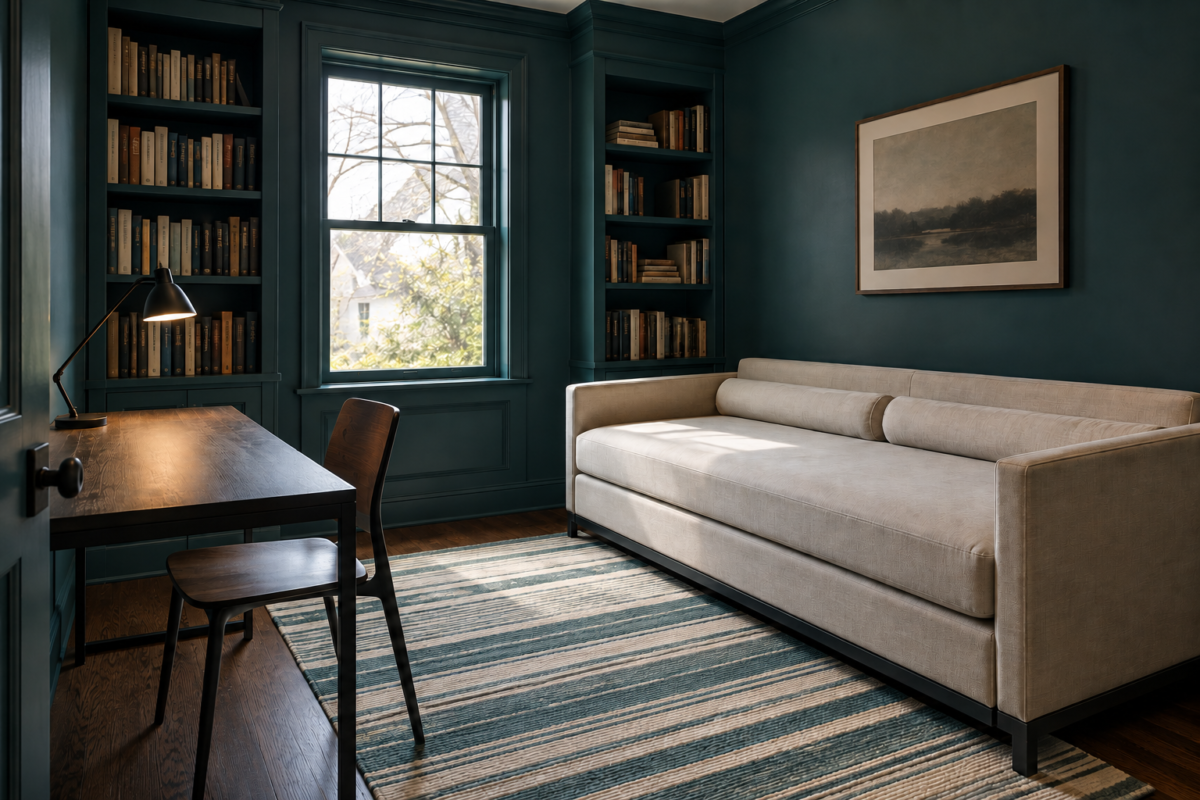
A sleeper sofa is the right call when the room is mainly a living room and guests come for a night or two. A daybed suits a small office or study and sleeps one person on a normal twin mattress, or two with a trundle. A Murphy bed gives guests a full-size mattress and hands the floor back every morning, and it costs the most to buy and install.
All three put a bed into a room that does something else every day, so the choice comes down to what the room gives up. The sections below cover each option, then the measurement that rules most rooms in or out, which is the footprint with the bed open, and finally how often guests stay.
A Sleeper Sofa Keeps the Seating
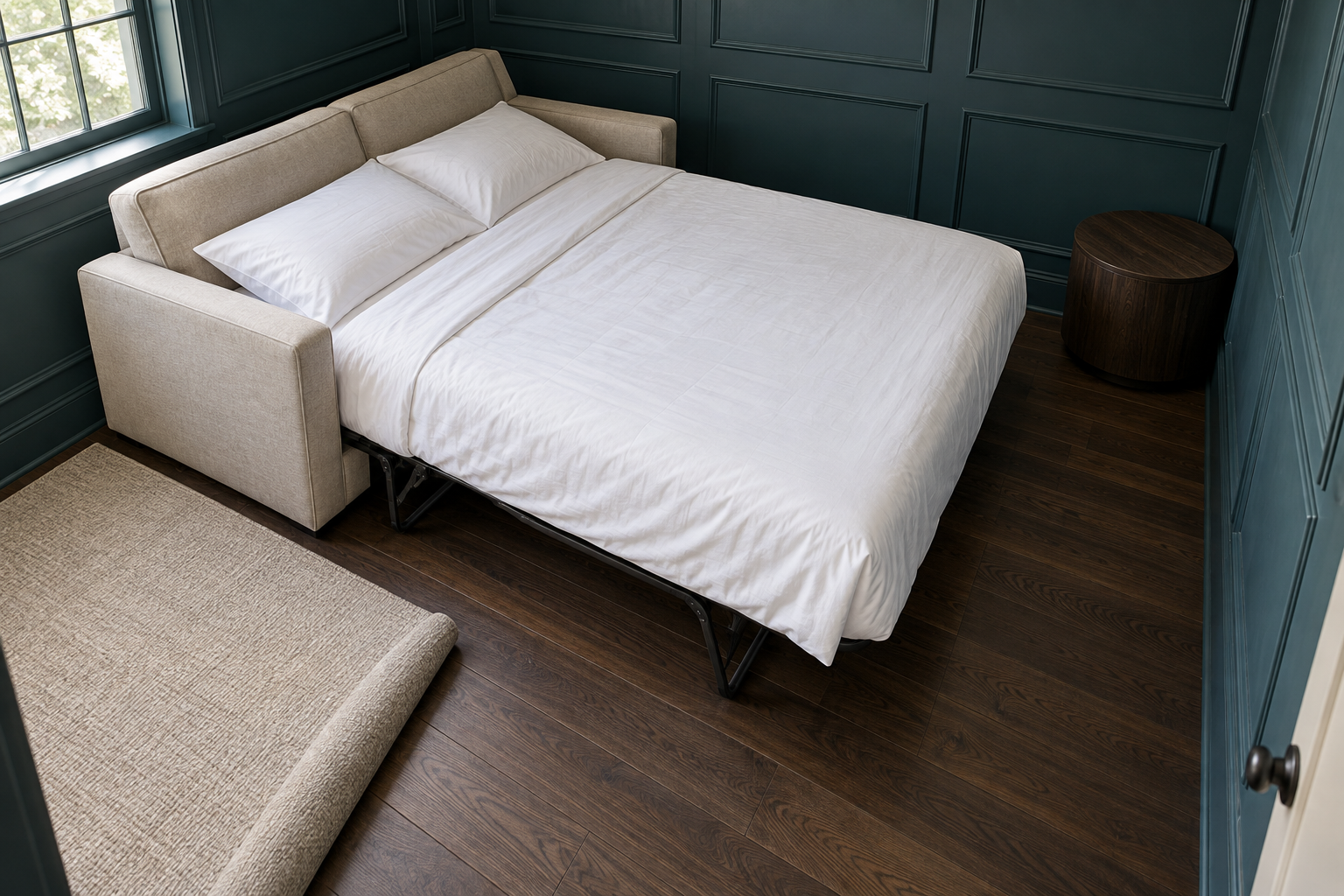
The room keeps a full sofa every day, which is the whole appeal. The cost is paid at night. The mattress folds into the frame, so it’s thin, often around 4 to 5 inches, and on older mechanisms a guest can feel the support bar through it. Many queen sleepers also use a mattress about 60 by 72 inches, 8 inches shorter than a standard queen, which leaves a tall guest’s feet at the edge.
The mechanism takes room inside the seat too, so a sleeper often sits less deeply and softly than a regular sofa of the same size. Open, a queen sleeper reaches well out from the wall. Check the open depth on the listing before buying, and measure it against the room with the coffee table moved. Our sofa roundup includes one queen sleeper among its picks.
A Daybed Sleeps on a Real Mattress
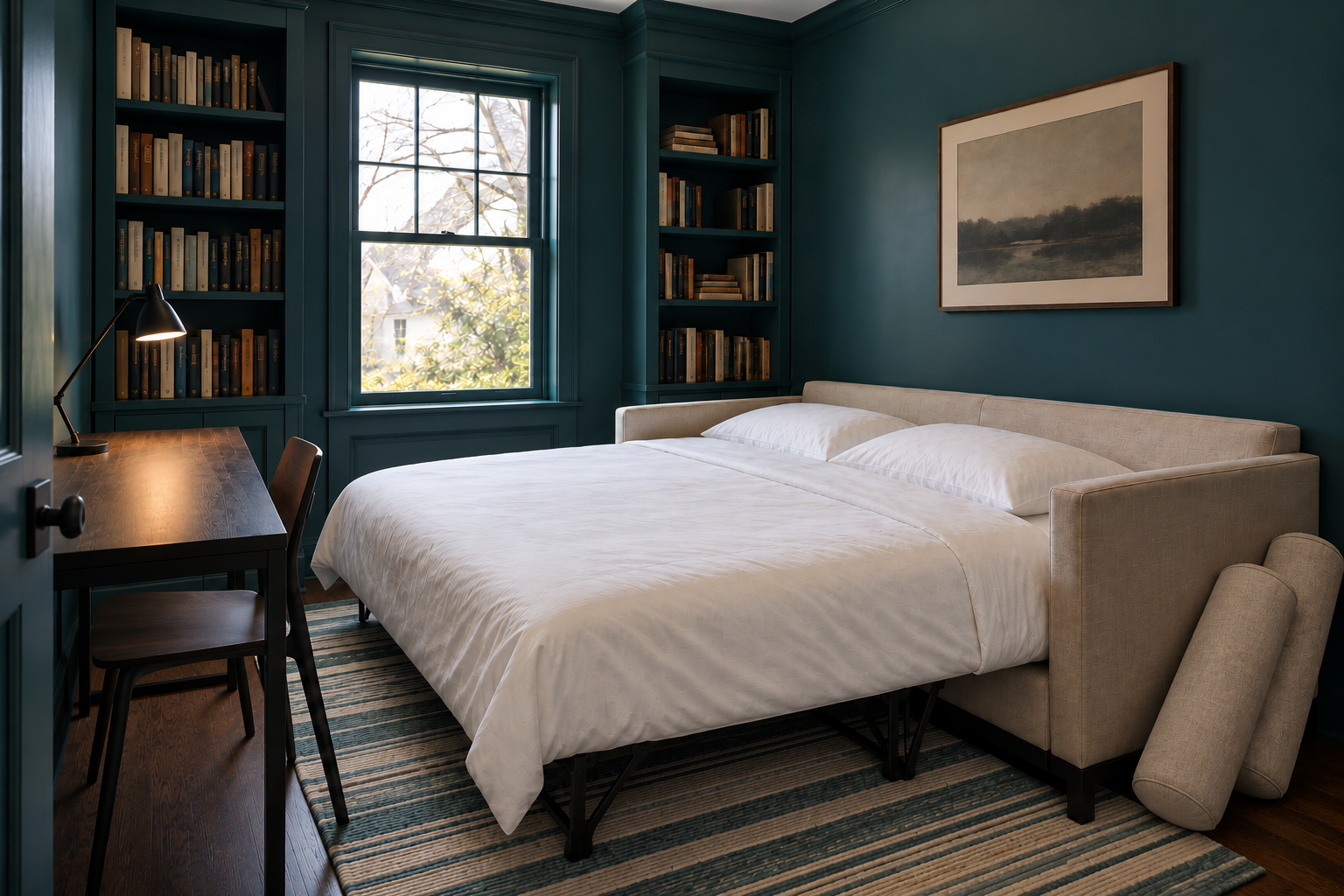
A daybed is a twin bed with a back and sides, so a guest sleeps on an ordinary 38 by 75 inch twin mattress, the same one a bed frame would take. Many have a trundle underneath. A pop-up trundle rises to the height of the daybed, and the two mattresses side by side come to 76 by 75 inches, close to a king in width but 5 inches shorter.
The tradeoff is seating. A twin mattress is 38 inches deep, far deeper than a sofa seat, so sitting back against the daybed’s back needs long bolsters or large cushions to bring the backrest forward. It works well as a reading spot or occasional sofa in a study. As the main seating in a living room it’s less comfortable than a sleeper sofa.
A Murphy Bed Gives Back the Floor
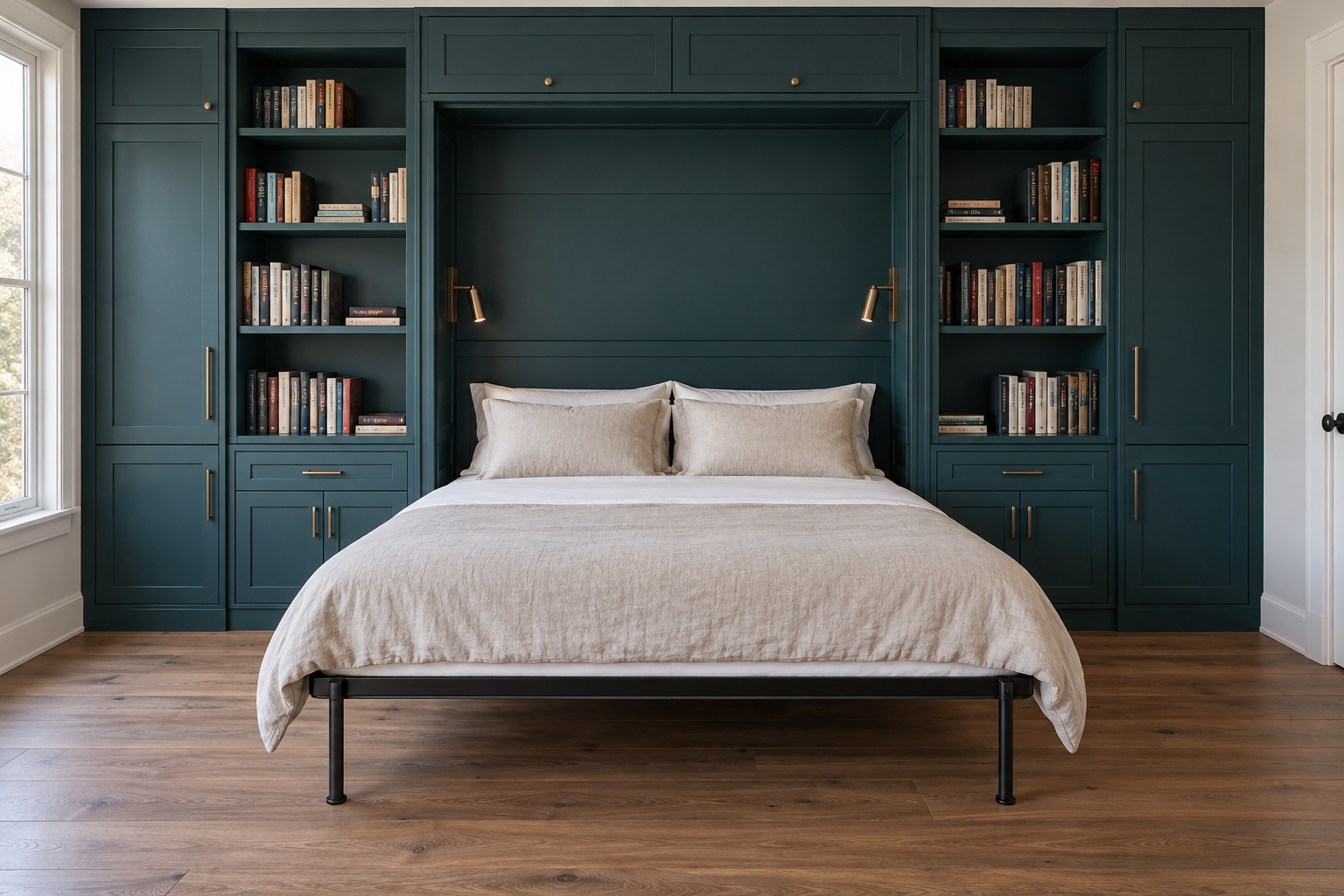
A Murphy bed folds up into a cabinet on the wall. Guests get a standard full or queen mattress, usually within a maximum thickness the maker specifies, so they sleep the way they would in a bedroom. During the day the floor is completely clear, and many models add shelves on either side or a fold-down desk on the cabinet front.
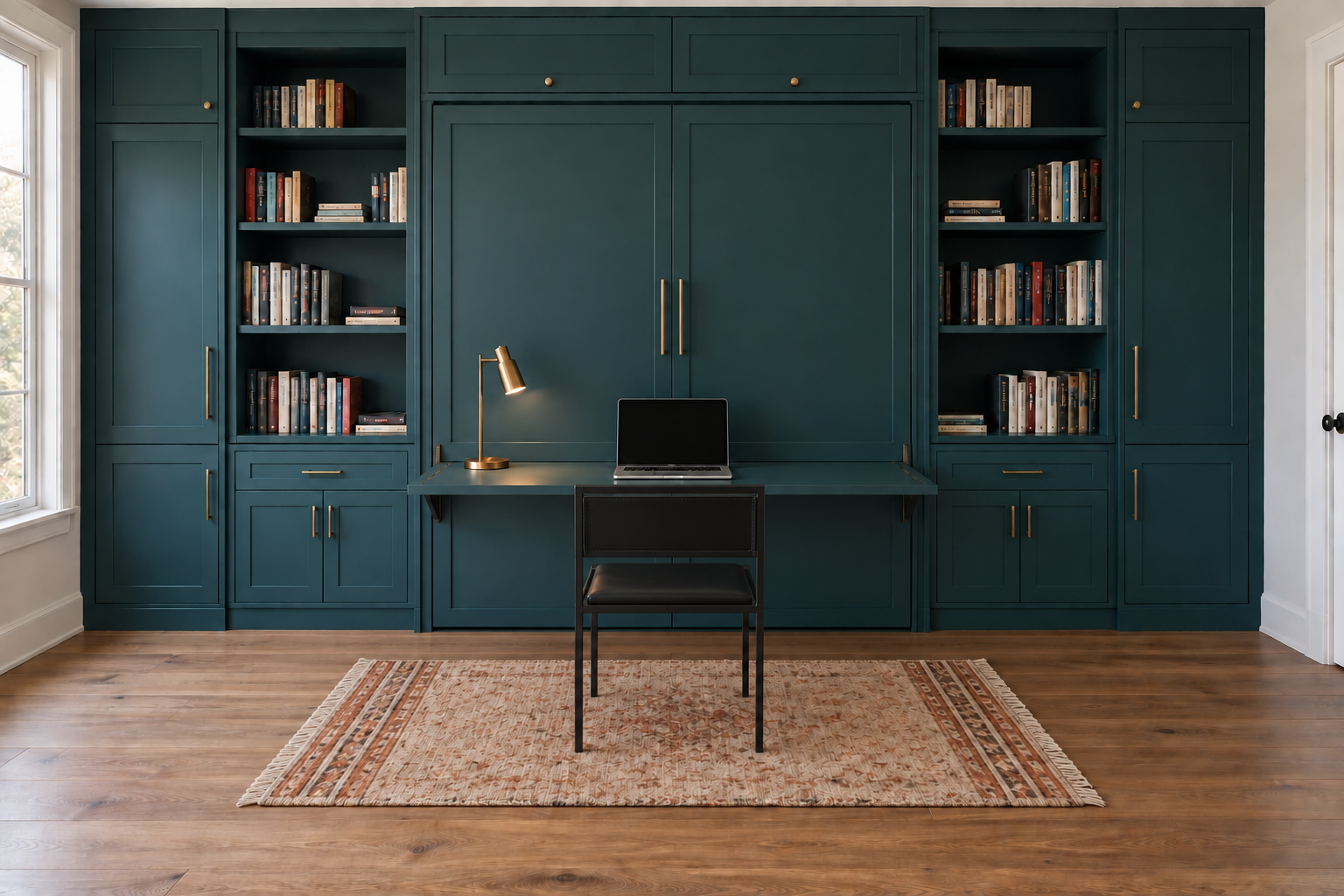
A wall-mounted Murphy bed has to be fixed securely into the wall framing, since the weight of the bed pivots out from it. The cabinet itself is fairly shallow, roughly 16 to 24 inches deep for most queen models, but a vertical queen stands around 7 feet tall and needs a standard ceiling height at least. Horizontal models open sideways and suit a low wall under a window or a slope. Cost and installation put it well above the other two, and it makes the most sense when guests come often or a studio has to switch between day and night every day.
Measure Each One Open, Not Closed
A guest bed that fits the room closed can still block the door once it’s open. These are typical ranges. Your model’s listing gives the real numbers.
| Closed | Open | Mattress | |
|---|---|---|---|
| Queen sleeper sofa | about 36 to 40 in deep | often 85 to 95 in out from the wall | often 60 x 72 in, 4 to 5 in thick |
| Twin daybed with trundle | about 40 x 80 in | about 80 in wide with the trundle up | two 38 x 75 in twins |
| Queen Murphy bed | about 16 to 24 in deep | about 85 to 90 in out from the wall | standard 60 x 80 in |
Once the bed is open, a guest still needs a path around it, to the door and to at least one side of the bed. The walkway widths in our bed size guide apply here too. If the open bed leaves less than about 2 feet to the nearest wall or piece of furniture, the room is too tight for that option.
How Often Guests Stay Decides the Rest
For a few nights a year, a sleeper sofa or a daybed is enough, and the room gets full use the other 360 days. A daybed is the better of the two in a small office, since it takes up a twin’s footprint and sleeps on a normal mattress. A sleeper is better in a living room, where the sofa gets sat on every evening.
When guests stay often, or for a week at a time, the Murphy bed earns its cost with a proper bed mattress and a clear floor. Think about who’s visiting as well. A low trundle is fine for children and hard for an older guest to get up from. If the room is set aside for guests most of the time, the guest room ideas in our companion piece take over from here.
Frequently Asked Questions
Is a futon a good alternative?
For short stays in a small room, yes. A futon is cheaper than any of the three and lighter to move. Its mattress is also its seat cushion, though, so it wears faster than a bed mattress, and most sleep firmer and flatter than a daybed on an ordinary twin mattress.
Does a Murphy bed have to be attached to the wall?
Wall-mounted models do. They’re designed to be fixed into the wall framing, and the installation instructions spell out how. Some freestanding cabinet beds fold a mattress out of a chest without any wall fixing, but they usually take a thinner mattress than a true wall bed.