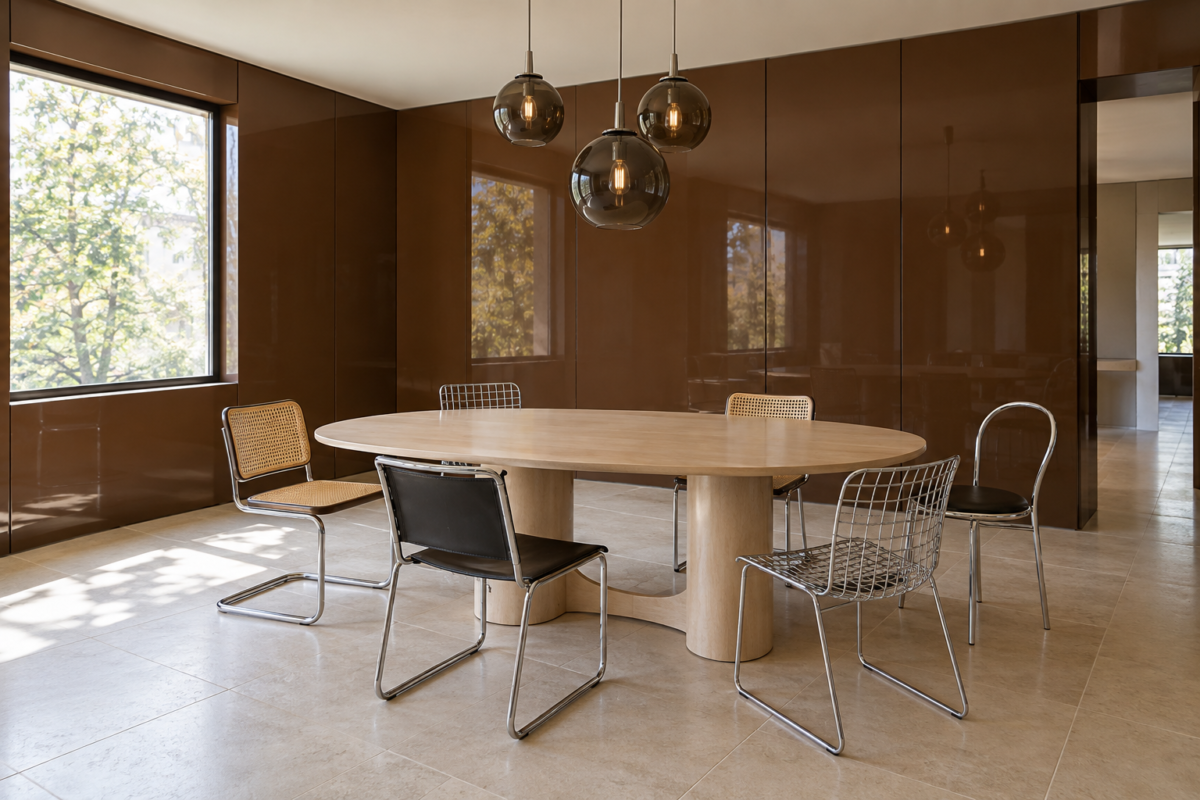
Most mixed dining sets aren’t planned. Two chairs come from a parent’s house and four from a flea market, and when one breaks, the replacement is whatever turned up. Around a new table, the result can look like a collection or like a waiting room, and the difference is rarely the chairs themselves.
A mixed set holds together when one trait stays the same from chair to chair and everything else is free to change. That trait can be a color, a finish, a material, or a general shape. Seat height has to stay close whichever you choose, though that part is about comfort more than looks.
Pick the One Thing That Stays the Same
There are four constants worth working with.
- Color. Different chairs painted or upholstered in the same shade.
- Finish or material. Every frame in the same wood tone, or all in chrome, or all in painted black.
- Shape. Chairs from one family, such as all spindle backs or all curved backs, in different woods.
- One chair model. The same design throughout, which frees color to change as much as you like.
One constant is enough when it’s strong and obvious. Chrome frames on four different chair designs read as a group at a glance, because nothing else in the room shines the same way. A quieter constant, such as similar wood tones, works better with a second one alongside it, like a shared seat material or similar back heights. If you’re starting from a pile of inherited chairs, look for what they already share before buying anything new.
The Same Chair in Different Colors
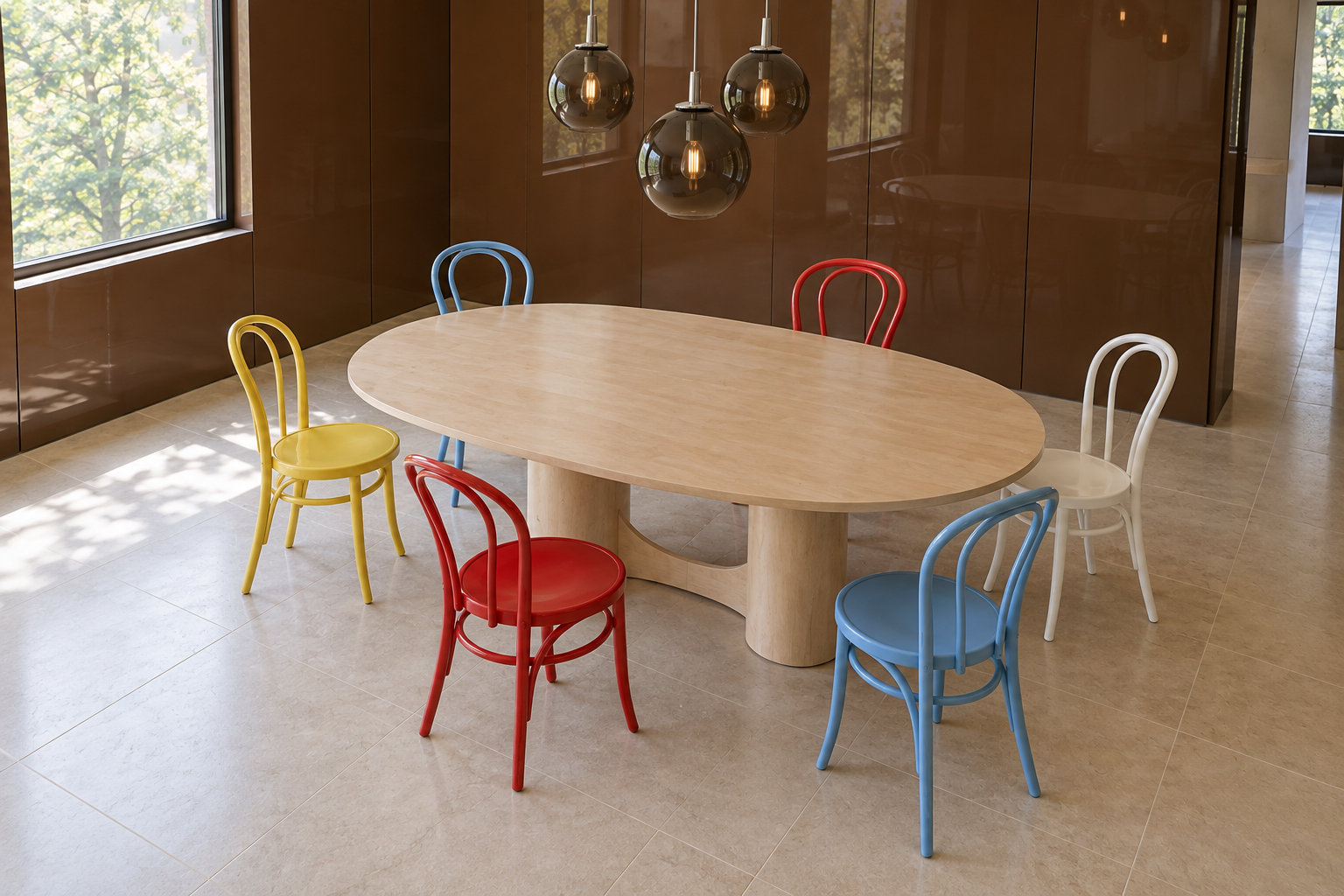
One chair model in several colors is the easiest mix to get right. The shape does the unifying, so color can be bolder than it could on a matched set. Two to four colors is a useful range. Past that, the table starts to look like a paint sample card.
Choose colors of similar strength. Tomato red, sky blue, and lemon yellow sit together because none is much paler or darker than the others, and a white chair at each end gives the eye somewhere to rest. Arrange them in pairs, with matching colors facing each other across the table or placed at both ends. Pairs read as a decision. A strict alternating pattern all the way round looks more like a café.
Bentwood chairs, simple painted side chairs, and molded plywood designs all work well here, since they come in many colors or take paint easily.
Different Chairs in One Finish
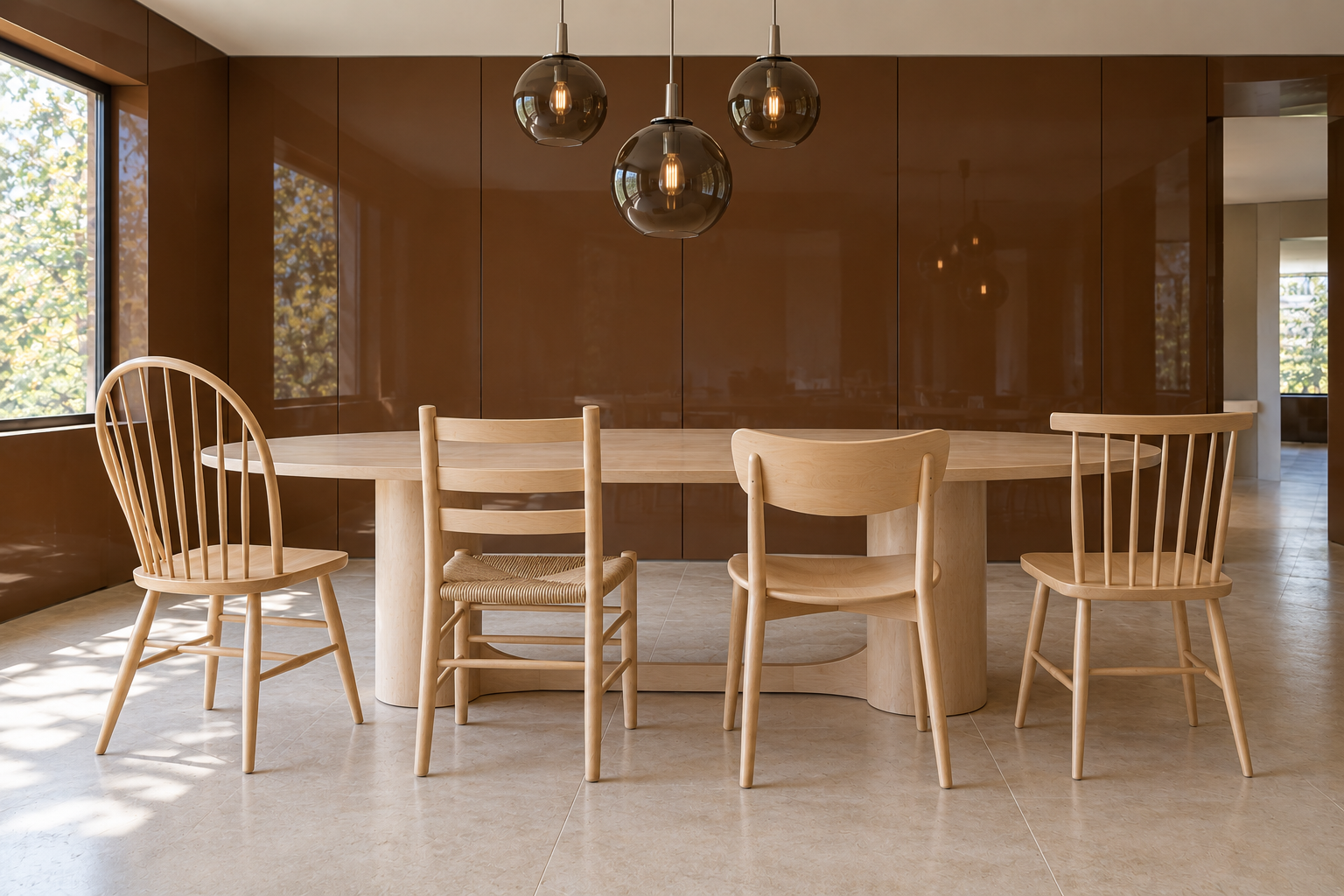
The reverse approach fixes the finish and lets the shapes change. A Windsor, a ladder back, a chair with a solid curved back, and a plain spindle back, all in the same pale wood, look like a collection built over time, which is often what they are. The shared finish carries them.
Matching the table’s finish is the calmest version. A deliberate contrast also works, dark chairs around a pale table or the other way round, as long as every chair makes the same contrast. What rarely works is several wood tones that are close but not the same, which reads as an attempt to match that missed. The same thinking applies to mixing wood tones anywhere in a room.
Old chairs with finishes too far apart to work together can all be painted one color, which turns this approach into the color constant above.
Ends, Benches, and Other Deliberate Breaks
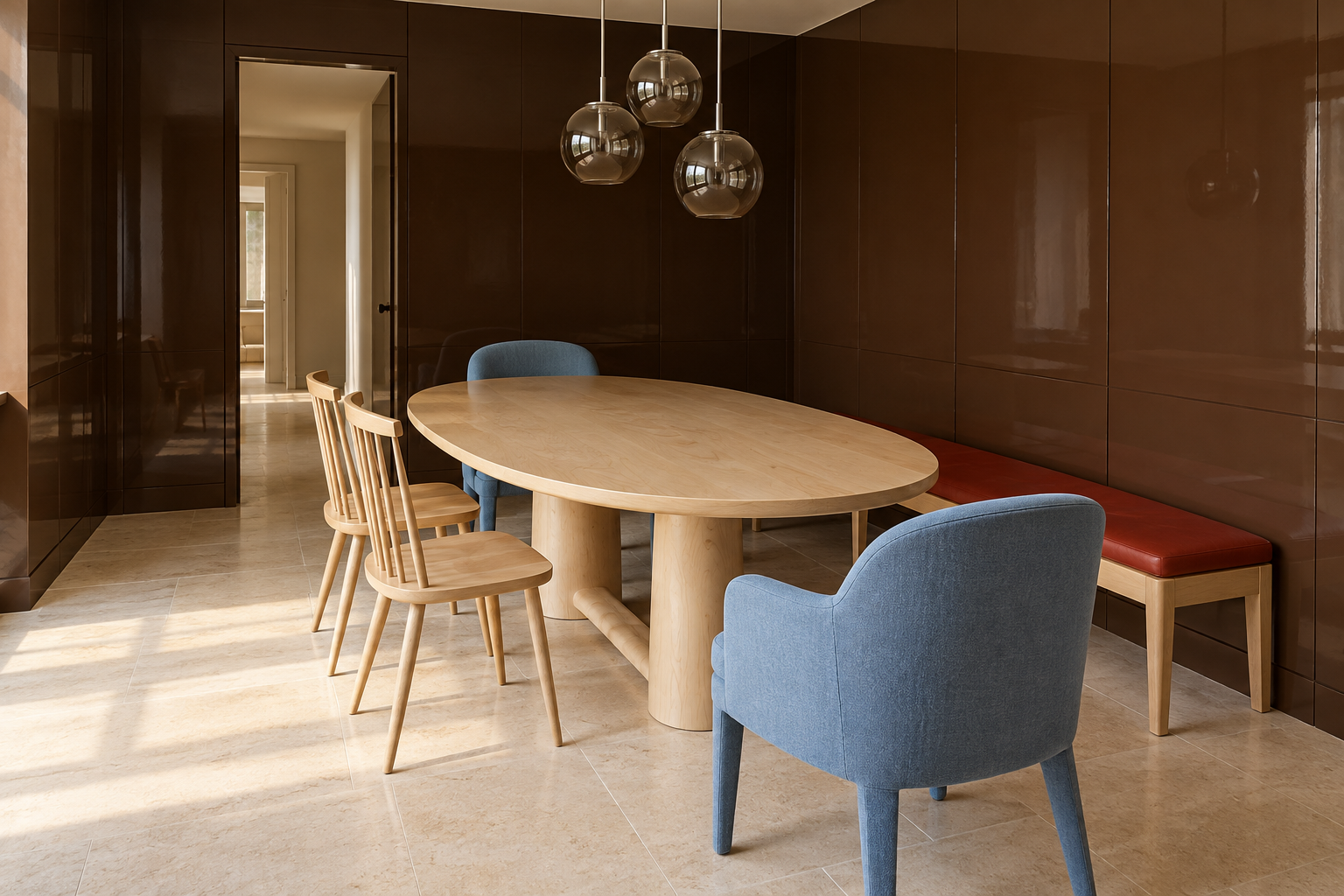
Breaking the pattern on purpose is different from having no pattern. The most familiar break is at the ends of the table, with a pair of armchairs or upholstered chairs at the head and foot and side chairs along the length. Because the two end chairs match each other, the break reads as symmetry. Upholstered chairs at the ends also put the most comfortable seats where people tend to linger.
A bench along one side is the other classic break. It seats more people in the same length, tucks fully under the table when it isn’t in use, and suits the wall side of a table, where chairs would have to squeeze in. Choose one a little shorter than the table so it slides between the legs or pedestals. Benches and armchairs both change how many people fit, so check the spacing with how many chairs fit around a dining table. A built-in version of the same idea, a banquette in a window bay, is one of the dining room ideas worth considering if the room has the space.
Check Seat Height and Arms Before You Buy
Mixed chairs fail more often on comfort than on looks. Before adding a chair to the set, measure these.
- Seat height. Keep it within about an inch of the other chairs. Most dining chairs sit between 17 and 19 inches, and a two-inch difference shows at the table’s edge and puts one person’s elbows higher than everyone else’s.
- Clearance under the table. Allow about 10 to 12 inches between the seat and the tabletop, and check the apron too. A deep apron can leave only a few inches for knees.
- Arm height. Arms need to sit lower than the apron if the chair is going to slide under the table. If they don’t, the chair belongs at an end, pushed back instead of tucked in.
- Seat width. Armchairs and wide upholstered chairs take more room per person, so a side with one of them may seat one fewer.
Take a tape measure to the flea market. Those four numbers decide whether a beautiful chair works at your table.
When a Matching Set Is the Better Answer
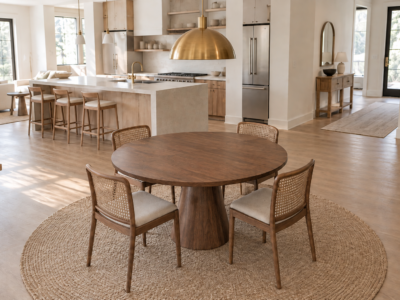
Mixing isn’t always the stronger choice. At a small table for four, seen whole from the doorway, four different chairs can take over the room, and a matching set, or matching side chairs with one pair of different end chairs, looks calmer. The same goes for a table with a strong design of its own, a sculptural base or an unusual top, where a varied set competes with it. In those rooms, keep the variety to one detail, such as the seat fabric, and let the table lead.
Frequently Asked Questions
Do mismatched chairs have to match the table?
No. They should relate to it through one trait, or contrast with it on purpose. Chairs in the table’s own wood tone look settled, and chairs in a single color that contrasts with the table look deliberate. The mix only looks off when the chairs half match the table, close to its finish but not quite.
Can upholstered and wooden chairs share one table?
Yes, and it’s one of the most practical mixes. Keep the seat heights close and let one color or finish connect them, such as upholstery that picks up the wood tone. Put the upholstered chairs where people sit longest, often at the ends, and keep wooden chairs along the sides, where they’re easier to pull in and out.