A brushed nickel faucet next to a brass lamp is not automatically a mistake. Leaving every finish in the room equally in charge is.
Most homes already mix metal finishes, whether anyone planned it or not. The kitchen faucet is chrome because it came with the house. The cabinet hardware got swapped to matte black during a weekend project. A brass floor lamp showed up because it was the right shape for the corner. None of that is a problem by itself. Metal finishes clash for a more specific reason. No single one of them is running the room, so the eye keeps bouncing between three or four different metals with equal weight, the same way mixed wood tones only look accidental once you notice nothing in the room is anchoring the others.
The fix isn’t picking one metal and banning the rest. It’s giving one finish the lead role and treating everything else as support, which is a far easier problem to solve once a few real fixtures are already in place and can’t be swapped on a whim.
Pick One Metal to Lead the Room
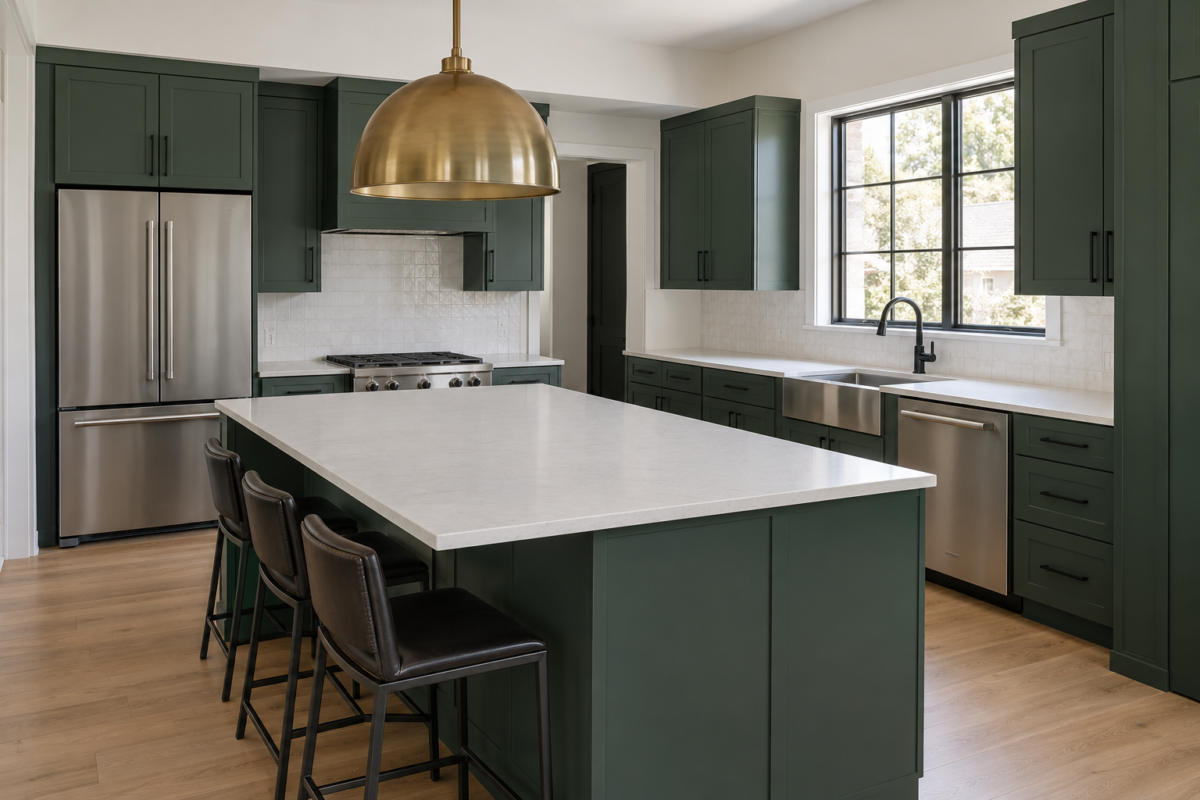
Start with whichever finish already covers the most square footage or the most visible fixtures, since that’s usually the one that’s hardest to change anyway. A kitchen with a brushed nickel sink and nickel cabinet pulls already has its lead; matte black hardware on a nearby island or a brass pendant over it can both play a supporting role around that.
As a general planning guideline, giving one finish something like 60 to 75 percent of the visible metal in a room keeps that hierarchy readable. Split closer to 50/50, or spread evenly across three finishes with none clearly winning, and the room stops reading as a decision and starts reading as an accident. This is a useful starting point, not a measurement anyone needs to take with a tape measure. The point is that one finish should obviously be doing more work than the others, not that it has to land at an exact percentage.
Two or Three Finishes Is the Practical Ceiling
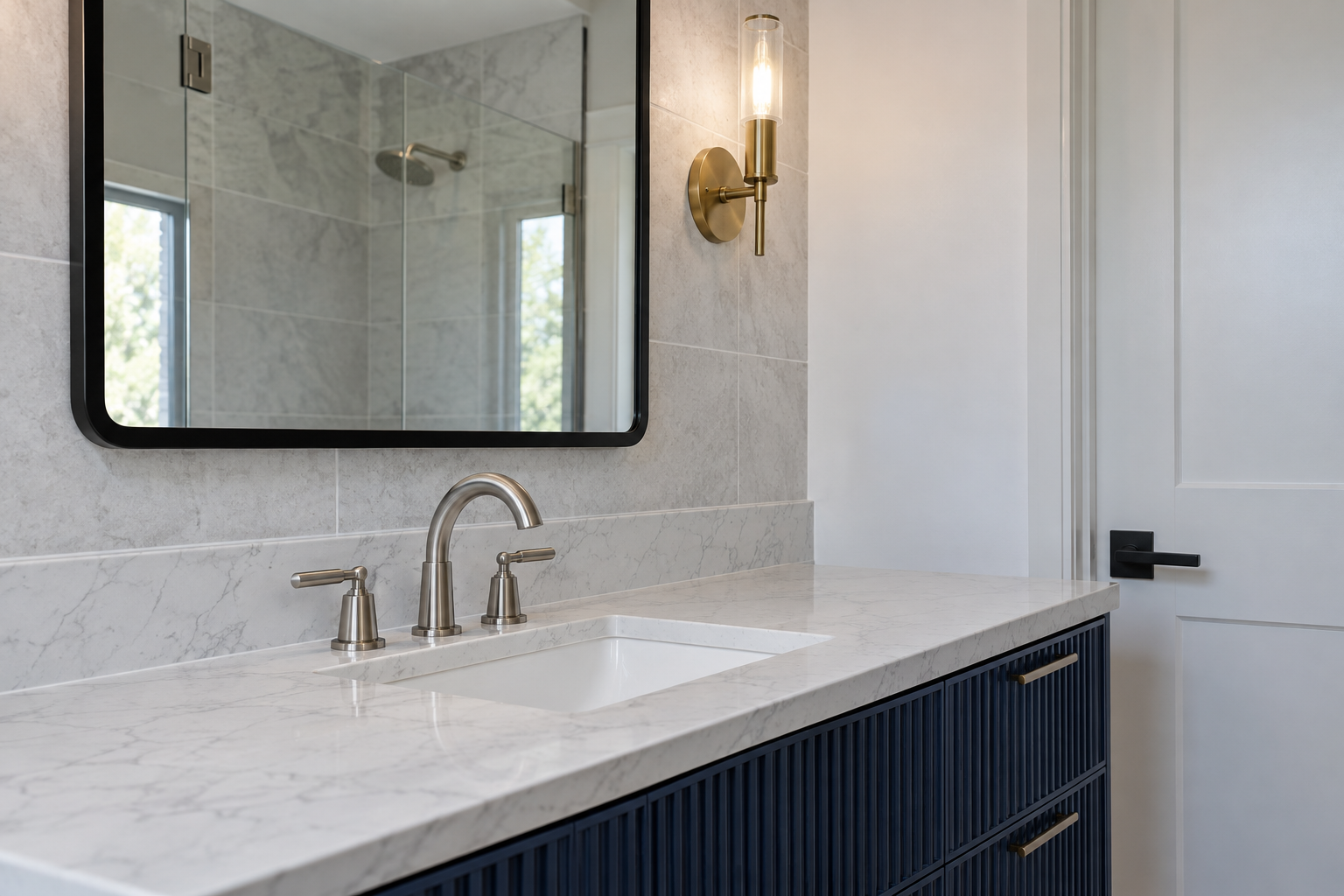
A room can usually support two finishes comfortably, and three when they’re distributed with real intent. A fourth is where most rooms start to feel unplanned, because a viewer’s eye can only track so many distinct metals before it stops reading them as a hierarchy and starts reading them as clutter.
If a kitchen already has a stainless sink, a nickel faucet, black cabinet hardware, and a brass pendant, that’s four, and at least one of them is probably fighting for attention it doesn’t need. Consolidating to three, even if it means swapping a single fixture, usually reads as more finished than adding a design reason to justify the fourth. The same ceiling shows up in mixing design styles in one room: past a certain number of competing ideas, the room stops reading as curated and starts reading as unresolved.
Bridge Warm and Cool Metals Instead of Choosing Sides
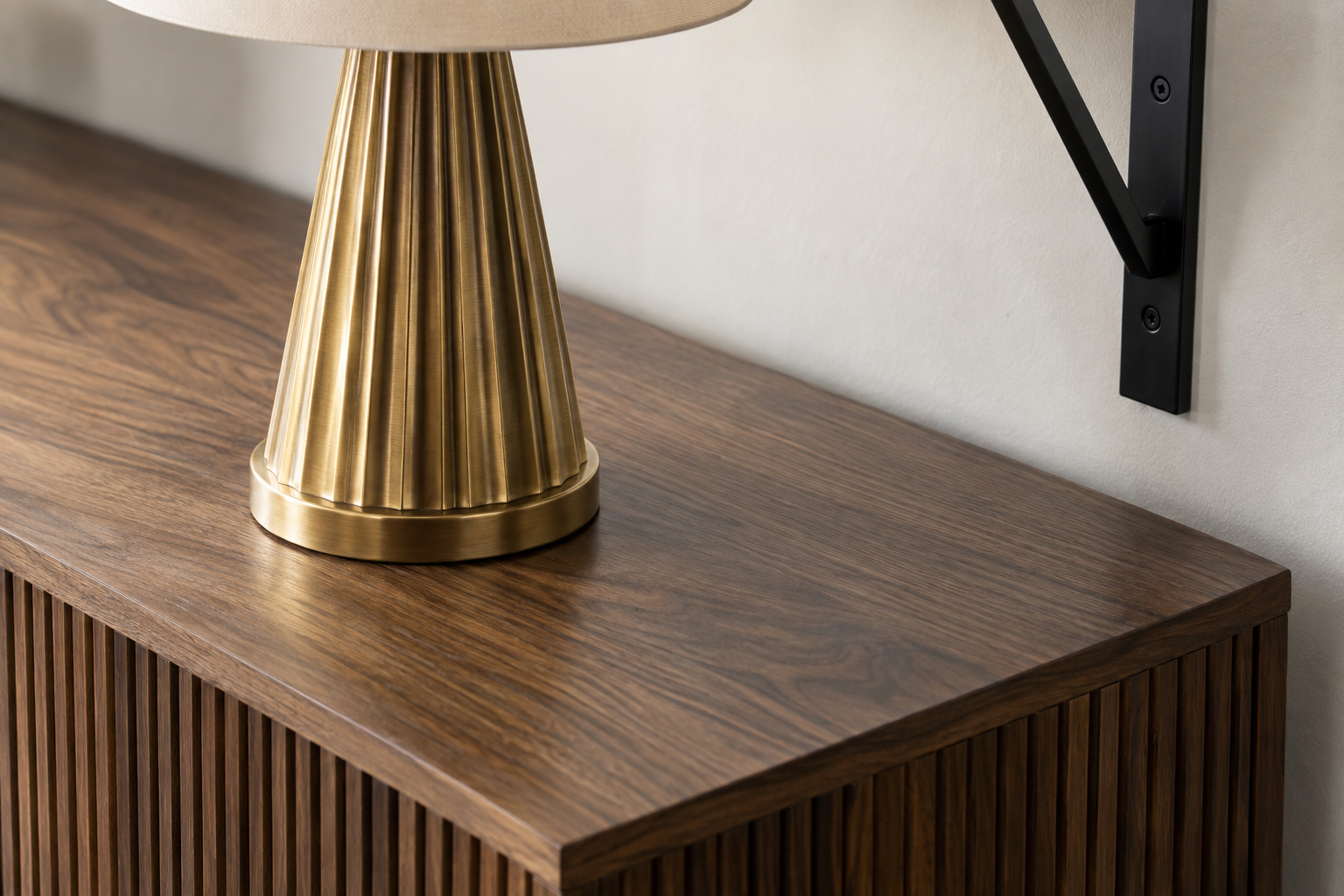
Brass, copper, gold, and warm bronze read warm. Chrome, stainless, and most nickel finishes read cool. Put a warm and a cool metal directly next to each other, a brass faucet beside a chrome towel bar for instance, and it tends to look like two different decades collided rather than one deliberate choice.
A finish that sits between the two, like brushed or satin nickel, generally works as a bridge: warm enough to sit near brass without clashing, cool enough to sit near chrome without competing. This matters most at close range, where two fixtures actually sit side by side on the same wall or counter. It matters less at the scale of a whole room, where a warm pendant across the kitchen from a cool faucet reads as two separate decisions rather than one collision.
Vary the Finish’s Texture, Not Just Its Color
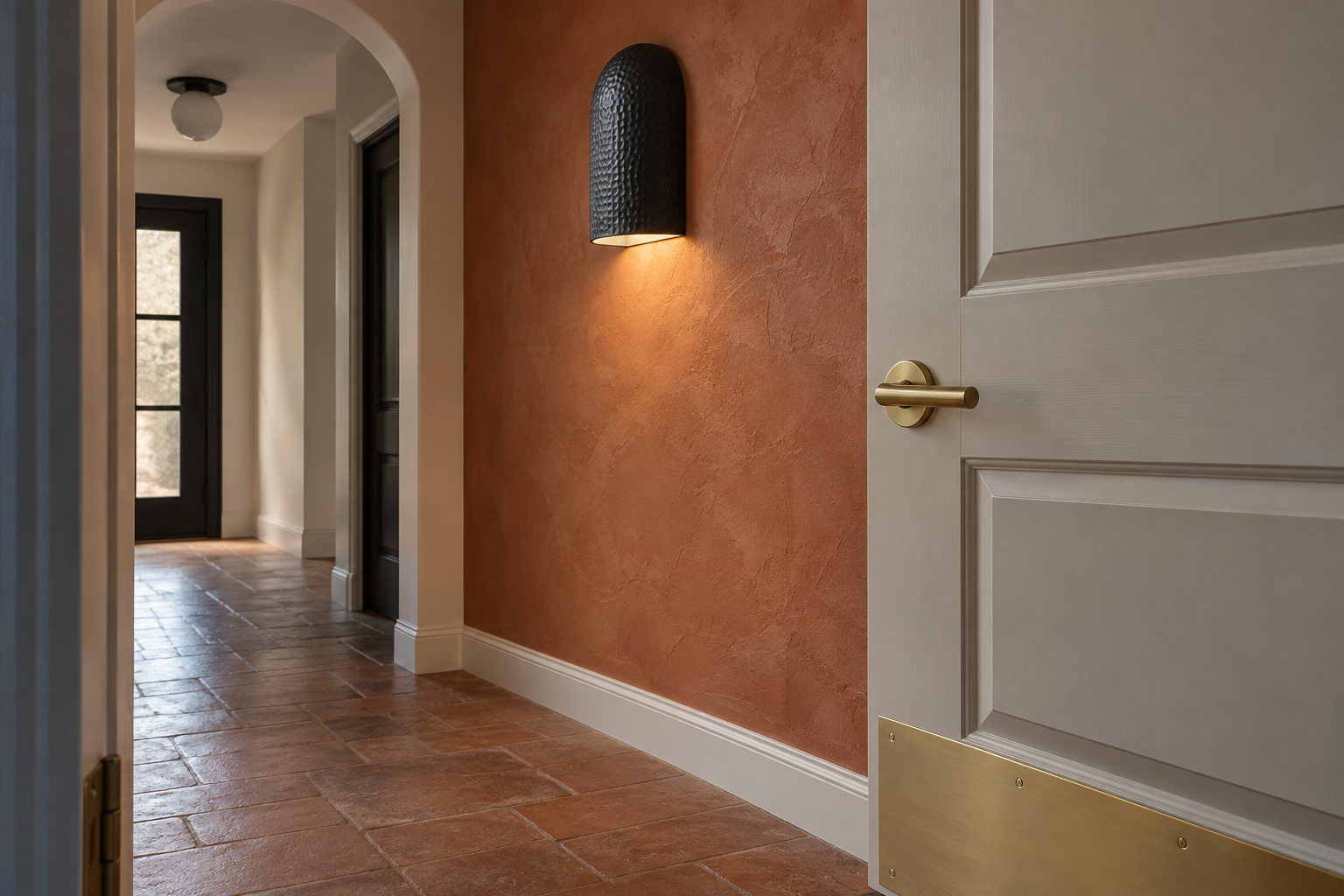
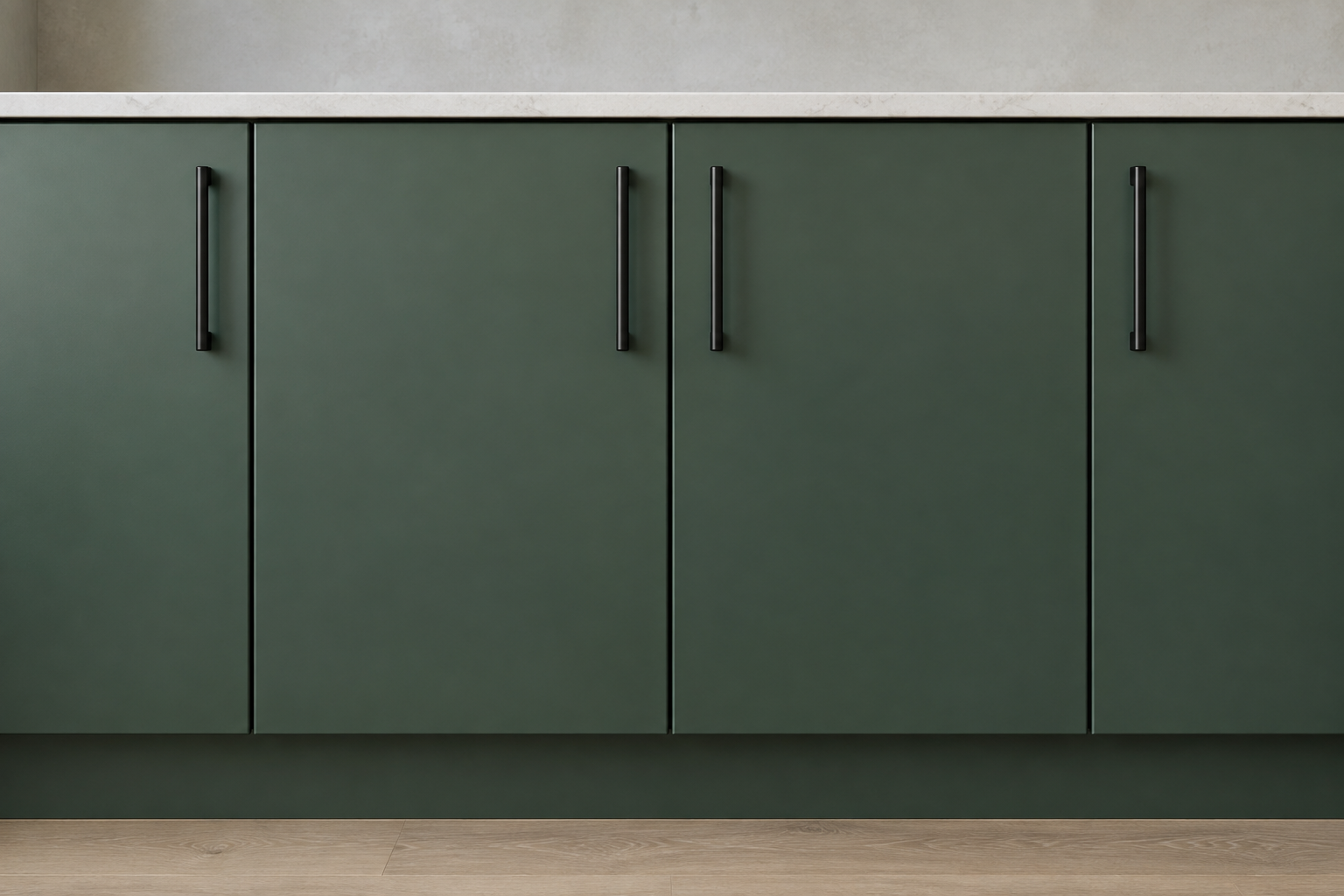
A polished, a matte, and a hammered version of the same metal tone sit together more easily than three completely different metal colors do. If black is the lead finish, a matte black pull, a slightly hammered black sconce, and a satin black faucet still read as one family even though none of them is identical.
Texture variation is what keeps a single-finish room from feeling flat, and it’s a lower-risk way to add real visual interest than introducing a second metal color altogether. It also solves a practical problem, since a matte black hardware line rarely comes in every texture a homeowner might want, so a slightly different black finish on a lighting fixture or a mirror frame isn’t a mismatch, it’s the same idea working across different products.
Work Around the Fixtures You Can’t Change Yet
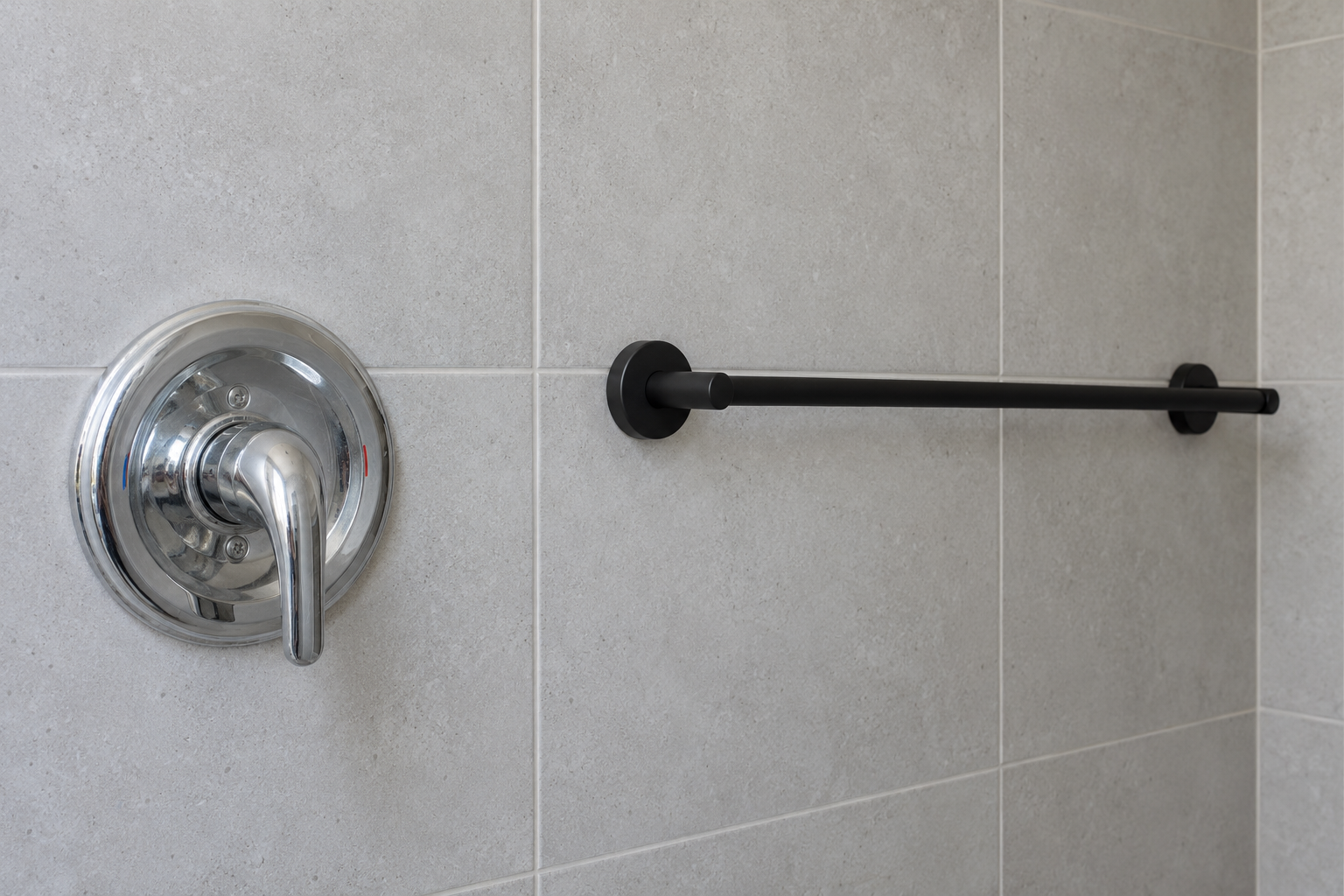
Plumbing, light fixtures, and door hinges are usually the most expensive and least urgent things to swap, which means most homes are mixing finishes out of necessity long before anyone decides to do it on purpose. Ripping out a working shower valve because its finish doesn’t match a new towel bar rarely makes financial sense.
If the shower valve is a plain, slightly dated chrome and isn’t getting replaced this year, the practical move is choosing a lead finish for whatever’s easy to change around it: a towel bar, a mirror frame, cabinet hardware, a light fixture. A mirror sized correctly for the vanity in a fresh matte black frame does more for the room than a valve replacement that wasn’t in the budget to begin with. Treat the fixed, expensive pieces as the constraint the room has to work around for now, not as the finish everything else has to match.
Black Is the Easiest Accent Metal
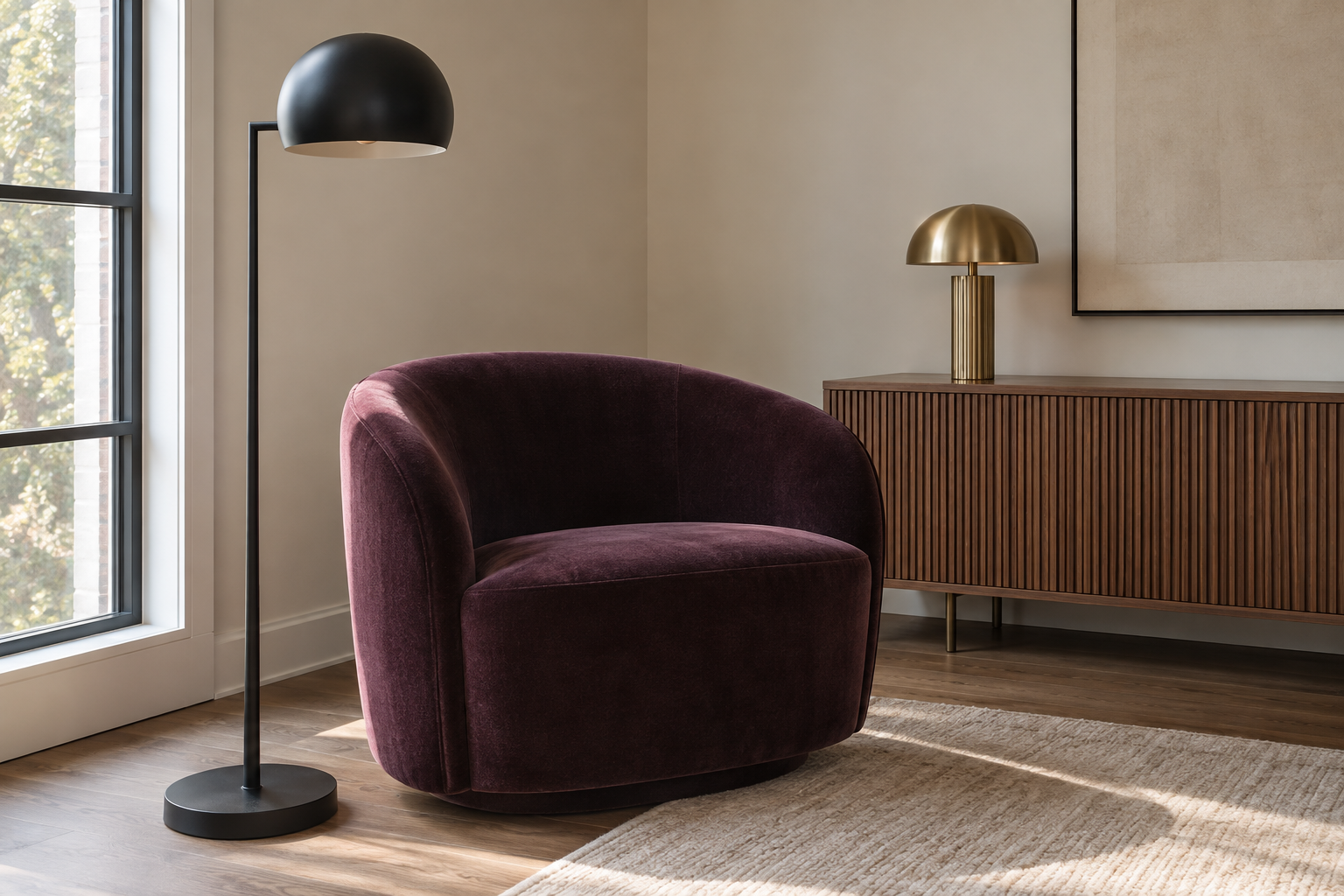
When a room already has two finishes and needs a third accent without adding real competition, matte or textured black tends to sit quietly next to almost anything, warm or cool. It reads more like a neutral than like a third metal color, which is part of why it shows up so often as the accent in rooms that are otherwise built around brass, nickel, or chrome. A black pendant sized right for a kitchen island rarely competes with the cabinet hardware or the faucet underneath it the way a second warm or cool metal would.
None of that makes black mandatory. It just makes it a reasonable first choice when nothing else has an obvious answer.
A Quick Way to Check a Room Before Committing
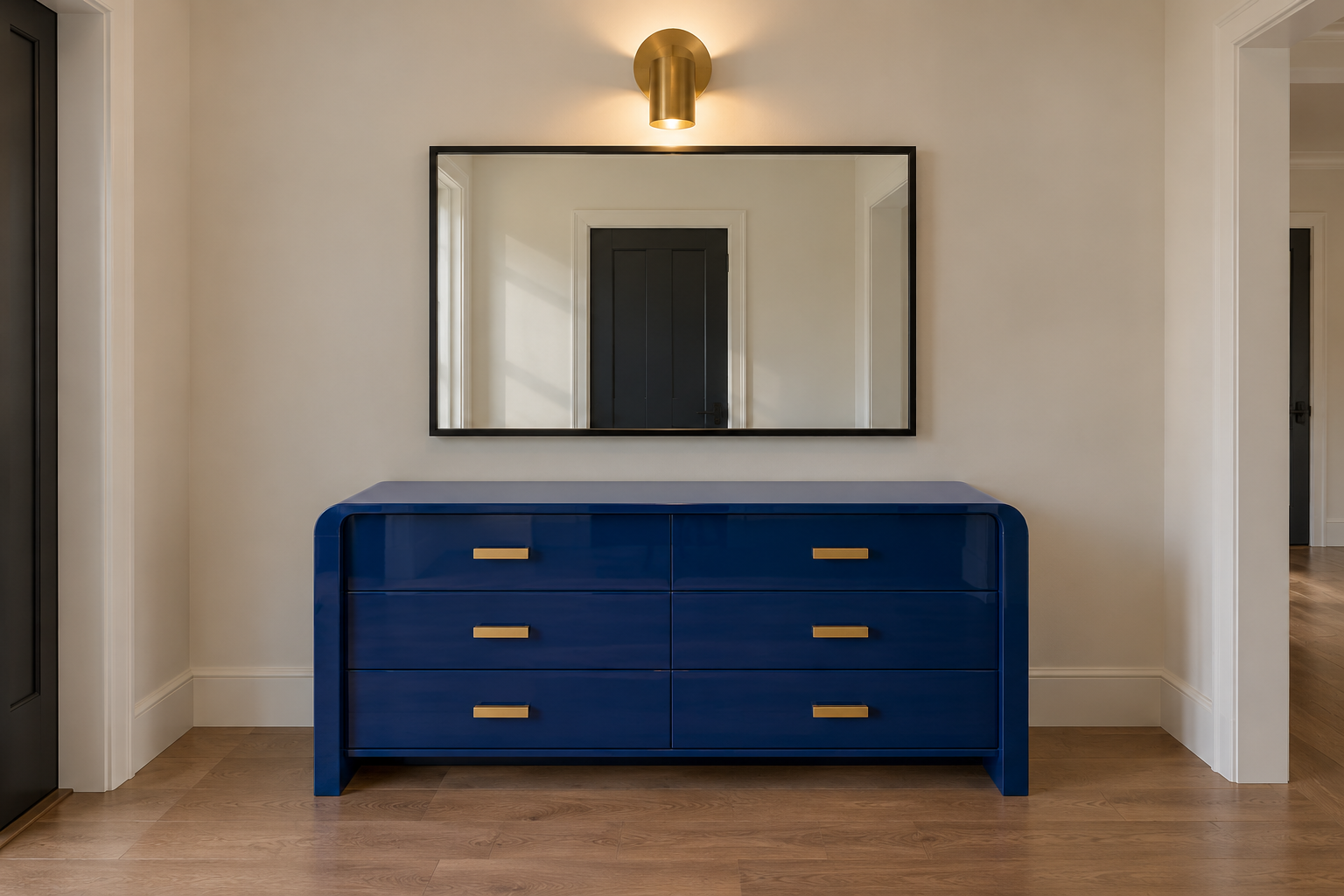
Stand in the doorway and count the distinct metal finishes visible from that one spot, including door hardware, lighting, and any furniture metal. Two or three is fine. Four is worth a second look, especially if none of them clearly outweighs the others.
If the room passes that count, and one finish is obviously doing more visual work than the rest, the mix is probably working, whether or not it matches any specific rule written about it.