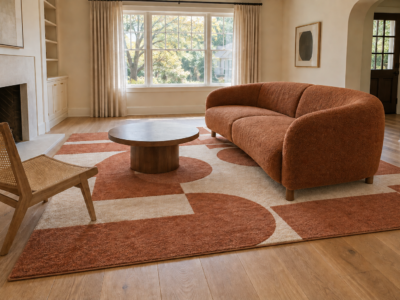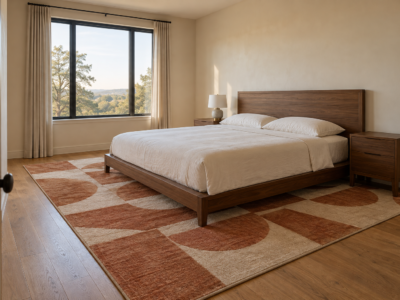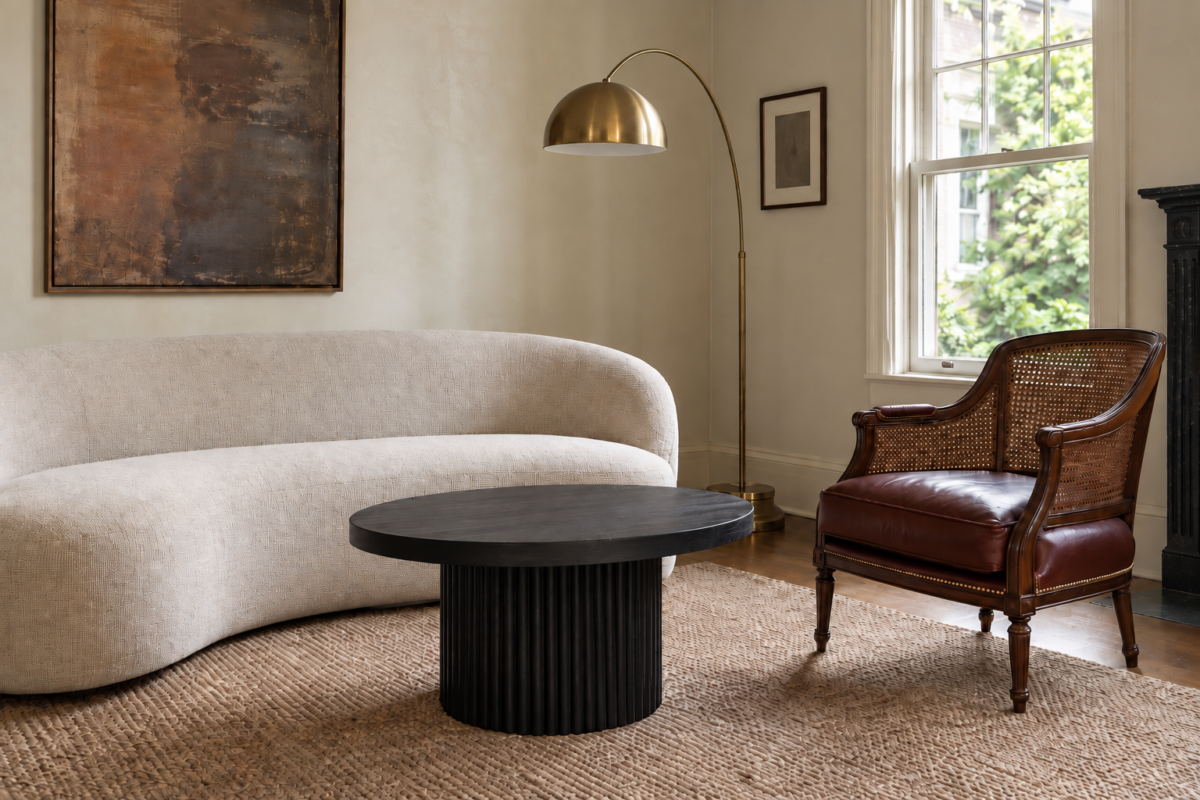
Most advice about mixing design styles asks the wrong question. Which styles go together? Modern and traditional. Industrial and farmhouse. Two pieces from completely different eras can sit in the same room and read as chosen together, or as furniture that happened to end up in the same space. The difference rarely comes down to which styles you picked. It comes down to whether anything repeats between them.
A room that mixes well usually has one thread running through it, a finish, a material, a color note that shows up on both the old piece and the new one. A room that mixes badly usually has nothing running through it at all, just furniture that arrived at different times for different reasons and never got introduced to each other.
This is for anyone with mismatched furniture already: inherited, thrifted, collected over years rather than bought as a set. The goal isn’t matching. It’s finding the thread that should connect what you own, then using it on purpose.
Pick One Element to Repeat, Not One Style to Match
Forget trying to make a traditional armchair and a low-slung contemporary sofa belong to the “same style.” They don’t, and forcing a style match is how rooms end up in an uncomfortable middle ground that isn’t quite either era. Pick one element instead: a metal finish, a wood tone, an upholstery color, and repeat it across at least two pieces from different periods.
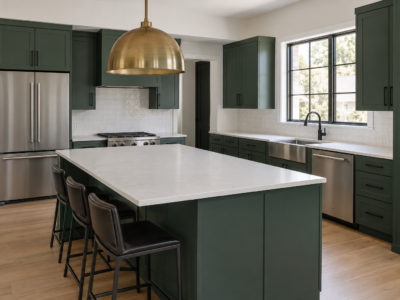
Brass is the easiest version of this. A brass lamp base on a traditional side table and a brass frame on a contemporary chair do more to unify a room than matching the chair’s leg style to anything else in it. The eye follows repeated material before it registers furniture style, which is why this works even across real stylistic distance.
Let One Era Lead and Everything Else Support It
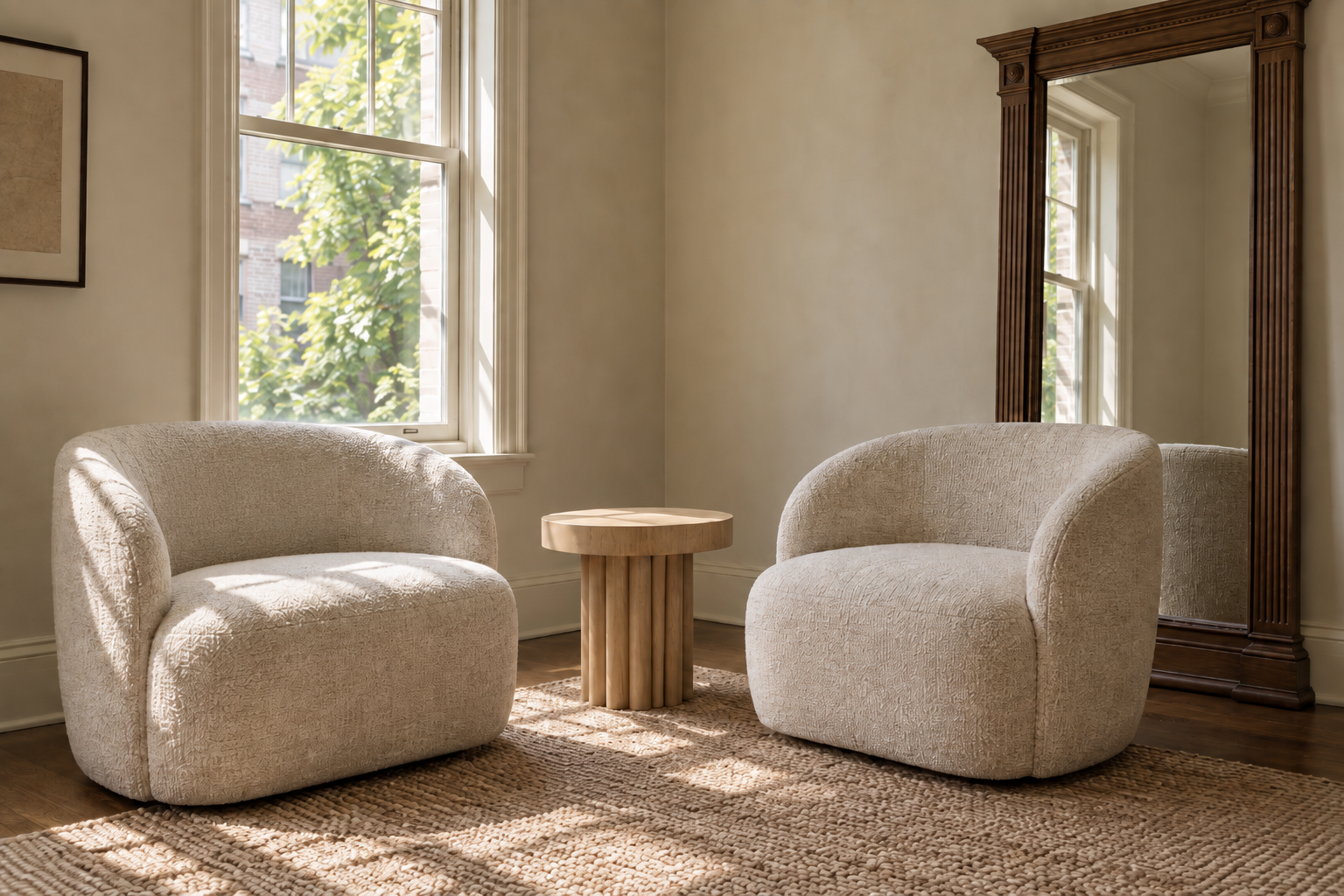
A 50/50 split between two styles is harder to pull off than it sounds, since the room ends up arguing with itself instead of making a point. A cleaner ratio is roughly 70/30, with one era carrying most of the room’s furniture and finishes and a single piece from a different era supporting it.
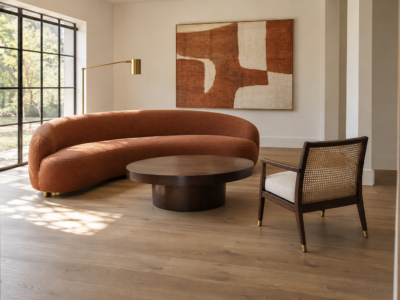
That supporting piece gets to be more traditional, more ornate, or simply older than everything around it, precisely because it’s alone. A single cane-back chair in an otherwise contemporary room reads as a deliberate accent. Two or three traditional pieces in the same room start to compete with the contemporary furniture for attention, and the room stops feeling edited.
Use Material as the Bridge Between Two Pieces
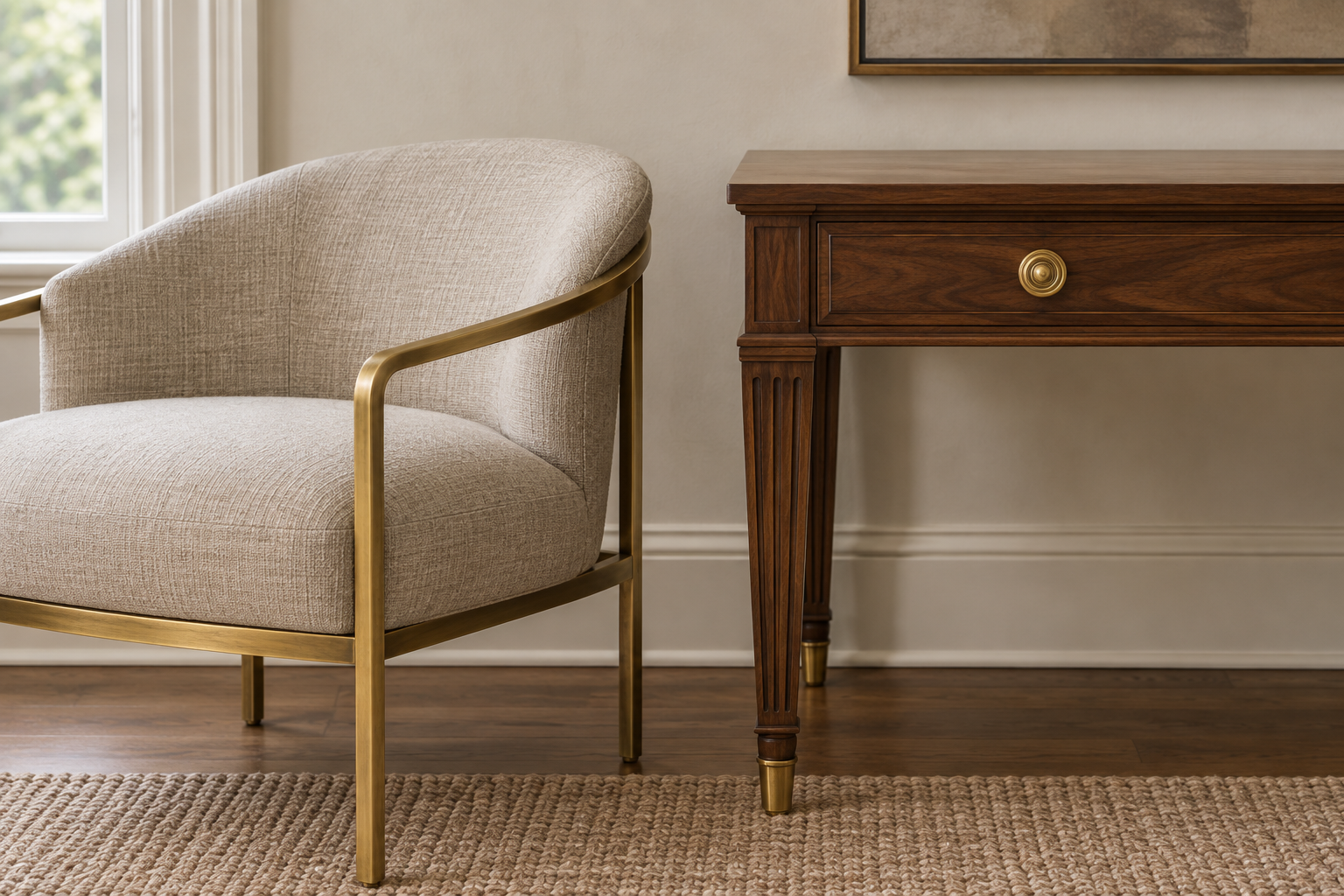
The clearest way to connect an old piece and a new one is to put the same material on both, even when nothing else about them matches. A carved walnut console with brass hardware paired against a sculptural contemporary chair with an exposed brass frame works because the brass is doing the connecting, not the furniture shape.
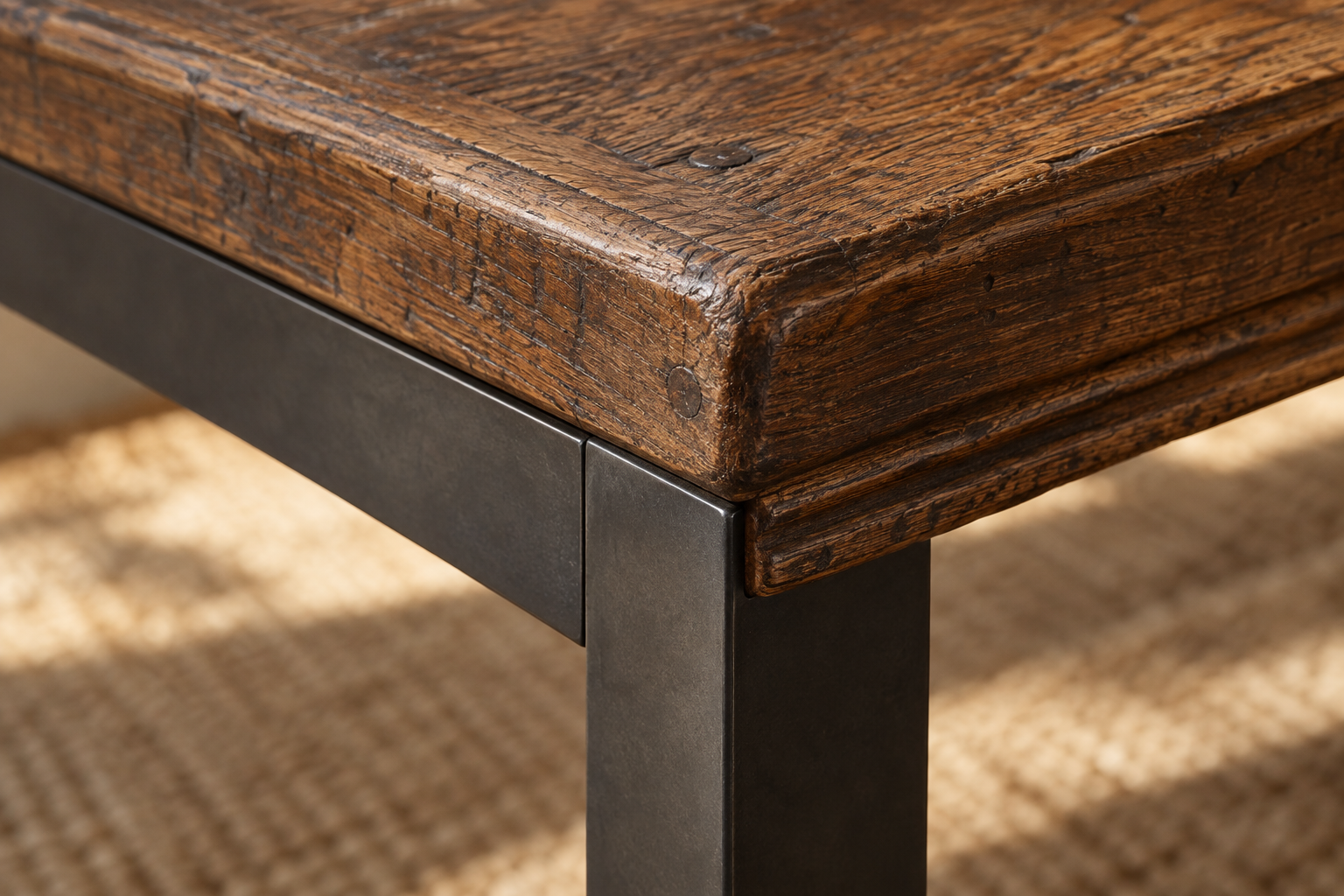
This matters more than color coordination, since color can feel like matching even when it isn’t the goal. Material repetition reads as intentional without reading as matched: wood grain against wood grain, metal against the same metal, even when the pieces themselves look nothing alike. Upholstery is part of this too. Whether you lean toward leather or fabric on your key pieces decides how much material repetition is realistic within a mixed room to begin with.
The Tell That You’ve Mixed Too Much
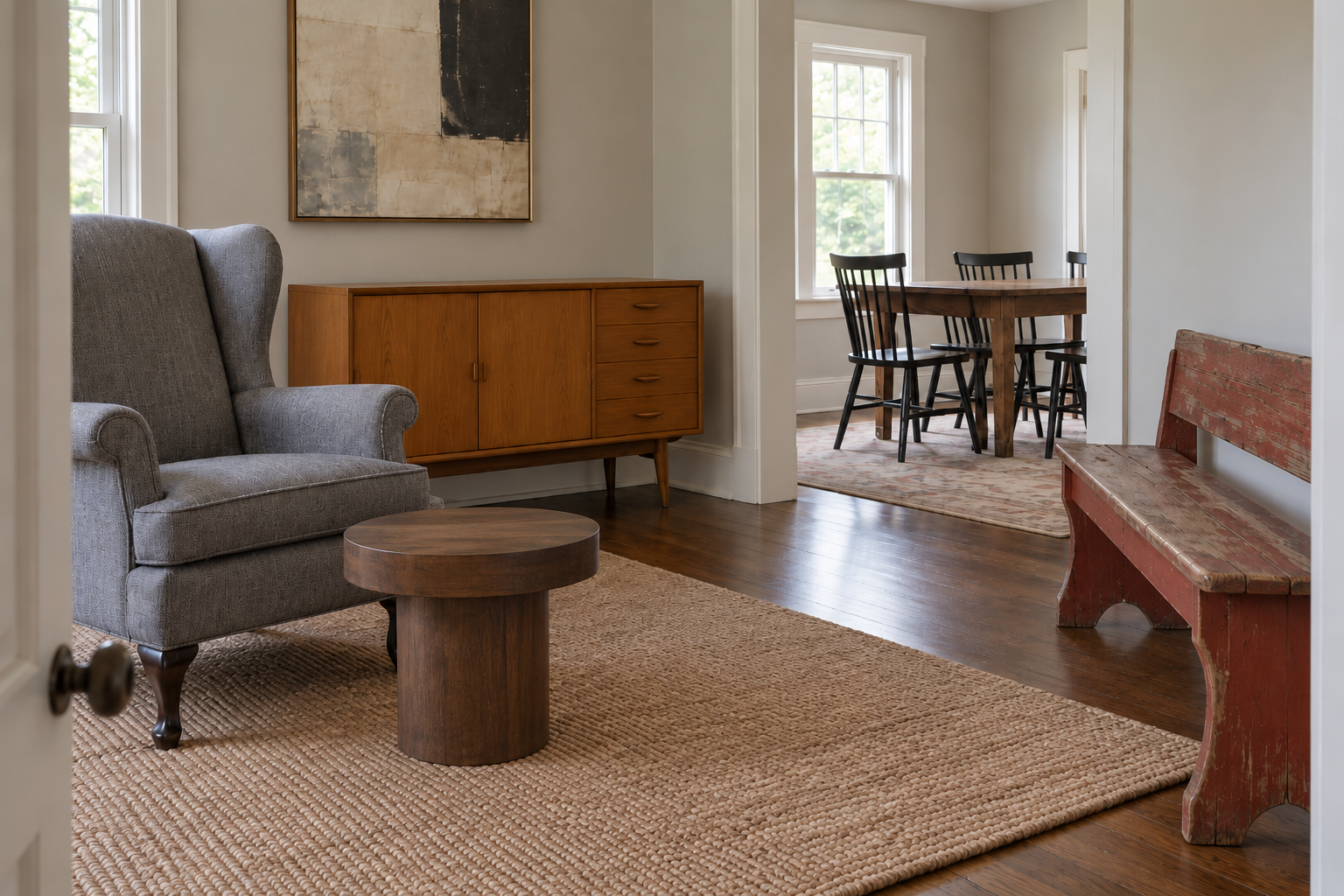
Mixing tips into disorder when a room has three or four furniture styles and none of them repeats anything. No shared material, no shared finish, no dominant era. Every piece is arguing for its own attention, and the room reads as accidental rather than collected.
The fix isn’t removing pieces until only one style remains. It’s finding or creating a repeating thread among what’s there. If nothing already connects the room’s furniture, one new piece, in a material that already appears somewhere else in the room, usually solves it faster than replacing anything.
Start With One Swapped Piece, Not a Whole Room
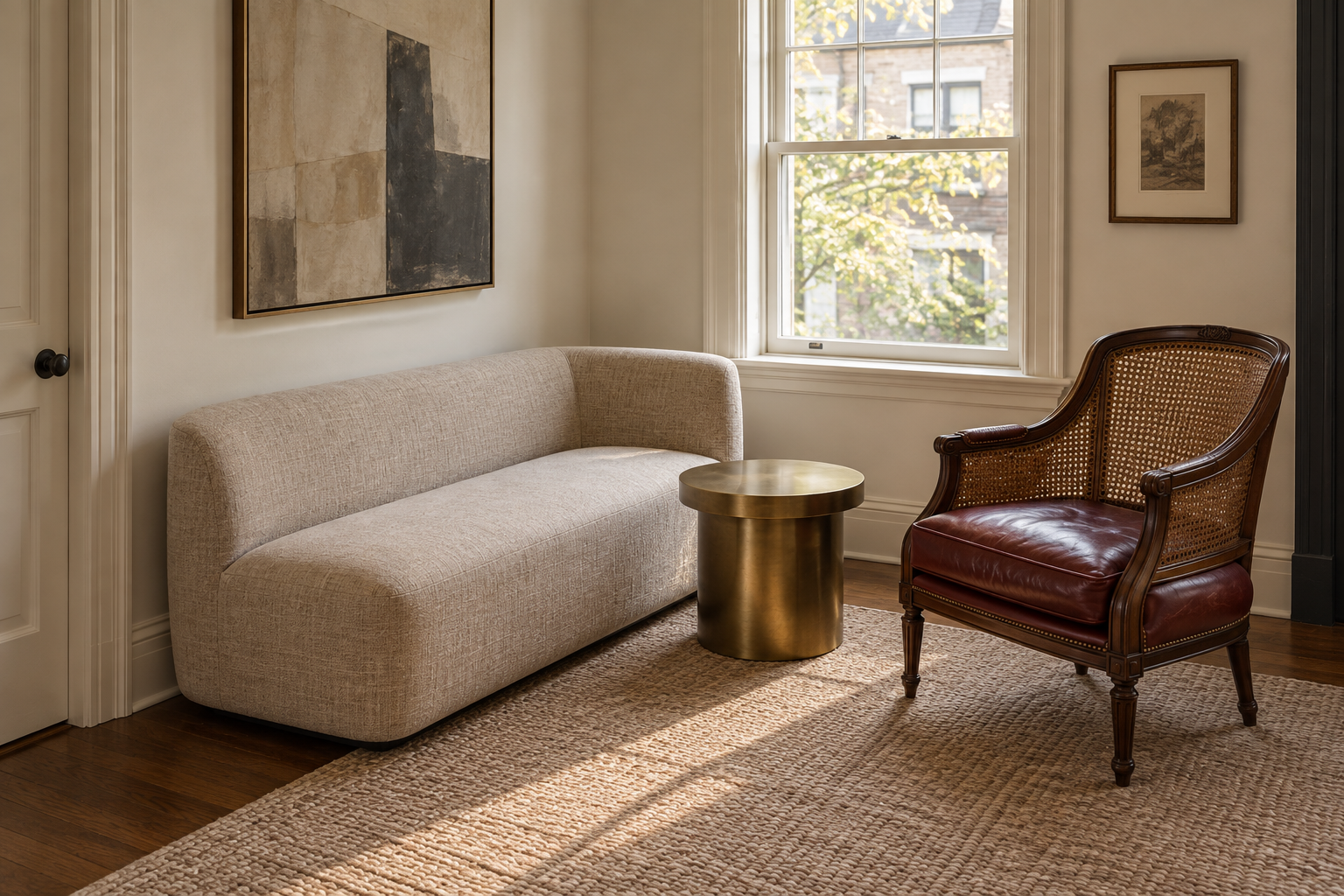
If your furniture currently matches because you bought it as a set, the easiest entry point isn’t a full room overhaul. Swap a single piece for something from a different era, in a material or finish already present somewhere else in the room.
A cane-back accent chair next to a low-profile contemporary sofa works if the chair’s frame echoes a metal finish already in the room, on a lamp or a table base. Start with one piece, live with it, and add a second only once the first genuinely earns its place. For more of what a mixed room looks like at full scale, living room ideas is a useful next stop.
Frequently Asked Questions
How many design styles can one room actually hold?
Most rooms hold two comfortably when one leads and the other supports it at roughly a 70/30 split. A third style usually needs its own repeating material to avoid competing with the other two.
Does mixing wood tones count as mixing styles?
Not exactly. Wood tone is a material decision (see how to mix wood tones), while style mixing is about furniture era and form. The two work together, since a shared wood tone can be the exact thread that ties two different-era pieces together.
What if I don’t have a traditional piece to mix in?
Start smaller than furniture. A single traditional lamp, mirror, or piece of hardware in a metal finish that already exists elsewhere in the room can introduce the contrast without a big purchase.