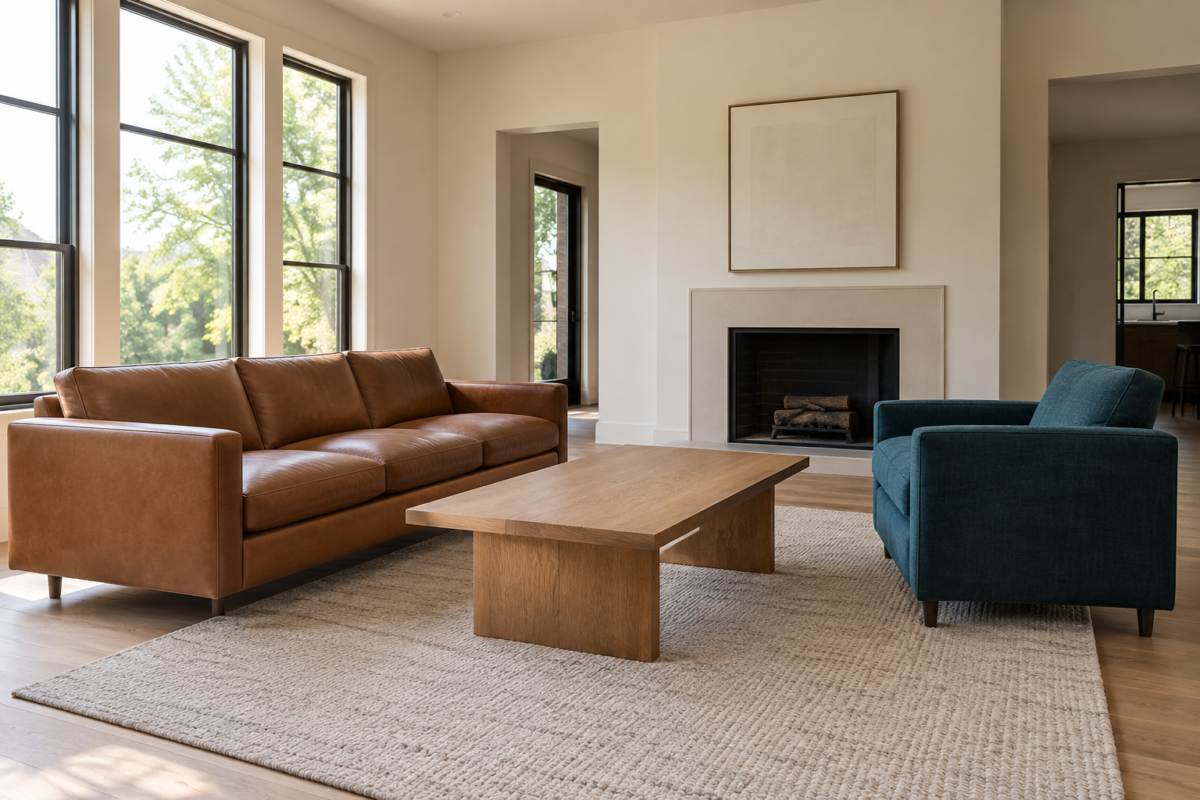
Leather and fabric solve the same problem in different ways, and neither one is the objectively correct choice. The right answer depends on what actually happens on your sofa: who sits on it, what gets spilled on it, how much sun hits it during the day, and whether you want it to look the same in ten years or develop character over that time.
This isn’t a ranking. It’s a comparison across the things that actually matter once the sofa’s in the room: how each one looks and feels, how it holds up to a household’s real habits, how it ages, and what it costs to get a version worth having.
How Each One Looks and Feels Day to Day
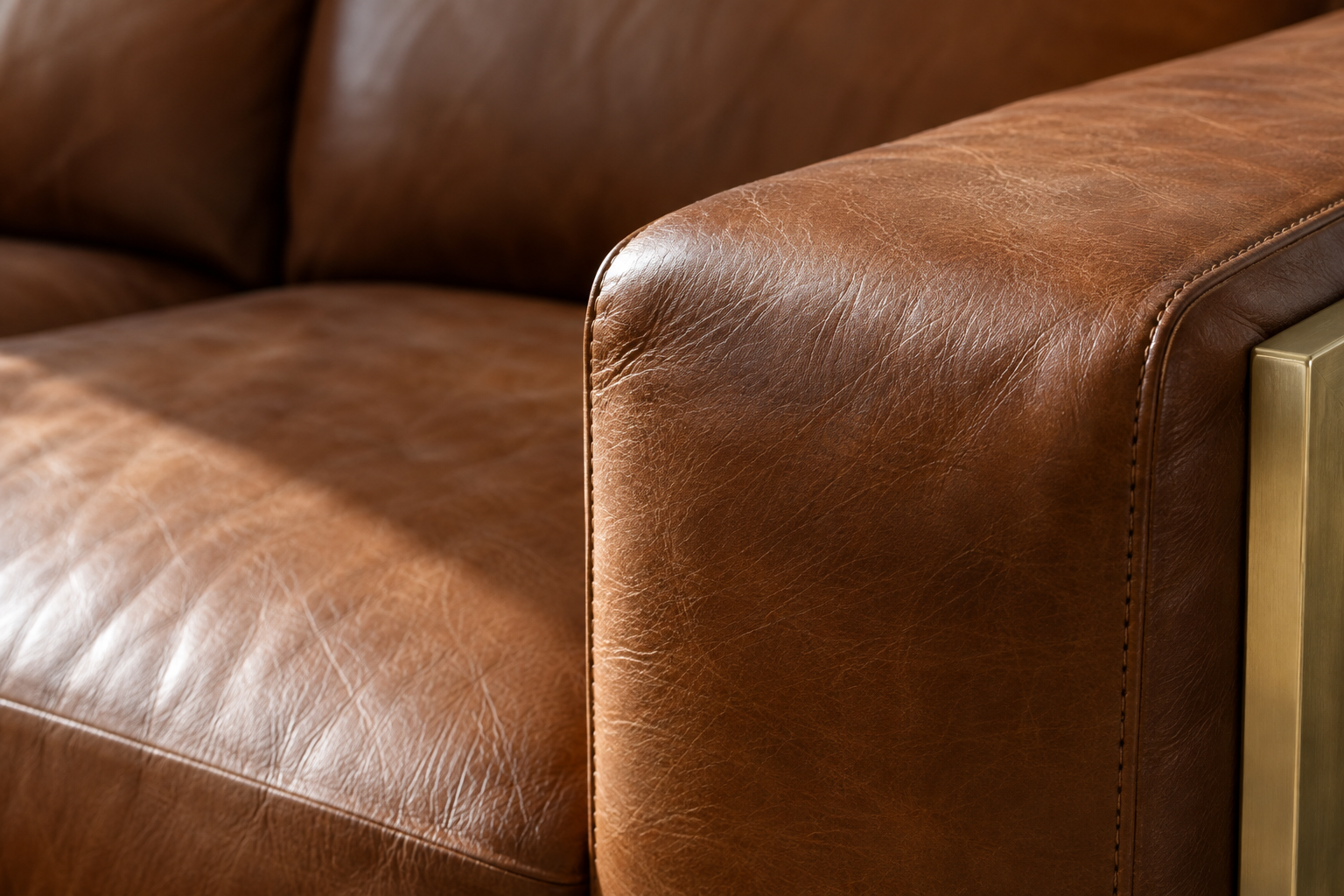
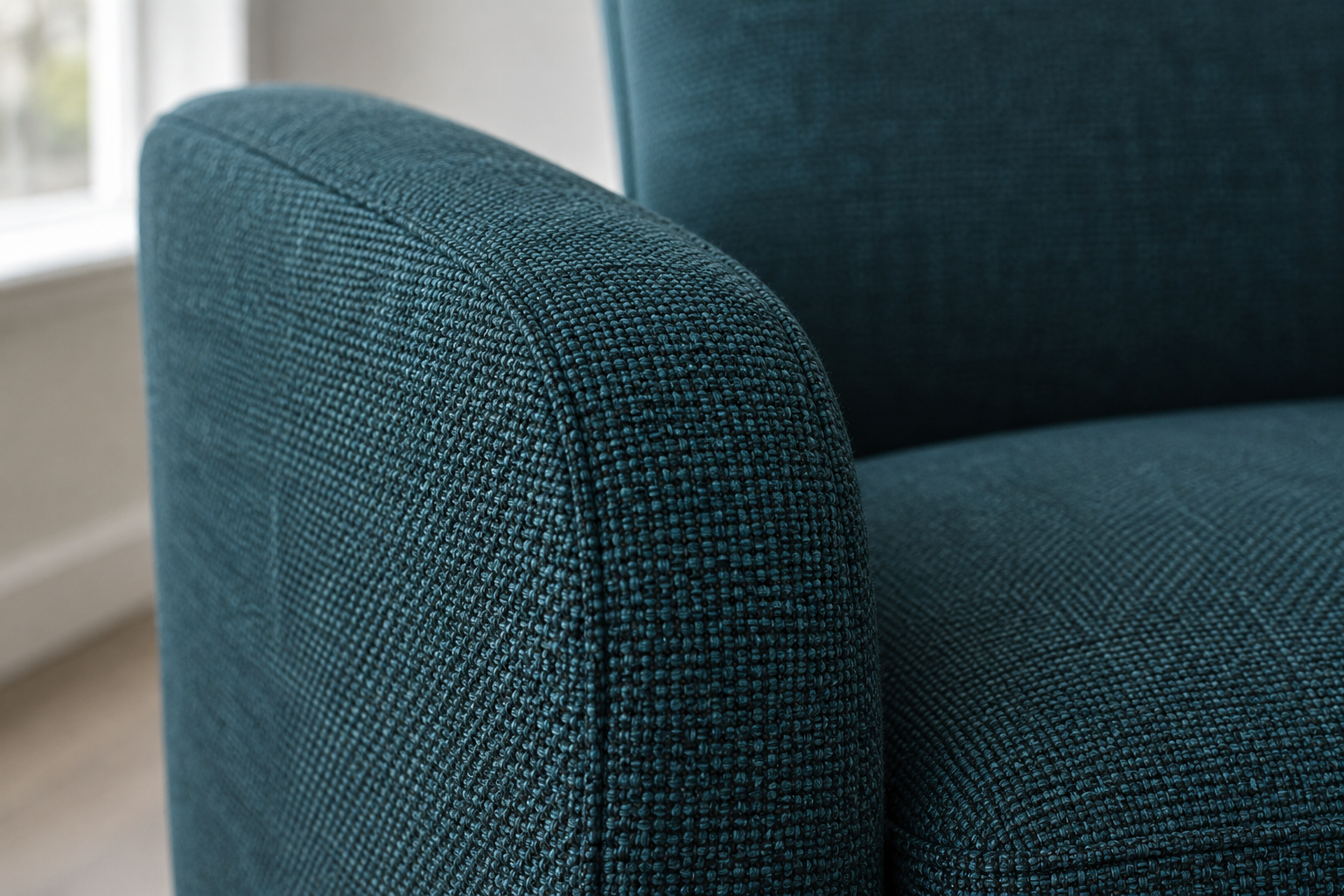
Leather has a cool touch that warms against skin within a minute or two, a texture that reads as substantial the moment you sit down. Fabric, especially a woven or textured weave, feels warmer immediately and softer against bare skin, which matters more than it sounds like it should in a room where people actually curl up rather than perch. Leather also reflects light in a way fabric doesn’t, giving a room a bit of sheen and visual weight a matte fabric sofa won’t provide on its own. Neither quality is better in the abstract. A sunroom with a lot of direct light usually suits leather’s reflectiveness; a room built around soft, layered textiles usually suits fabric’s ability to disappear into the rest of the room instead of standing out from it.
Living With Pets, Kids, and Everyday Messes
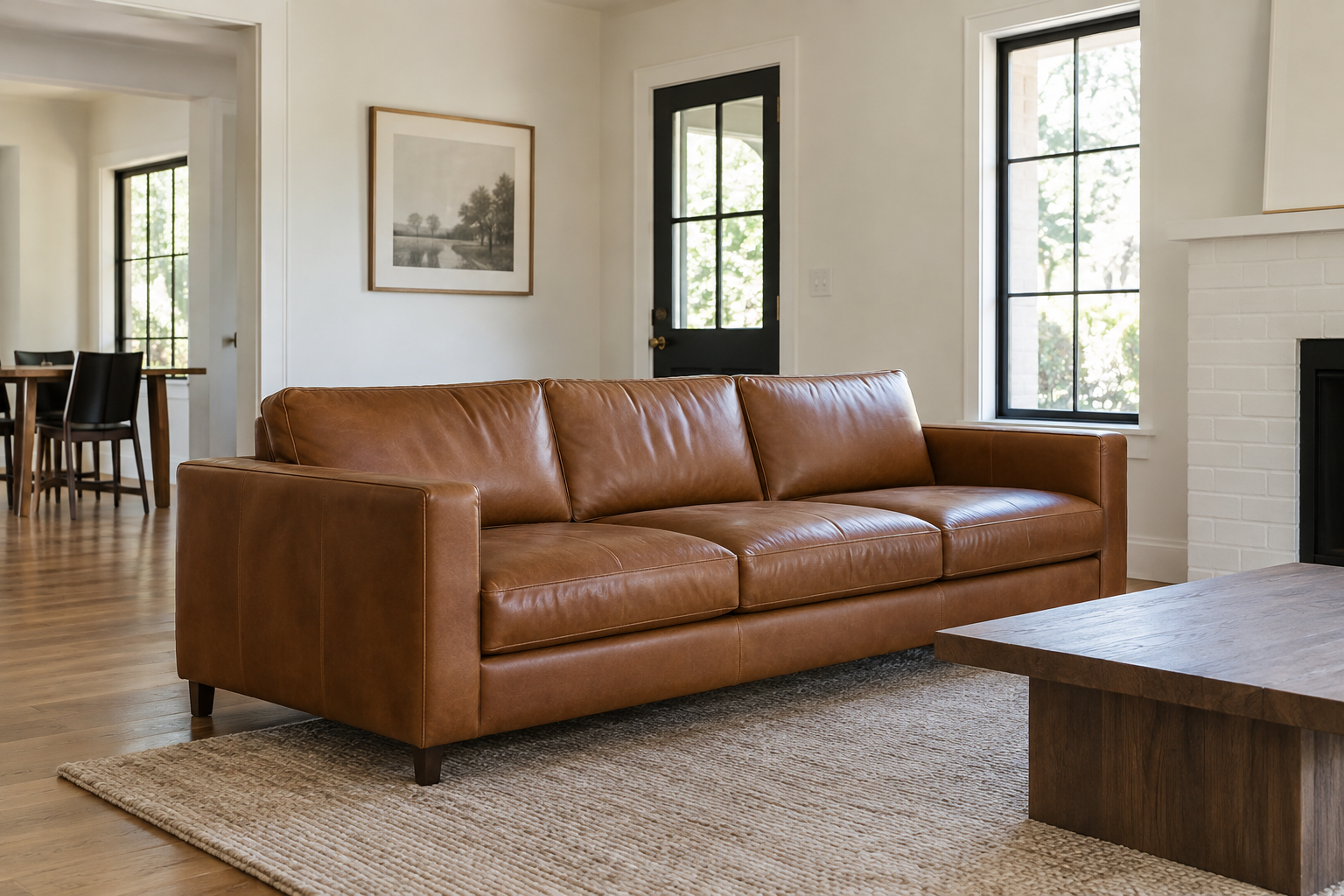
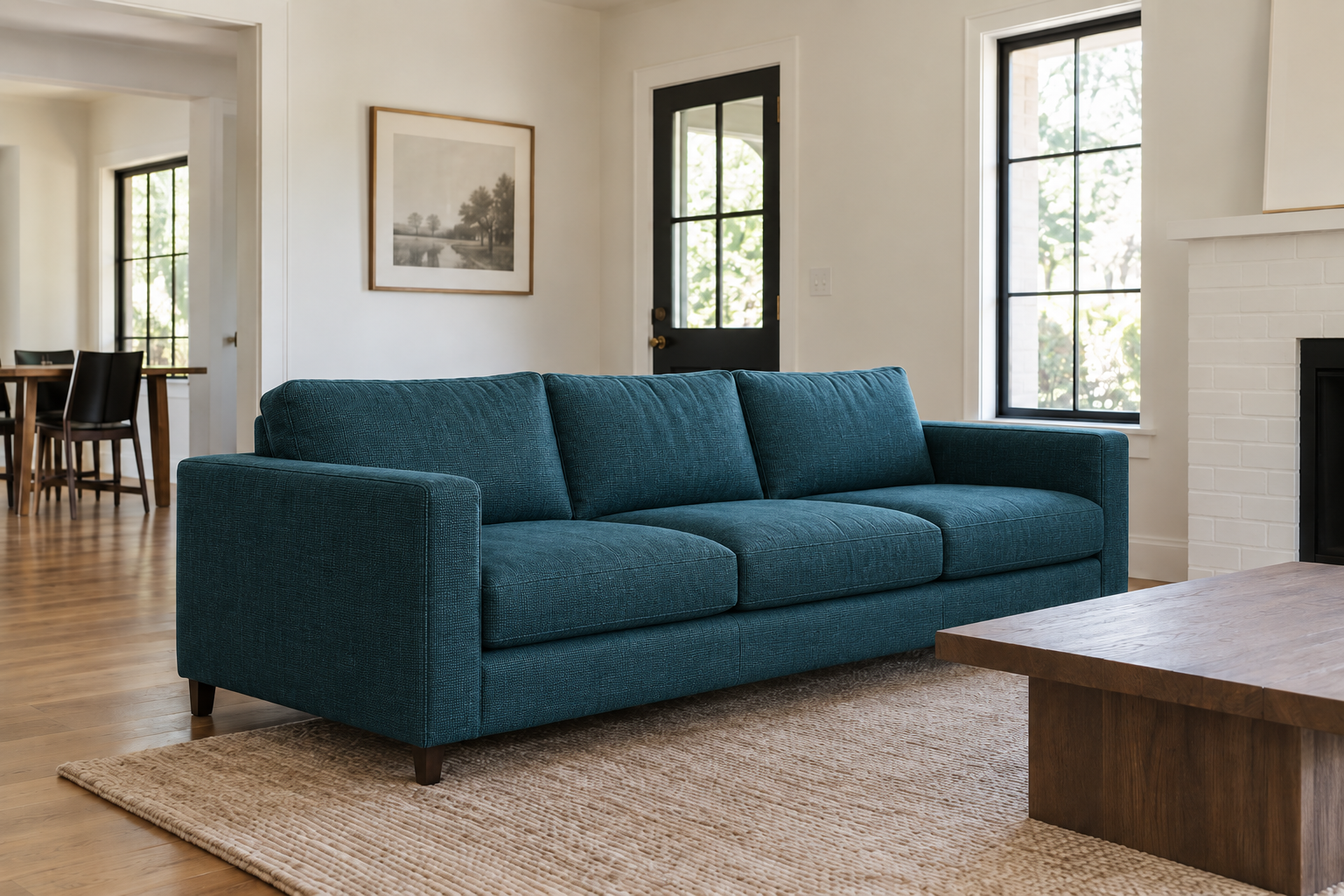
Leather’s real advantage here is that most spills wipe off the surface instead of soaking in, which matters a lot with kids and pets in the house. It doesn’t resist everything: sharp claws can scratch it, and ballpoint pen can be difficult to fully remove. A quality performance fabric closes most of that gap. Many are now woven or treated specifically to resist stains and shed pet hair more easily than a standard weave, though an untreated fabric still soaks up spills the way leather doesn’t. The household matters more than the material here. A home with a scratching cat has a real reason to favor a tightly woven performance fabric over leather, regardless of how the two otherwise compare.
How Leather and Fabric Age Over Time
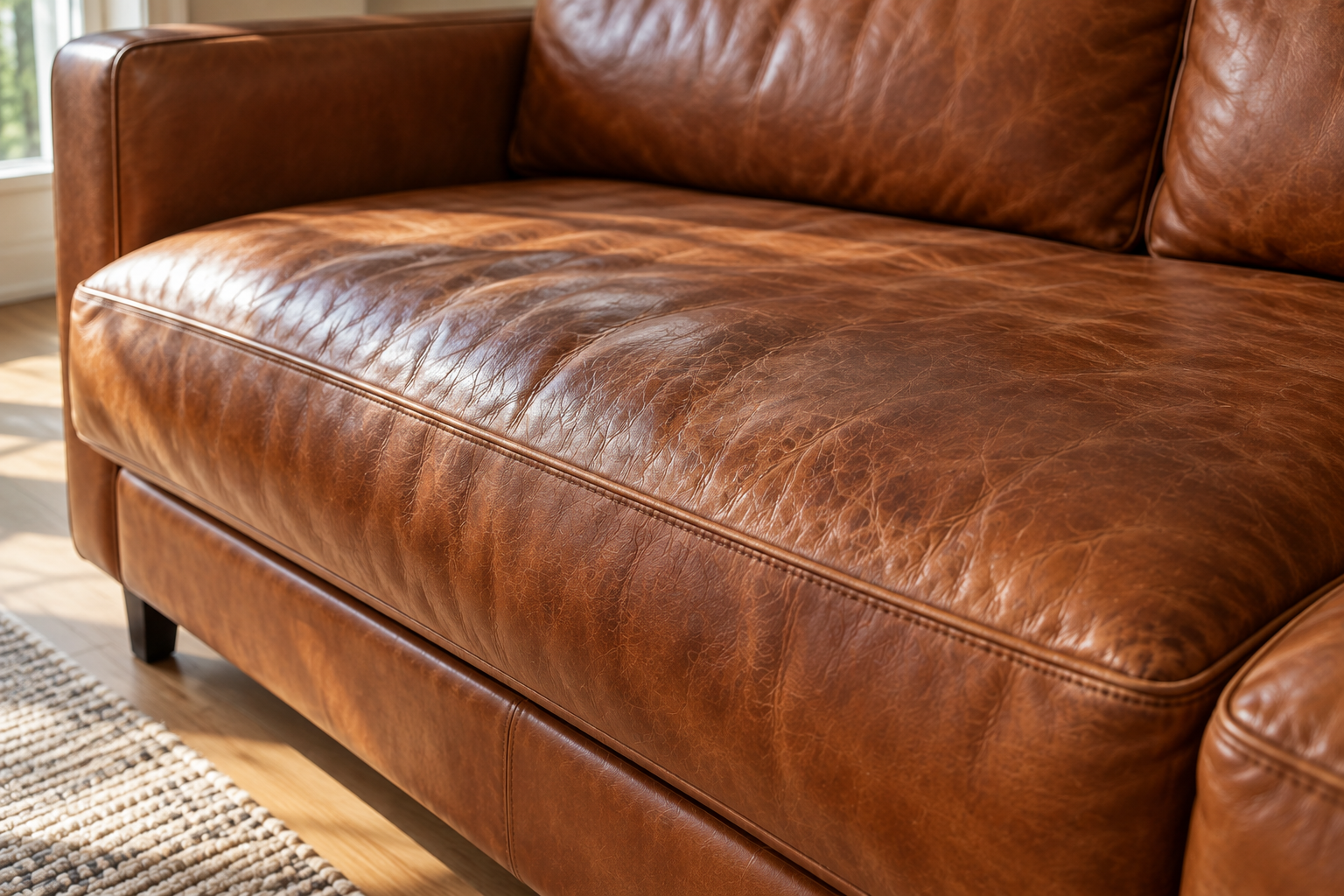
Leather is the one that changes on purpose. A quality top-grain leather develops a patina, a softened sheen and slightly richened color, that most people consider an upgrade rather than wear. Bonded or lower-grade leather doesn’t age the same way and is more likely to crack or peel instead of softening, so the grade matters as much as the material itself when durability is the actual question. Fabric ages differently: it doesn’t develop character the way leather does, but a quality weave resists fading and pilling for years without changing its basic look. Neither one is simply more durable than the other in every case. The honest answer depends on the specific leather grade or fabric weave in front of you, not the material category alone.
Cost, Style Flexibility, and What You’re Really Paying For
Genuine leather generally costs more upfront than a comparable fabric sofa, and the gap widens with grade: top-grain and full-grain leather sit well above bonded leather, which sits closer to a mid-range fabric option in price. Fabric offers something leather can’t match on the style side, color and pattern options in a nearly unlimited range, while leather is largely limited to natural hide tones plus a smaller range of dyed finishes. A room built around a specific color story usually has an easier time with fabric. A room built around material and texture as the main statement usually leans toward leather instead, cost aside.
Which Rooms and Climates Suit Each Material
Leather runs cooler to the touch in a cold room and can feel uncomfortable in a hot, humid climate, where it can also stay tacky against bare skin. Fabric doesn’t have either problem, which makes it the more forgiving choice in a sunroom, a poorly climate-controlled space, or a humid region. Leather tends to suit a formal living room or a study more naturally than a casual family room, simply because of the visual weight it carries, though a casual leather sectional exists and works fine when the room’s design calls for it. Sofa Size Guide is worth checking regardless of which material you land on, since the wrong dimensions cause more regret than the wrong upholstery ever does.
There’s no universal answer here, only a better fit for a specific household. Pets and kids point toward a tightly woven performance fabric or a quality top-grain leather, not the lowest-grade version of either. A hot, humid climate points toward fabric. A room built around color and pattern points toward fabric; one built around texture and visual weight points toward leather. Match the material to how the room actually gets used, not to which one photographs better in someone else’s living room.
Frequently Asked Questions
Is bonded leather as durable as top-grain?
No. Bonded leather is made from scraps of real leather bonded to a fabric backing with a printed surface layer, and that surface layer is what typically cracks or peels within a few years of regular use. Top-grain and full-grain leather are cut from the hide itself and age by developing patina rather than deteriorating. The price difference between the two grades reflects a real difference in how each one holds up over time.
Can a fabric sofa really hold up with pets in the house?
A genuinely performance-rated fabric, one specifically woven or treated to resist stains and moisture, can hold up well with pets, including regular shedding and the occasional accident. A standard, untreated fabric is a different story and will show wear and staining much faster. The label matters here more than the general category: “fabric sofa” covers a wide range of actual durability, from delicate linen blends to genuinely rugged performance weaves.