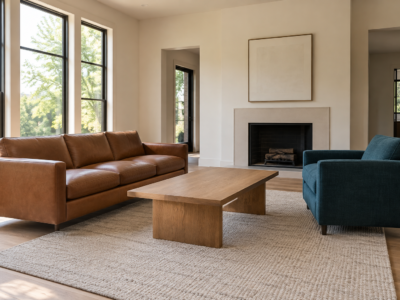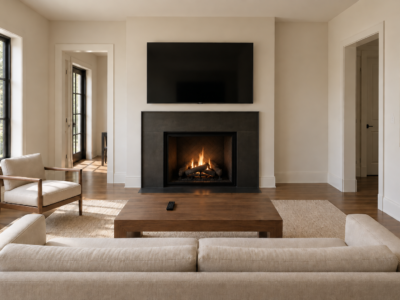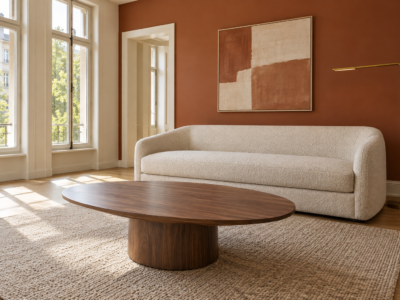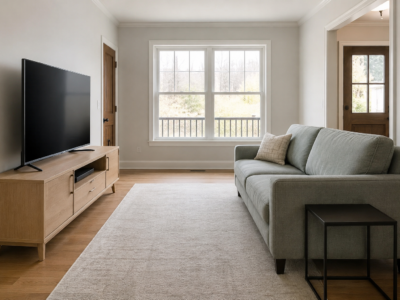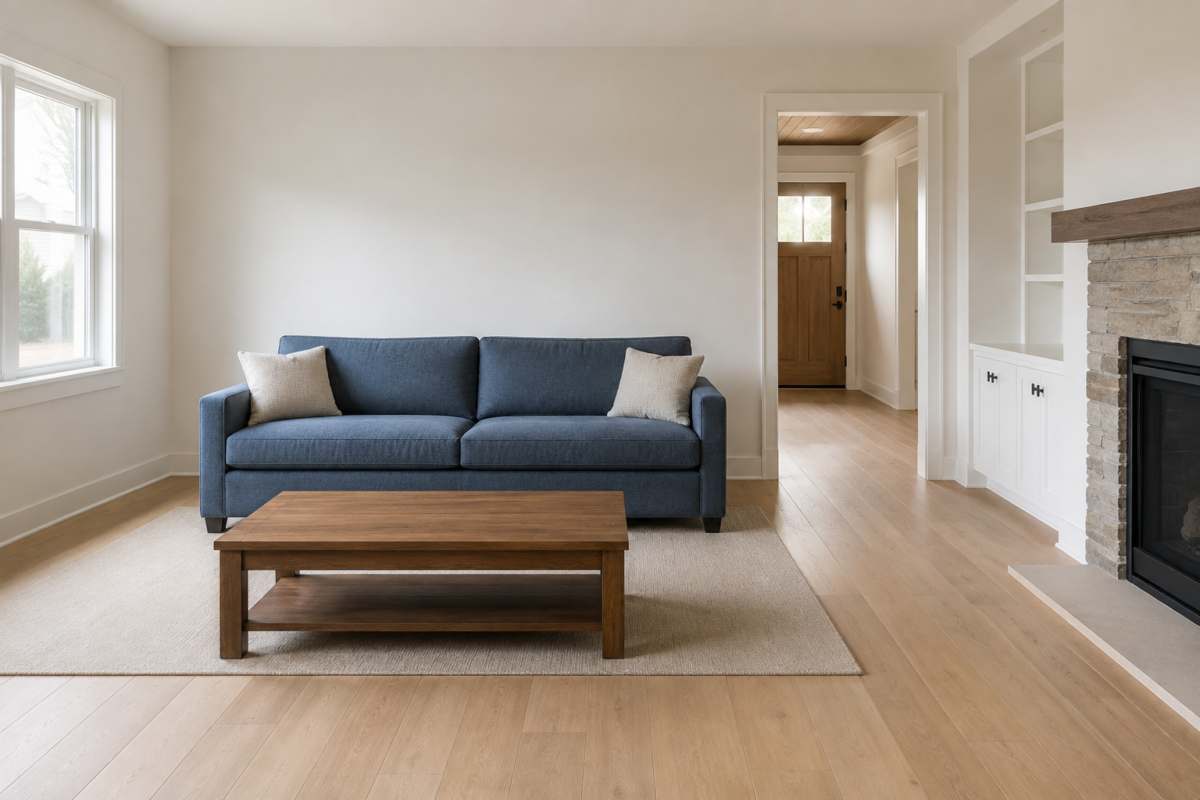
A sofa gets picked for how it looks in a showroom, then it shows up in the room itself and either blocks the path to the hallway or leaves a walkway so wide the room feels unfinished. Both problems come from the same mistake: choosing a sofa’s size based on seat count or style, not the room’s own footprint. A three-seat sofa that reads as generous in a furniture store can be genuinely too big for a real room once a coffee table, a rug, and 30 inches of walking space around it all have to fit in the same footprint.
Start With the Room, Not the Showroom Floor
The sofa’s footprint needs to leave real walking room on at least one side, not just fit flush against the walls. A useful starting check: measure the room’s open floor area first, subtract 30 inches for a walking path, and see what’s left for the sofa itself. A room with roughly 12 feet of usable wall length can comfortably hold an 84-to-90-inch three-seat sofa; a smaller room, closer to 9 or 10 feet, usually calls for a loveseat or a compact sofa under 75 inches instead. Sectionals need the same math applied to their full footprint, not just their longest side, since an L-shaped sectional can measure 95 to 130 inches on each leg.
The Depth and Height That Actually Fit a Body
Seat depth and seat height matter more than most people check before buying, and both affect how a sofa actually feels to sit in, not just how it looks. A seat depth between 20 and 25 inches works for most adults; deeper than that, and shorter people end up perched forward instead of resting against the back cushion. Seat height between 15 and 20 inches keeps knees roughly level with hips when sitting, and taller households tend to do better with a seat toward the higher end of that range. Overall back height, typically 32 to 36 inches, changes how substantial a sofa reads in the room without changing its footprint at all.
When a Sofa Overwhelms Everything Around It
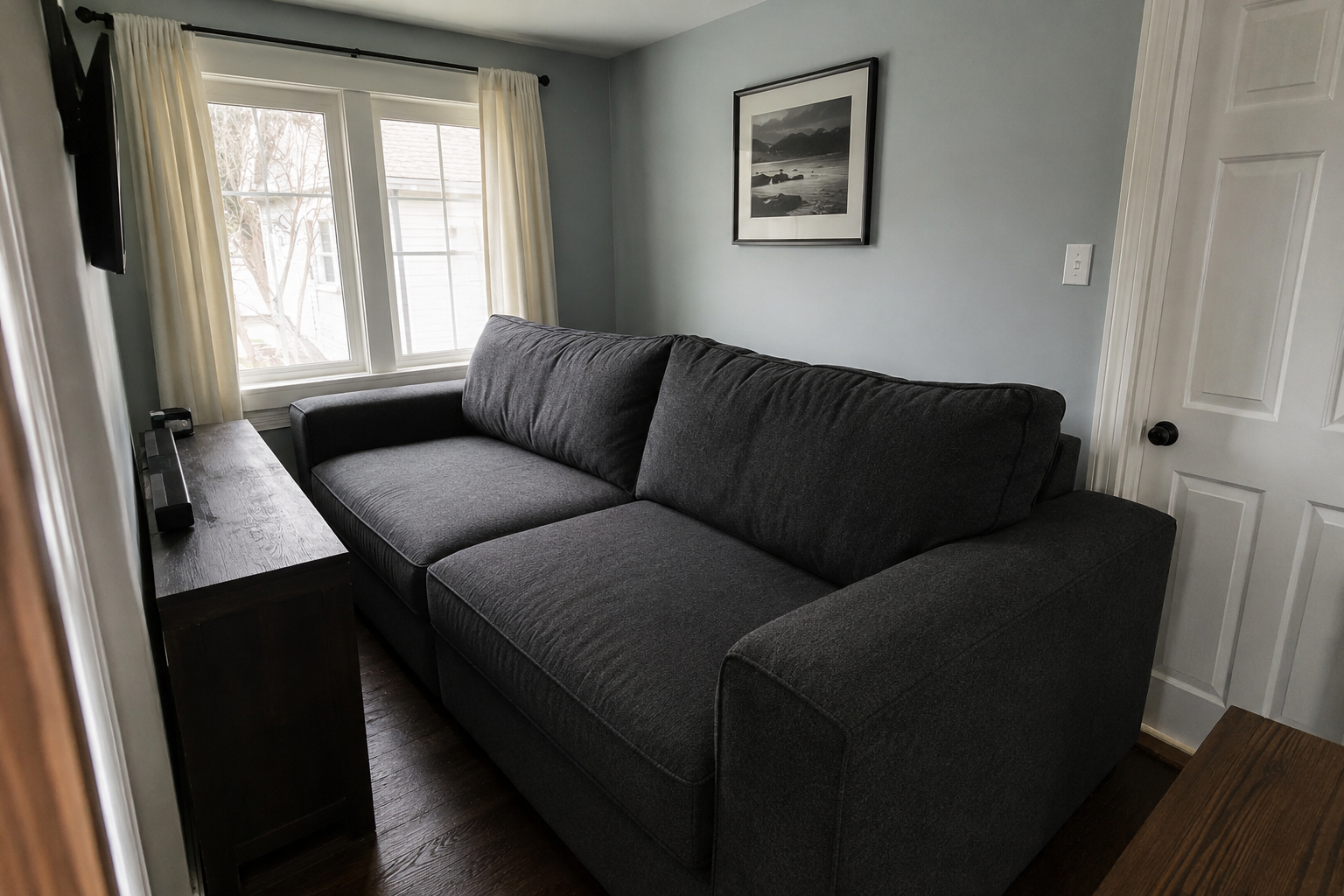
A sofa that’s too big for its room doesn’t always look wrong at first glance. It usually shows up as a room that feels cramped in ways that are hard to pin down. A coffee table gets pushed too close to fit, a walkway requires turning sideways, or a rug can’t extend far enough past the seating because the sofa already claims most of the floor. The sofa itself might be a good piece, well-made and reasonably scaled for its type, and still be the wrong size for the specific room it’s in.
Leave Real Walking Room on Every Side
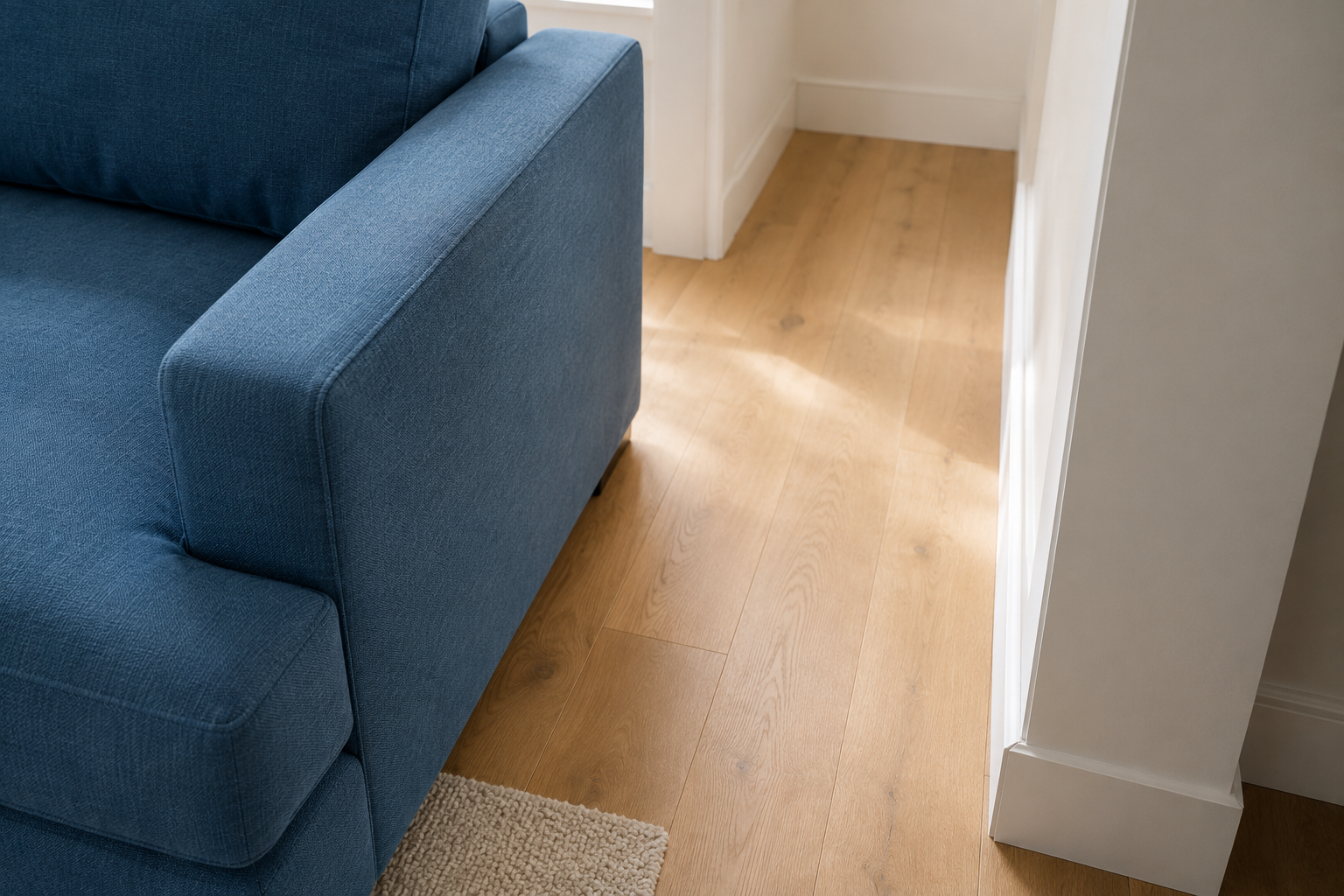
At least 30 inches of clear walking space in front of a sofa is the standard comfortable minimum. That number has to survive after the coffee table and rug are in the room too, not just around an empty footprint. A sofa against a wall with no room to walk behind it can still work in a small room. But if walking past the sofa means squeezing between it and another piece of furniture, that’s a sign the sofa is bigger than the room can comfortably hold, no matter how the dimensions look on paper.
None of this requires a tape-measure obsession before every decision. Just check three numbers against the room itself before buying: the sofa’s full footprint against the open floor area, the seat depth and height against how tall the household is, and 30 inches of walking clearance that survives once the rest of the furniture is in place. A sofa that clears all three rarely feels like the wrong size, whatever its style.
Frequently Asked Questions
What size sofa fits a small living room?
A loveseat or compact sofa under 75 inches wide is usually the right call in a room with 9 to 10 feet of usable wall length. Choosing a smaller three-seat sofa instead of a full-size one, or a sofa with a lower profile back, can also help a small room read as considered rather than crowded.
Is a sectional always too big for a normal-sized room?
Not necessarily, but a sectional’s full footprint, chaise included, needs the same clearance math as a straight sofa. A sectional that seats as many people as a three-seat sofa and a chair combined will often take up meaningfully more floor area. It’s worth measuring the sectional’s own footprint rather than assuming it fits just because it replaces smaller pieces.