Indoors, board and batten is a flat panel with narrow strips of wood fixed over it at even intervals, usually finished with a cap along the top. The battens stand a little proud of the wall, so the pattern comes from shadow as much as from paint, and it changes through the day as the light moves.
The familiar version is white and stops about a third of the way up. That leaves a set of choices open: how high it goes, how far apart the battens sit, which way they run, how the paint relates to the wall above, and what the cap is for. Each idea below changes one of them.
A Half Wall With a Ledge on Top
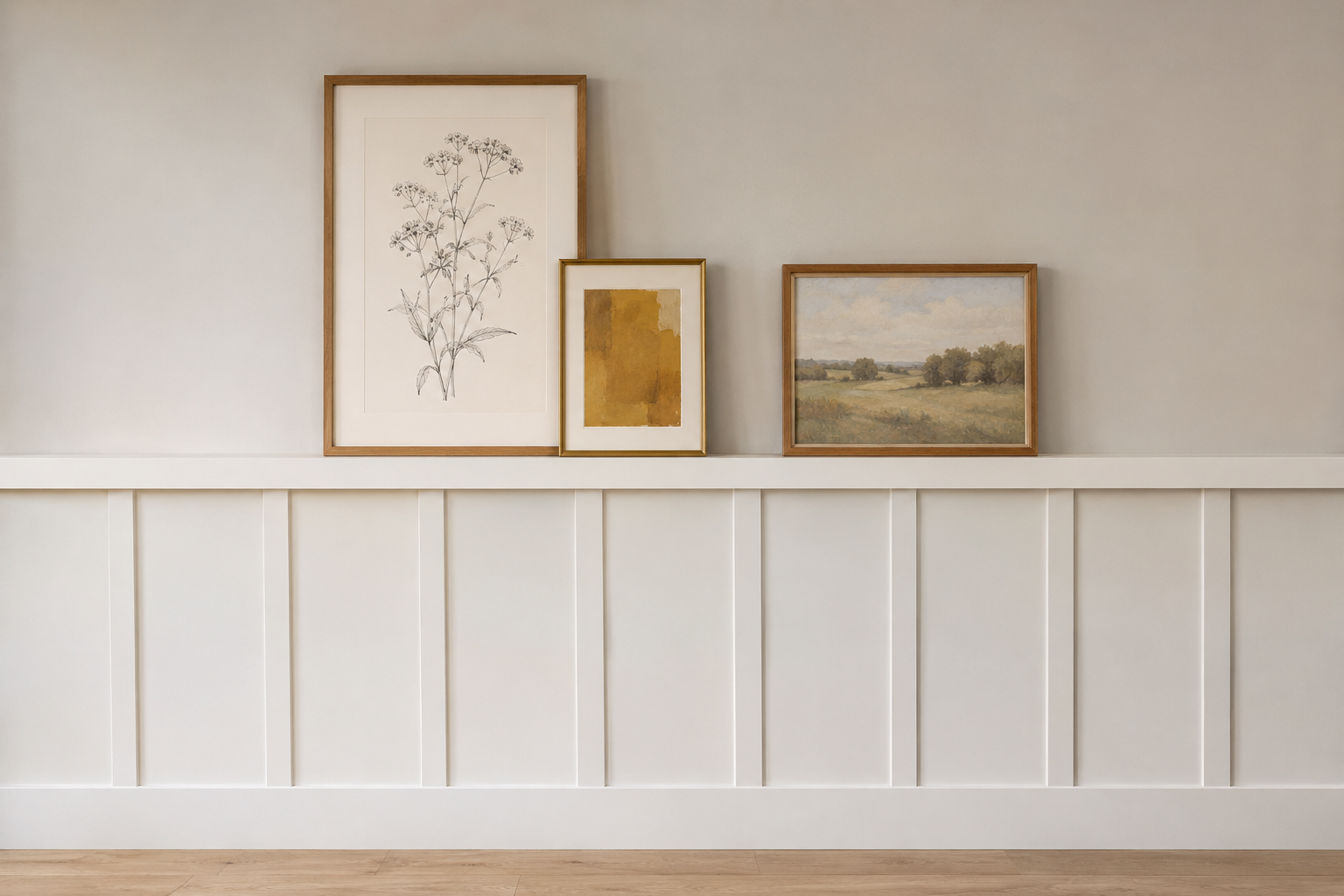
The familiar height still works, and the cap is where it can do more. A cap a few inches deep becomes a ledge for framed prints, which can be swapped without a nail, and a run of them at this height sits at eye level for someone in a chair.
The right height depends on the ceiling and the furniture in front. The heights for chair rail and wainscoting by ceiling height apply here too, since the cap does the same job as a chair rail.
Two-Thirds of the Way Up a Bedroom Wall
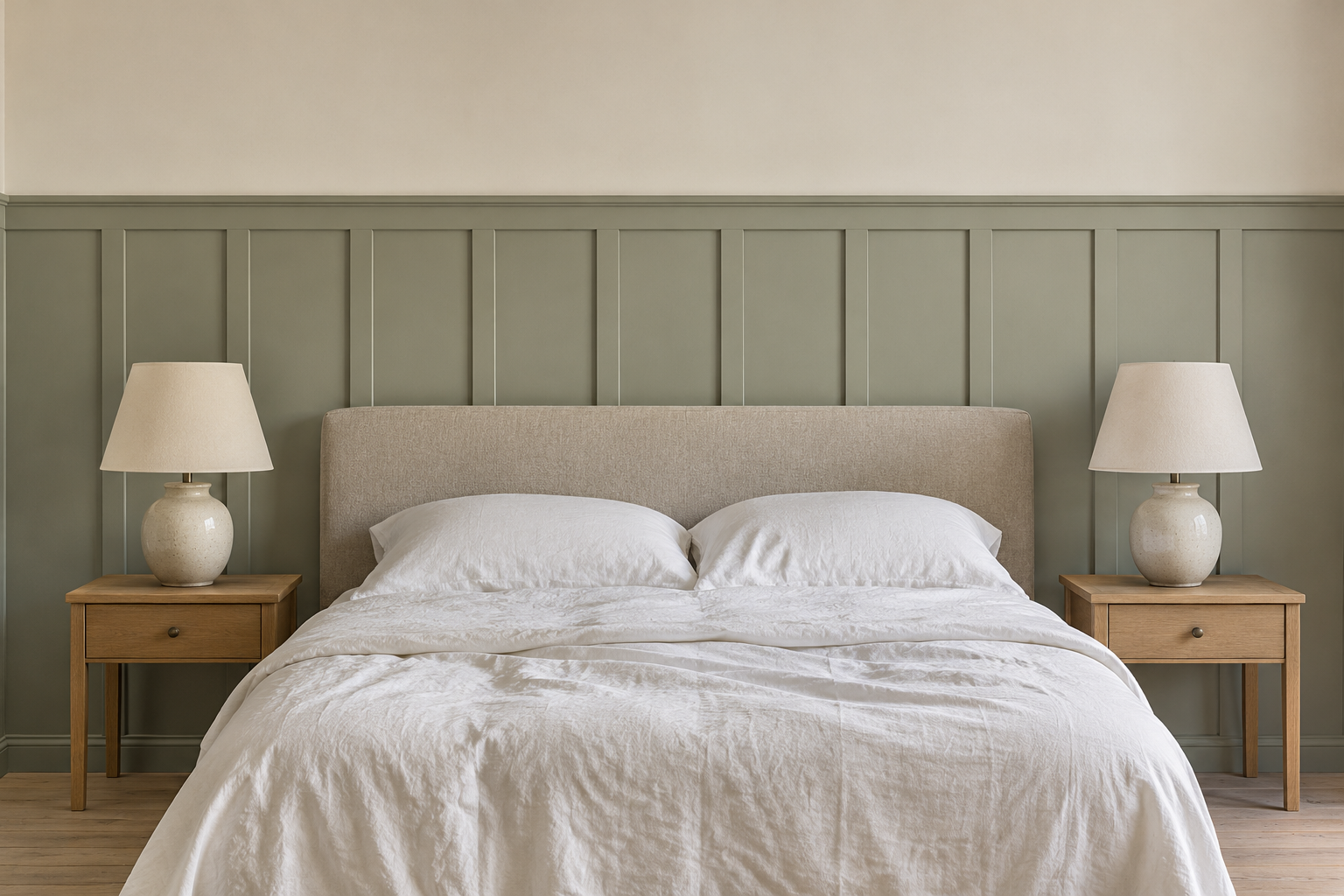
Taking the paneling to about two thirds of the wall changes the proportion of the room. The band of plain wall above becomes the smaller part, so the paneling looks like the wall itself, not a trim along its base, and the top stays clear of the headboard.
In a bedroom that means the cap sits well above the bed, not level with the pillows, where a cap at headboard height would run into the headboard’s own top line. Sage gray against cream, as here, keeps the two parts of the wall close in tone, so the change in surface carries more of the effect than the change in color.
Floor to Ceiling Behind the Bed
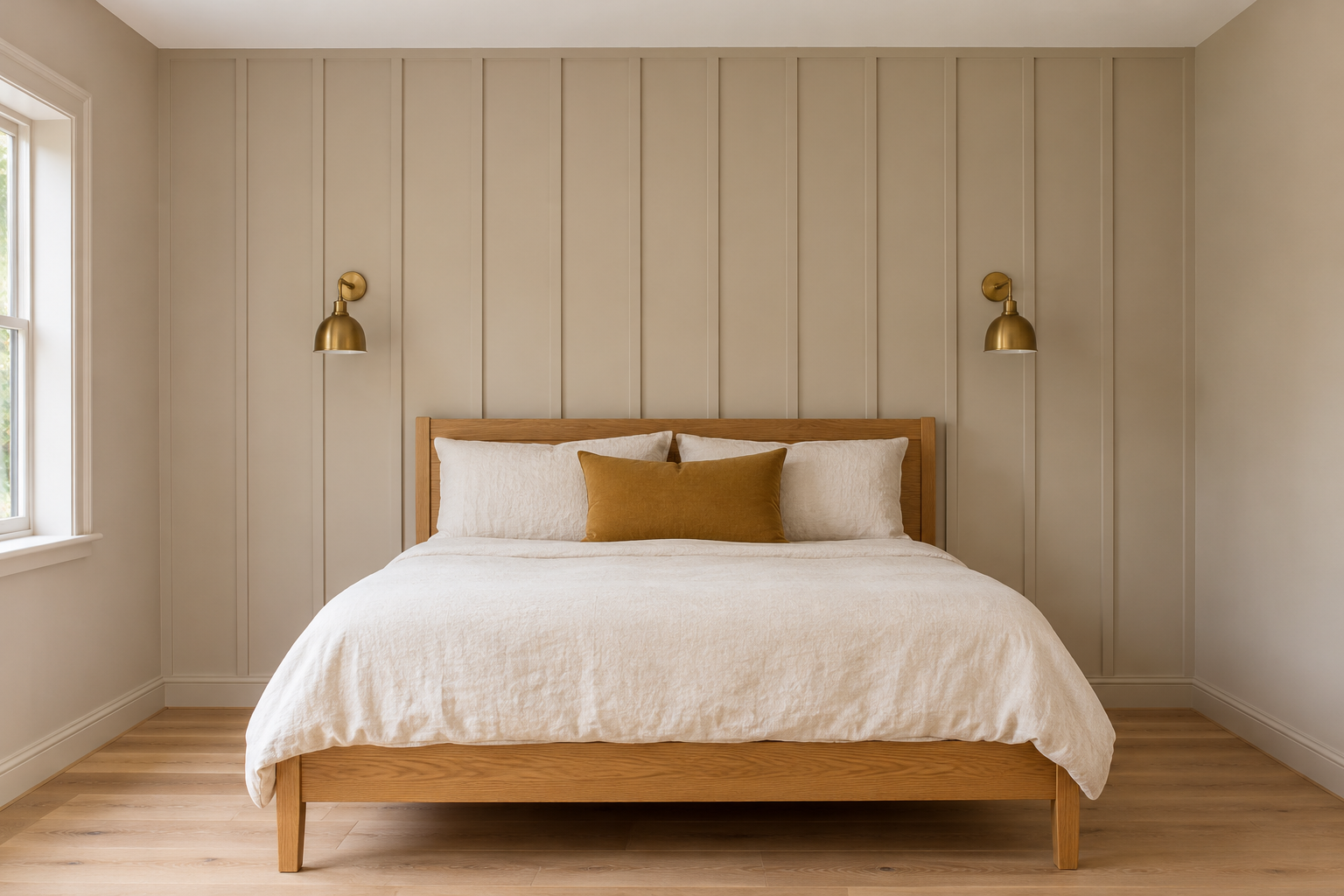
On one wall, from the baseboard to the ceiling, board and batten becomes the room’s main pattern, and the bed needs no headboard to mark its place. Wall lights can be fixed straight onto the paneling, which frees the nightstands.
Painting the other walls in the same color, warm putty here, makes the paneled wall a change of surface rather than a separate accent wall. It suits a room where the bed wall is long and otherwise blank.
Battens the Same Color as the Wall
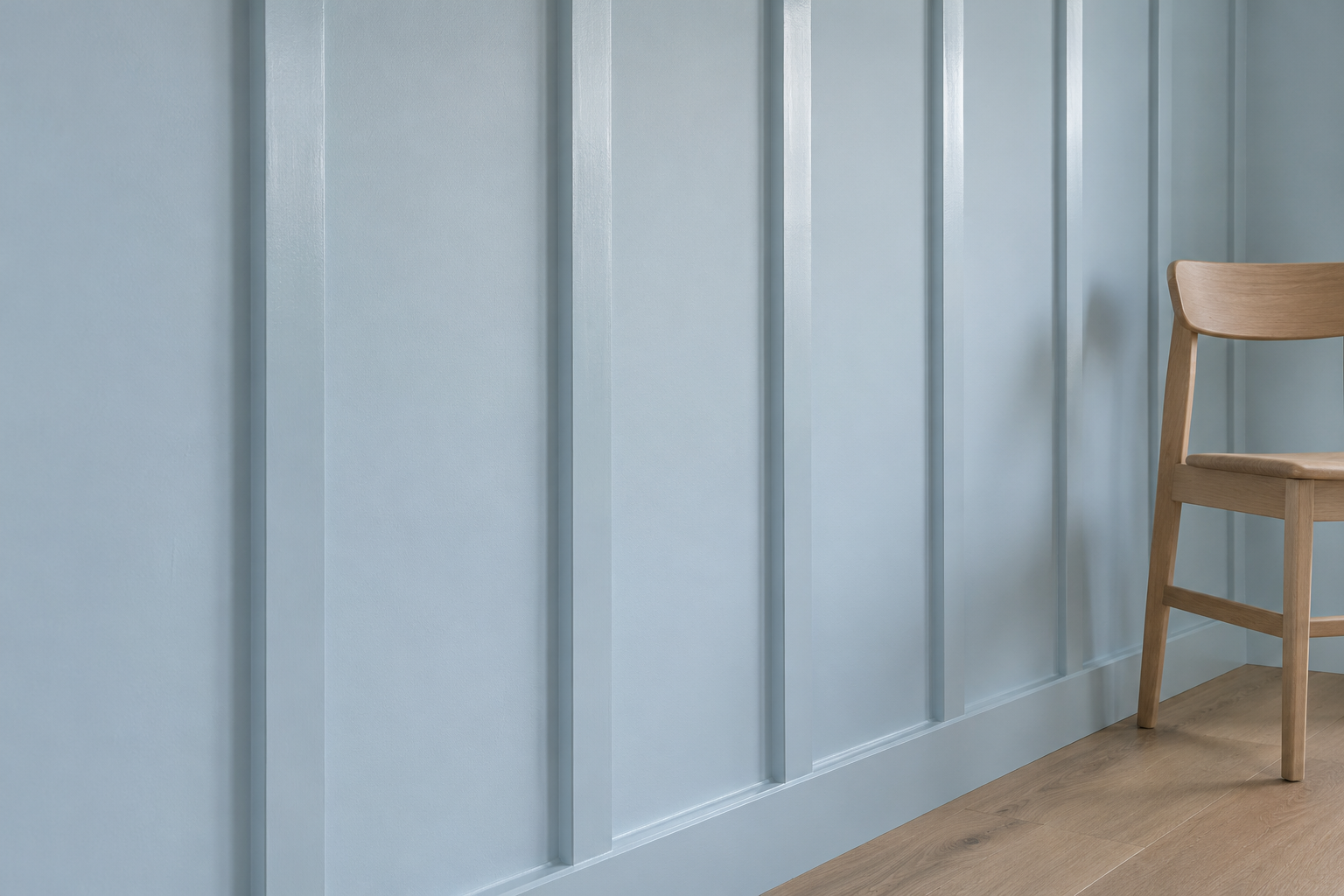
Paint the battens, the panels, and the walls one color and the pattern almost disappears, showing only where light catches an edge. In the morning or late afternoon, with sun from the side, every batten throws a line of shadow, and at midday the wall looks nearly flat. It is the quietest version, and the one that most rewards a room with a window to one side.
A slightly higher sheen on the battens than on the wall picks out their faces. It suits a room already painted in one color, where trim and walls are the same.
A Dark Panel Under a Pale Wall
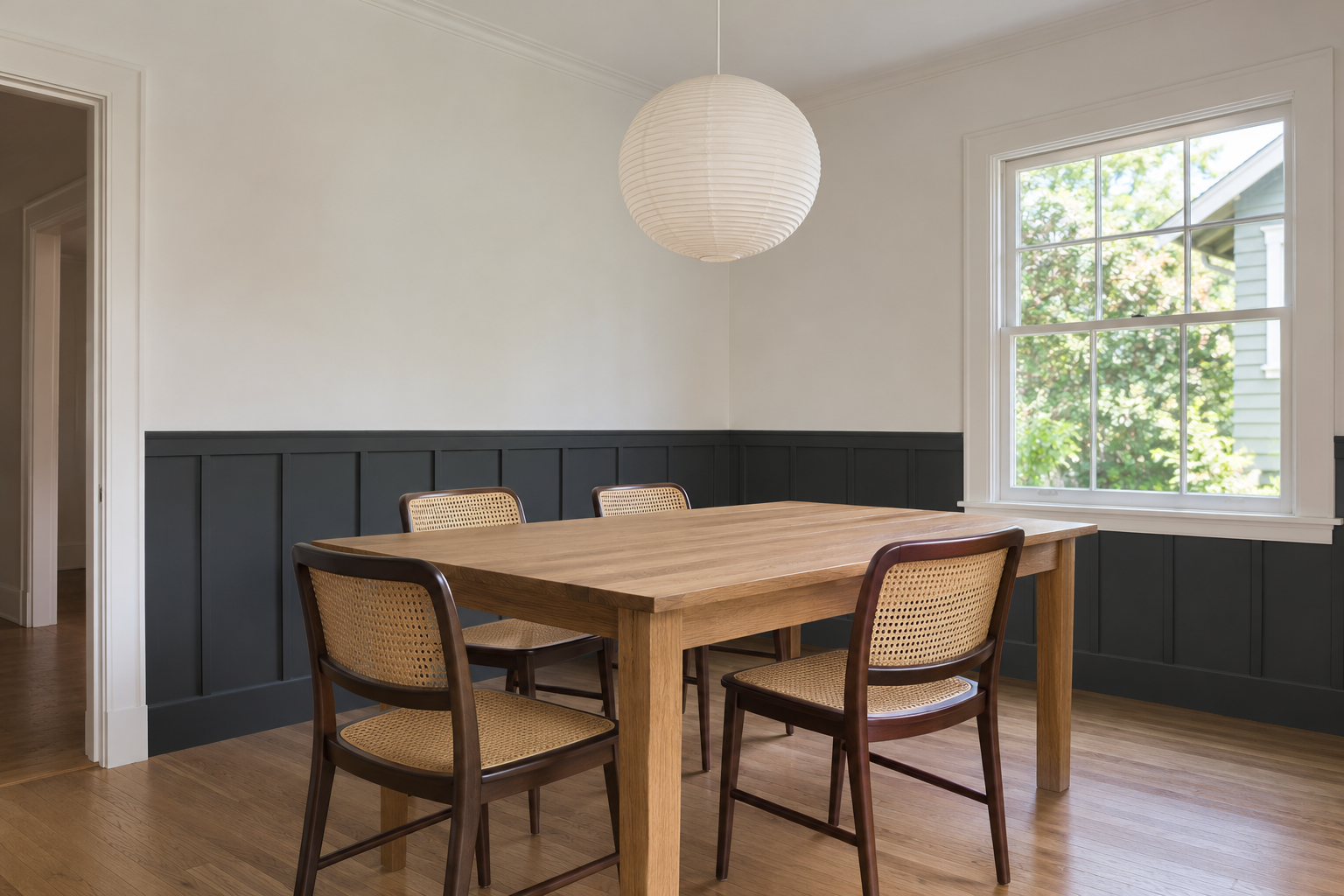
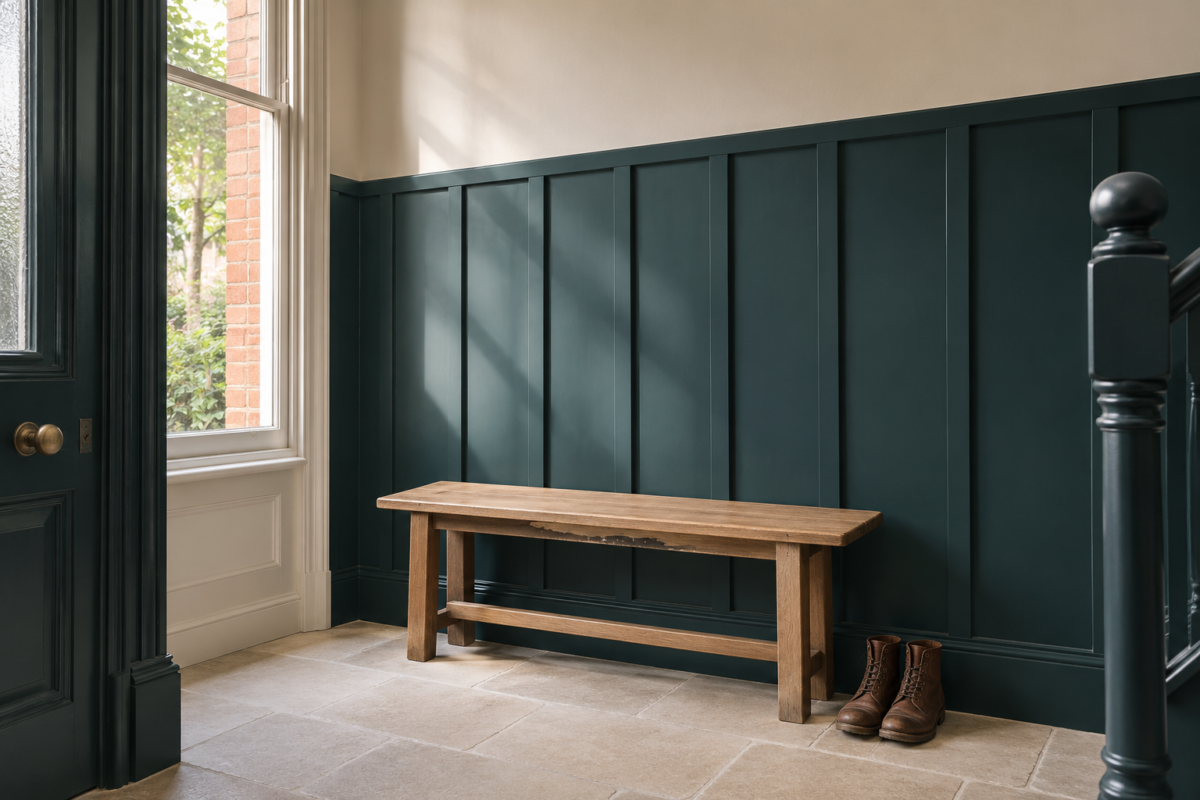
Charcoal paneling below a white wall puts the weight of the room near the floor, and the dining chairs and table read against it. The line of the cap runs all the way around the room, which ties together walls broken up by doors and windows.
Dark paint hides scuffs better than pale, though it shows dust on the cap, so it suits a dining room or a hall, where chairs and bags knock the lower wall. In a small room with little light, the same choice can make the floor area feel smaller, since the dark band draws the eye down.
A Grid of Squares
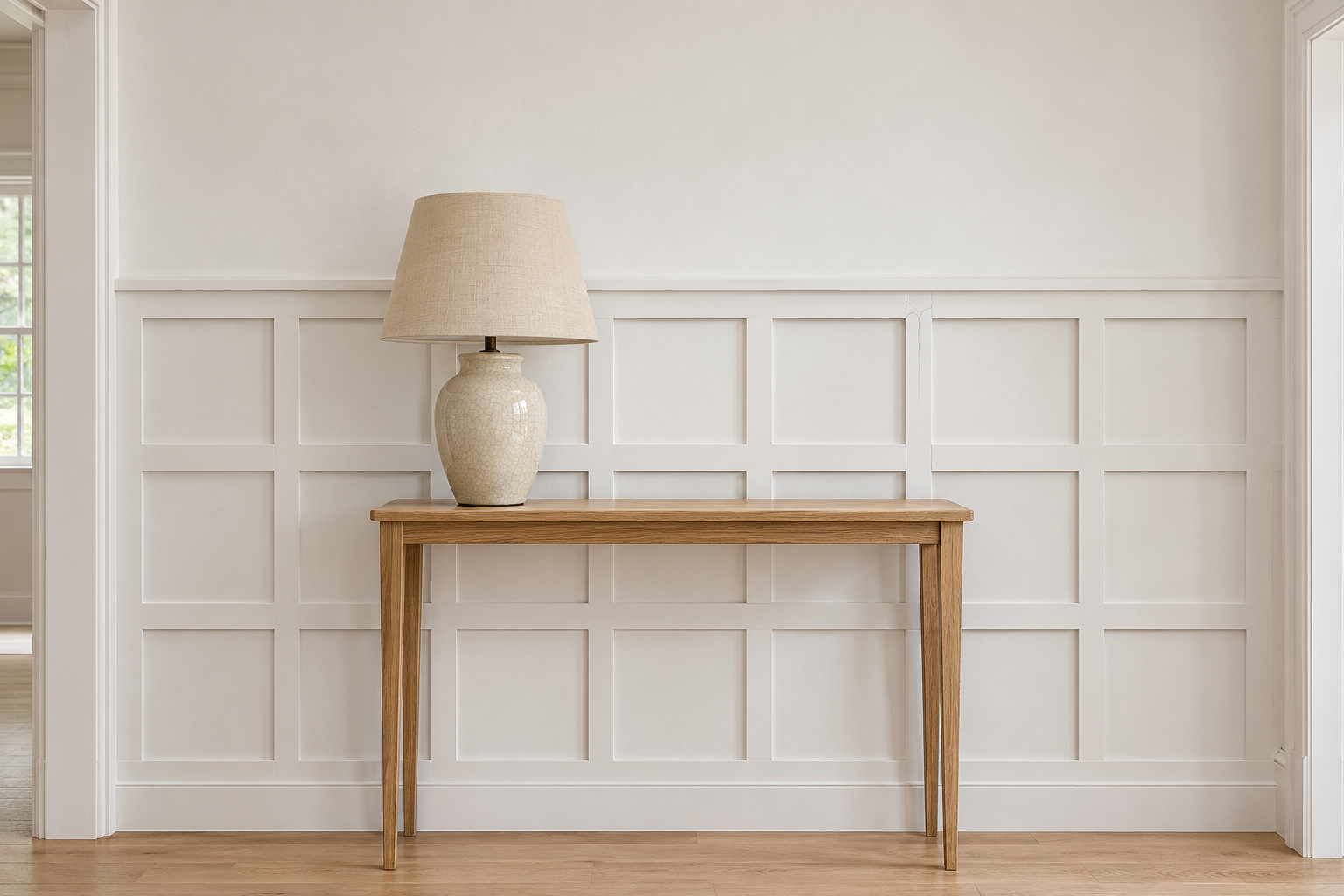
Horizontal battens added between the verticals turn the panels into squares. A grid looks more formal than vertical lines and closer to old raised paneling, and it suits a hall or a dining room more than a bedroom.
The squares decide how it looks. Work the spacing out from the height of the paneling first, then set the verticals to match, so each section is a true square, not a tall rectangle. Joints where battens meet tend to crack through the paint, so caulk each one before painting.
Slim Battens Set Close Together
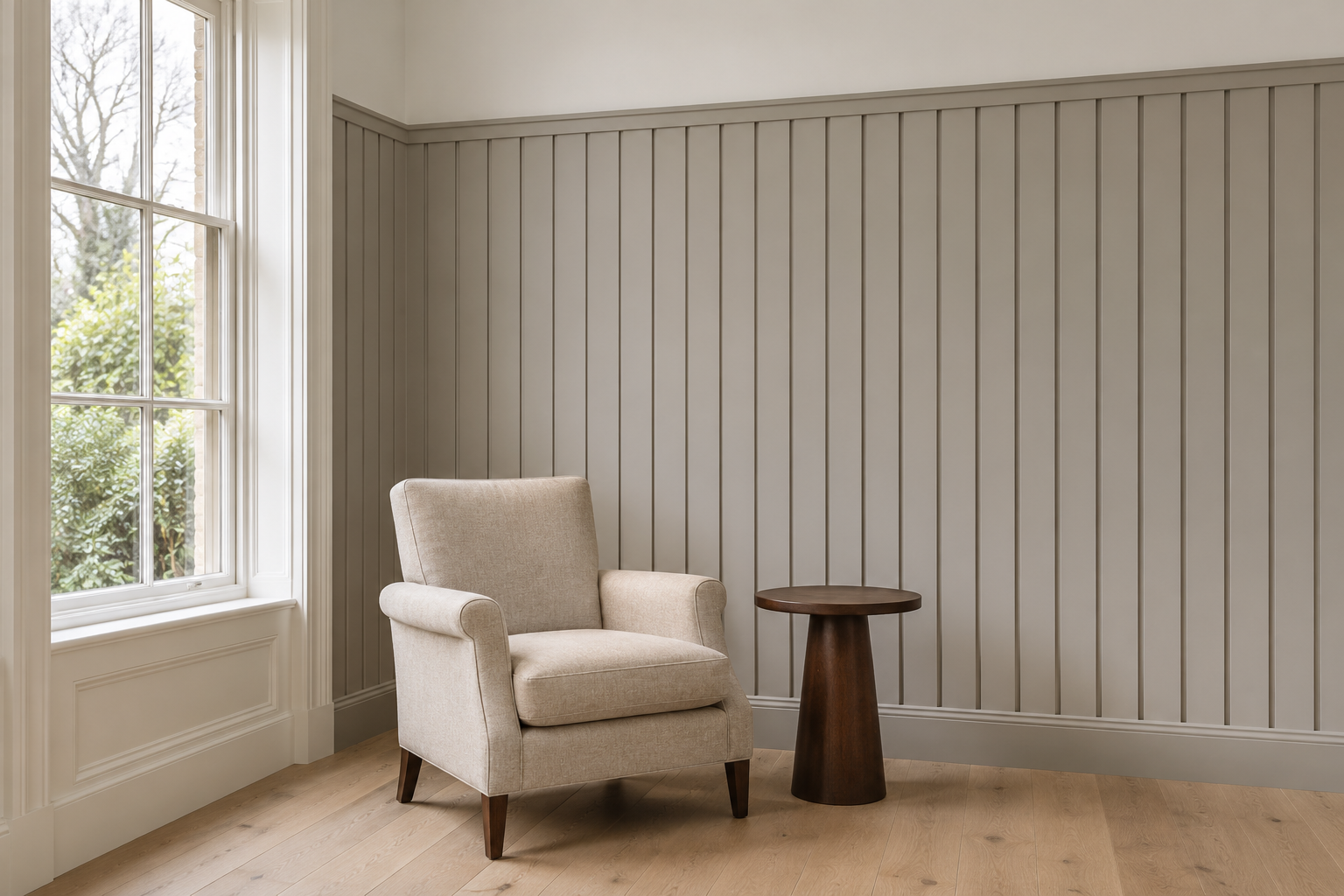
Narrow battens a few inches apart make a fine vertical rhythm, closer to a fluted surface than to classic paneling. In a room with a high ceiling, the close lines lead the eye up and make the wall look taller still.
Close spacing multiplies the battens, and with them the cutting, filling, and painting. On a long wall that is many more strips of wood than the classic spacing needs, so it suits a single wall more than a whole room.
Battens Run Sideways
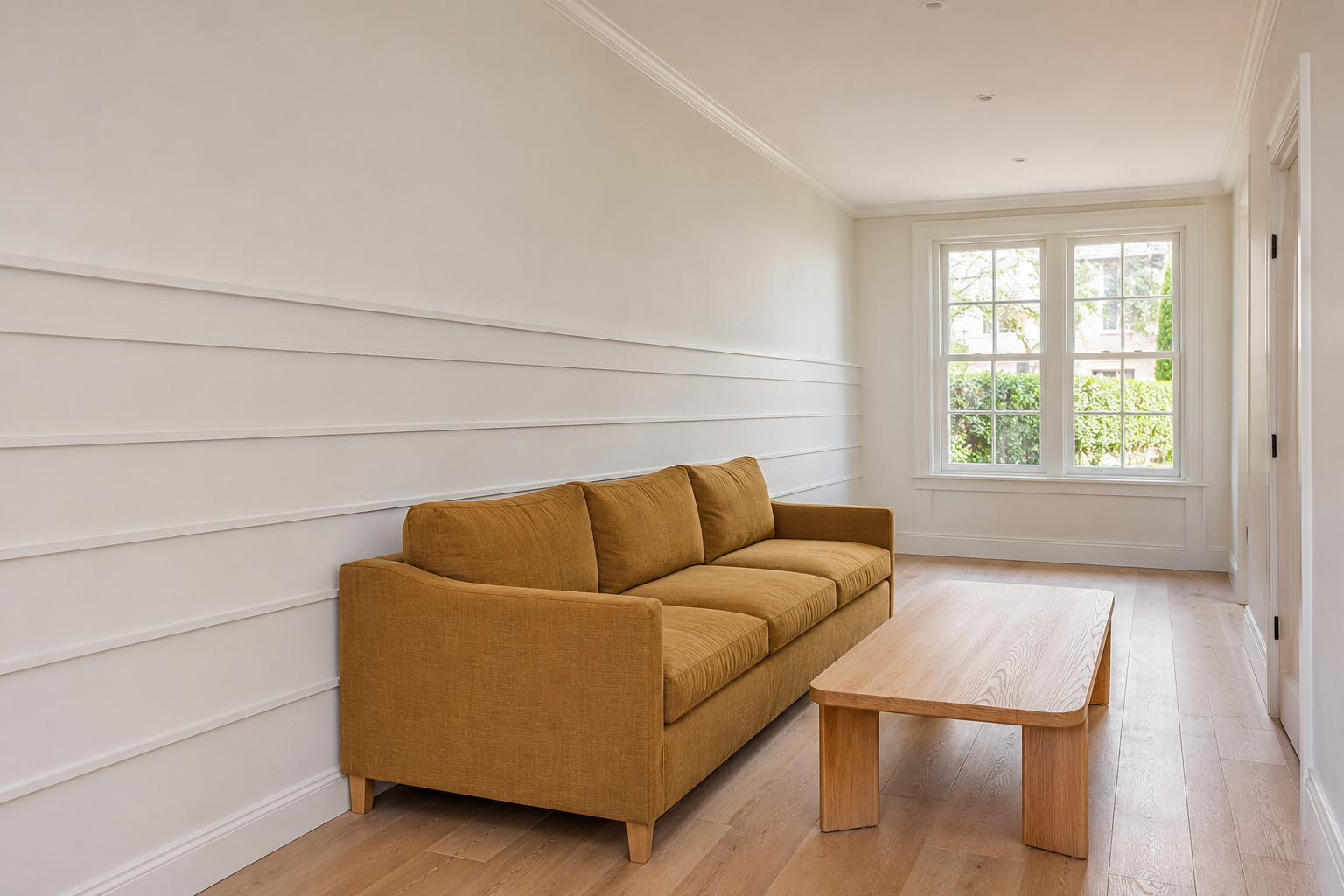
Horizontal battens draw the eye along a wall instead of up it, which widens a narrow room and lowers a tall one. Along the long wall of a narrow living room, they lead toward the window at the end and make the room feel less like a corridor.
Five or six lines are enough to set the direction. Horizontal battens catch more dust along their tops than vertical ones, so they suit a room that is dusted regularly more than a stair wall that rarely is.
Wallpaper Above the Panels
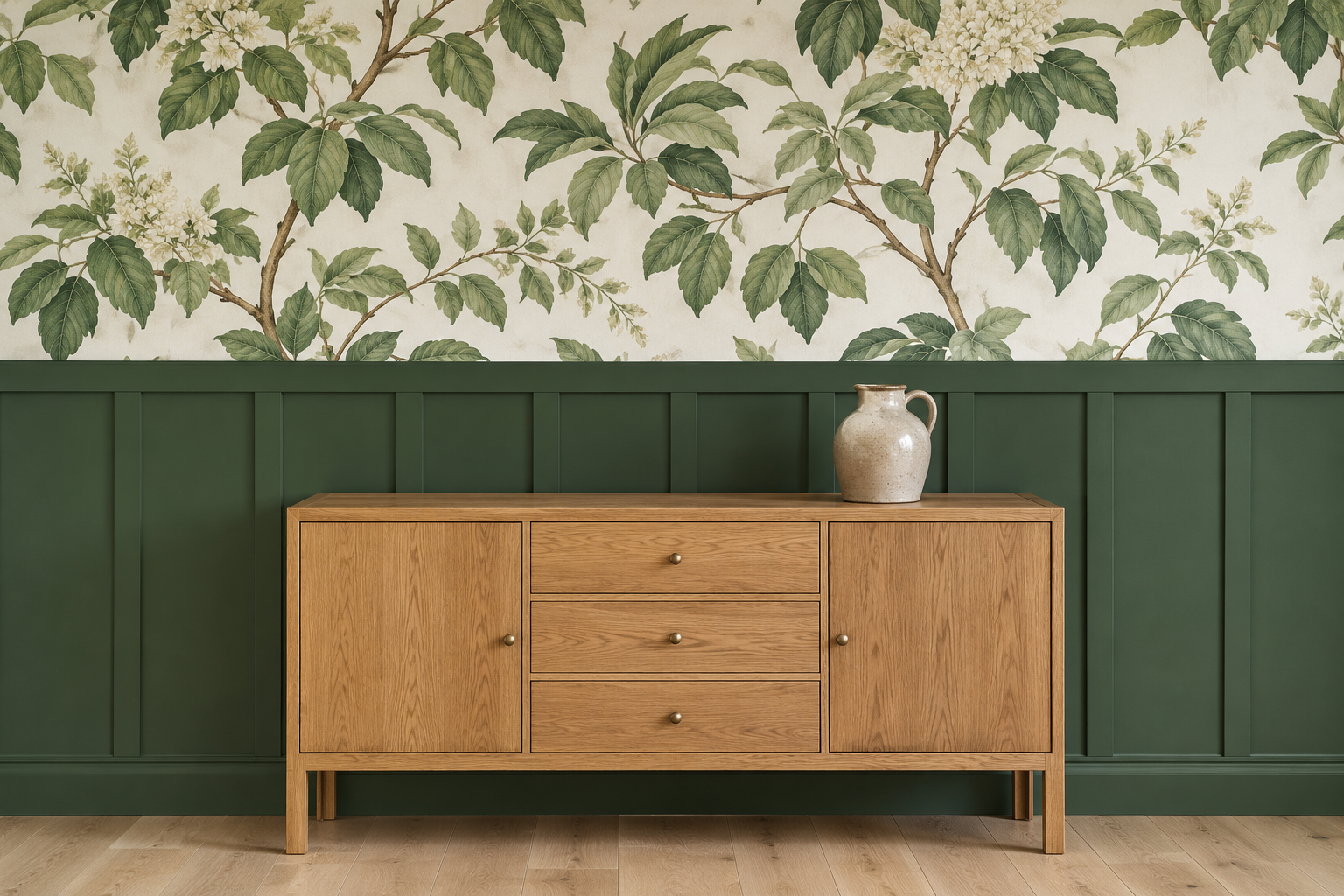
Board and batten below and wallpaper above split the wall into plain and patterned parts, and the cap is a clean edge for the paper to finish against. A large-scale pattern needs the height above a low panel to show a full repeat, so this works best with paneling at about a third of the wall.
Painting the panels in a color taken from the paper, deep green from the leaves here, joins the two halves. A plain-colored panel lets a busy paper be bold without filling the whole wall, and peel-and-stick paper makes the upper half easy to change later.
A Peg Rail Along the Top in a Bathroom
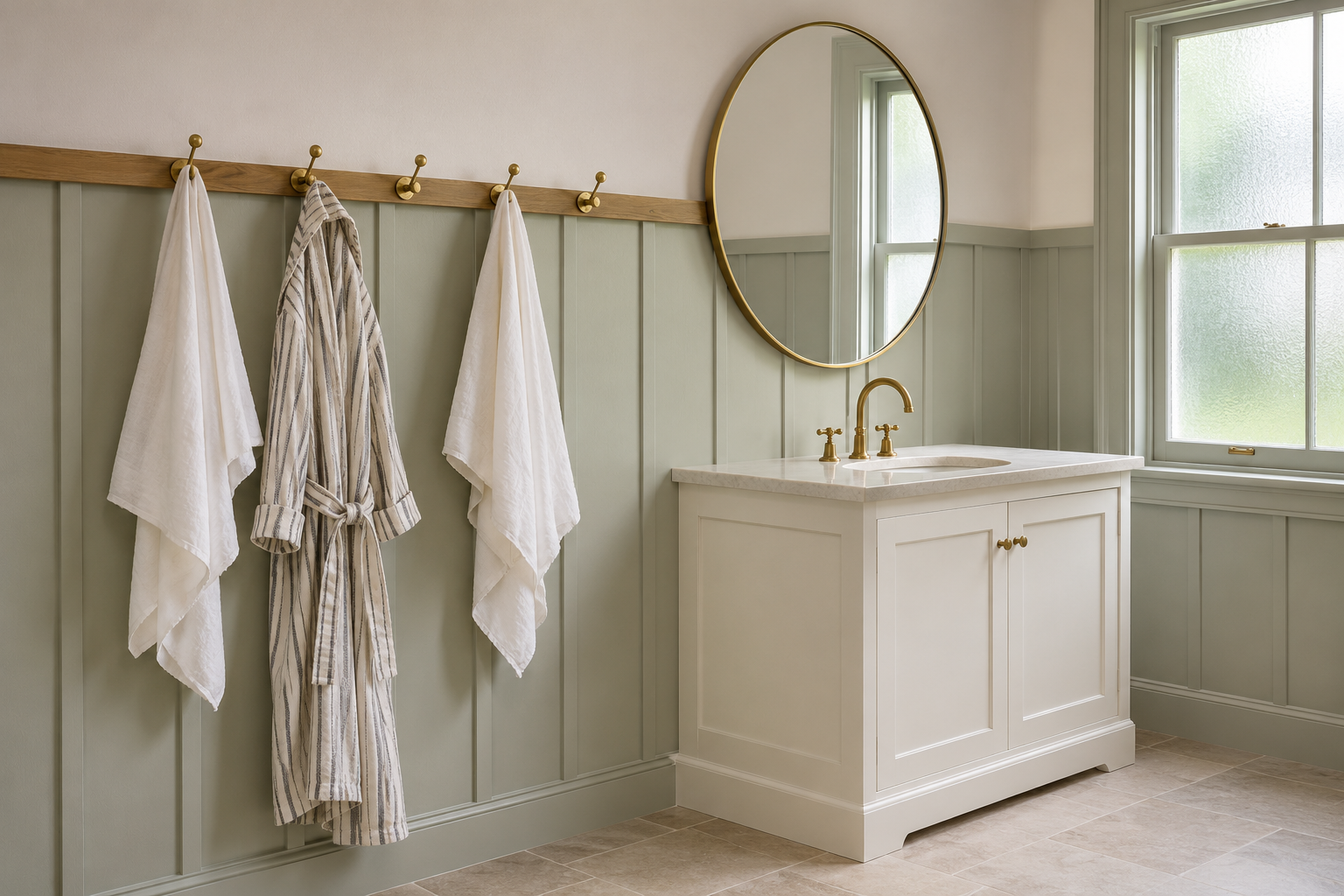
In a bathroom, the cap can be a peg rail, holding towels and a robe at a height where they dry in the air rather than folded on a bar. It also keeps hooks off the tiles and plaster.
Use a moisture-resistant board or primed solid wood for the panels and battens, and a paint made for bathrooms, which resists mildew and can be wiped. Seal the bottom edge where it meets the floor, since water from the bath or shower collects there.
Panels That Follow the Stairs
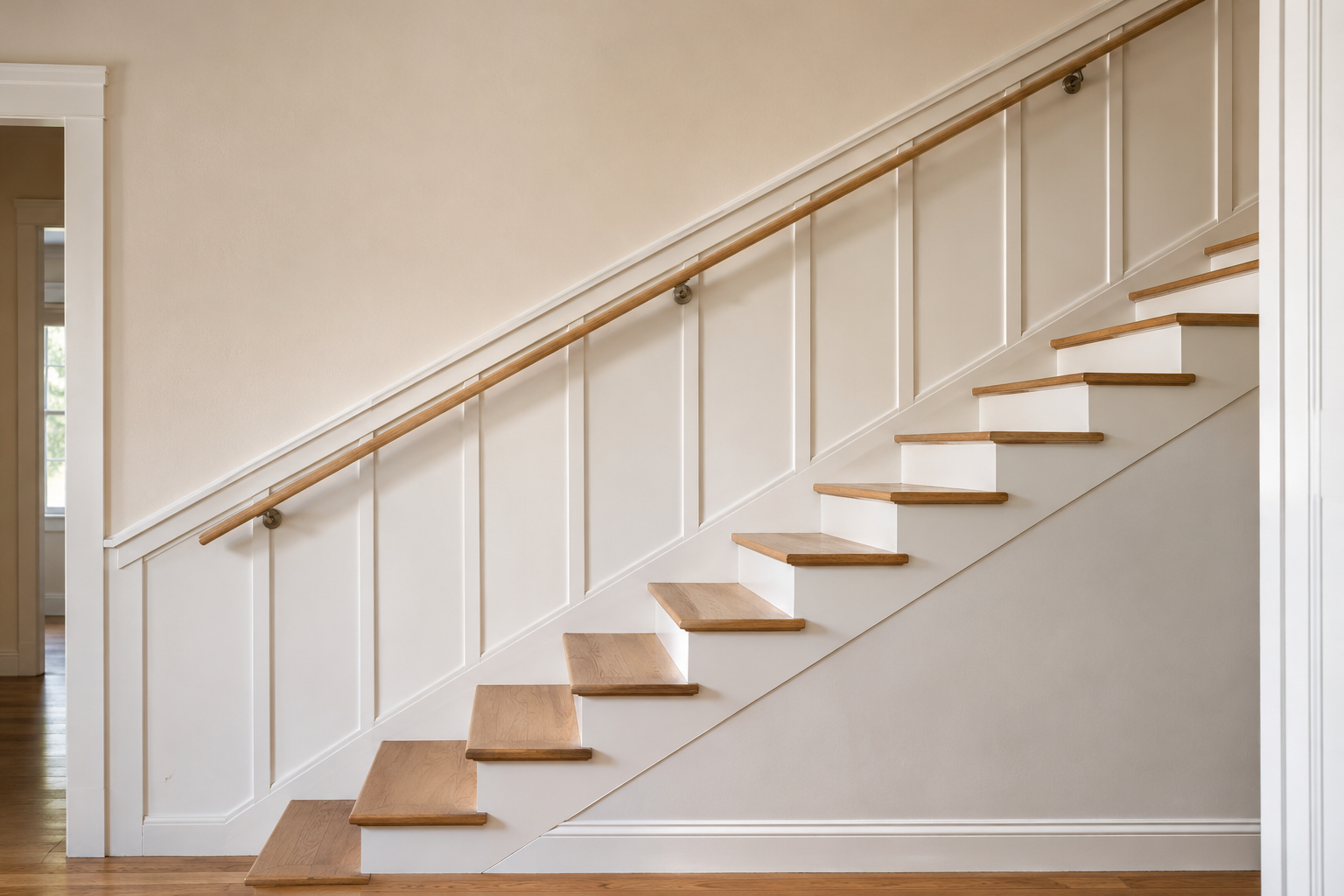
On a stair wall, the battens stay vertical and the cap and bottom rail follow the slope of the stairs. The paneling rises with the steps at a constant height above them, and the plumb battens keep the wall from looking like it leans.
A stair wall is knocked by shoulders and bags and scuffed by feet, so paneling here protects it as well as decorating it. The stair’s own handrail and finishes set the colors, and a handrail can be fixed on brackets straight through the paneling into the wall behind.
Oiled Oak Instead of Paint
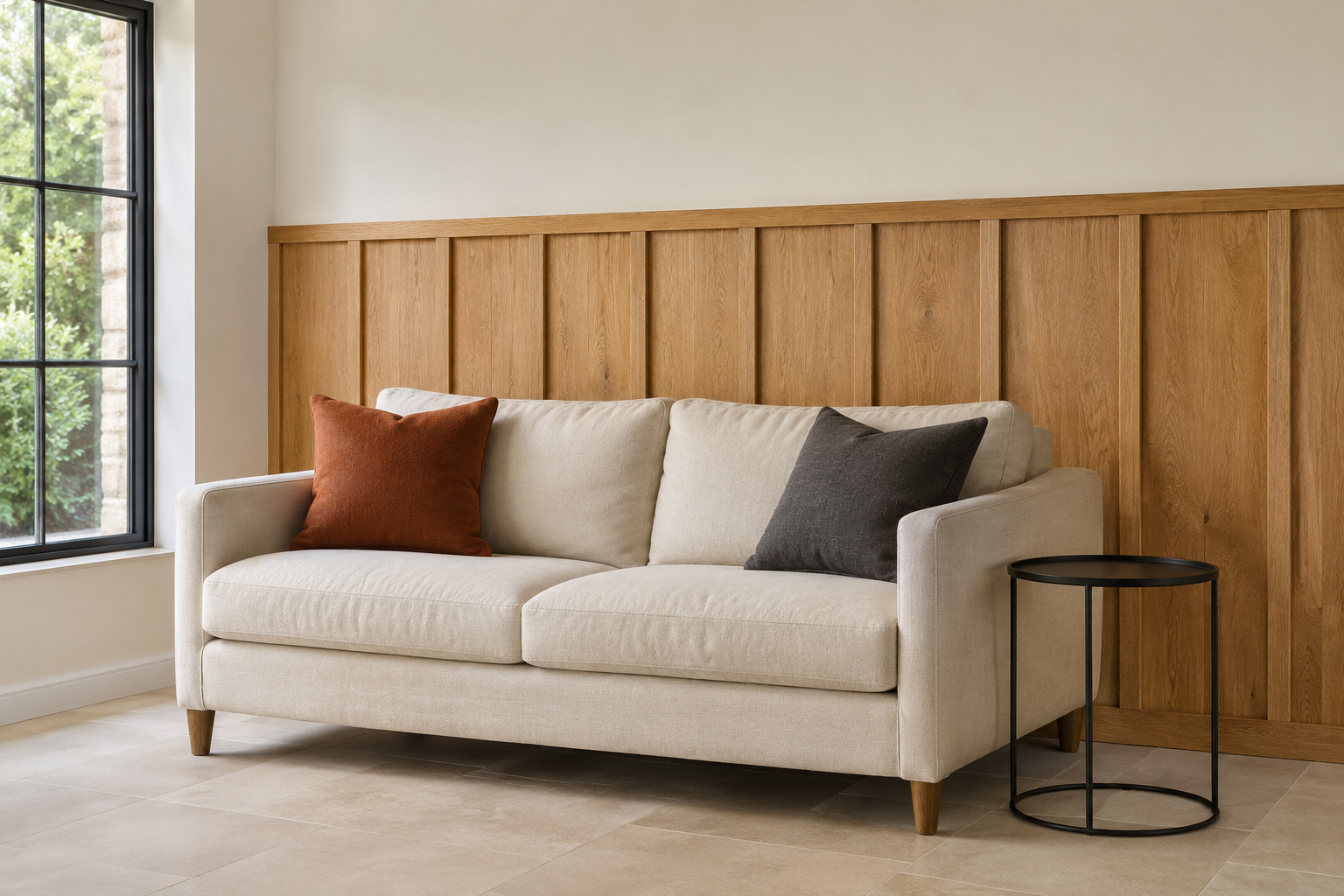
Oiled oak battens show their grain, and the wall turns warm in a way painted paneling doesn’t. Each batten is slightly different in color, which adds a variation that one paint color can’t.
Oak darkens and turns more golden over a few years, especially in sun. Oil can be refreshed in place without sanding, while a varnished or lacquered finish holds its first color longer but is harder to repair where it is scratched.