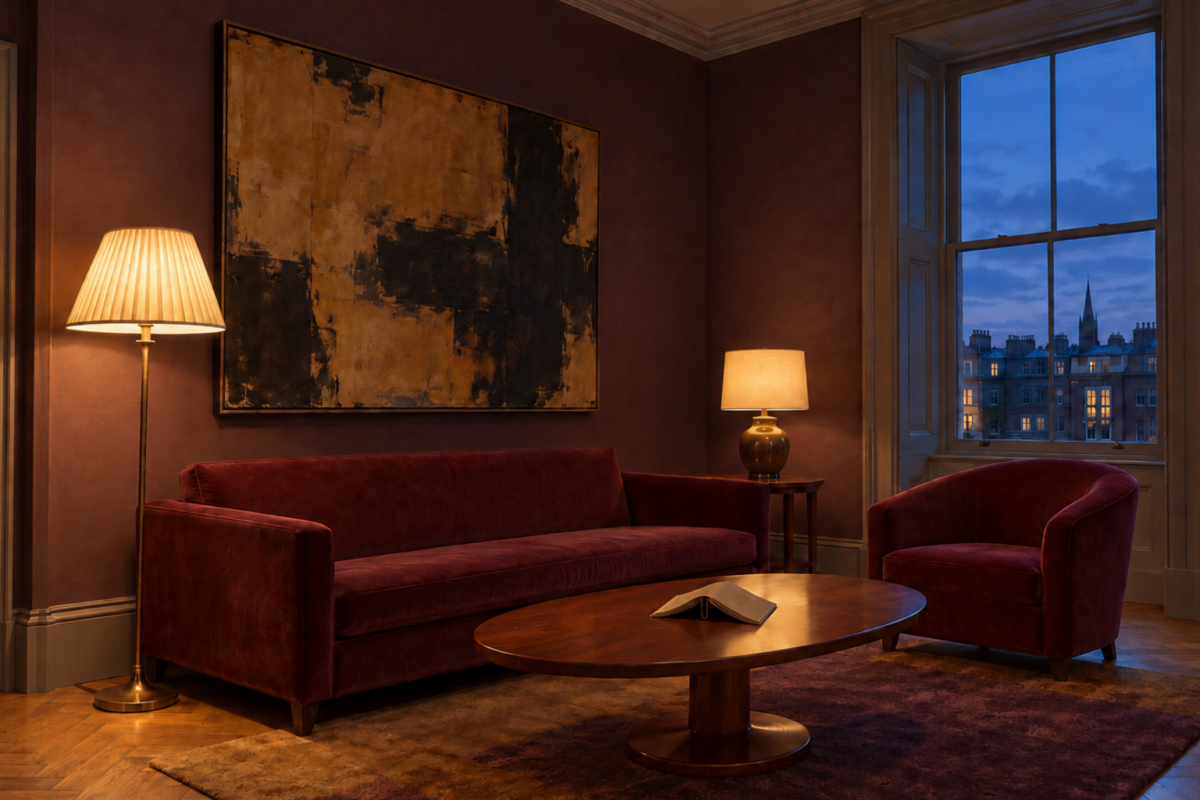
The first evening cold enough for socks shows what a living room was set up for. The overhead light goes on because the lamps are in the wrong places, the armchair is too far from the sofa to talk across, and there’s a stretch of cold floor between the rug and the seat. None of it mattered in summer, when the windows stayed open until late and nobody sat inside for long.
Most of what makes a room feel cozy is physical and easy to check: light that sits low and warm, a surface within reach of every seat, something soft underfoot, and a room quiet enough that voices don’t bounce. The ideas below start with light, move to seating and floors, and finish with curtains, sound, and the things on the shelves. Most are a rearrangement or a single purchase. A couple, like a deeper sofa, mean replacing something larger.
Turn Off the Overhead Light
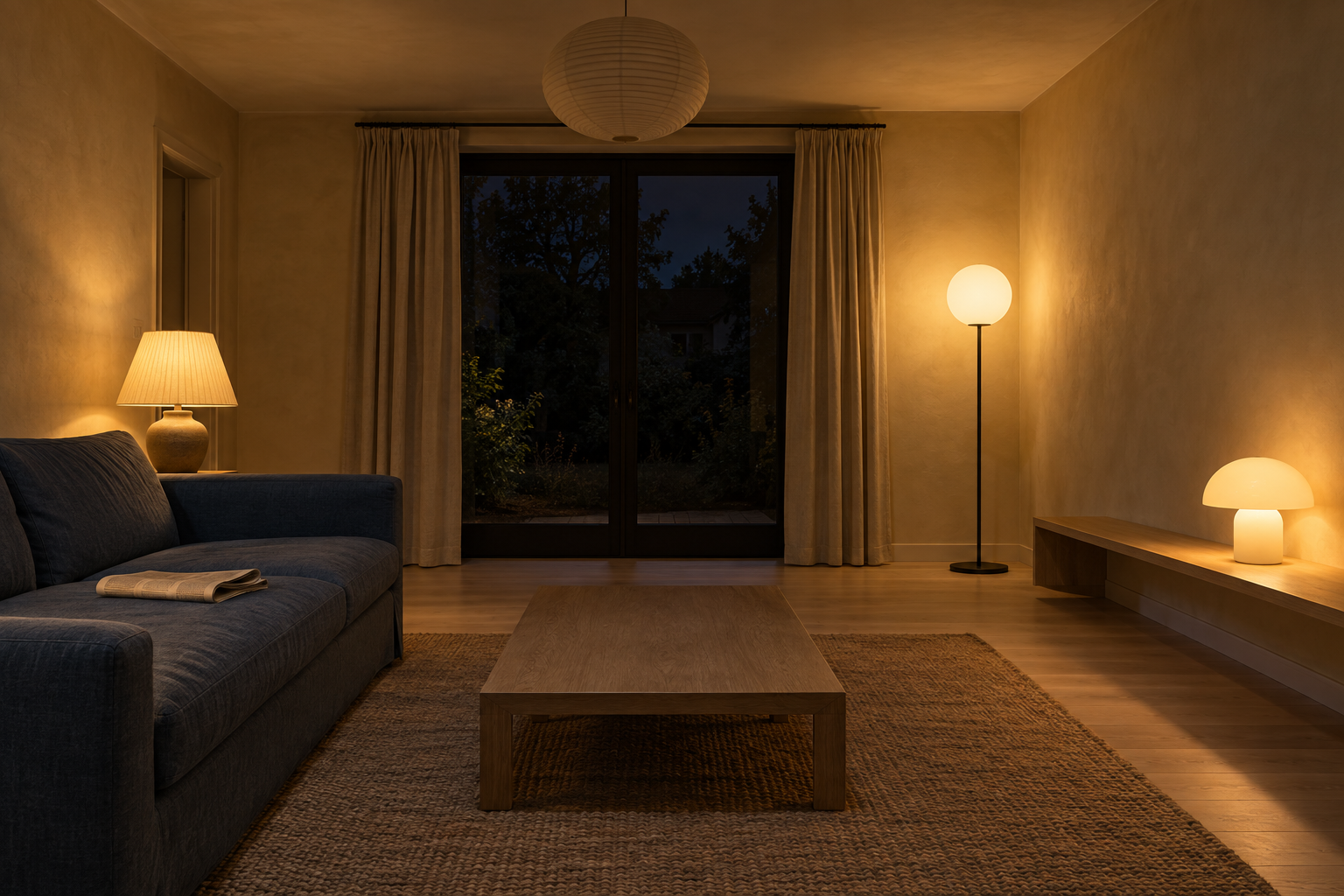
A ceiling fixture lights a room evenly from above. That’s useful for vacuuming and hunting for keys, and it flattens everything else, because every surface gets the same light and nothing falls into shadow. Put the light at the height of the people using the room instead: a table lamp beside the sofa, another by the chair, and a floor lamp or small lamp in the farthest corner, so the edges of the room glow while the middle stays softer.
Check each lamp from a seat. If you can see the bare bulb while sitting, the shade is too short or the lamp is too tall. For bulbs, warm white LEDs labeled around 2700K look closer to lamplight than anything at 3000K and above, and 2200K bulbs go warmer still for evenings. Keep one color temperature across the room so no single lamp looks blue beside the rest. A fuller plan for layering lamps with task and accent light covers what goes where.
Pull the Seats Closer Together
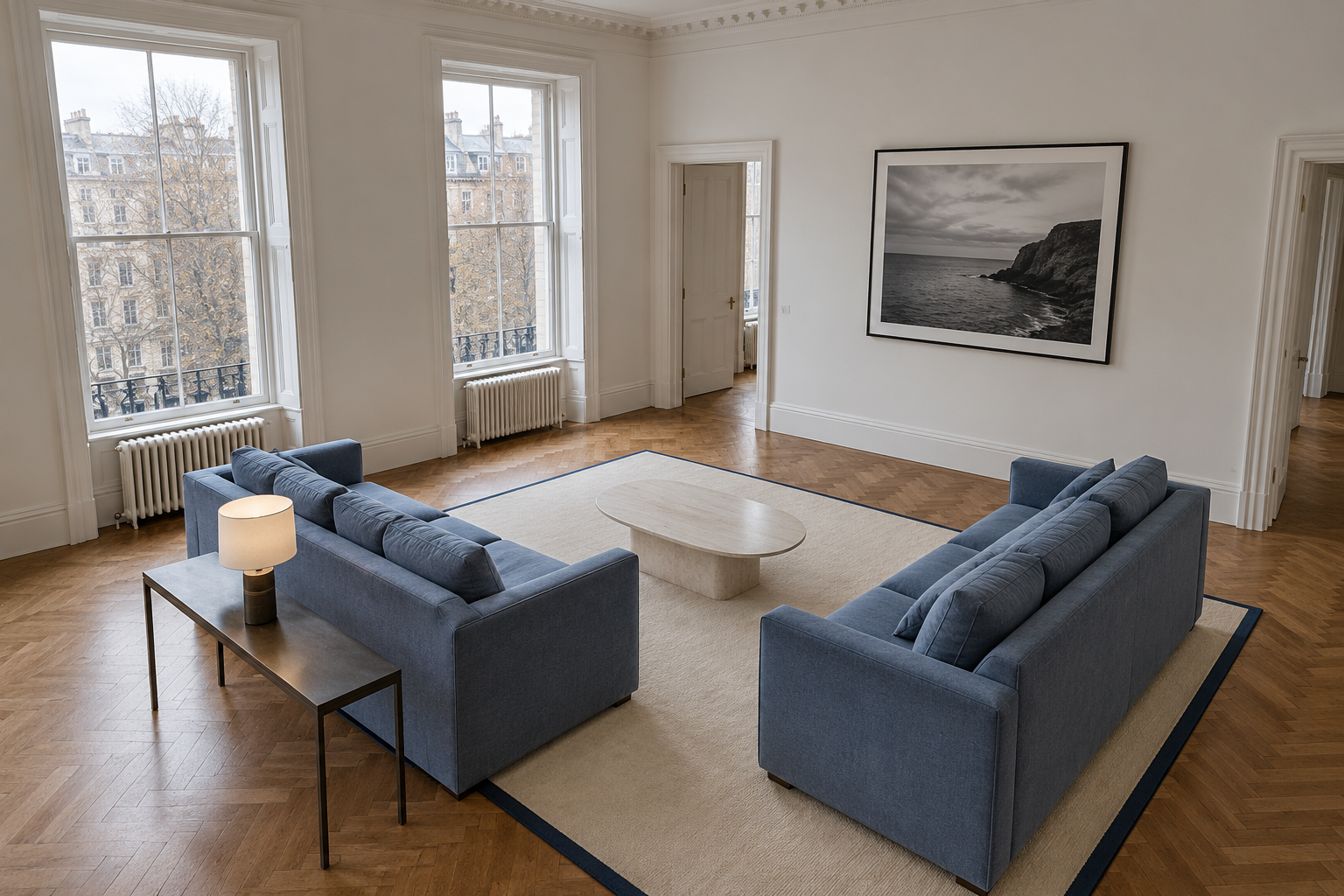
Seating pushed back against the walls of a large room leaves everyone talking across an empty middle. Bring the sofa and chairs in so they face each other around the coffee table, close enough to talk without raising your voice and to pass a mug across. About 8 feet or less between facing seats is a common starting point. In a big room that can mean floating the sofa off the wall with a console table behind it, and letting the space beyond the seating become the walkway.
A small room has the opposite problem. The seats are already close, so take out anything in the group that isn’t a seat or a surface, and the circle stops feeling crowded.
Choose a Sofa Deep Enough to Curl Up On
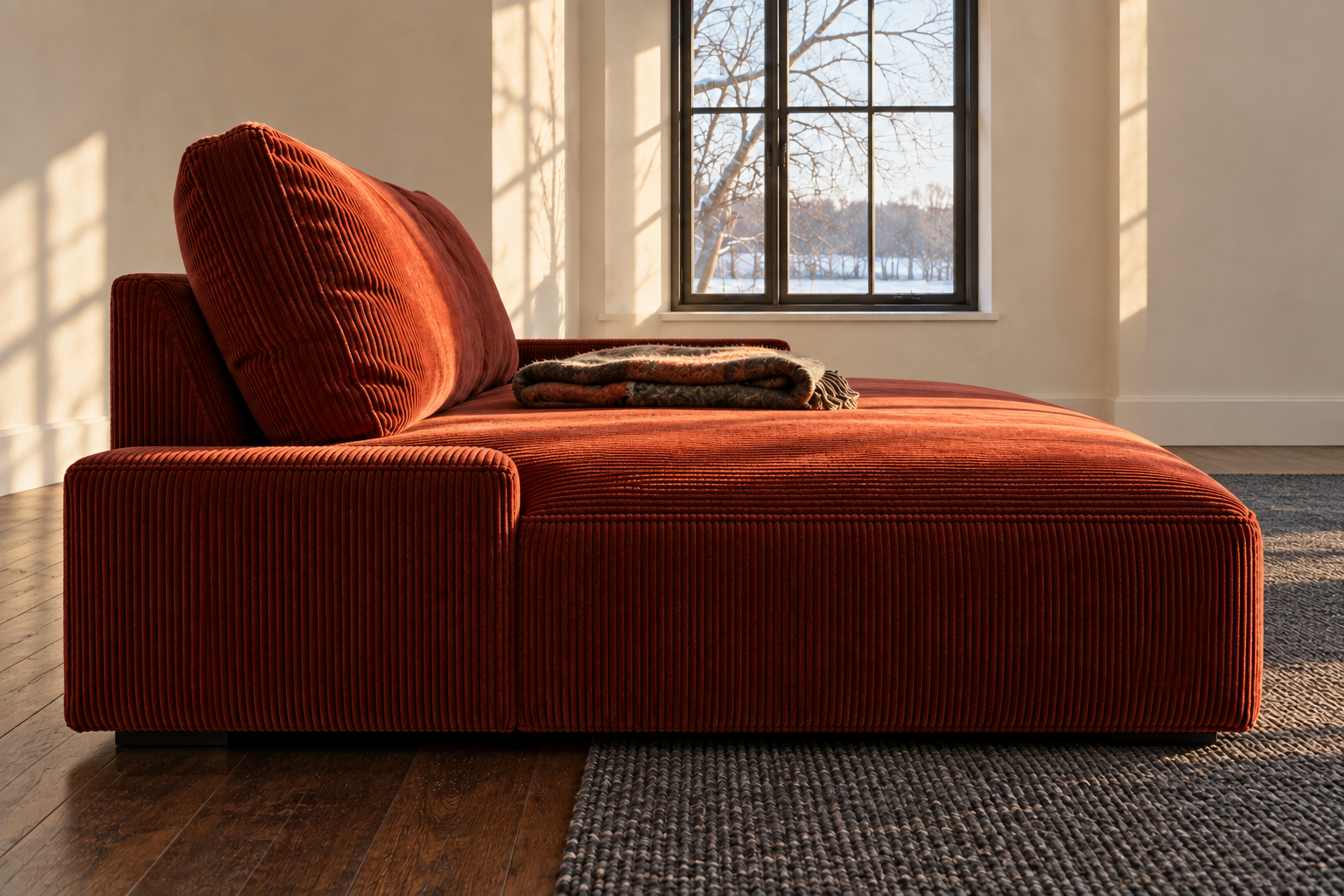
Most sofa seats measure somewhere around 20 to 24 inches from the front edge to the back cushion, and sofas sold as deep seat often run 25 inches or more. The difference shows the first time someone sits sideways with their feet up. On a shallow seat their knees hang over the edge. On a deep one an adult can tuck both legs in and lean on the arm.
Deep seats suit a family room where the sofa is for lying on. They’re less comfortable for shorter people who want their feet flat on the floor, and for upright conversation, where a standard depth with a firm back supports better. Loose back cushions help here, since an extra cushion can shorten a deep seat when needed. Fill matters too. Foam wrapped in feather gives a little and then supports, while all-feather cushions need plumping every day. A deeper sofa also takes more floor, so check it against the size of the room before buying.
Keep a Table Within Reach of Every Seat
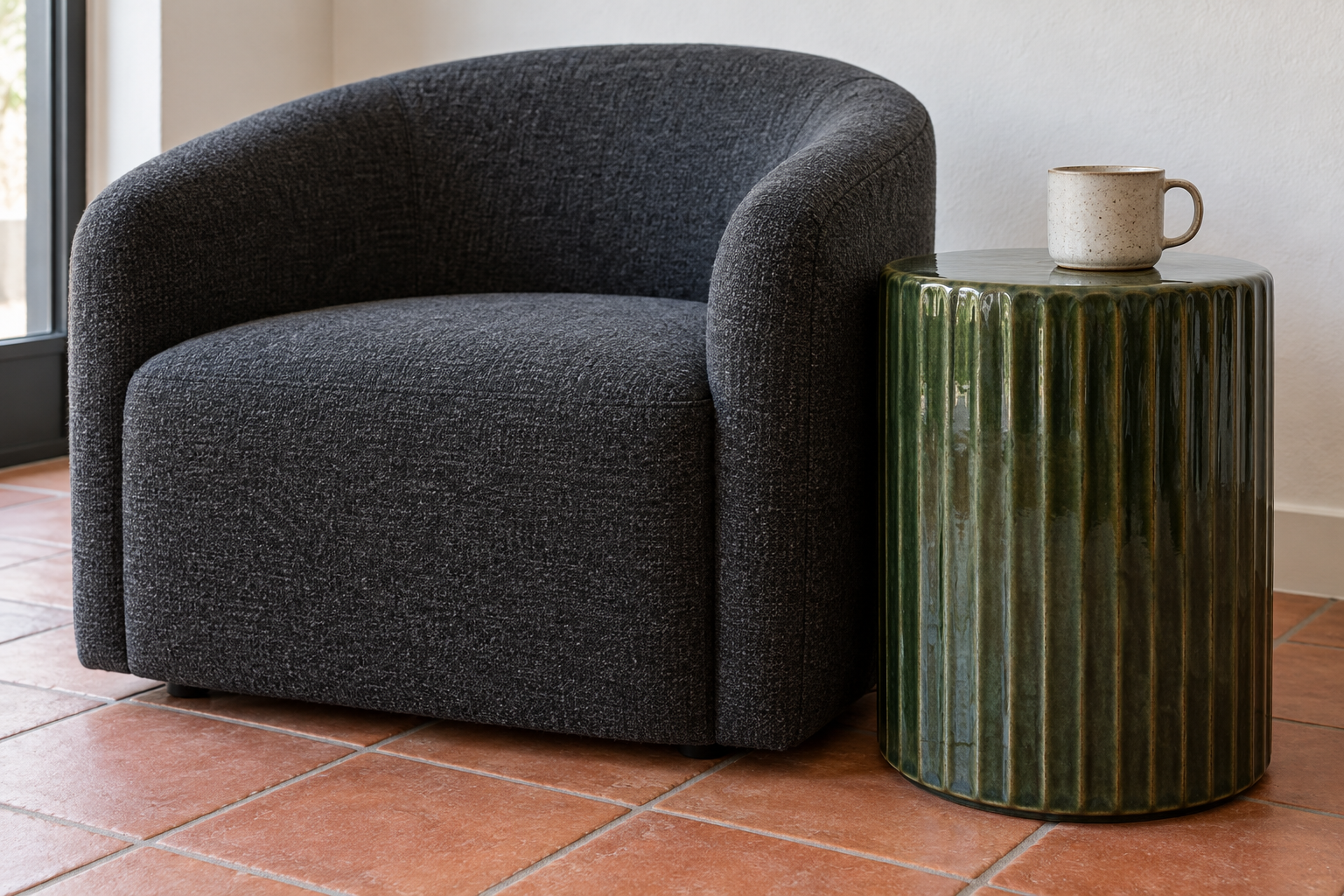
Every seat should have somewhere to put a cup down without anyone getting up. The coffee table serves the middle of the sofa, but the ends of a long sofa and every armchair need their own surface. A side table about level with the arm of the seat, give or take a couple of inches, can be reached without twisting. Where floor space is tight, a small drum table fits in a corner, and a C-shaped table slides under the seat itself.
Pick one heavy enough to stay where it’s put. A light table that tips when a knee catches it tends to get pushed back against the wall, out of reach, and then stops being used. Ceramic, stone, and solid wood drums stay put, and so does anything with a wide base.
Add Somewhere to Put Your Feet Up
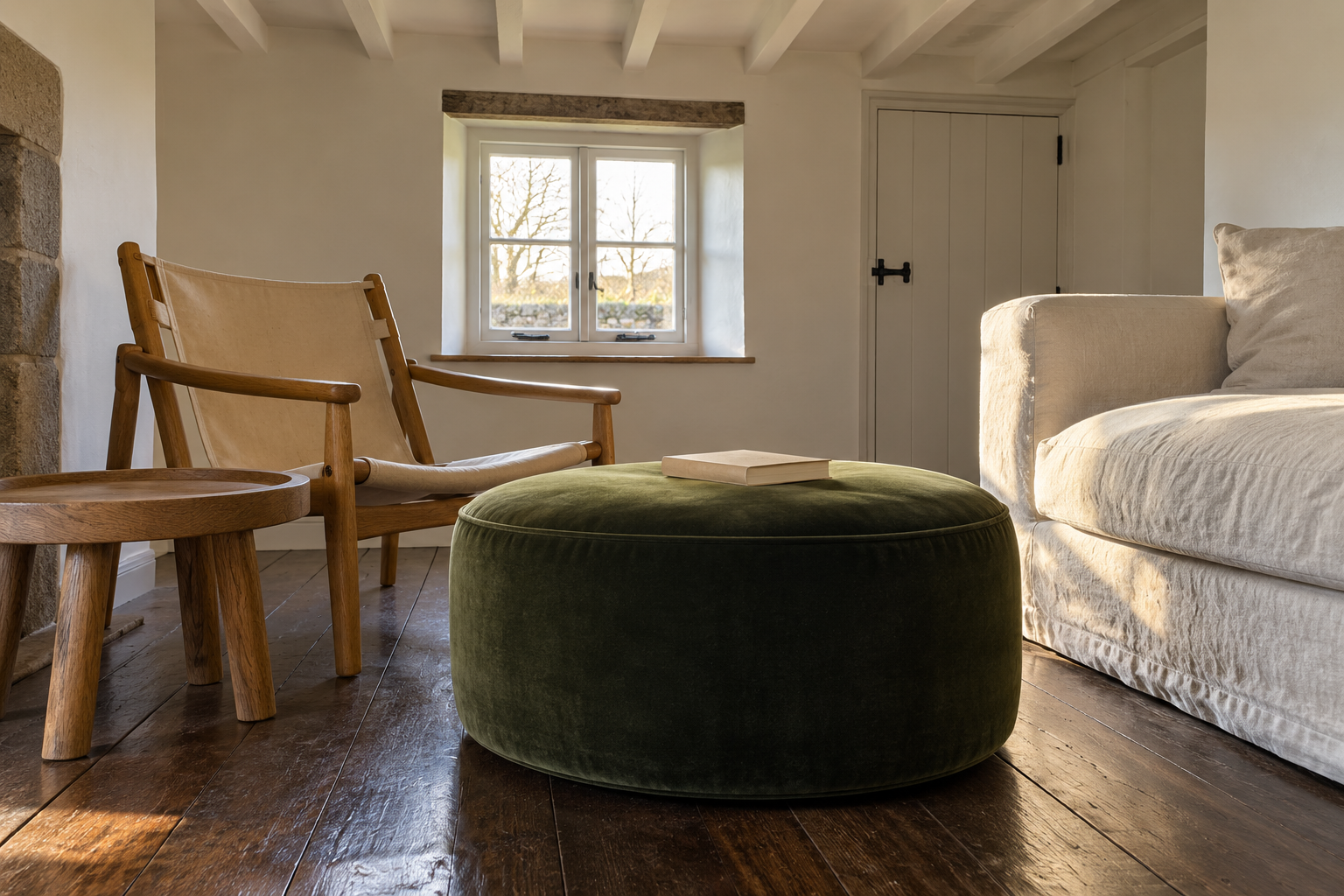
An upholstered ottoman or a low footstool turns an ordinary armchair into one you can spend an evening in. Set it where a chair and the end of the sofa can both reach it, or give the main reading chair its own. A top roughly level with the seat cushion, or a little below, keeps legs comfortable without lifting the knees too high.
An upholstered top is kinder to feet than wood. If the ottoman also has to hold drinks, keep a tray nearby to set on it, and lift the tray off when feet go up. A storage ottoman with a lid gives the room one more place for the things that otherwise pile up on the sofa.
Size the Rug for Bare Feet
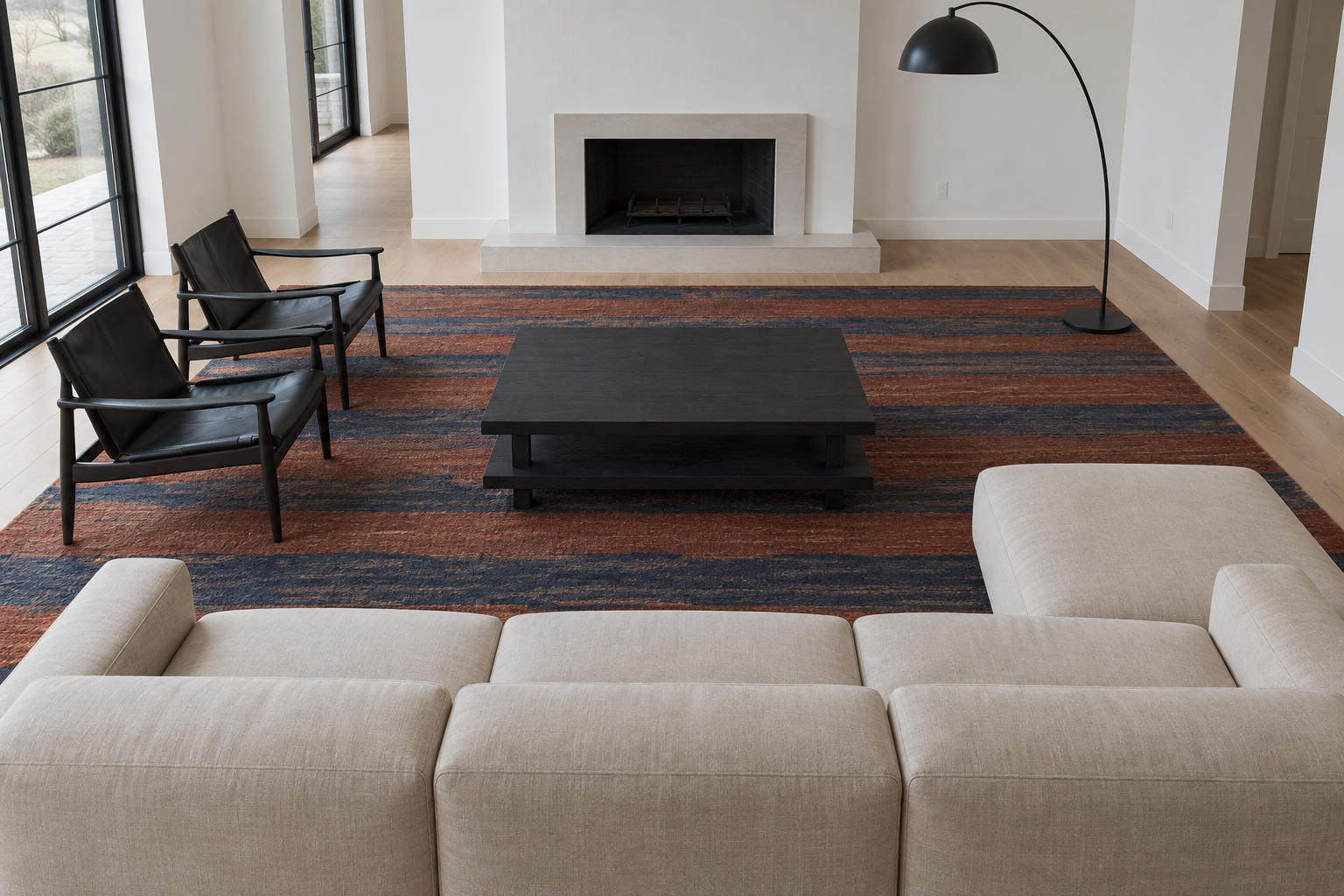
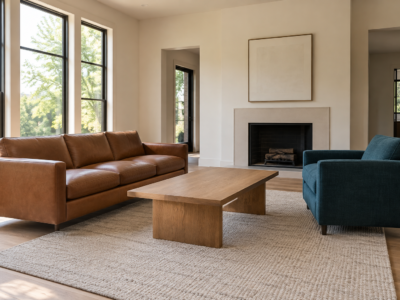
A small rug in front of the sofa leaves cold floor exactly where feet land when someone stands up. Size the rug so the front legs of the sofa and every chair sit on it. Then feet land on the rug from any seat. In most living rooms that means 8 by 10 feet or larger, and placing a rug in a living room covers the layouts in detail.
Wool pile is softer and warmer underfoot than jute or a flat cotton weave, which matters more in winter than it does in June. A thick felt or rubber pad under the rug adds cushioning, keeps the rug from creeping across a smooth floor, and puts another layer between feet and the boards.
Close Lined Curtains at Dusk
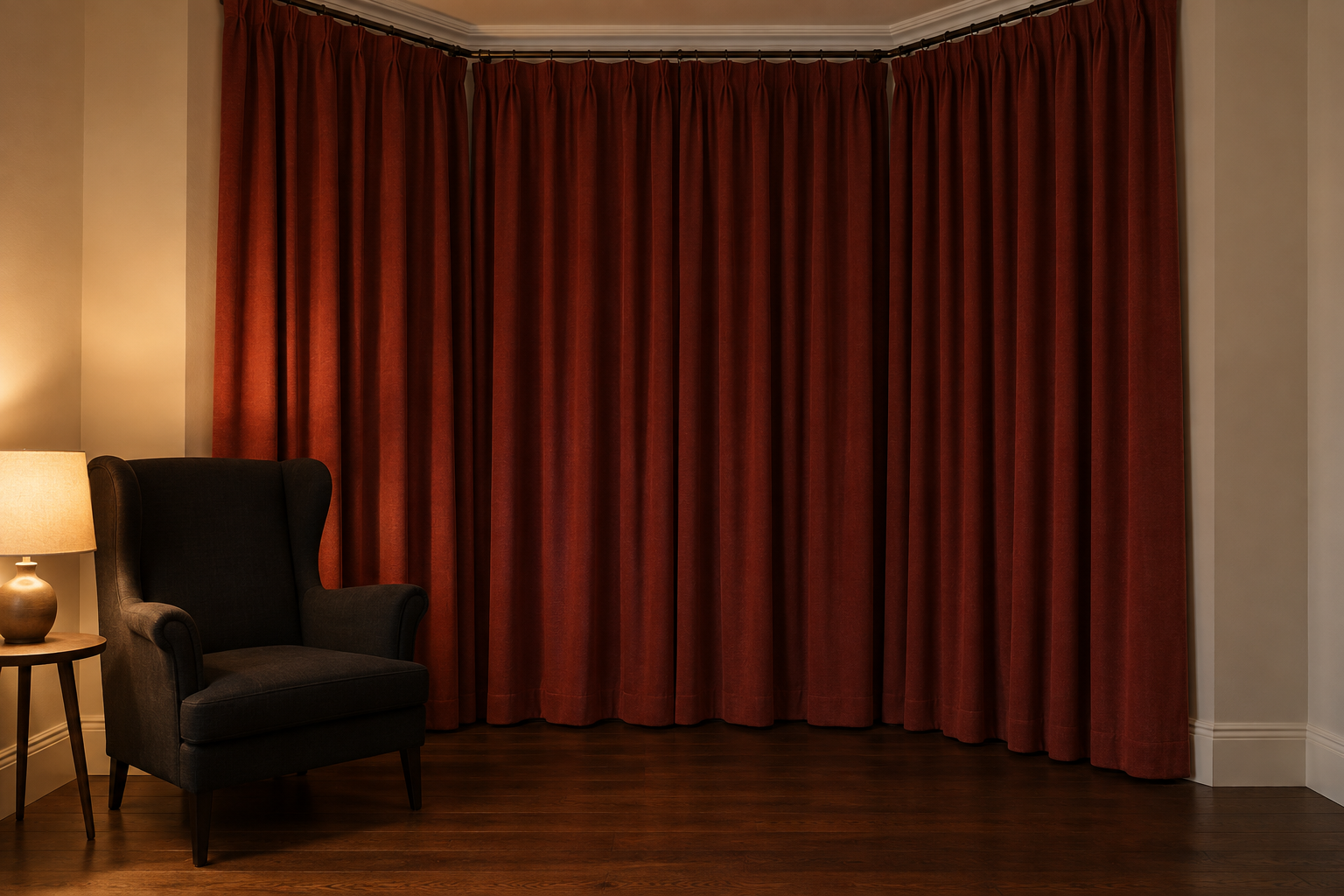
After dark, an uncovered window becomes a black mirror, and the glass cools the air beside it, which the person in the nearest seat feels as a draft. Lined curtains drawn at dusk deal with both. A lining, or an interlining sewn between the face fabric and the lining, gives the curtain body and reduces the chill that comes off the glass.
Hang them wide enough to clear the window frame on both sides and long enough to reach the floor, so no strip of glass shows at the edges when they’re closed. Curtain length is its own decision. Wool, heavy linen, and velvet hang in deep, even folds and look as good closed as open. Sheers do little after dark. If you like them for daytime, hang a lined pair on a double rod beside them.
Soften the Way the Room Sounds
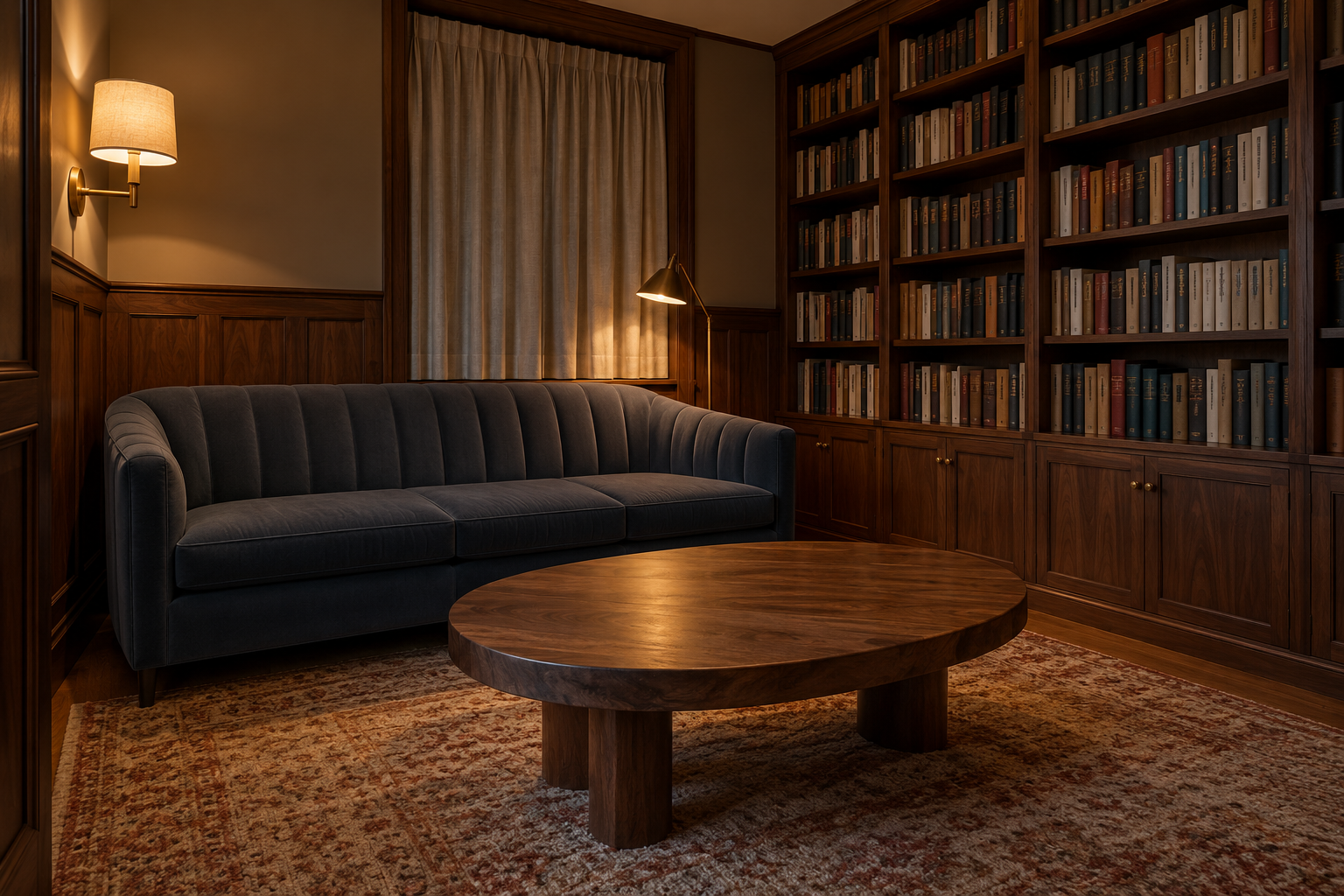
A room with a bare wood floor, empty walls, and leather furniture echoes. Voices bounce, the TV sounds harsh, and footsteps carry into the next room. Soft, porous materials absorb sound where hard ones reflect it, so a large wool rug, upholstered seating, lined curtains, and a wall of books each take some of the echo out. Rooms that feel calm usually have several of these, though few people would name them as the reason.
Test your own room by clapping once in the middle of it. If the sound rings, add one large soft surface at a time and clap again. Start with the floor, since it’s usually the largest hard surface in the room.
Vary the Texture of the Big Pieces
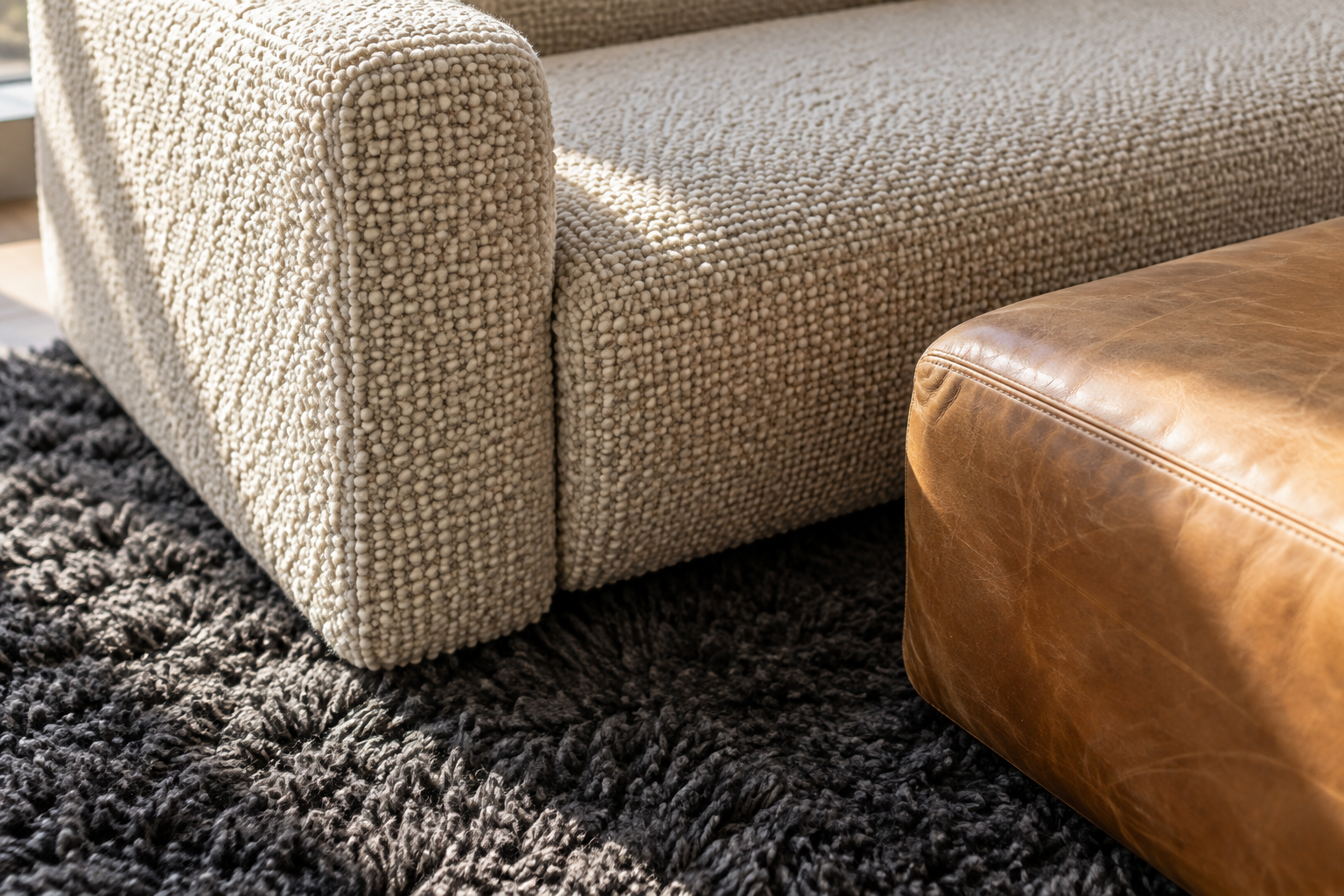
When the sofa, rug, and curtains are all smooth and the same weight, lamplight slides over them evenly and the room looks flat, whatever its color. Texture catches low light and throws small shadows, which is a large part of why a textured room looks warm at night. Put it on the big surfaces first: a looped wool or corduroy sofa, a high-pile or hand-knotted rug, linen or wool curtains, a leather chair that softens with use.
One textured sofa does more than several textured cushions on a smooth one, and it doesn’t get rearranged or end up on the floor. Once the large pieces are set, add cushions, varying their size and texture as well as their color.
Store Throws Within Arm’s Reach
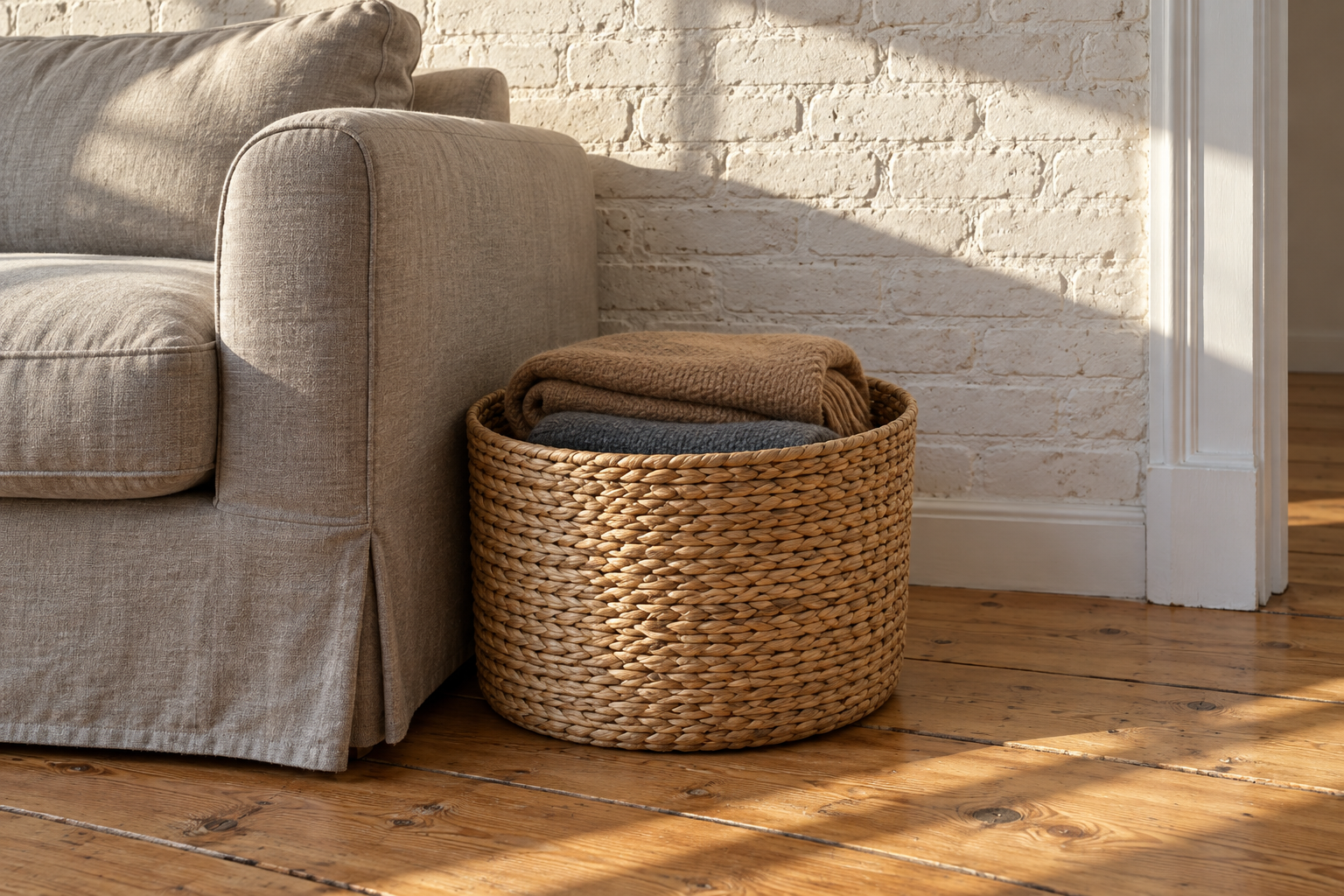
Throws get used when someone on the sofa can reach one without getting up. Keep two or three folded in a lidless basket on the floor at the end of the sofa, or in a drawer of the coffee table. Draped over every arm and back, they slide off, bunch behind cushions, and end up on the floor.
Keep a mix of weights. A light cotton or linen throw suits an early autumn evening, and a heavy wool one belongs to midwinter, when a throw with real weight earns its place on the sofa.
Fill the Shelves With Books You’ve Read
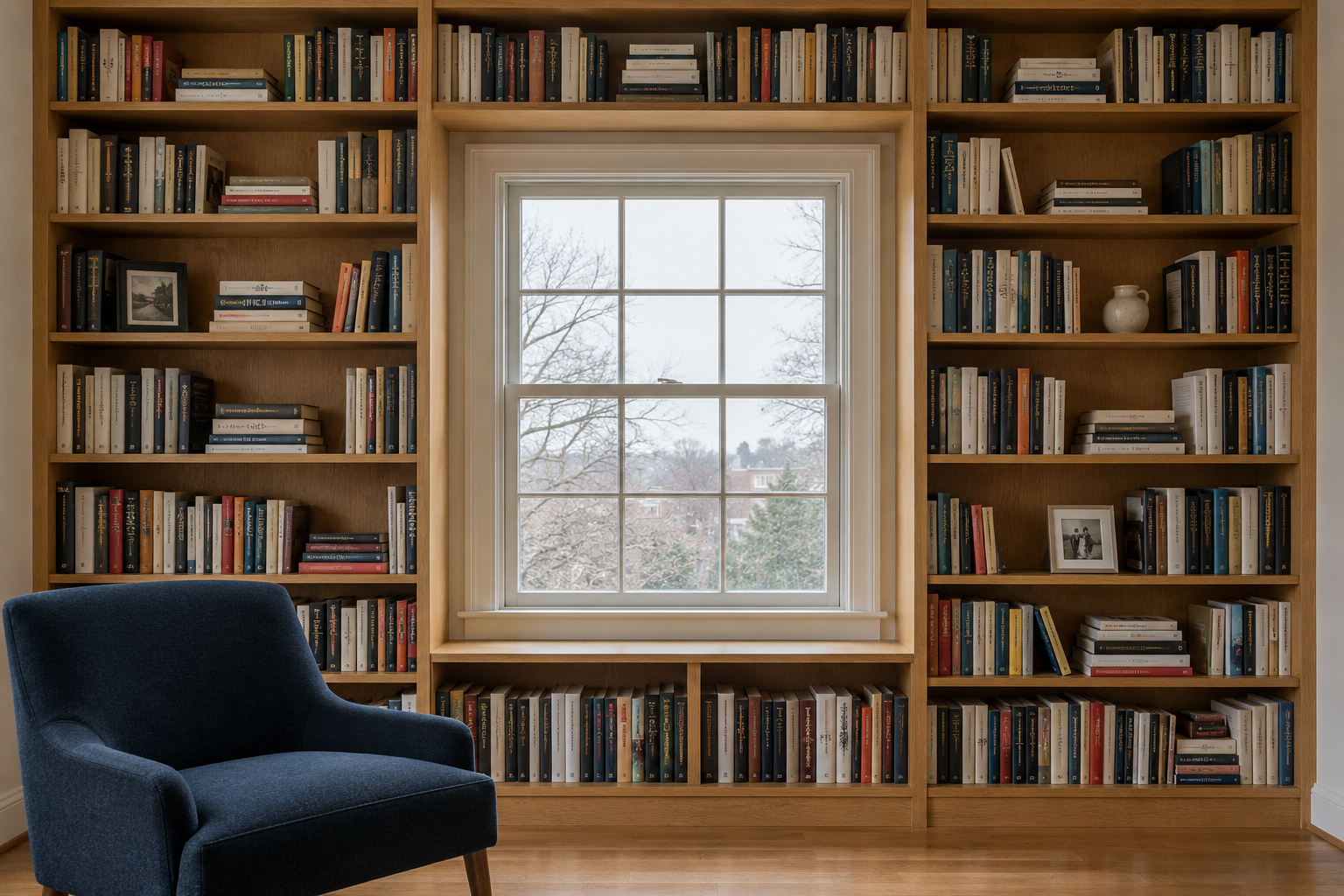
Shelves full of books, photographs, and things collected over years make a room look lived in, which is much of what people mean by cozy. Shelves styled like a showroom, with a few objects spaced evenly on otherwise bare boards, look tidy and a little empty, as if nobody reads there.
Books also do physical work in a room. A full shelf absorbs sound, and a wall of mixed spines adds color and pattern without any paint. Keep most books upright in rows, lay a few in short stacks, and set objects among the books instead of in place of them. Bookshelf styling that starts with the books goes through it shelf by shelf.
Hide the TV When It’s Off
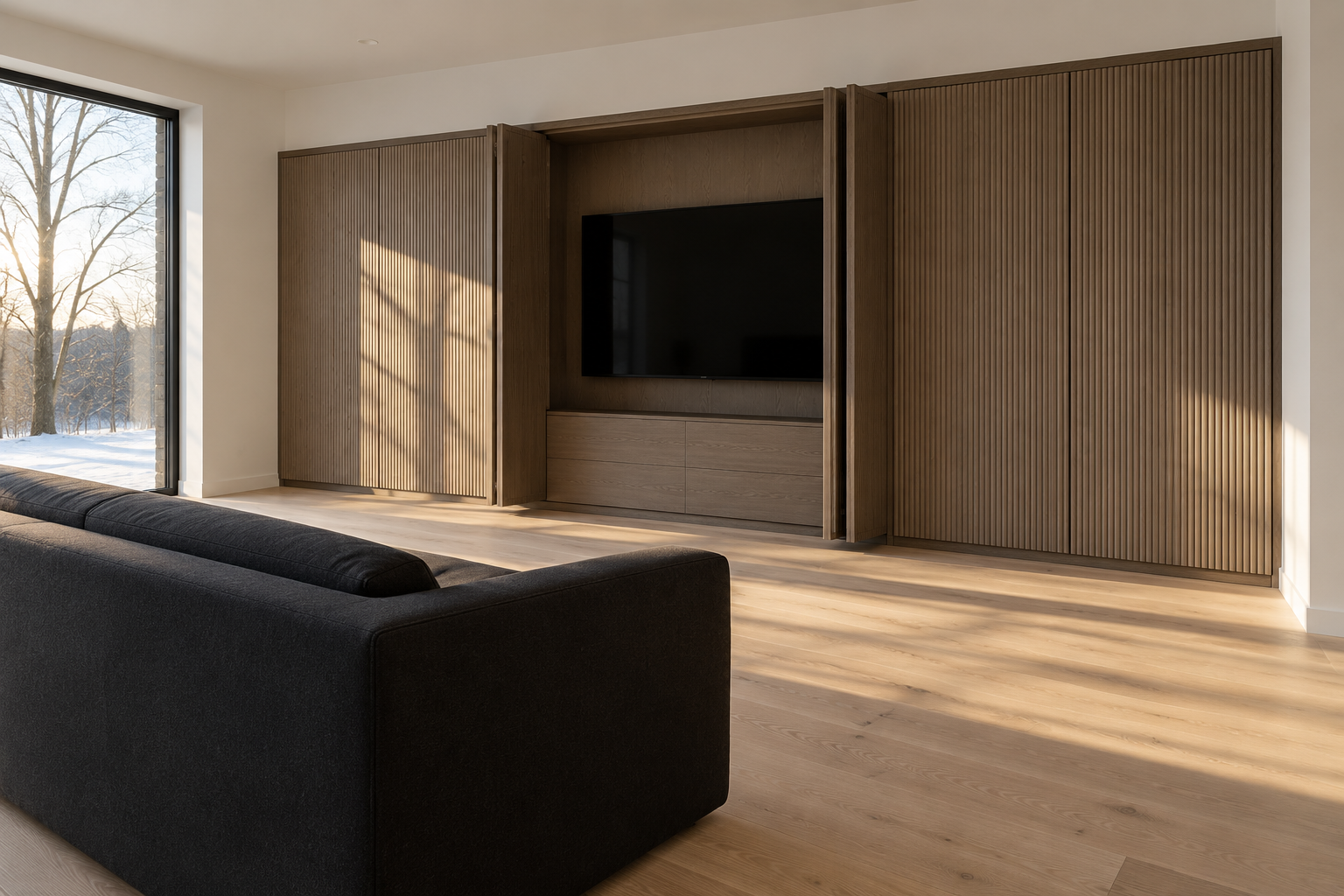
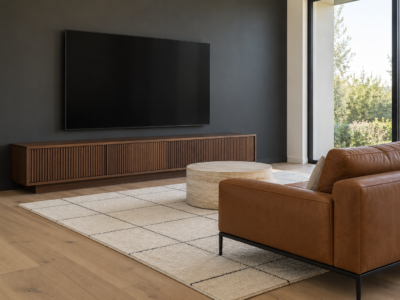
A large dark screen is the coldest-looking object in most living rooms, and when every seat faces it, the room is organized around something that’s switched off for most of the evening. Give it somewhere to disappear. A cabinet with doors that close over it is the simplest answer. A TV that displays artwork when idle is another, and it reads as a picture on the wall.
Placement is the third option. Put the TV on a side wall so the seats can face each other or the fireplace, with a clear view of the screen from the sofa for film nights. Arranging a living room around a fireplace and a TV covers the common layouts.