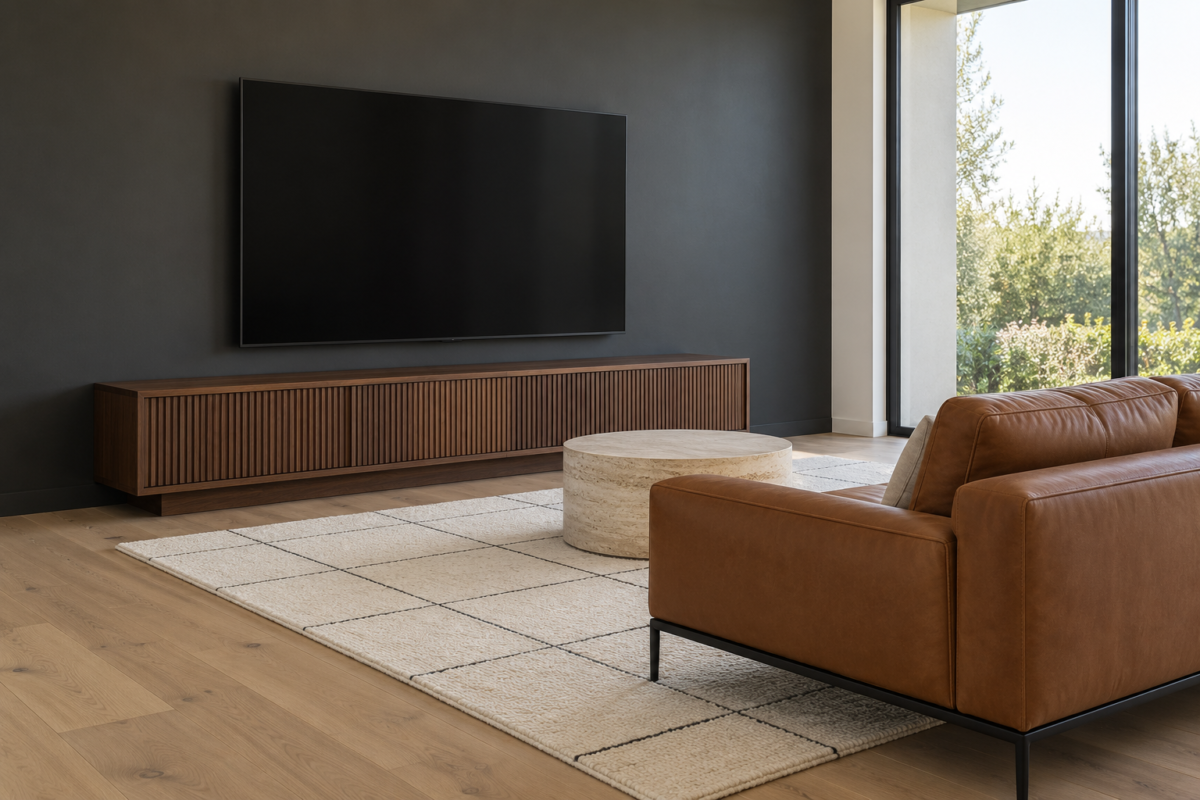
A television on the wall of a living room usually goes with the center of its screen about 42 inches above the floor. That’s roughly where an adult’s eyes are when sitting on a sofa, and a screen centered there can be watched for hours with the head level.
It’s a starting figure. A low sofa, a recliner, a fireplace, or a bed will each move it, and the size of the screen decides where the bracket itself goes on the wall. Every height below is measured from the finished floor.
Where 42 Inches Comes From
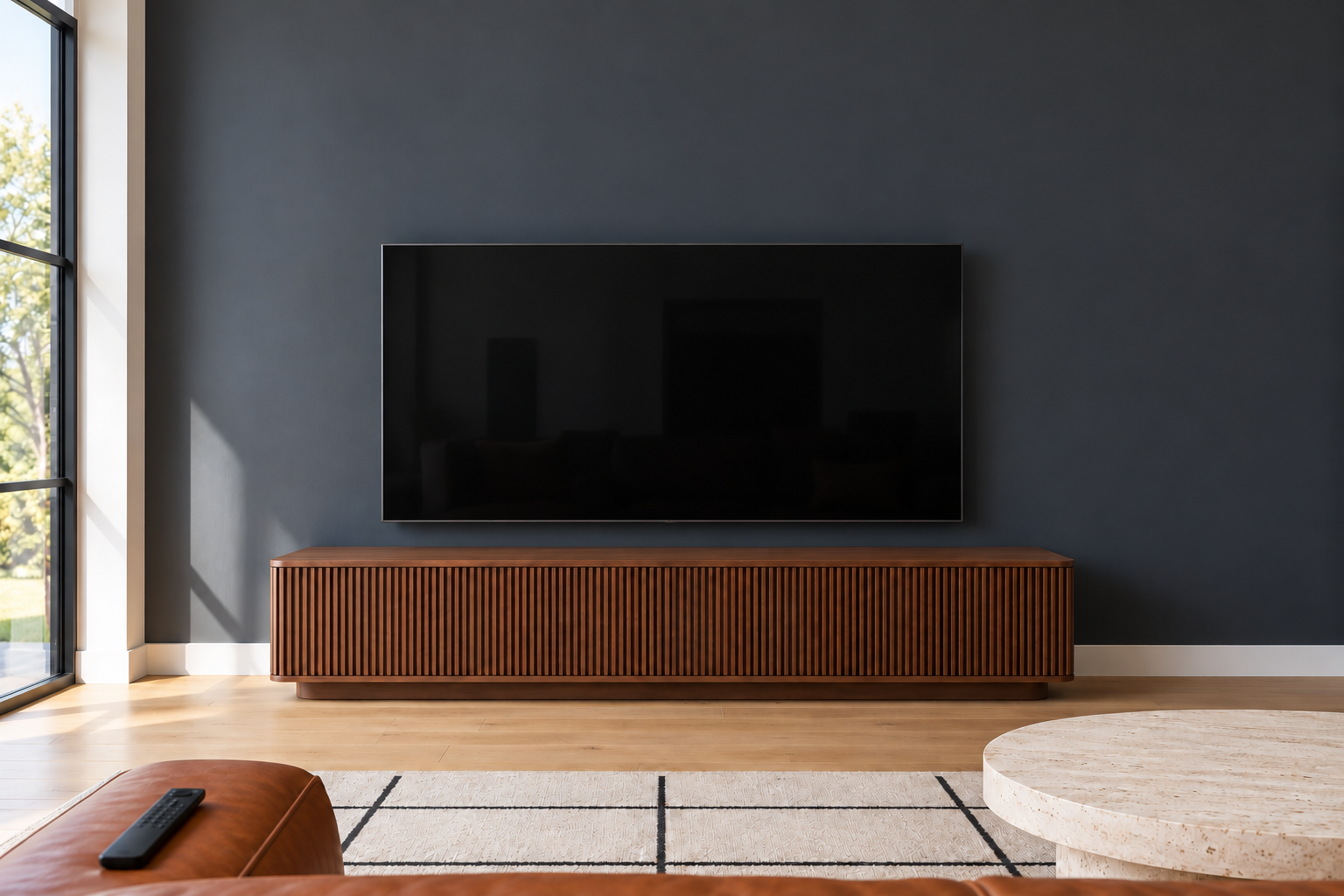
On a sofa with a seat about 18 inches high, most adults’ eyes are between 40 and 44 inches from the floor once they’ve settled back. The middle of the screen goes at that height because looking straight ahead, or slightly down, is easier to hold for a long time than looking up.
The number for a particular room is easy to find. Sit where you normally watch, the way you normally sit, and have someone measure from the floor to your eyes. A deep, low sofa can bring the figure down to 38 inches. A firm upright one can raise it to 45. Where a household has both a tall and a short viewer, the middle of the two is close enough.
From the Center of the Screen to the Bracket
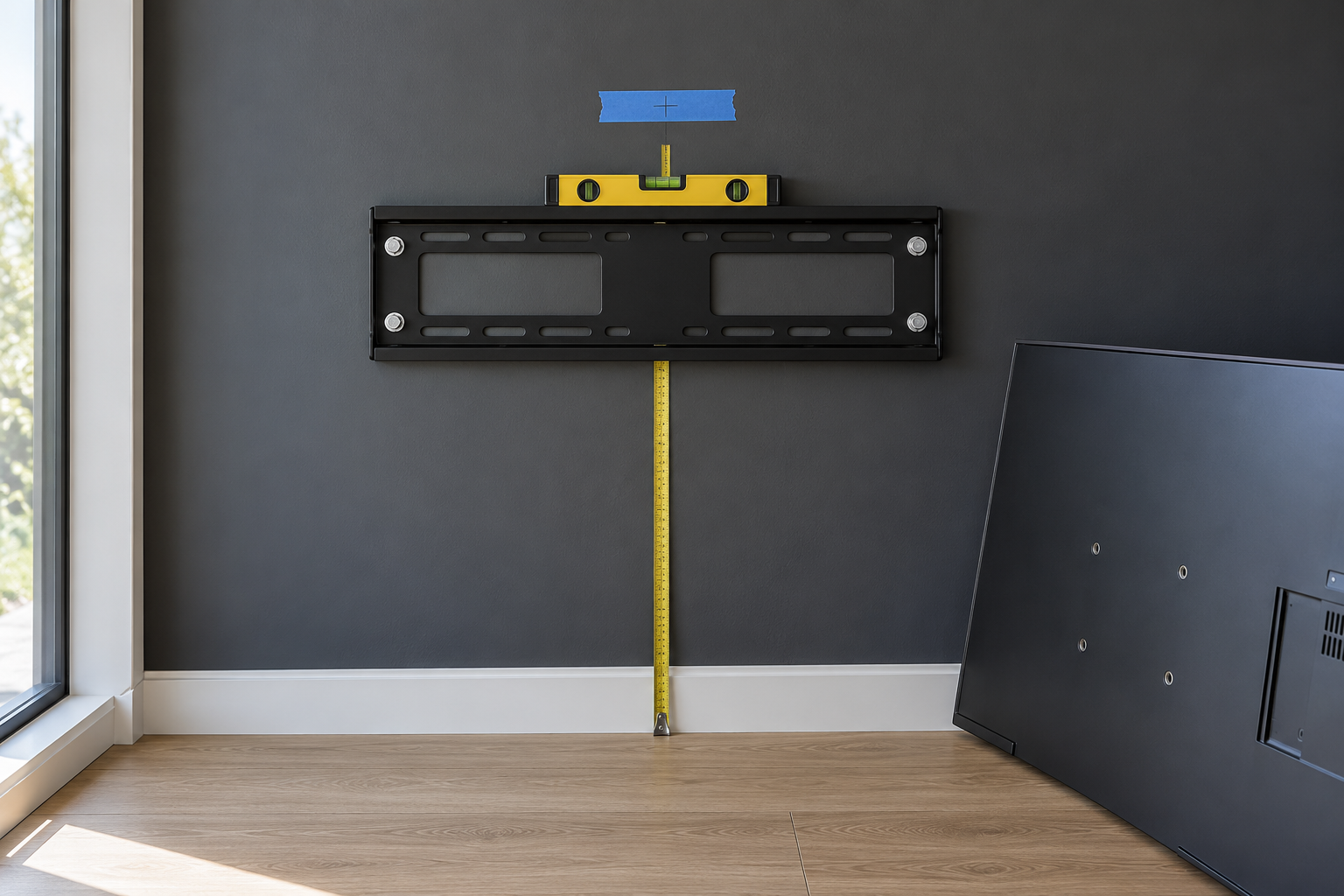
The 42 inches is to the center of the screen, and that’s seldom where the drill goes. Two more measurements turn it into marks on the wall.
The first is the height of the screen. Sizes are sold by the diagonal, and a 65 inch television is about 32 inches from the top of the picture to the bottom. Half of that sits above the center and half below.
| Screen size (diagonal) | Screen height, top to bottom | Bottom edge above the floor, with the center at 42 inches |
|---|---|---|
| 43 inches | 21 inches | 31.5 inches |
| 50 inches | 24.5 inches | 30 inches |
| 55 inches | 27 inches | 28.5 inches |
| 65 inches | 32 inches | 26 inches |
| 75 inches | 37 inches | 23.5 inches |
| 85 inches | 41.5 inches | 21 inches |
Figures are rounded to the nearest half inch and leave out the frame around the picture, which adds a fraction of an inch.
The second is where the mounting holes are. On many televisions the four threaded holes in the back sit below the middle of the set. Measure from the center of that hole pattern up to the center of the screen. If it’s 2 inches, as an example, the center of the wall plate goes 2 inches below the center of the screen, at 40 inches from the floor. The mount’s instructions give the same offset for the plate itself, since the arms that hook onto it add or subtract a little.
Over a Console
A gap of about 4 to 8 inches between the top of a cabinet and the bottom of the picture is a common choice, close enough that screen and cabinet look like one arrangement. That’s a matter of proportion, and the table shows where it comes easily. A 65 inch screen has its bottom edge 26 inches up, so a media console 20 inches high leaves 6 inches.
Larger screens leave less. The bottom edge of an 85 inch set is 21 inches from the floor, which is lower than most consoles. Raise the screen until the gap is right. Over a console 22 inches high with a 5 inch gap, the center ends up near 48 inches. That’s acceptable, because a screen that size is watched from further back and the upward angle stays small.
Above a Fireplace
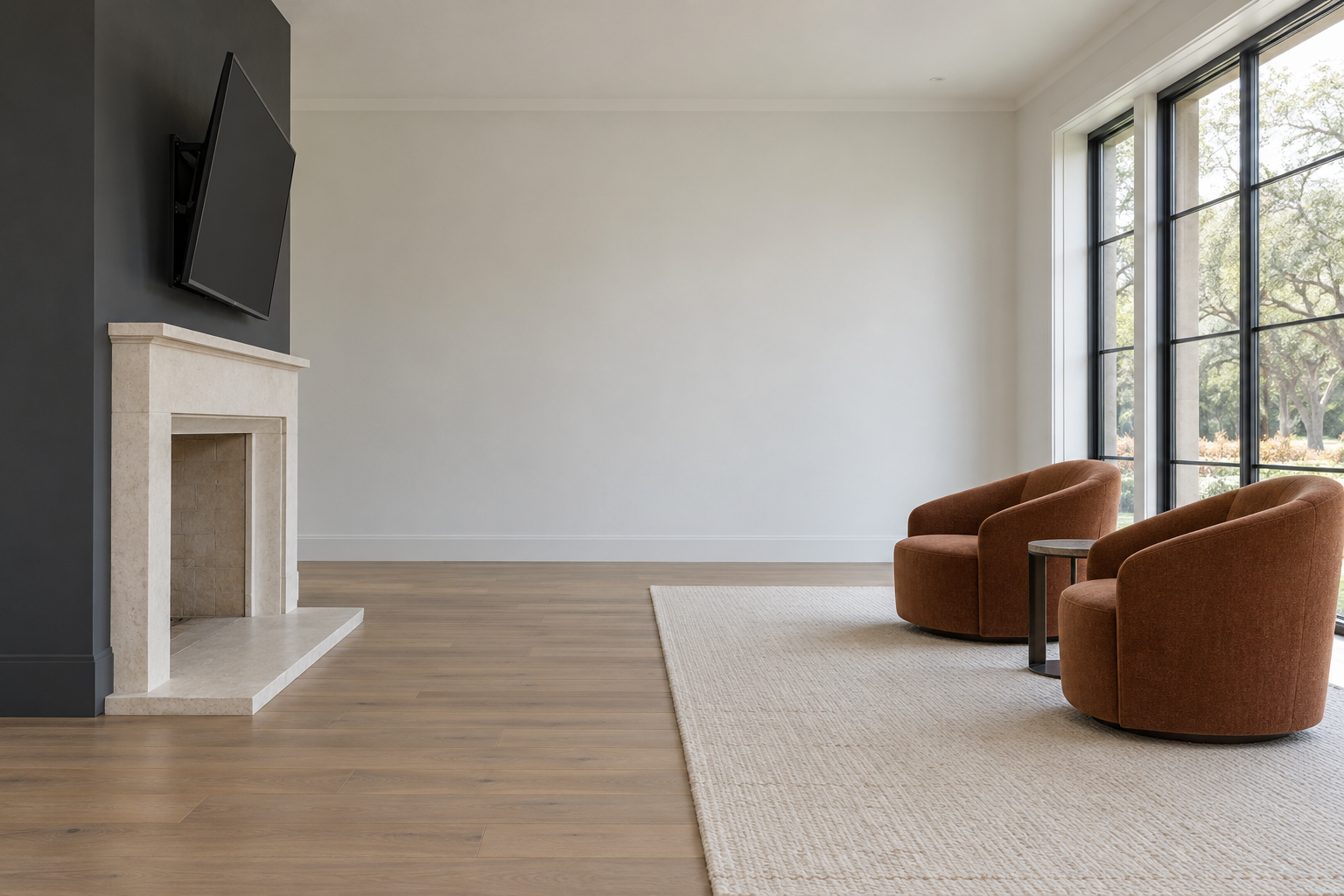
A mantel pushes the screen up, and the question becomes how far up is tolerable. A common comfort guideline keeps the center of the screen no more than about 15 degrees above the line of the eyes. The height that allows depends on how far back the seats are. At 15 degrees, the center can rise about a quarter of the viewing distance above eye level.
Here is an example with ordinary numbers. The top of a mantel shelf is often about 54 inches from the floor. Leave 5 inches above it, add half the height of a 65 inch screen, which is 16 inches, and the center lands at 75 inches. That’s 33 inches above a seated eye at 42. For 33 inches to stay within 15 degrees, the seats need to be a little over 10 feet from the screen. At 8 feet the same screen is about 19 degrees up, which is enough to feel in the neck over a long film.
A tilting mount aims the picture down at the seats, which improves how the image looks from below. It doesn’t lower the screen. A mount that pulls down in front of the fireplace for viewing does. Heat is the other matter, and both the fireplace’s manual and the television’s give the limits. If the room allows it, the screen can go on another wall.
Across From a Bed
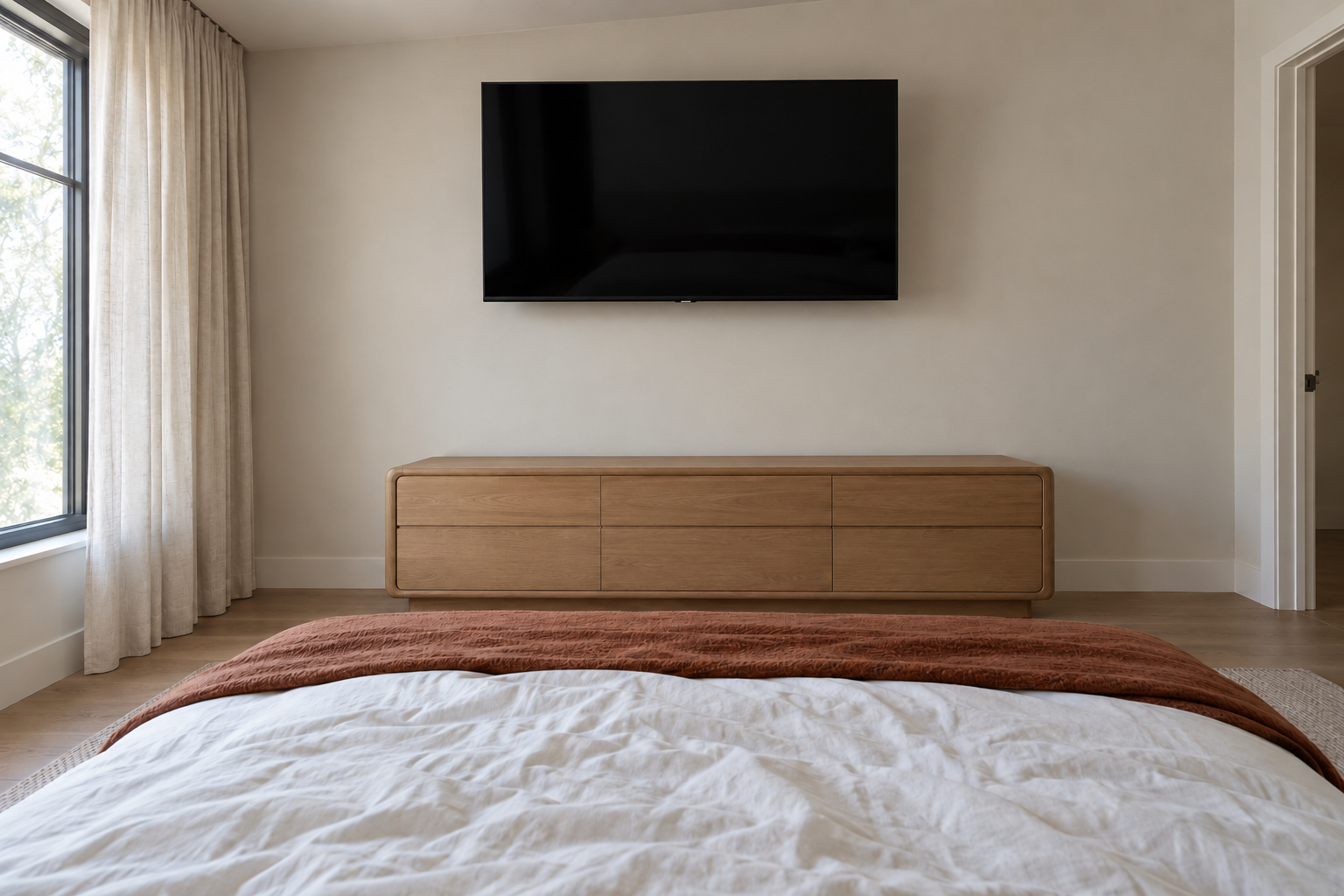
A bedroom television is watched lying back against pillows, with the head tipped and the eyes pointing above the horizontal. A screen at 42 inches would be hidden behind the viewer’s own feet and the footboard. So the bedroom set goes higher, and it needs a mount that tilts the top of the screen forward.
No single number works, because beds, pillows, and habits differ too much. Get into the position you watch from and look comfortably at the far wall. Have someone mark the spot your eyes land on. That mark is the center of the screen, and it is usually well above the living room figure. Check that the bottom edge clears a dresser below with a few inches to spare.
Tape the Outline on the Wall First
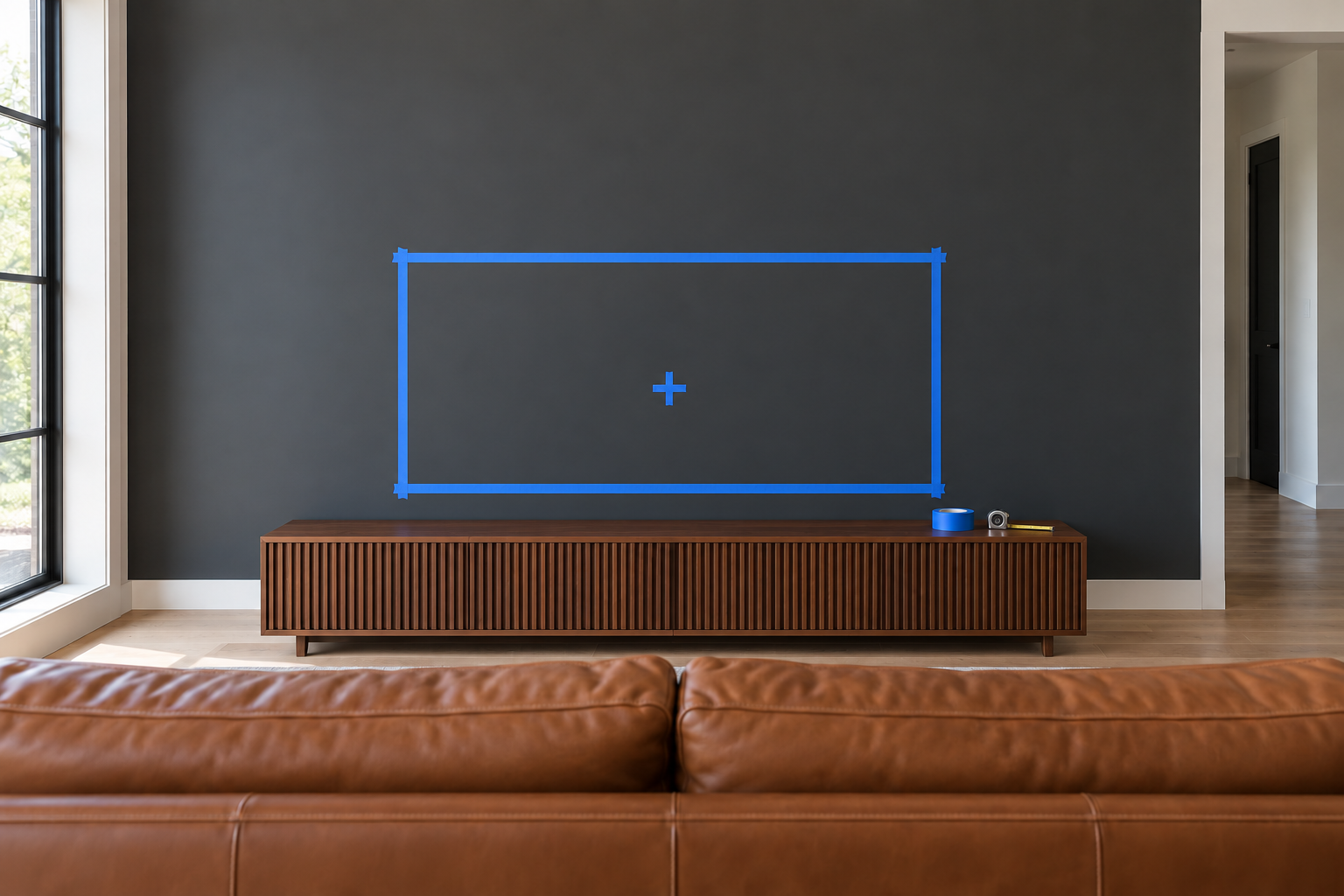
Before any holes are made, mark the screen on the wall in painter’s tape at its full size, with a cross at the center. A 65 inch screen is about 57 inches wide and 32 inches high. Sit down and look at it. Leave it up for an evening if there’s any doubt, and move it an inch or two until it stops drawing attention to itself.
Then find what the bracket will be screwed into. In a framed wall, the plate should catch two studs, and they don’t always fall where the center of the screen wants to be. Many plates are wide enough to slide the set sideways on them after hanging. Check for the outlet and the cable entry as well. Both should end up behind the set and clear of the plate.