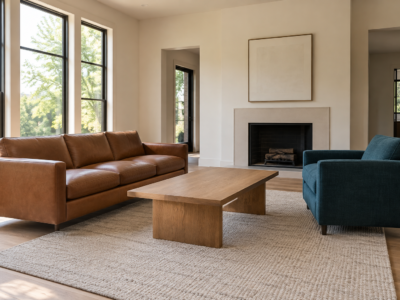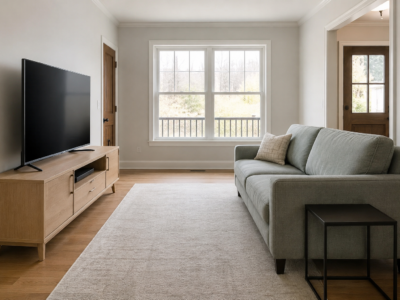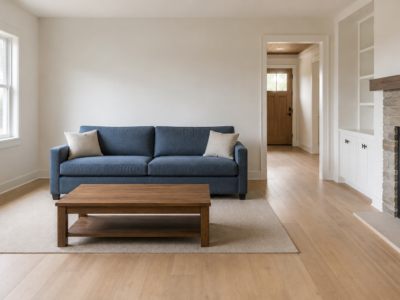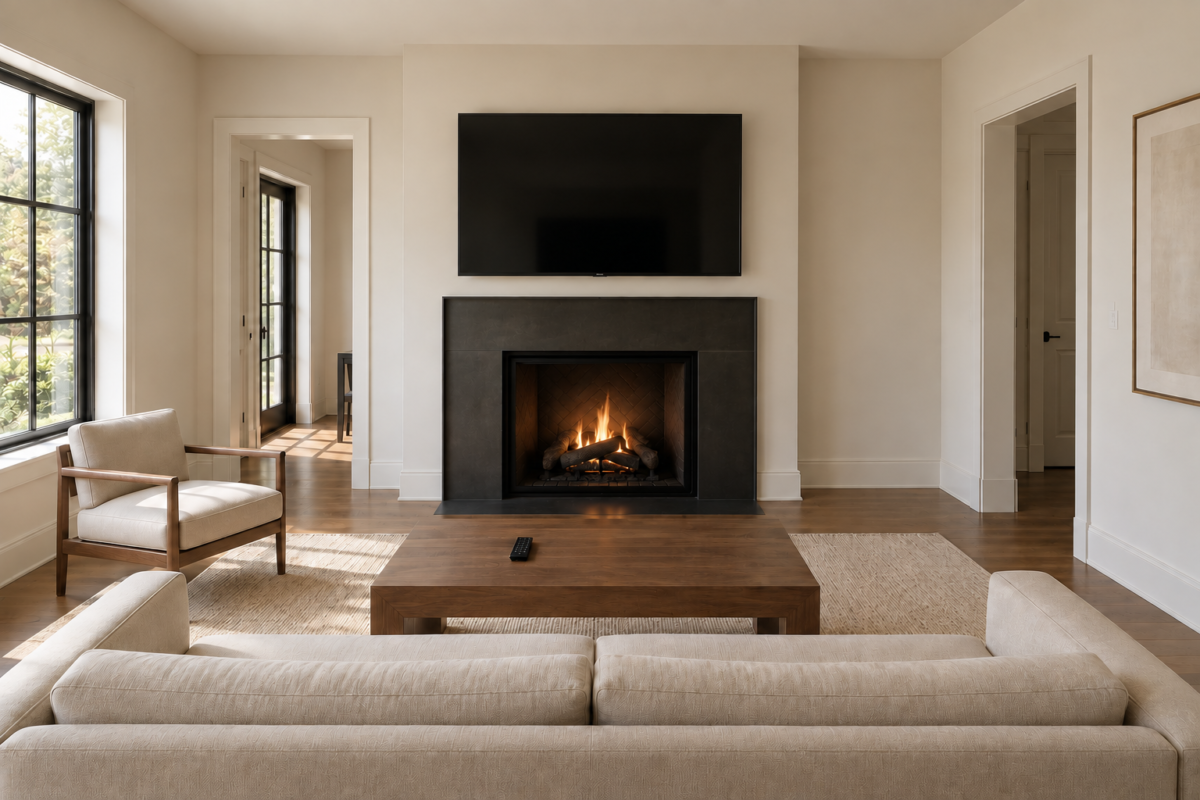
A fireplace and a TV both want to be the thing a living room is arranged around, and most rooms only have one wall willing to cooperate. The usual advice, mount the TV above the mantel and call it solved, works in plenty of rooms and actively works against plenty of others. The right answer depends on where the fireplace actually sits, how big the room is, and whether the two features even share a wall.
Four real configurations cover most living rooms: same wall, opposite walls, adjacent walls, and an off-center fireplace that doesn’t line up with anything. Here’s how to tell which one you have, and what to do about it.
Mount the TV Above the Fireplace in a Small Room
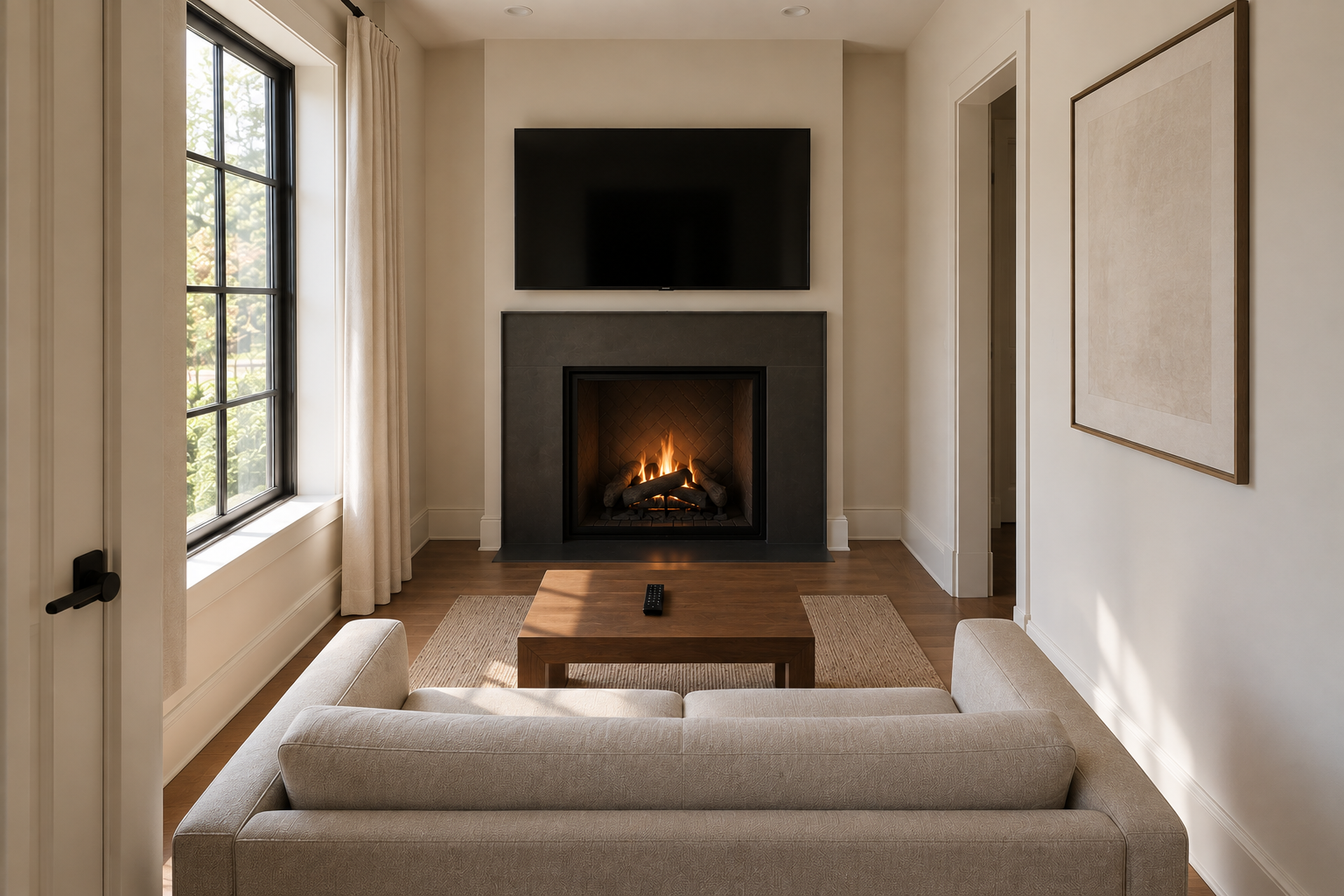
When a fireplace and a TV are stuck on the same wall because there’s genuinely no other option, mounting the TV above the mantel is usually the right call, not a compromise. This works best in a smaller or narrower room, where the seating sits close enough that the higher viewing angle doesn’t strain anyone’s neck during a two-hour movie. As a rough starting point, a couch more than nine or ten feet back from a TV mounted this high is pushing past comfortable, though the exact distance depends on the screen size and the mount’s actual height above the floor. Screen-to-Sofa Distance has the specifics for different screen sizes. If the room is deep enough that this distance becomes a real problem, that’s usually the sign the room actually wants one of the other three layouts instead.
Put Them on Opposite Walls in a Larger Room
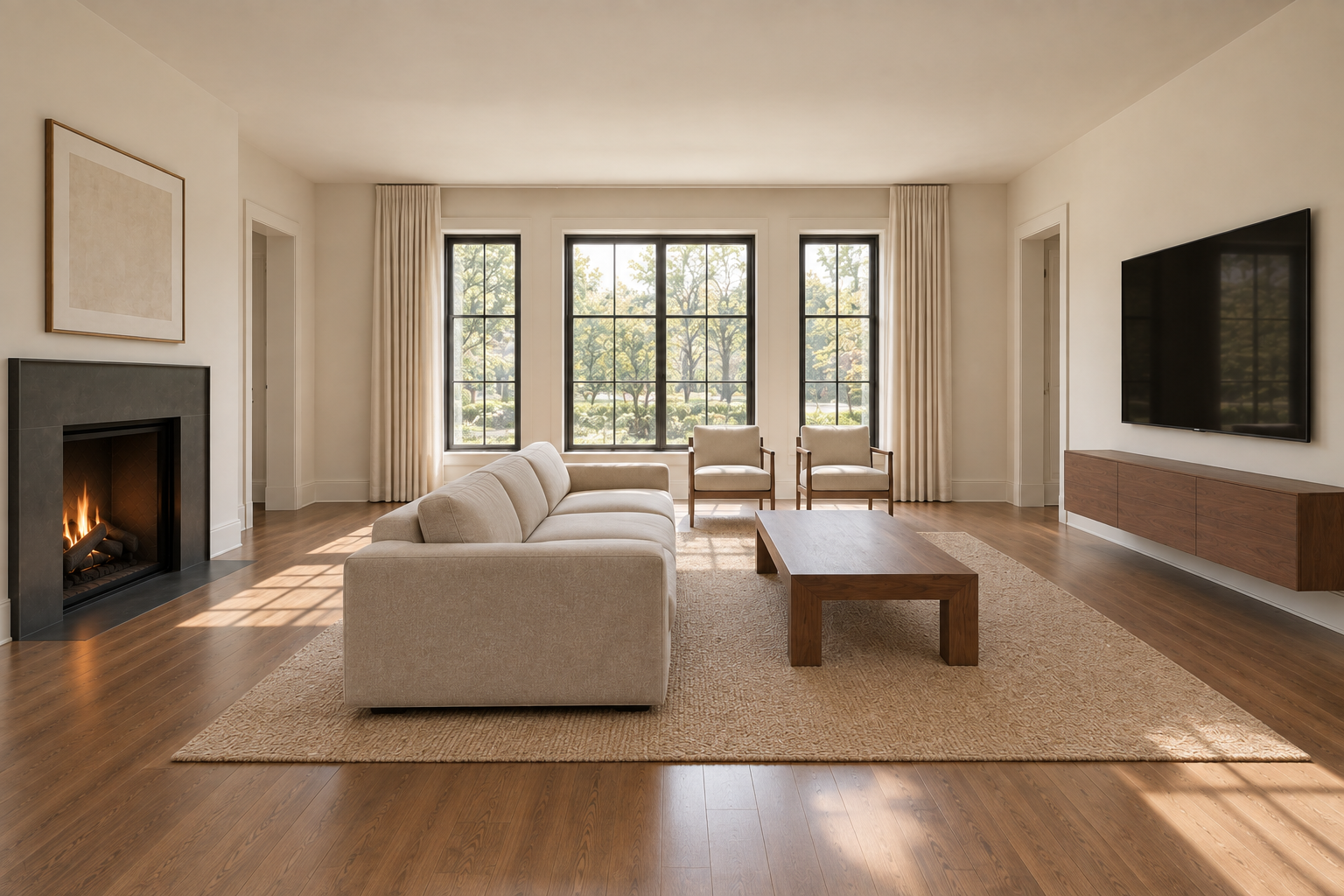
A room with enough depth to put the fireplace and the TV on facing walls gets to treat them as two separate zones instead of one crowded wall. Seating should still commit to one primary orientation, usually facing the TV, since a room that tries to split attention evenly between two walls ends up with furniture facing everywhere and nowhere. The fireplace end can still function as a secondary gathering spot, especially with a chair or two angled toward it, without needing to compete for the sofa’s actual sightline. This only works with real distance between the two walls. A room barely big enough to fit a sofa in between isn’t actually a candidate for this layout, no matter how much the floor plan looks like it should be.
Place Them on Adjacent Walls and Commit to One
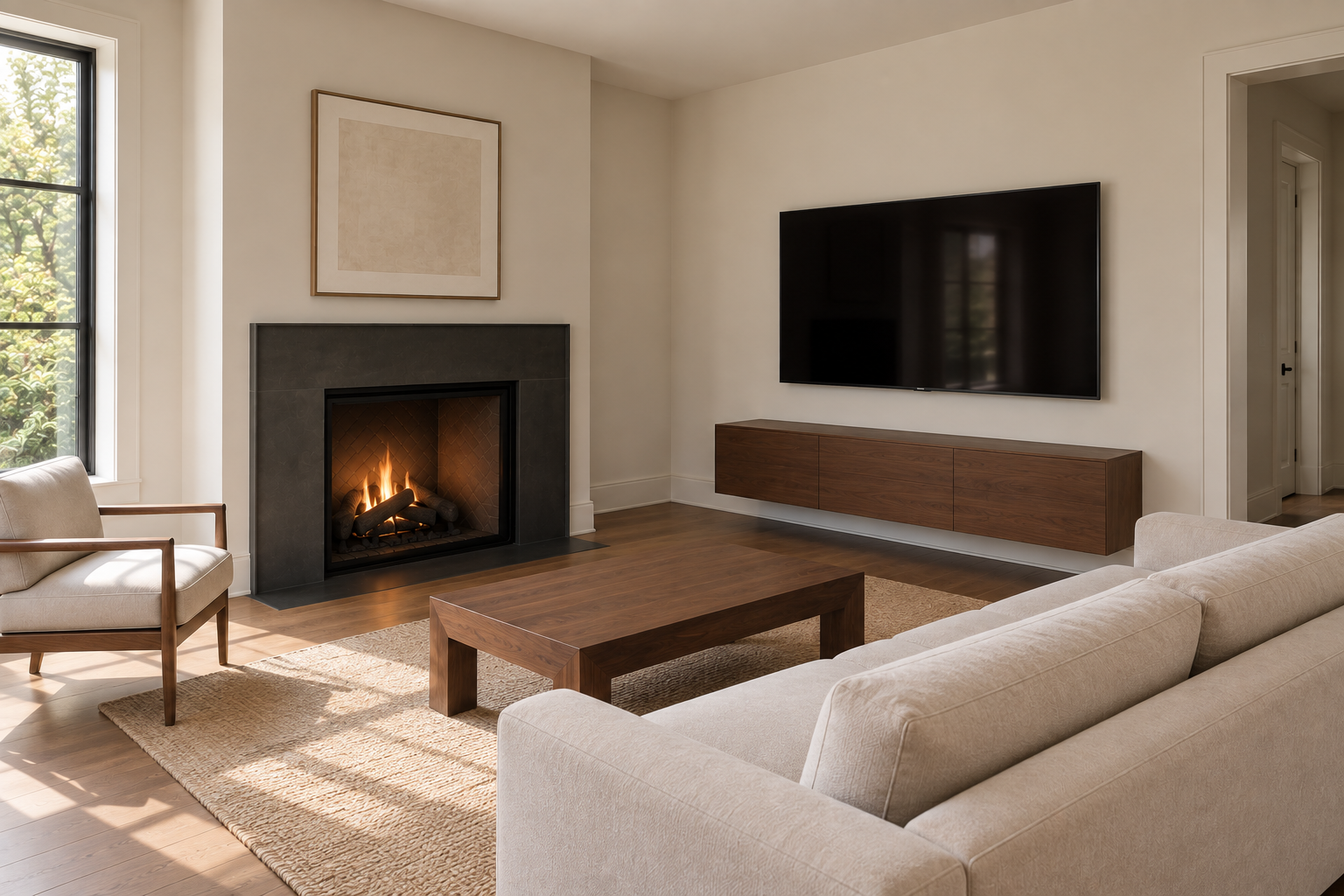
Adjacent walls, a fireplace on one and a TV on the perpendicular wall next to it, is the configuration most likely to end up half-solved, because neither wall directly faces the other and nothing about the room forces a decision. The fix is committing to one as primary and angling the seating toward it, typically the TV, since daily use usually wins out over the fireplace’s occasional use. The fireplace doesn’t disappear from the plan. It’s still visible from an angle, which is usually enough for the evenings it’s actually lit. Splitting the difference with seating aimed at the corner between the two walls is the version of this layout that satisfies neither one, and it’s worth naming as the specific mistake to avoid rather than a neutral middle ground.
Work Around an Off-Center Fireplace
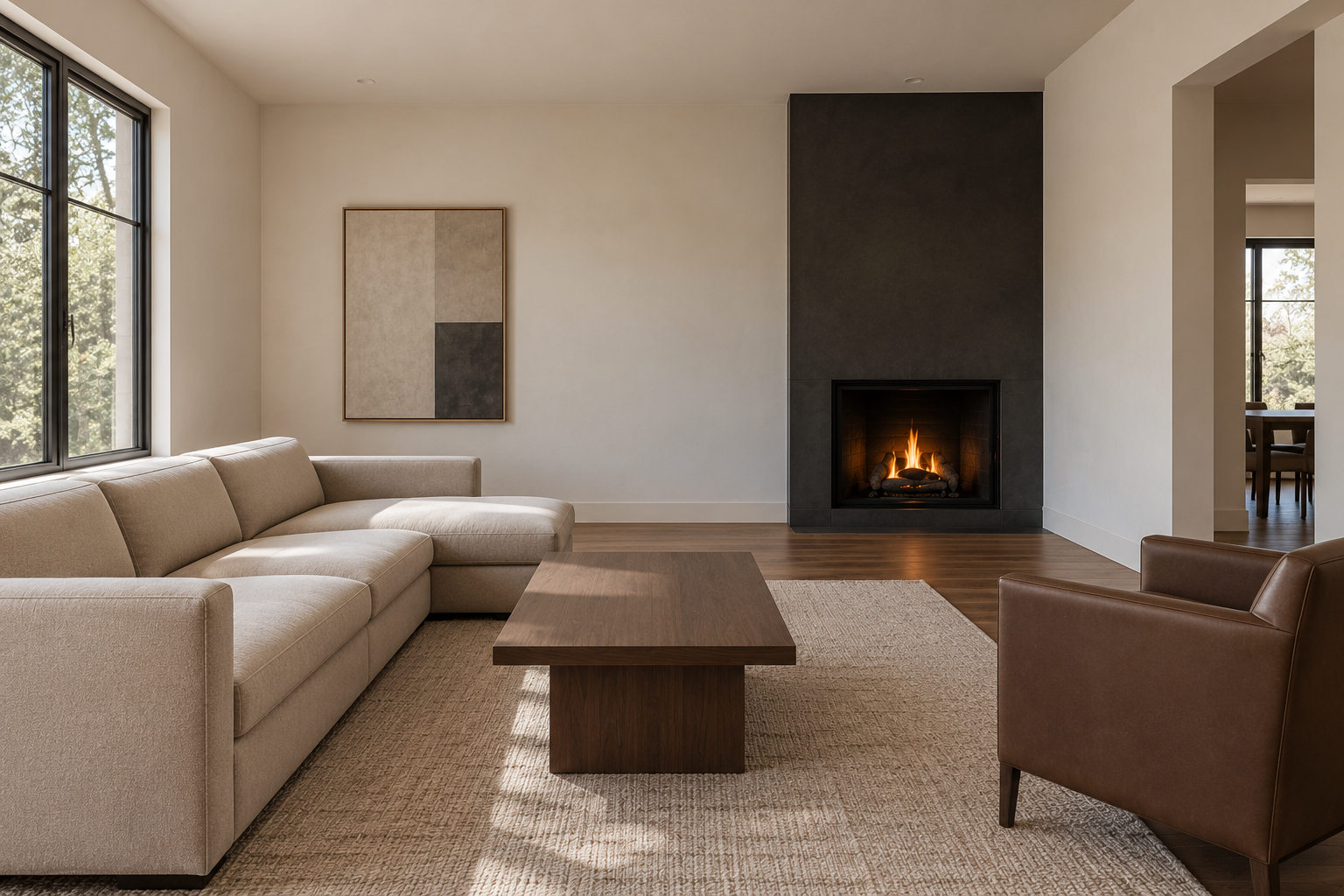
A fireplace that isn’t centered on its wall breaks the layout logic most living room advice assumes, since centering the sofa on the fireplace just puts the whole arrangement off-center relative to the rest of the room. The fix is arranging seating to balance the room’s actual proportions instead of the fireplace’s position on the wall. A sofa centered on the room, with an accent chair or a side table filling the gap between the fireplace and the wall’s edge, usually reads better than forcing symmetry the wall doesn’t have. This is one of the more common real-world layouts that generic living room advice skips entirely, since it assumes every fireplace sits obligingly in the middle of its wall.
Float the Seating So It Works for Both
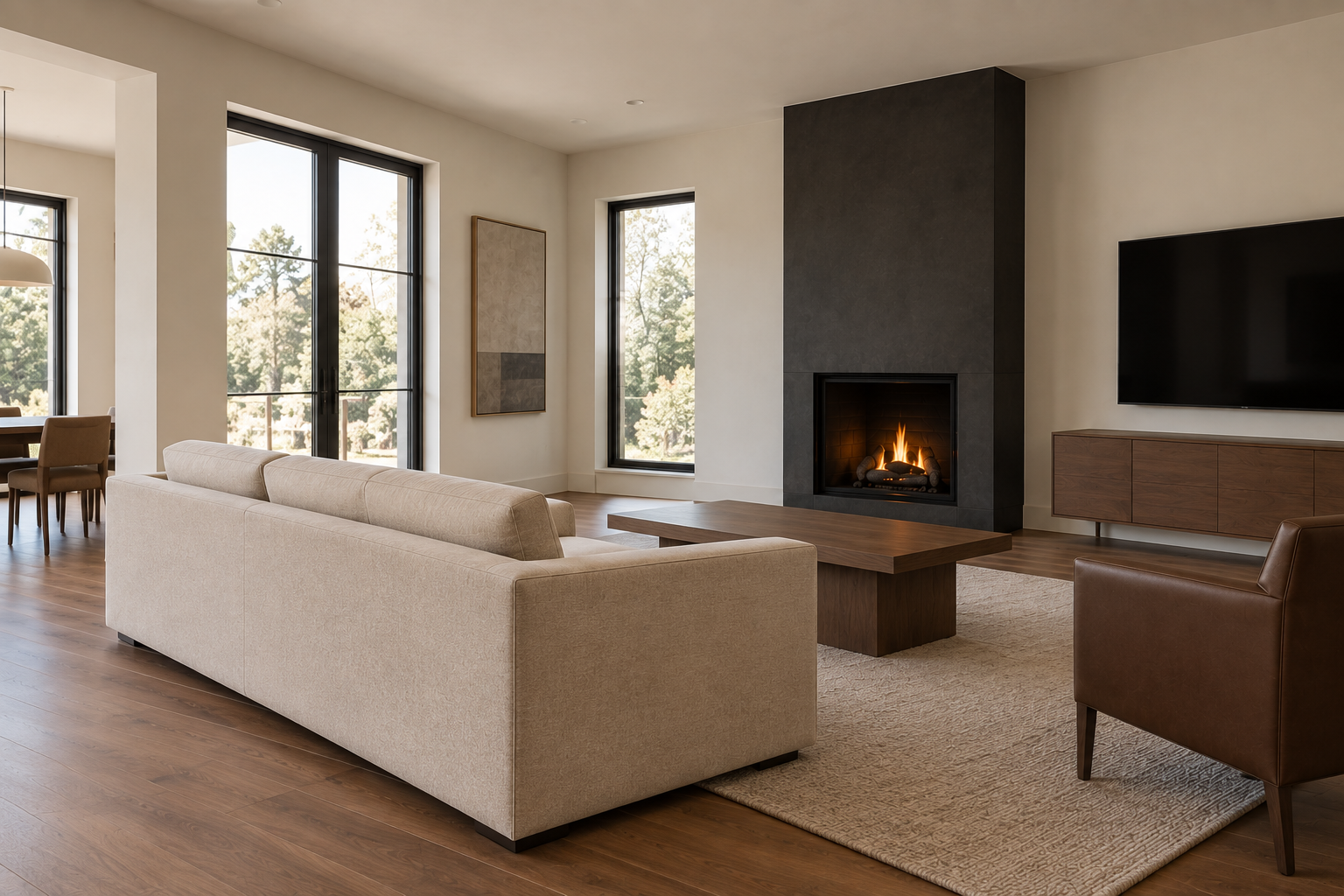
Whichever configuration your room turns out to be, the same underlying move helps all four: float the seating instead of pushing it flat against a wall. A sofa a few feet off the wall keeps sightlines open to both the fireplace and the TV, even in a layout that’s committed to one as primary, instead of locking the room into seeing only one of them clearly. It also usually opens circulation around the room’s edges, a genuine bonus on top of the sightline benefit. This one change matters more here than in most living rooms, since a room already juggling two focal points has less margin for furniture placement that makes the choice harder than it needs to be.
None of these four configurations is better than the others in the abstract. Each one is correct for a specific room, and the wrong one for every other room shape. Figure out which wall relationship your fireplace and TV actually have, commit to the seating orientation that configuration calls for, and float the furniture enough to keep both in view. The room doesn’t need a compromise. It needs the layout that matches what’s actually on the walls, and a layout picked for the wrong reason tends to get quietly undone within the first year anyway, one moved chair at a time.
Frequently Asked Questions
What if I don’t watch TV every night, should the fireplace win by default?
If the fireplace genuinely gets more regular use than the TV, orient the seating toward it and treat the TV as the secondary feature instead, on a swivel mount or a wall placement that’s visible but not the sofa’s main sightline. The four configurations above still apply. They just swap which feature gets the primary seating orientation.
Can a rug help visually connect two separate focal-point zones?
It can, especially in the opposite-walls configuration where the two zones can otherwise feel disconnected. A large rug that extends from the seating group toward the fireplace end visually ties the room together as one space rather than two unrelated areas, even when the furniture itself is oriented toward just one of the two features.