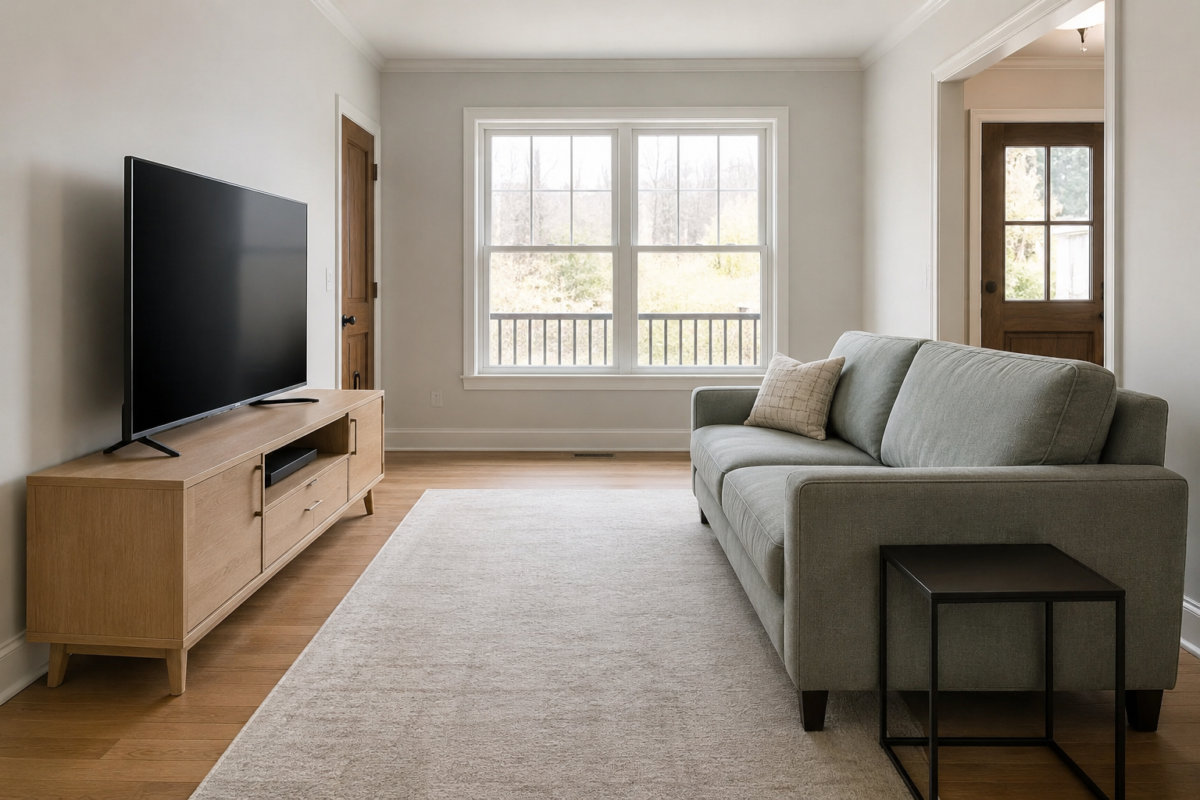
A TV mounted at the right height on paper can still feel wrong once the sofa is actually in place, and the reverse is just as common: a comfortable-looking distance that turns out to be too close once the screen is on and the eyes have to track fast motion across it. The math isn’t complicated, but it depends on the specific screen size and the specific seat height, not a single distance that works for every room.
Size the Distance to the Screen, Not the Room
The standard guidance is 1.5 to 2.5 times the screen’s diagonal size, measured from the seating position to the screen, not from the wall behind the sofa. A 55-inch TV works well from about 7 feet away; a 65-inch TV wants closer to 8 feet. Higher-resolution screens, 4K and up, allow sitting closer within that range without the image looking soft, since there’s more detail packed into the same screen area. The room’s depth sets a hard limit on this math regardless of screen size, which is worth checking before buying a larger TV than the room can comfortably seat someone in front of.
Eye Level Matters as Much as Distance
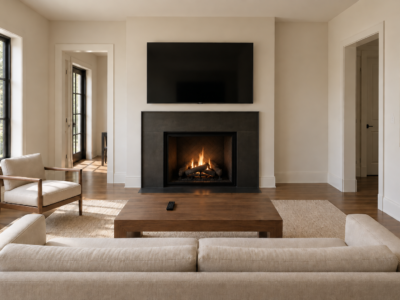
The vertical position matters as much as how far away the sofa sits. The middle of the screen should land close to seated eye level, generally within about 15 degrees above or below, to avoid the neck strain that comes from looking up at a TV mounted too high over a fireplace or media console. A standard seat height around 18 inches keeps eye level fairly consistent between sofas, which is part of why a TV mounted at a fixed height can still feel wrong if the seating changes.
Too Close Reads as Cozy, Not Comfortable
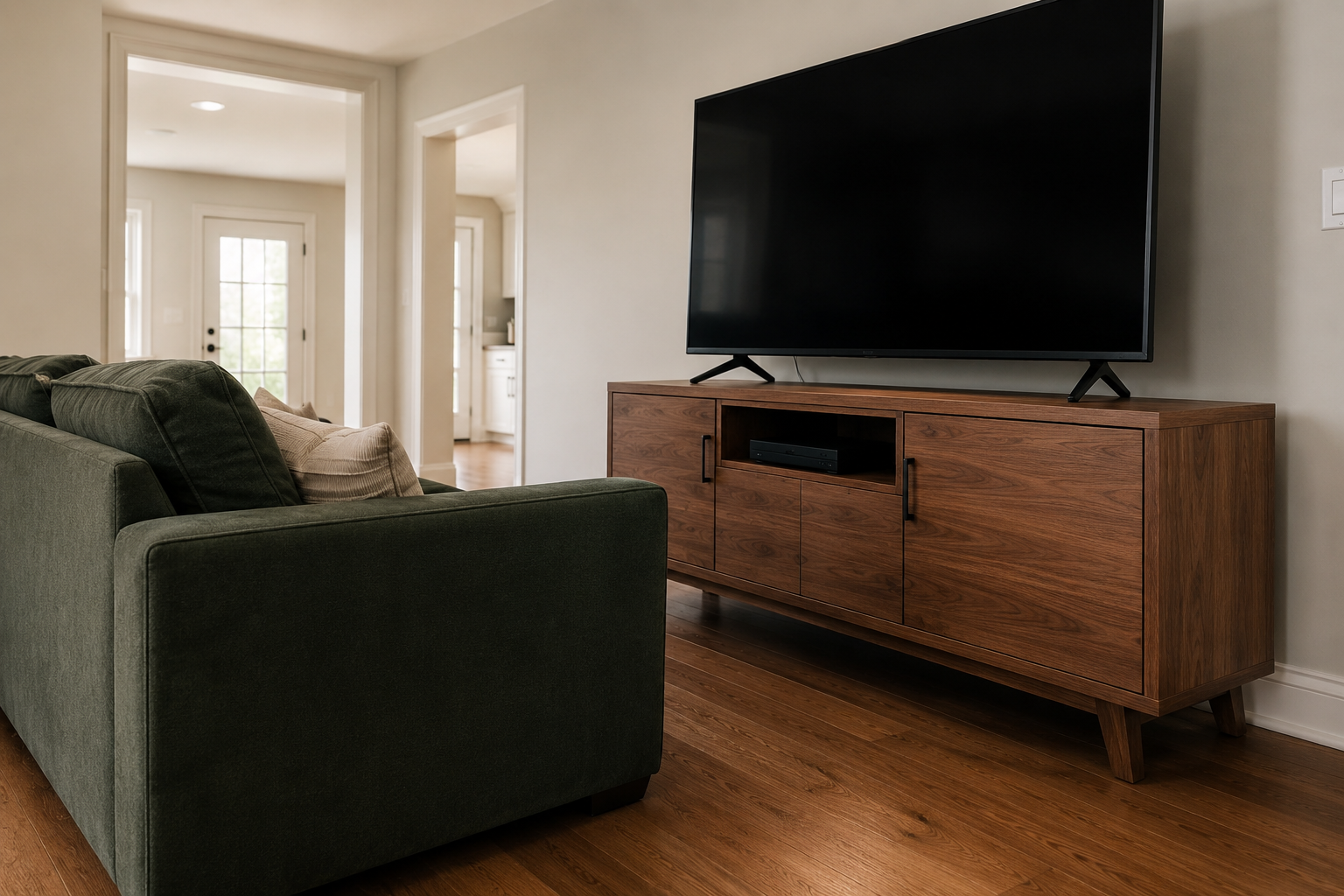
A TV placed too close to the sofa often gets excused as making the room feel more intimate. But in practice, it’s closer to eye strain than comfort, especially during fast motion, when the eyes have to work to track action that fills too much of the visual field. This is the most common distance mistake in smaller living rooms. The temptation is to compensate for a shorter room with a bigger screen, instead of accepting a smaller one that fits the available distance.
The right distance comes down to a ratio, not a fixed number: 1.5 to 2.5 times the screen’s diagonal, adjusted for the room’s depth and the seating’s height. Getting the vertical alignment right matters just as much as the horizontal distance, and both are worth checking with the sofa already in its real position, not estimated from an empty room.
Frequently Asked Questions
Does a 4K TV change the ideal distance?
Yes, slightly. Higher resolution allows sitting closer to a screen of the same size without seeing individual pixels, which is why some guidance for 4K sets leans toward the lower end of the 1.5-to-2.5x range rather than the upper end. It doesn’t eliminate the ratio, it just shifts where in that range a specific room can comfortably land.
What if my living room isn’t deep enough for the ideal distance?
Choosing a smaller screen is usually the better fix, rather than accepting a distance below the recommended minimum. A smaller TV at the right distance is more comfortable to watch than a bigger one placed too close, even though the bigger screen looks more impressive in a showroom.