Fall shows up in a house before anyone decides to decorate for it. The light comes in lower and warmer by four in the afternoon. A room that felt fine in a linen throw in August starts asking for something heavier. The porch chairs that got used every evening in July start needing one more layer to stay comfortable past sunset. Decorating for the season is really just noticing that shift and following it, not covering every surface in gourds before the temperature has even dropped.
None of the twelve ideas here ask for a full redecorating pass. A living room gets one chair with real texture and color. A mantel gets height and warmth from its own architecture and a lit fire, not a themed display. A bathroom gets exactly one towel swapped for something with more weight. The point isn’t to touch every room equally. It’s to notice which rooms in a given house actually change with the season, and let those carry the shift, while the rest stay exactly as they were in September.
Let the Entry Set the Season, Not the Whole House
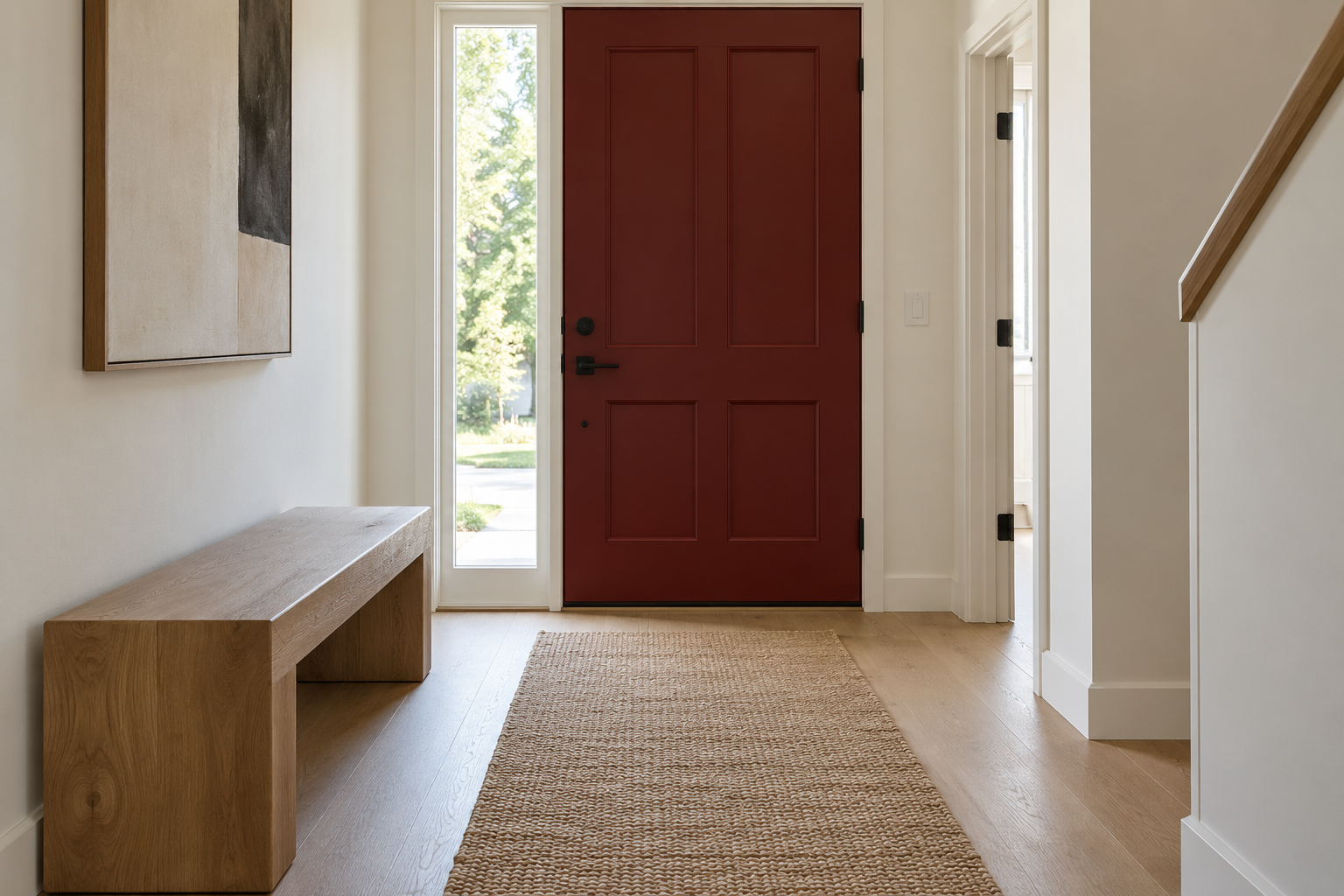
An entry doesn’t need a display at the door to feel like it’s shifted into fall. Swapping the summer doormat and runner for something in a heavier, warmer-toned weave, a wool or jute runner in rust or warm oat rather than the flat cotton mat that worked all summer, changes the whole first impression without adding a single object to a shelf or console. It reads as a real material shift, not a seasonal prop. Skip the instinct to add a grouping on a nearby surface as well. One considered runner does the job; a second seasonal moment stacked next to it starts to compete instead of support it.
Swap the Living Room Throw for Something With Real Weight
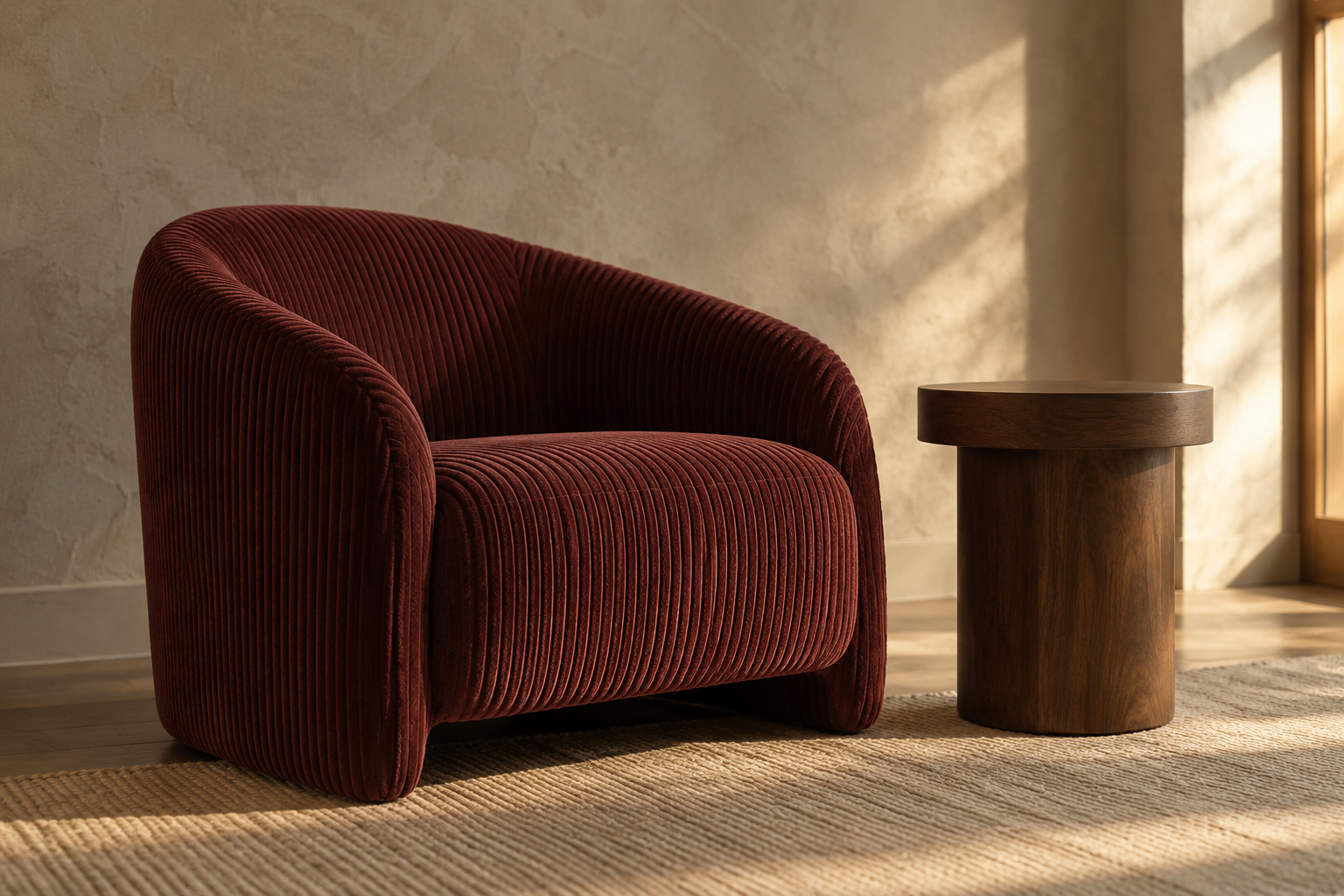
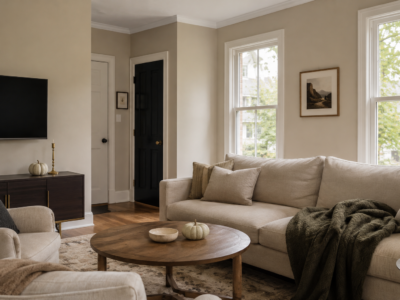
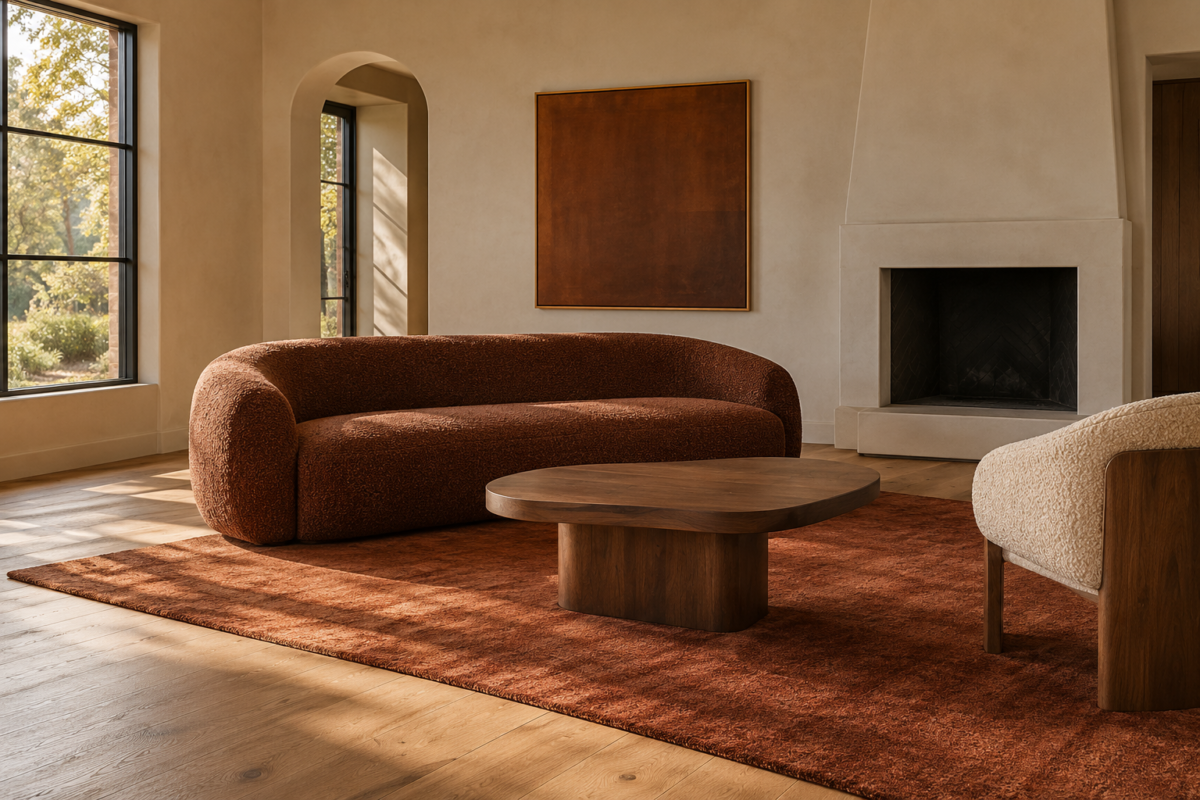
Swapping in a substantial, texture-forward fabric on one piece of seating does more to shift a living room’s season than changing anything else in the room. A ribbed corduroy or a heavy bouclé in a deep oxblood or rust reads as a real material shift rather than a seasonal accessory, especially against a room that otherwise stays exactly as it was all summer. This works best on a single chair rather than the whole seating arrangement. One piece carrying real texture and color reads as a deliberate choice; recovering everything at once starts to look like a full room redo instead of a seasonal one.
Set the Table With Amber Glass and Collected Objects, Not a Theme
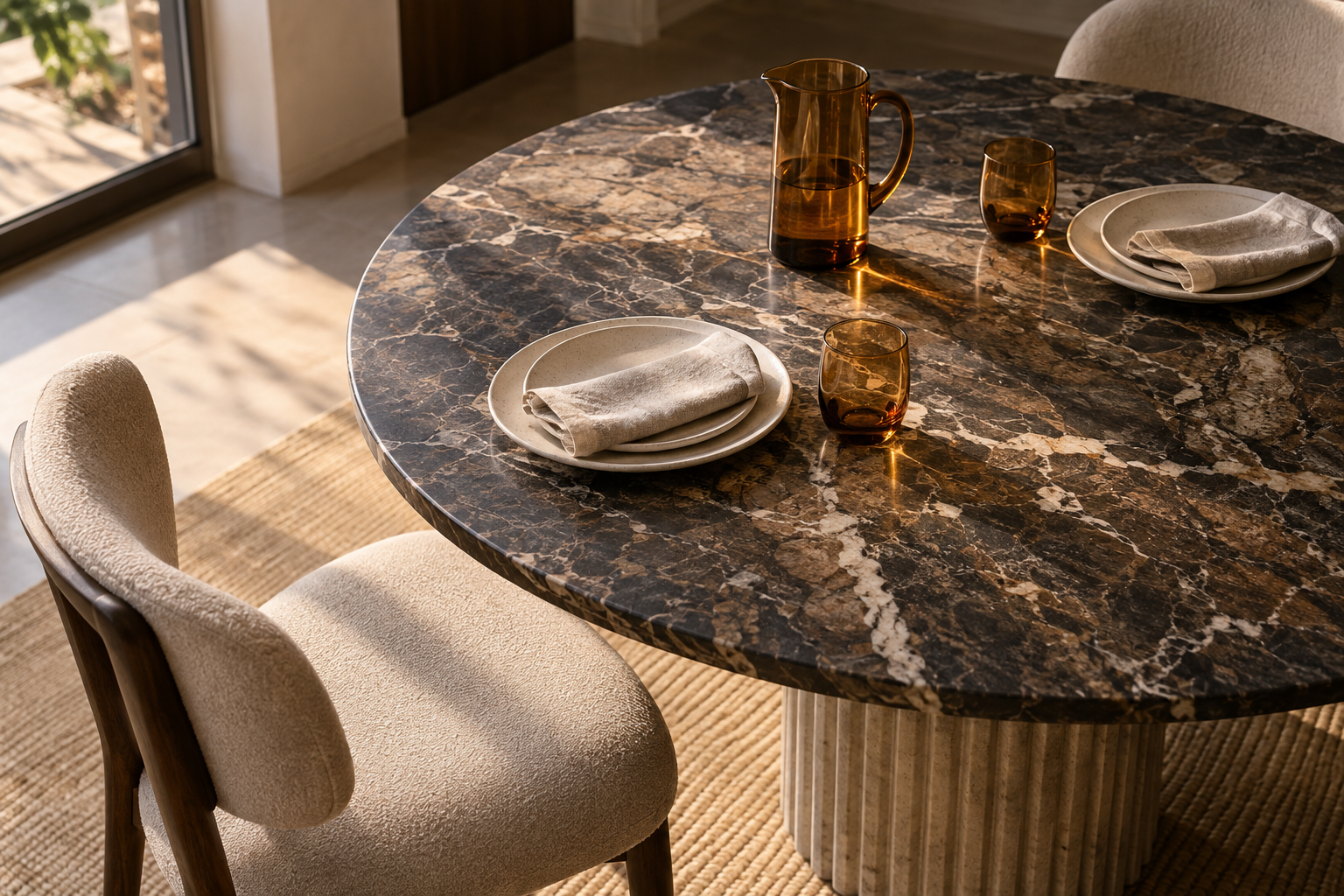
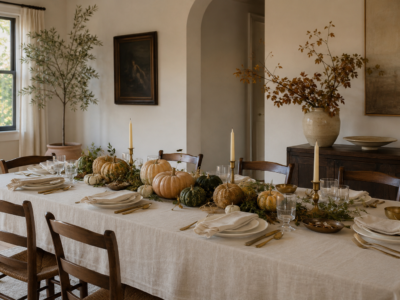
A dining table doesn’t need a matching centerpiece kit to look like it’s dressed for the season, and honestly, most of those kits photograph better than they read in person. Amber glassware catches warm afternoon light in a way clear glass doesn’t, and setting the table for an actual meal, real plates, folded linen napkins, water glasses already in the cabinet, does more real styling work than a themed runner ever will. A table with real material presence, a richly veined stone or a dark wood top, needs even less added to it. The whole approach depends on the table looking set for people, not staged for a photo.
Bring the Kitchen’s Open Shelf Into the Season
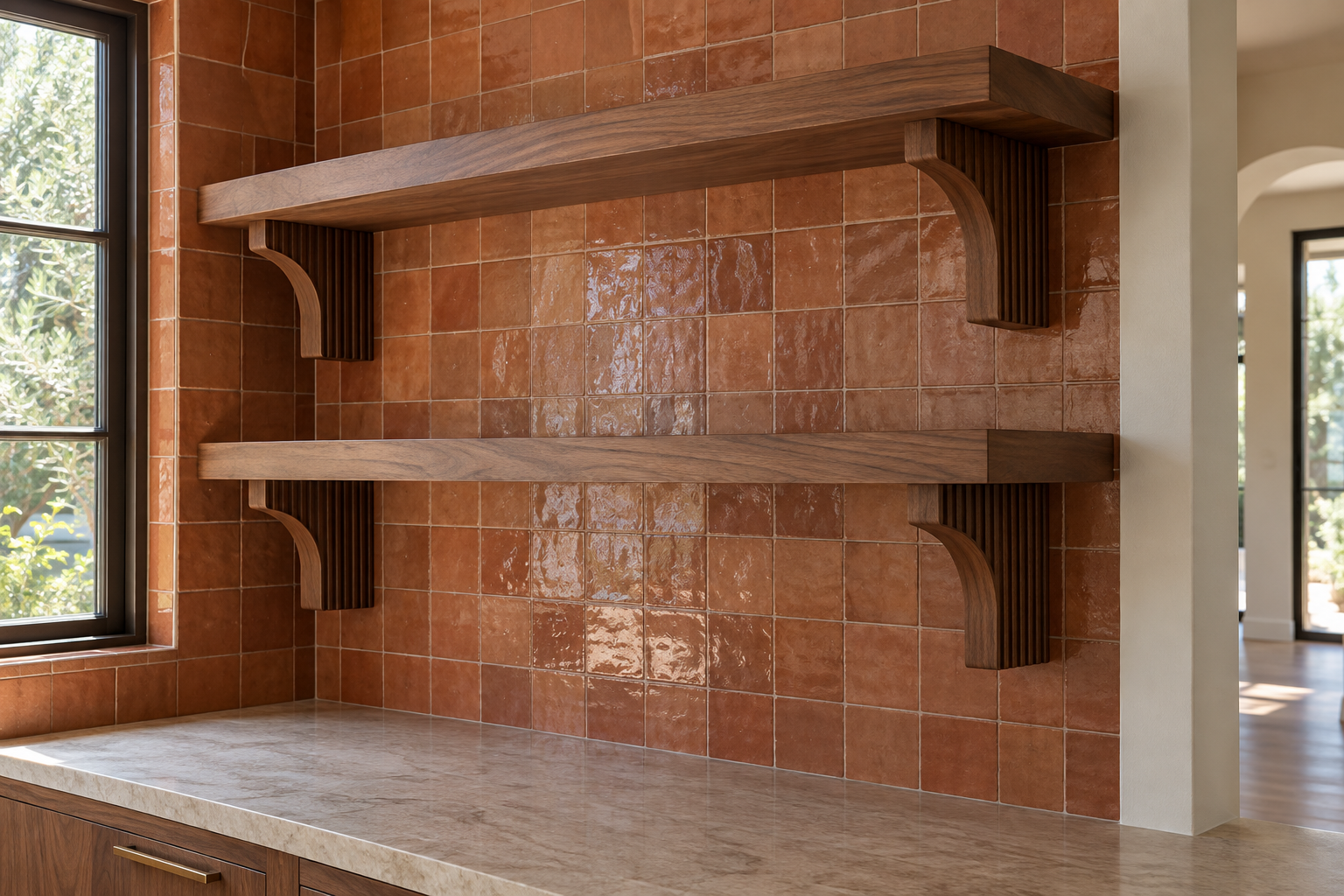
A kitchen’s open shelving carries fall best through the material behind it, not through anything set on top of it. A warm terracotta or zellige-style tile backsplash, or a richly grained wood shelf, reads noticeably warmer once autumn light comes in lower and cooler through a kitchen window than it does in August. Clearing the shelf down to nothing, rather than adding a seasonal display, is what actually lets that material do the work. A kitchen this warm to begin with doesn’t need styled objects competing with its own walls for attention.
Let the Mantel Hold Height, Texture, and Warm Light
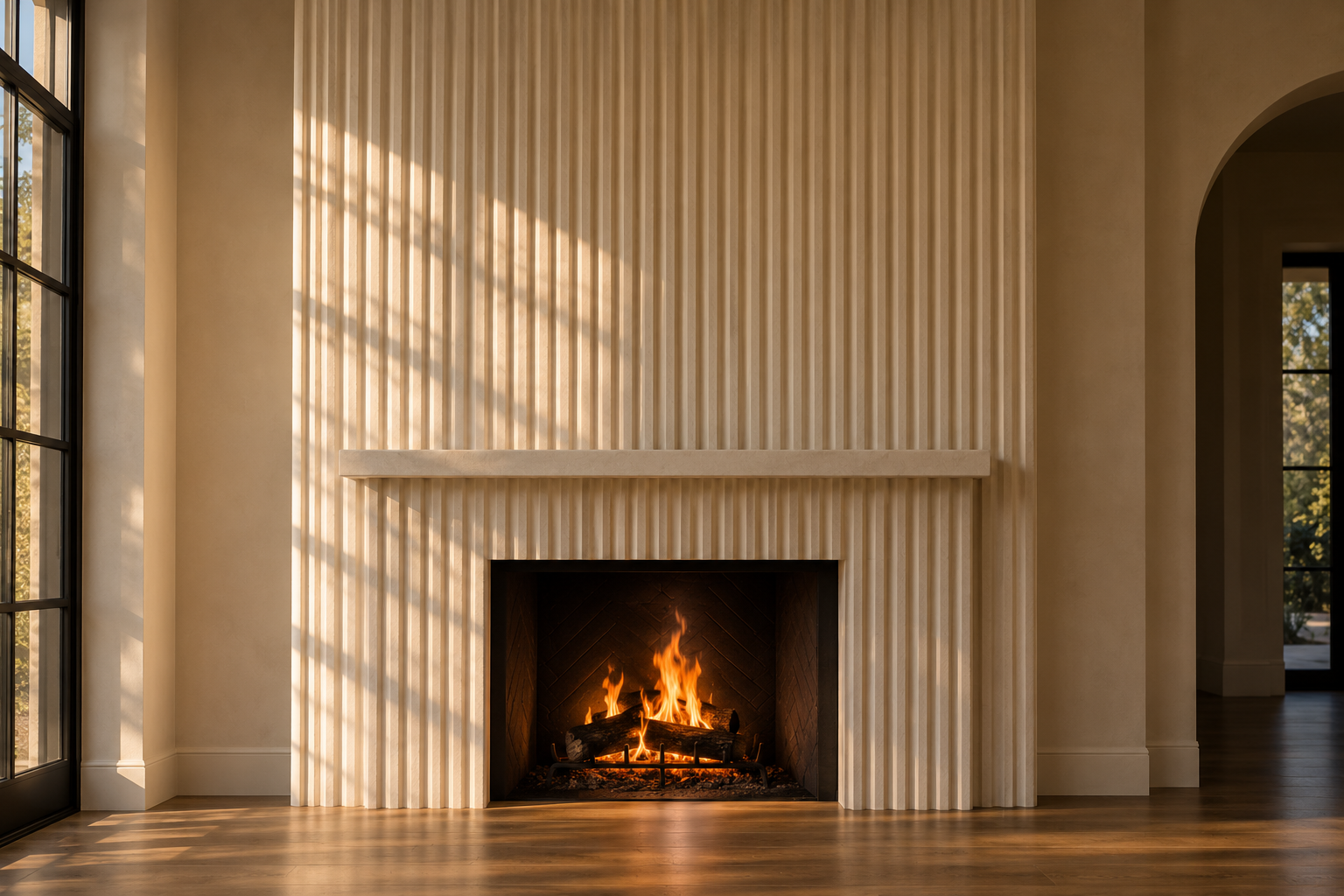
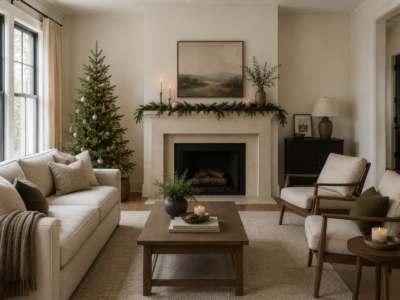
A mantel doesn’t need styled objects to carry fall if the fireplace itself is doing the actual work. Lighting a real fire earlier in the evening than it got used all summer changes a room’s whole temperature more than anything arranged on the shelf above it ever could. A plaster or stone surround with real vertical texture and height, left completely bare, lets the fire’s own light and the surround’s scale carry the moment instead of competing with a mantel full of seasonal objects. This is the one idea on this list that has nothing to do with styling at all. It’s about using the room’s own architecture instead of decorating around it.
Change What the Bed Feels Like Before You Change How It Looks
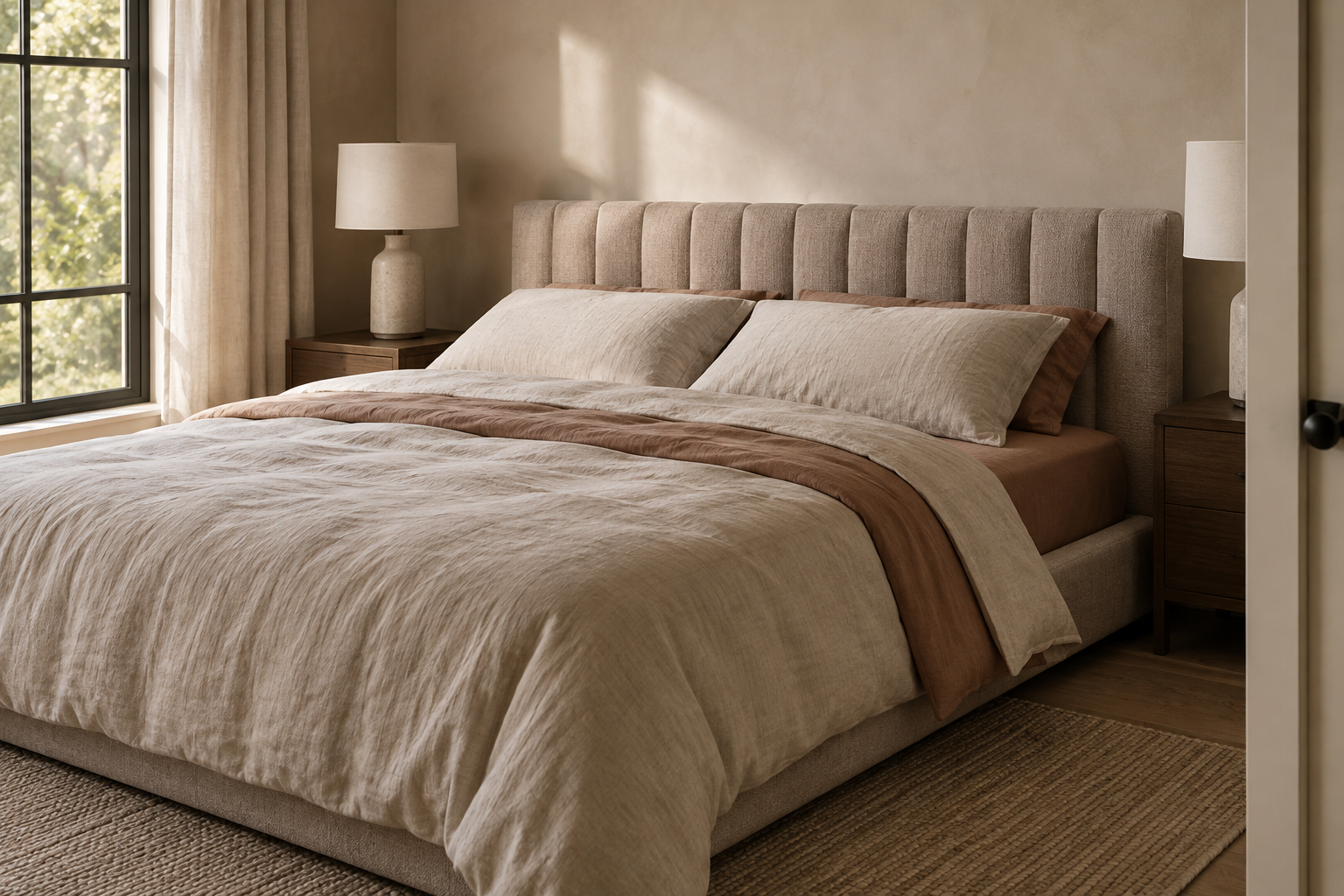
It’s easy to decorate a bedroom for fall and forget that the bed itself is the thing a person actually touches every night. Flannel or brushed cotton sheets change what the bed feels like getting into, which matters more to how a bedroom reads as seasonal than a new color palette does on its own. Layer it in a warm, quiet tone, an oatmeal or a soft clay, rather than reaching for something bold here. A bedroom is one of the rooms fall changes least dramatically, and a quieter response is the honest one, not a missed opportunity to do more.
Give a Reading Corner a Reason to Get Used After Dark
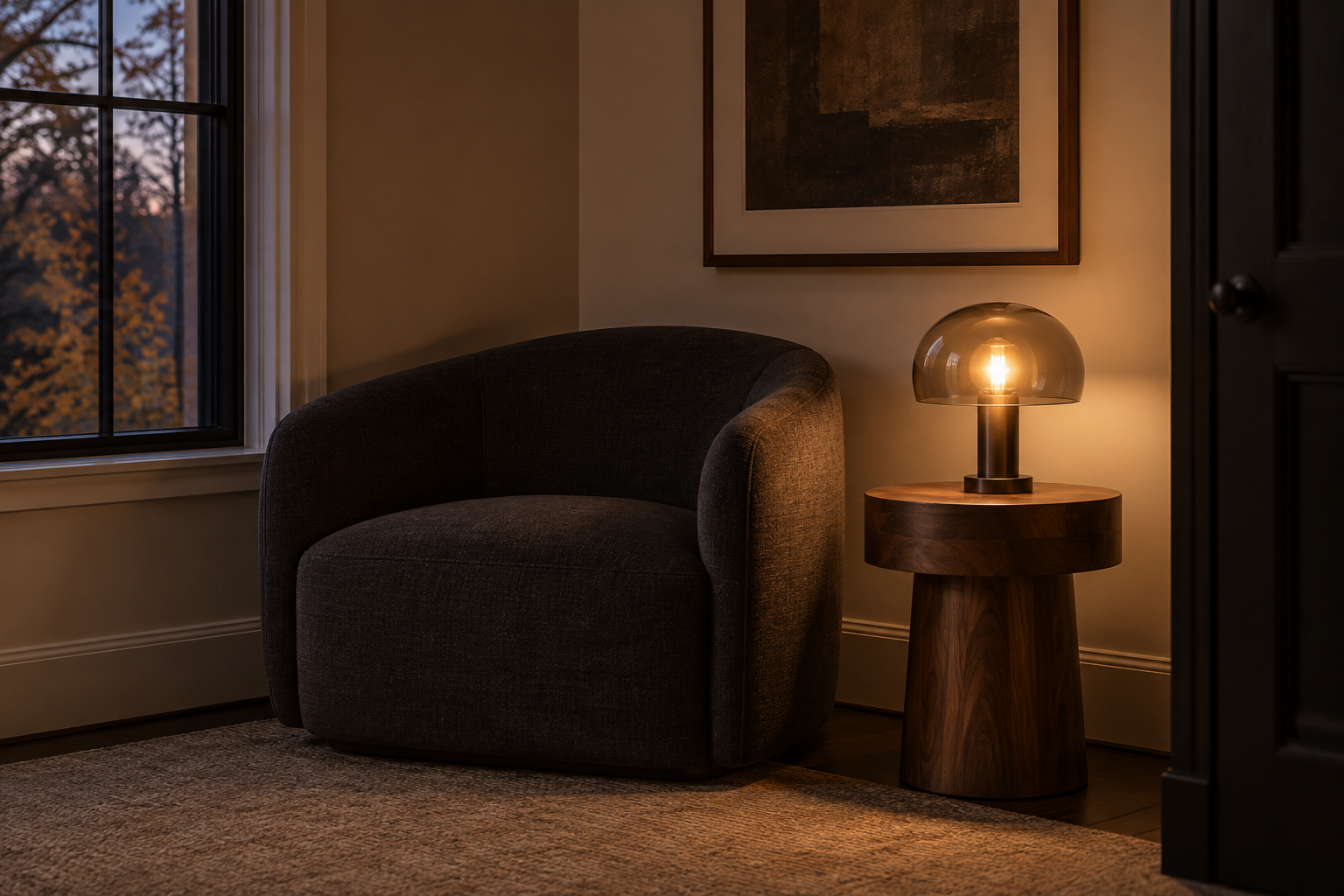
The sun sets earlier in fall than most people adjust for right away, and a reading chair or a home-office corner that got plenty of natural light through September can go dim by six o’clock without anyone noticing until the room feels unused. A genuinely warm table lamp, left on earlier in the evening than it was all summer, fixes that directly, the same layered-light thinking behind a living room’s evening lighting applied to one corner. The corner doesn’t need new furniture or a styling pass. It needs to actually get lit before the room goes dark around it.
Let One Fall Texture Reach the Bathroom
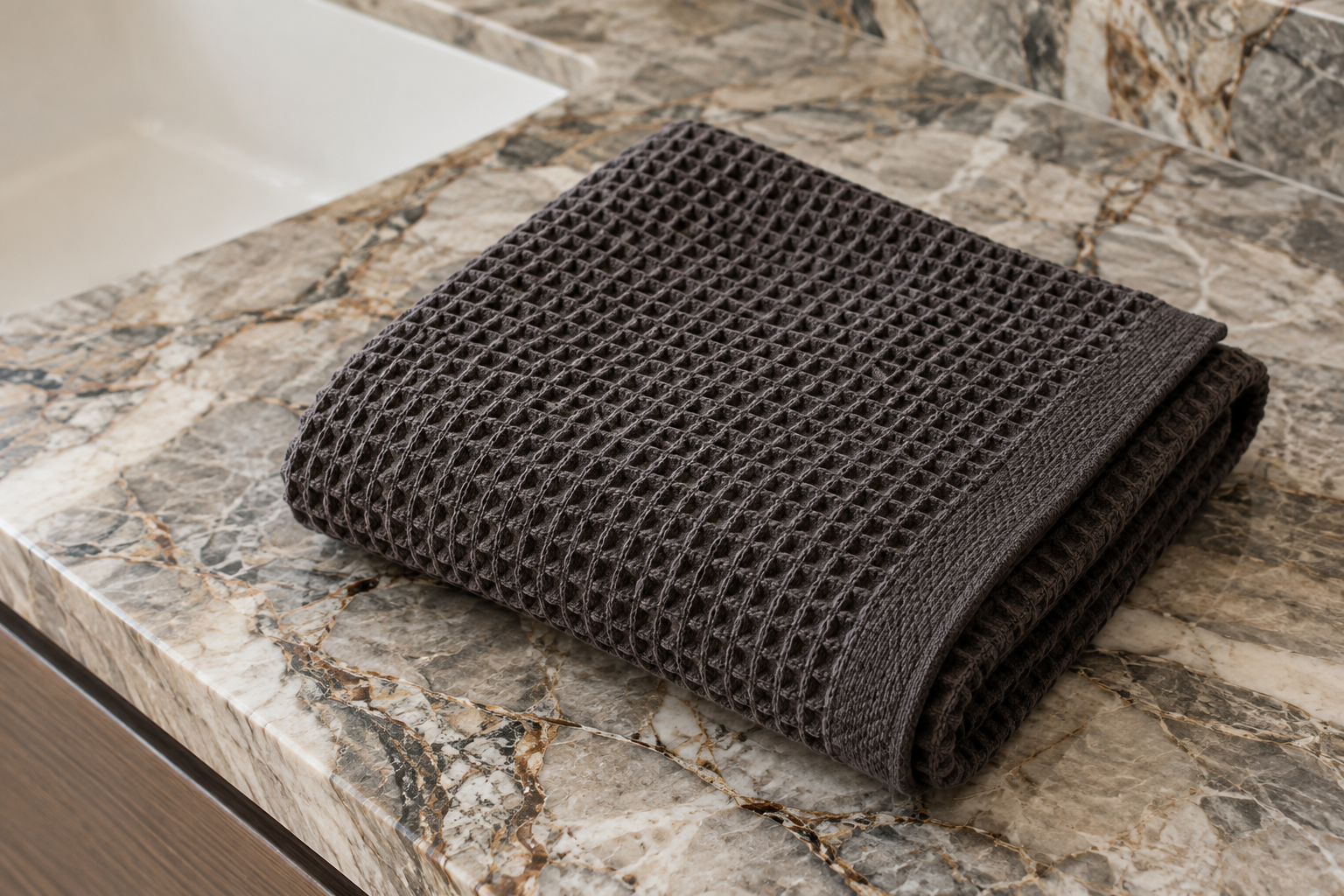
A bathroom rarely gets touched in most seasonal decorating passes, and it mostly doesn’t need to be. One texture change, a heavier waffle-weave towel in a warm charcoal or clay tone instead of a plain white one, is enough to bring the season into a room that otherwise has almost nothing seasonal to say. Resist adding anything else. A bathroom crowded with fall-themed soap dishes and candles starts to feel like it’s trying too hard for a room this size, while one good towel just quietly does its job.
Use the Console Table for Objects, Not Decorations
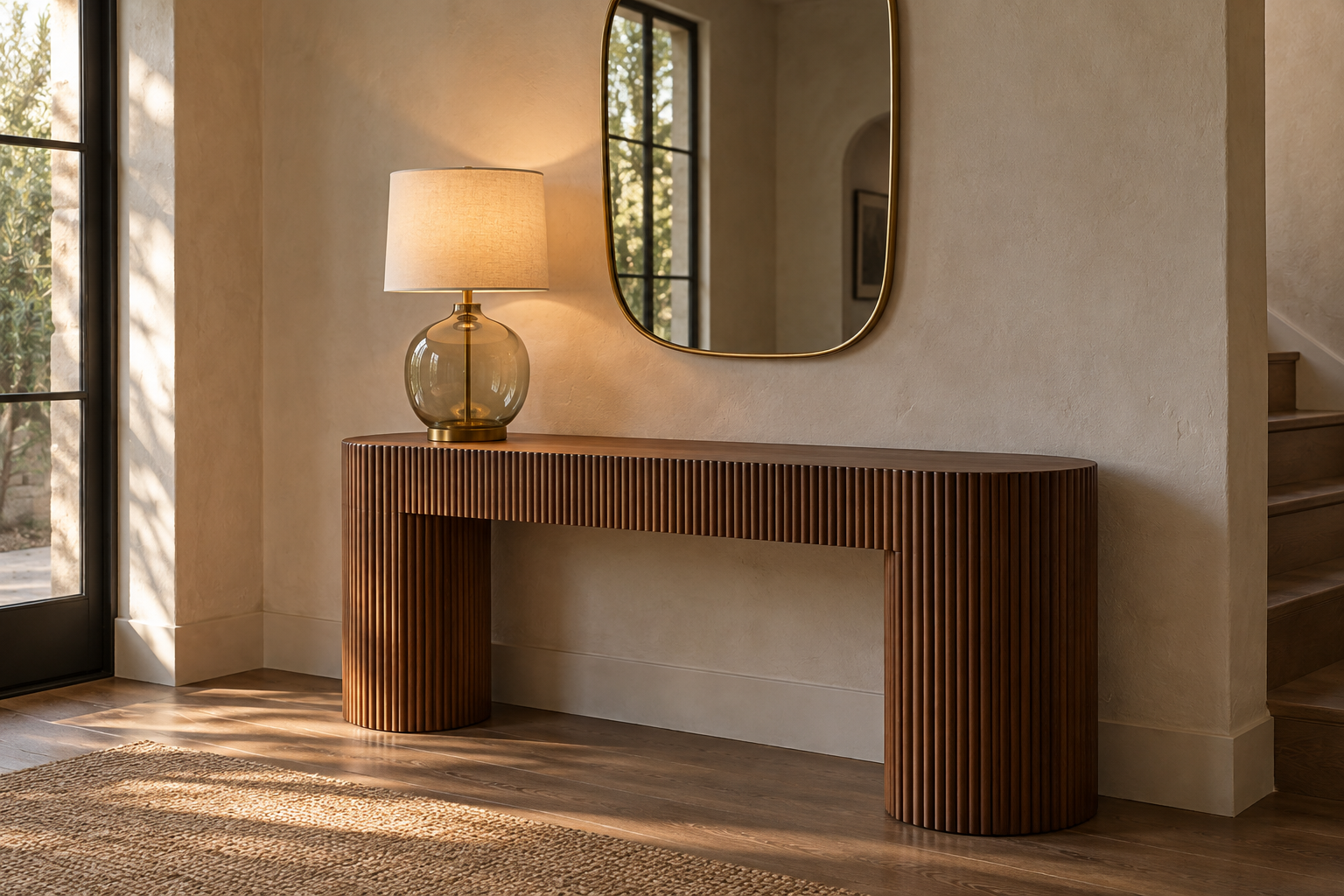
A console table gets decorated more often than it gets edited, and the difference shows. A themed seasonal display, matched candles, a runner, small figural objects, reads as decoration added for the month. A genuinely useful pairing, a sculptural lamp doing real evening light and a mirror doing what a mirror by a door is actually for, reads as furniture that lives there and happens to suit the season, not a display assembled for it. Leave real space around both. Two functional pieces with room to breathe do more than a console crowded with objects that don’t have a job.
Swap One Piece of Art for the Season, Not the Whole Wall
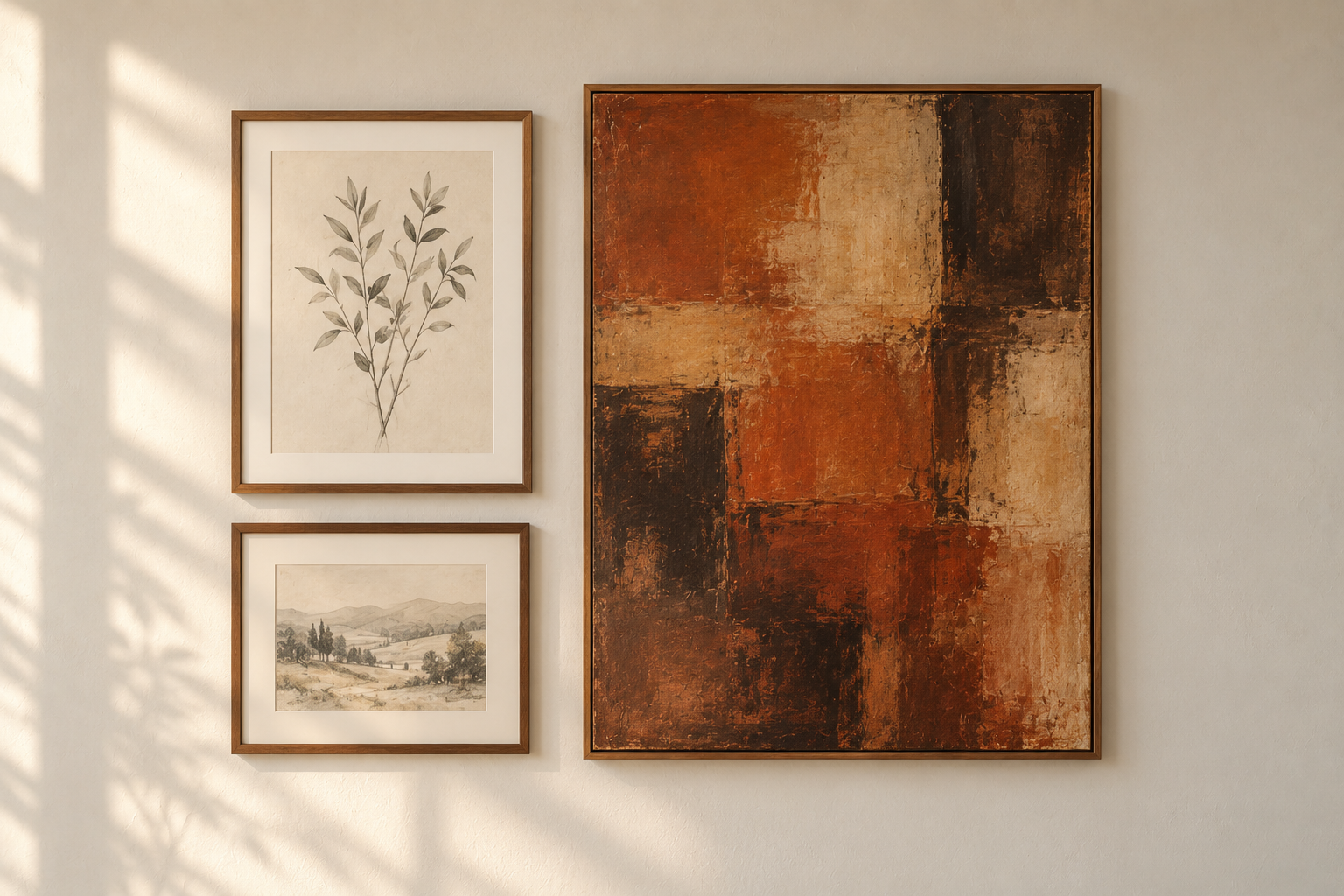
A gallery wall doesn’t need a seasonal overhaul to feel like it’s shifted with the year. Swapping in one piece with a richer, more saturated palette, a deep rust or ochre tone instead of whatever hung there through summer, changes the wall’s whole temperature without touching the other frames at all. This works specifically because the other pieces stay put. A wall where every frame changes at once loses the contrast that made the swap feel deliberate in the first place, and starts to look like an entirely different wall instead of the same one, adjusted.
Keep the Porch Furnished for One More Season
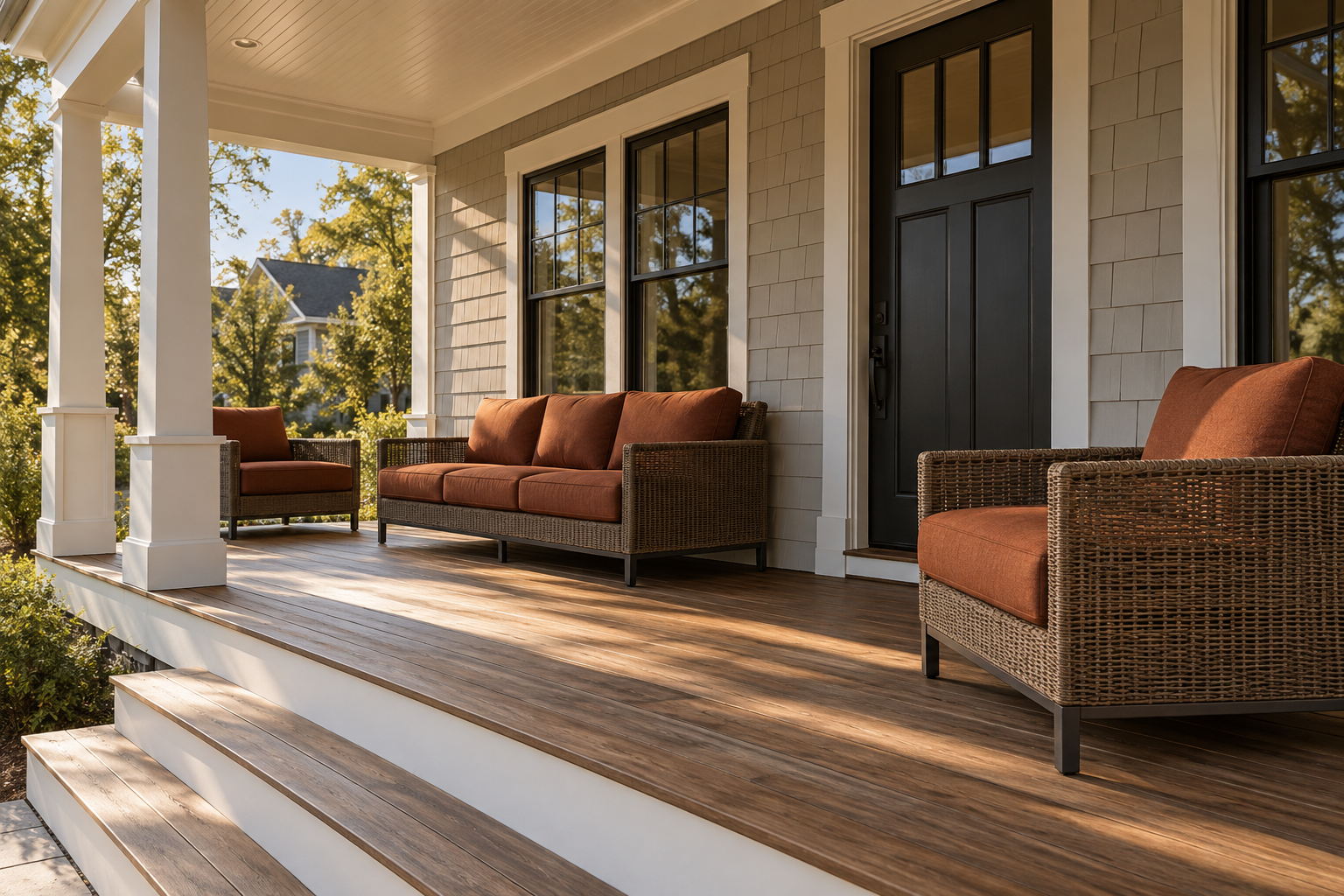
Porch furniture tends to get put away the moment the weather turns, which is often a few weeks earlier than the porch actually stops being usable. Leaving the seating exactly where it is, cushions and all, signals that the space is still meant to be sat in, not stored for winter. This works best on a covered porch, where the furniture isn’t fighting actual weather yet. An open, exposed deck is a different, more seasonal calculation entirely.
Pick the One Room That Actually Earns the Effort
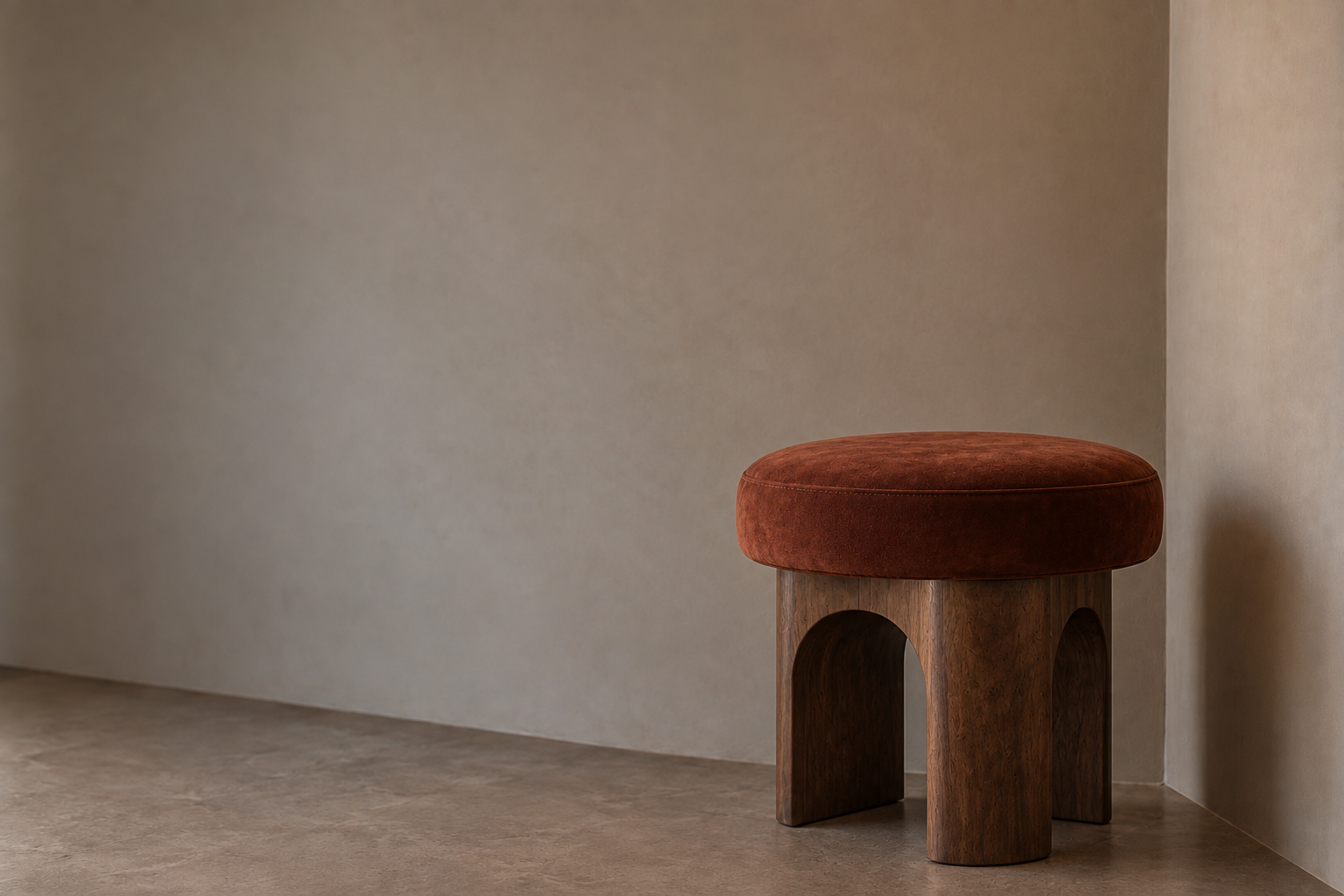
Not every room in a house needs to visibly change for fall, and treating all of them equally usually means every room gets a little bit of effort and none of them gets enough to actually read as different. One well-made piece, a sculptural stool or a single chair with real color and material presence, placed alone in an otherwise bare corner, can do more for a room than five scattered decorations spread across the whole house. Pick the one or two rooms that already get used the most this time of year, and let the rest of the house stay exactly as it was.