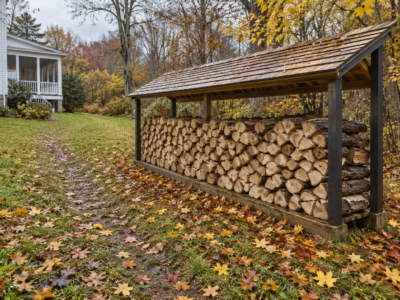
The first hard frost changes what a patio is for. Chairs that got used every evening in early autumn sit wet for days, cushions stay damp under a gray sky, and the umbrella that shaded lunch all summer starts catching the wind. Some of that furniture will come through winter outside with no trouble. Some of it will crack, rust, or mildew if it stays.
Which is which depends mostly on what each piece is made of, and on how dry everything is when it’s put away. This guide sorts the furniture by material first, then covers cleaning, cushions, covers, and indoor storage, and ends with the umbrella, fire pit, and grill.
Start With What Each Piece Is Made Of
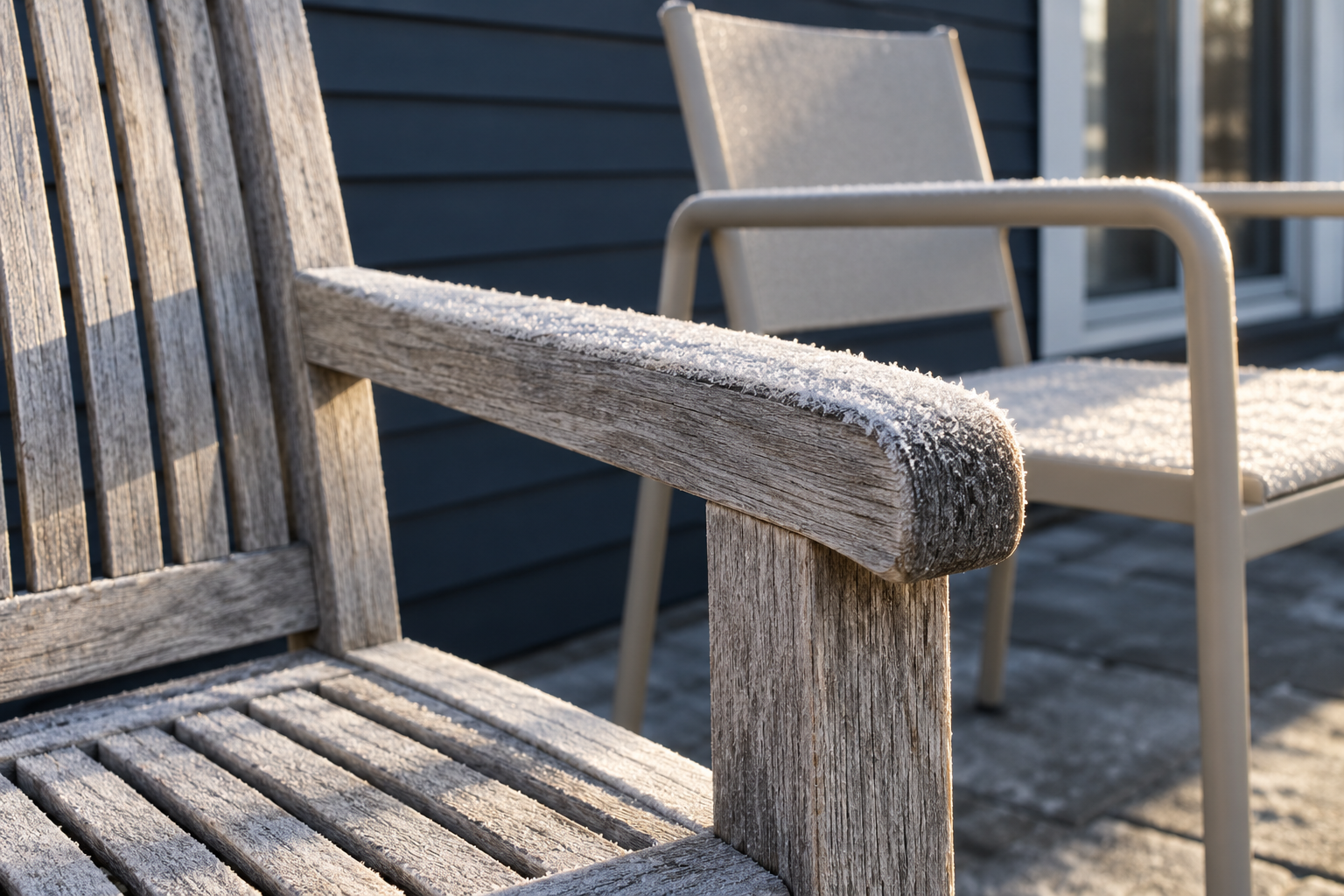
Teak and other dense tropical hardwoods can stay out all winter. Left uncovered, teak weathers to silver gray, a change in color on the surface, not a sign of damage. Powder-coated aluminum and good resin wicker, made from HDPE, also handle cold and wet. A cover keeps them cleaner and stops leaves and water collecting in the weave, but it’s optional. Wrought iron and steel handle cold as well, though water sitting in a chip in the paint starts rust, so touch up chips before winter.
Everything else is safer indoors. Cheap molded plastic can turn brittle in hard cold and crack when knocked or loaded with snow. Softwood that isn’t rated for outdoor use, glass tabletops, and anything upholstered should come inside. How teak, aluminum, and wicker compare goes into each material in more depth.
| Material | Winter plan |
|---|---|
| Teak and dense hardwoods | Leave out, covered or bare |
| Powder-coated aluminum | Leave out, with an optional cover |
| Resin (HDPE) wicker | Leave out, ideally covered |
| Wrought iron, steel | Touch up chips, then cover |
| Molded plastic | Store under cover or indoors |
| Glass tabletops | Store indoors, on edge |
| Cushions and fabric | Store indoors, fully dry |
Clean and Dry Everything First
Pollen, dirt, and bird droppings left on over winter are harder to clean in spring and can stain. Wash frames and tabletops with mild soap and water, rinse, and let them dry completely, in sun and moving air, before they’re covered or stored. Anything put away damp, under a cover or in a shed, grows mildew.
It’s also the easiest time to tighten loose bolts, replace missing glides on chair feet, and touch up paint. A small repair made on a dry autumn afternoon is a lot easier than one made after the rust has spread.
Bring the Cushions Indoors
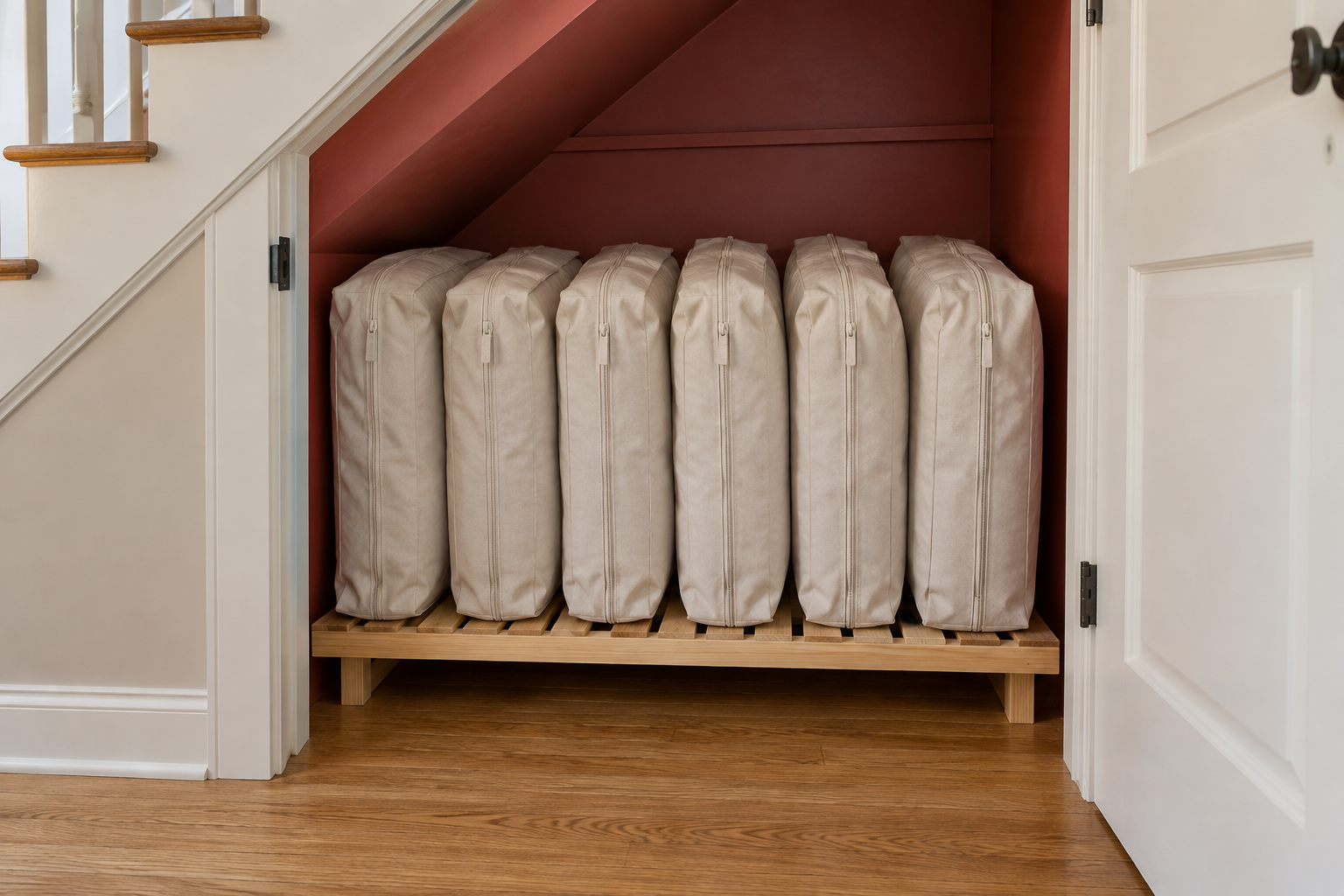
Outdoor cushion fabric resists water and fading, but the foam inside still soaks up moisture, and a cushion that’s put away damp grows mildew over the winter. Bring cushions inside even if the furniture stays out. Brush them off, wash any removable covers according to their care labels, and dry everything fully, foam included, which can take a couple of sunny days.
Store them in breathable fabric bags, not sealed plastic, which traps whatever damp is left. Standing them on edge lets air reach both sides. A closet, a dry basement, or a cupboard under the stairs works well. In a garage, keep them on a shelf, off the concrete, which stays cold and damp, and away from where mice can nest in them.
Cover What Stays Out So Water Runs Off
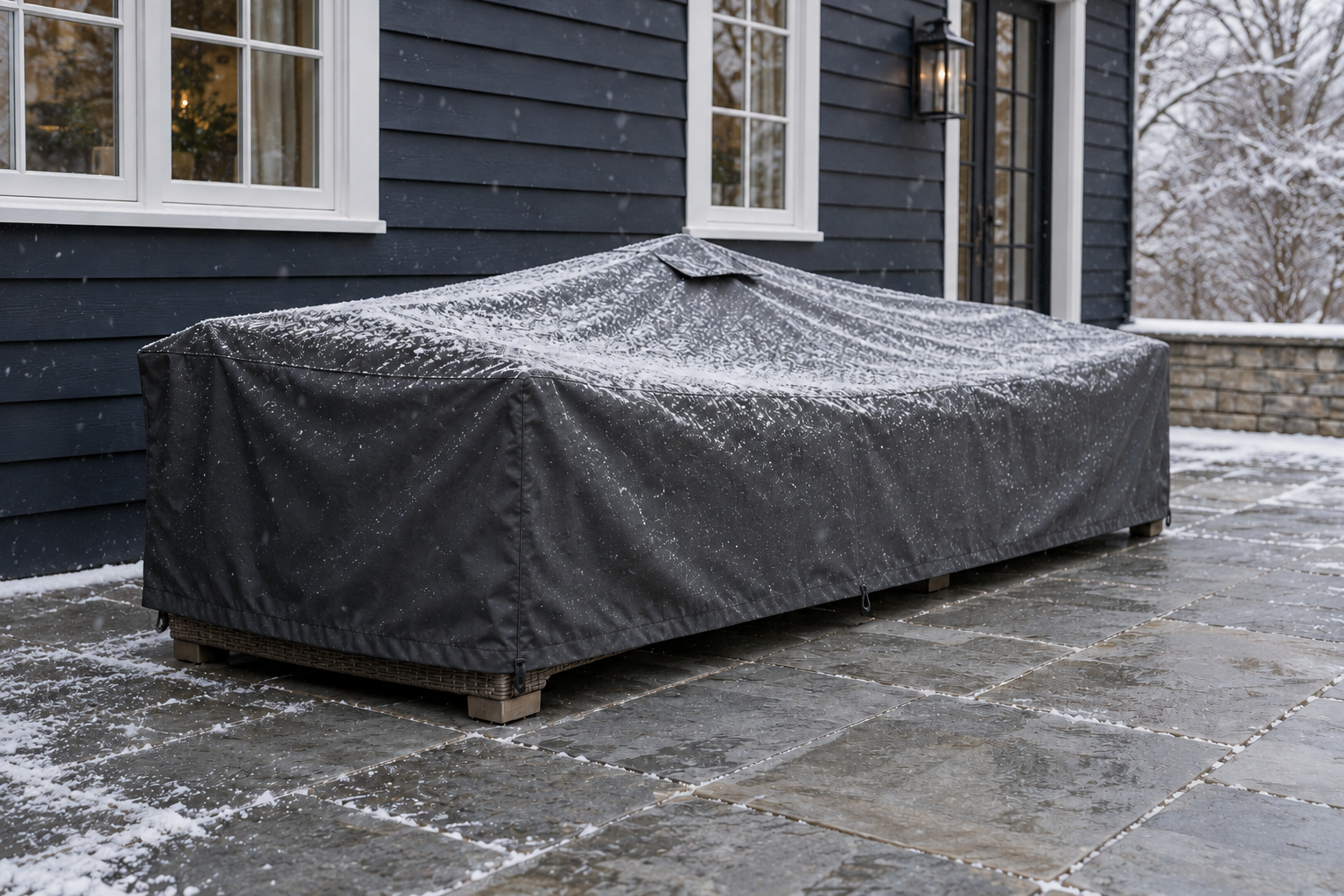
A good cover is breathable, fitted, and vented. A plastic tarp tied over a table traps condensation underneath, and the furniture stays wetter than it would uncovered. Breathable fabric with vents lets moisture escape, and straps or a drawcord keep the cover on in wind. The hem should stop above the ground, since a cover dragging in a puddle wicks water back up.
Water collects in a flat cover and weighs it down. Raise the middle with a cover support pole, or an upturned bucket, so rain and snow run off. After heavy snow, brush the covers off so the weight doesn’t stretch them or bend lighter frames. Stack chairs if they’re made to stack, and group pieces under fewer, larger covers.
Store What Comes In Off the Floor
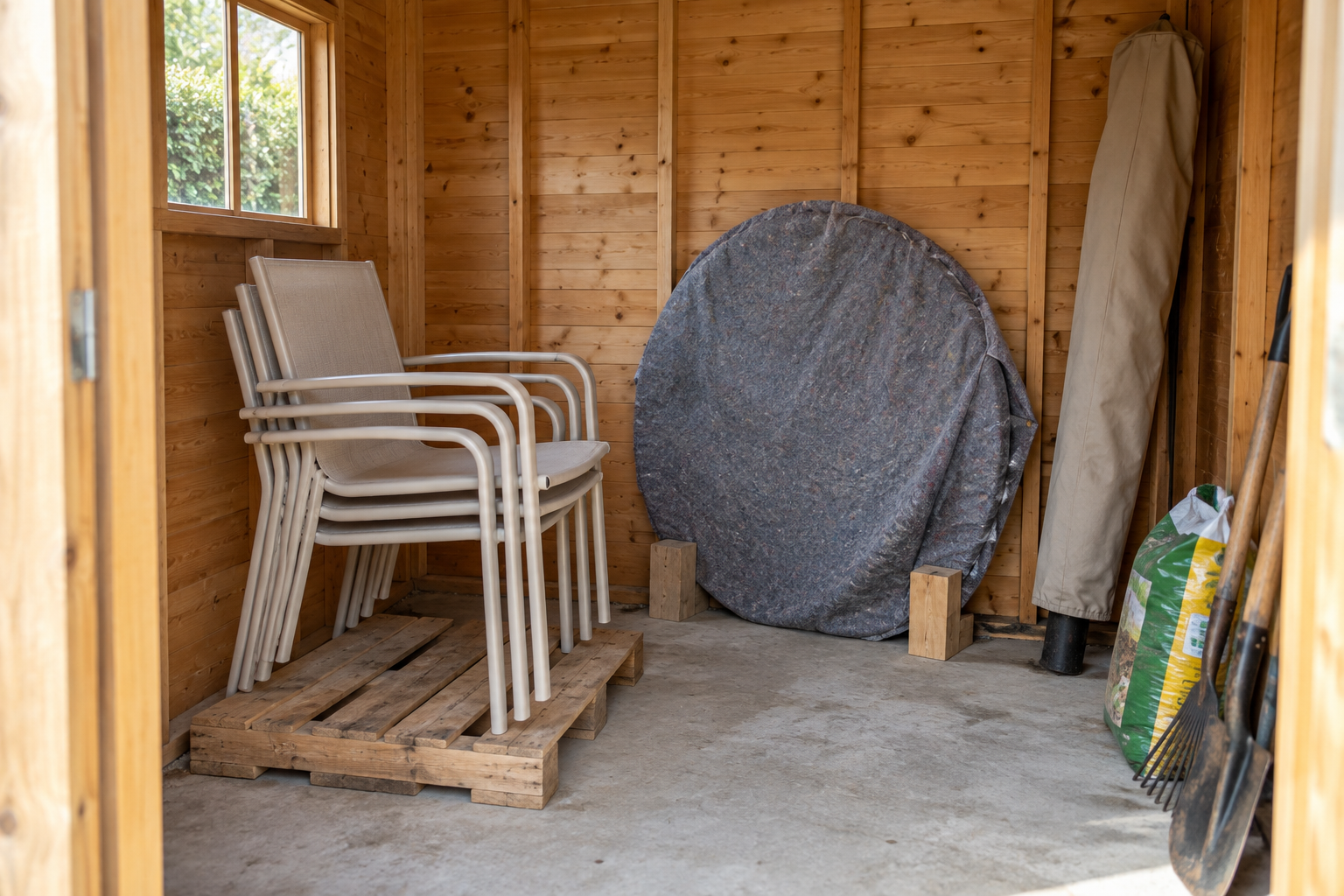
Folding and stacking chairs, small side tables, and any softwood pieces can go into a garage, shed, or basement. Keep them off bare concrete, on a pallet or a shelf, where they stay drier, and throw a cotton sheet over them to keep off dust. Plastic sheeting traps condensation the same way a tarp does outside.
A glass tabletop is the piece most likely to break over winter, from snow and ice on top of it or from a knock in a crowded shed. Lift it off its base, wrap it in a moving blanket, and stand it on edge against a wall, braced so it can’t slide, with nothing stacked against it.
Close Up the Umbrella, Fire Pit, and Grill
Close the umbrella, let the canopy dry completely, and store it indoors in its cover. Left open or even closed outside, an umbrella catches the wind, and a winter storm can tip it over along with its base. Drain a base that’s filled with water before the first freeze, since water expands as it freezes and can split the plastic.
Clear the ash out of a fire pit before covering it, since wet wood ash turns into a caustic sludge that eats at steel. A grill can stay out under a cover once it’s cleaned. Its propane cylinder stays outside too, disconnected, upright, and away from doors and windows. Propane cylinders should never be stored in a garage, shed, or house.
Frequently Asked Questions
Is it better to cover teak or leave it bare?
Either is fine for the wood itself. Bare teak turns silver gray within a season or two and keeps it, and some people prefer that look. A breathable cover slows the change and keeps leaves and bird droppings off, which saves some scrubbing in spring. Avoid wrapping teak in plastic, which holds moisture against the wood and encourages mildew.
Can cushions be stored in a garage?
Yes, if they’re completely dry, in breathable bags, and up on a shelf. The risks in a garage are damp from the concrete floor and mice, which like to nest in cushion foam. A closet or basement inside the house is better when there’s room.
When should patio furniture go away, and when can it come back out?
Put cushions and fragile pieces away before the first hard frost, and while there’s still a dry spell to clean and dry everything. Bring them back once the hard frosts are over and the weather has settled into dry days, since cushions put out in early spring rain will need drying all over again.