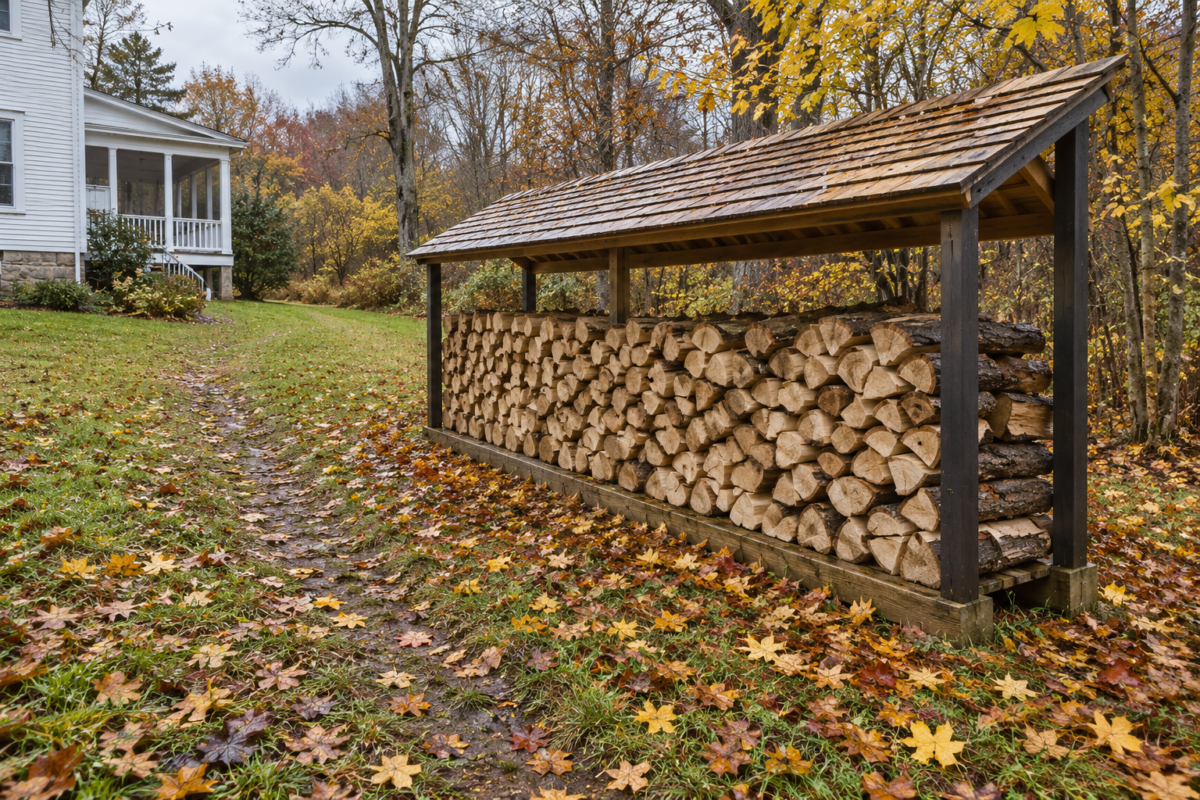
By October the question about firewood is where to put it. A delivery of half a cord is a heap in the driveway, and it has to become a stack that stays dry through the winter and can still be reached in snow. The logs for this week need a second place, near the fire, that doesn’t bring the yard indoors with them.
Those are two kinds of storage. Outside, the stack wants air on every side and a roof over the top. Wood burns well once its moisture is below about 20 percent, and it gets there by drying in the wind. Inside, a few days’ worth is enough. The ideas start at the woodpile and work toward the hearth.
Raise the Stack on Rails
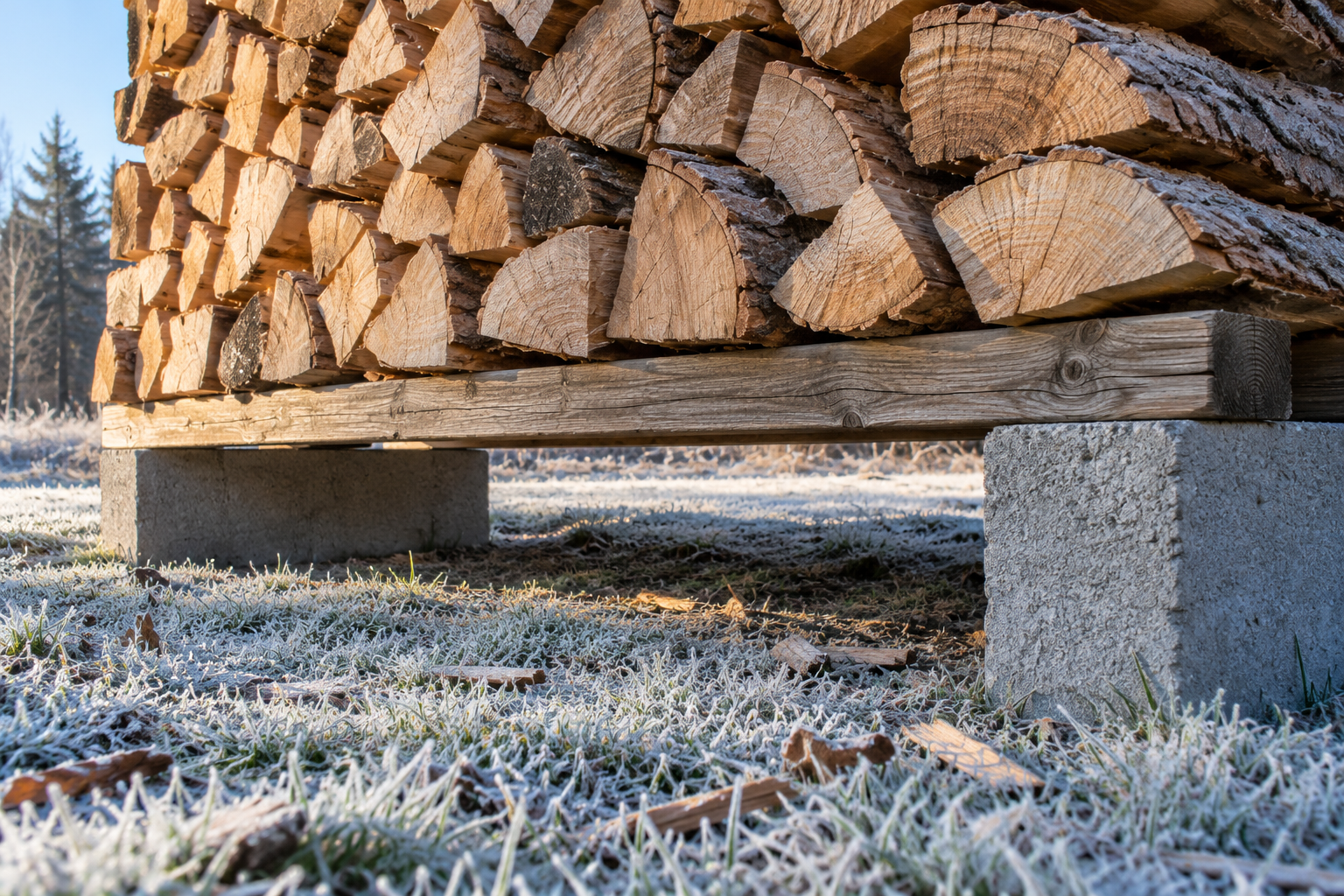
Wood lying on soil draws up damp, and the bottom row rots. Two parallel rails hold the stack a few inches clear so air moves under it. Treated lumber set on concrete blocks does the job, and so does a steel rack with a bar along each side of its base. For logs cut to the common 16 inches, set the rails about a foot apart. A gap under the pile also leaves less shelter for mice and insects than a stack sitting on the ground.
Roof the Top and Leave the Sides Open
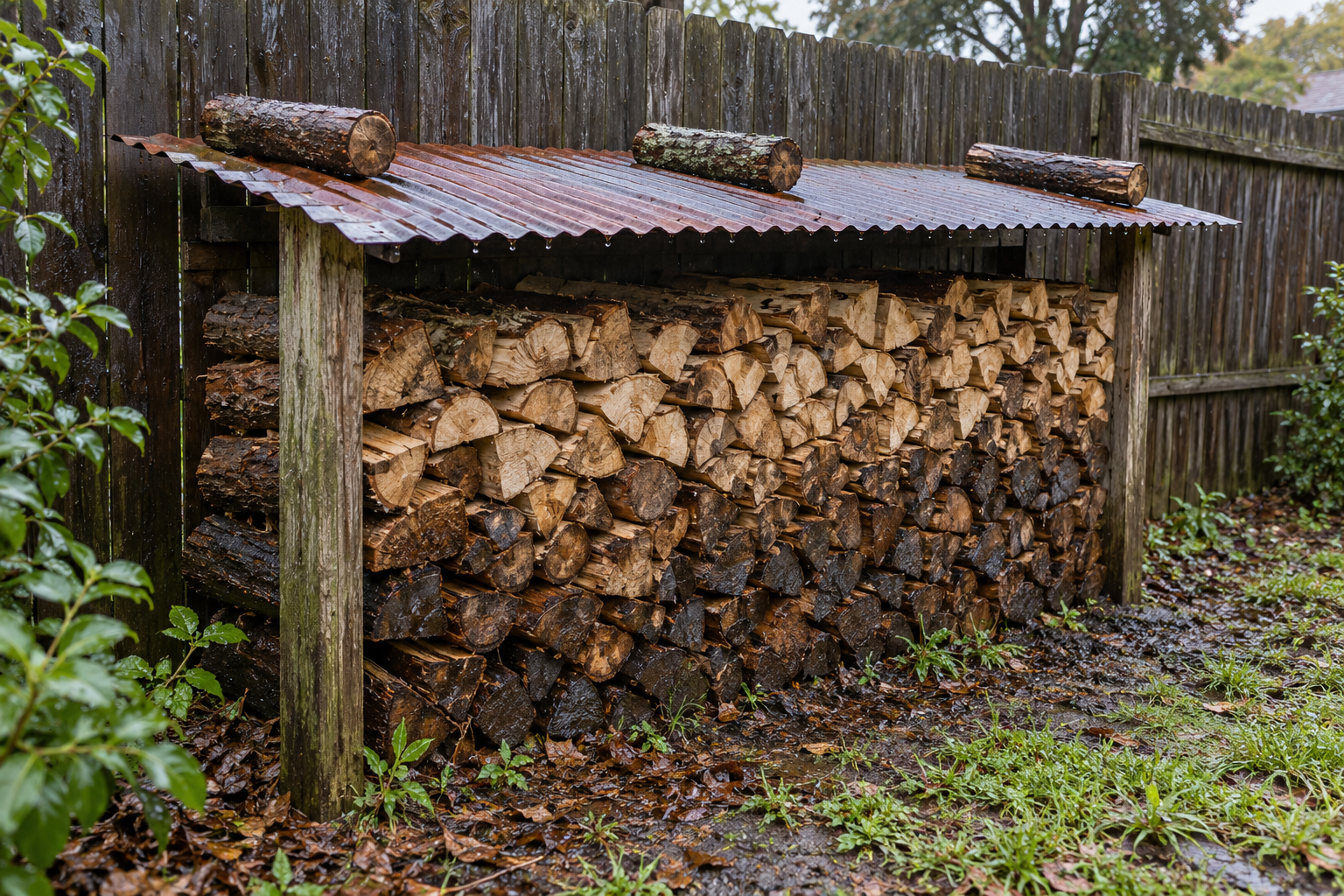
A tarp pulled down to the ground keeps the rain out and holds the moisture in, and wood wrapped that way can stay damp all winter. Cover the top of the stack only. A sheet of corrugated metal weighted with a few logs, or a fitted cover that reaches a foot down the sides, sheds rain and snow while wind passes through the rest. A spot with sun and wind dries a stack sooner than a sheltered corner behind the garage.
Build a Shed With Slatted Sides
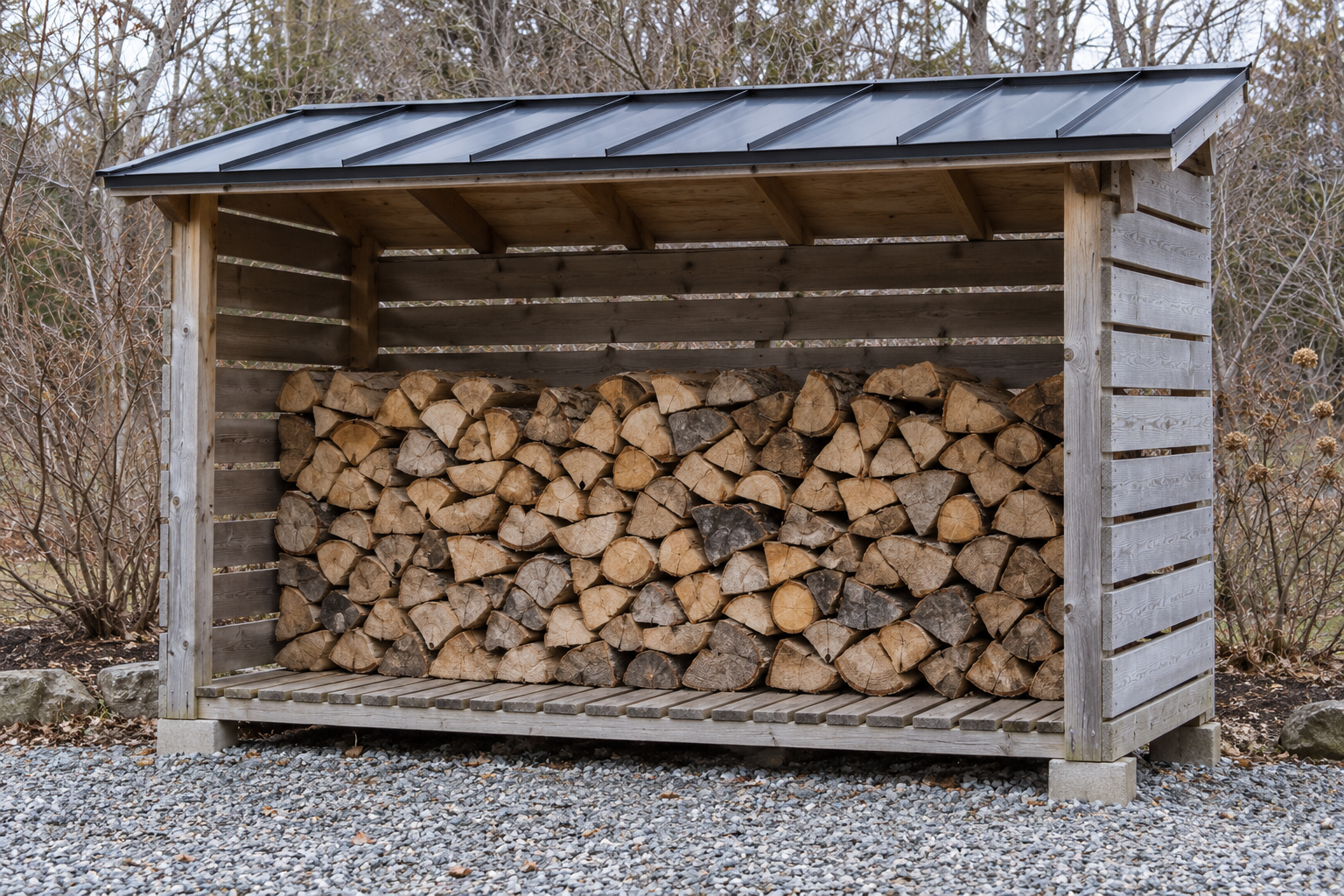
Where a household burns wood all winter, a small shed with an open front saves covering and uncovering a stack. The useful kind is closer to a crate than to a garden shed. It has a roof with an overhang at the front, a slatted floor raised off the ground, and side walls of boards spaced a finger’s width apart. Make it deep enough for two rows of logs. A third row at the back gets the least air.
Keep Two Bays for Two Winters
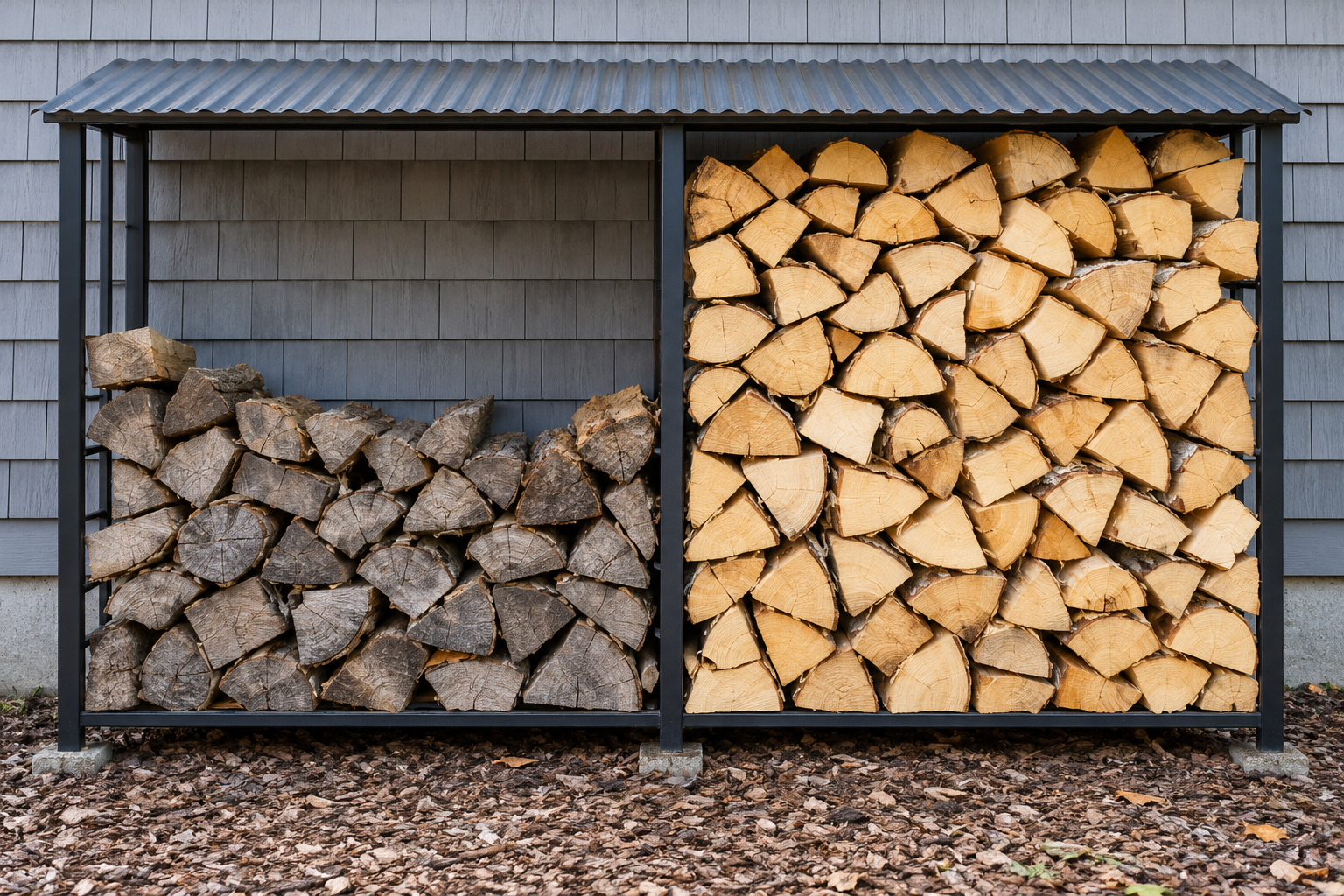
Softwood can be dry in about six months, and a dense hardwood such as oak often takes a year or longer. In a single stack that’s added to at the front and burned from the front, the oldest wood stays buried at the back. Two bays fix the order. One holds wood ready for this winter and the other holds what’s drying for the next. When the first is empty, it’s refilled with new wood and the two trade roles.
Crisscross the Ends
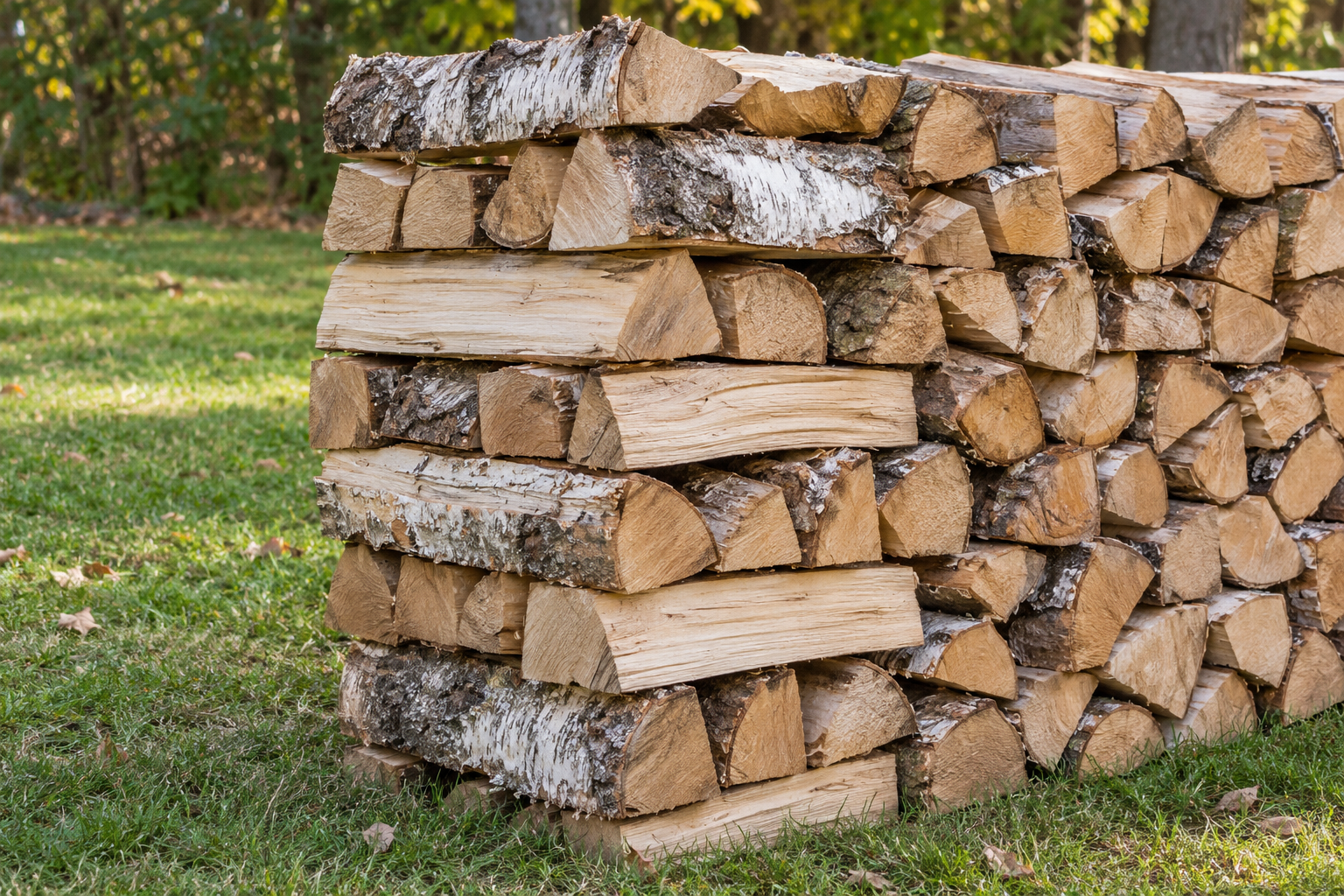
A stack with no rack needs something to stop its ends from rolling out. Build the last 16 inches at each end as a tower. Lay three or four logs side by side, then the next layer across them at a right angle, and keep alternating to the top, like the corner of a log cabin. The two towers act as bookends, and the ordinary rows run between them. Split pieces with flat faces make steadier towers than rounds do.
Stack It in the Round
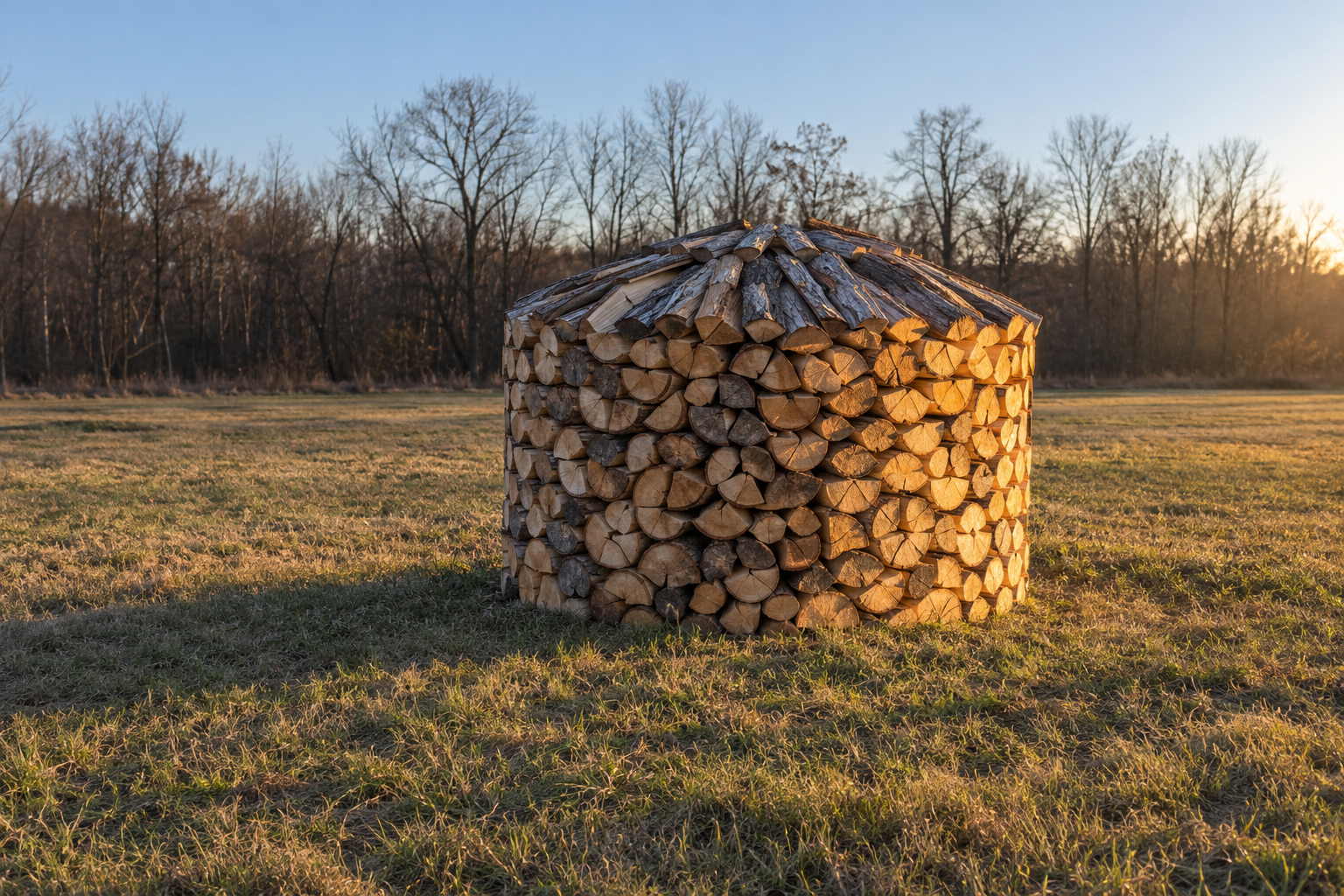
A circular stack, a traditional method in Germany, stands without any supports. Logs go down in a ring about 6 feet across with their ends pointing outward and tilted a little toward the middle. The center is filled with odd pieces stood on end, and the top is finished with a layer laid bark side up, overlapping like shingles.
It holds a great deal on a small patch of ground. It also takes an afternoon to build and can’t be burned from one end, so it suits wood that will sit for a year.
Keep the Main Pile Away From the House
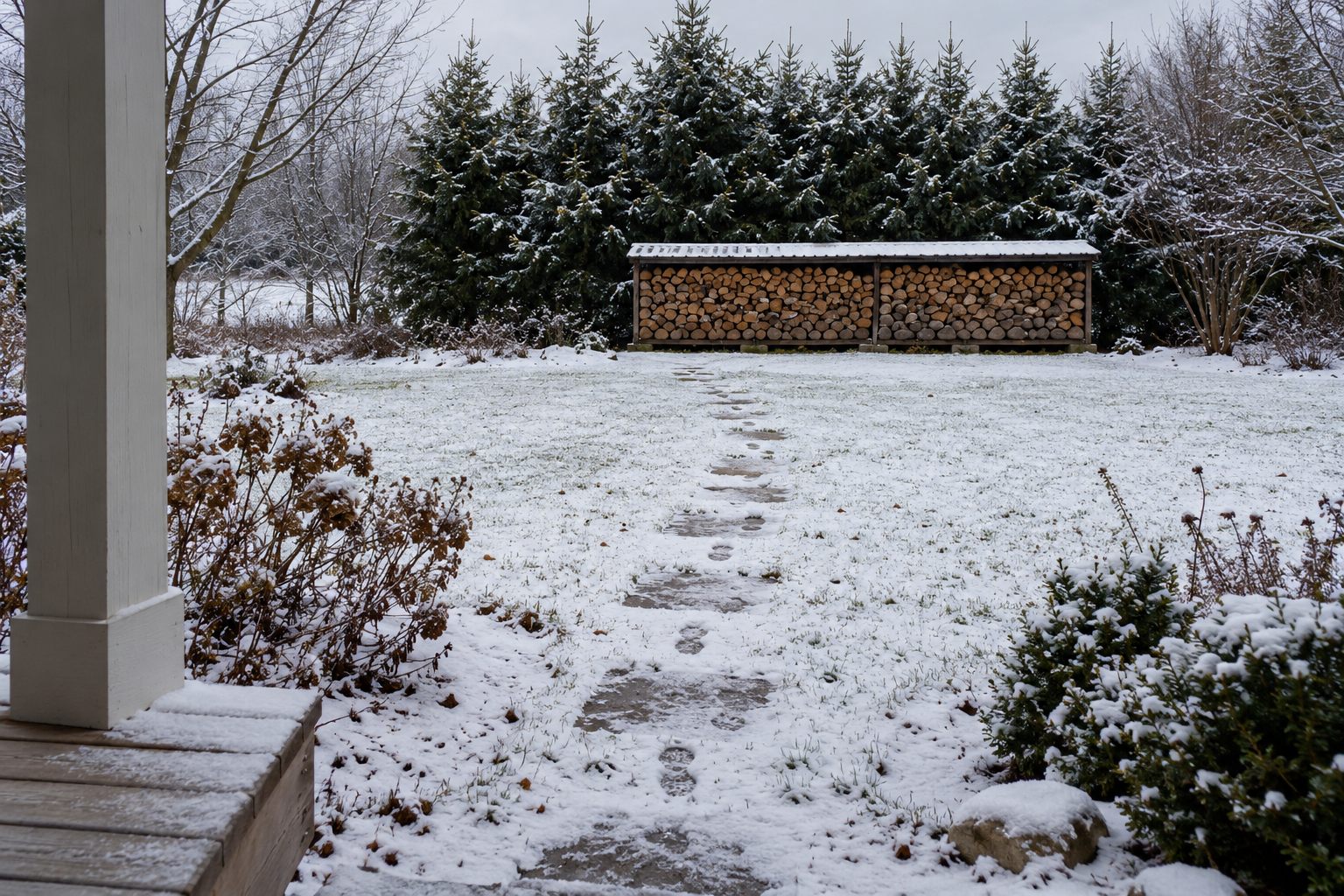
Stacked wood shelters insects and mice, and some of those insects also damage houses. A pile against the siding gives them a bridge and keeps the wall damp. A distance often recommended for the main pile is about 30 feet from the house, with a small supply kept close.
Pick the spot in October with February in mind. The route to it should be one that gets shoveled, and a few flat stones keep the path usable in a thaw.
Hold a Week’s Wood on the Porch
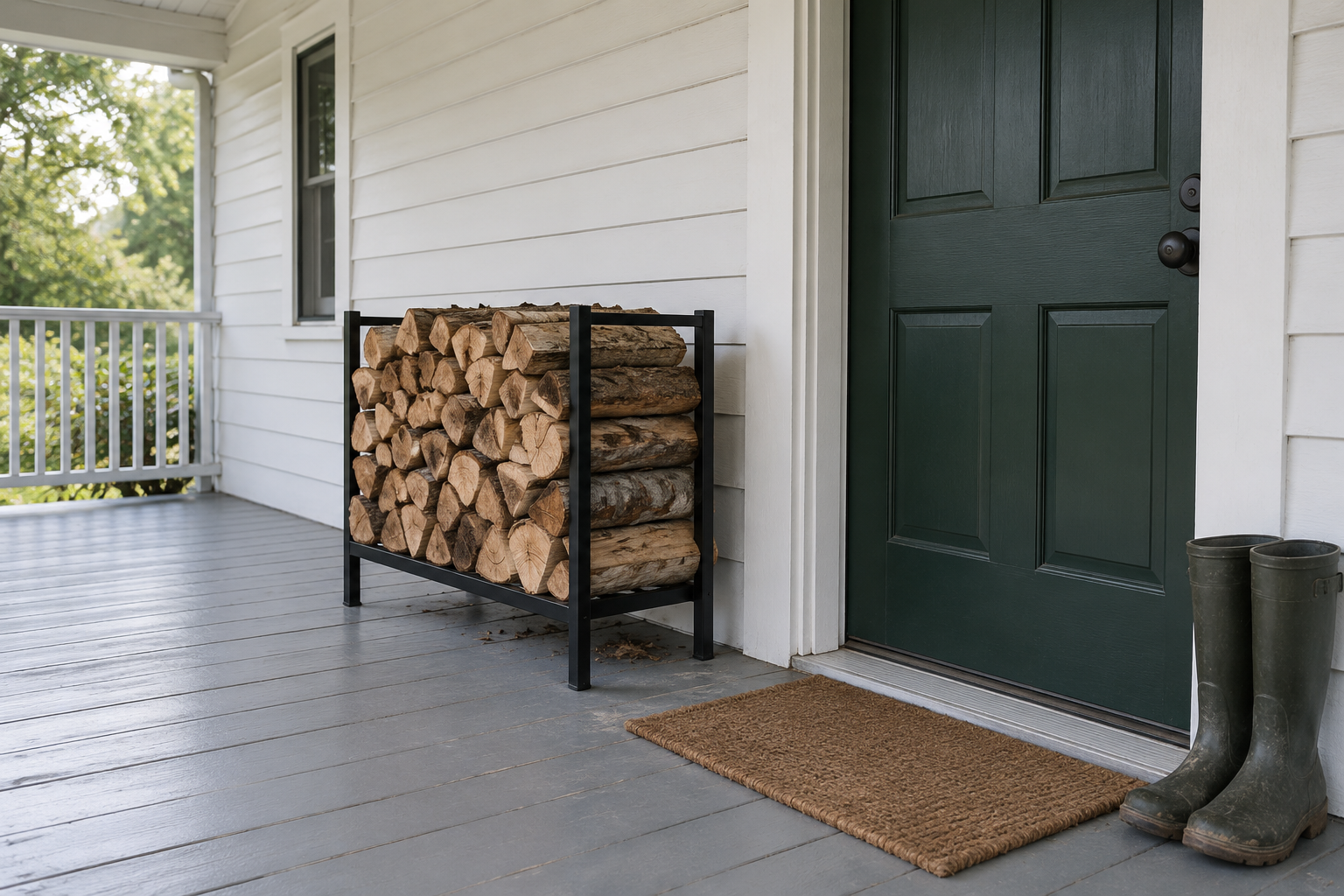
The big pile is a walk away, so a small rack under the porch roof or beside the back door saves a trip in the dark. Size it for about a week of fires and refill it on a dry day. A rack on legs keeps the logs off the porch boards and a few inches out from the wall, which lets both dry after blowing rain.
Haul It on Wheels
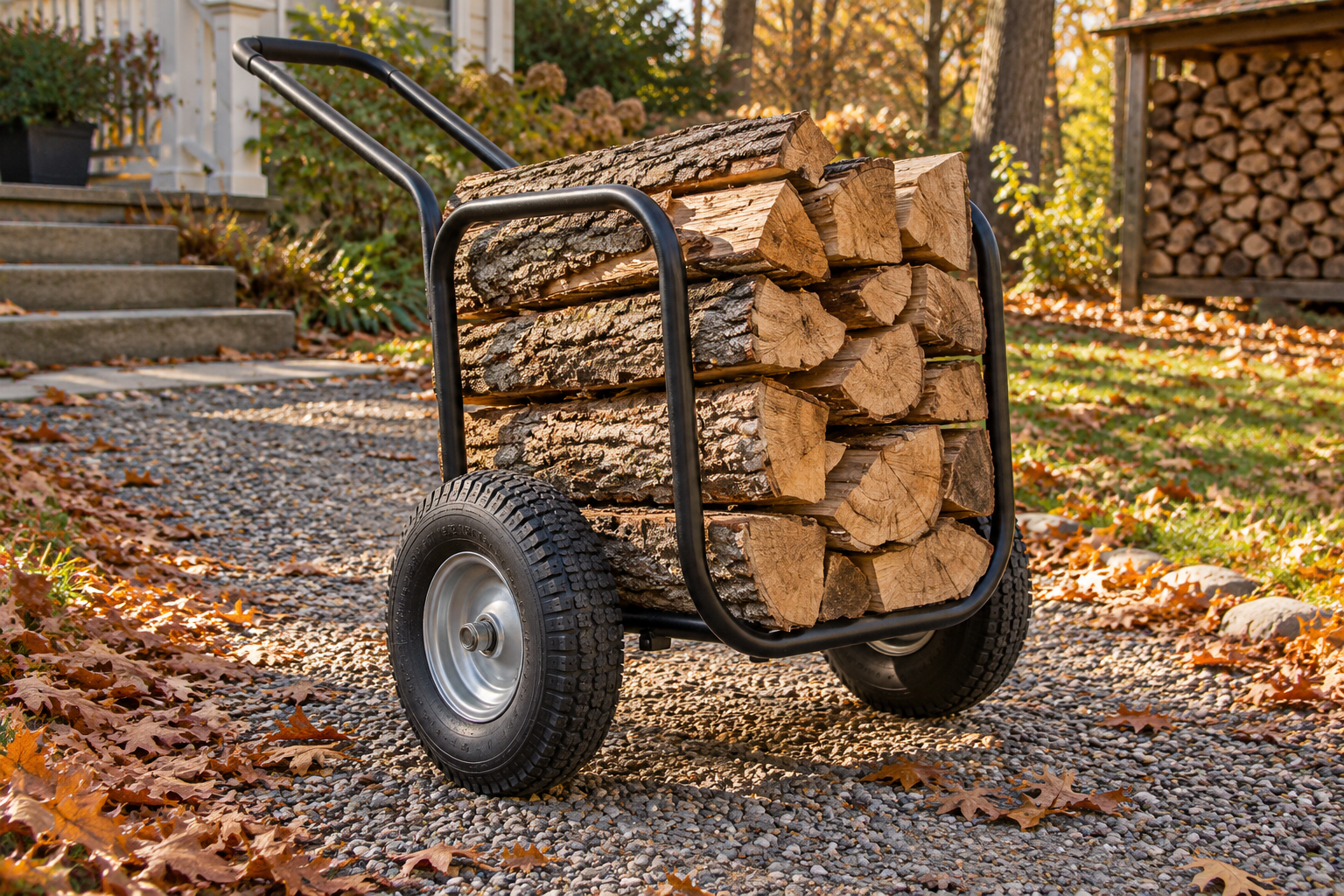
Firewood is heavy, and carrying it across a yard an armload at a time wears thin by January. A log cart with two large tires rolls over grass and up a step or two, carries several armloads, and can stand by the door as a rack. For the last few yards indoors, a canvas sling with two handles holds six or eight logs and keeps bark off a coat.
Give the Day’s Logs a Basket With Handles
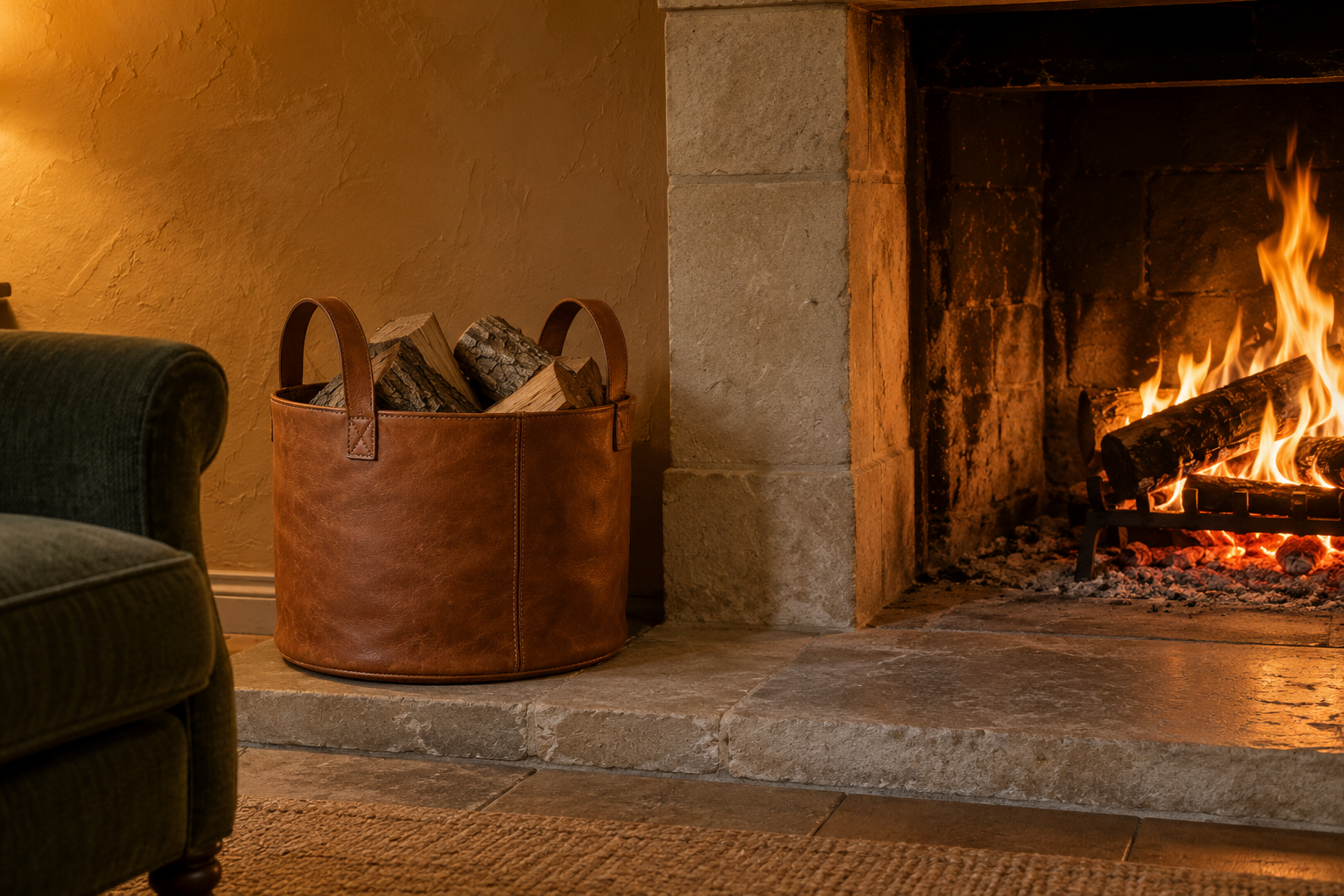
Beside the fire, the best container is one that can be carried out to the porch and back, so the wood is handled once. A deep basket of willow, leather, or thick felt with strong handles does both jobs. Bark, dust, and the occasional spider come in with every load, and a basket with a solid base or a liner keeps them off the floor. Stand it on the hearth, to one side, where stray bits can be swept into the fire.
Stack Upward in a Small Room
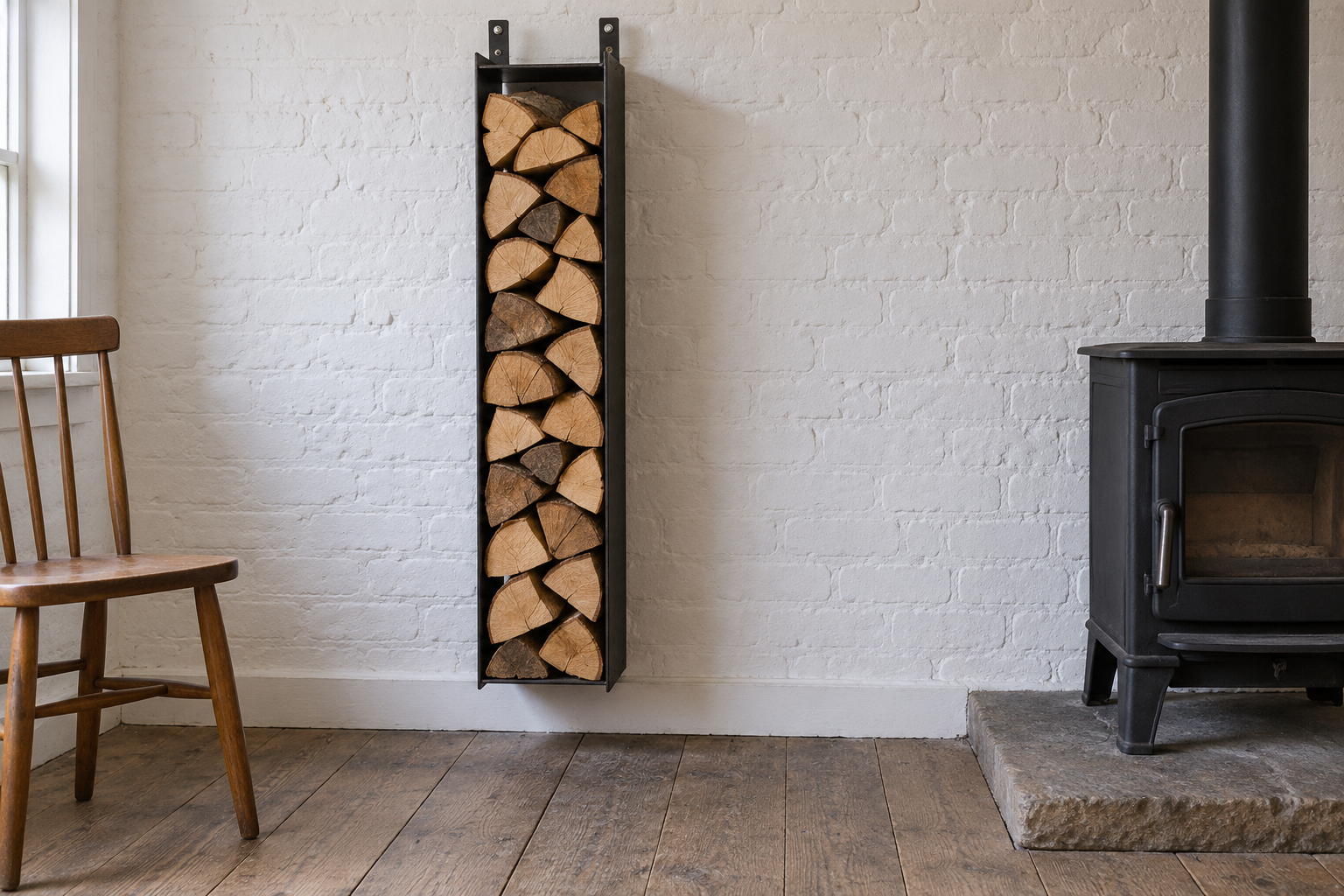
A basket takes a couple of square feet of floor. A tall, narrow steel rack takes about one, and it holds logs in a single column to chest height. The cut ends make a strip of pale, rough pattern against the wall, which a basket hides. A light rack that tall should be fixed to the wall, since a column of logs can tip when one is pulled from the middle. A recess built beside the fireplace is the permanent version.
Keep Kindling in Its Own Box
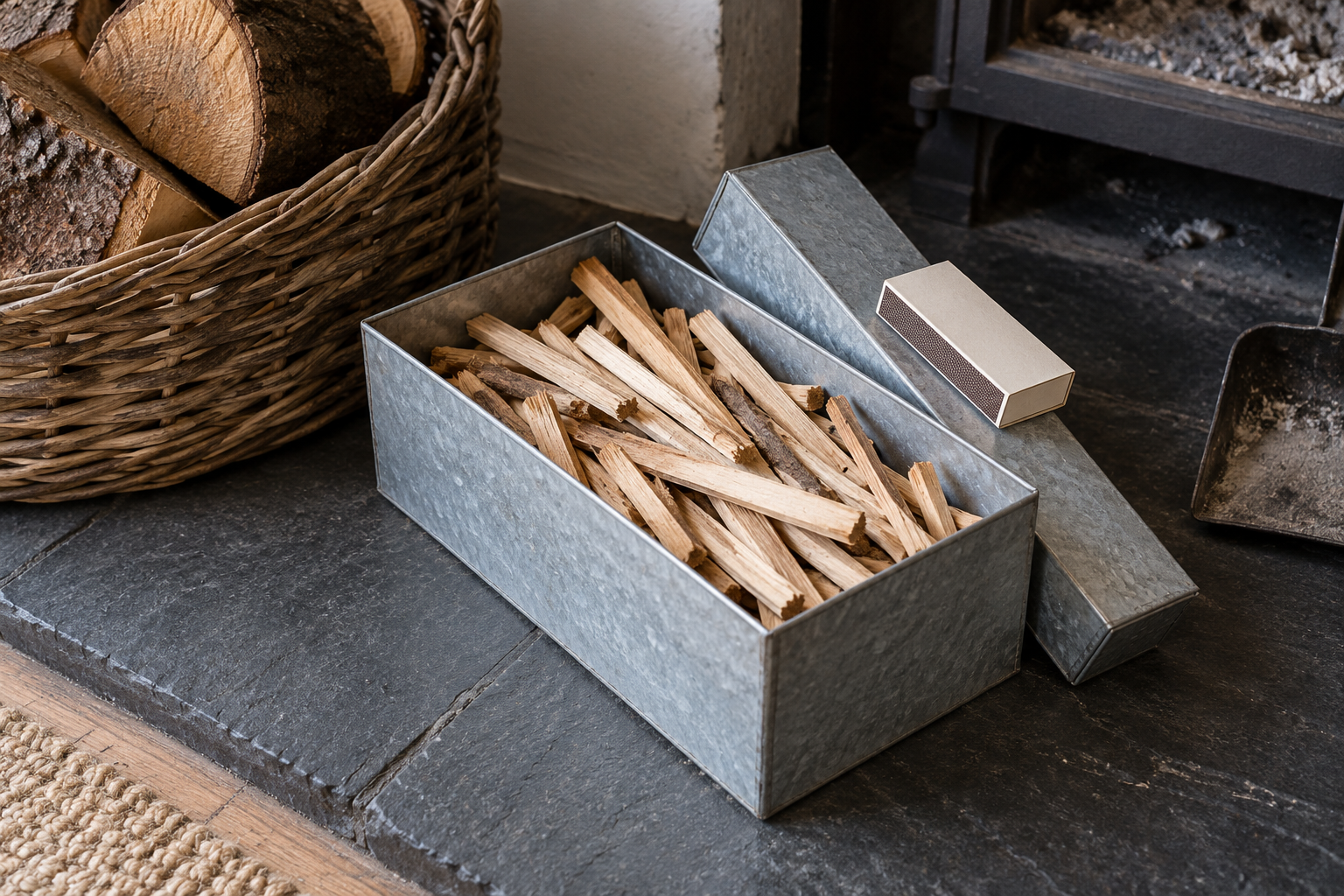
A fire starts with dry sticks no thicker than a thumb, and they vanish to the bottom of a log basket. A separate box by the hearth, a lidded tin or a small crate, holds kindling, firelighters, and matches together. Fill it from the driest wood in the pile. Splitting a few straight logs into sticks on a dry afternoon keeps the box full for weeks.
Leave Space Between the Logs and the Stove
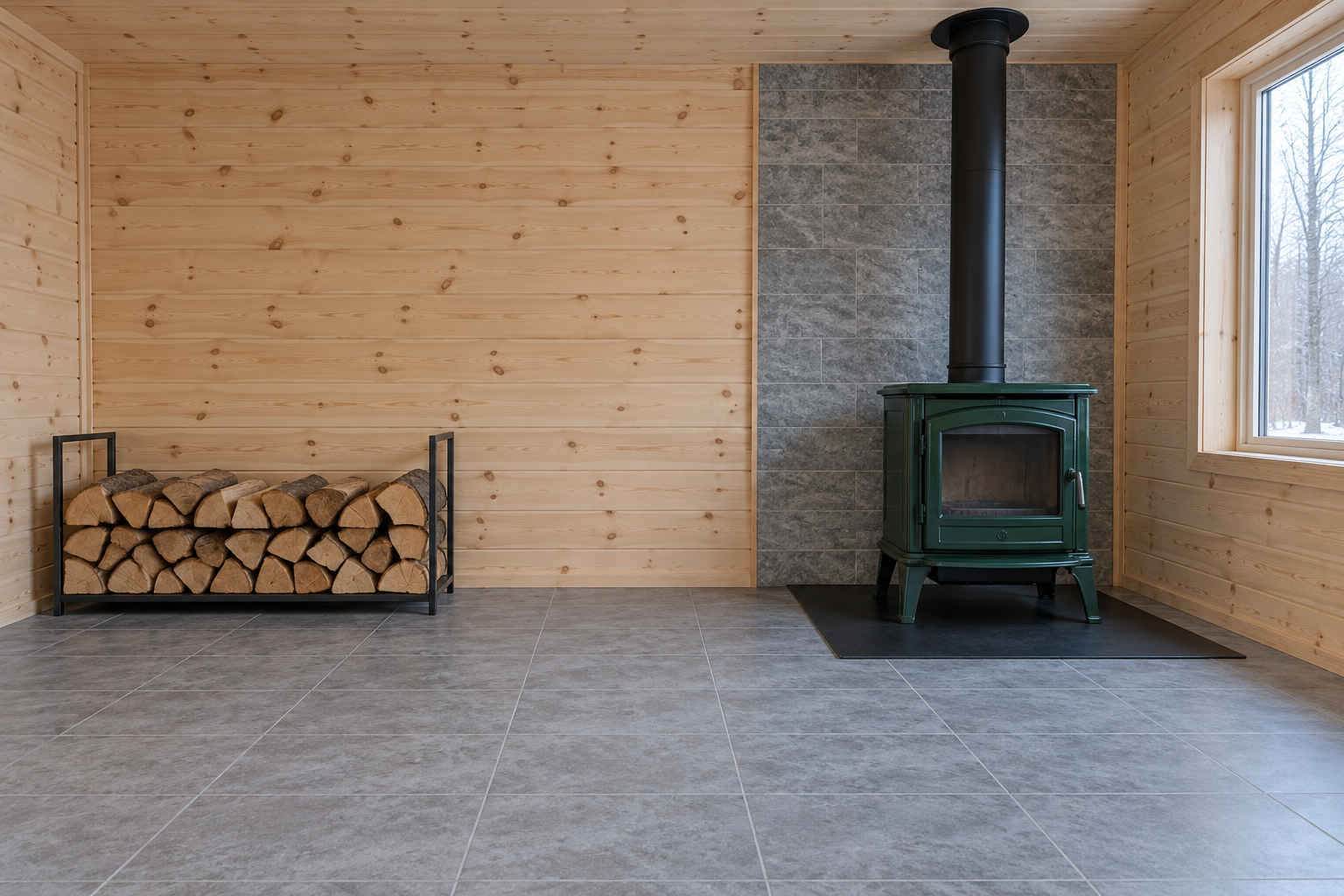
Logs stacked against a wood stove are a fire risk, however convenient the spot. A stove’s installation manual gives a clearance to combustible materials, and firewood counts as one. Keep the indoor stack outside that distance, and never on top of the stove or leaning on its sides. By an open fire, the basket sits to one side of the hearth, clear of where a spark could land.