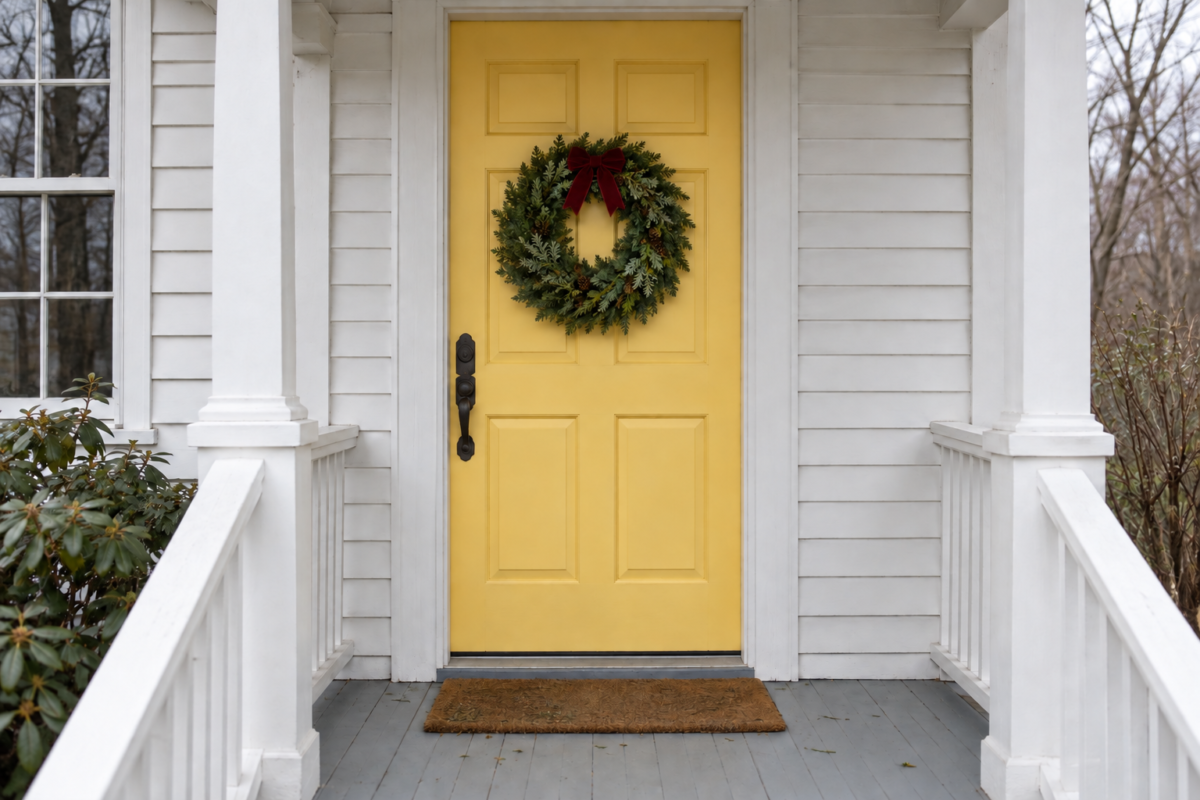
From the sidewalk, a wreath is judged against the door around it. One that covers about two thirds of the door’s width leaves a band of door showing on each side, wide enough that the wreath sits on the door and doesn’t crowd its edges. That proportion is a convention, and nothing goes wrong if a wreath is an inch or two either side of it.
Front doors are commonly 36 inches wide, and two thirds of that is 24 inches. Other doors need the sum done again.
Measure the Door, Then Check How the Wreath Was Measured
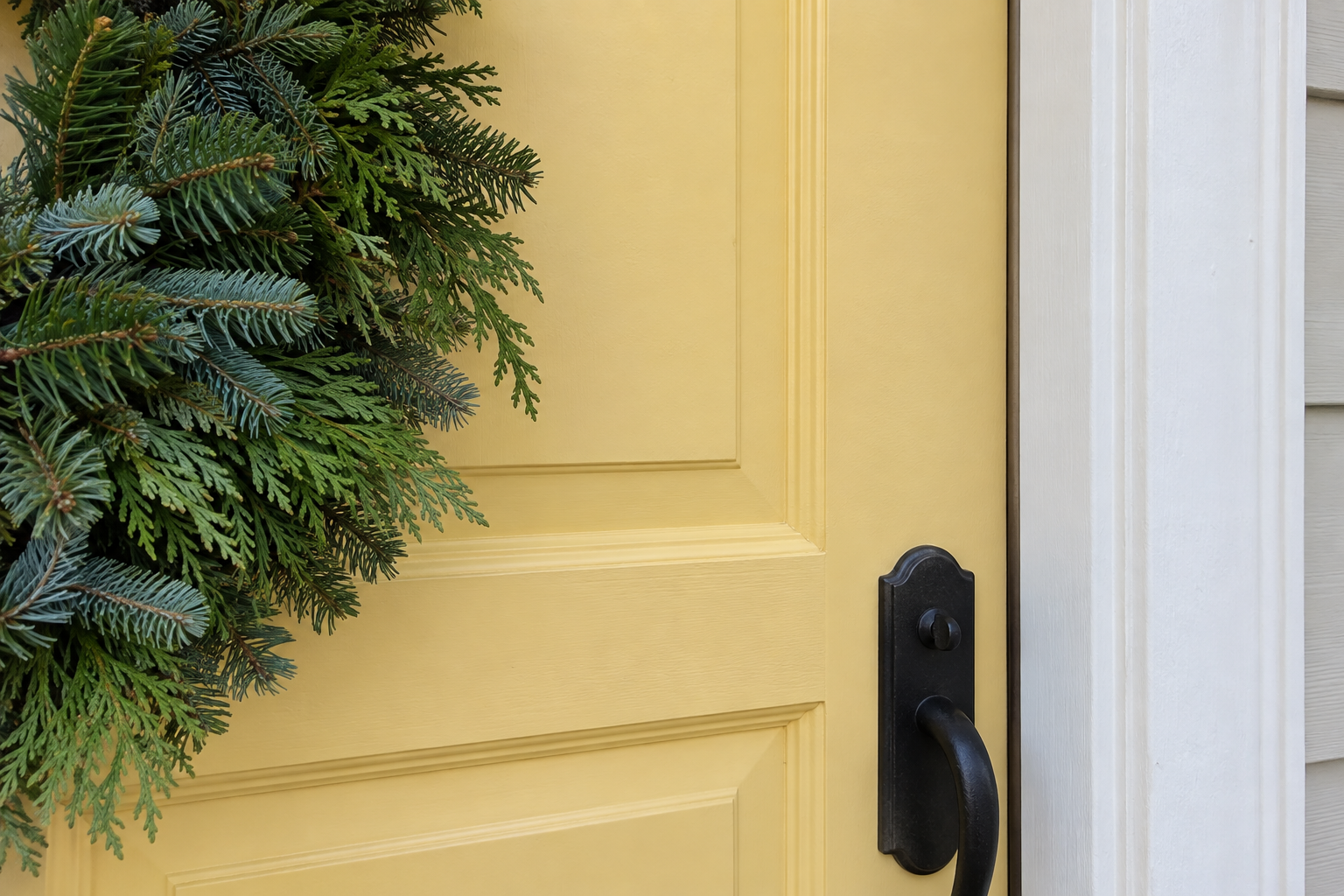
Measure the door itself from edge to edge, leaving out the trim. Two thirds of that is the wreath’s diameter, taken across the outermost tips of the greenery.
| Door width | Wreath diameter | Door showing on each side |
|---|---|---|
| 30 in | 20 in | 5 in |
| 32 in | 20 to 22 in | 5 to 6 in |
| 36 in | 24 in | 6 in |
| 42 in | 28 in | 7 in |
A wreath one size up fills the door and suits a house seen from a long way back. One size down can look sparse on a wide, plain door.
Check what the seller’s number refers to. An artificial wreath is usually listed by its full width. A fresh one is sometimes sold by the size of the wire ring inside it, and the greens add several inches all round, so the finished wreath is a good deal wider than the number given.
Glass, Panels, and a Knocker
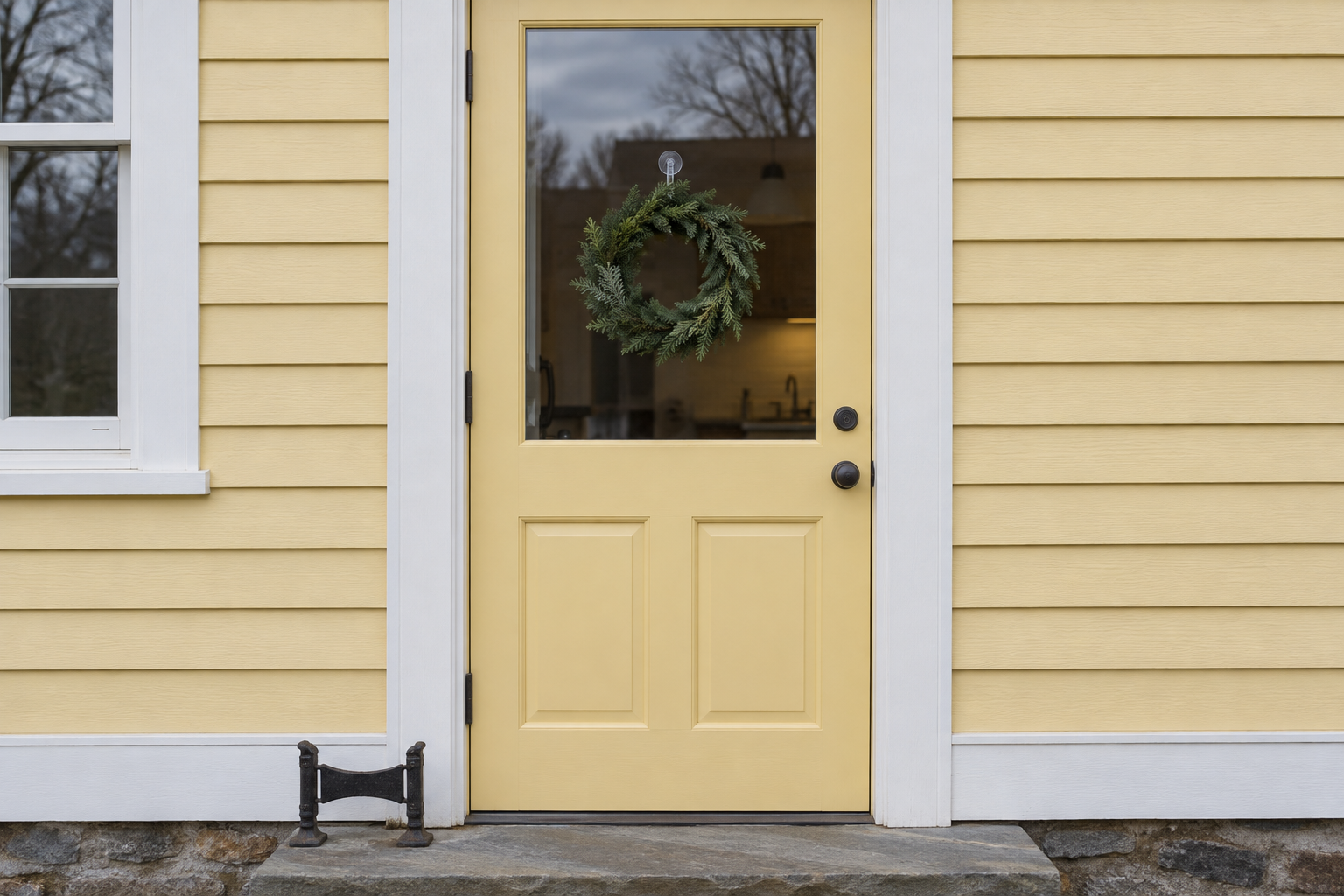
On a door with a large pane of glass, the wreath usually hangs on the glass, and the glass becomes the thing to measure. Take two thirds of the width of the pane, so that glass shows all the way round the wreath. A half-glazed door with a pane 22 inches wide takes a wreath of about 14 or 15 inches.
On a paneled door, a wreath looks settled when it’s centered on the upper panels, over the rail between them. A knocker or a peephole in that spot is a reason to hang the wreath a little lower or to choose one with an open center that frames it.
Hang the Center Near Eye Level
The center of the wreath goes 56 to 60 inches above the bottom of the door, about eye level for many adults. On a standard door 80 inches tall, a 24 inch wreath centered at 58 inches has its top edge at 70, which leaves 10 inches of door above it. On a taller door, keep the center at the same height. Hung 10 inches from the top of a 96 inch door, the same wreath would have its center at 74 inches, above most people’s heads.
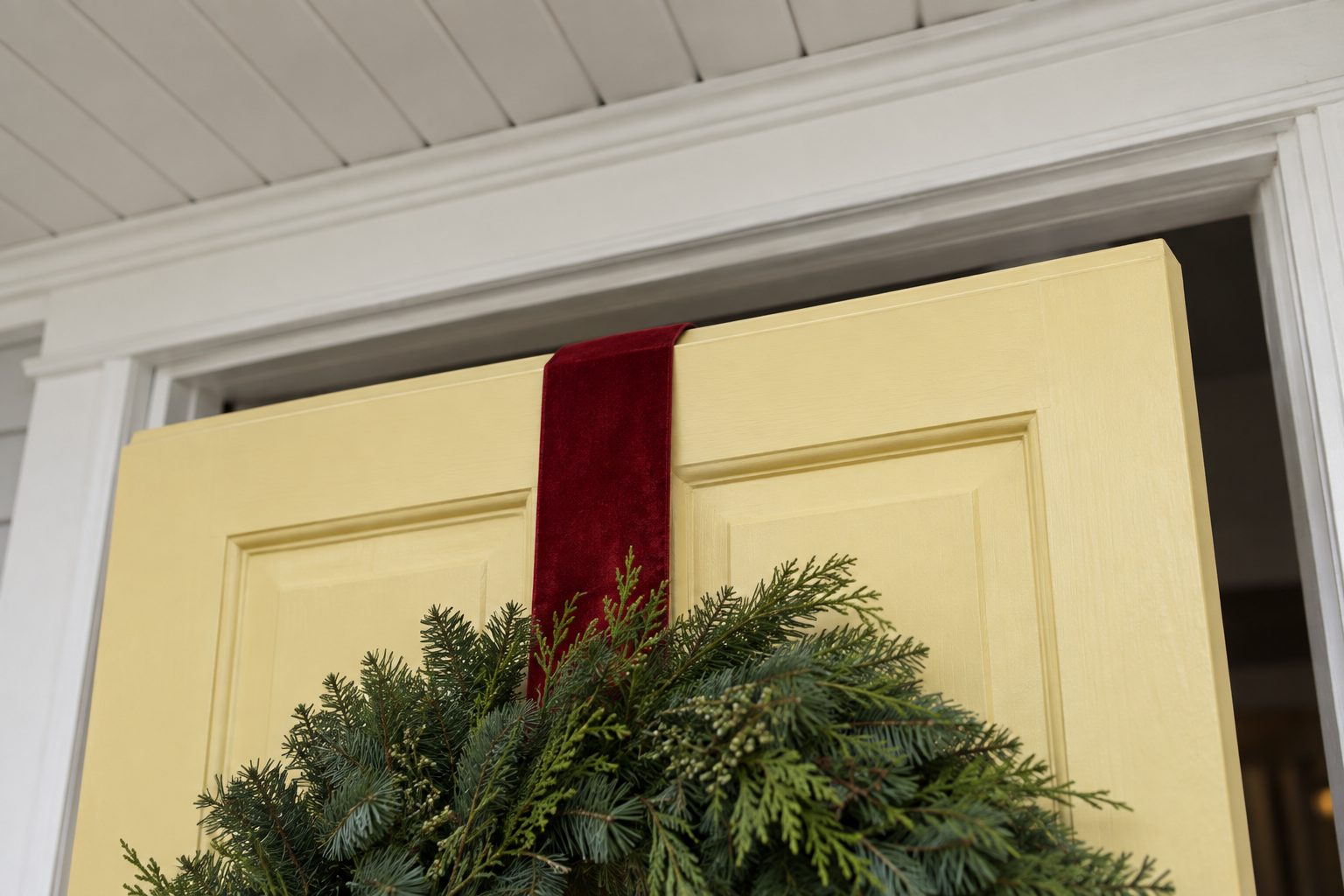
How it hangs decides whether it reaches that height. A metal hanger over the top of the door is quick, but it has a fixed drop, and its thickness can stop a tight door from sealing. A length of wide ribbon is adjustable. Tie it to the wreath, run it up and over the top of the door, and fix the end on the inside face with a hook or a flat tack. On a steel door, a magnetic hook holds a wreath at any height with nothing over the top.
A Storm Door Limits the Thickness
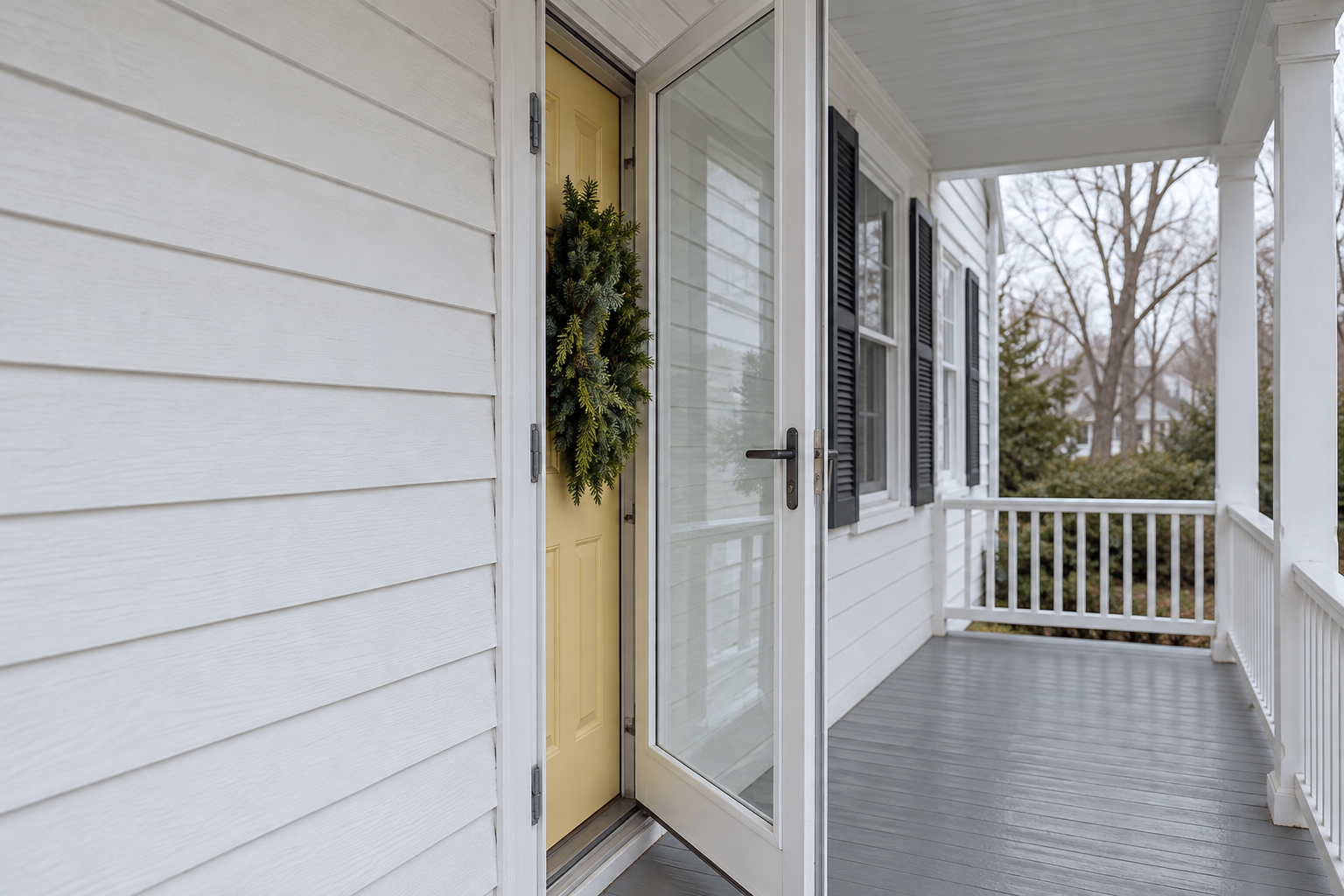
The space between a storm door and the door behind it is shallow, and shallower still at the handle. A full evergreen wreath can be thicker than that. Close both doors, measure the gap from the face of the entry door to the glass of the storm door, and compare it with the wreath’s depth before buying.
If the wreath is too thick, hang it on the outside of the storm door from a suction hook or a magnetic one. It will take the weather there. A fresh wreath behind glass that faces the afternoon sun dries out quickly, so the outside can be the better place for it anyway.
Double Doors and Sidelights
A pair of doors takes a pair of wreaths. Size each to its own door by the same proportion, and hang both at one height. Each door in a pair is often narrower than a single front door, so the wreaths come out smaller than 24 inches.
Sidelights and a transom make an entrance wider and taller, but the wreath still hangs on the door, and the door is still what gets measured.