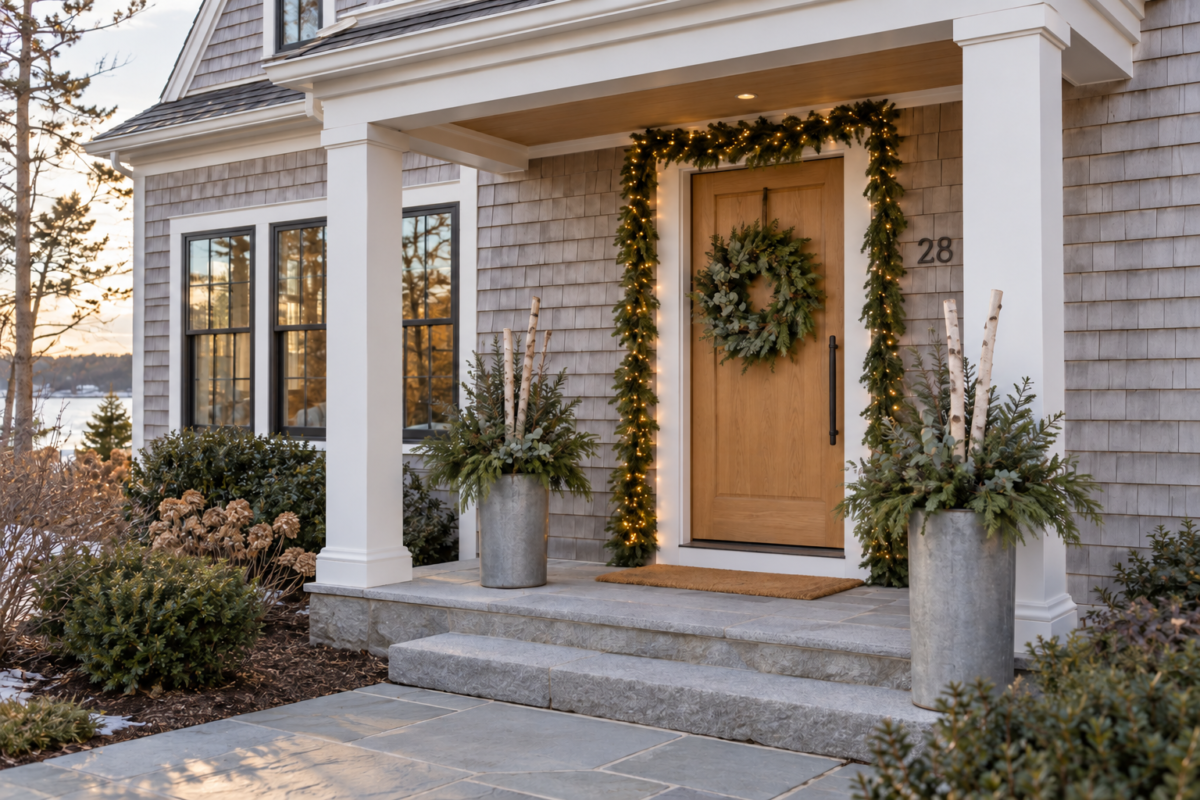
A porch is seen from two distances. From the street, a neighbor or a delivery driver takes in the whole front of the house in a couple of seconds, and small details disappear. At the door, someone waiting for the bell to be answered has time to notice the ribbon on the wreath and the branches in the planters. A well decorated porch works at both.
Starting at the door and working outward keeps everything in proportion. The wreath goes up first, then garland around the frame, then planters, light for the steps, and, if the house faces the street, the windows. Each piece takes its size from the door. Inside, these Christmas decorating ideas pick up where the porch leaves off.
Size the Wreath to the Door
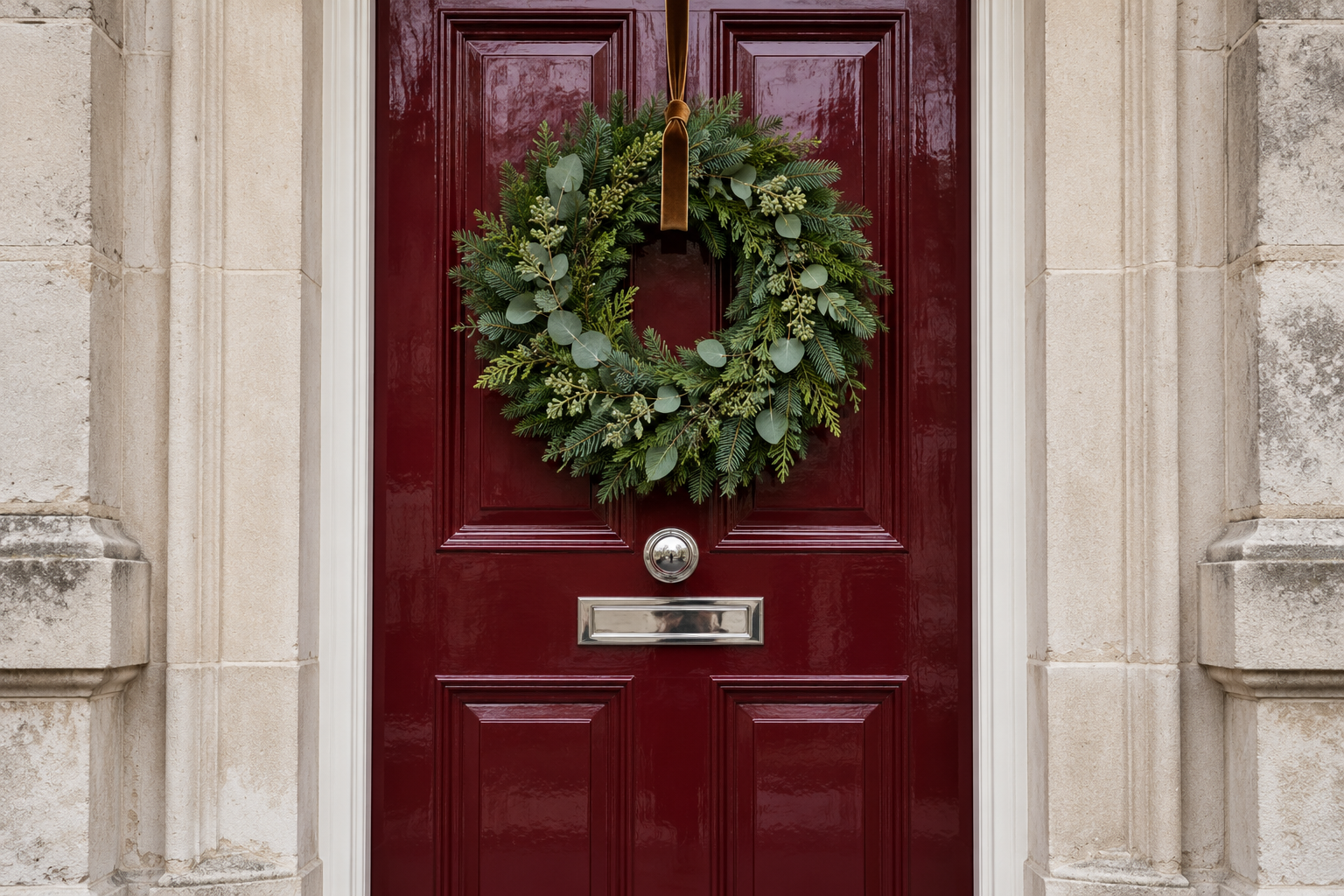
A wreath that looks generous in the shop can look like a saucer on a front door. As a starting point, choose one roughly two-thirds the width of the door. On a standard 36-inch door, that’s a wreath about 22 to 24 inches across. A double door or a tall door under a transom can take a 30-inch wreath, or two matched ones.
Hang it so its center sits a little above the middle of the door, near eye level, on a slim hanger that won’t stop the door from closing. A fresh wreath on a door that faces the afternoon sun dries quickly, so mist it every few days.
Frame the Door With Garland
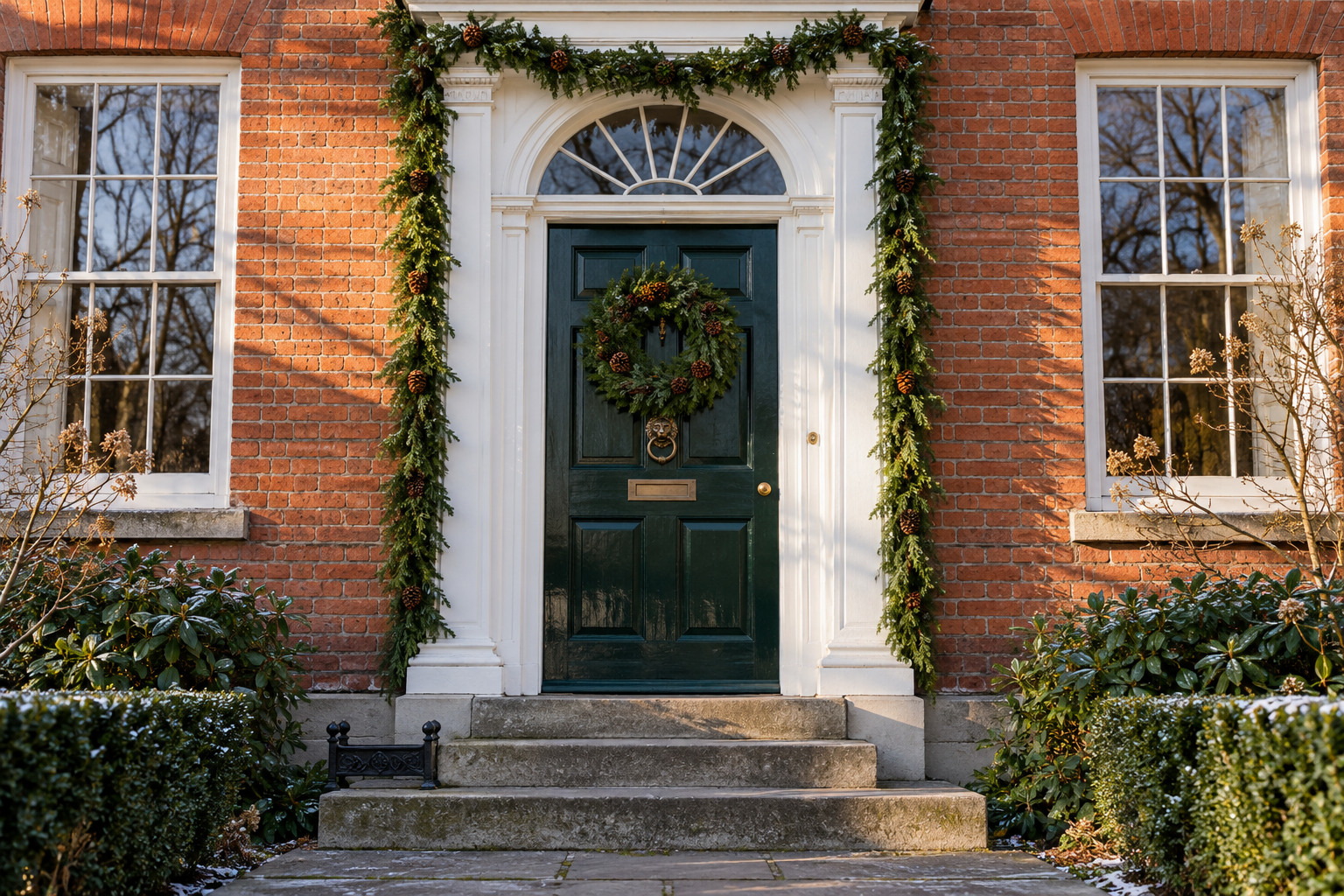
Garland around the door frame makes the whole entrance the display instead of the door alone. For a standard single door, measure up one side, across the top, and down the other side of the trim. It usually comes to 17 or 18 feet, and buying 20 allows for a slight swag across the top.
Fresh garland looks fuller than most artificial ones but dries out in sun and wind, so an artificial base with fresh cuttings tucked into it lasts longer. Fix it with clear adhesive hooks or small cup hooks in the trim every 12 to 18 inches so it doesn’t sag between them. On a red brick front with a dark green door, like this one, plain greenery with a few pine cones is enough, since the brick and the door already carry the color.
Fill the Planters With Cut Greens and Branches
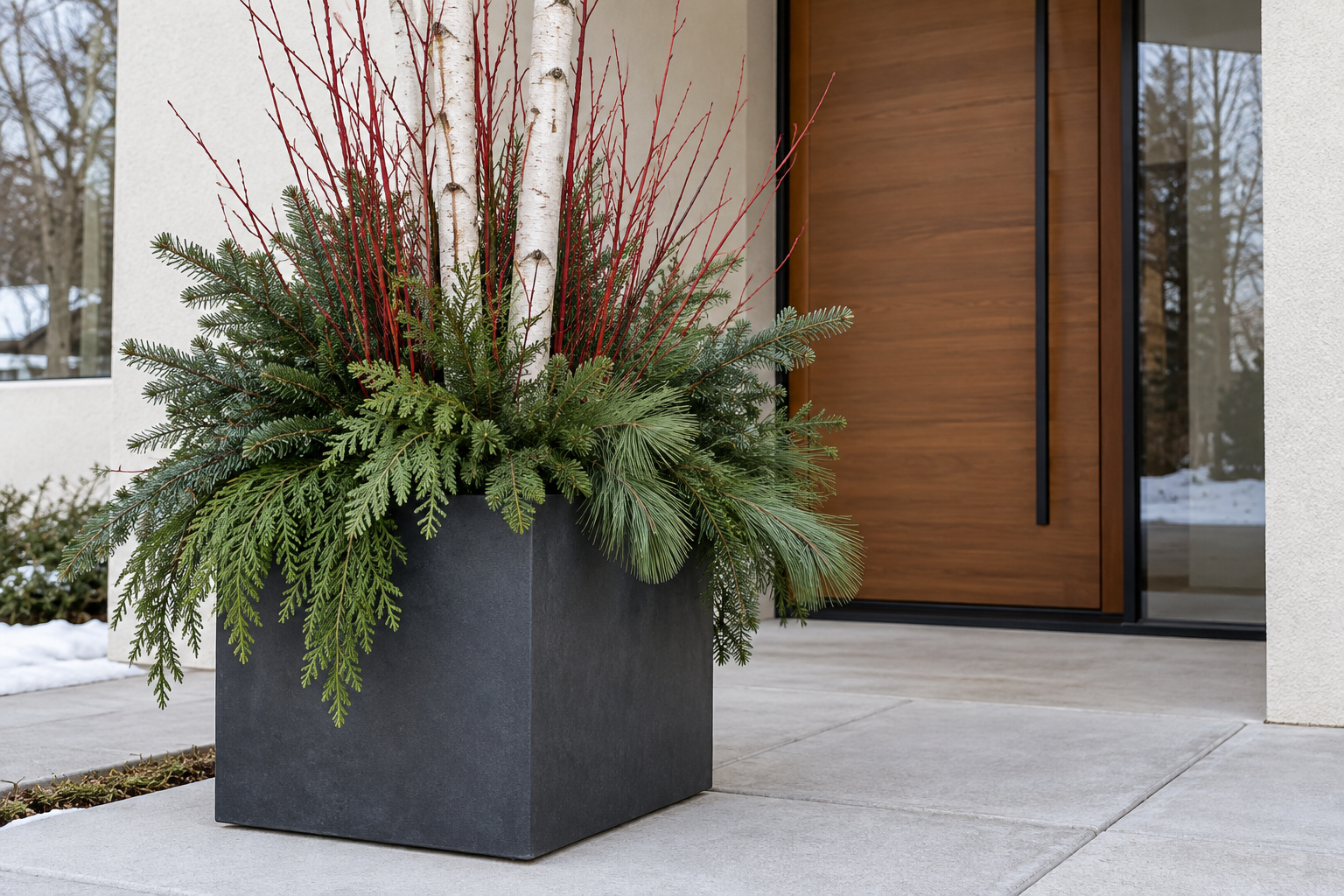
By December the summer planters are empty or full of dead stems. Filling them with cut evergreens gives the porch color through the winter with no watering once the soil freezes. Push the stems into the old soil, or into a block of damp floral foam if the soil is gone. Put tall branches in the center, like birch poles or red-twig dogwood, then fir, cedar, and pine around them, spilling over the rim.
In cold weather, cut greens hold up outdoors for weeks, often into January. A pair of planters on either side of the door frames the entrance from the street, while up close it’s the mix of needle textures people notice. The warm stucco and teak door here need nothing brighter than the red dogwood stems.
Light the Steps and the Railing
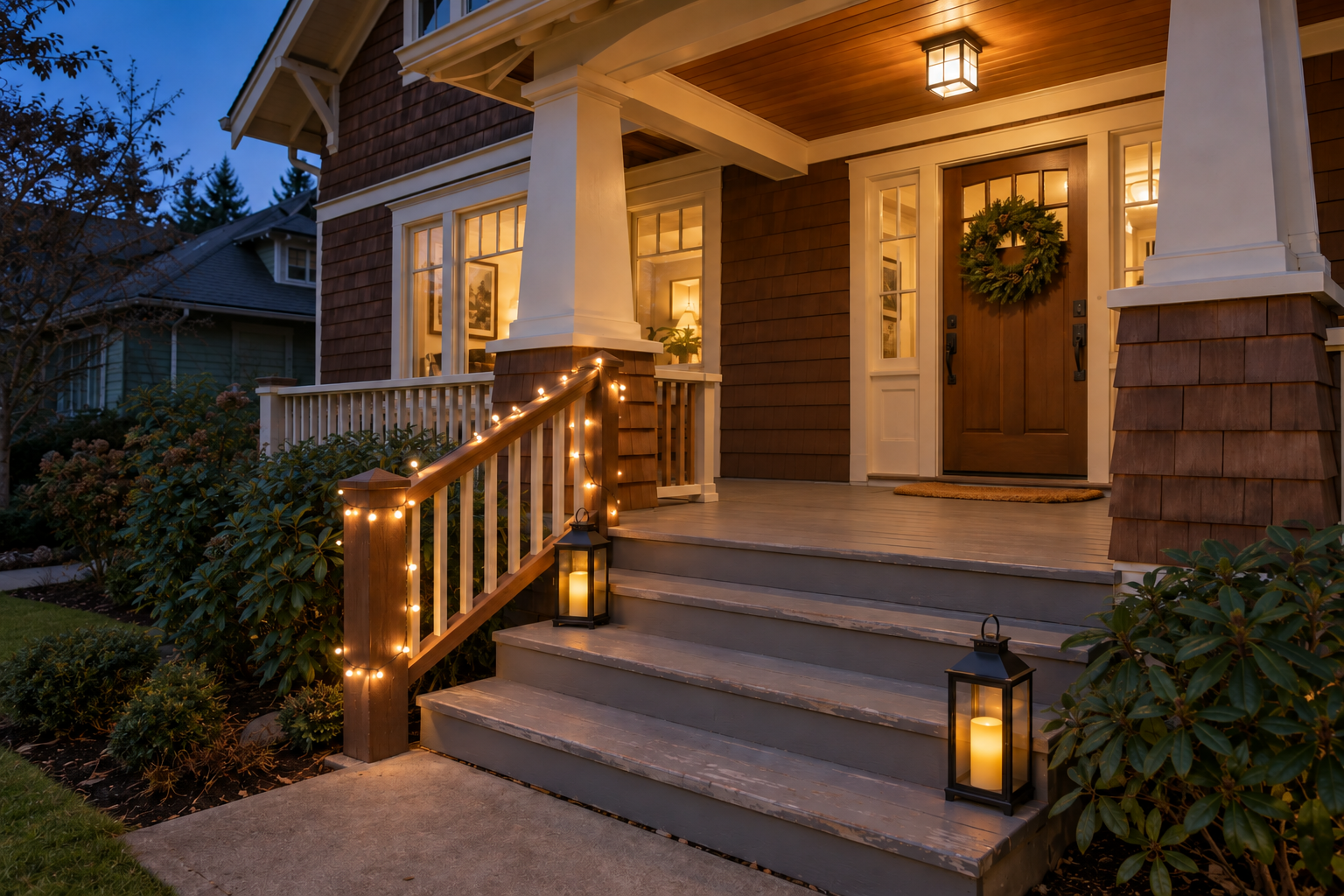
By late afternoon in December, the porch gets used in the dark. Lights along the railing and a lantern or two on the steps make the entrance easy to find and show where each step ends. Warm white string lights wound loosely along a handrail, or clipped under it, light the way without glare, and our outdoor lighting ideas cover the rest of the yard.
Use only lights and extension cords rated for outdoor use, plugged into an outdoor outlet with ground fault protection, and keep every connection off the wet porch floor. Battery lanterns on timers are the simplest choice for steps, with no cord to trip on and no flame near dry greenery.
Scale Everything Down for a Stoop or Apartment Door
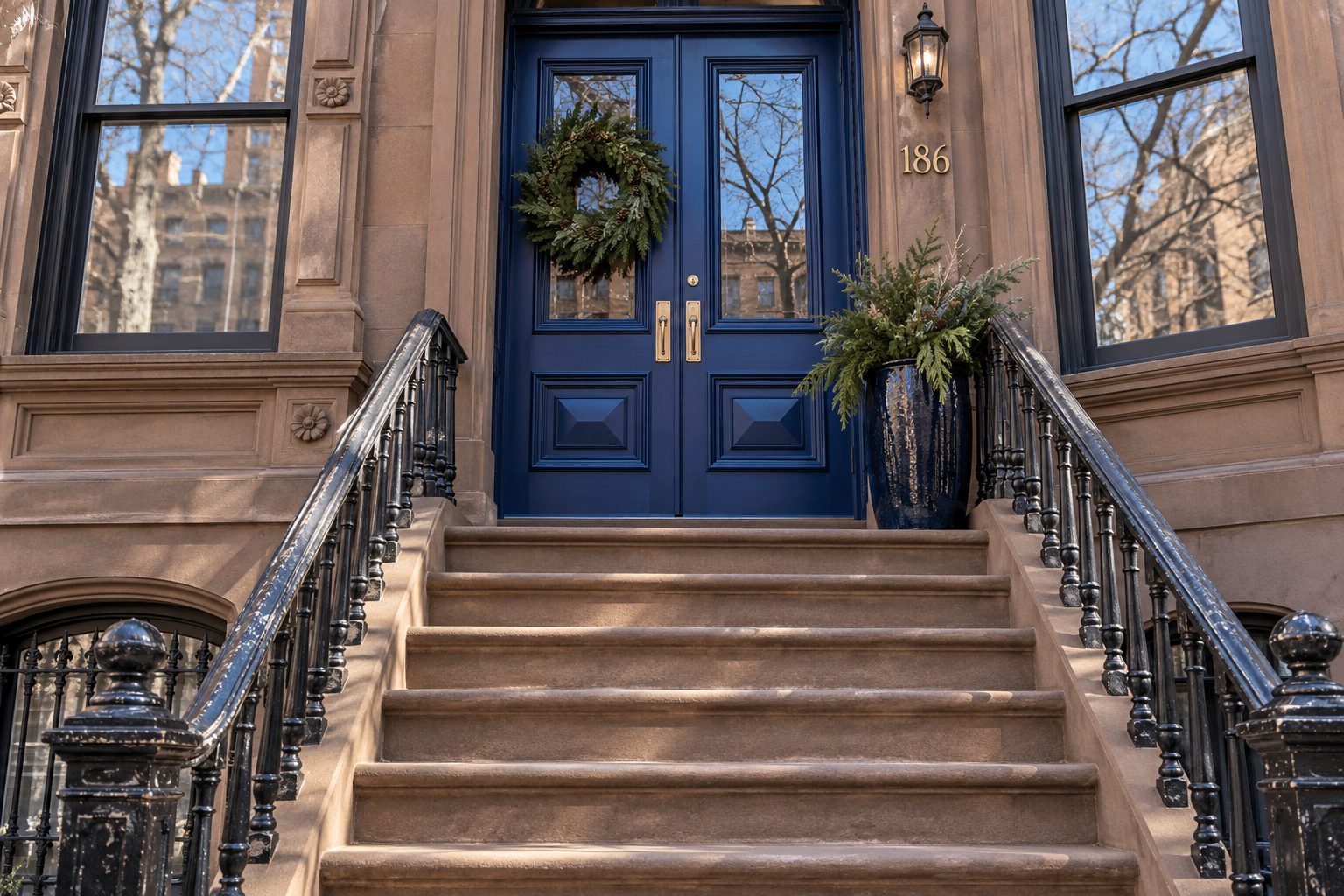
A narrow stoop, a townhouse step, or an apartment door off a shared hallway can’t take planters and garland without crowding the way in. The door carries it alone, with a wreath sized to the door, perhaps a short swag of greenery over the frame, and one planter if the step leaves a clear path beside it.
In a shared hallway, check the building’s rules first and keep everything off the floor where neighbors walk. An over-the-door hanger avoids putting nails into a rental door. On a brownstone stoop with a deep blue door like this one, a single full wreath and one tall planter make the entrance look finished from the sidewalk.
Hang Wreaths in the Front Windows
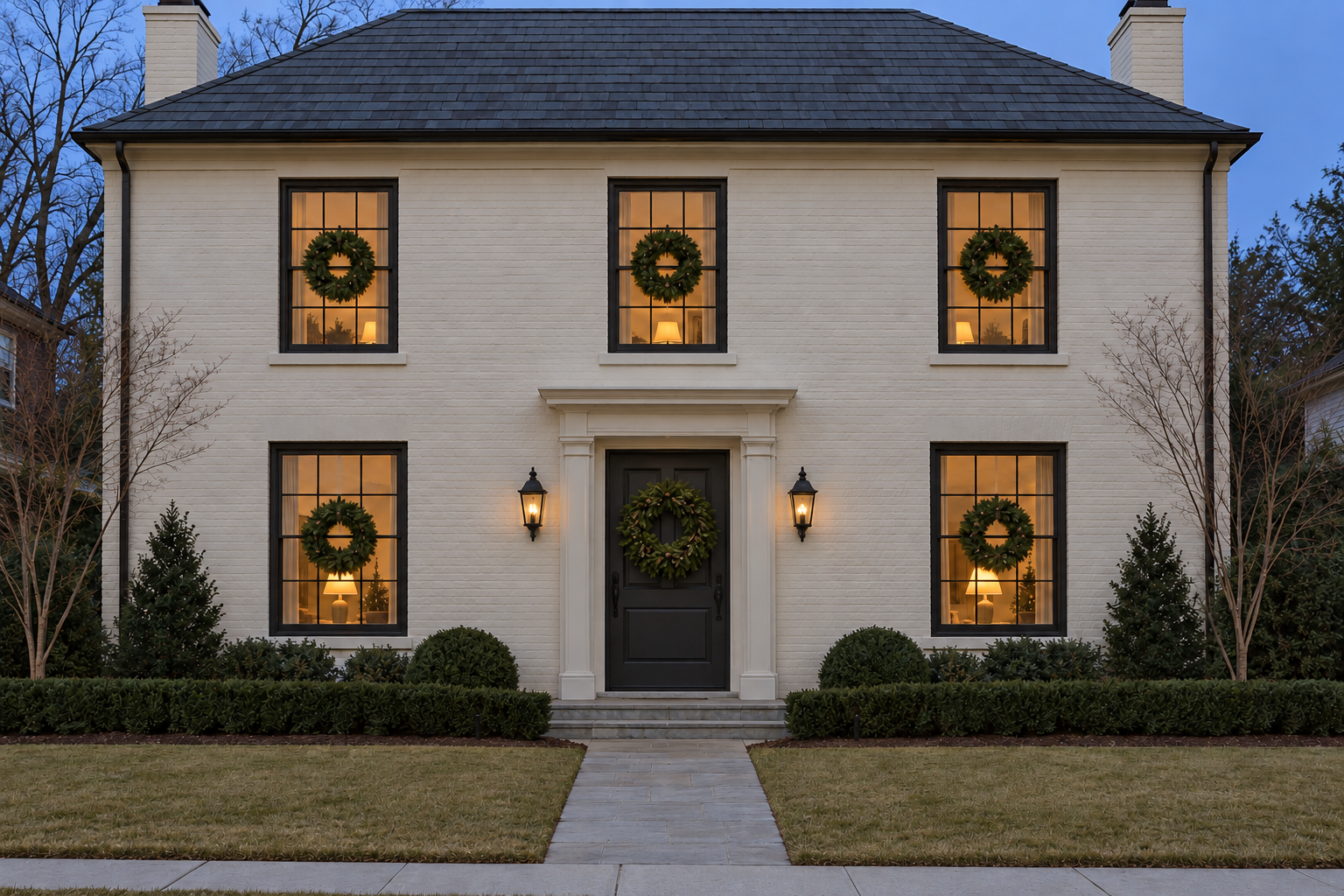
From the street, the front windows are as much a part of the house’s face as the door. A wreath in each front window repeats the door wreath across the facade and makes the whole house look decorated for very little effort. Windows take smaller wreaths, usually 16 to 20 inches for a standard sash, so each sits inside the frame with glass showing around it.
Hang them outside with suction hooks or from a ribbon over the top sash, or on the inside of the glass if the window has a screen. Using the same greens as the door wreath ties the set together from across the street, and after dark a lamp in the room behind each window lights its wreath from inside.