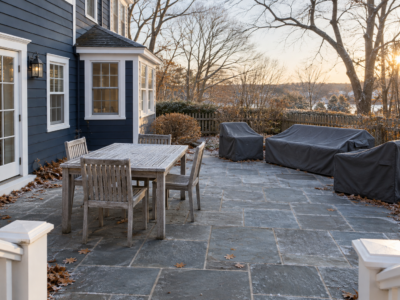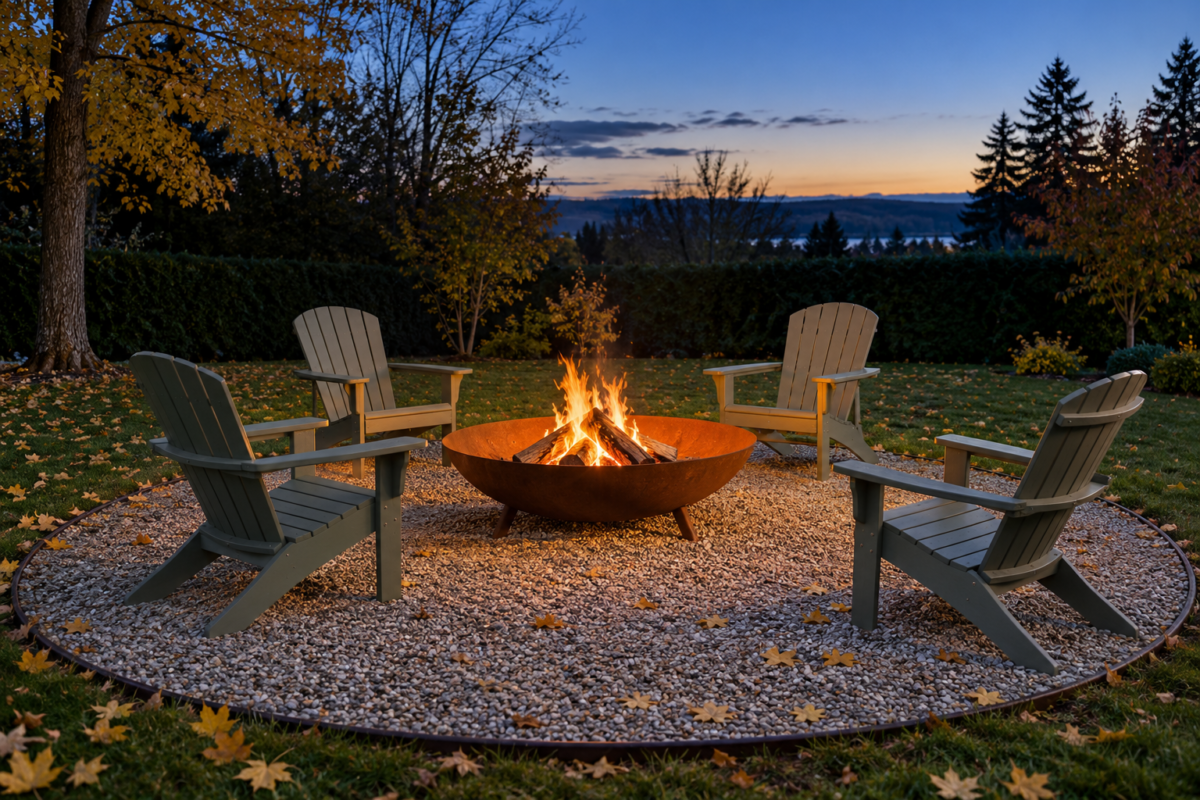
A patio table goes quiet once it’s dark before dinner. The chairs are cold to sit on, and the yard becomes something looked at through the kitchen window until spring. A fire pit gets some of those months back for the price of a steel bowl and a load of wood. It gives the yard one warm, lit place, and people will put on a coat and walk out to it.
The pit itself is the small decision. A steel bowl can be bought in an afternoon. What takes thought is the circle around it: how far it stands from the house, which way the wind crosses it, what’s underfoot, where the wood is, and what the seats are like after a day of rain.
Start With the Distance From the House
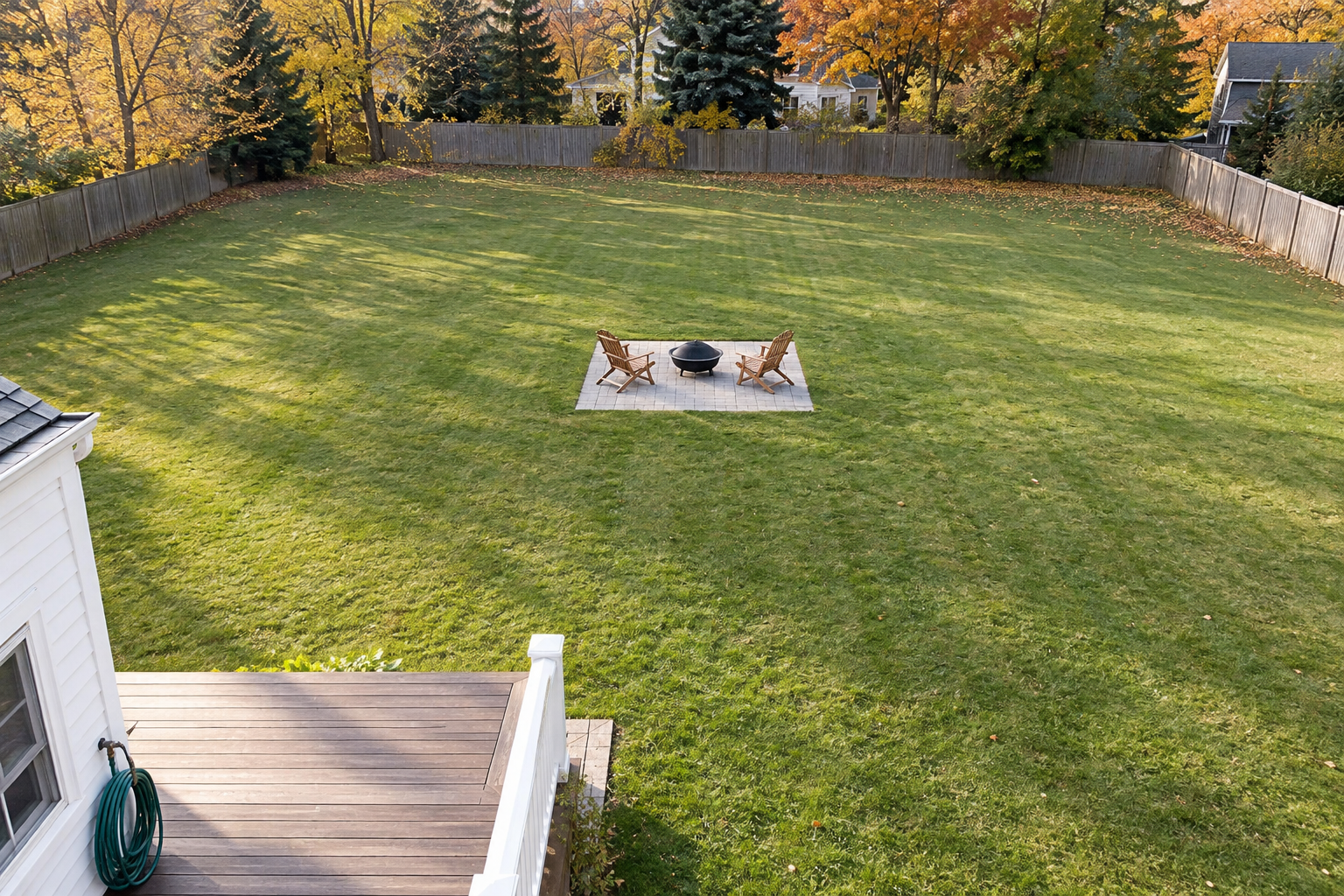
Many fire departments ask for 25 feet between an open wood fire and any building, fence, shed, or overhanging branch. Some allow 15 feet, or less, for a portable pit with a screen. A few towns ban wood fires on certain days or altogether. The rule that applies is the local one, and it’s usually a single page on the fire department’s website.
Read it before buying anything, because it settles a good deal. A yard that can’t give a wood fire its distance can often still take a gas one. Whatever the rule, keep a hose that reaches the pit connected until the first hard frost, and a bucket of water beside the fire after that.
Put It at the Far End of the Yard
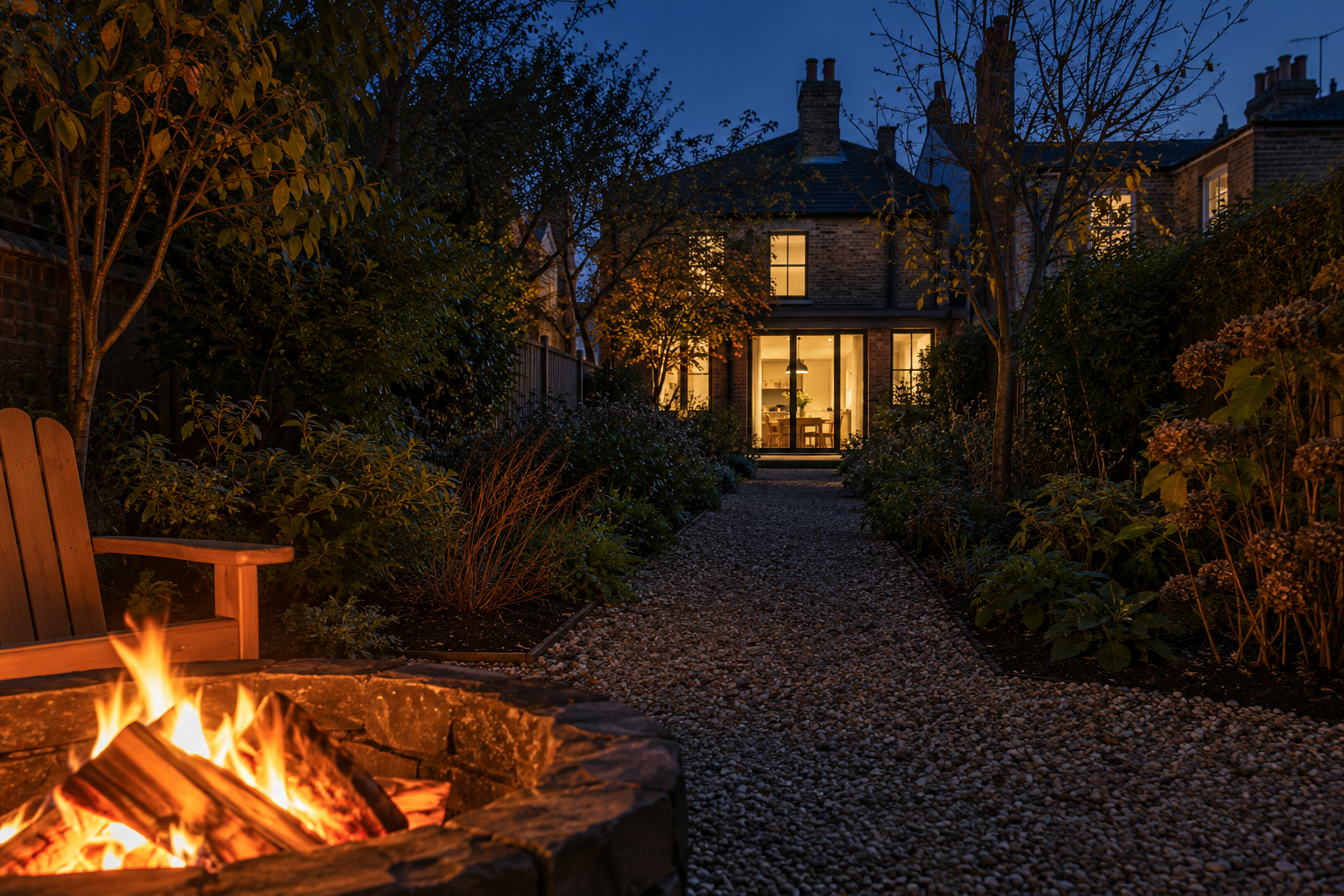
The required distance tends to push a fire pit away from the house, and that’s often where it’s best anyway. A fire by the back door is an extension of the patio. A fire at the end of the garden is somewhere to go, with a walk out and a walk back.
It also changes what you look at. From a chair at the far fence, the view is your own house with the kitchen lit, which few people ever see from outside after dark. Leave a lamp on indoors before going out.
Give It Shelter on the Windy Side
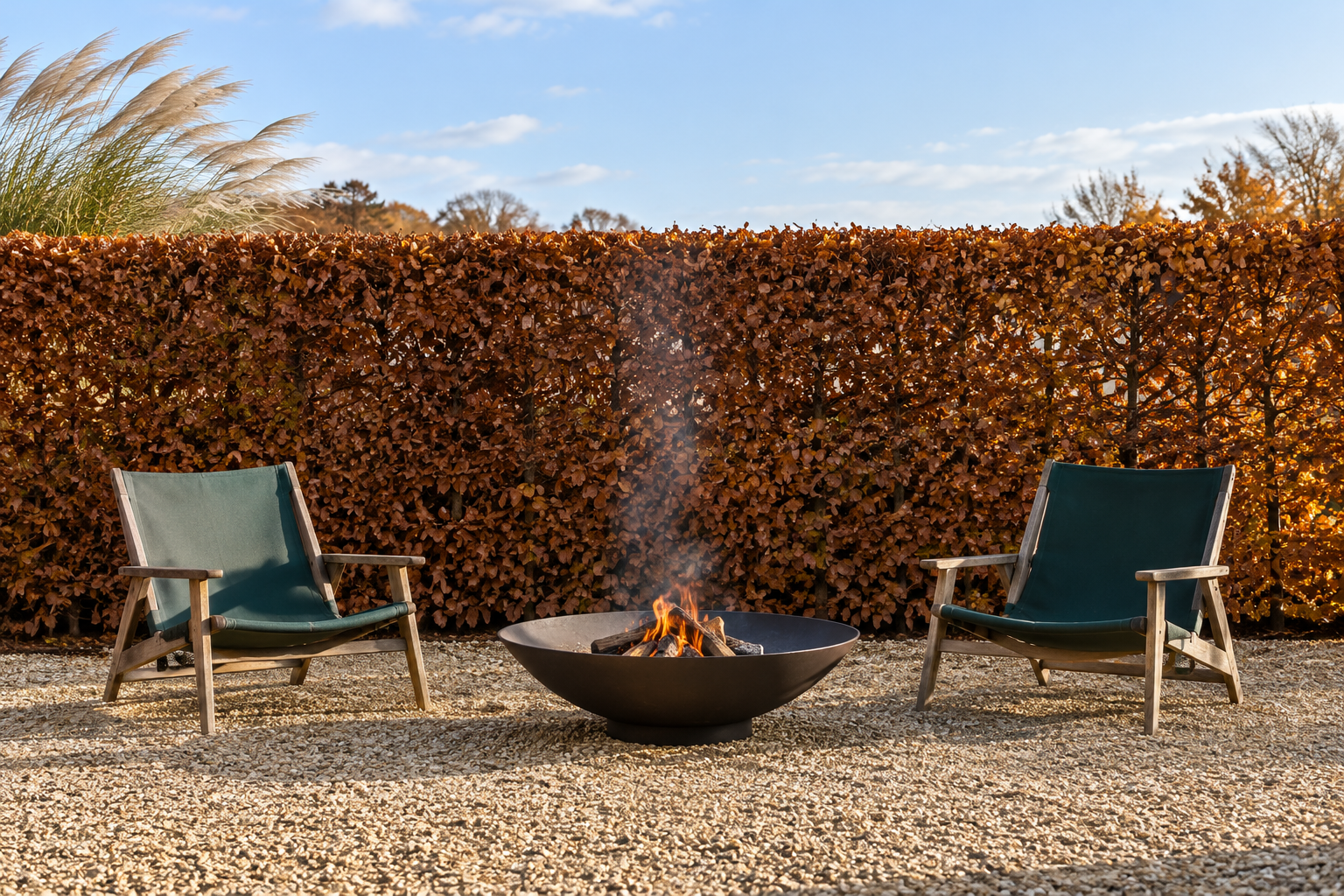
Wind decides whether a fire is pleasant more than temperature does. A steady breeze flattens the flames, pushes smoke along the ground into one unlucky chair, and carries the heat away before it reaches anyone.
Notice where the wind comes from on fall evenings, then place the pit so that something stands on that side. A hedge makes good shelter, since it filters the wind where a solid wall can send it tumbling over the top. Clipped beech and hornbeam hold their dead leaves through winter and keep working after other hedges are bare. Keep the fire well out from the foliage, at the distance the local rule gives for fences.
Lay a Circle of Gravel
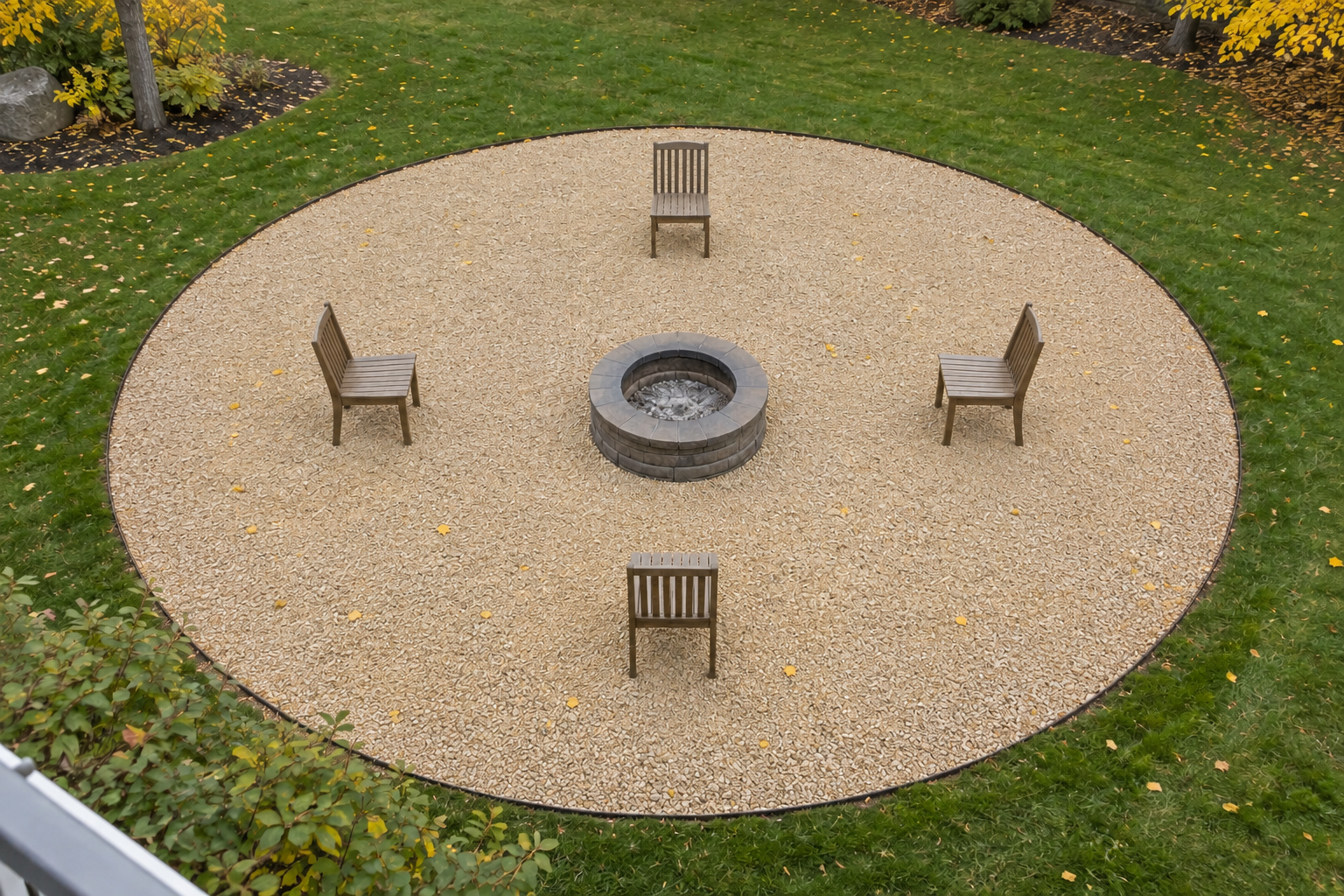
Grass under a fire pit scorches, and by November the ground around it has been walked into mud. Gravel solves both. It doesn’t burn, it drains, and a spark that lands on it goes out.
It’s easy to make the circle too small. Add it up from the middle. A pit about 3 feet across, then 3 feet of open ground on each side so knees aren’t roasting, then about 3 feet for the depth of a chair, then a foot to push the chair back. That comes to roughly 17 feet across, and nearer 20 if there’s to be a path behind the chairs. A steel or stone edge keeps the gravel out of the lawn and gives the mower a line to follow.
Begin With a Steel Bowl
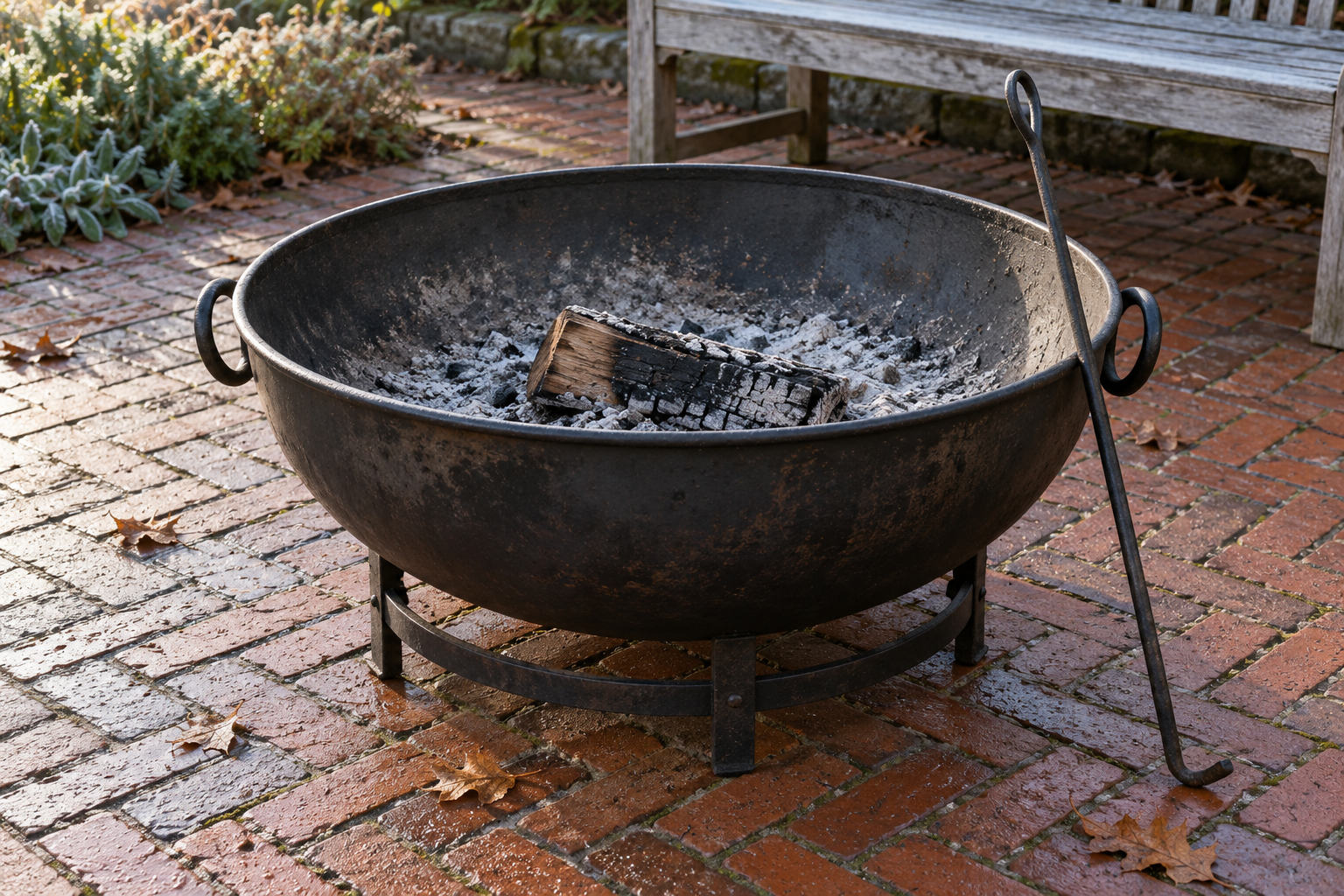
A steel bowl on legs is the least permanent fire pit and, for a first one, the most sensible. It can stand in three different places over a fall before anyone commits to a spot. That is an easy way to learn where the wind comes from and which corner of the yard people drift to.
Thicker steel is slower to rust through and less likely to warp with heat. Weathering steel forms a layer of orange rust that protects the metal beneath, though runoff can stain pale paving while that layer forms. Look for a drain hole in the bottom, since a bowl that fills with rain turns its ash to paste.
Build a Low Ring of Stone
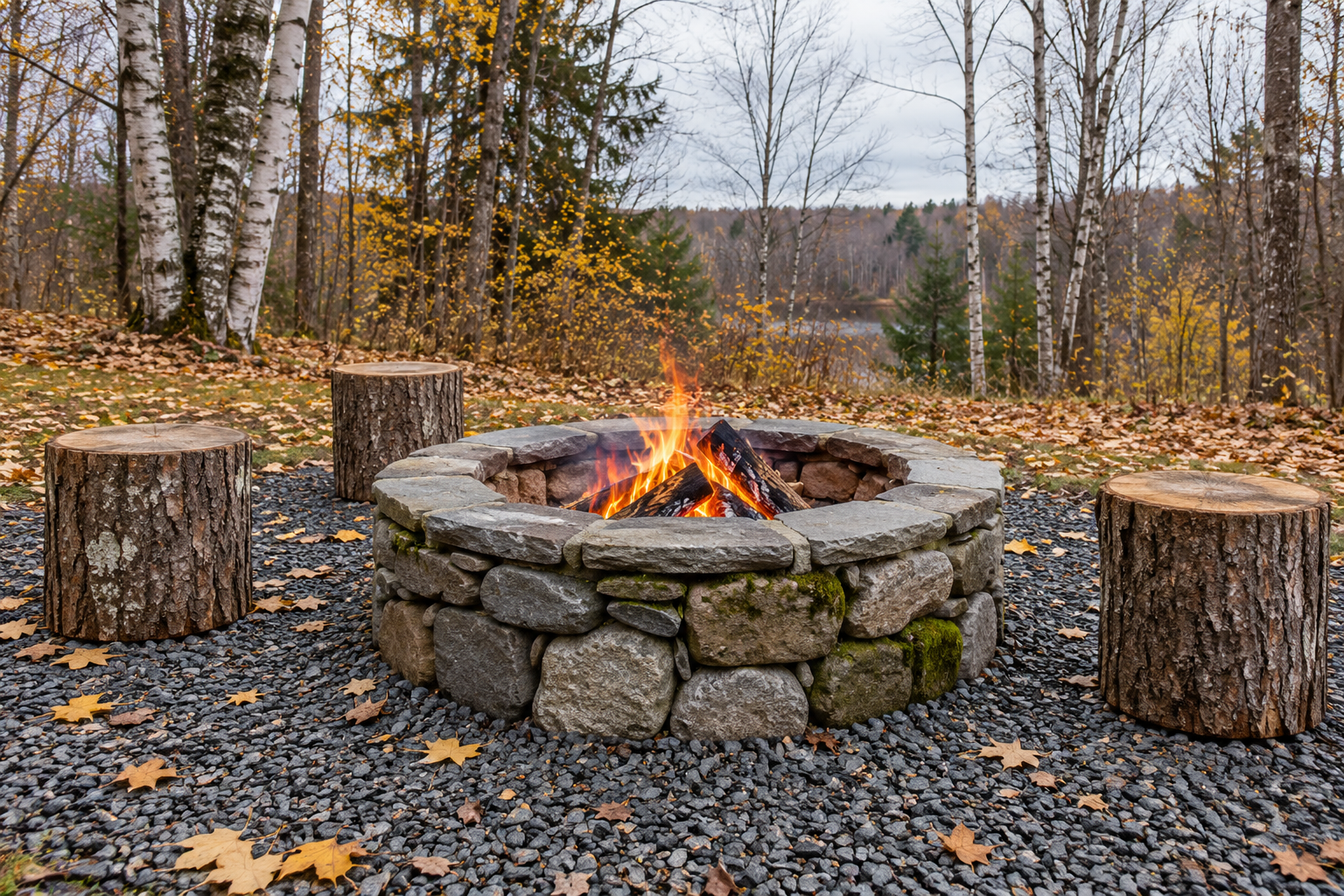
A ring of stone or block makes the fire a fixed part of the yard, which suits a spot that’s already been proven with a bowl. Keep it modest. About 3 feet across on the inside holds a fire big enough for a circle of chairs, and some towns cap a backyard fire at that width in any case.
The height of the wall matters more than it seems. A ring about a foot high lets the flames show from a low chair and gives heat to feet and shins, which get cold first. Built much taller, the wall hides the fire from anyone seated and the warmth goes straight up.
Sink the Seats Below the Lawn
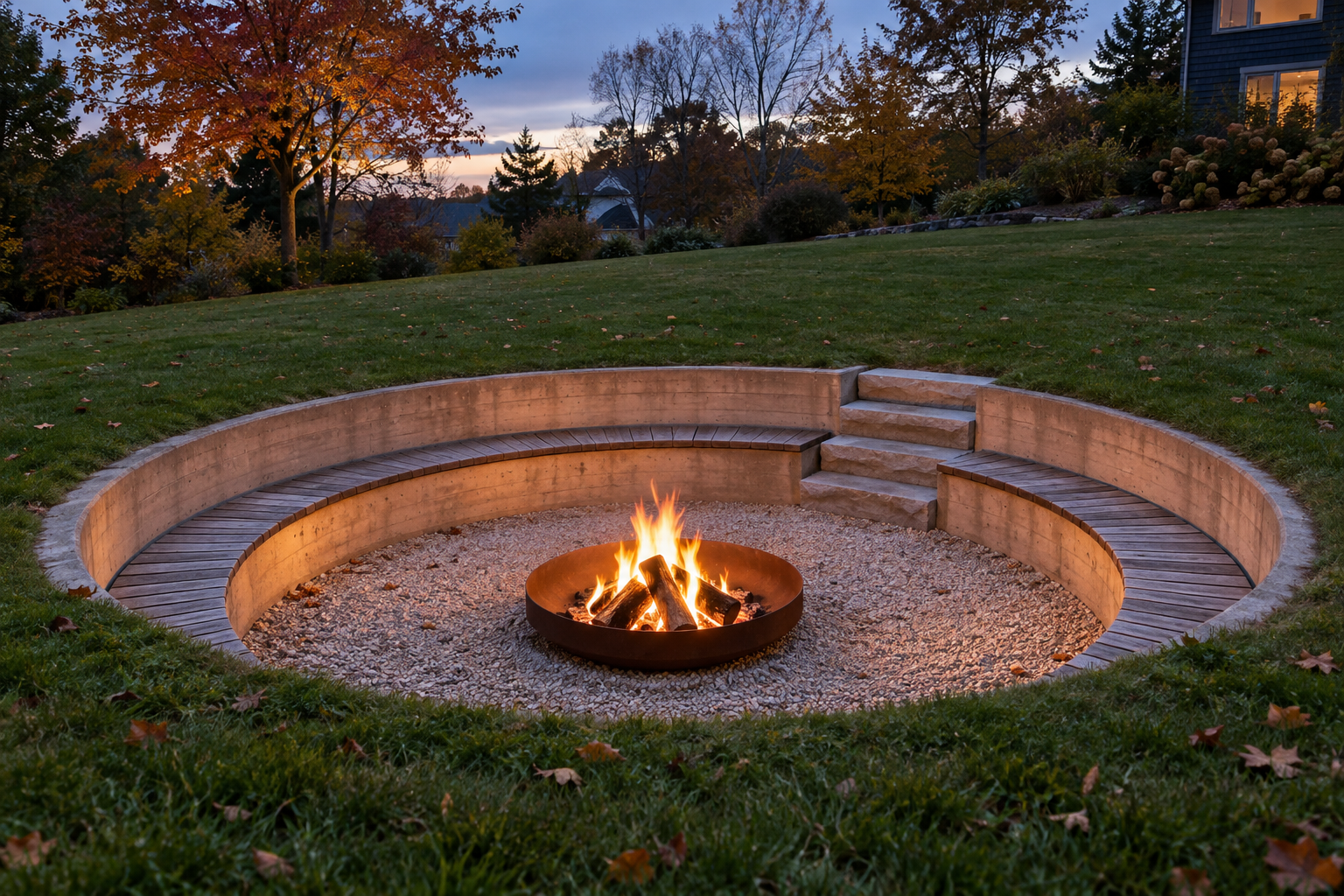
Dropping the fire and its seats a foot or two below the ground takes the people sitting there out of most of the wind. The retaining wall becomes the back of the bench, and from the rest of the yard the whole thing nearly disappears, leaving a glow at grass level.
It depends on drainage. A hollow in the ground collects water, so a sunken circle needs a gravel base that drains freely, or an outlet on a sloping site. On heavy clay with nowhere for water to go, it can stand full of water for much of the winter, and a ring at ground level is the better choice.
Burn Less Smoke
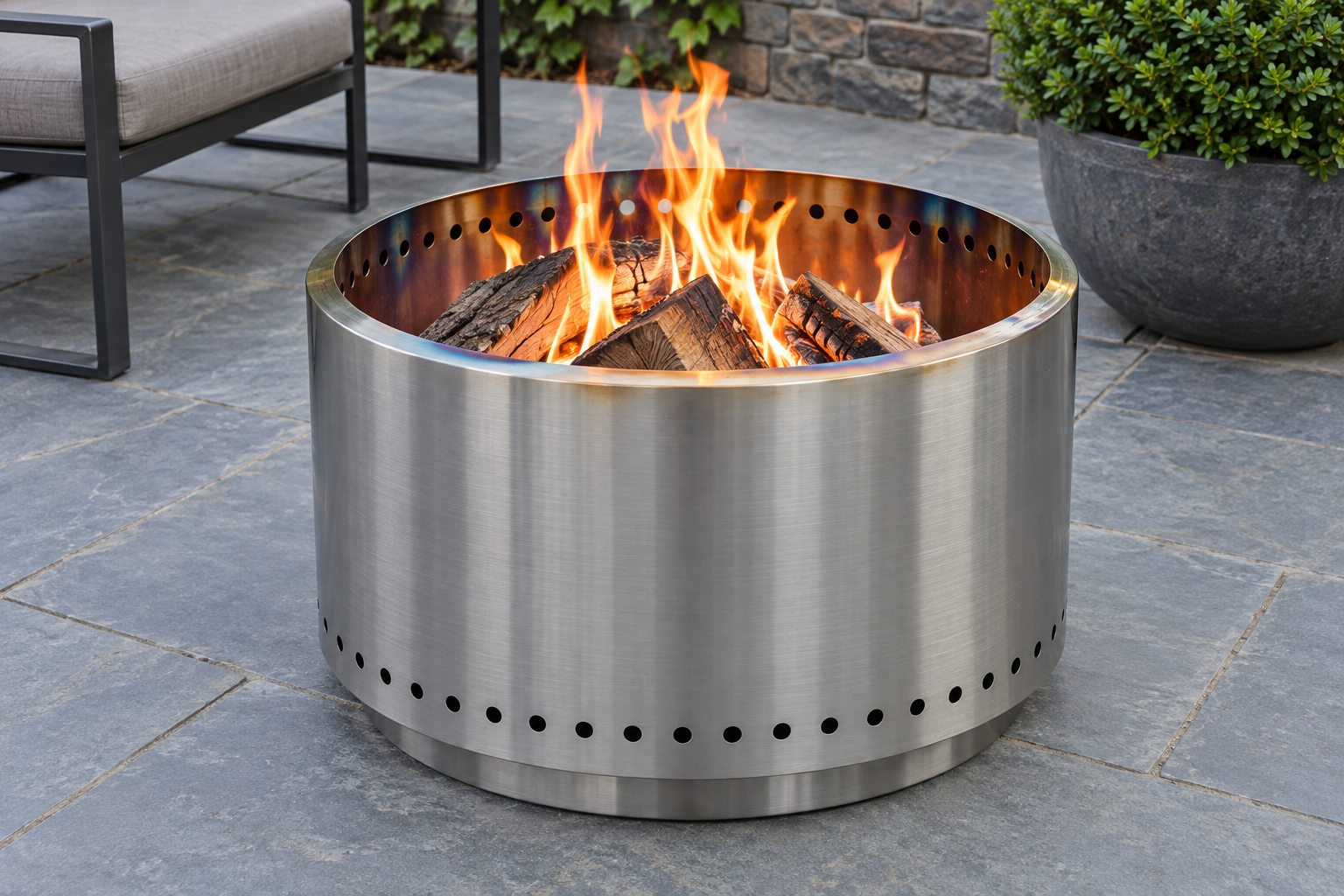
Smoke is the usual complaint about a wood fire, and it follows whoever just changed seats. A pit built with a double wall deals with much of it. Air is drawn in at the base, heated as it rises between the two walls, and released through a ring of holes just under the rim, where it burns off smoke that would otherwise drift out.
These pits are designed to burn cleanly once they’re hot, with dry wood, and filled no higher than the holes. The trade is where the heat goes. A tall steel cylinder sends most of its warmth upward, so faces and hands get more of it than feet do.
Use Gas Where Smoke Is a Problem
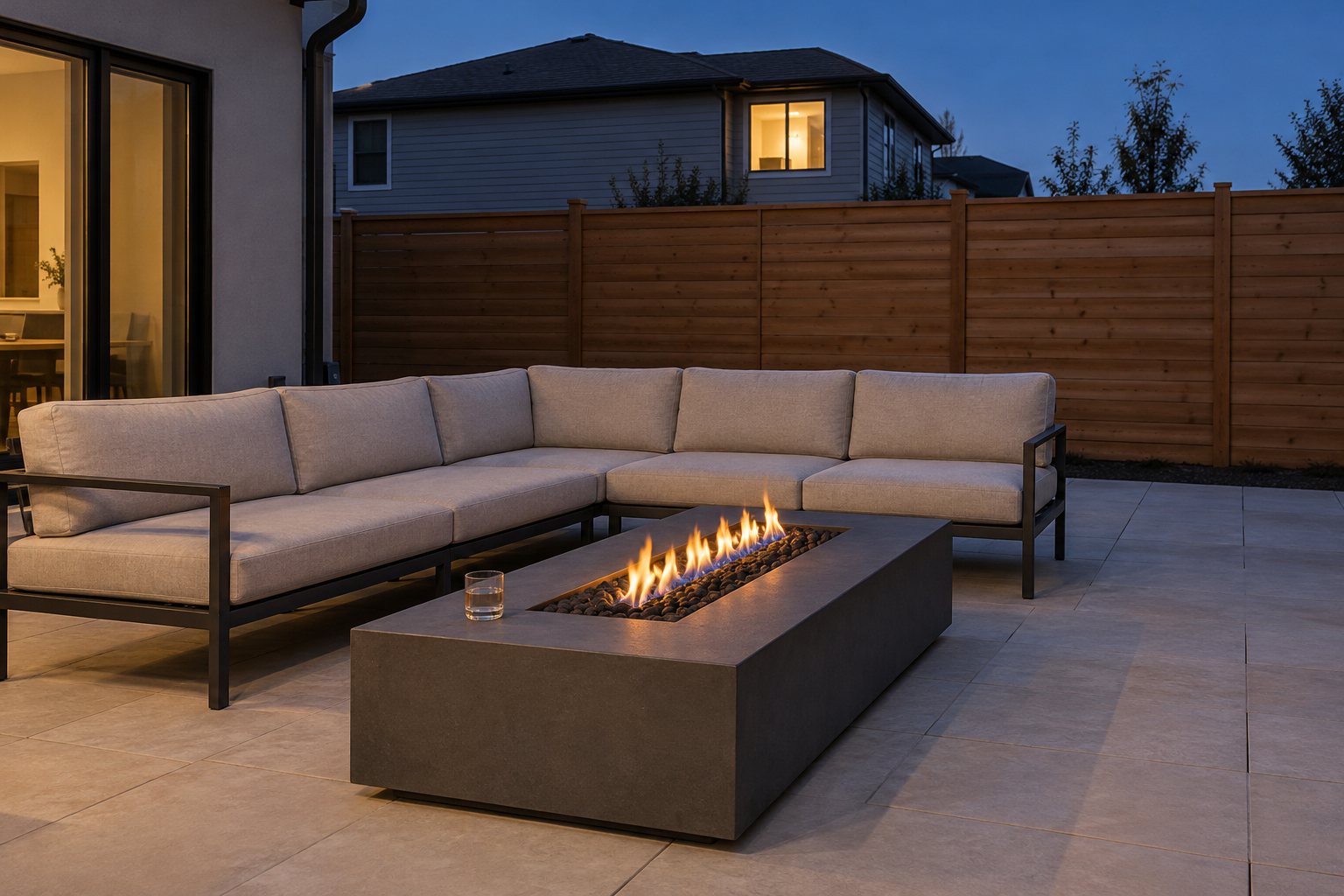
A gas fire table gives off no smoke, no sparks, and no smell on a coat the next morning. It lights with a switch and goes out the same way, so it gets used for twenty minutes on a weeknight when nobody would bother laying a wood fire. On a small patio with neighbors close on both sides, that often makes it the only fair choice. It also suits a patio that needs one fixed point after dark.
What it lacks is heat and occupation. A gas flame tends to warm the people nearest it and little beyond, and there’s nothing to poke or feed. Whether one may stand on a wooden deck or under a roof varies by model, and each comes with its own required clearances.
Stand a Chiminea in a Corner
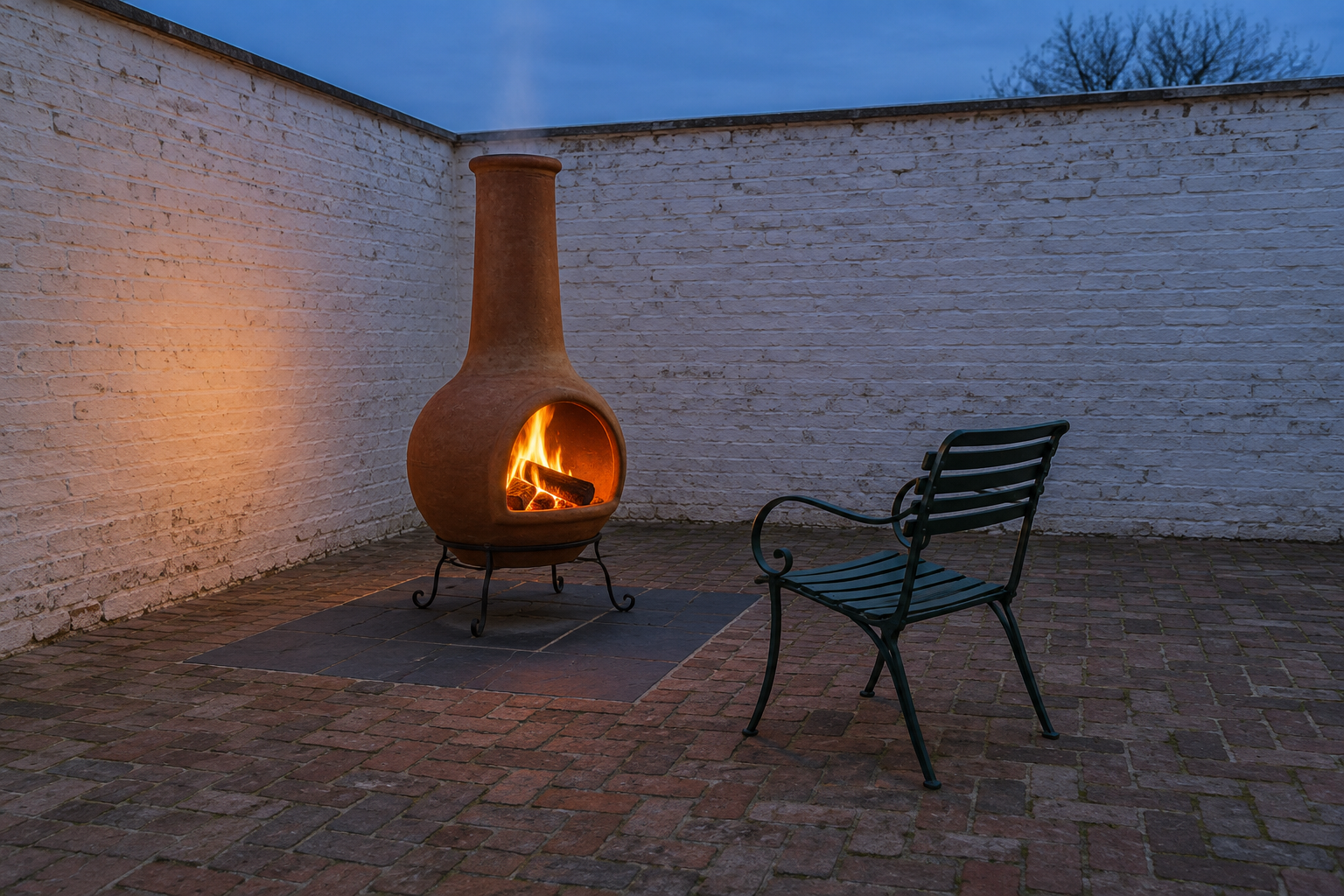
A chiminea is a small stove with a chimney, made of clay, cast iron, or steel. Its flue lifts the smoke above head height before letting it go, which matters in a courtyard or a narrow yard where an open pit would fill the space with it.
The fire faces one way, so a chiminea suits two or three chairs in an arc more than a full circle. That makes it a good fit for a corner, set out from both walls. Clay can crack if it’s heated fast or left wet through a freeze, so start with a small fire and cover it or bring it under a roof for winter.
Curve a Bench Around Half
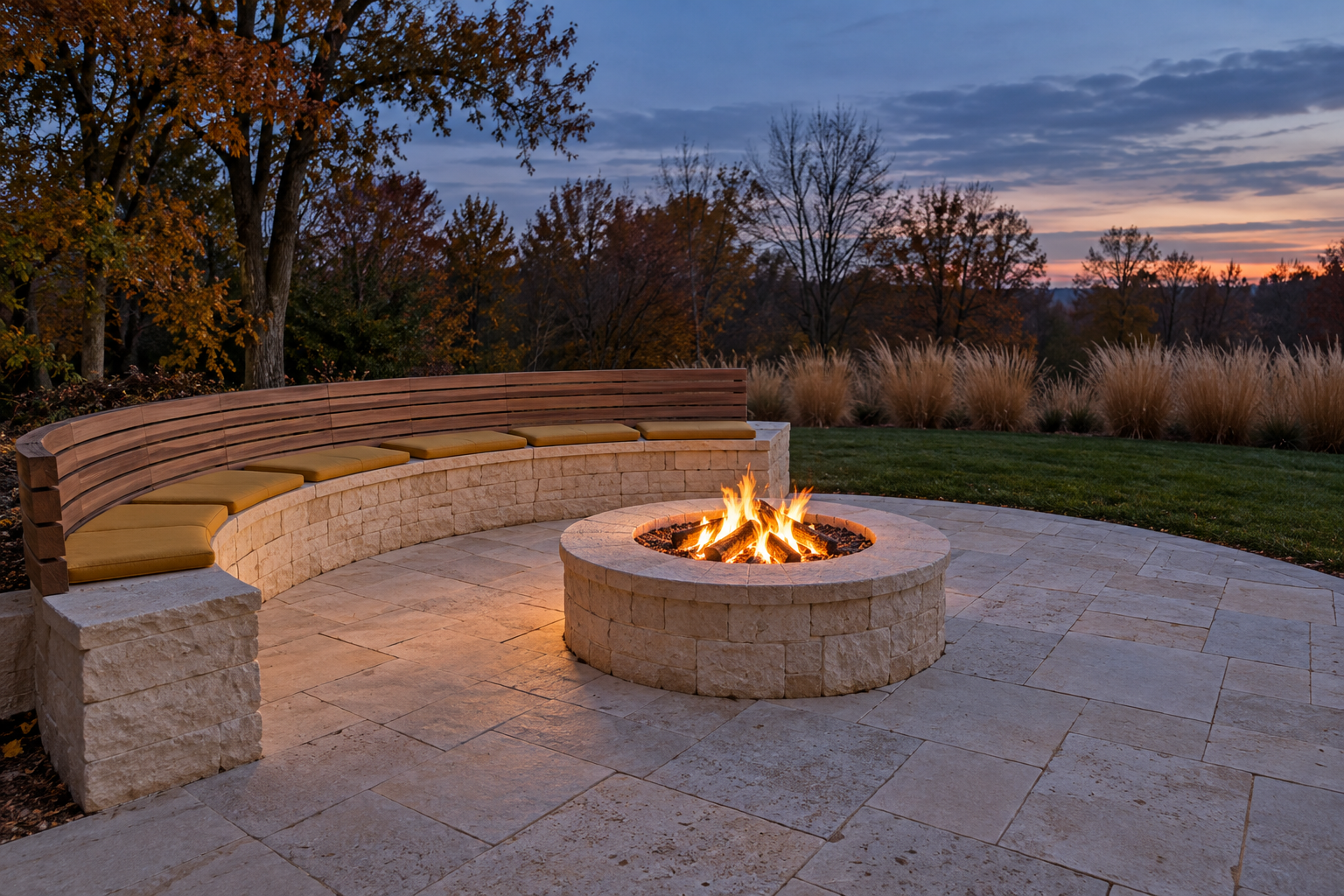
A built bench gives a fire pit a permanent shape and seats more people in the same space than chairs do. The mistake is taking it all the way around. A full ring traps anyone sitting where the smoke blows, and makes the pit awkward to reach with an armful of wood.
Half a circle, or a little more, works better. Put the bench on the side the wind comes from, so its back gives some shelter, and leave the other side open for loose chairs on the nights there are more people. A seat about 18 inches high and deep enough to lean back on needs cushions brought out for it, since stone is cold by October.
Keep the Chairs Loose
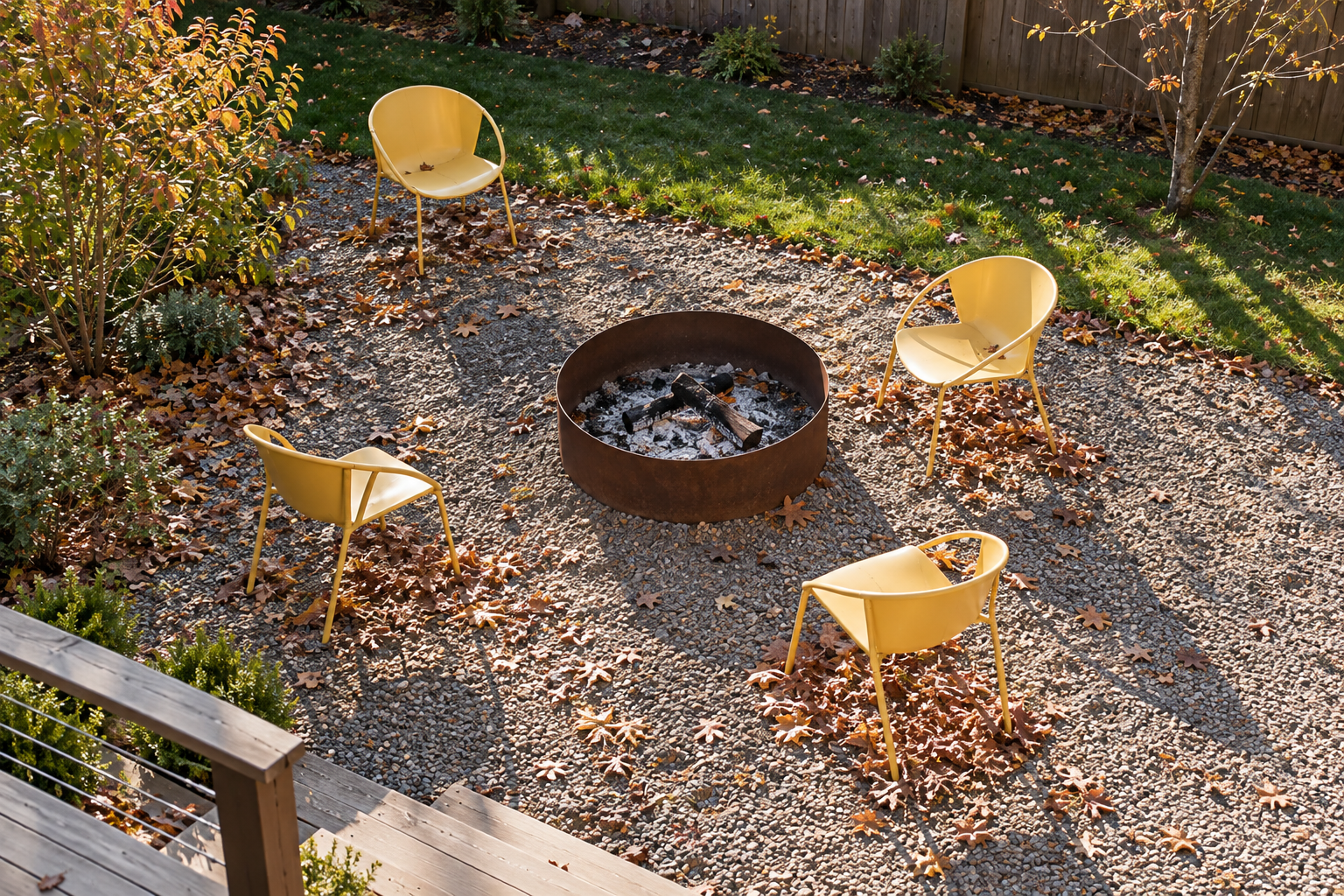
People move their chairs all evening. They pull in when the fire is first lit and the air is cold, push back as it builds, and shift sideways when the smoke turns. Chairs light enough to drag with one hand let that happen. About 3 feet from the edge of the pit to the front of the seat is where most people settle once a wood fire is going well, and further when the wood is spitting.
Low, reclined chairs suit a fire better than upright dining chairs, because the heat is low and so is the thing being watched. The frame material decides how they fare if they’re left out all winter.
Choose Seats That Dry by Evening
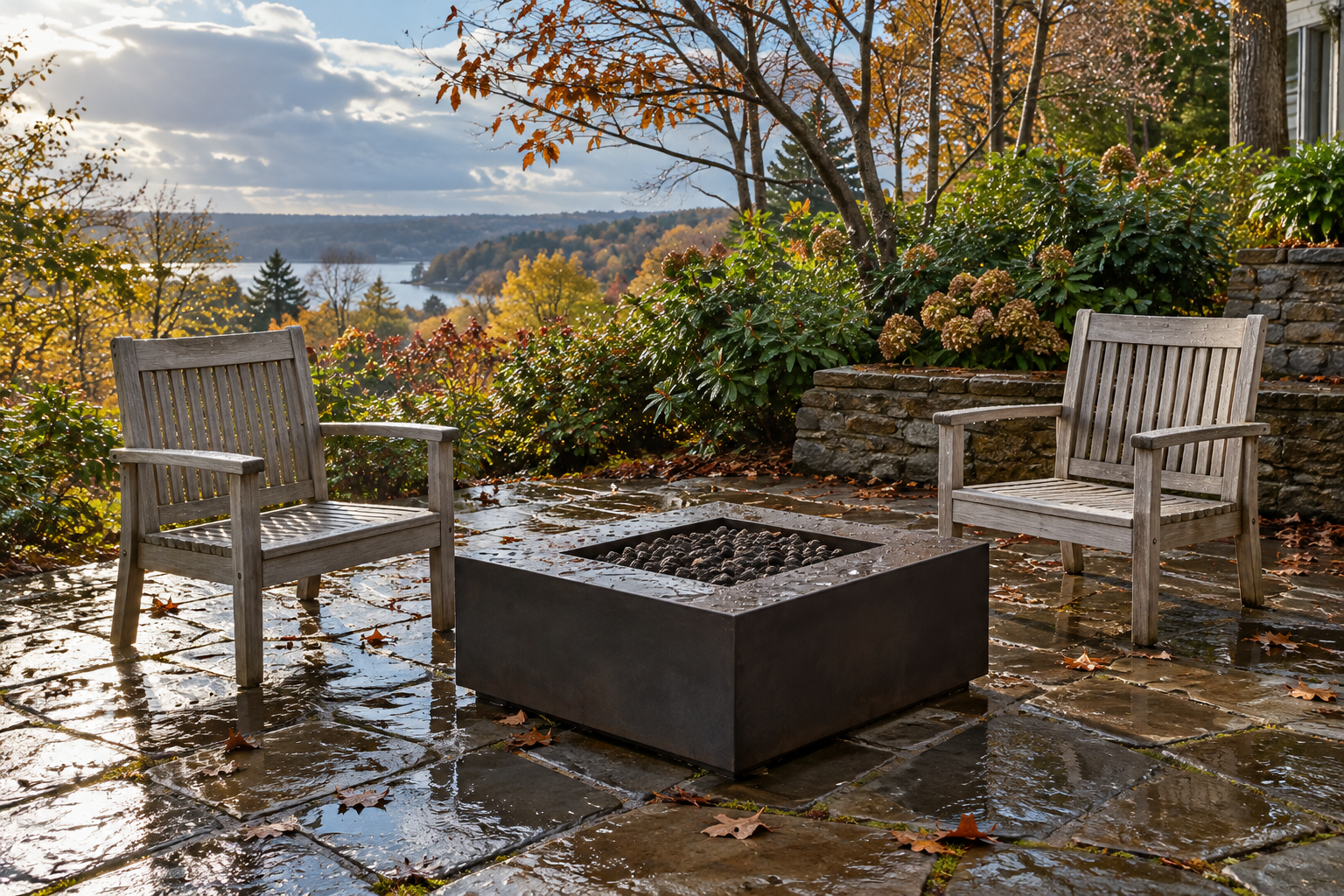
In summer a cushion left out overnight is dry by ten in the morning. In late October, with the sun low and dew falling by five, a cushion that got rained on Tuesday can still be damp on Saturday. A damp seat is reason enough to stay indoors, in the very season the fire pit was bought for.
Bare slatted wood and open metal seats shed water and dry far sooner than any cushion. Use those around the fire and keep the cushions in a box by the back door, to be carried out with the matches.
Keep the Wood Within a Few Steps
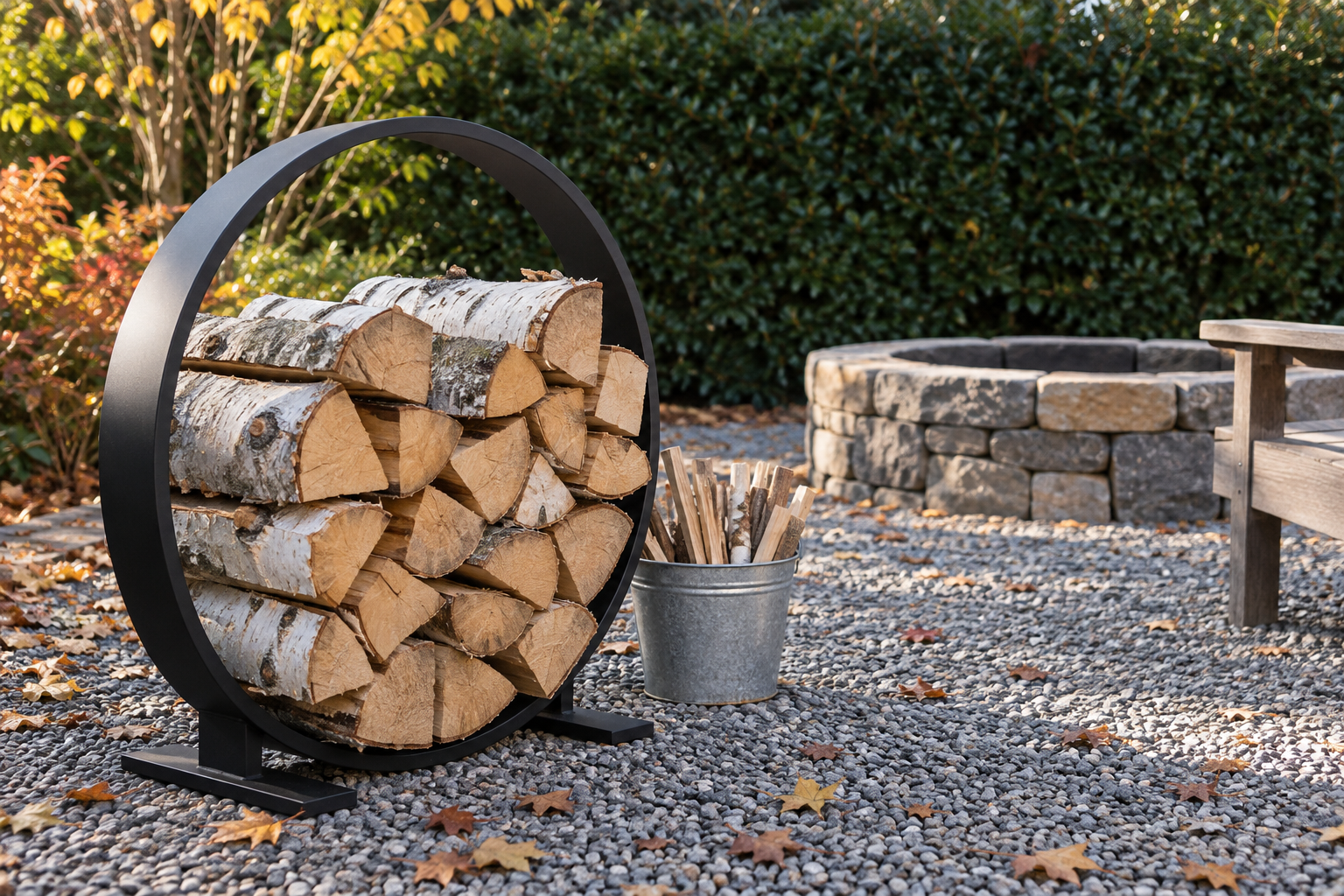
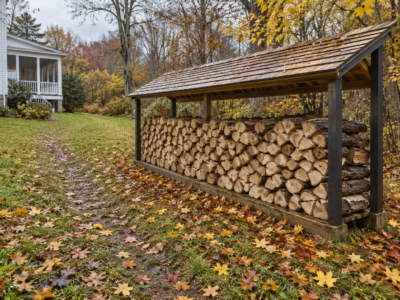
A fire that burns for three hours gets through several armfuls of logs, and somebody has to fetch each one. If the woodpile is across a dark lawn, the fire gets left to die down sooner than anyone wanted.
A small holder beside the seats, filled before dark with that evening’s wood, fixes this. It only needs to hold one night’s supply, because the main stack belongs somewhere drier and further off. Stand it a few steps from the pit, out of reach of sparks, with a bucket of kindling next to it.
Cook on It
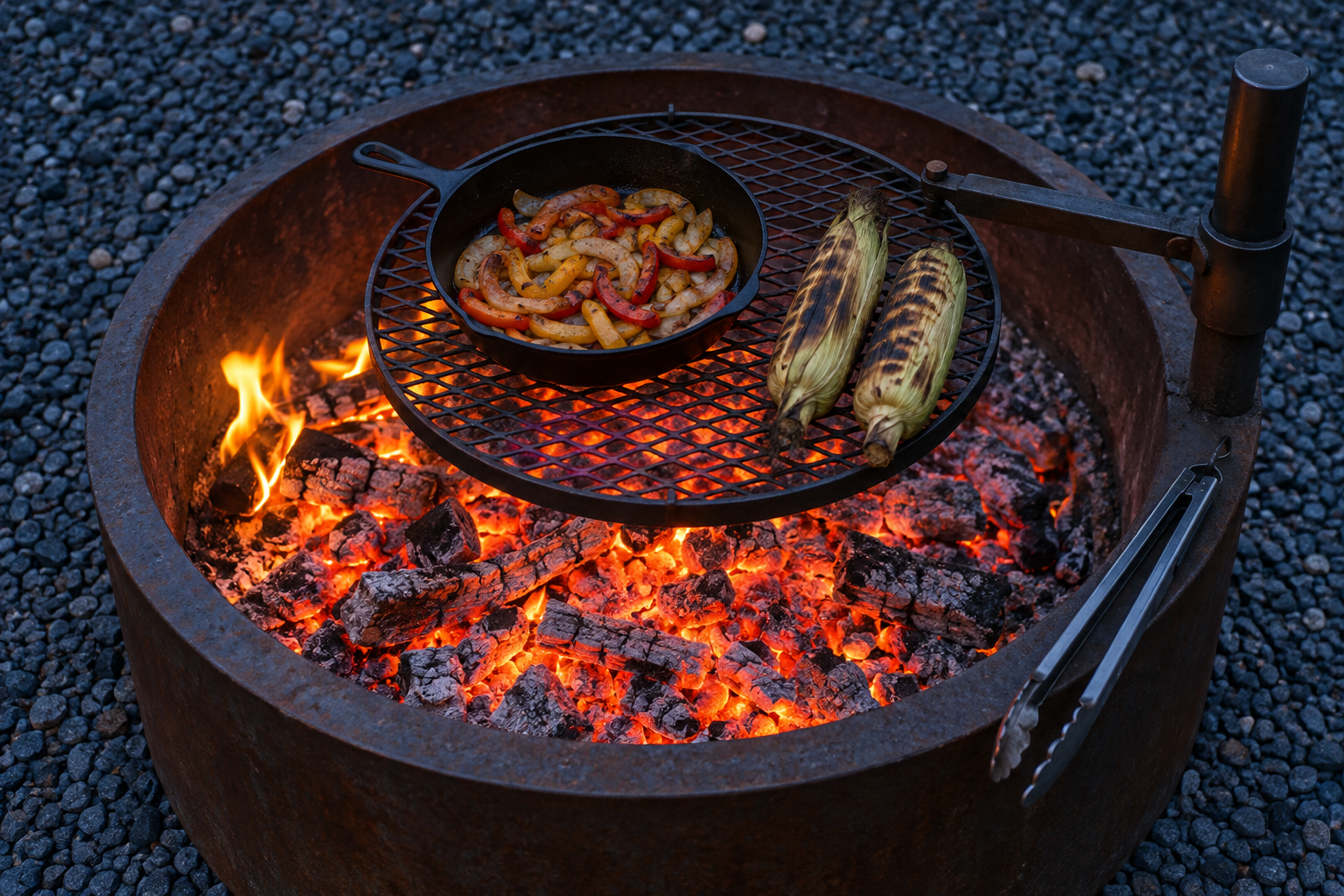
A grate turns a fire pit into something to do at six o’clock, which is a better reason to go outside in November than sitting down in the cold and waiting to feel warm. The simplest kind lies across the rim. One on a swing arm can be moved off the heat without lifting anything hot.
Cook over embers, once the flames have died back, when the heat is steady and nothing blackens before it’s done. That means lighting the fire well ahead, half an hour or more. A cast iron pan handles what would fall through the bars.
Put a Lid on It
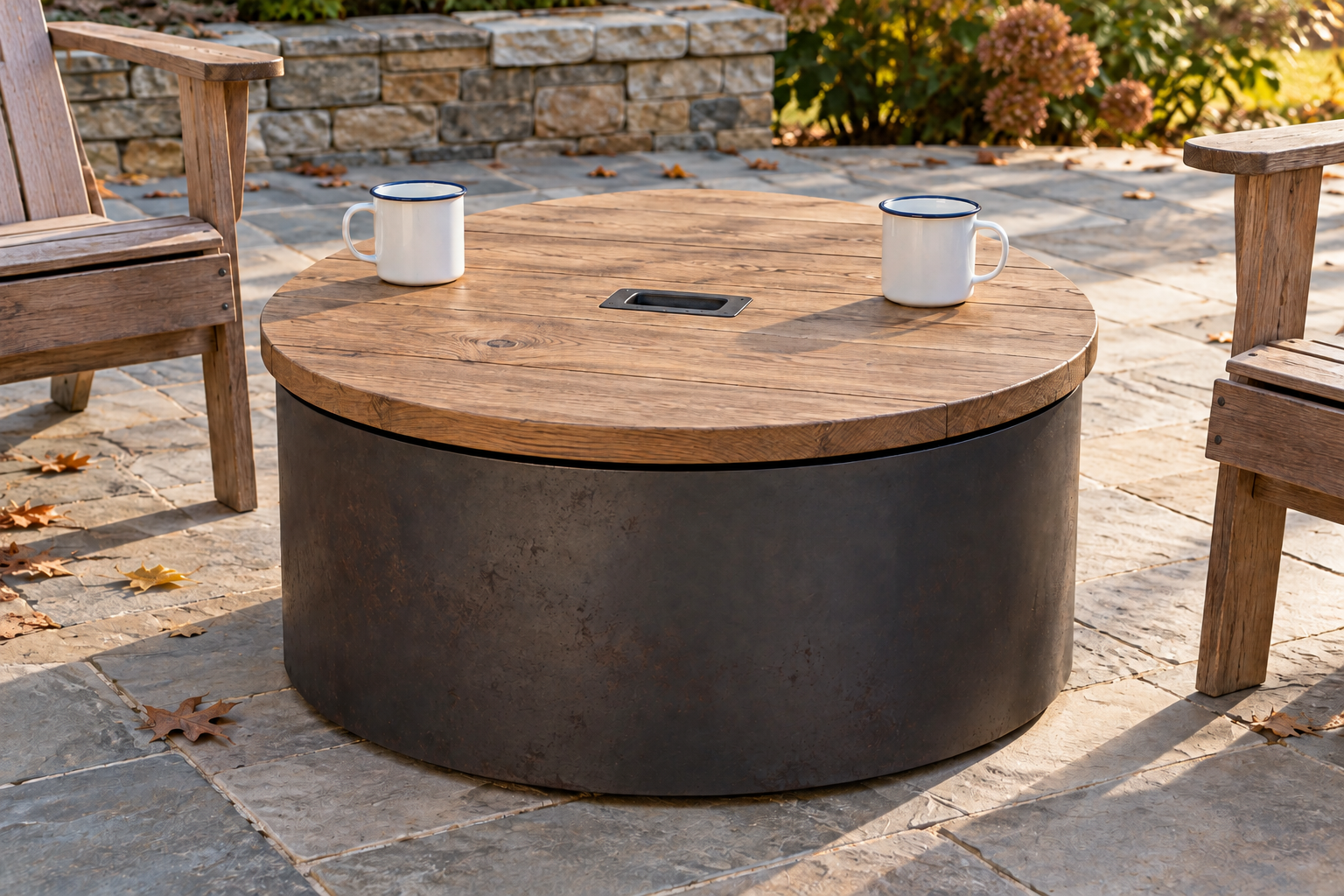
For most of the week a fire pit is a bowl of cold ash in the middle of the seating. A lid changes what it is by day. A flat cover of wood or steel makes the pit a low table, keeps rain out, and stops the wind from lifting ash across the patio.
Rain is the part that matters for the pit itself. Wet ash turns caustic and eats at steel, and a covered bowl is spared that. The lid goes on only when the fire is fully out and the ash is cold, which usually means the next morning.
Light the Path and Leave the Circle Dark
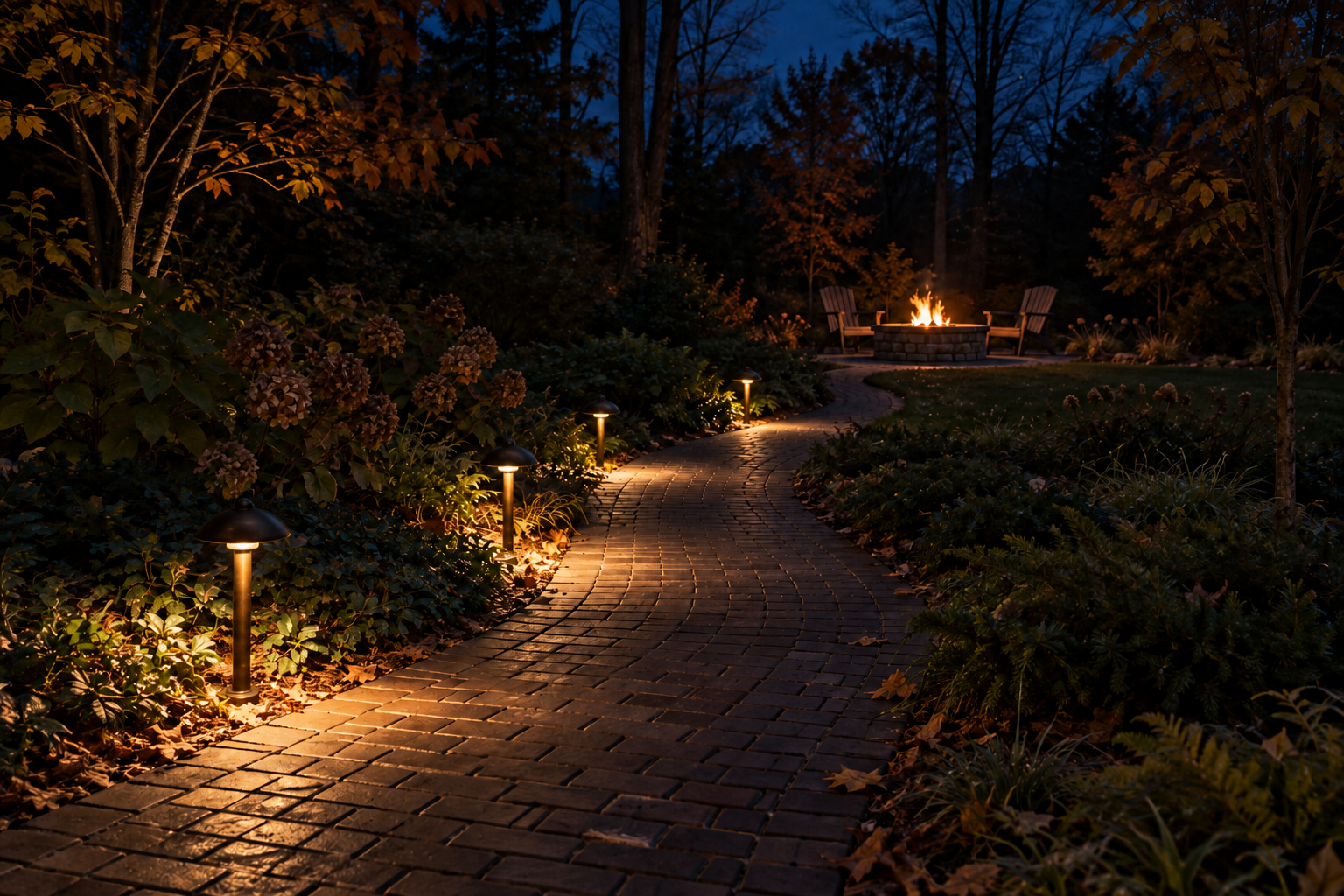
The fire is the light. Anything brighter near it, whether a floodlight on the house or strings of bulbs overhead, flattens the flames and takes away the darkness that made sitting there worth the walk. Eyes adjust to firelight over several minutes and then see a surprising amount.
What does need lighting is the way there and back. Low fixtures that throw light down onto the path show the edge of a step and the turn by the shed, and stay out of the eyes of the people by the fire. Stop them short of the circle. The last few yards can be walked toward the glow.