A patio usually ends up decorated by accumulation: a table bought one summer, a set of chairs added the next, an umbrella grabbed on sale, until the space technically has furniture but never quite reads as considered. The fix isn’t a full renovation. It’s making a small number of real decisions on purpose, material, shade, seating, color, and letting those choices do the work that a dozen small purchases usually can’t. These fourteen ideas span a small urban patio through a larger yard-facing one, on the theory that “considered” looks different depending on how much space is available, not one fixed formula applied everywhere.
Choose a Material Palette Before You Buy Furniture
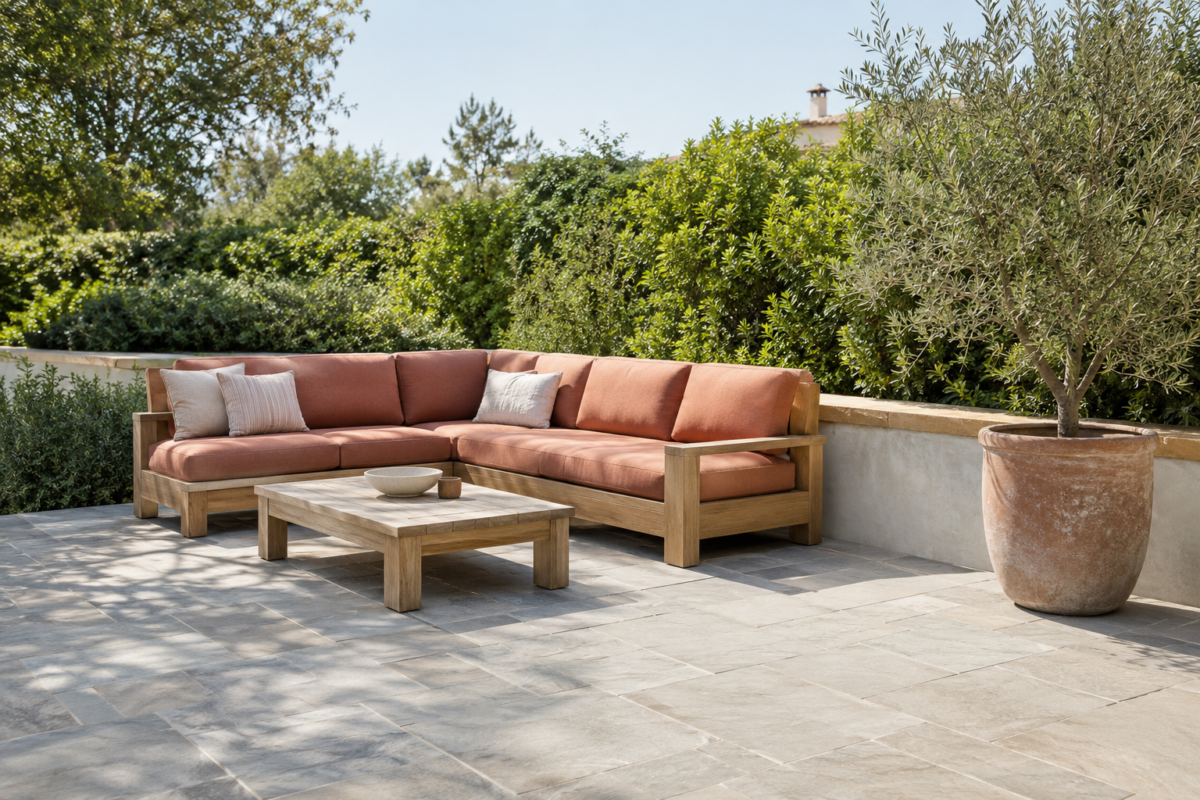
The single most useful decision on a patio happens before any furniture arrives. It comes down to picking two materials, usually the hardscape underfoot and one dominant wood or metal tone, and letting everything else follow from there. A pale stone patio with white oak furniture reads as intentional the moment it’s finished, precisely because nothing else is competing with those two choices. Adding a third or fourth material later, a different wood tone, a clashing metal finish, is what usually turns a considered start into an accumulated one.
Build the Seating Into the Space
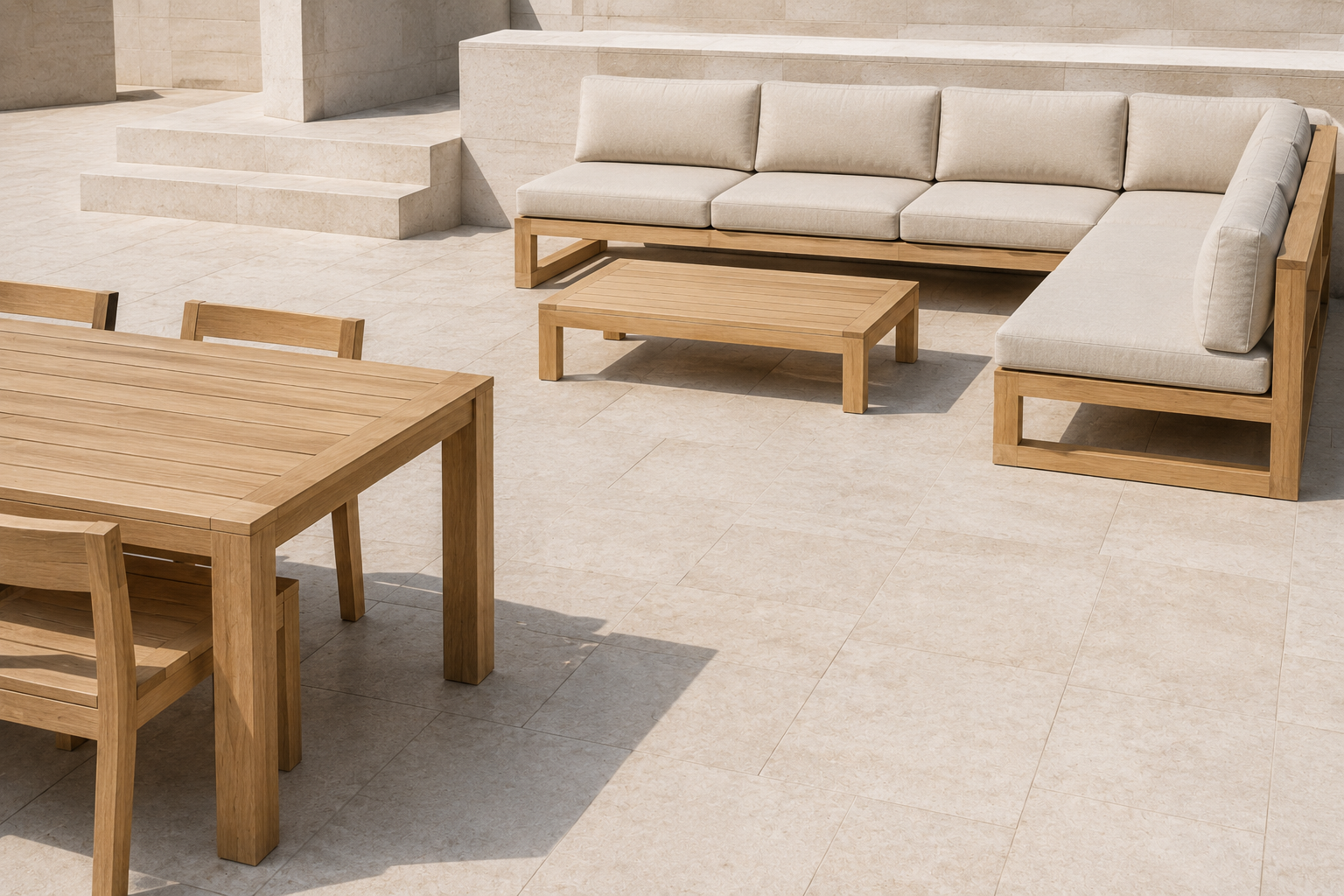
A built-in bench, poured as part of a low garden wall or retaining edge, reads as part of the patio’s architecture in a way freestanding furniture rarely manages, rather than furniture simply placed on top of it. A concrete bench with a wood cap and a run of cushions along its length works especially well framing one edge of a smaller patio, since it doesn’t eat into the open floor the way a freestanding sofa or bench would.
Add Shade With a Pergola, Not Just an Umbrella
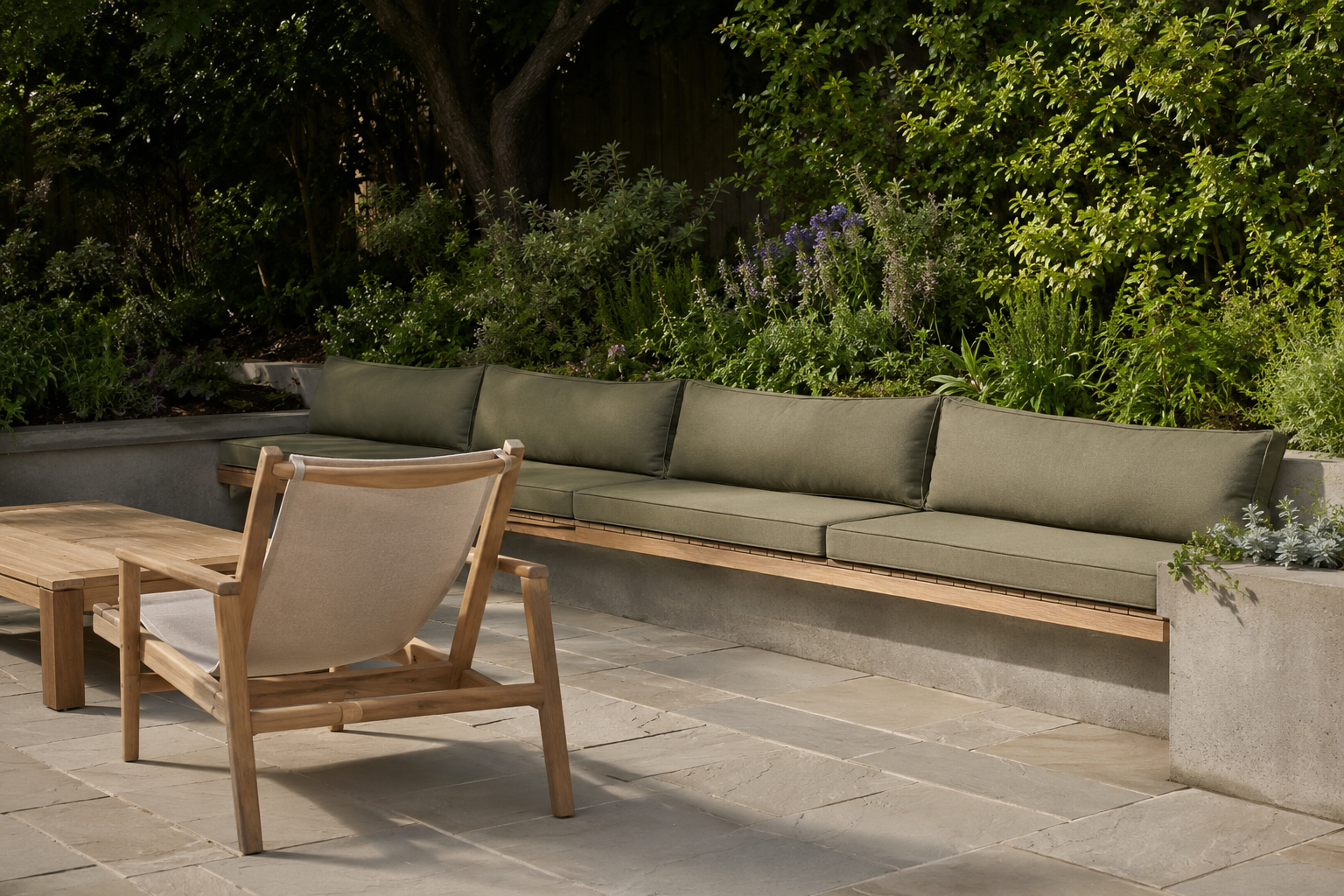
An umbrella solves shade for one table, temporarily, and has to be adjusted through the day as the sun moves. A pergola, even a simple slatted-roof version, gives a patio permanent architectural shade and a defined “ceiling” that a moveable umbrella never quite achieves. It’s a bigger investment than an umbrella, but it’s the difference between a patio that reads as a real outdoor room and one that reads as a table that happens to be outside.
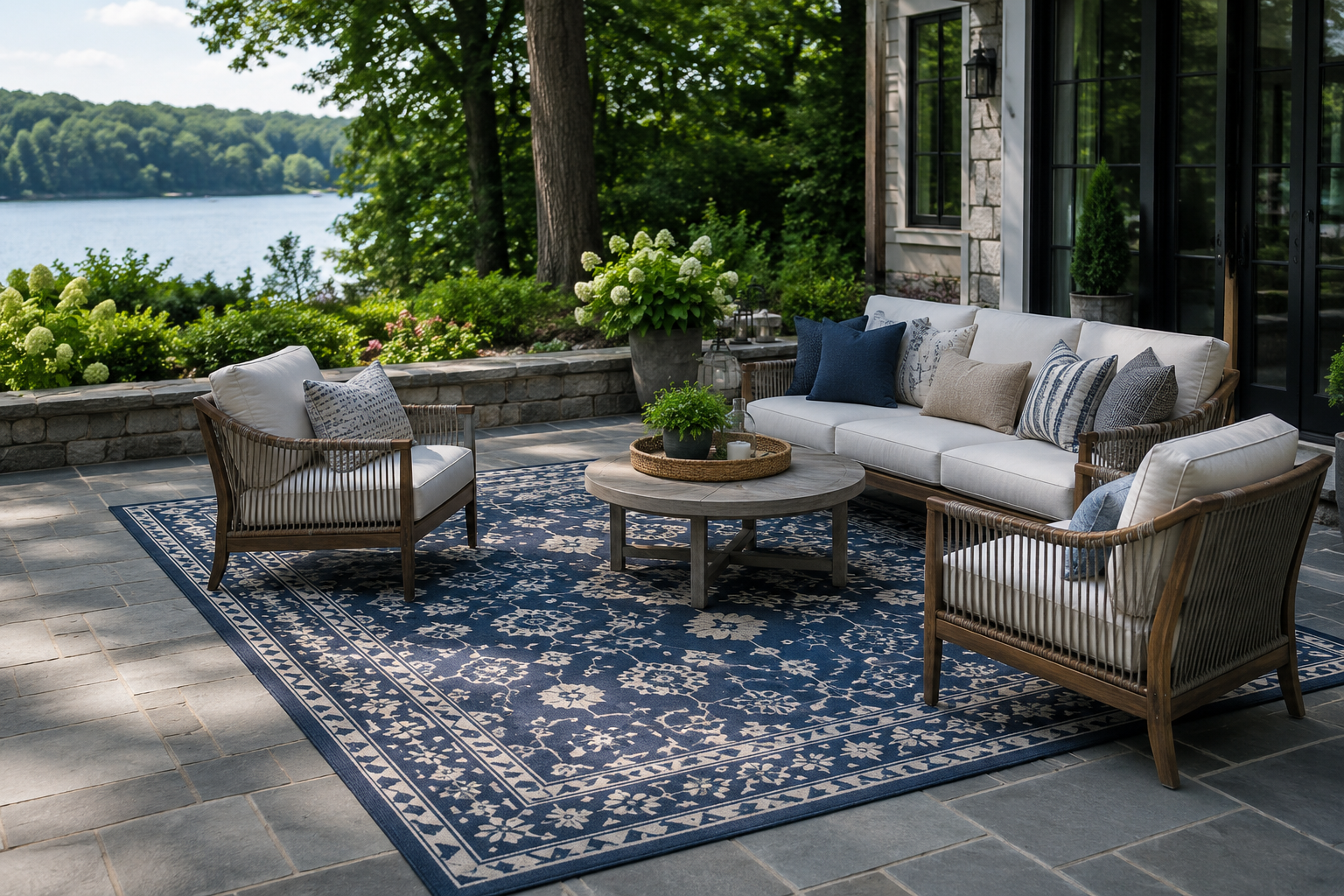
Anchor a Large Patio With an Outdoor Rug
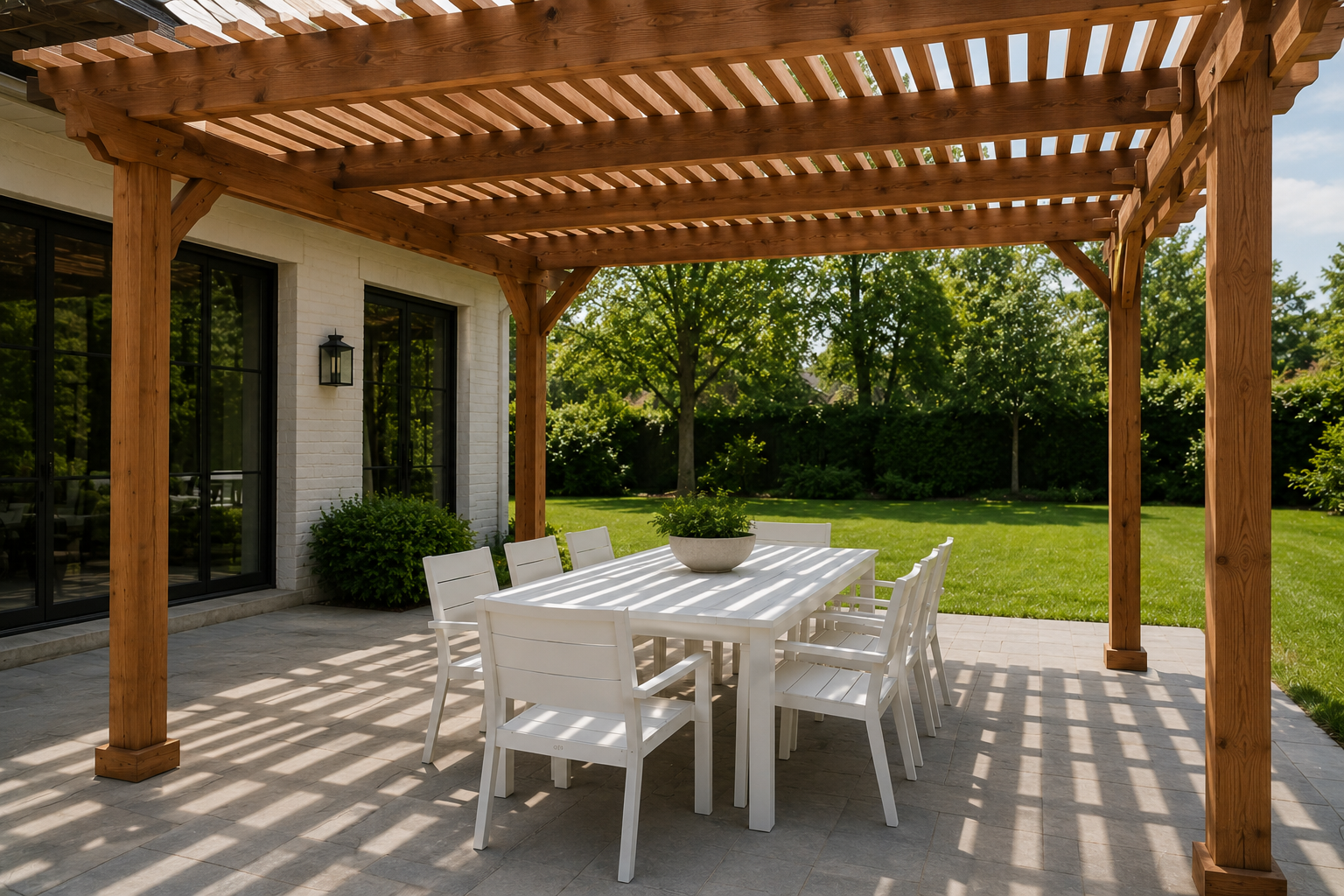
On a large paved patio, a seating group can start to feel like it’s floating on an oversized surface with no defined edge. An outdoor rug does the same job outside that a rug does indoors. It draws a visual boundary around the seating and makes the group read as one considered arrangement rather than furniture scattered across open stone. This idea matters most on bigger patios; a small space rarely needs it.
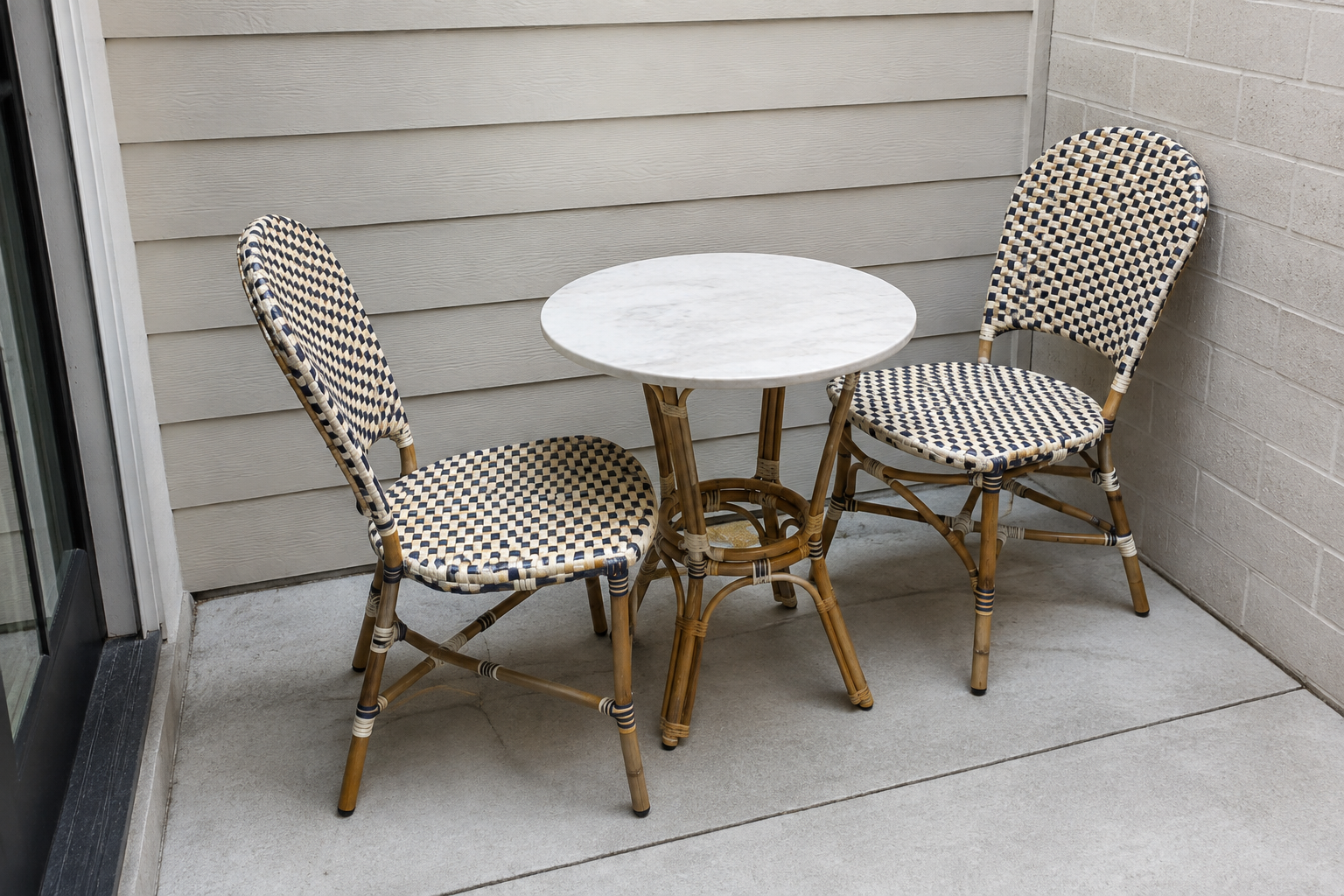
Give a Small Patio One Real Job
A small urban patio or balcony usually fails not from bad furniture but from trying to do too much in too little space, a dining spot, a lounge area, and a plant collection all competing for the same six square feet. Choosing one genuine function, a two-chair coffee nook, a single reading spot, and committing to it fully reads as far more intentional than a scaled-down version of everything a larger patio might have.
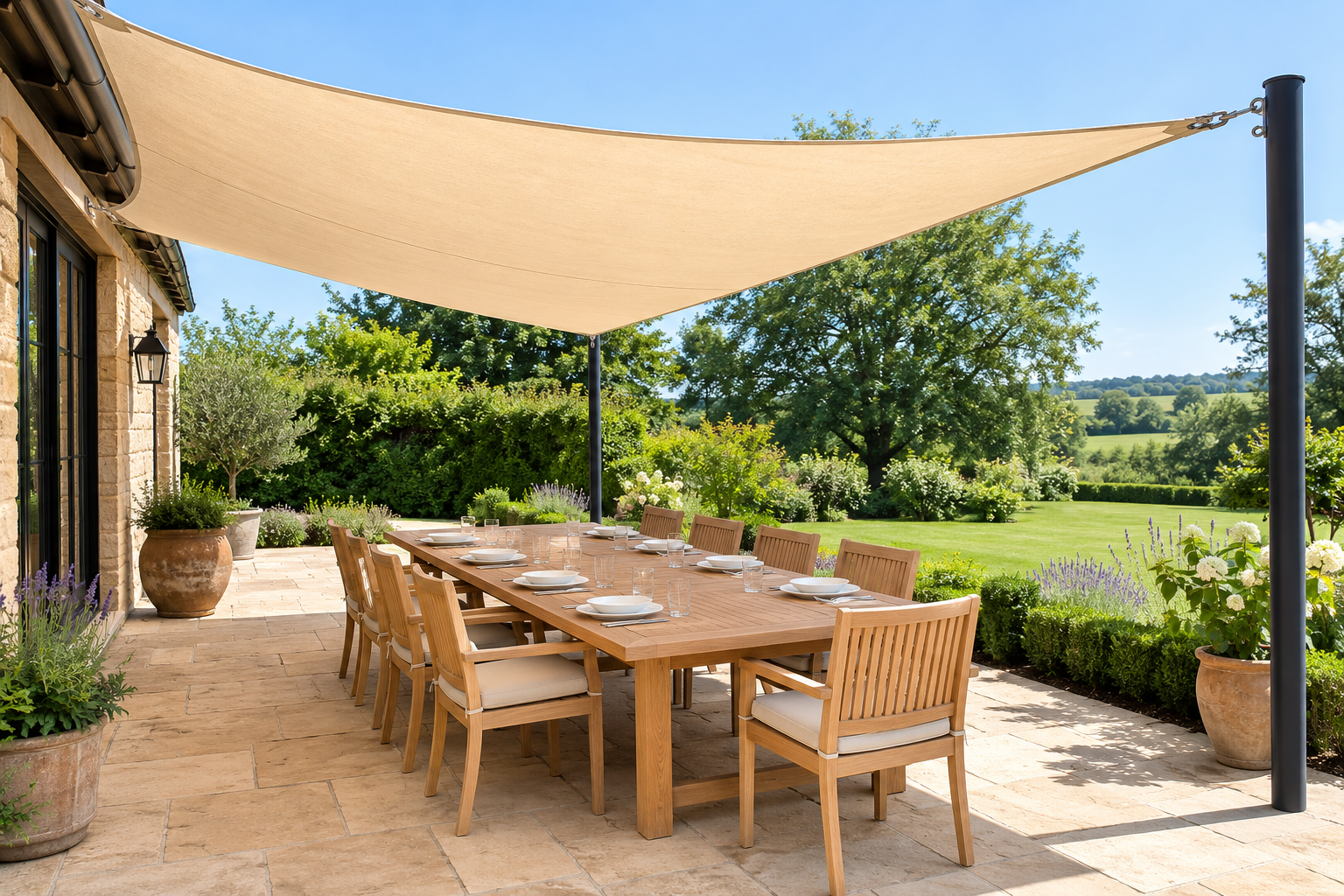
Cover a Big Dining Area With a Canopy
Where a pergola suits a smaller, more permanent shade need, a canvas sail-shade canopy scales better over a large dining area, since a single taut piece of fabric can cover more square footage than a slatted roof without the same structural investment. It’s a good middle option between an umbrella’s limited coverage and a pergola’s permanence, particularly for a patio that’s mostly used for entertaining rather than everyday lounging.
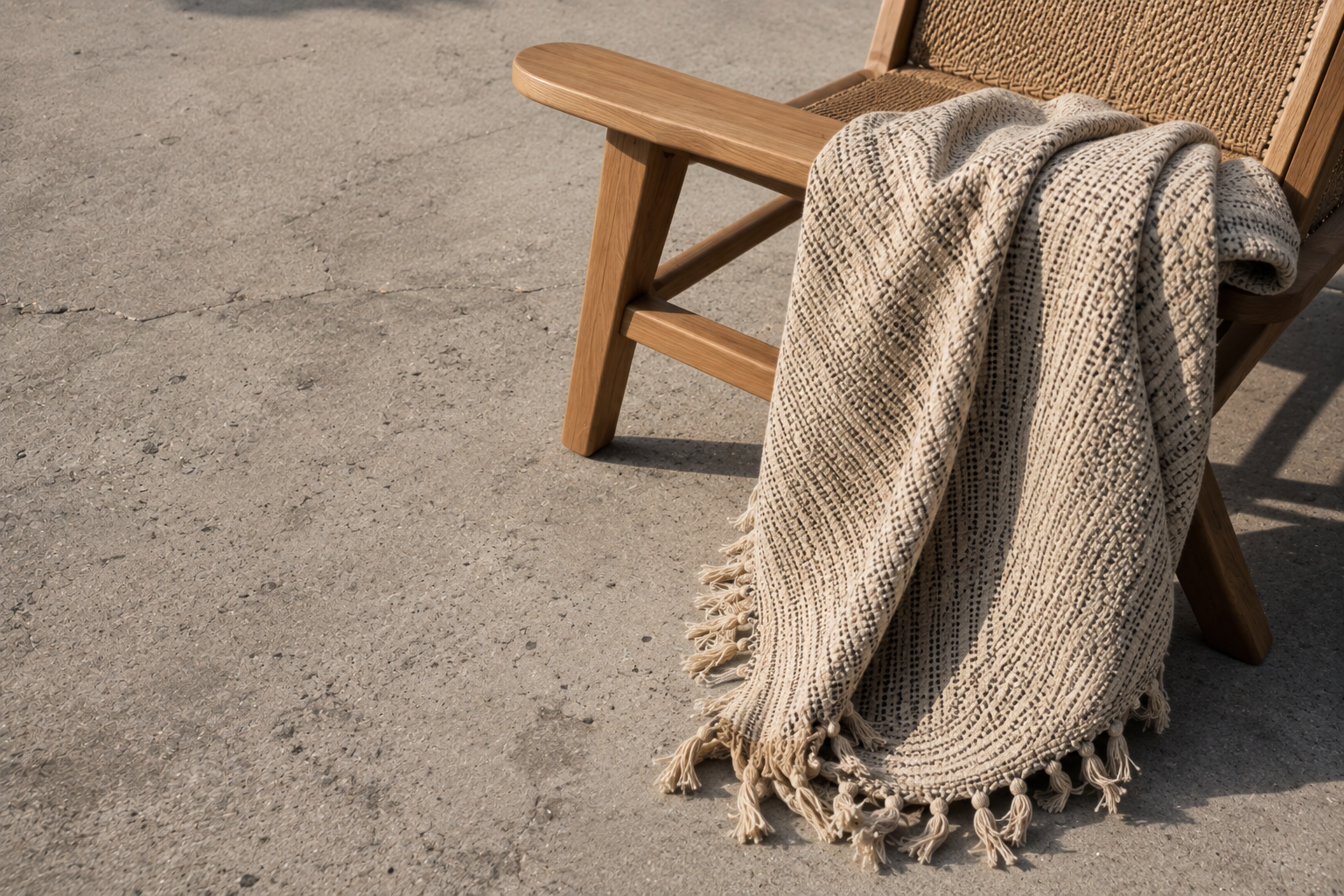
Warm Up Plain Concrete With Wood and Textiles
Most patios aren’t stone or pavers, they’re a plain poured-concrete slab, and treating that as a problem to hide usually backfires. The better move is leaving the concrete honestly visible and letting the furniture and textiles do the warming work on top of it: a teak chair, a woven throw, natural materials that contrast with the concrete’s flatness instead of trying to disguise it.
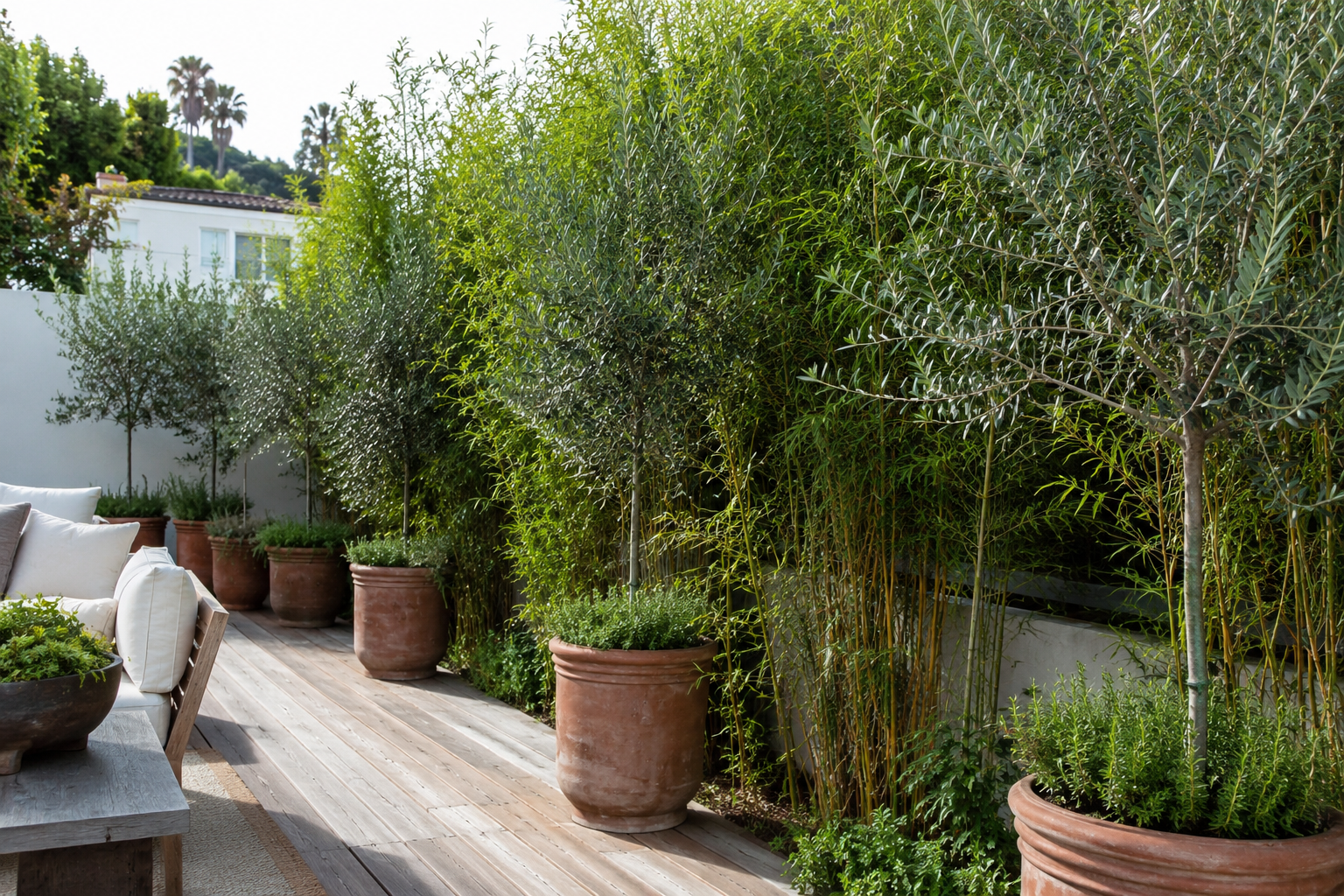
Screen the Edges With Planting Instead of a Fence
A row of tall potted plants along one property line does the privacy work a fence would, without the cost or the permanence, and it reads as considerably softer against a patio’s overall materials. This is the one place in this list where plants genuinely earn a leading role, not as scattered decoration but as a functional choice, screening a sightline that a neighbor’s window or a shared fence line creates.
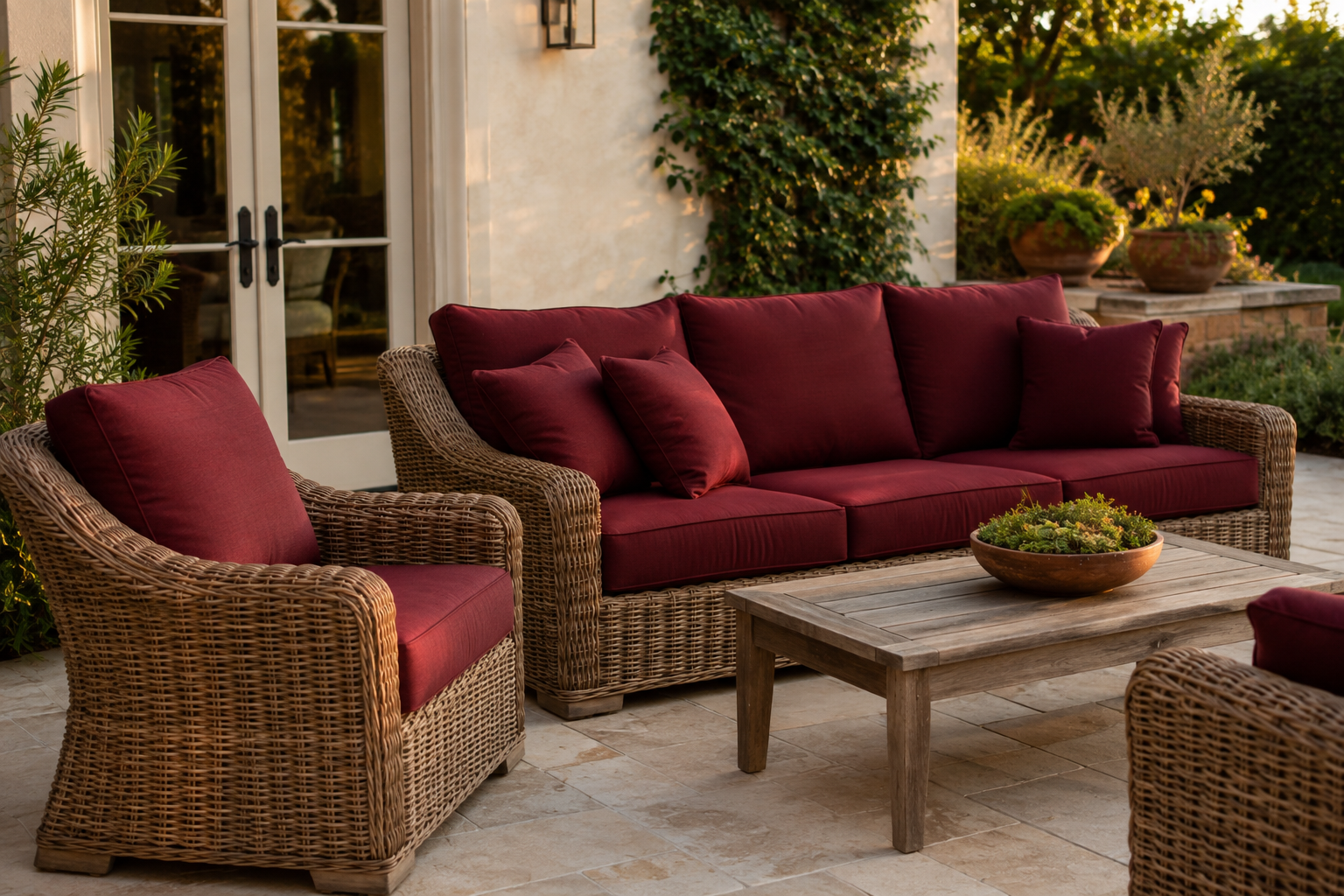
Put the One Rich Color in the Cushions
A patio doesn’t need to stay neutral to feel restrained, but the color, when it shows up, works better coming from real furnishings than from a scattered decorative object. A deep oxblood or rust cushion fabric on otherwise-neutral wicker furniture is a confident, genuine color choice, distinct from adding one bright throw pillow to an unchanged beige set. Used once, in the fabric itself, it reads as intentional rather than trend-chasing.
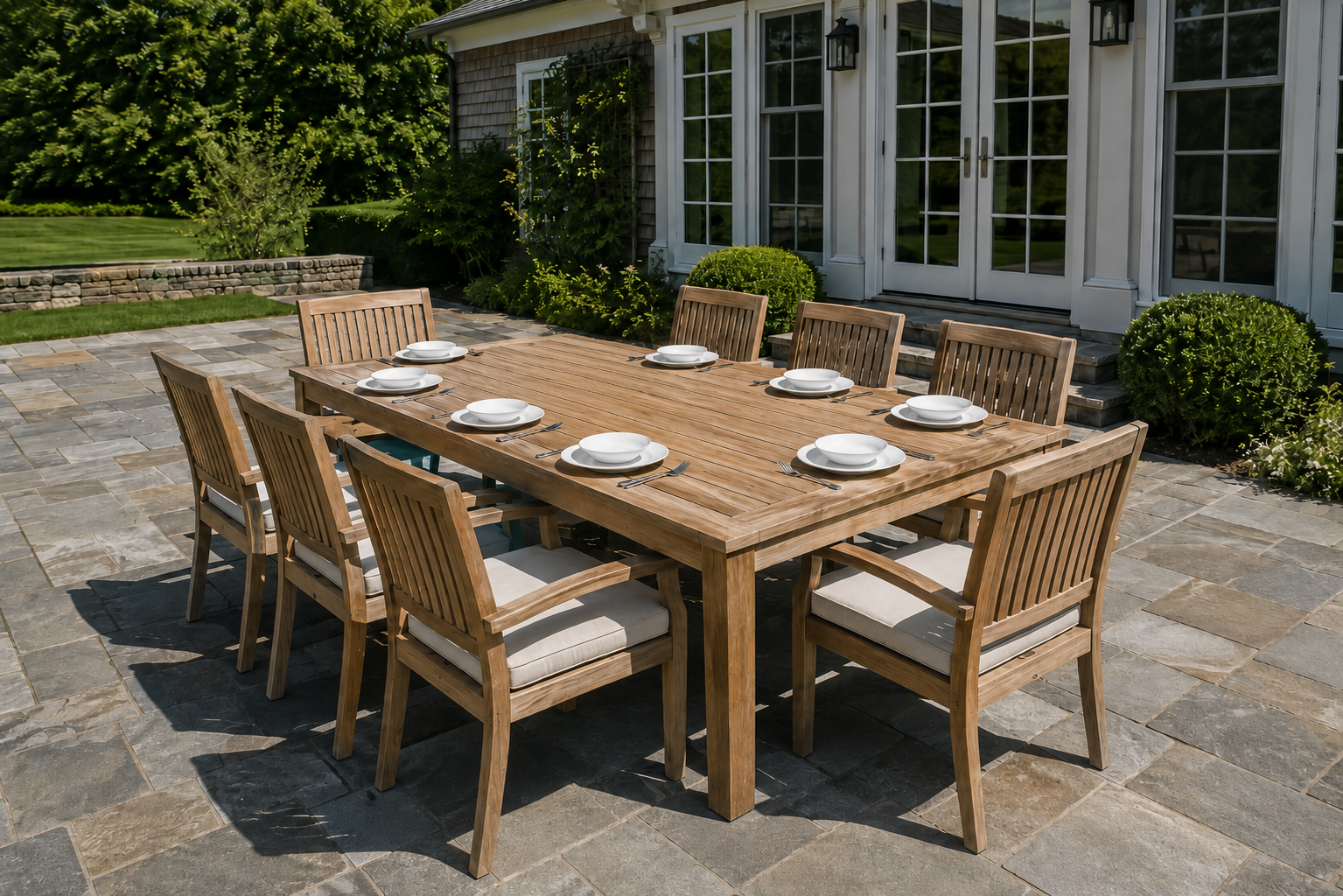
Size the Table for How You Entertain
A small bistro table works fine for two people having coffee, but it becomes the wrong furniture entirely the first time eight people show up for dinner. A patio used often for entertaining is better served by a table sized for that reality from the start, a long teak table with real seating for six to eight, rather than pushing a too-small table past its limit every time it matters.
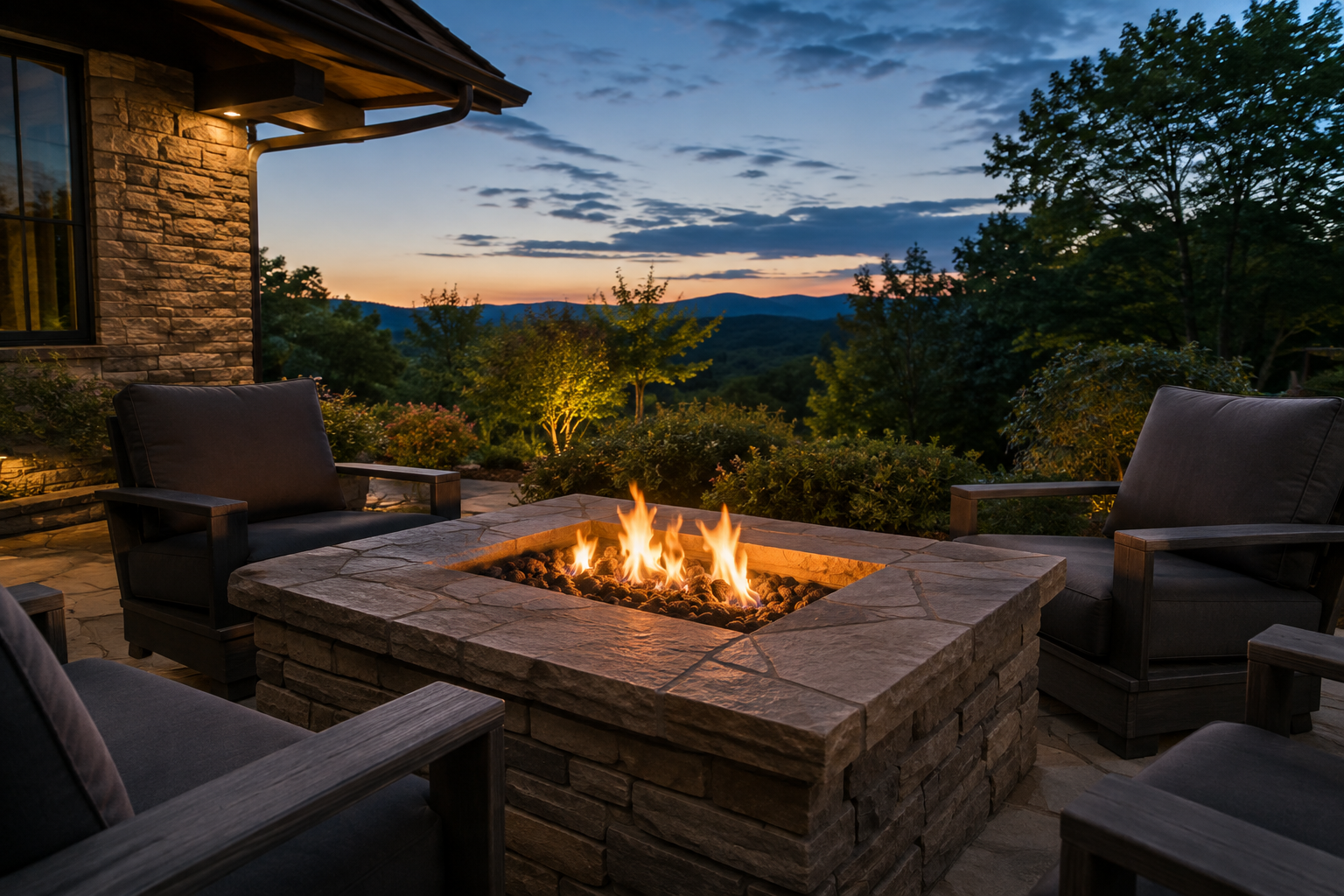
Build the Evening Around a Fire Feature
A fire table or built-in fire pit gives a patio a genuine reason to be used after dark, beyond just leaving the porch light on. Surrounding lounge chairs arranged around it create a natural gathering point that a patio without any evening anchor usually doesn’t have, and the warmth extends how many months of the year the space gets used.
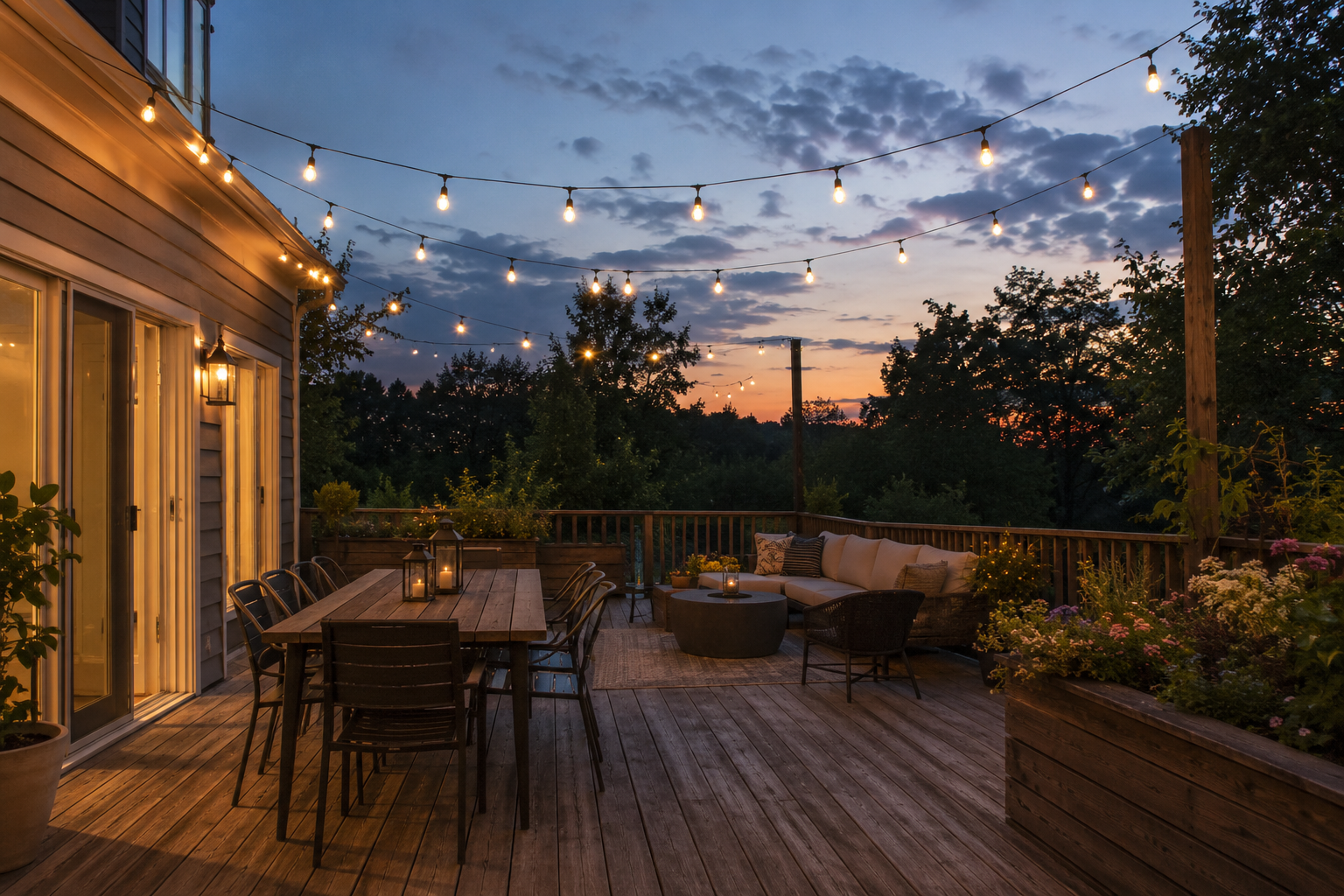
Hang String Lights to Define the Ceiling
Where a fire feature anchors a patio at ground level, string lights do the equivalent job overhead. Crossing the open space above a lounge or dining area, they give a roofless patio a defined “ceiling” the way a pergola’s structure does, just with light instead of shade. It’s a lower-cost way to give an open patio the same sense of enclosure a permanent structure provides.
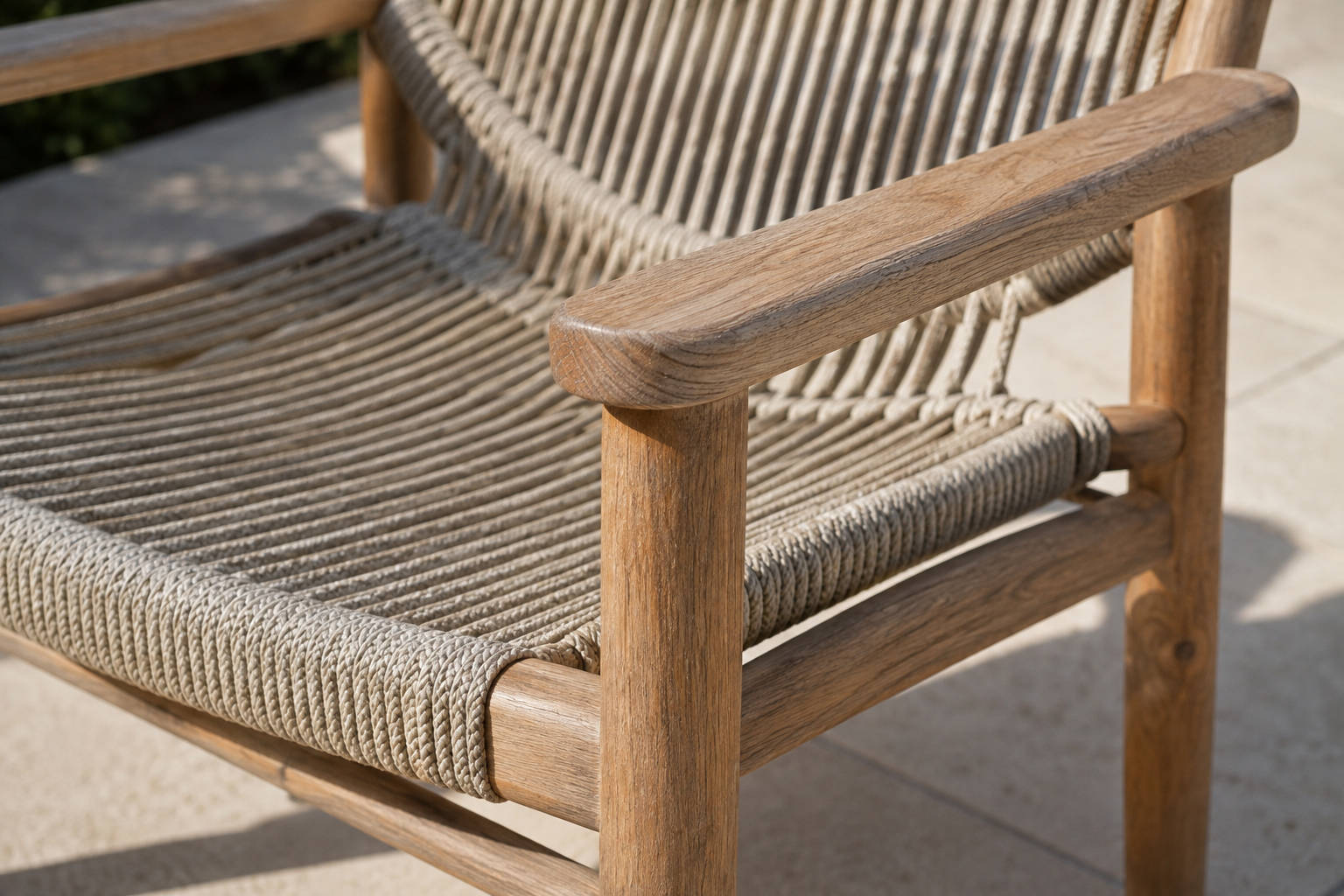
Choose Furniture That Can Live Outside
A beautiful chair that has to be dragged inside every time rain is forecast eventually just stays inside permanently. Rope-and-teak or all-weather wicker furniture, built to handle sun and moisture, costs more upfront but gets used through a full season instead of becoming storage-shed furniture by the second month.
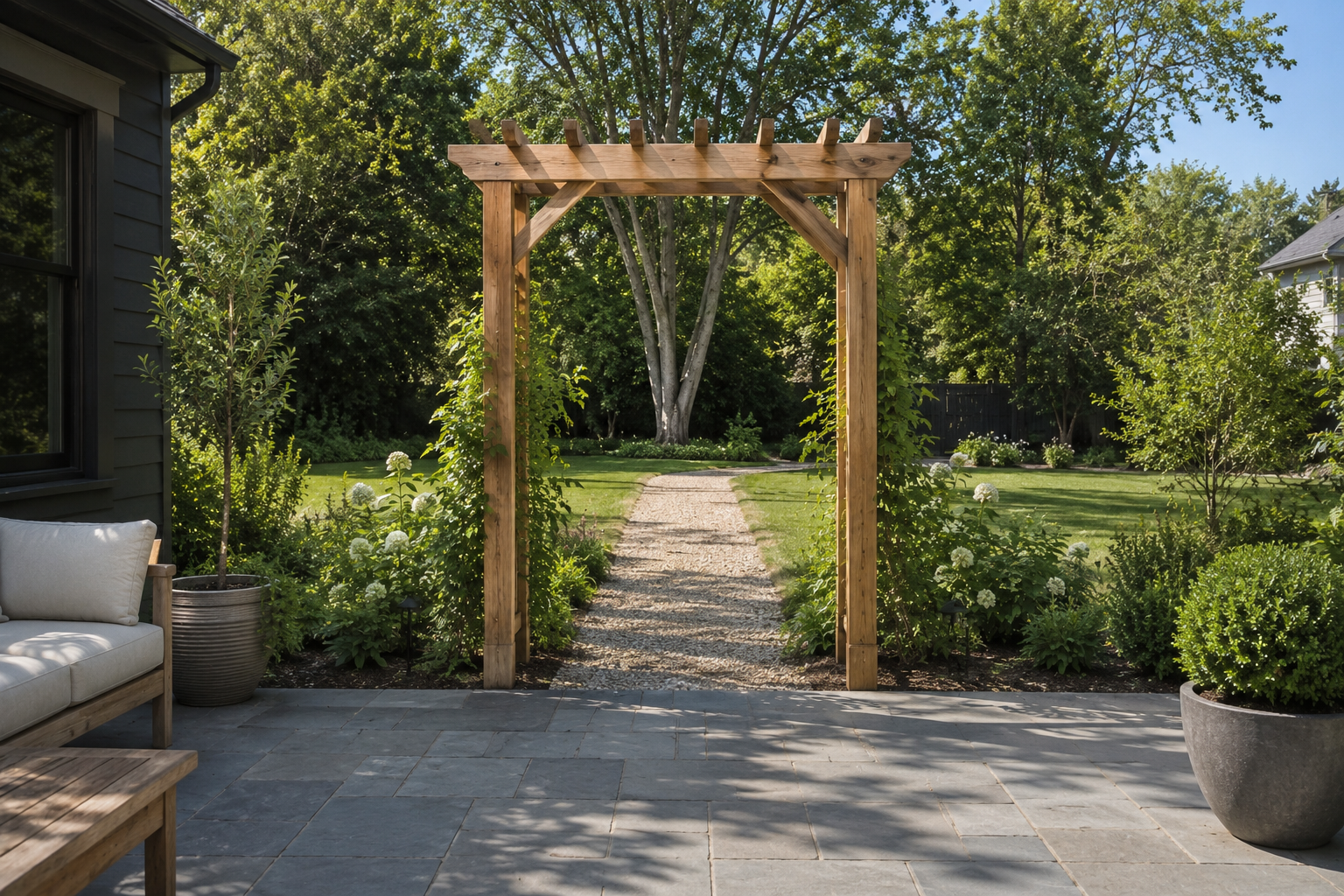
Frame the Threshold With an Arbor or Gate
On a larger patio that opens onto more yard beyond it, a simple arbor or gate at that transition point gives the eye a clear marker for where the decorated patio ends and the rest of the property begins. It’s a small architectural gesture, but it makes the boundary between the two spaces read as a deliberate choice rather than the patio just trailing off into the lawn.
A patio decorated this way, with a handful of real decisions rather than a slow accumulation of purchases, ends up reading as finished at almost any size, whether that’s a two-chair balcony or a table that seats eight.
Frequently Asked Questions
How do I maintain all-weather furniture through the seasons?
Most all-weather materials, rope, teak, powder-coated metal, hold up with minimal care: an occasional rinse, cushions brought inside or covered during extended rain, and teak left to weather naturally rather than stripped and re-oiled constantly. The genuine advantage over indoor-style furniture isn’t zero maintenance, it’s that the maintenance it does need is minor and infrequent.
If I can only do one thing on a small patio, what should it be?
Committing to a real material palette, idea one on this list, before buying any furniture at all. It’s the cheapest decision to get right and the one that makes every later purchase easier, since a considered material choice gives a small space a coherent identity even before the first chair arrives.