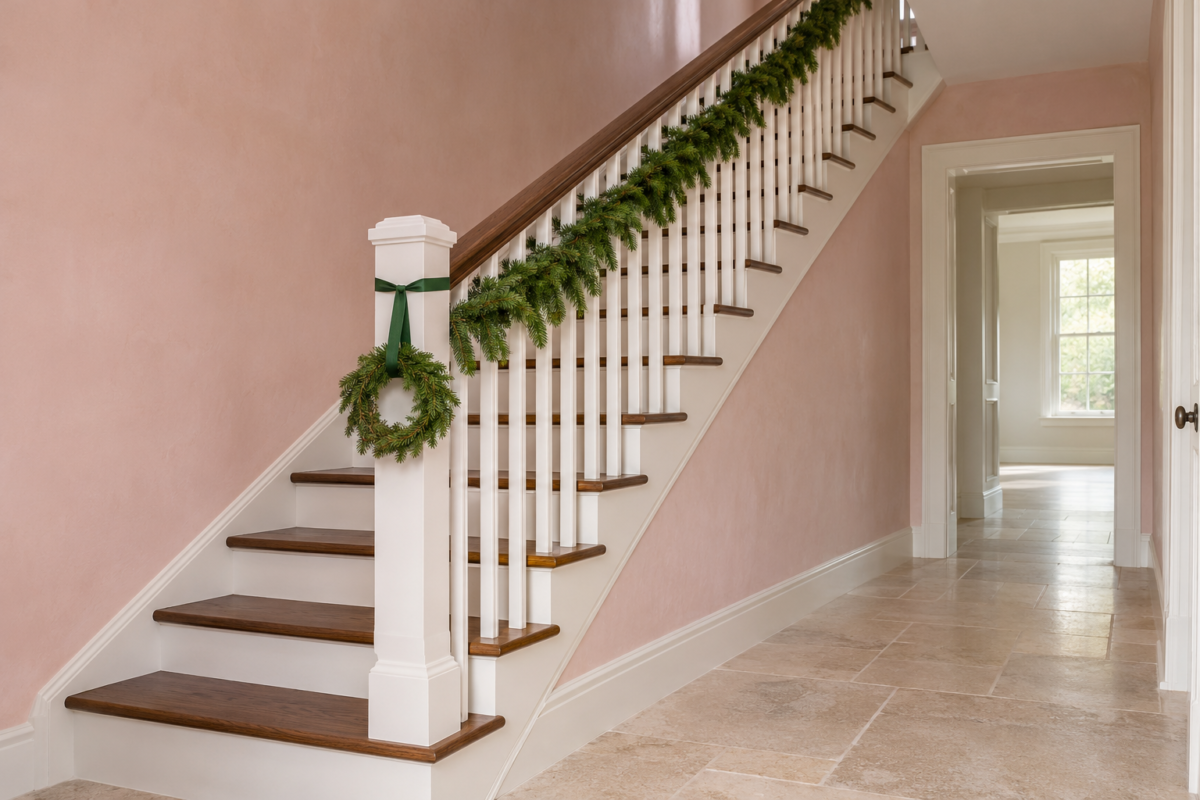
A staircase is busy at Christmas. Presents go up it to be wrapped and come down it on Christmas morning, guests carry bags up it to the spare room, and somebody comes down it in the dark for a glass of water. Through all of it, one hand is usually on the rail.
The newel post, the balusters below the rail, the wall beside the stairs, and the open space of a stairwell all take decoration without being in anyone’s way. The handrail and the steps are what people hold and stand on, so they stay clear, and anything with a cord runs where no foot will find it.
Garland Tied Below the Handrail
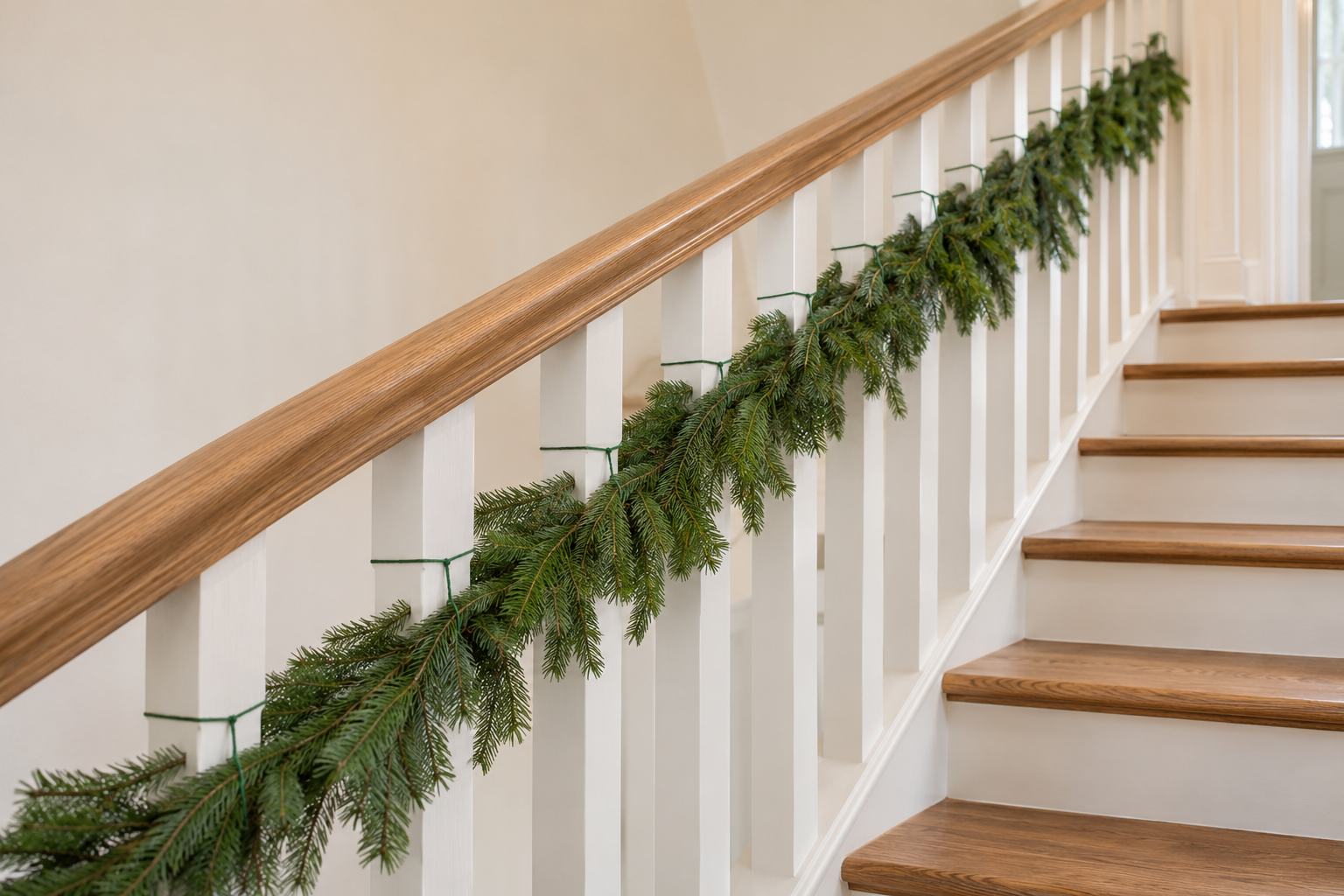
Garland is the first thing most staircases get, and it can look just as full tied along the balusters a few inches under the rail as it does wound around the rail itself. Fixed there, it leaves the top of the rail bare for a hand to slide along, and needles from fresh greens fall to the side of the stairs instead of into a palm.
Tie it at every baluster, or every second one on a long run, with soft florist wire or green garden twine that disappears among the stems, so it follows the slope of the rail in one straight line from the newel post to the landing. Faux garland suits a staircase that rises through a heated hall, where fresh greens dry out within two or three weeks.
A Wreath on the Newel Post
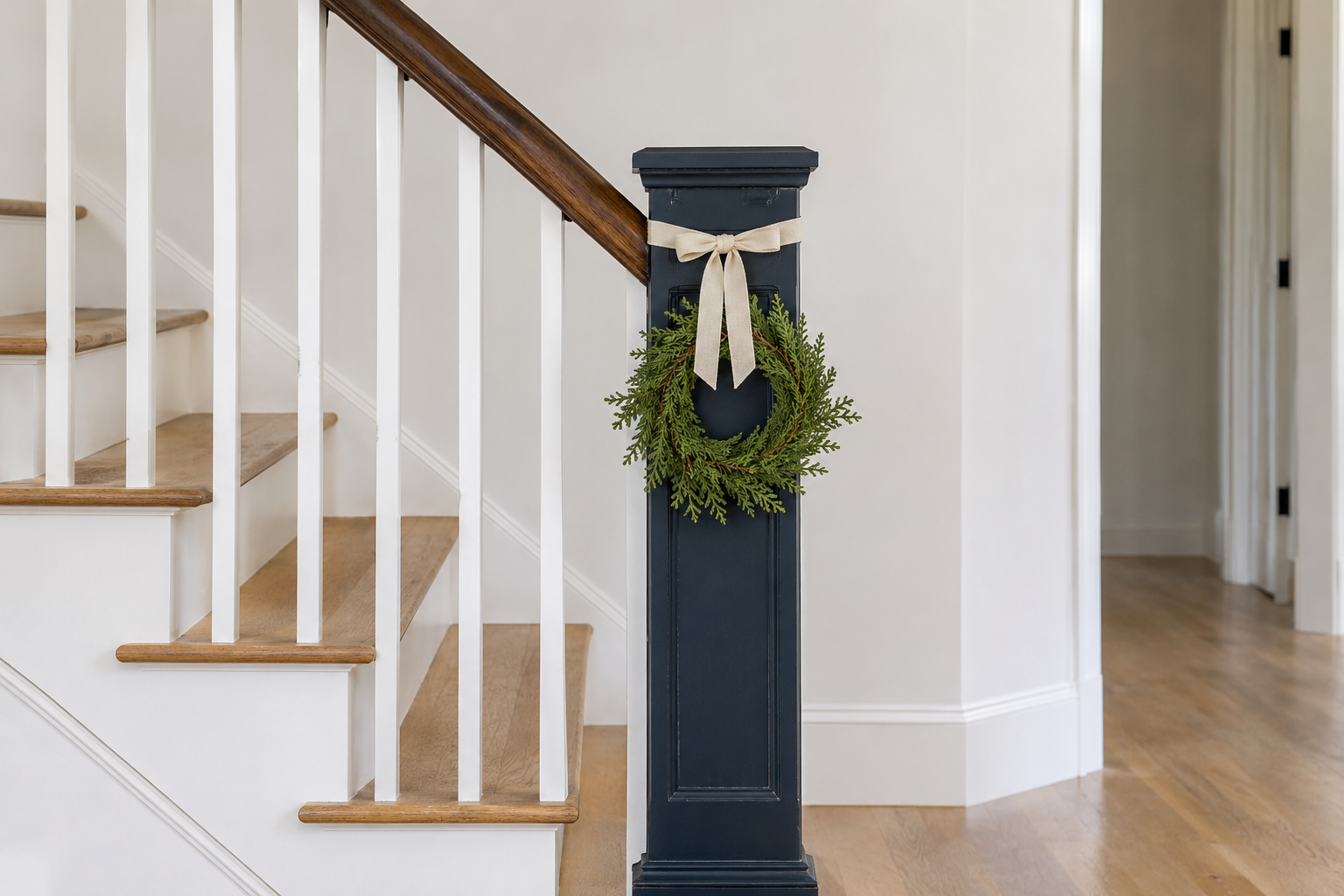
The newel post is often the first part of the staircase seen from the front door, and it is the one part that can carry a weight without anyone touching it. A wreath on its face marks the foot of the stairs with a single piece, and on a post with a round cap or finial a wreath can lie over the top instead, like a collar.
A small one, about a foot across, keeps the post’s shape visible. Hang it from a ribbon tied around the post just under the cap, so nothing is screwed into the wood. On a staircase that also has a garland, the wreath hides the knot where the garland starts.
Swags With a Bow at Each Tie
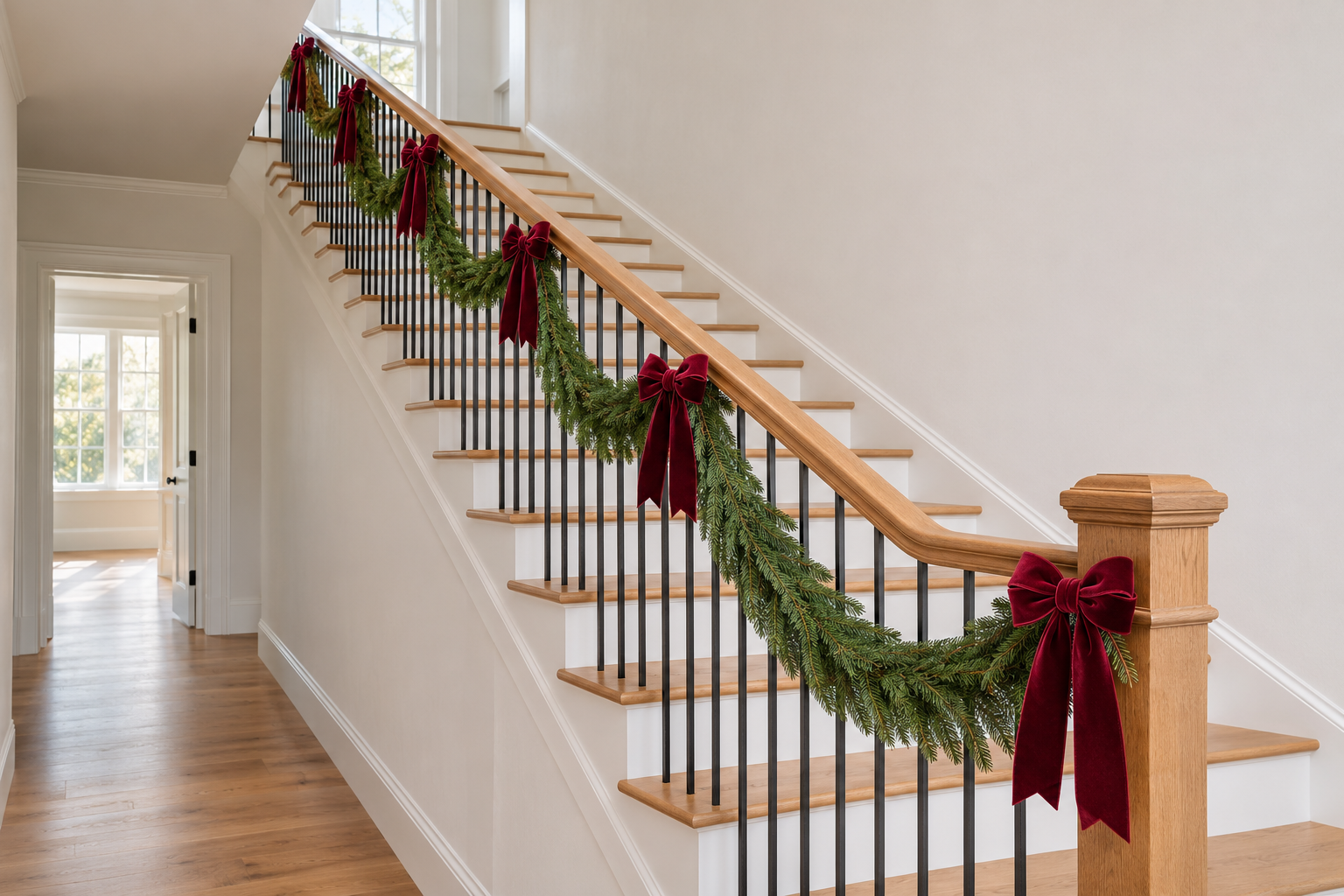
Garland can also hang in loose swags, tied up at every fourth or fifth baluster and dipping between ties, with a ribbon bow over each tie. The curves break up a long, straight run of balusters, and the bows set a beat that the eye follows up the stairs. A velvet or wired ribbon keeps a bow’s shape through the month, where thin unwired satin tends to flatten.
Swags take about half again the length of the banister, more if the dips are deep. Hang them on the outer face of the balustrade, the side facing the hall, so they don’t brush the legs of anyone going up.
Small Wreaths on Every Other Baluster
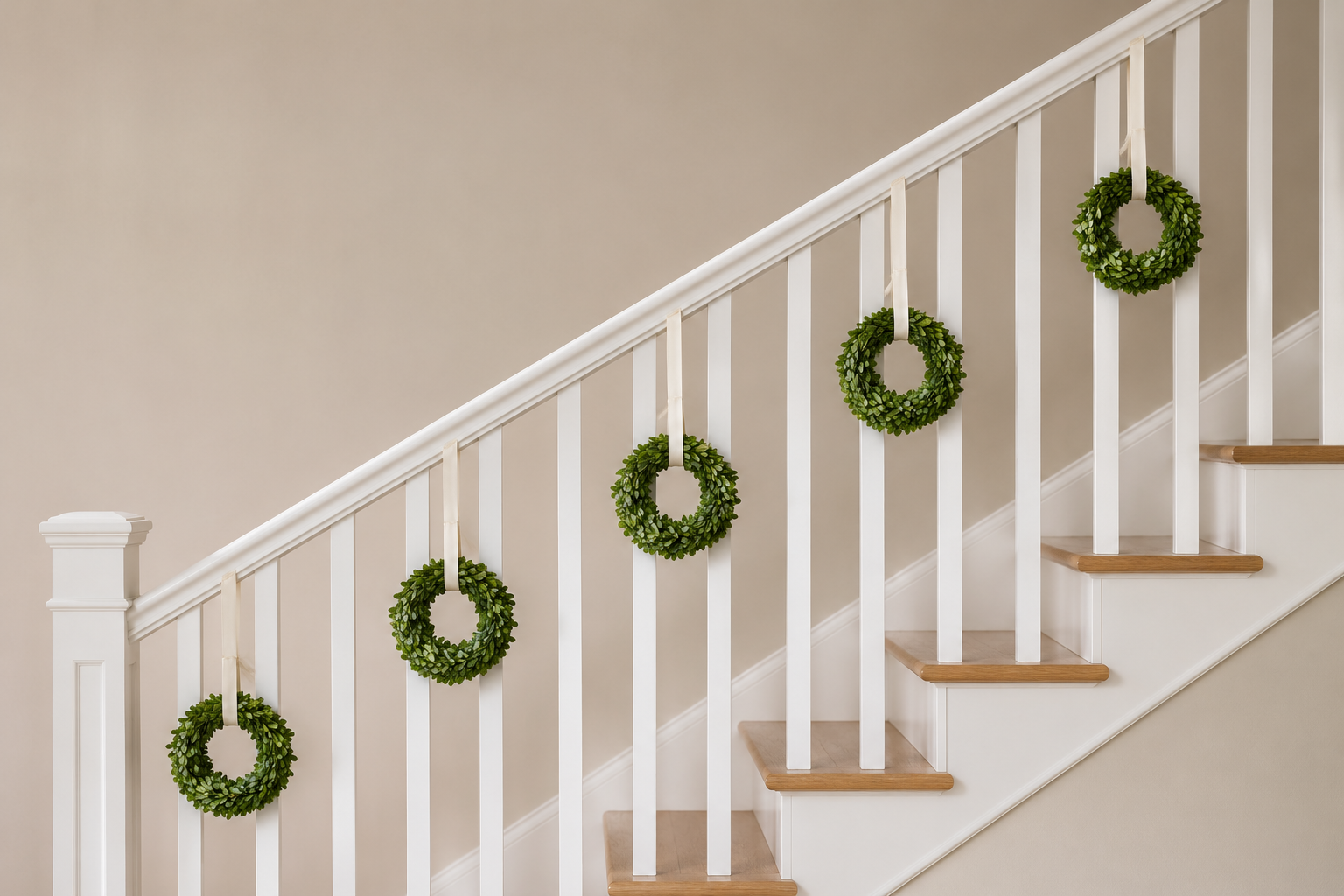
A row of small wreaths, each 6 to 8 inches across, hung from every second or third baluster, rises up the stairs like a line of dots. It suits a plain stair with square or simply turned balusters better than a carved one, where the wreaths compete with the turning.
Use the same wreath and the same length of ribbon all the way up, so every wreath hangs the same distance below the rail and the row climbs at the rail’s angle. Boxwood, faux or preserved, keeps a neat round outline at this small size.
Stockings Tied to the Spindles
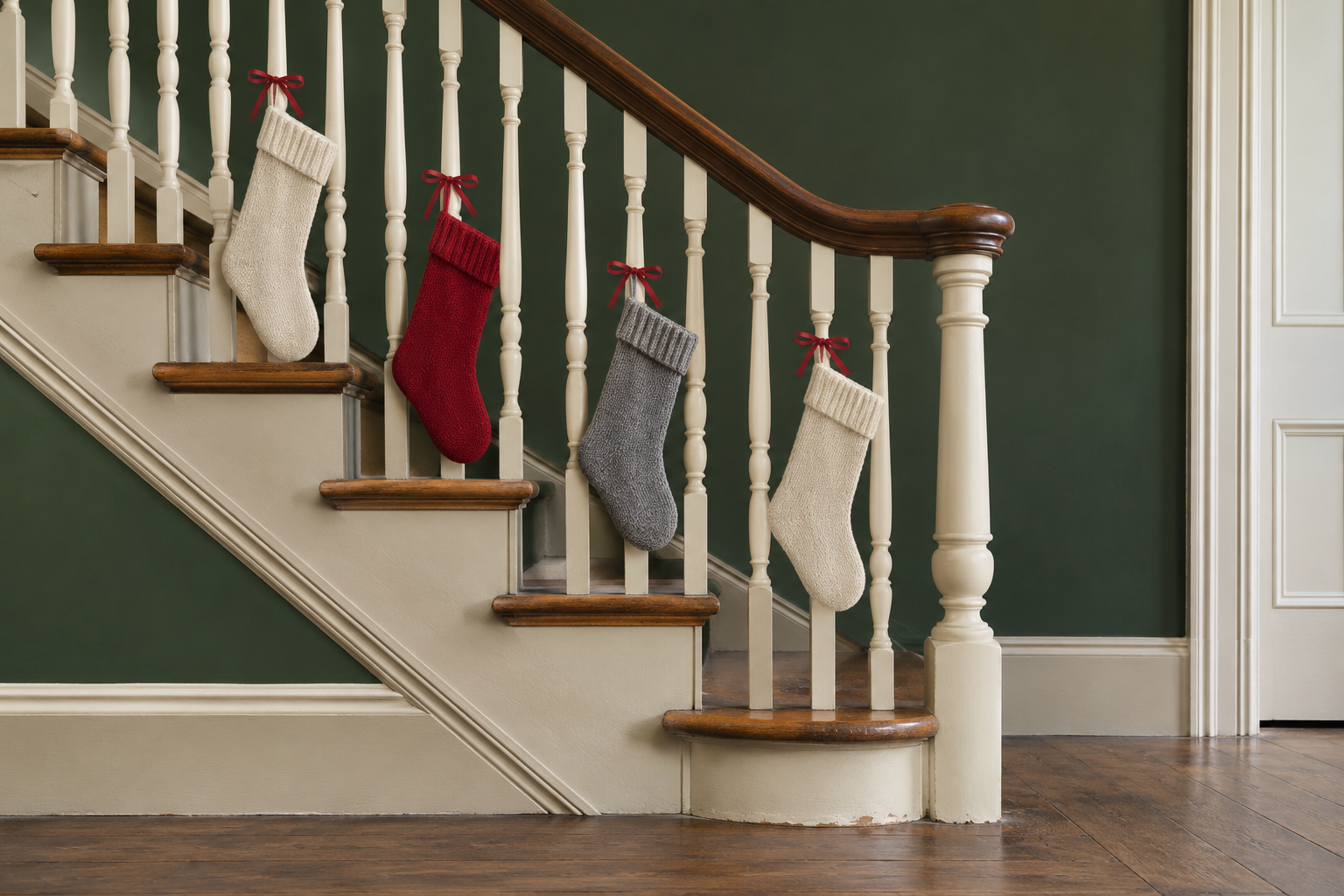
In a house without a mantel, the staircase is where the stockings can go, and it has room for every one in the family. Tie each with ribbon to its own baluster near the foot of the stairs, a few spindles apart, at a height a child can reach on Christmas morning.
Hang them on the outer face of the balustrade, below the rail and clear of the steps. A filled stocking weighs more than an empty one, so tie the ribbon above a turned collar or a thicker part of the baluster, where it can’t slide down overnight.
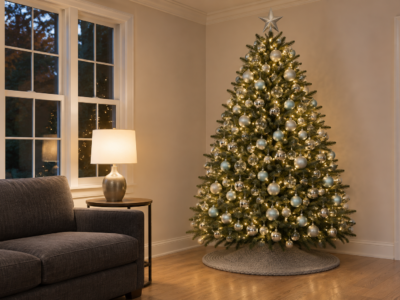
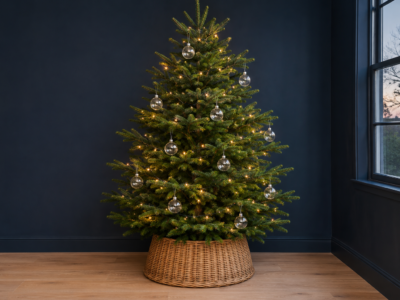
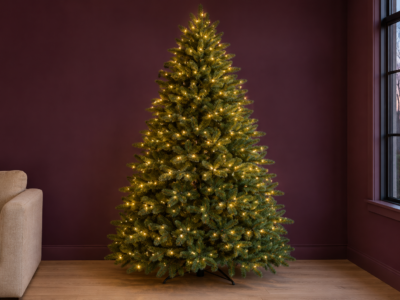
A Tree at the Foot of the Stairs
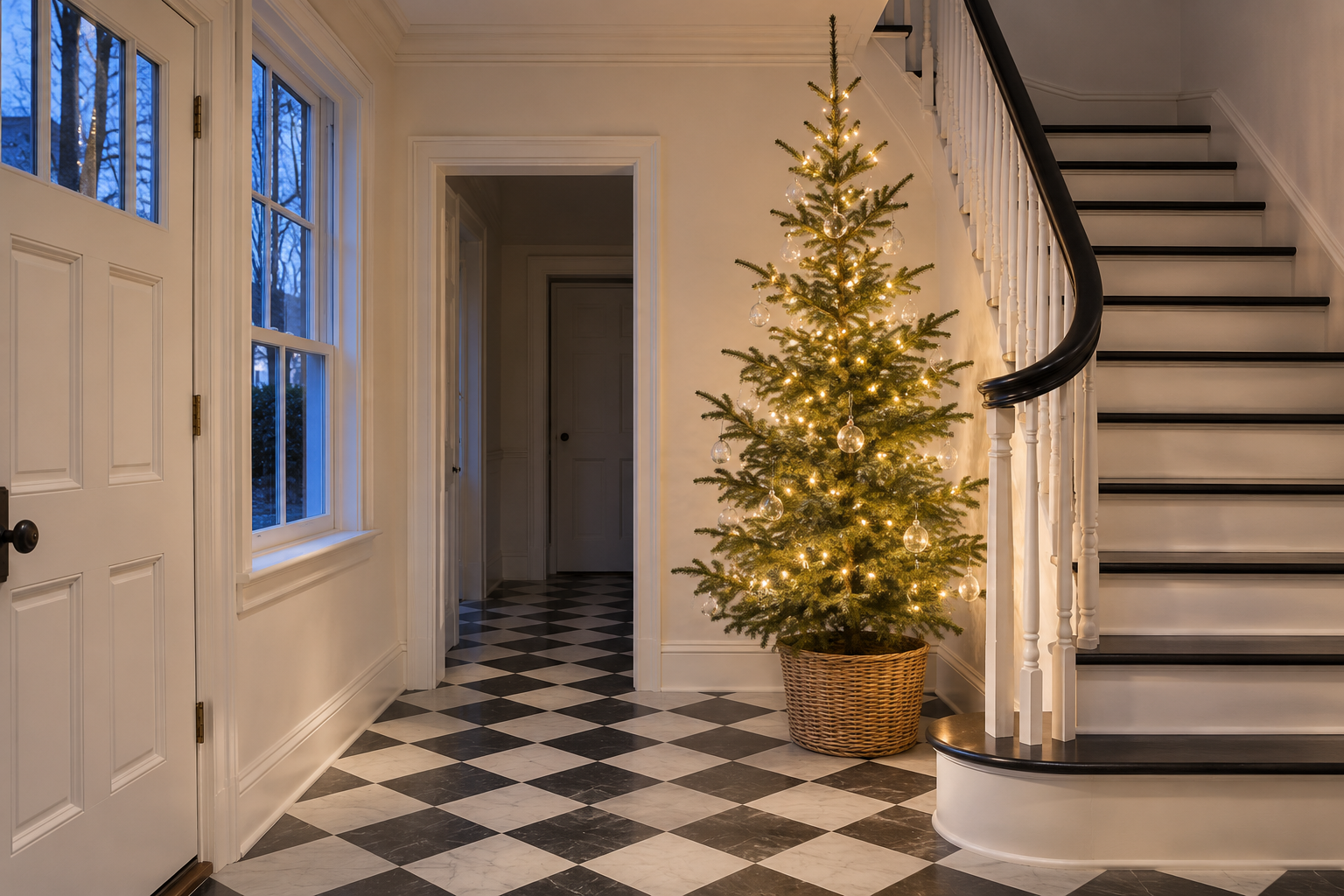
A tree beside the bottom step, or on a wide landing, is seen from the hall, from the stairs on the way down, and from above, which shows the top of a tree in a way no other spot in the house does. A slim tree fits beside a staircase without narrowing the hall, and on a landing it needs room around it at least as wide as the stairs.
Stand it on the side away from the handrail, and plug it in where the cord can run along the baseboard rather than across the hall floor. Since it will be looked down on, the top third is worth ornaments too, where a tree in a corner usually gets the fewest.
Ornaments Hung Down the Stairwell
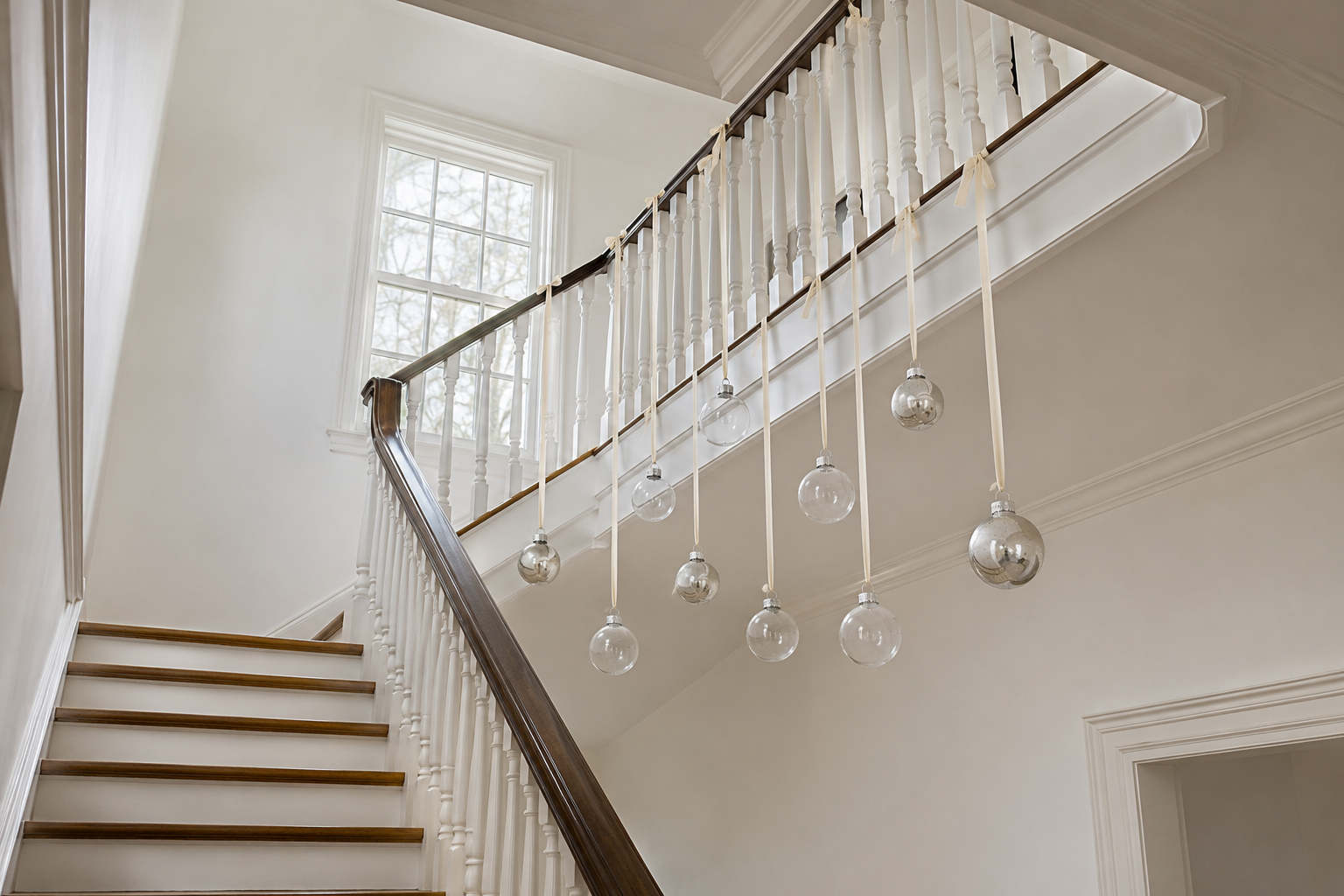
In a house with an open stairwell, ornaments can hang from the upper balustrade on long ribbons at staggered lengths, filling the height above the stairs with glass that turns and catches the light from the landing window. Little else in the house can use that space.
Tie each ribbon to a baluster with a double knot, not to the rail, and choose shatterproof ornaments, since anything that slips falls a full floor. Hang them where they can be seen from the hall but are out of reach of anyone on the steps.
Christmas Cards Along the Banister
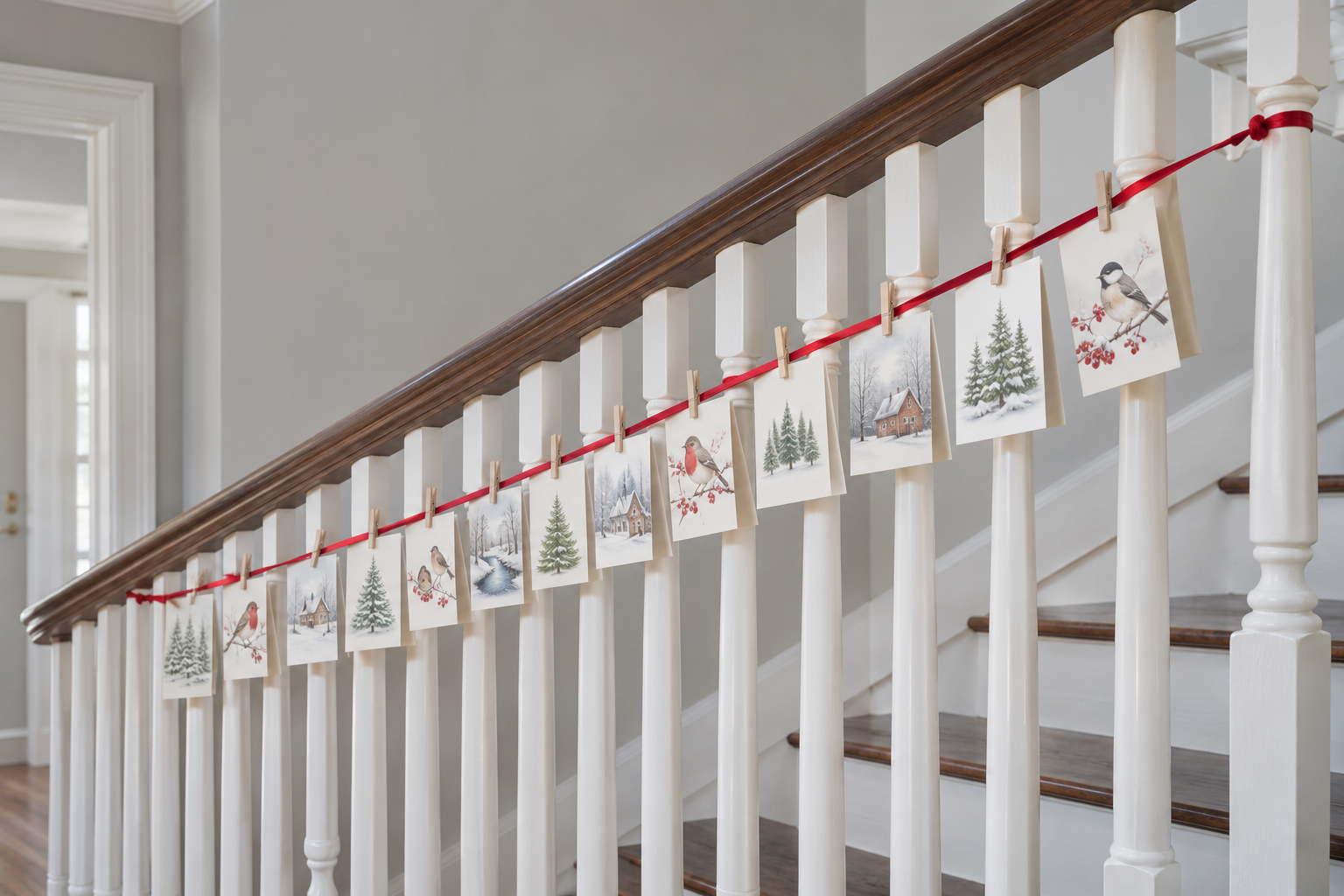
Cards arrive all through December, and a ribbon tied along the balusters below the rail gives them somewhere to go as they come. Clipped on with small wooden pegs, they make a line of color up the stairs that fills out as the month goes on, with nothing to rearrange.
Tie the ribbon taut at both ends and at every few balusters, so a full run of cards doesn’t sag into the space just under the rail, where a hand reaches.
Wreaths Stepped Up the Stair Wall
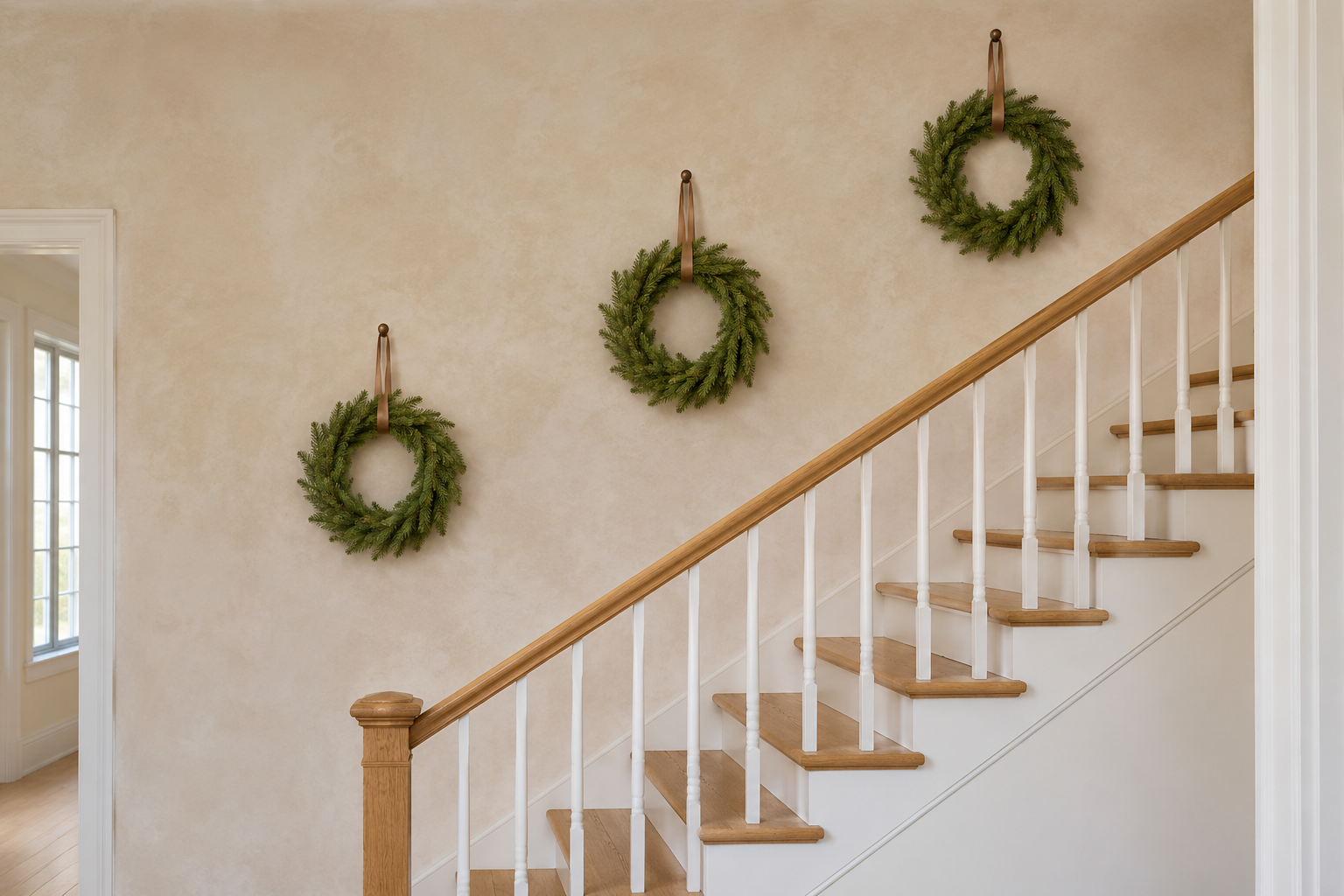
On a staircase that runs along a wall, three or five wreaths hung up the wall, each a step higher than the last, follow the climb of the stairs and keep greenery off the balustrade altogether. In many halls that wall has nothing on it, so the wreaths need no clearing first.
Measure each one to the same height above the edge of the step below it, so the line rises at the angle of the stairs, and space them evenly along the run. Adhesive hooks rated for the weight hold faux wreaths without a nail in the plaster. If the wall has its own handrail, hang the wreaths well above it.
Lights Along the Base of the Balusters
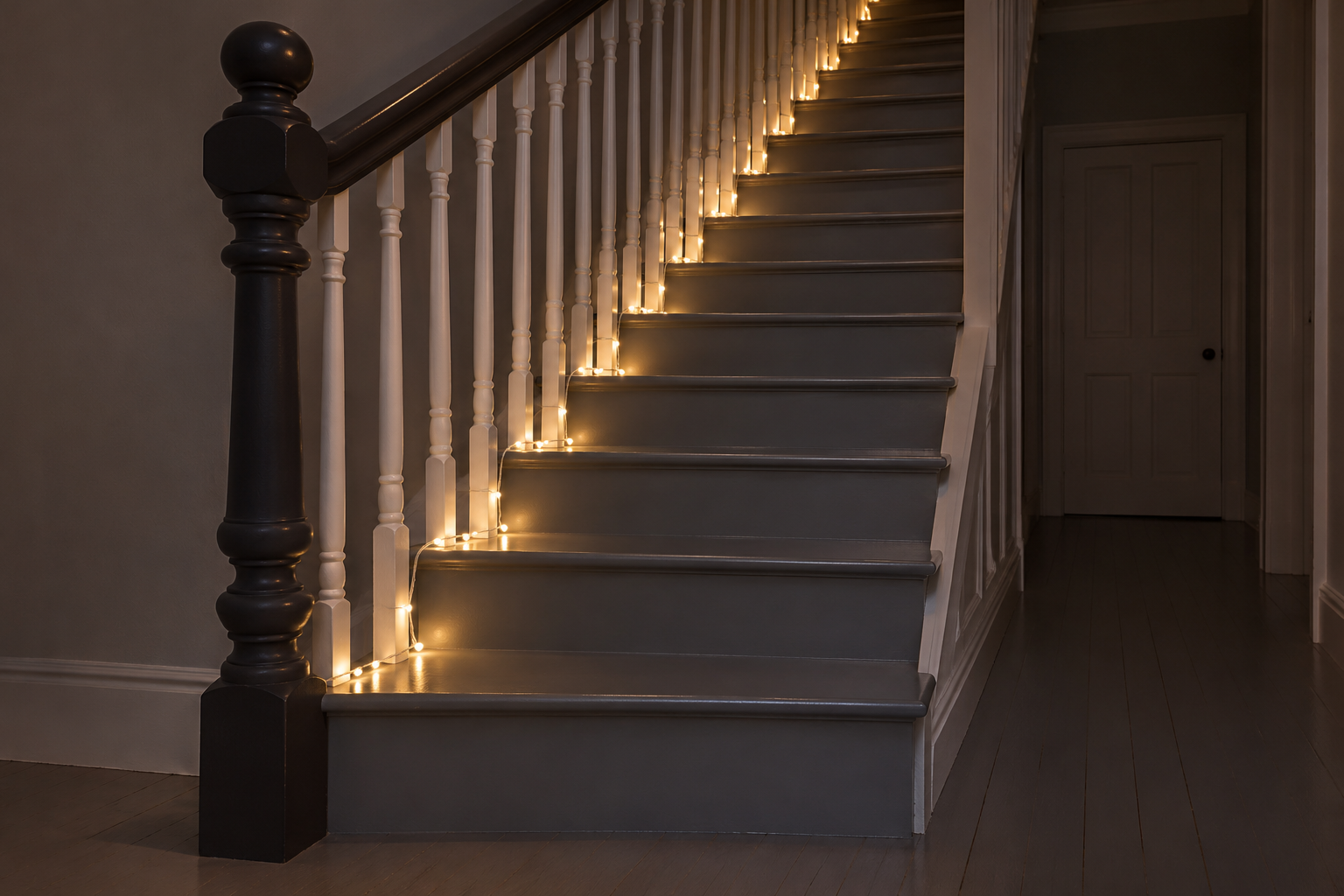
A string of warm white lights tied along the base of the balusters, where they meet the steps, lights the staircase from below. From the hall it is a low line of light rising with the stairs, and late at night, with the hall light off, it shows the edge of each step on the way down.
A battery string with a built-in timer avoids a cord altogether. A plug-in string needs its cord run along the wall and never across a step. LED bulbs stay cool against painted wood and any greenery nearby.