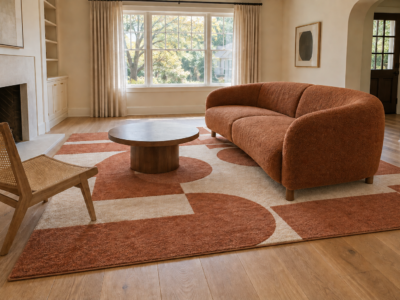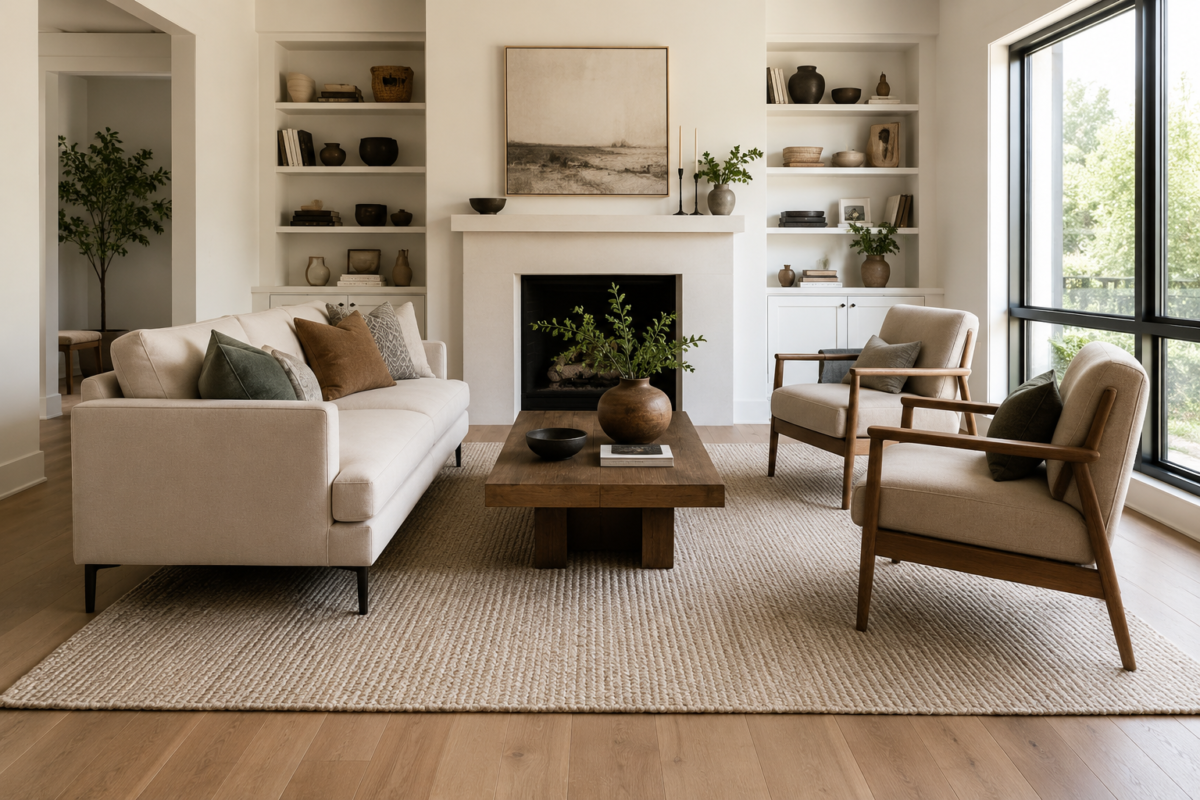
A rug that’s too small is the single most common furniture-arrangement mistake in a living room, more common than the wrong sofa or the wrong coffee table. A small rug floating under just a coffee table, with every other piece of furniture sitting on bare floor around it, makes a room look like the rug arrived before the furniture did rather than after it.
The right size depends on what the rug needs to do in that specific room: anchor a full seating group, sit fully under a dining table with room for chairs to slide out, or ground a bed without disappearing under it. There’s no single correct size across every room, but there is a reliable size logic for each one.
Living Room: Let the Rug Connect the Seating, Not Just the Coffee Table
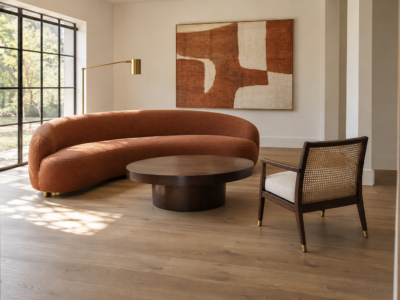
The most common living room rug mistake is sizing it to the coffee table instead of the seating group around it. A rug that only reaches partway under the front legs of the sofa and chairs, leaving their back legs on bare floor, reads as undersized even if it looked reasonable in the store. The better standard: at minimum, the front legs of every seating piece should sit on the rug, and in a larger room, all four legs of each piece on the rug looks more intentional. For a standard living room, that usually means an 8×10 rug. A smaller seating arrangement with a loveseat and two chairs can work with a 5×7, but rarely smaller than that.
Dining Room: Leave Room for the Chairs to Slide Out
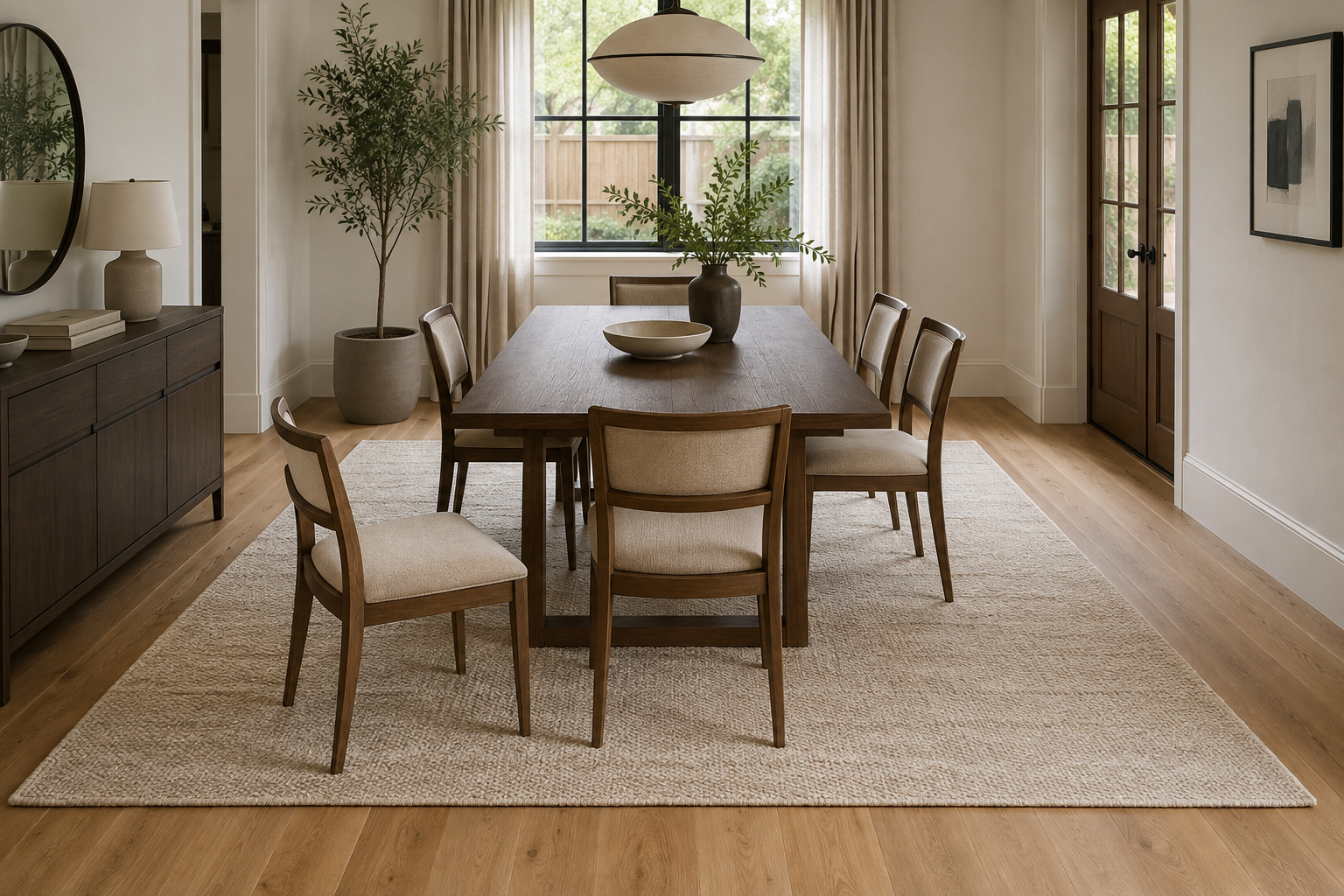
A dining room rug needs to extend far enough past the table that a chair can be pulled out from the table without its back legs falling off the rug edge. The standard guidance is at least 24 inches of rug beyond the table’s edge on all sides, which usually adds up to roughly four feet added to both the table’s length and width. A table that seats four typically needs a 6×9 rug, a table for six usually needs an 8×10, and a table for eight or more usually needs a 9×12. Leave at least 12 inches of bare floor between the rug’s edge and the room’s walls so the rug doesn’t crowd the room.
Bedroom: Extend Past the Sides of the Bed
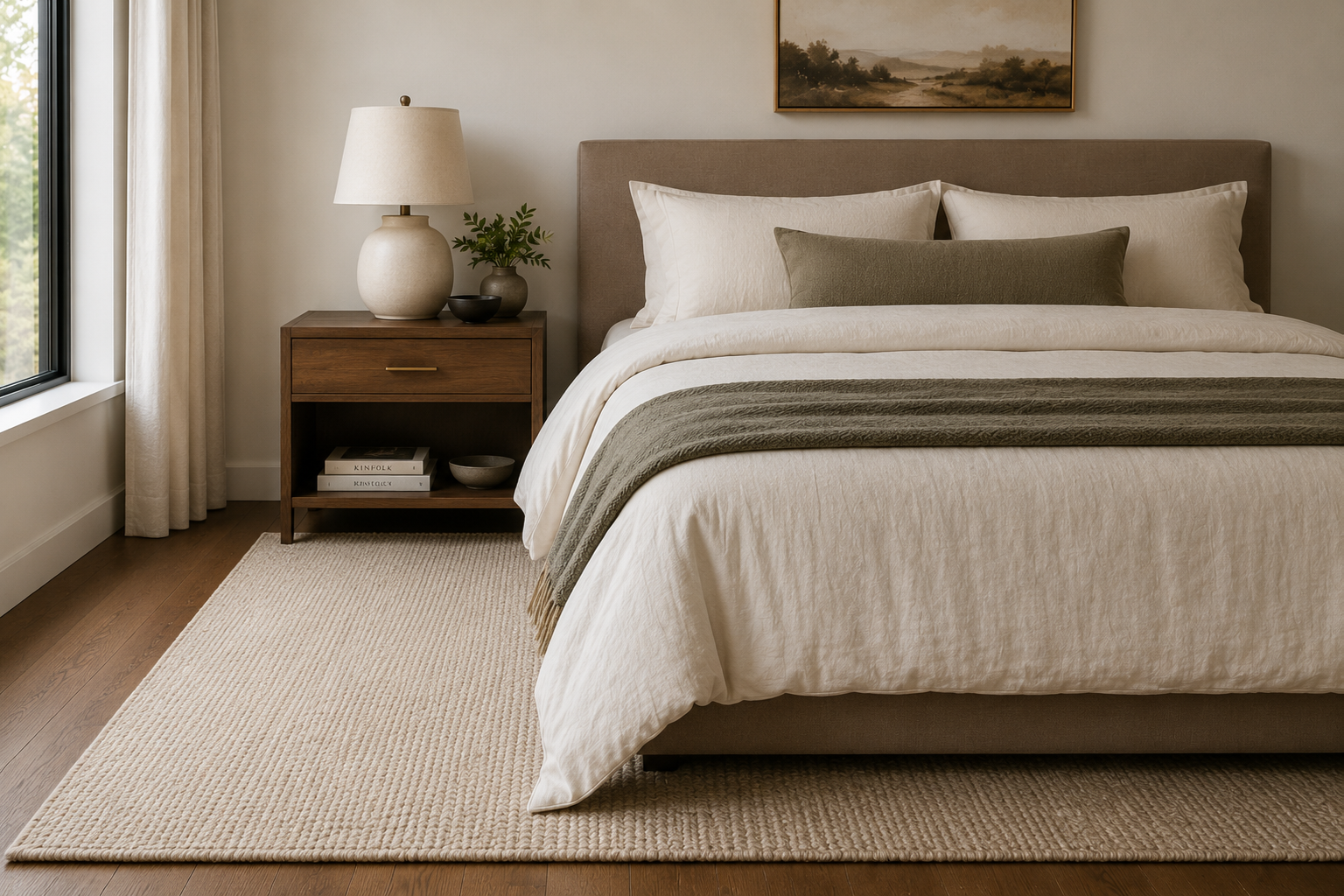
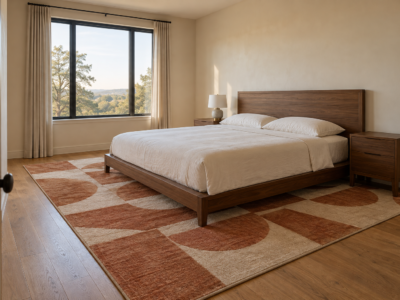
A bedroom rug’s job is different from a living room rug’s. It needs to be there when feet hit the floor on either side of the bed, not just visible at the foot of it. The rug should extend at least 18 to 24 inches past both sides of the bed, and ideally reach far enough that a nightstand can sit partially on it rather than entirely off it. A queen or king bed usually needs at least an 8×10 rug placed so it extends beyond the sides and foot of the bed, not centered purely under the mattress with nothing showing at the edges.
The 12 to 18 Inch Rule for Everywhere Else
For rooms without a clear anchor piece, an entryway, a home office, a reading nook, a reliable starting rule is leaving 12 to 18 inches of visible floor between the rug’s edge and the walls on each side. Much less than that and the rug starts to look like it’s trying to cover the entire floor; much more than that and it can look stranded in the middle of the room. This isn’t a hard rule the way the dining table clearance is, but it’s a reasonable default when there’s no obvious furniture group to size the rug around.
When a Smaller Rug Actually Makes Sense
A smaller rug isn’t always a mistake. In a genuinely small room, sizing a rug up to reach every recommended clearance can leave almost no bare floor at all, which reads as cramped rather than grounded. A smaller, well-placed rug under just a coffee table or centered in a reading nook can work fine in a tight space, as long as it’s a deliberate choice rather than an accident of not measuring first. The goal isn’t the largest rug that fits. It’s the size that does the job the room needs it to do.
Rug sizing has a reliable logic once you know what the rug is supposed to connect, seating, chairs at a table, or a bed and its nightstands. Measuring that relationship first, before shopping, avoids the undersized-rug mistake almost every room ends up making at least once.
Frequently Asked Questions
What if my rug is a little too small for the room?
A rug that’s close but slightly under the ideal size is a smaller problem than one that’s dramatically undersized, and layering a smaller rug over a larger jute or sisal rug underneath can visually extend the footprint without buying an entirely new piece. It’s a reasonable fix rather than a full replacement if the mismatch is minor.
Should a round table always get a round rug?
Not necessarily. A round rug under a round table repeats the same shape and can look slightly matched-set rather than considered, while a square or rectangular rug under a round table adds some contrast without looking wrong. Either works; a round rug is the safer default, but it isn’t a rule, and the table’s shape is usually worth settling first.