A sunroom facing south, in most of North America and Europe, takes sun from midmorning to late afternoon and needs shade before anything else. Facing north, it gets even light all day and little warmth, and needs heat. East-facing glass gets the morning, and west-facing glass the low afternoon sun that comes in under any roof overhang and straight across the floor.
The season changes it again. The glass that makes the room bright at noon in July loses heat quickly on a January evening, and after dark it turns black and reflects every lamp. A sunroom that is used through the winter needs heat, curtains, and the right lamps as much as it needs shade in summer, and a three-season room needs furniture that can sit through the cold.
Keep the Old Outside Wall
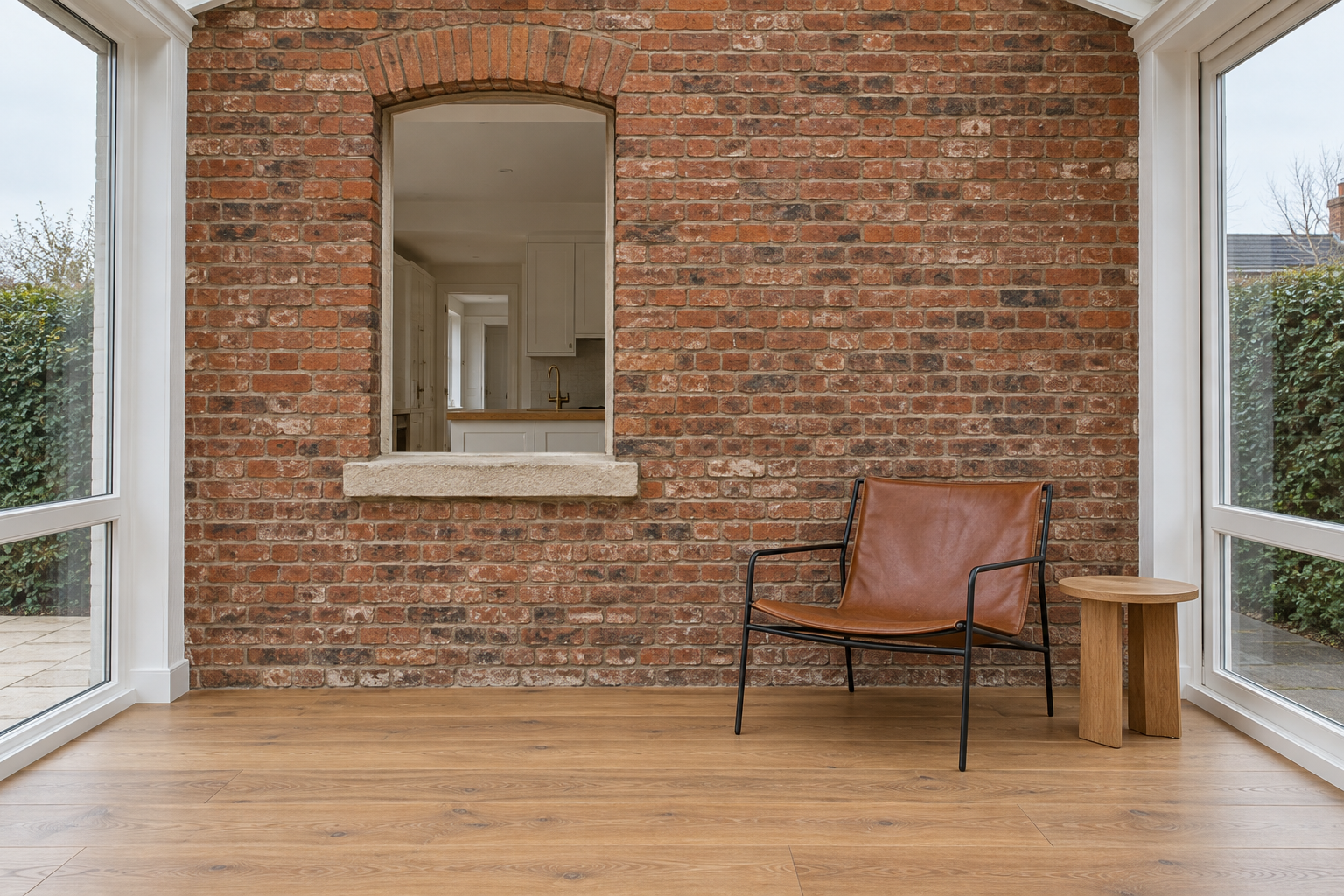
When a sunroom is added to a house, one of its walls used to be the outside of the house, in brick, stone, clapboard, or stucco. Leaving it as it was, instead of covering it in drywall, gives a glass room one solid surface with weight and texture, and it keeps a record of how the house grew. A window in that wall can lose its glass and stay as an opening into the kitchen or living room, which lets the sunroom’s light reach further into the house.
Old brick that sheds dust can take a breathable sealer or a limewash. The outdoor fittings come off before the room is finished: a porch light is capped by an electrician, a hose bib by a plumber.
Shade the Roof Glass First
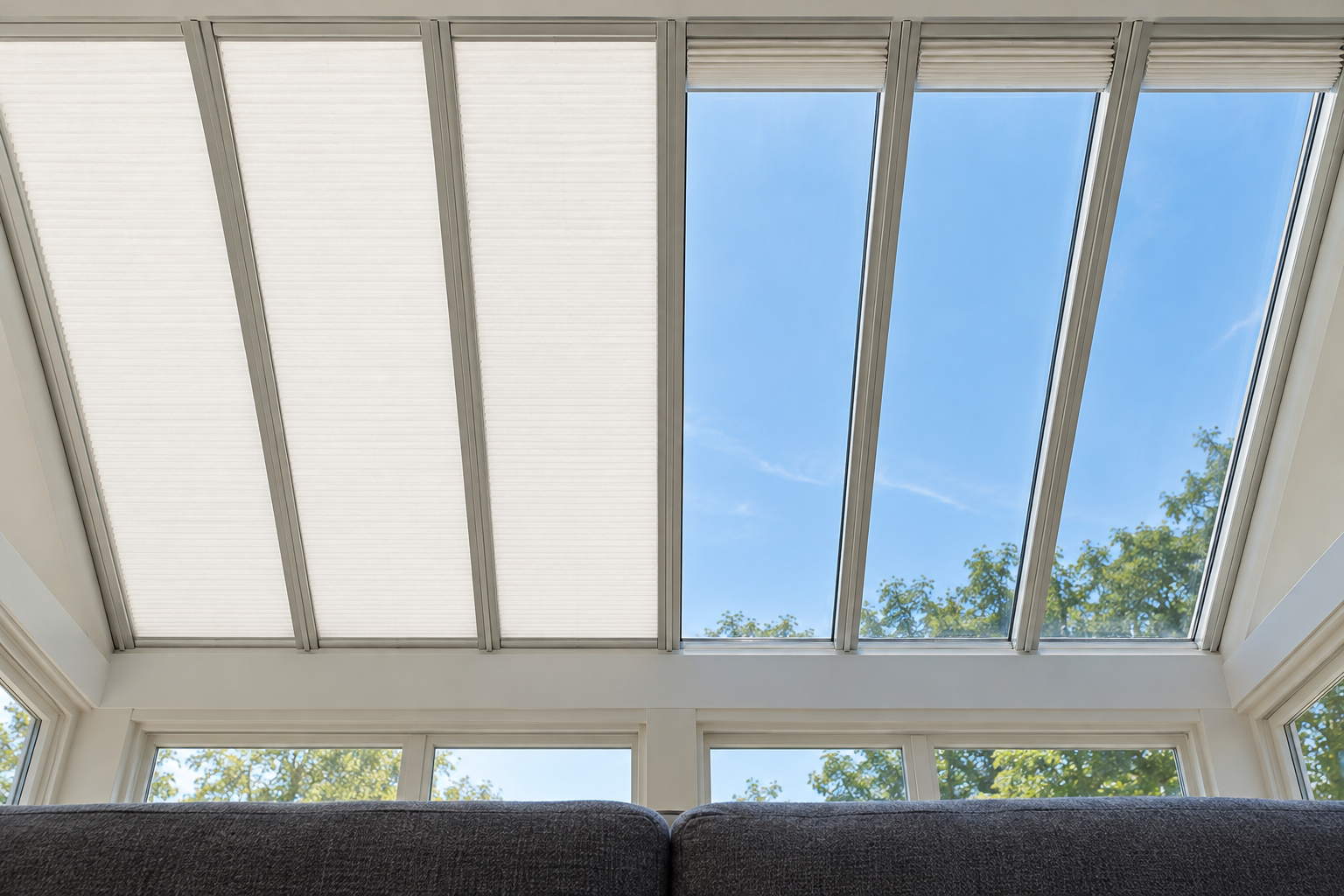
Glass overhead faces the summer sun for more of the day than glass in the walls, and it lets the light fall straight onto the floor and the furniture. In a sunroom with a glass roof, shading the roof does more for comfort at midday than shading the windows. Pleated or cellular shades fitted to each roof panel, running in side tracks so they don’t sag, can be drawn across at noon and opened in the morning and in winter, when the sun is welcome.
Where the roof is being built or replaced, a solid insulated roof with the glass kept to the walls gives a room plenty of light from the sides and far less heat at noon. A few roof windows in it bring light to the middle of the room and need only a shade each.
Lay a Floor That Can Take Sun and Boots
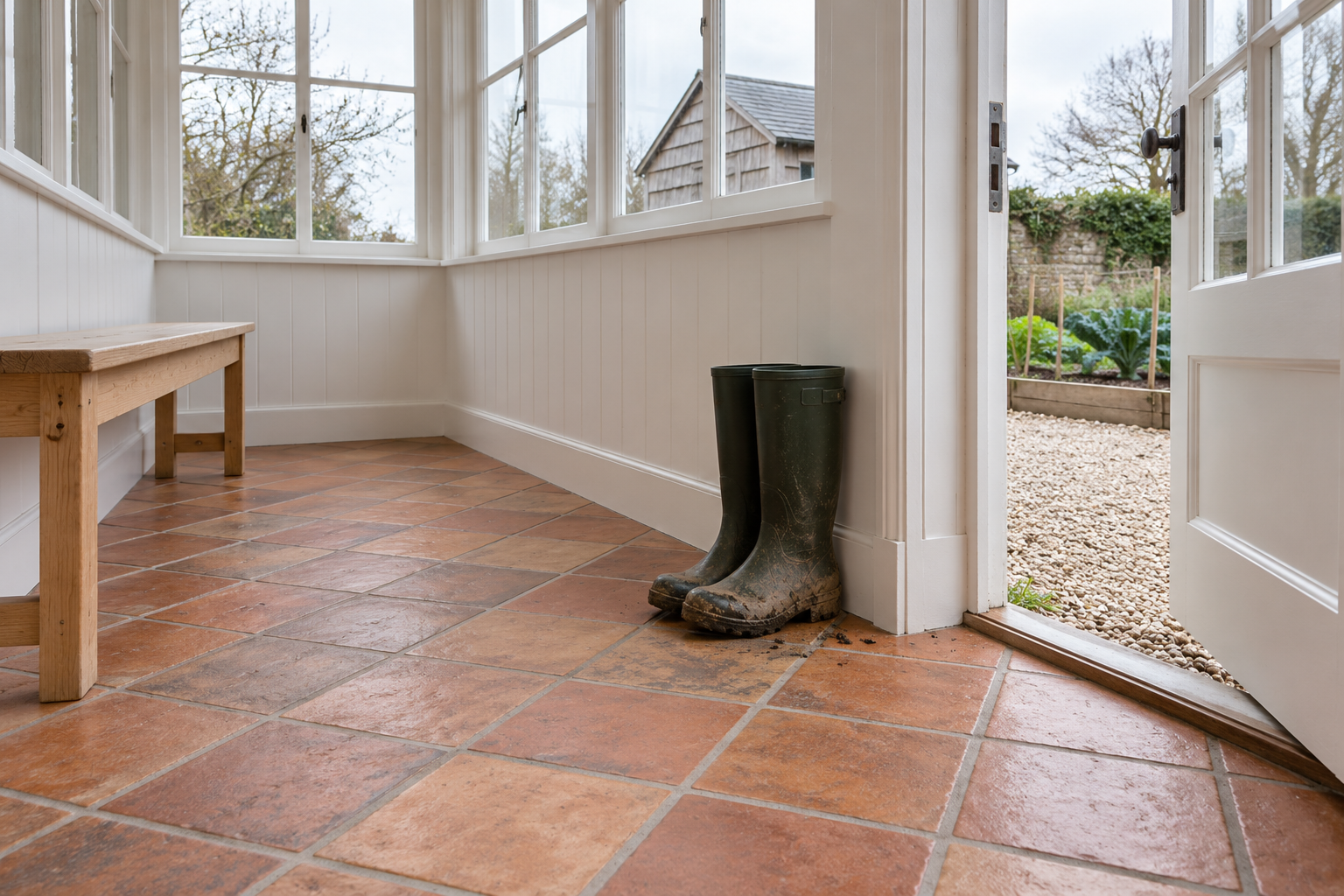
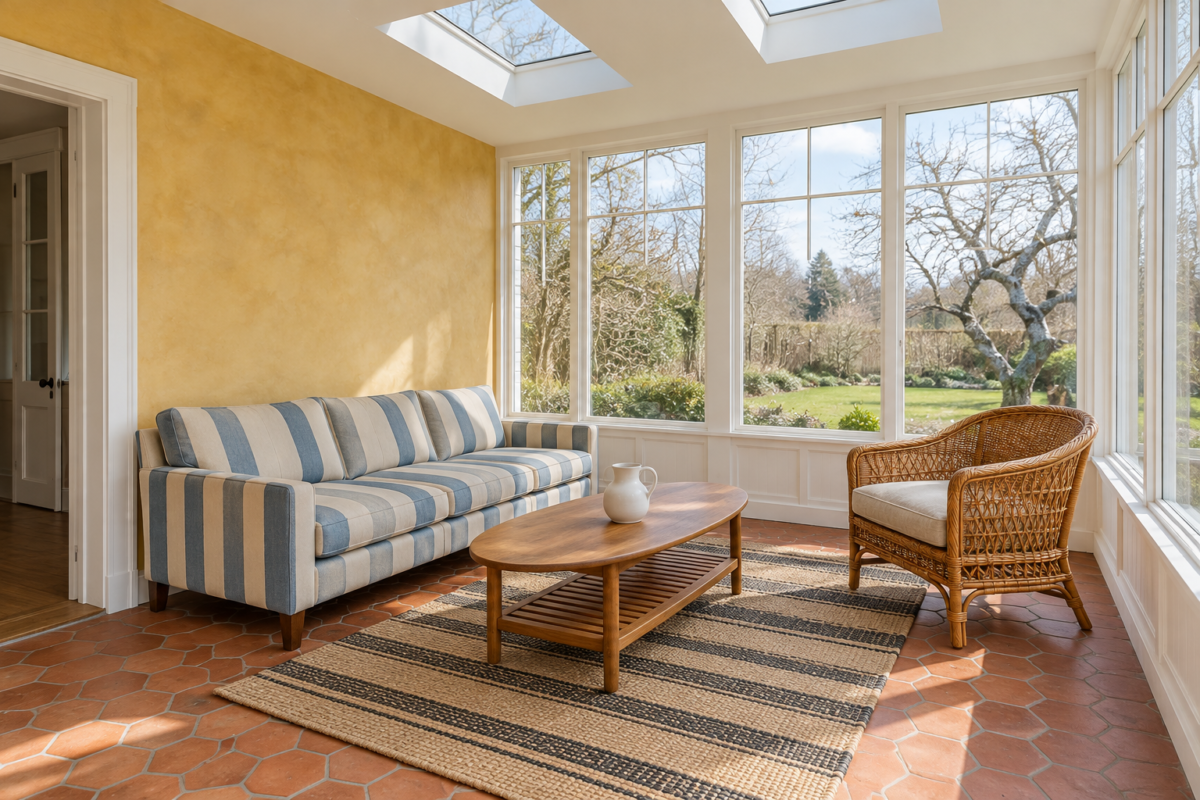
Fired clay and stone keep their color in strong sun, where a wood floor or a wool rug in the same spot changes color over a few summers. Terracotta, limestone, slate, or sealed cement tile also suit a room that often opens straight onto the garden, since soil and rain wipe off them.
A tile floor in direct sun warms through on a bright winter afternoon and gives some of that warmth back after the sun moves off it. In summer, in shade, it stays cool underfoot. On a winter morning it is simply cold, which slippers, a flatweave rug where people sit, or heating under the tiles takes care of.
Paint the Solid Wall a Deep Color
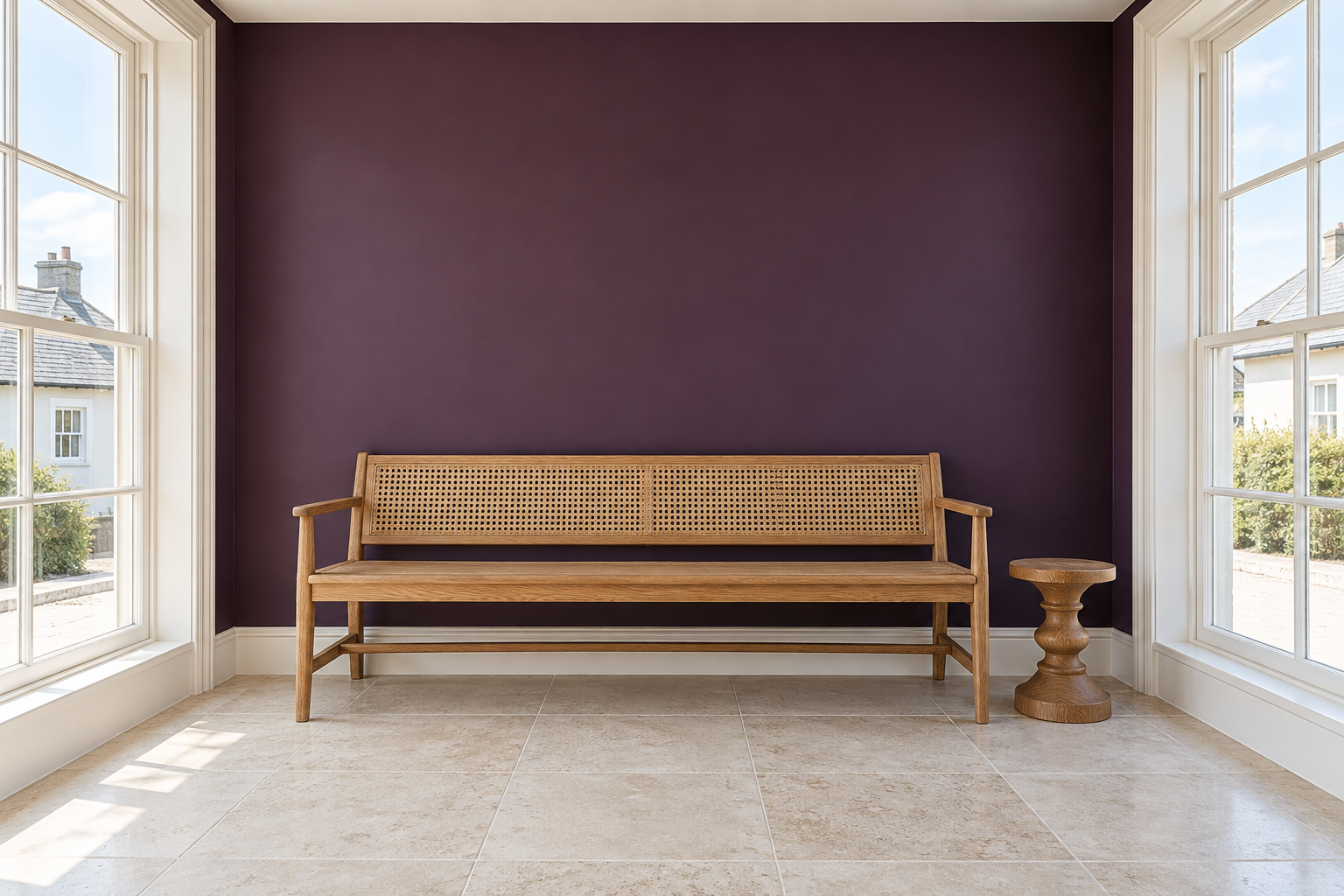
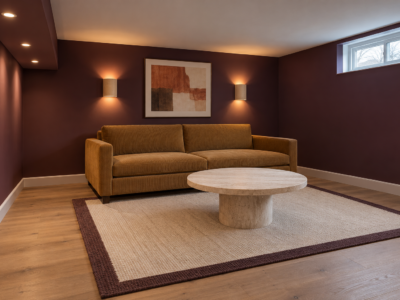
A sunroom often has only one solid wall, the old house wall or a short end wall between the windows, and it is usually painted white to match the frames. In bright light a white wall glares, and a pale tint looks washed out by noon. A deep color, aubergine, saffron, or a brick red, holds its depth in full sun and gives a glass room one band of strong color behind the furniture, with the garden showing through on every other side.
Use a flat or matte finish, which shows no glare when the sun strikes it at an angle. A deep wall looks as strong against a snowy garden in January as it does against summer green.
Cover the Sofa in Outdoor Fabric
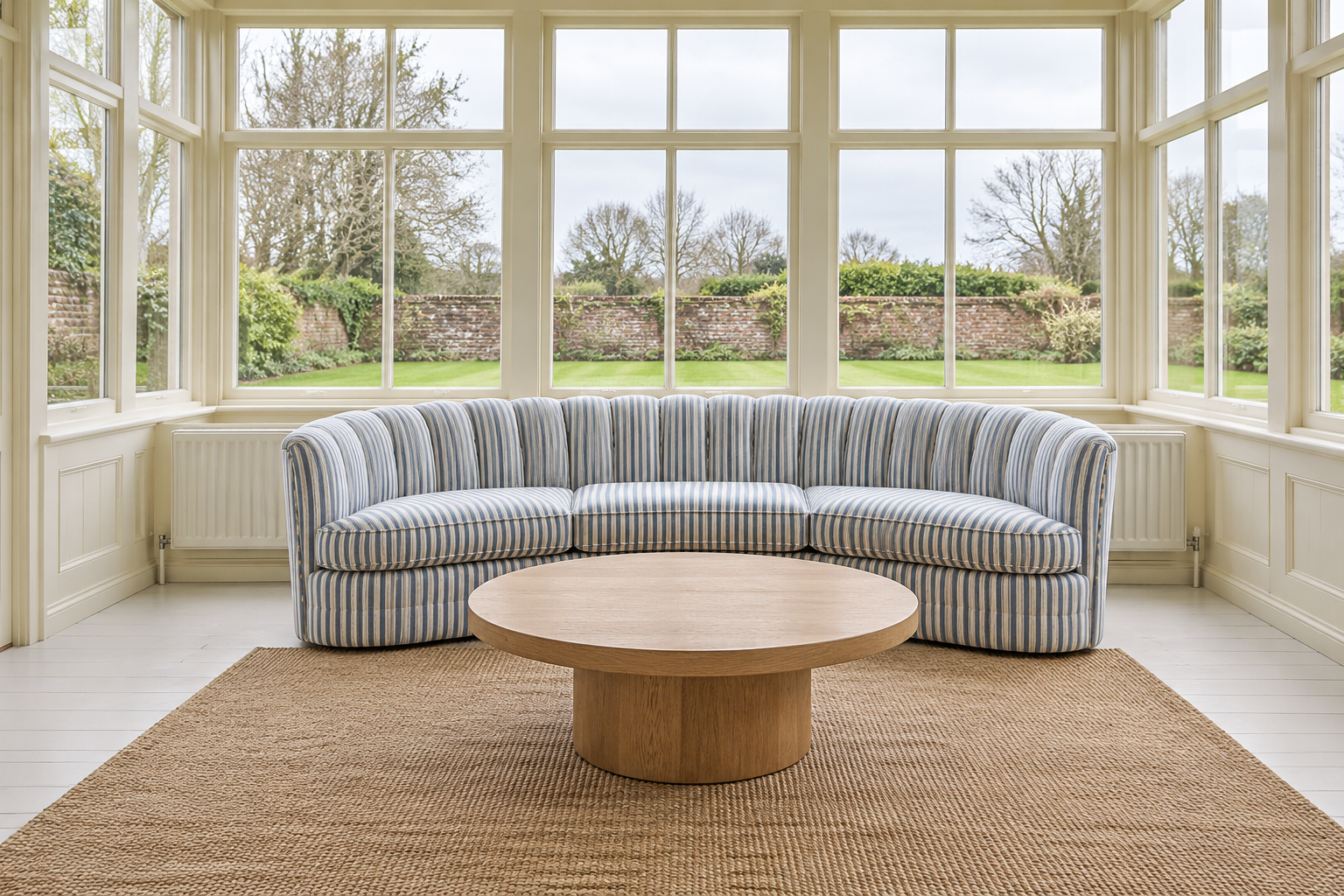
Fabric in a sunroom can get more sun in one summer than a living room sofa gets in years, and ordinary upholstery fades first on the side that faces the glass. Fabrics made for outdoor furniture, many of them acrylic dyed before it is spun so the color runs through the fiber, are made to keep their color in the sun, and the newer ones are soft enough for a sofa used every day. They suit a deep, tailored sofa built like an indoor one, so the room keeps the look of a sitting room.
A ticking stripe or a plain color keeps the sofa simple against the busy view through the glass. Turn the seat and back cushions every few weeks in summer, so both sides get the same light.
Put the Table on the Morning Side

A table for breakfast goes on the side of the room that gets the morning sun, usually the east, where the light comes in low and soft at the hour the table is used and has moved on by midday. Facing west, the same table catches the evening sun at dinner, which is pleasant in May and blinding in August without a shade.
A round pedestal table suits a sunroom, since four chairs tuck around it without legs at the corners, and it can stand in the middle of the floor where there’s no wall to push it against. Leave a clear path from the house door to the garden door that doesn’t run through the chairs.
Give the Afternoon a Daybed

The west end of a sunroom gets the lowest, warmest light of the day, late in the afternoon when the sun is low enough to come in under any overhang. A daybed belongs there, with its long side against the glass, so whoever lies on it has the sun behind them and the room in front. It seats three in the morning and takes one person lying down after lunch.
A rattan or wooden frame with a thick mattress cushion and two bolsters keeps it light enough to move to the shade in midsummer. Pull a shade on the west windows when the sun drops to eye level.
Build a Bench Along the Glass
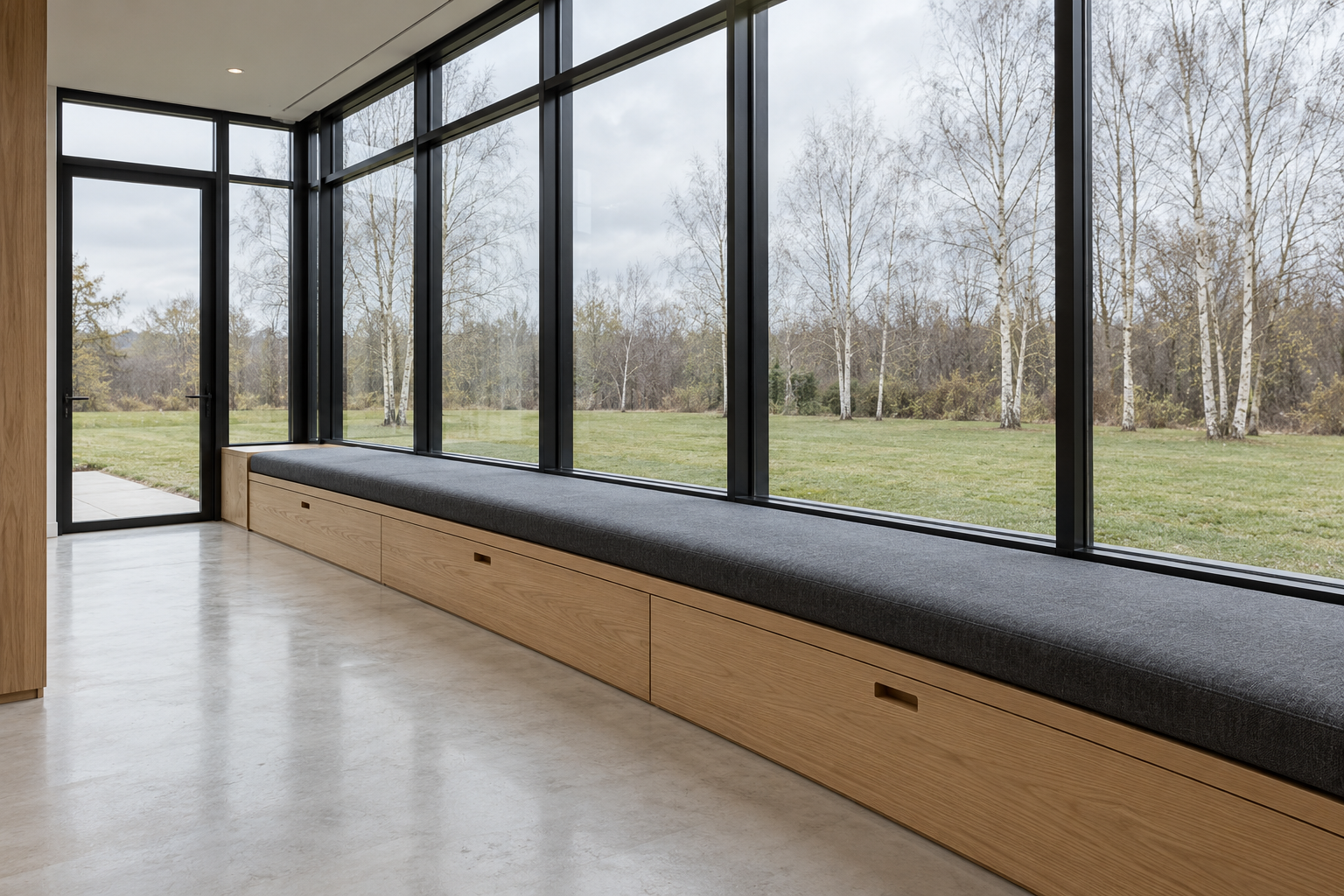
The strip of floor directly against the glass is often the least used part of a sunroom, since freestanding furniture tends to stand away from the windows. A bench built along the knee wall under the glass uses that strip, seats more people than chairs in the same length, and leaves the middle of the room open. Drawers in the base hold seat cushions in winter, board games, or garden gloves, and open more easily than a lid when someone is sitting on the bench.
Where the knee wall is about seat height, the bench top can run level with it, and a seat deep enough to lean back on, as on a banquette, makes it a place to sit through a meal.
Board the Ceiling in Wood
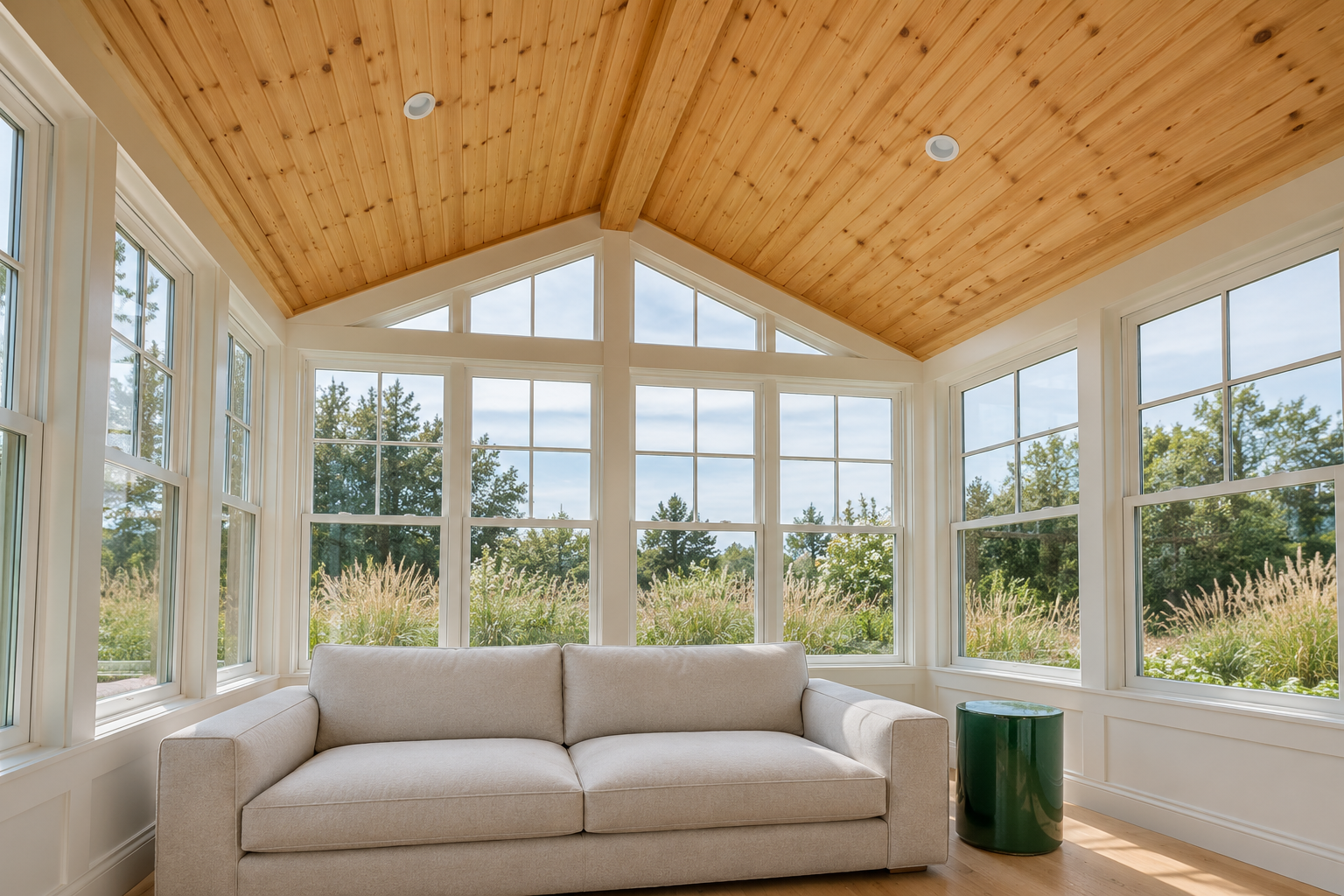
Where a sunroom has a solid roof, a ceiling of tongue and groove boards in pine or cedar gives the room a warm surface overhead, above walls that are mostly glass and white frames. Boards running the length of the room lead the eye out toward the garden. A pitched ceiling shows the boards well, since the slope catches the light differently on each side through the day.
Pine deepens to a honey color over the years in a bright room. Pair it with something in a strong color lower down, an emerald lacquered side table, a green or blue upholstered chair, so the wood isn’t the only warm tone in the room.
Give the Plants One Wall of Shelves
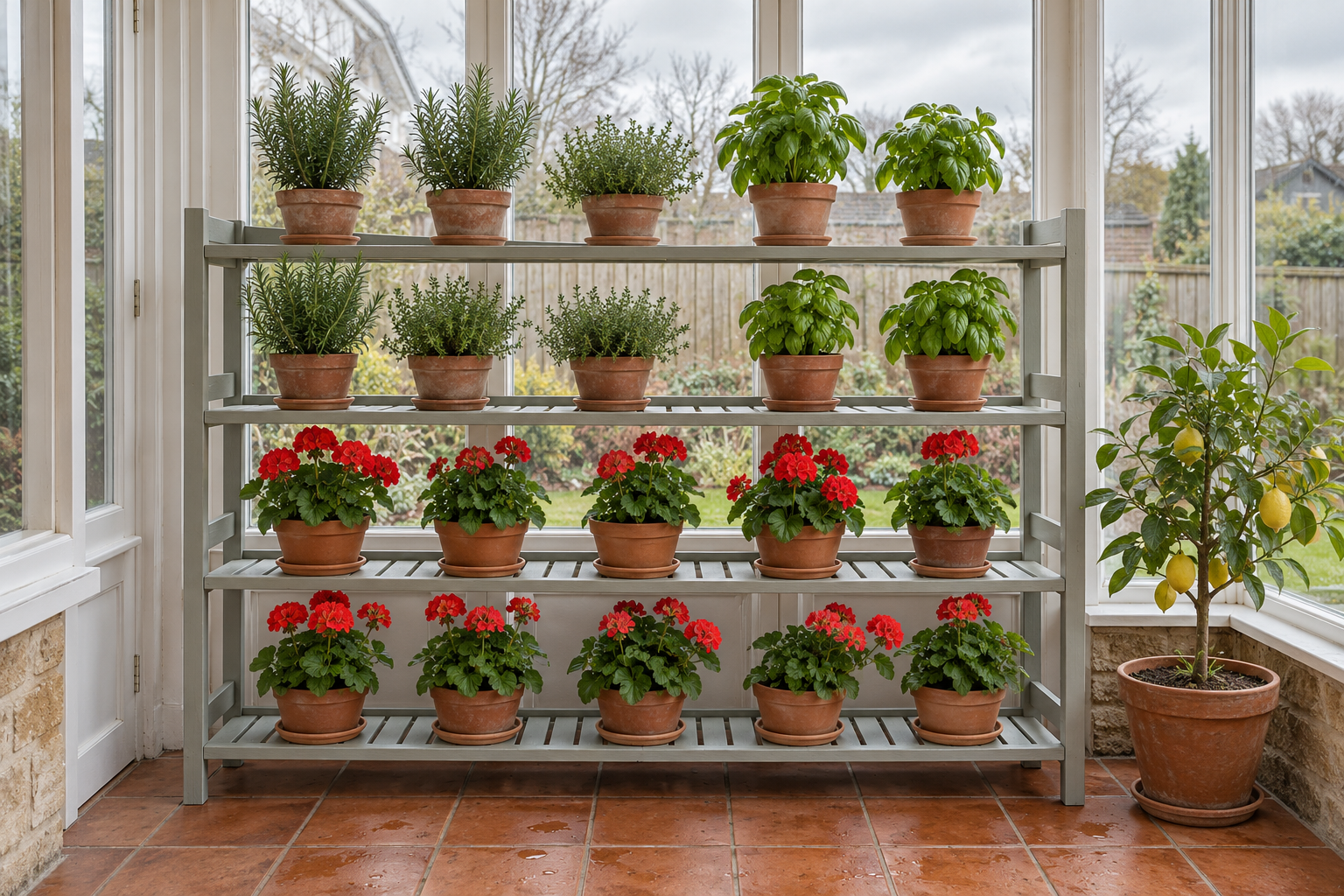
A sunroom is the brightest room in the house for houseplants, and a set of slatted shelves near the glass lets them be grouped on one wall instead of spread across every sill. Slats let water drain and air move around the pots, and a run of plain terracotta pots on saucers makes them one collection instead of a scatter.
Put plants that want full sun, rosemary, thyme, pelargoniums, citrus, on the shelves that get the most direct light, and keep ferns and other shade plants out of it, where direct sun through glass scorches their leaves. A tile floor under the shelves takes the drips.
Hang Curtains for Winter Nights
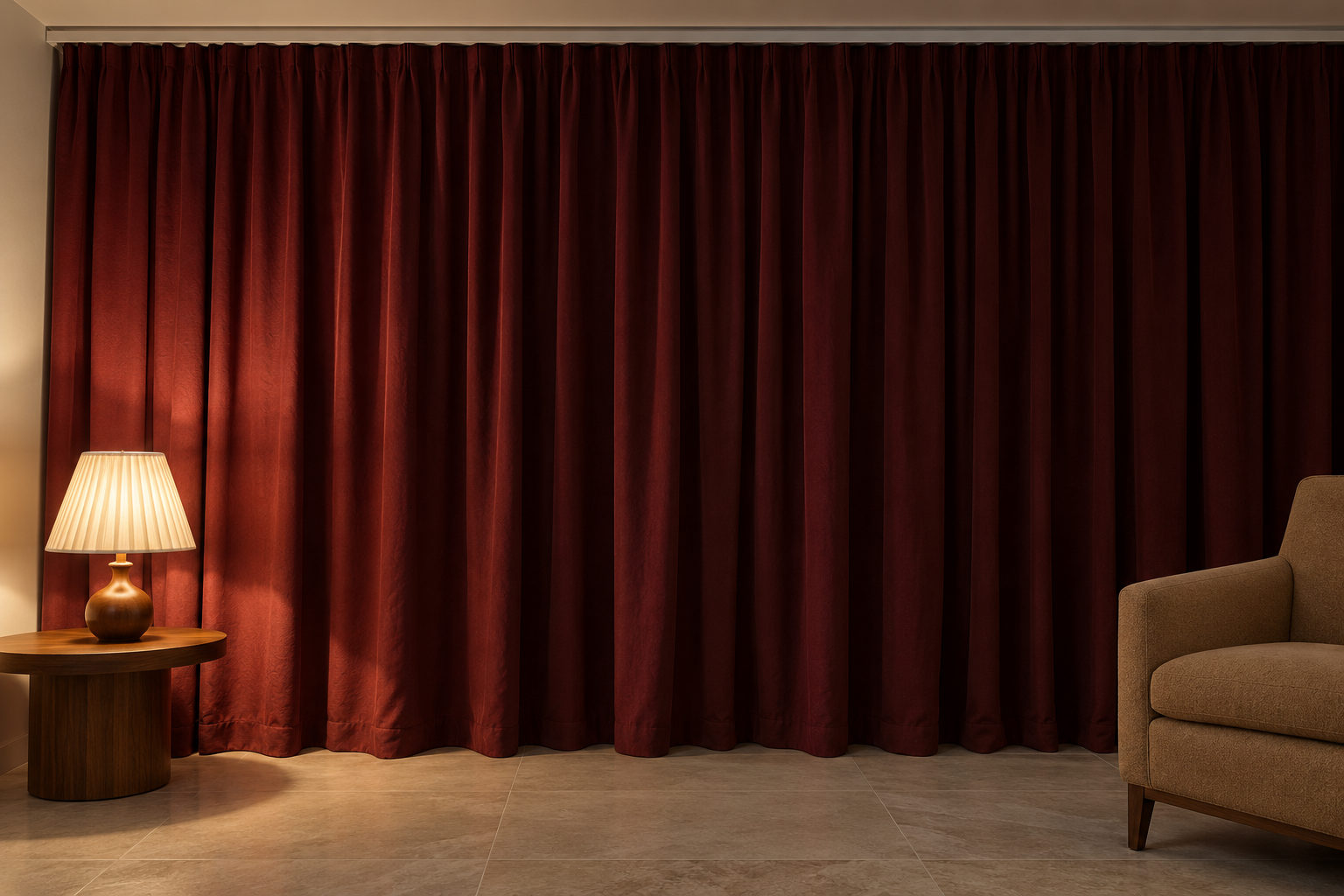
After dark in winter, a glass room loses heat fast, and its windows turn black. Lined curtains drawn across the glass in the evening keep some of the warmth in and give the room walls of soft fabric instead of dark panes. A track fixed to the ceiling lets them run around the corners where the glass wraps the room, and stack back against the solid wall by day so they cover none of the windows.
Choose a heavy or interlined curtain and a color that looks right by lamplight, since that is when it will be seen drawn. Deep burgundy, dark ochre, or a deep green fills a room lit by a single lamp. Let them just touch the floor, which cuts the draft along the bottom.
Keep the Lamps Low After Dark

At night, every light in a sunroom reflects in the glass, and a bright overhead fixture shows up as a row of lights in every pane. Lamps set low, a table lamp at the end of the sofa, a floor lamp reaching over its arm, light the people and the furniture, and their reflections in the windows are small and warm. Shades that hide the bulb from the side keep the bright point out of the glass.
A sunroom used at night needs its lamps planned along with the outlets, since a room with glass walls has few places for them. Floor outlets near the sofa save a cord running across the tiles.
Heat It for the Cold Months
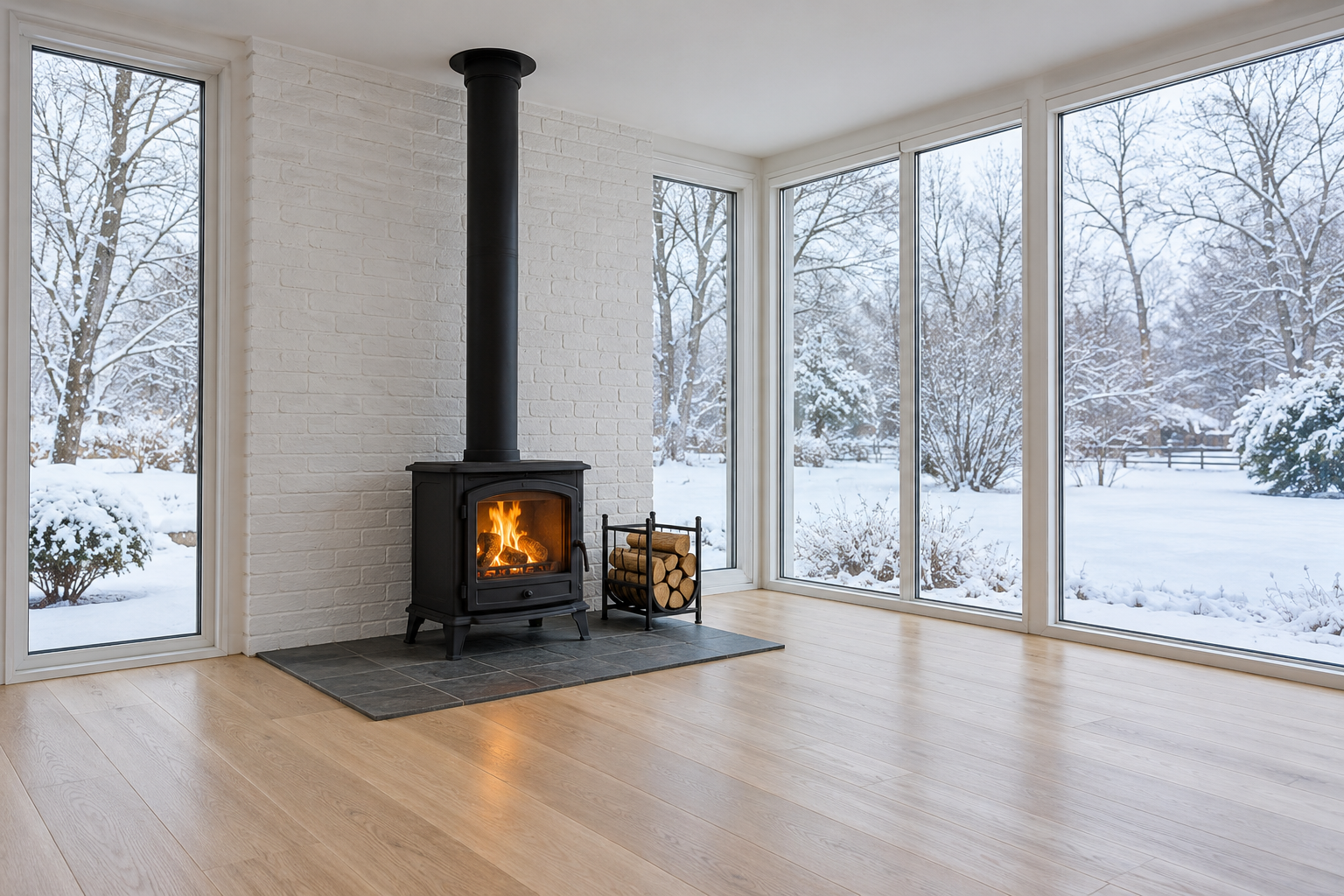
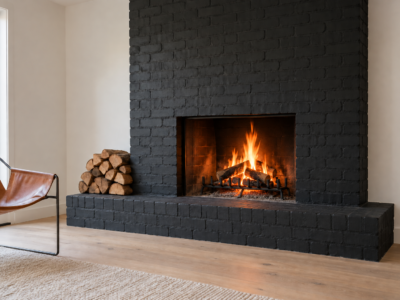
A four-season sunroom is heated and insulated like the rest of the house, and it needs more heat than its size suggests, because glass loses heat faster than an insulated wall. A wood stove gives the room a center and a heat that reaches across it. It needs a noncombustible hearth, a flue, and clearances to walls and furniture set by its maker and local code, and a qualified installer.
Electric heat takes less work. Heating cables or mats under a tile floor warm the floor itself, which is where a cold glass room feels coldest first thing. An electric fireplace gives a flame and some heat from a wall outlet, enough for a small room on a mild evening.
Let the Summer Heat Out
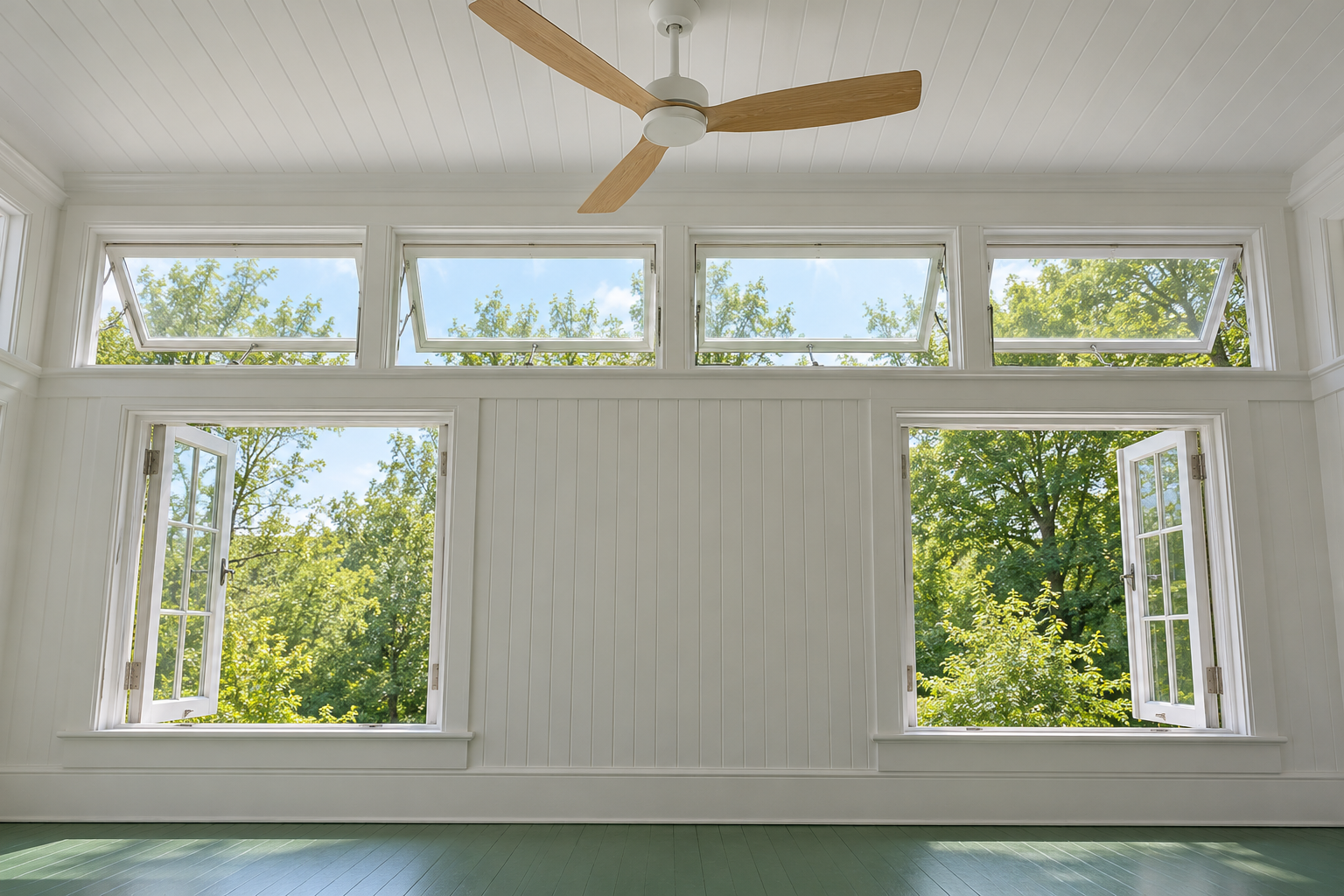
In summer, warm air rises and gathers under a sunroom’s roof. Windows that open high up, awning windows just under the ceiling or roof vents, let it out, and windows that open low on the shaded side let cooler air in to replace it, so the room pulls a breeze through without a fan.
A ceiling fan helps where the roof is solid and high enough, with the blades at least 7 feet above the floor. A fan can’t hang from roof glass, so in an all-glass room it stands on the floor or hangs from the ridge beam.
Furnish a Three-Season Room for Its Cold Months
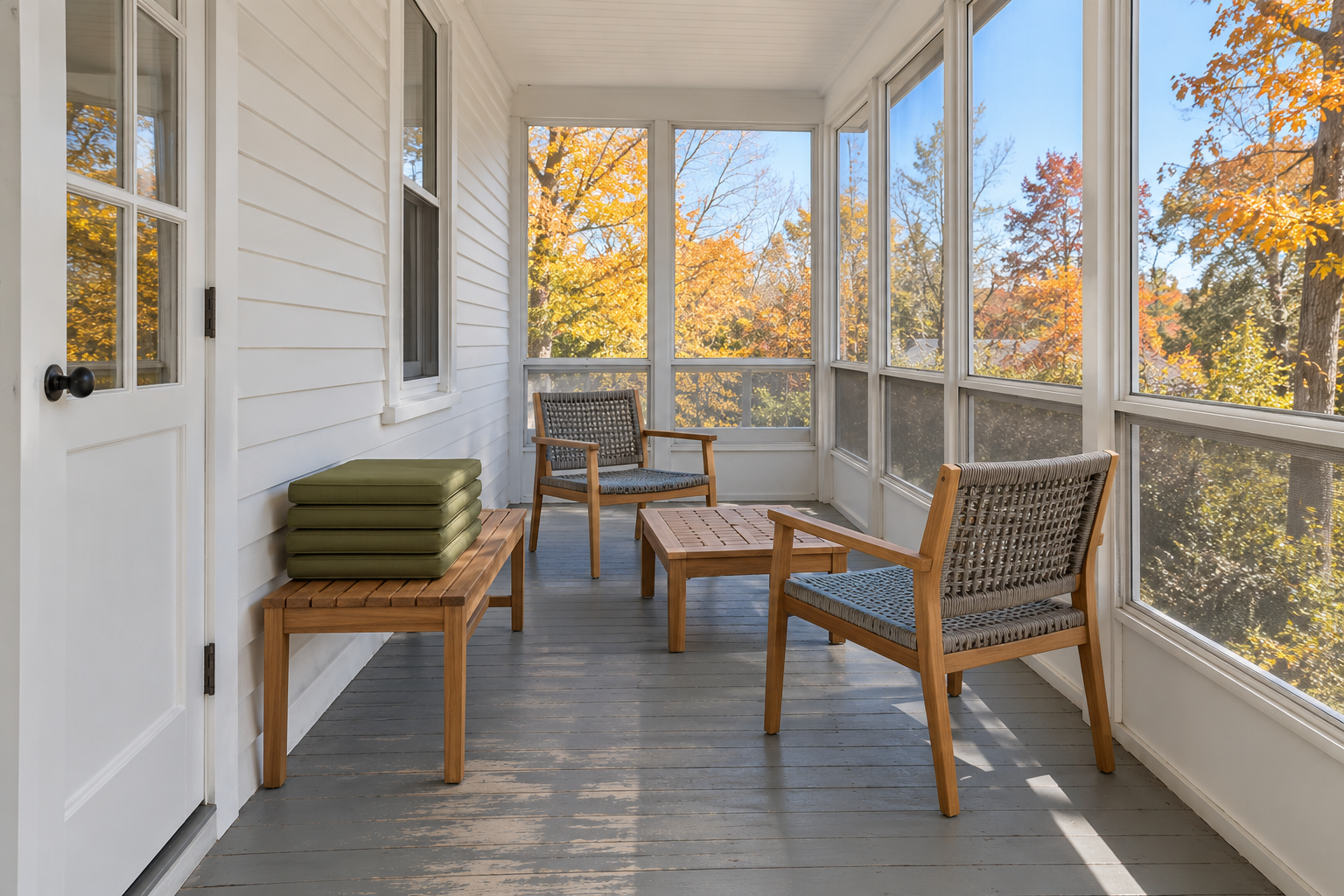
A three-season room, with single glazing or screens and no heat, gets close to outdoor temperatures in winter, and the cold glass gathers condensation. Furnish it like a covered porch, with frames that can take the cold and damp, teak, aluminum, or all-weather wicker, and seat cushions that come in at the end of the season. Indoor upholstery left out there through the winter can turn damp and smell of mildew by spring.
In late October the room is still bright on a clear afternoon, and it is the time to stack the cushions on a bench by the house door, ready to carry in on the first hard frost. The chairs stay where they are, and the room can be used on any sunny winter day in a coat.
Turn the Desk Side-On to the Glass
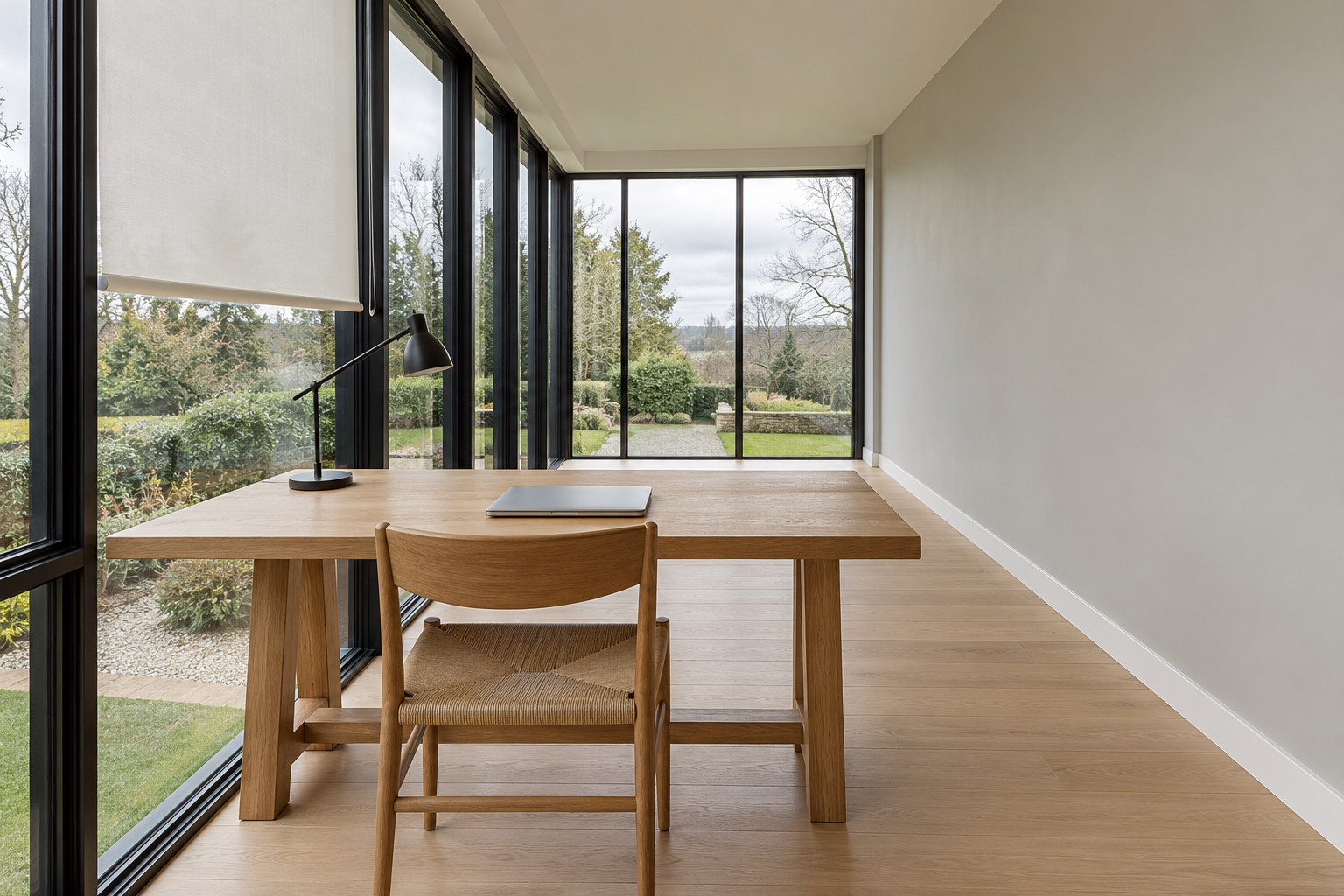
A sunroom makes a bright place to work, as long as the screen neither faces the glass nor has it behind. With the windows behind the screen, the eyes adjust to the bright view and the screen looks dim. With the windows behind the chair, the glass reflects in the screen. Set the desk with its long side at right angles to the window wall, so the daylight comes from the side.
Fit a shade on the windows nearest the desk, to draw against direct sun at the hour it reaches the desk. A shade on just those panes keeps the rest of the view open.
Close It Off With Glazed Doors
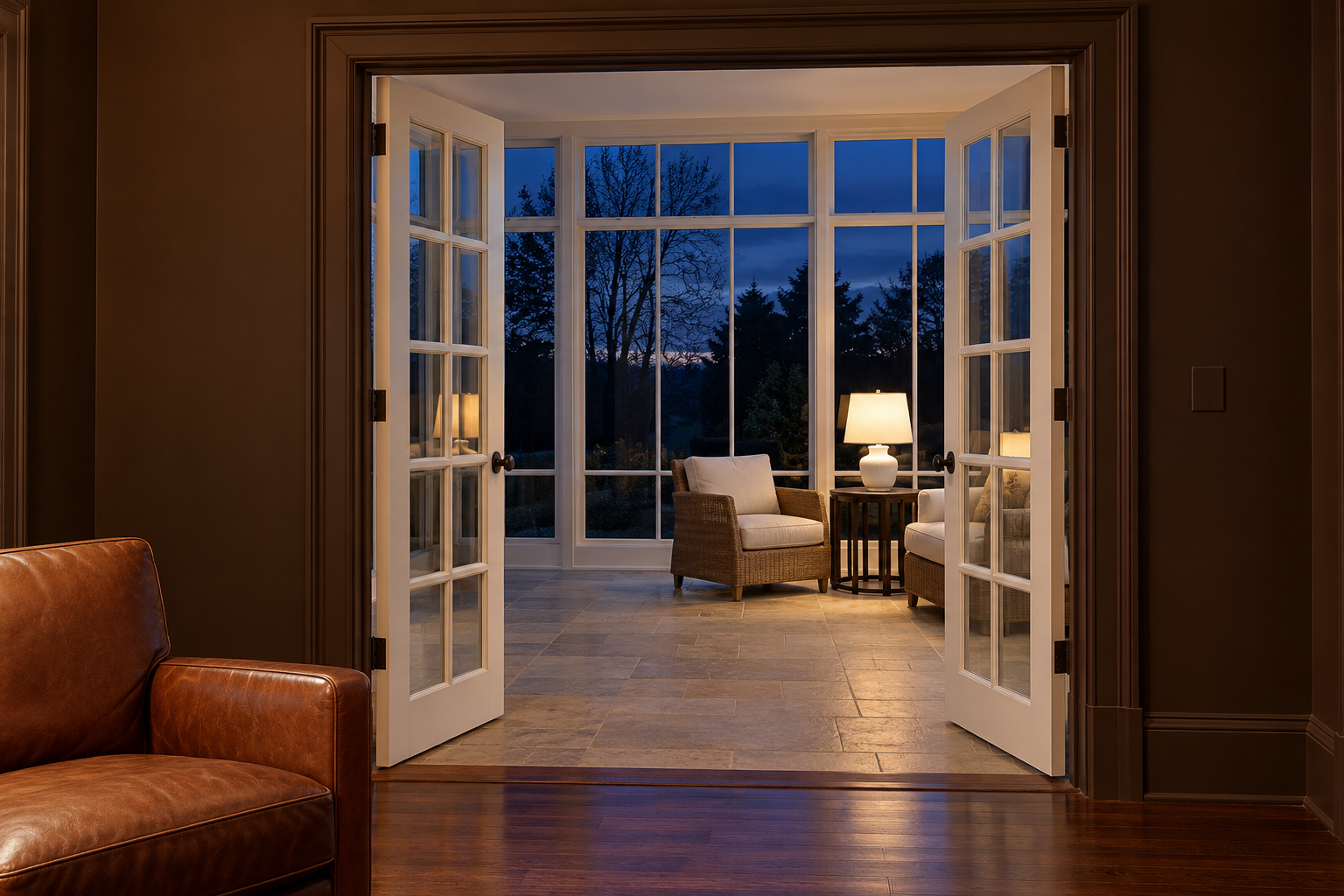
Glazed doors between the house and the sunroom let the light through and close against the weather. On a winter night they shut, and the house doesn’t lose heat into a glass room no one is sitting in. On a hot afternoon they keep the heat of the glass in the sunroom instead of the living room.
A pair of French doors in small panes suits an older house, and a single wide glass door suits a modern one. Seen from the living room at dusk, with a lamp lit beyond the doors, the sunroom becomes the brightest thing in view.