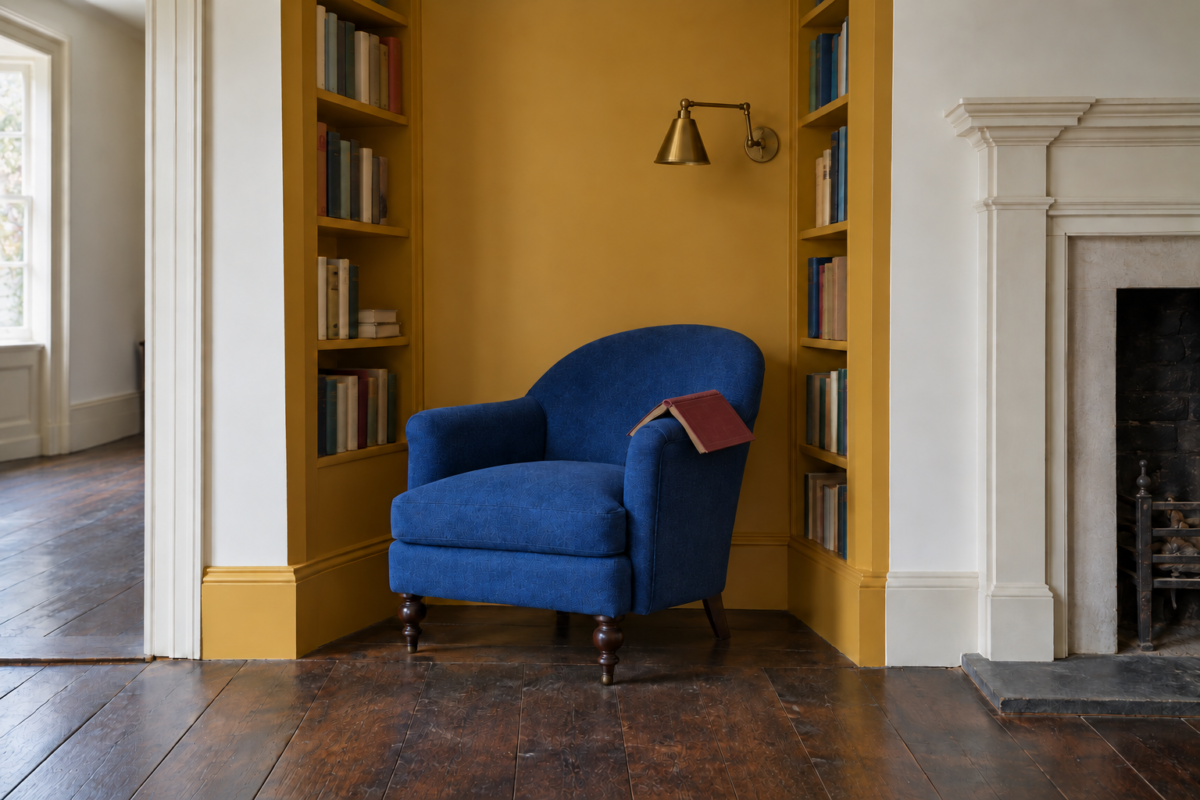
Look at where people end up reading in a house that has no place meant for it. They sit at one end of the sofa with their legs up, or on the bed against the headboard, or on the third stair. Each of those spots has something solid behind the back and something close at one side. A nook supplies the same two things on purpose, and adds a decent light.
It takes very little floor. A chair’s footprint is about three feet square, and several of the places here use less than that because the seat is built into a gap the house already had. What separates a nook from a chair that happens to be in a room is a boundary of some kind. It can be a turned back, a pair of wings, a recess, a curtain, or a change of color.
Turn One Chair to Face the Window
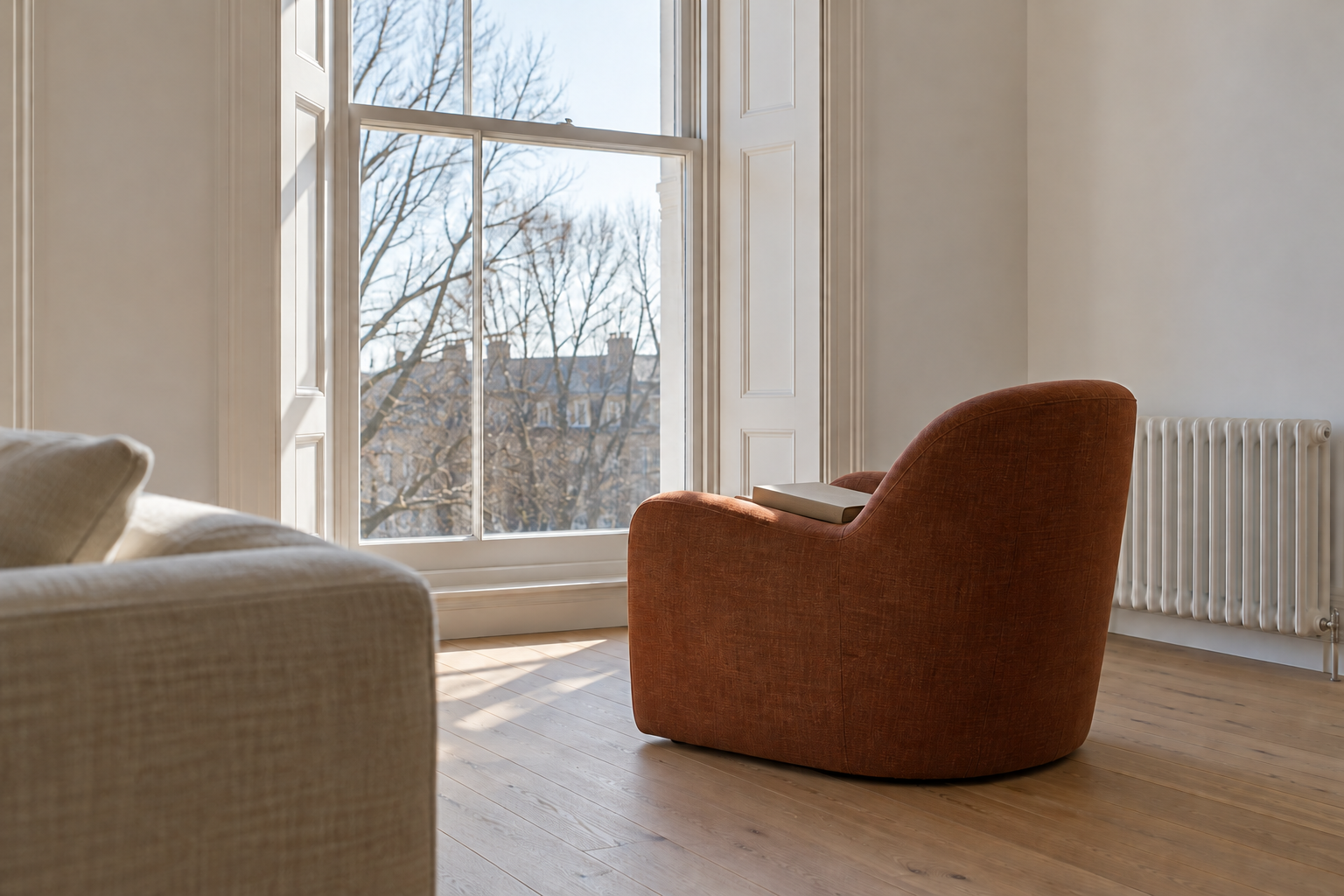
Furniture in a living room nearly always faces inward, toward the sofa, the fire, or the screen. Turn a single armchair the other way, so it looks out of the window with its back to the rest, and it stops being part of the seating group. The chair’s own back becomes the boundary. Someone sitting in it can’t see the television and isn’t in anyone’s line of conversation.
Angle it so the window is ahead and slightly to one side. Daylight then falls across the page from the side, without the glare of facing the glass square on, and the view is there whenever the reader looks up.
Choose a Chair With Sides
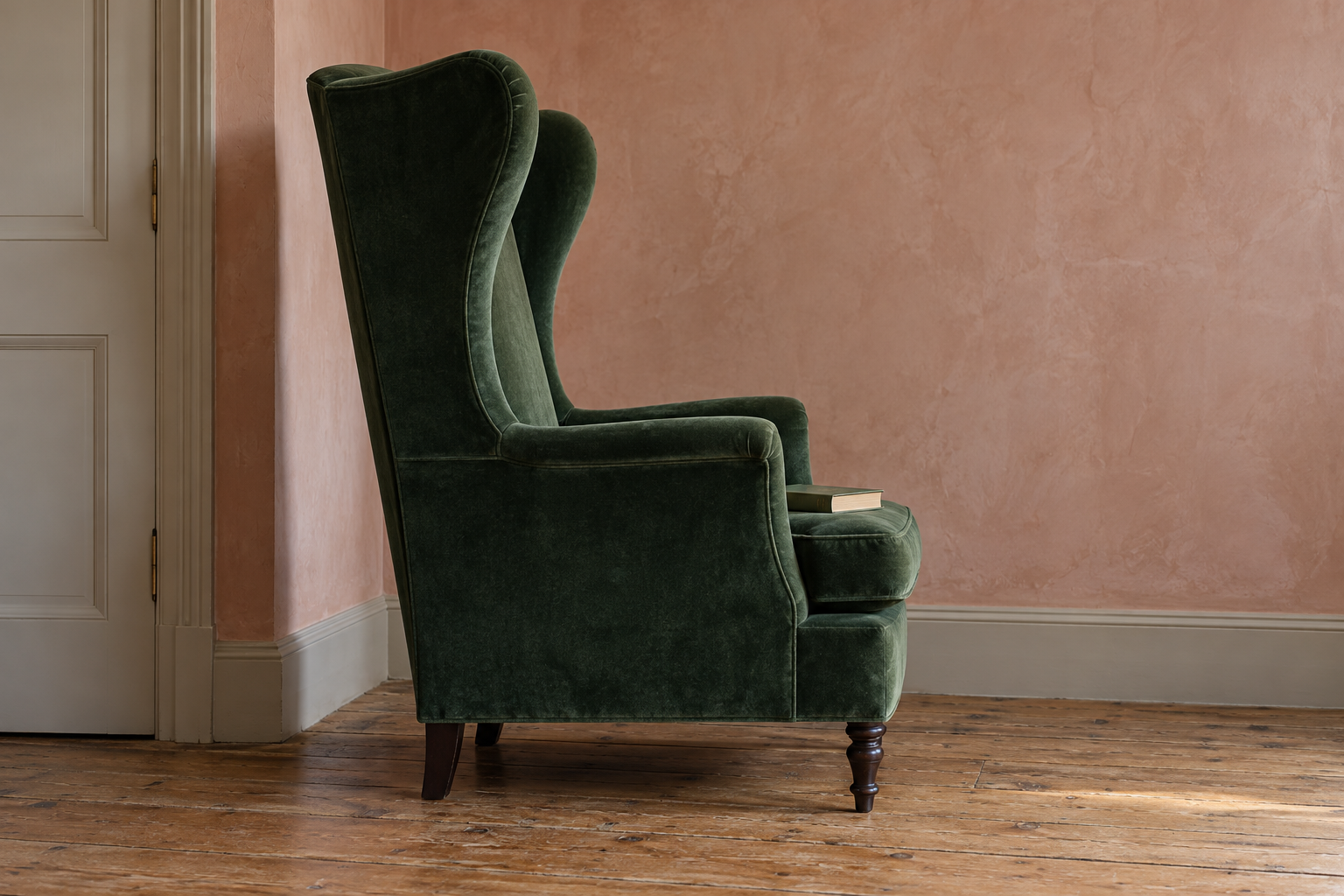
The wings on a wing chair were put there to keep drafts off the sitter’s head, and they also shut out the edges of the room. Seen in profile, a deep wing reaches forward as far as the sitter’s cheek. From inside it, the view narrows to the book and whatever is straight ahead.
The effect depends on how far the wings project and how high the back rises, so look at a chair from the side before choosing it. A soft, matte cover such as velvet or wool suits the shape, since the wings sit right beside the face. Among upholstered armchairs, the tall, enclosing shapes do this and the low, open ones don’t.
Build a Seat Into the Window
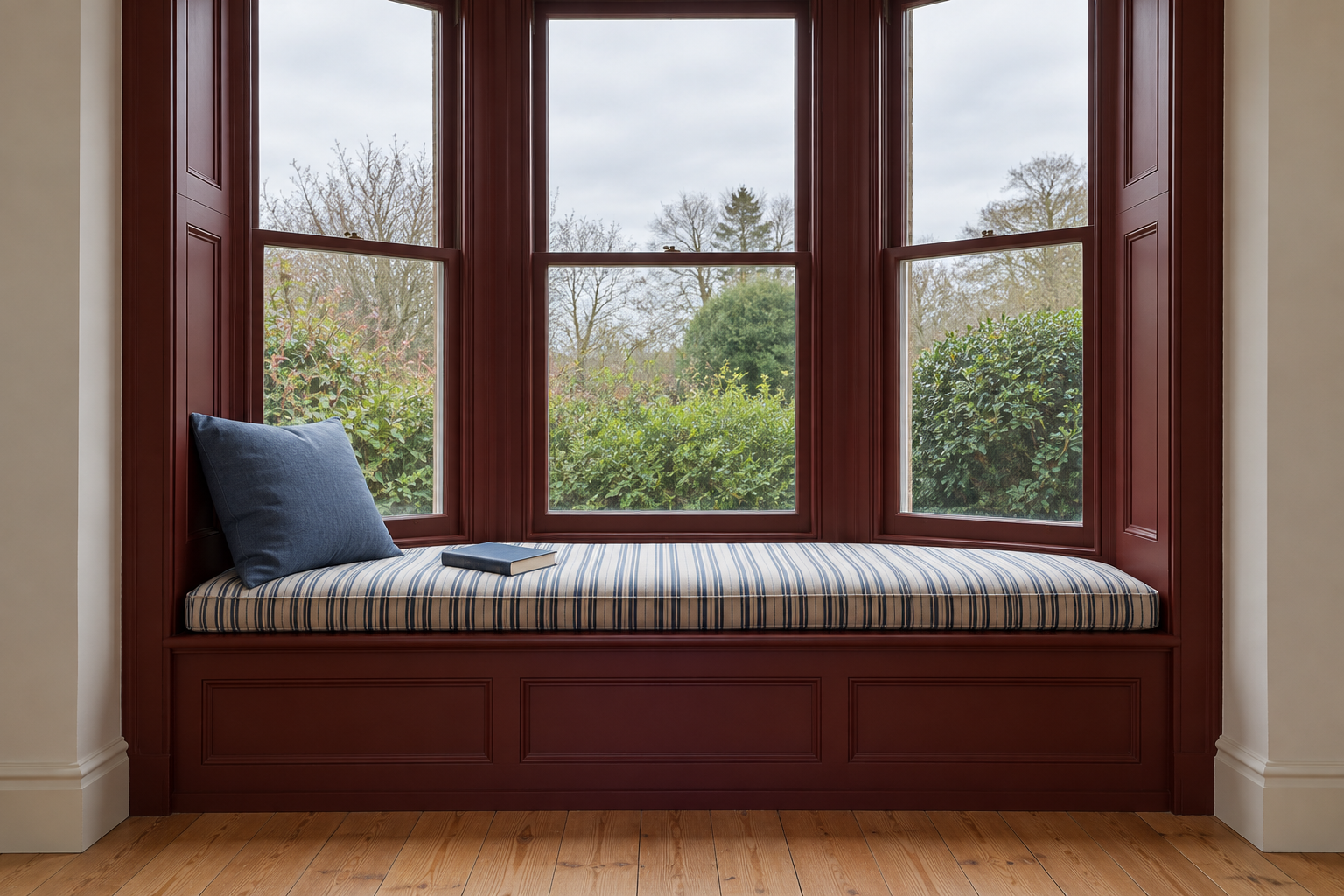
A window seat puts the reader in the best light in the house and takes no floor from the room, since it fills the depth of the wall or the bay. Its proportions are different from a dining bench. People read on a window seat sideways, back against one end and legs along the cushion, so depth matters more than it does for sitting upright.
About 24 inches from front edge to glass is comfortable for that, where a bench for eating can be several inches shallower. Length matters too. Under about 4 feet, an adult’s knees stay bent. Paint the seat front, the side reveals, and the window frame one color and the bay becomes a single piece of joinery, distinct from the walls around it.
Fit a Bench Between Two Bookcases
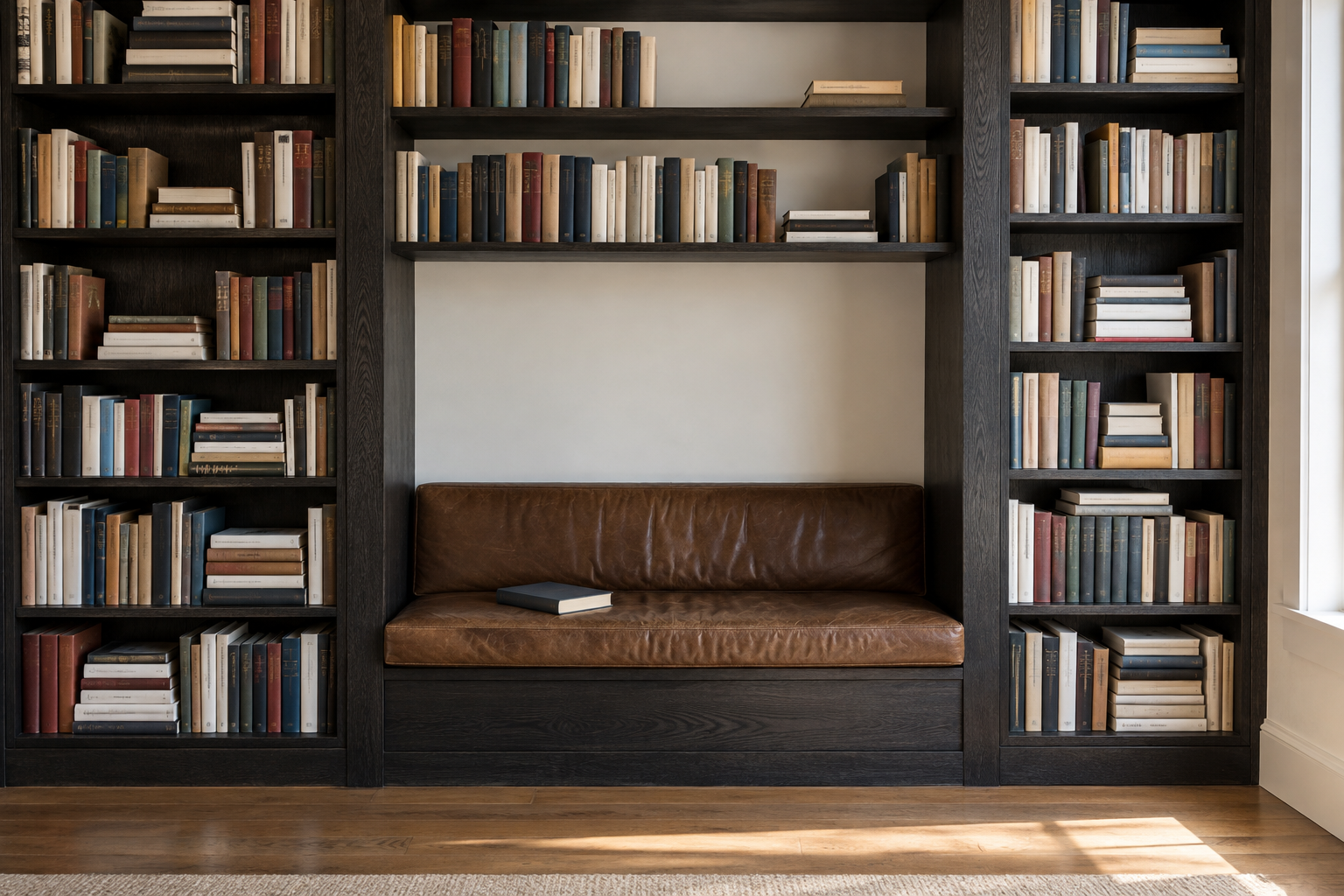
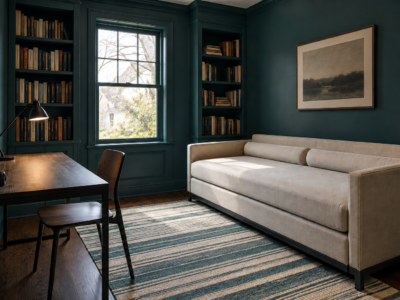
Two tall bookcases with a gap between them make a recess without any building work. The sides of the cases become walls at each shoulder, a shelf or two across the top makes a ceiling, and a bench or a deep cushion on a low cabinet makes the seat.
What stands out here is the texture at the edges. Spines run up both sides of the sitter, uneven in height and color, so the nook is lined with the books themselves. A gap of about 3 to 5 feet suits it. That is wide enough to sit sideways with knees drawn up, and narrow enough that both sides stay within reach.
Take the Doors Off a Closet
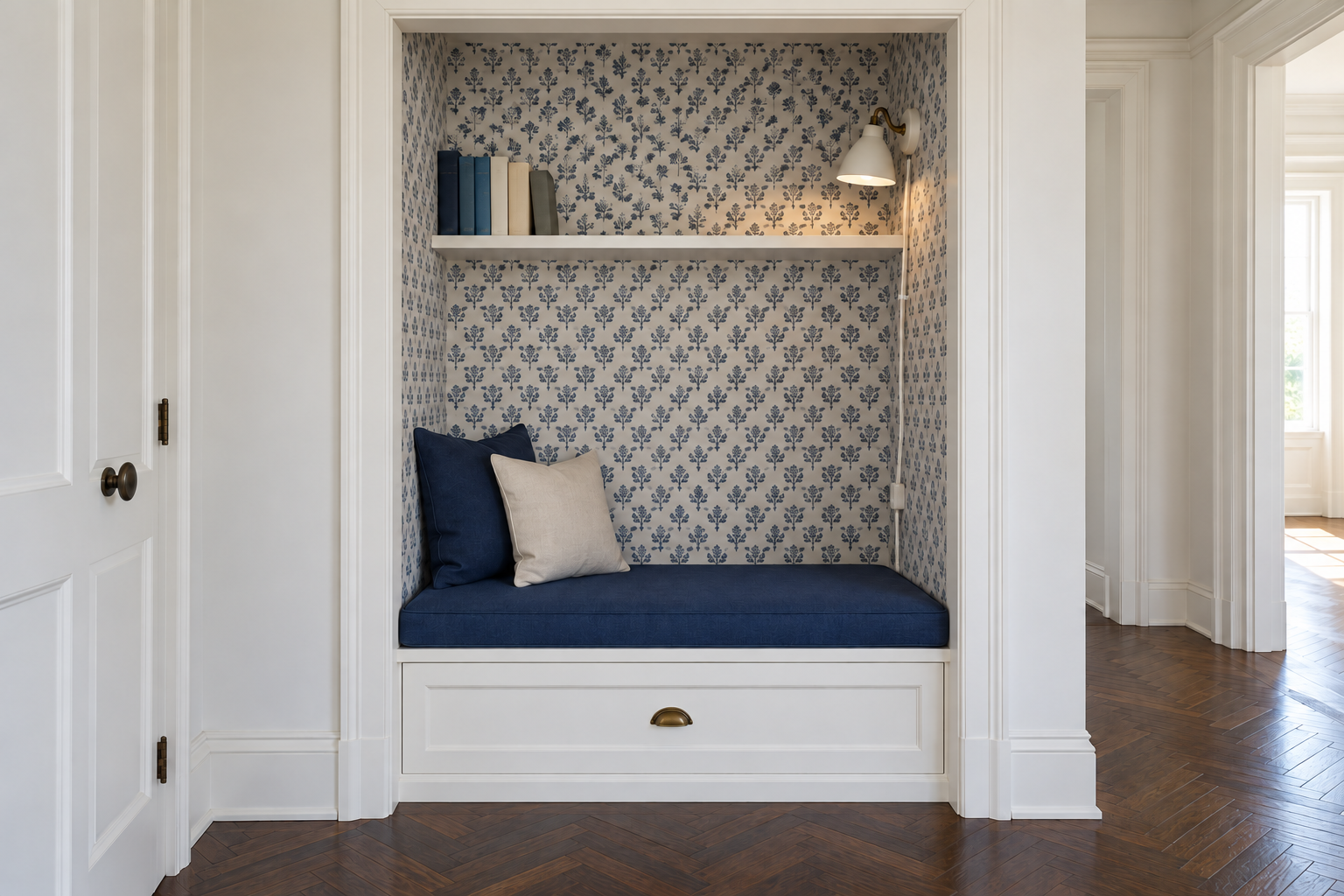
A shallow hall closet is already a nook with the wrong contents. With the doors and the hanging rod removed, a bench fitted wall to wall, and a light added, it becomes a seat with three walls and a ceiling.
Because it’s small and separate, a closet can take a wallpaper or a color that would be too much across a whole room. Pattern on all three inner walls can also make the shallowness of the space less obvious. Most closets have no outlet, so the light is usually one that plugs in outside the frame, with its cord run down the inside corner. Put a drawer under the bench and some of the storage comes back.
Use the Low End Under the Stairs
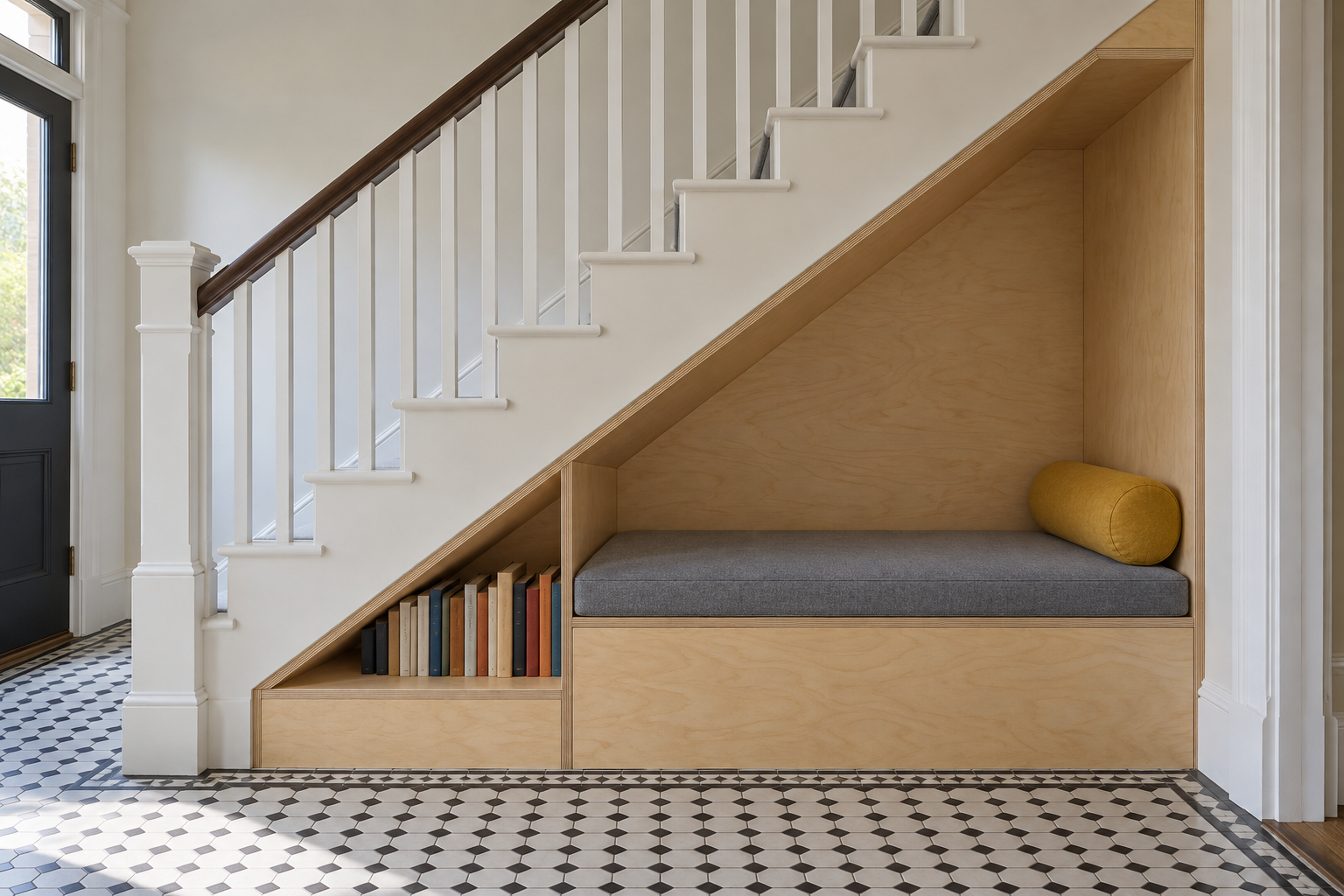
The triangle under a staircase is too low at one end for standing or hanging coats, and that end is the right height for sitting. A seated adult needs roughly 3 feet of clear height above the cushion, and a tall one a little more. Sit on a stool under the slope and mark where your head clears, then build the seat so the back rests toward the taller end.
The lowest part of the triangle, where nobody’s head would fit, holds a row of books or a basket. Lining the whole recess in one material, plywood or paint or paper, separates it from the hallway, which is often the busiest strip of floor in the house. It works best on a staircase where the tall end is already spoken for.
Furnish the Landing
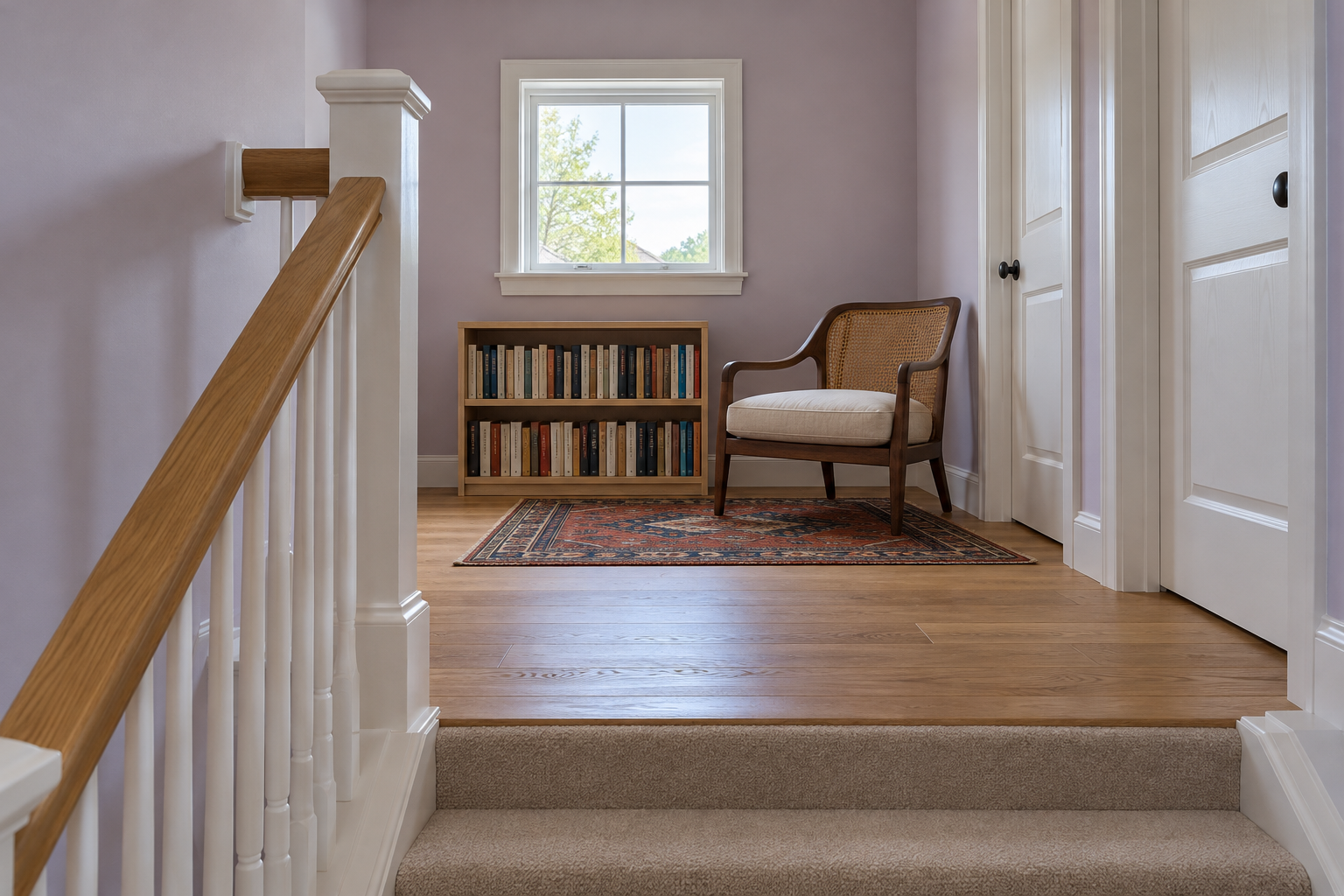
A landing, or the dead end of a hallway, is often 20 or 30 square feet that the house heats and nobody uses. It often has a window, and it’s away from the kitchen and the television.
One chair, a small rug to mark its place, and a low bookcase under the window are enough. Keep the chair light in outline, with open arms or a cane back, so it doesn’t crowd the route to the bedrooms. Then check the route itself: aim to keep about 3 feet clear between the chair and the top of the stairs.
Put a Daybed Under the Eaves
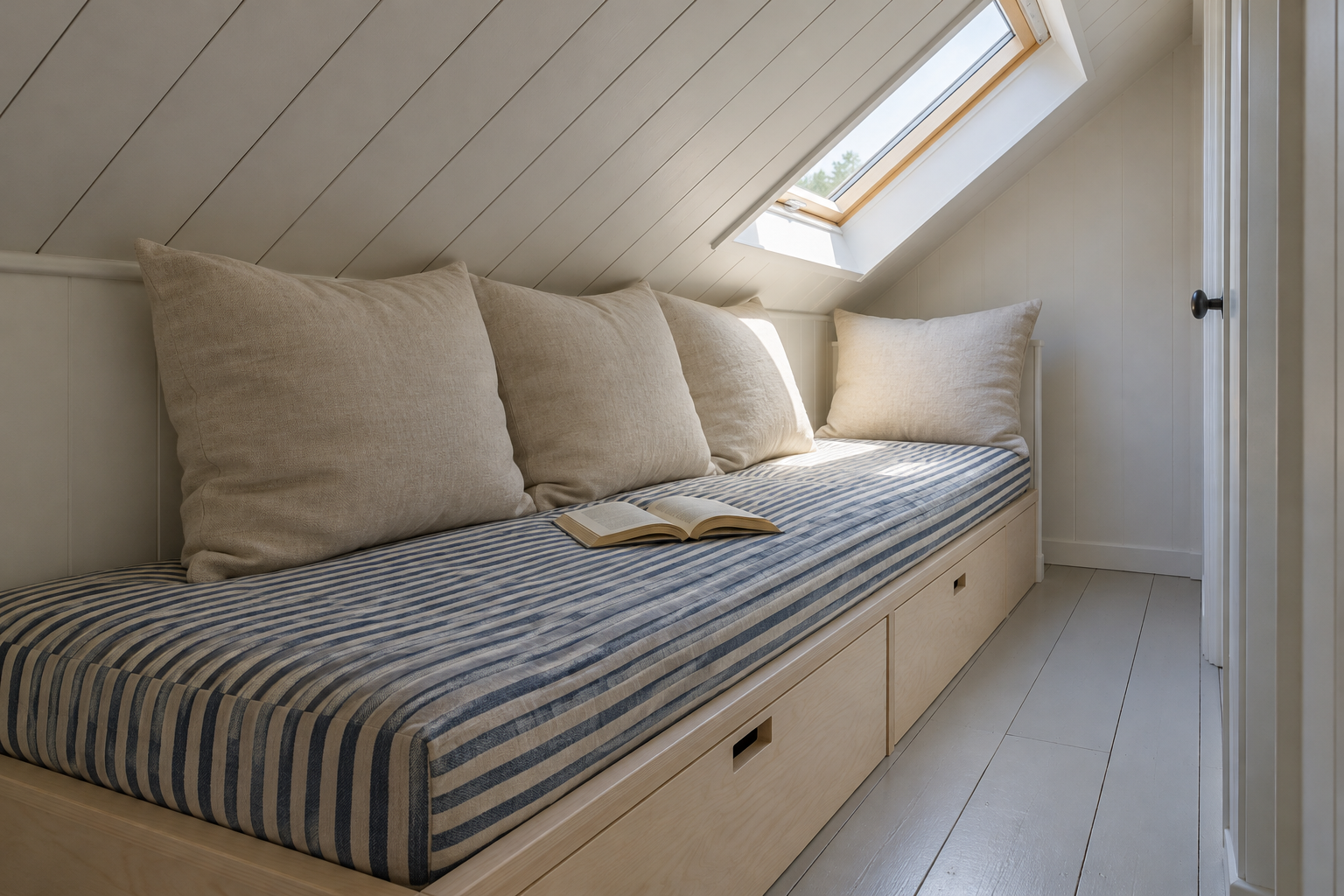
Some people read lying down, and for them a chair is the wrong furniture. The low side of an attic room, under the roof slope where nobody can stand, takes a daybed along its length without costing any usable floor.
The slope does part of the work. A ceiling that comes down close over the bed makes a compartment out of it, in the way a top bunk or a ship’s berth does. Large firm pillows along the low wall turn the mattress into a deep sofa for sitting up. A roof window above the head end gives daylight on the page, and it needs a blind for the hours when the sun comes straight through it.
Hang a Curtain Across It
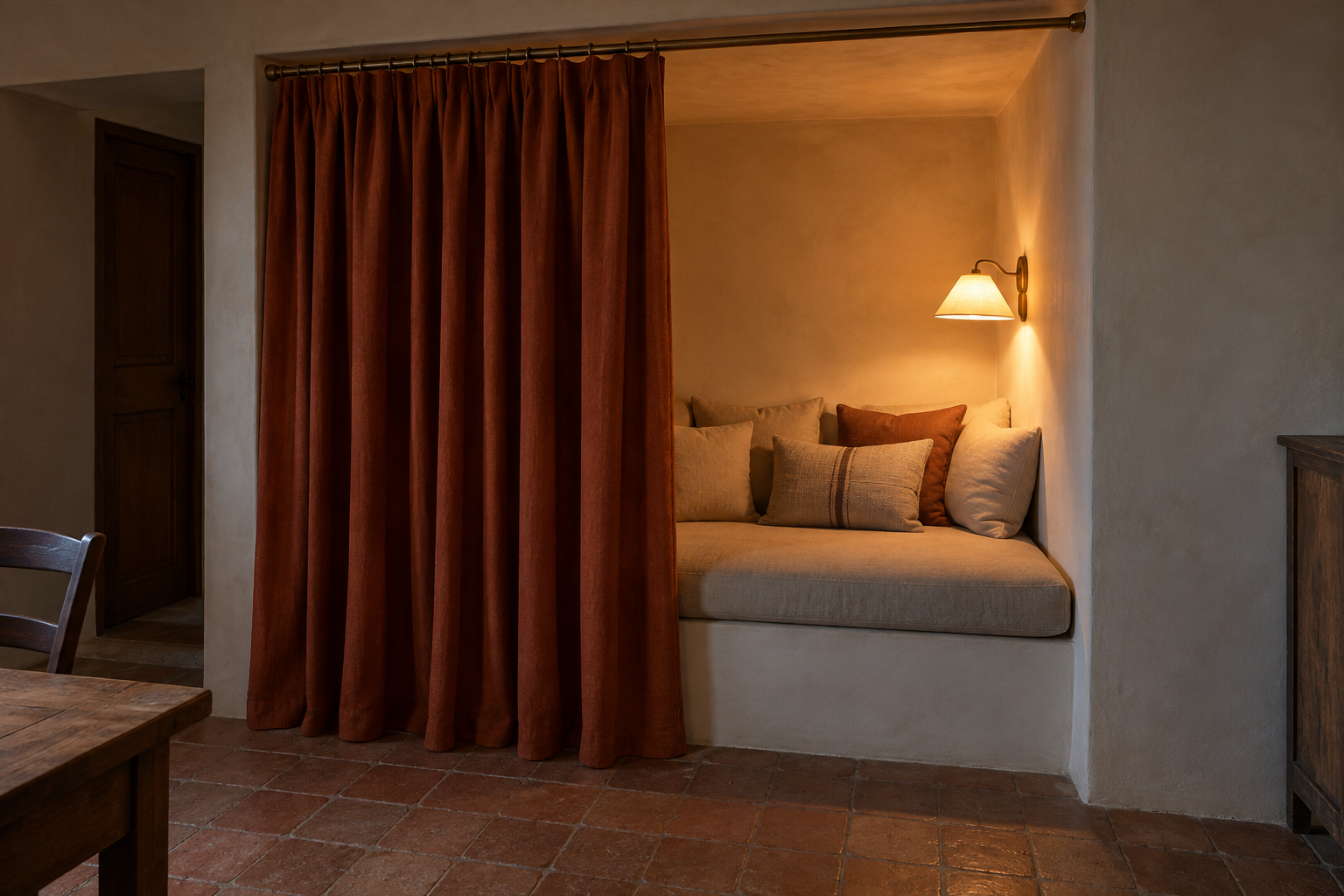
A curtain is the cheapest wall there is. Hung across the front of an alcove, a bay, or a bed set into a recess, it closes the fourth side on demand and can be pushed back out of the way.
A heavy, lined fabric is worth the cost here. Wool or velvet with an interlining helps muffle the room outside and hold warmth in, and it hangs in deep folds that look substantial when half drawn, which is how the curtain will spend most of its time. Thin cotton does none of that. A light fixed inside, on the alcove wall, means the reader isn’t relying on the room light that the curtain has just shut out.
Paint the Recess Darker Than the Room
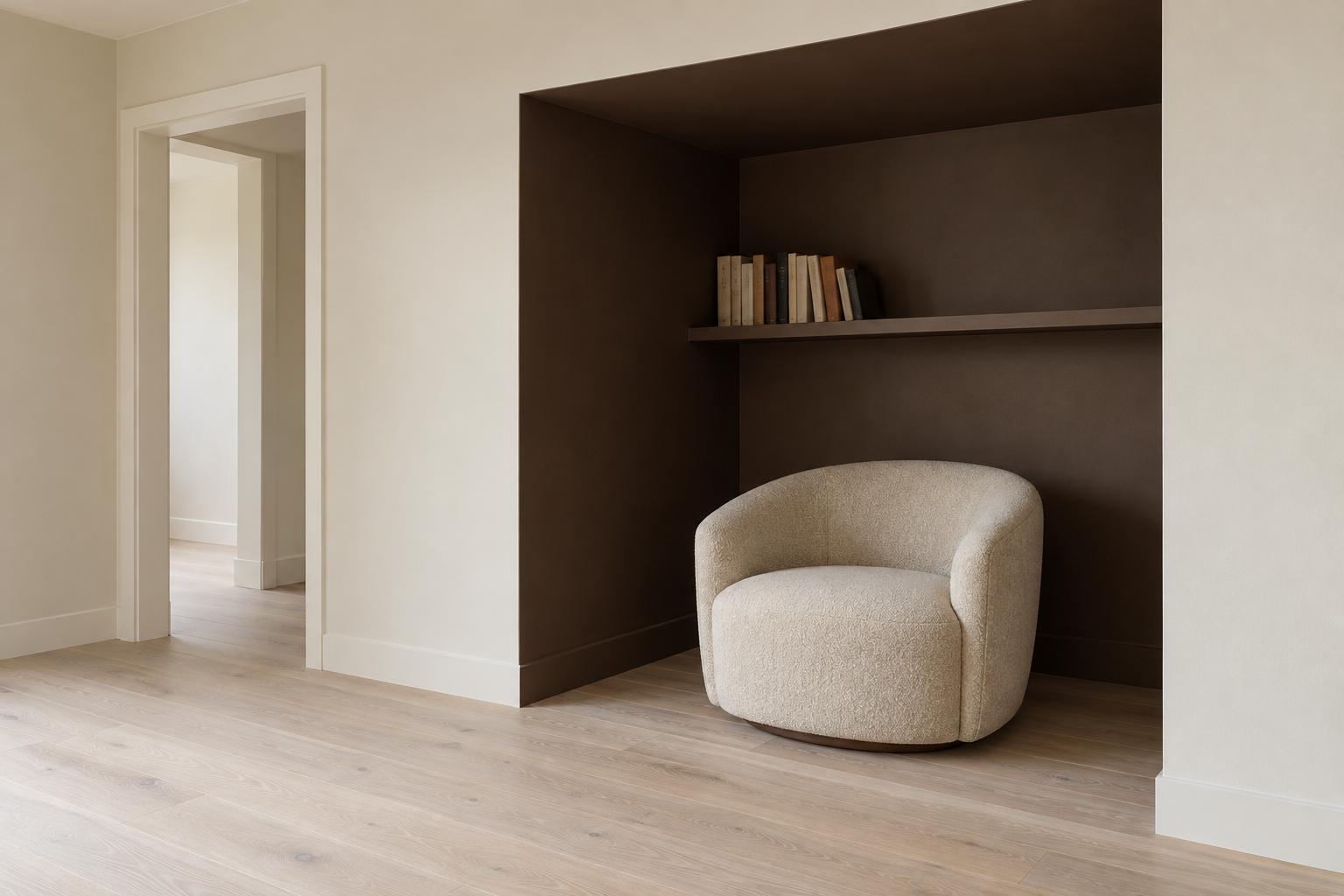
A recess painted the same color as the walls around it is an indentation. Painted several shades darker, it becomes a separate place. Dark surfaces tend to look further away, as if in shadow, so the back of the recess seems to drop back and the opening looks like a doorway into a smaller room.
For the effect to hold, the dark color has to cover every surface inside, the ceiling and any shelf included, with the change falling exactly on the outer corner. A pale chair against the dark stands out from it, where a dark chair would disappear. This is color drenching at the scale of one alcove, and a quart of paint does it.
Stand the Lamp Behind Your Shoulder
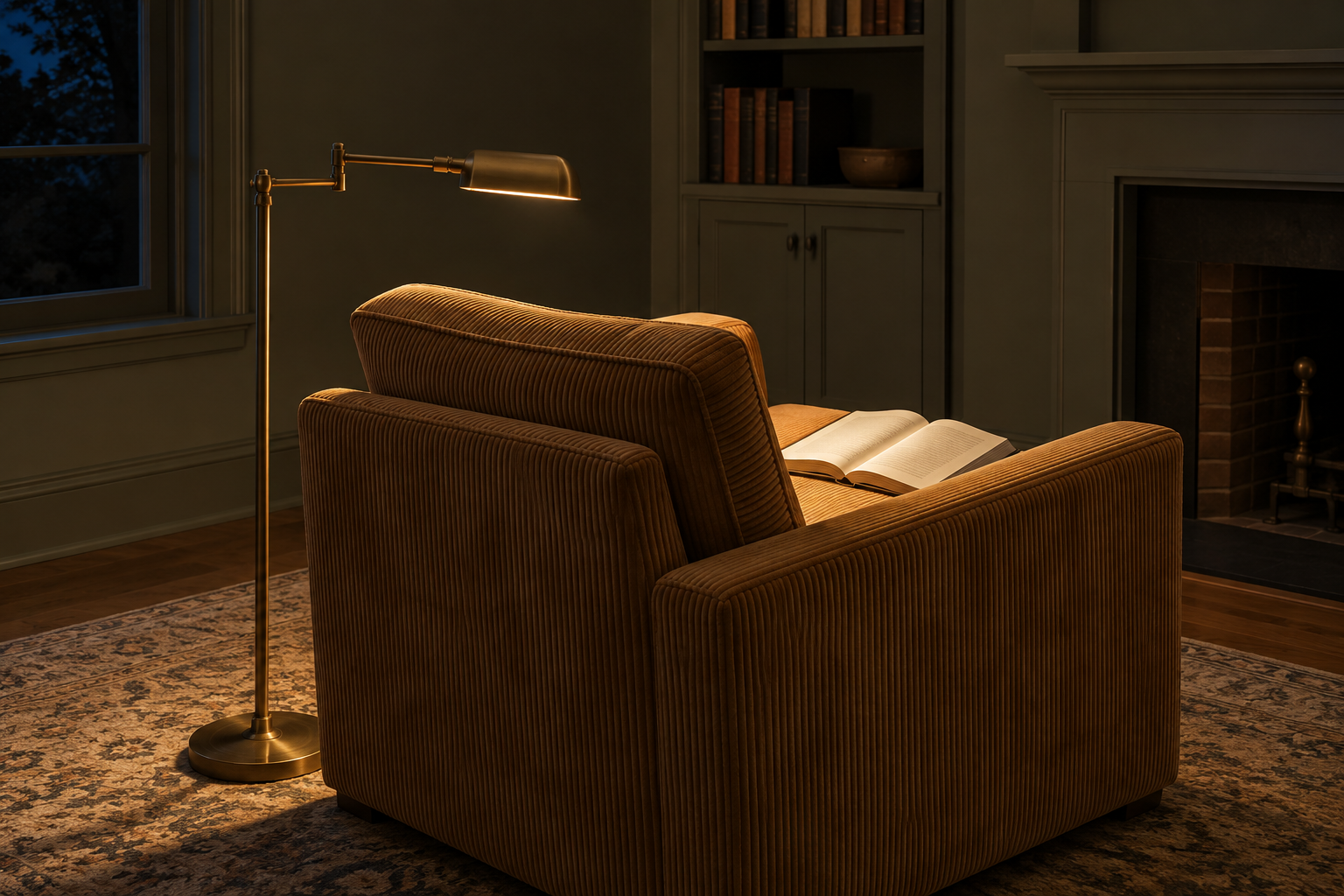
A reading corner is easy to light from the wrong place. A lamp on a table in front of the chair shines into the reader’s eyes, and a ceiling light puts the shadow of the head on the page. The light wants to come from behind and to one side, over the shoulder, and land on the book.
A floor lamp with an adjustable arm does this well. Stand its base behind the chair and bring the shade forward beside the shoulder, a little above head height when seated, pointing down. If the bulb can be seen from the chair, the shade is too high or tilted too far.
Keep a Small Table at the Arm
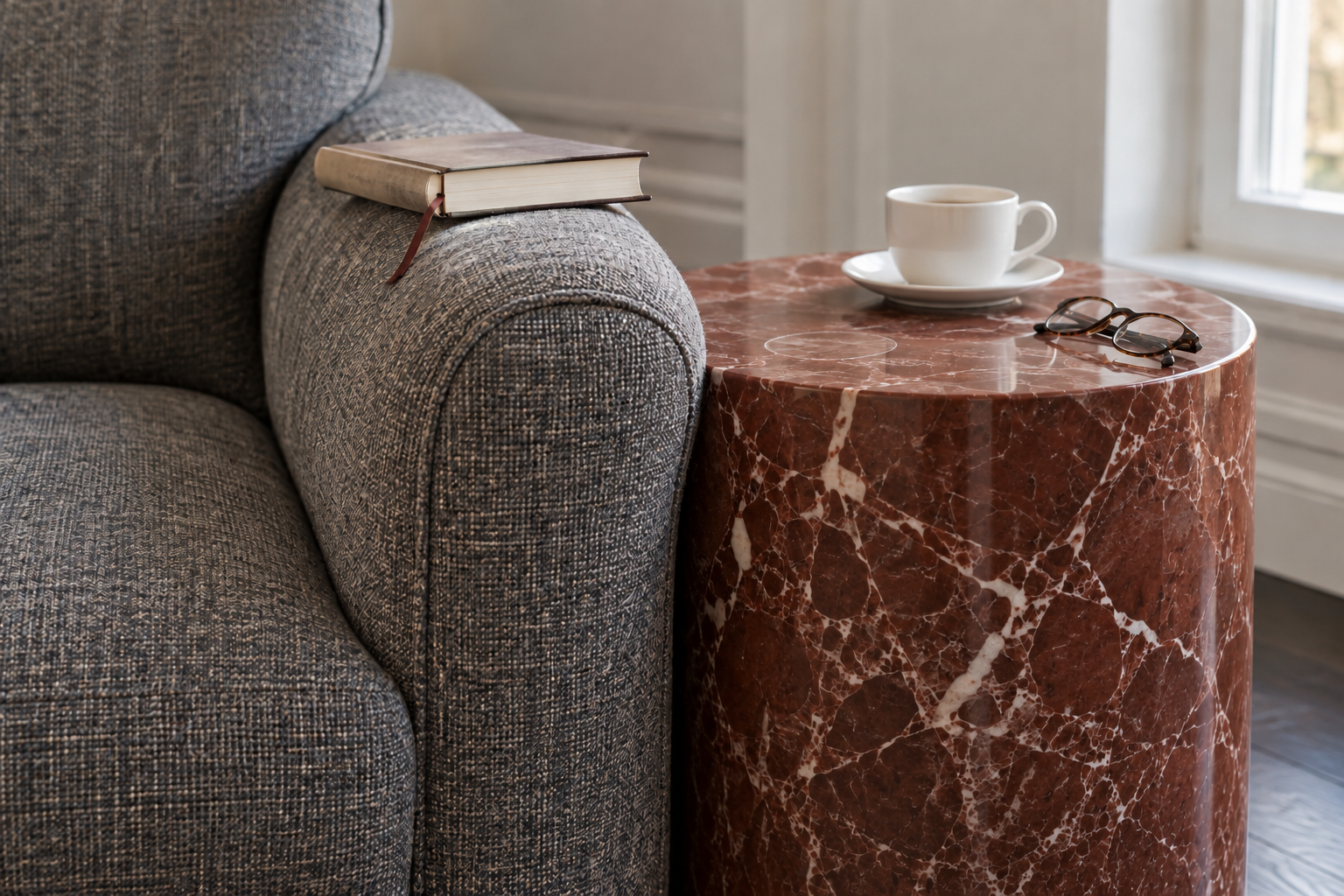
Without somewhere to put a cup, a reader gets up every half hour, and the nook loses to the sofa, which has a coffee table. The surface can be very small. A top 10 or 12 inches across holds a cup, a pair of glasses, and a phone turned face down.
Its height is what matters. A table whose top is about level with the arm of the chair can be reached without looking. One much lower makes the reader lean and feel for it. Stone, metal, or sealed wood will take a hot cup without a coaster, which is one less thing to keep track of.