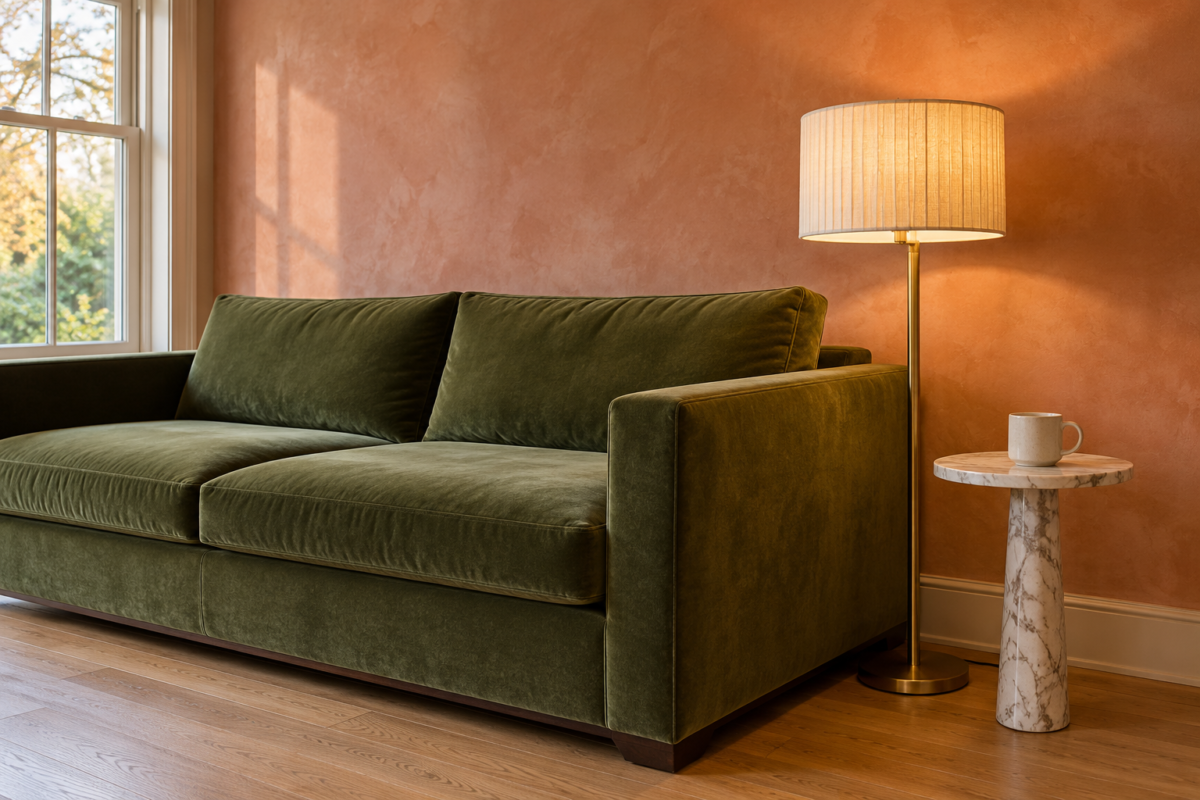
A floor lamp carries its light up on its own stem, with no table to lift it, so the lamp’s height alone decides where the light starts. Beside a sofa, the number that matters is the lower edge of the shade. It has to hide the bulb from anyone sitting down and still let the light reach a lap or a book.
Put the lower edge of the shade about at seated eye level. Beside an ordinary sofa that’s roughly 40 to 46 inches from the floor, and most shaded floor lamps that put it there stand 58 to 64 inches tall overall.
Measure From Your Eyes, Seated
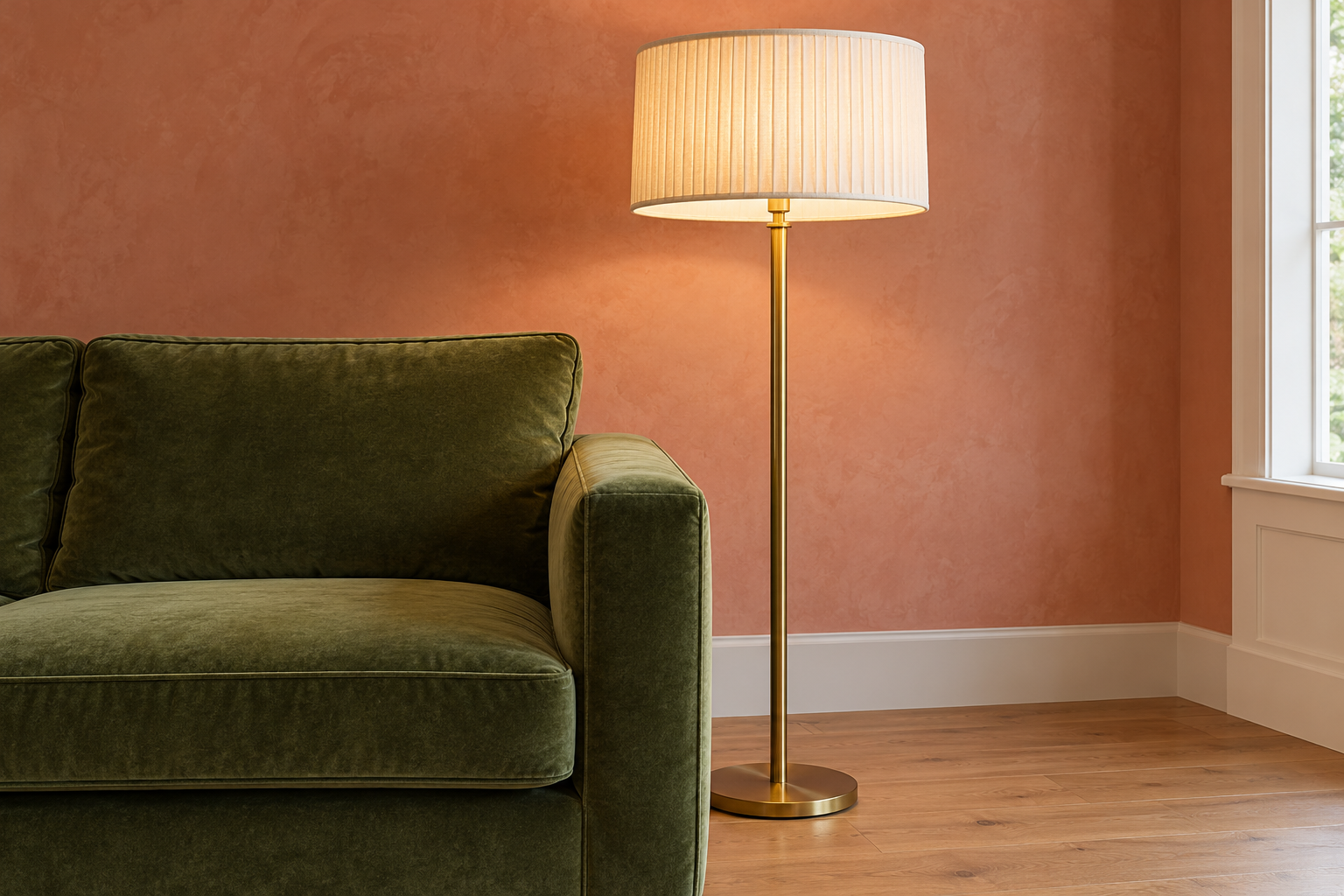
Sit back on the sofa the way you would in the evening and have someone measure from the floor to your eyes. On a seat about 18 inches high, most adults’ eyes are 40 to 44 inches from the floor. A deep, low sofa brings that down, and a tall upright one raises it.
The lamp’s shade should start there or an inch or two higher. For example, with eyes at 42 inches and a shade 12 inches tall, a lamp with its shade bottom at 44 inches stands about 56 inches to the top of the shade, a little more with the finial. The same principle sets a table lamp’s height: the shade covers the bulb from the seat beside it.
Beside the Sofa
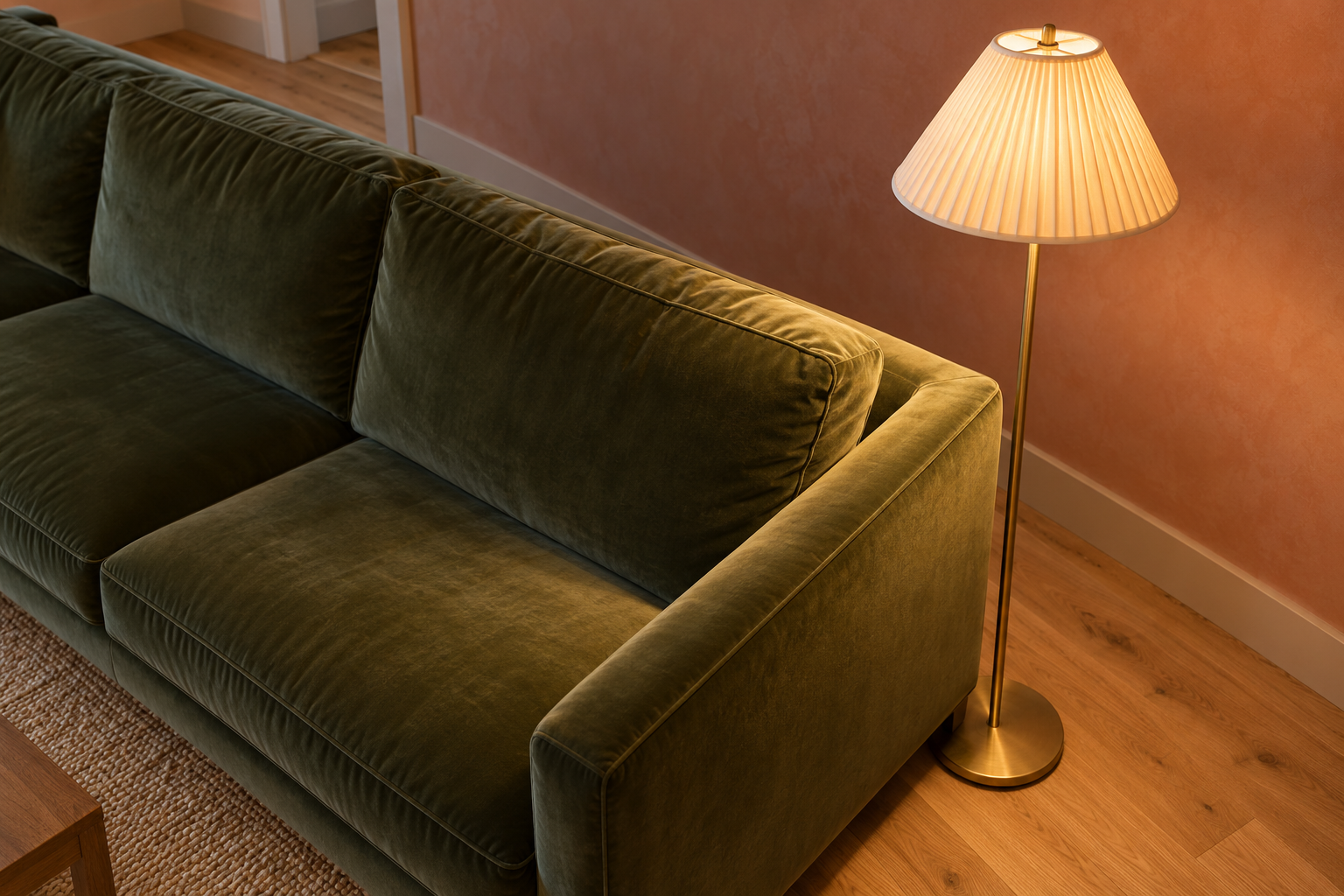
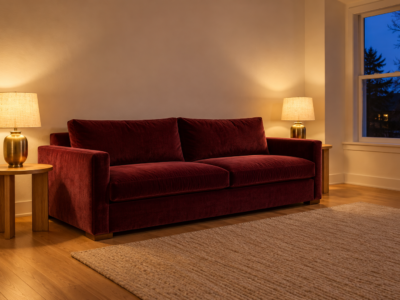
Stand the lamp at the end of the sofa, beside the arm and a few inches behind its front edge, so the light falls forward onto the end seat instead of into the room’s walkway. Pushed back level with the back of the sofa, the shade lights the wall more than the seat.
A side table at the same end takes the place a lamp base would, so with both, the lamp goes behind the table, where its base is out of the way of knees and feet.
At a Reading Chair
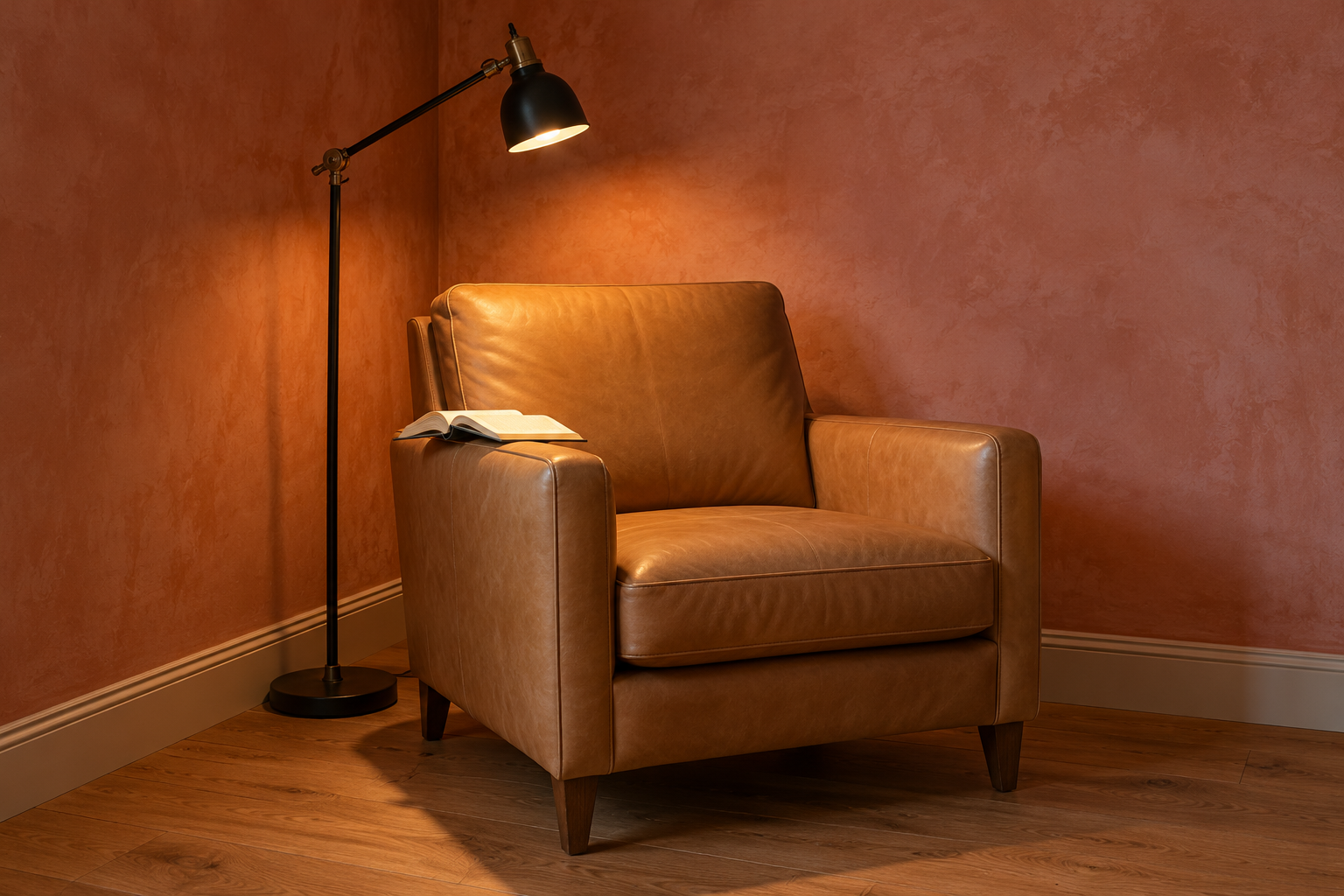
For reading, the light should come from behind and to one side of the shoulder, so it falls on the page without the reader’s own head casting a shadow on it. A lamp just behind the chair’s arm, with its shade at or a little above the seated reader’s eye level, puts it there.
An adjustable reading lamp, with a small shade on a jointed arm, lets the head come down and in over the page, which suits someone who reads for long stretches or needs more light than a drum shade spreads.
Next to the Bed
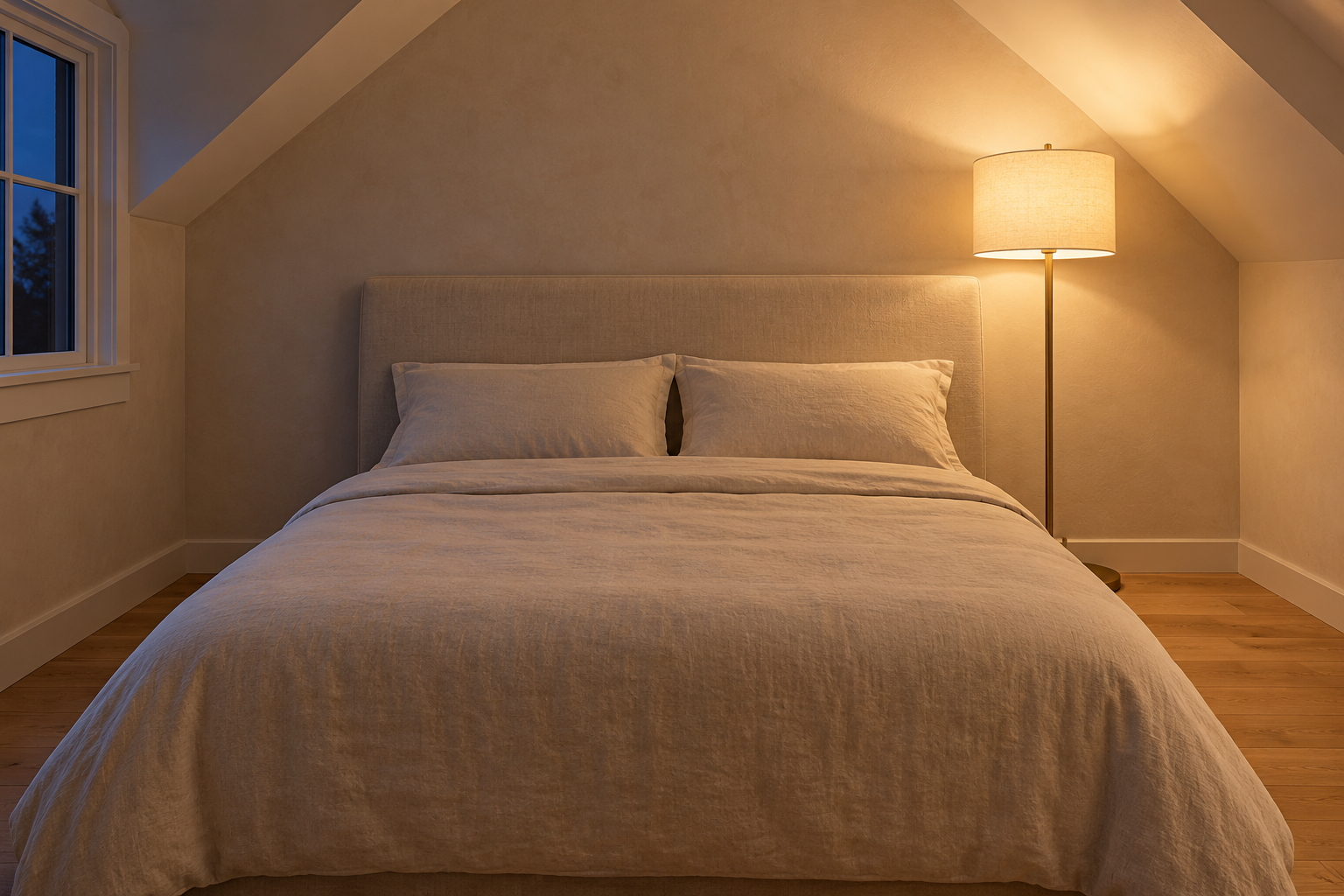
In a narrow bedroom with no room for a nightstand, a slim floor lamp beside the bed does a bedside lamp’s job. The person to light is sitting up against the headboard, so the shade’s lower edge goes about level with the top of the headboard, or with the eyes of someone sitting up in bed, typically around 50 to 56 inches from the floor on a standard bed.
A switch reachable from the pillow matters more here than anywhere else. A foot switch on the cord, or a lamp with the switch near the shade, can be awkward from bed, so check where it sits before choosing the lamp.
Arc Lamps Over a Seat
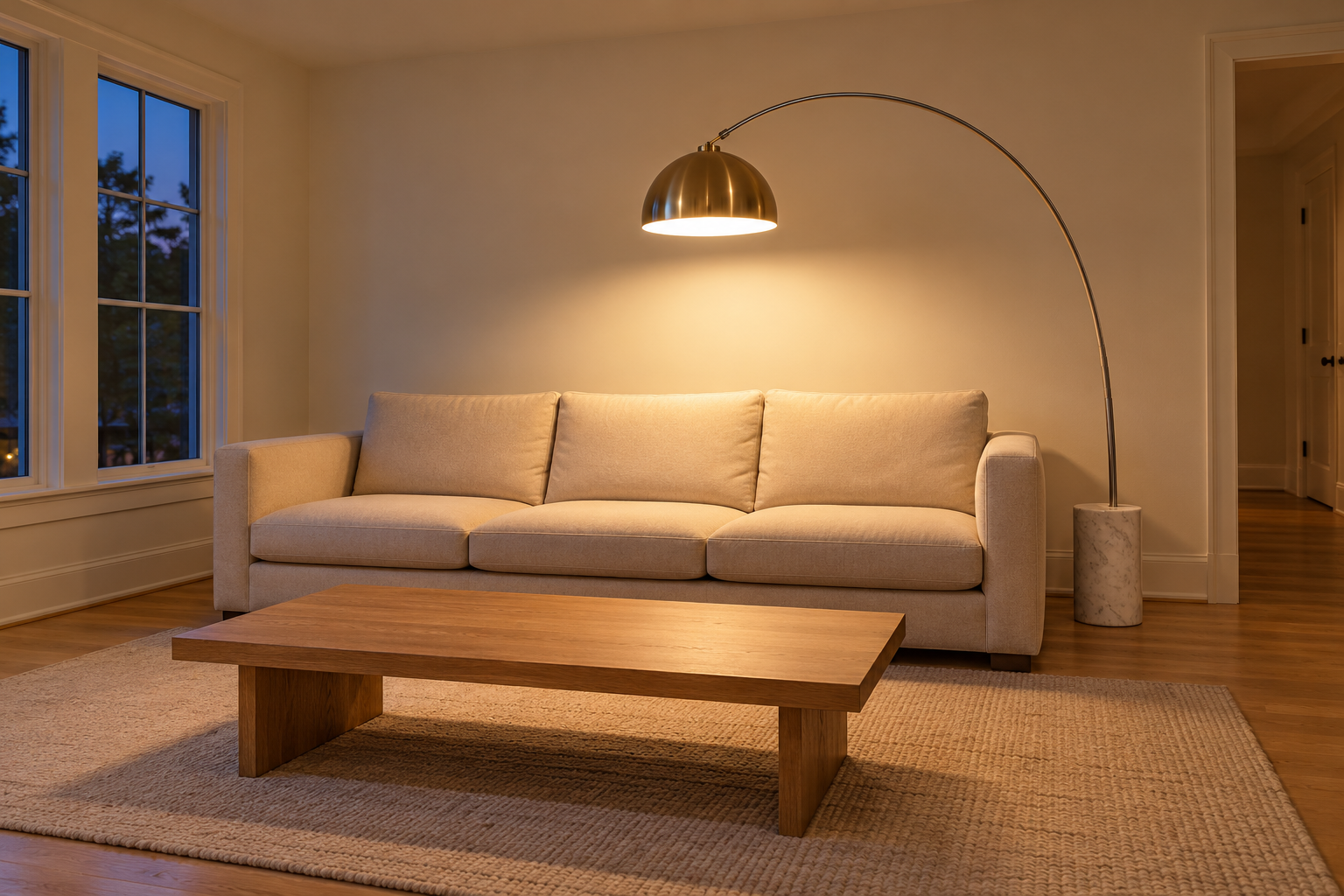
An arc lamp puts its base away from the seat and swings its shade over it, which suits a sofa with no space at its ends or a seat in the middle of the room. Its shade should hang well above the heads of people sitting under it, usually with its lower edge a foot or more above a seated head, and that takes an apex around 6 and a half feet high or more.
Check the reach, the distance from the base to the shade, against the sofa’s depth plus the gap behind it, so the shade lands over the seat. The heavy base belongs behind the sofa’s end or in a corner, where nobody walks into it.
Torchieres Light the Ceiling
A torchiere, with an upturned shade at the top of a tall stem, throws its light up onto the ceiling, and from there it spreads through the room. It belongs above standing eye level, around 70 inches or more, so nobody walking past sees into the bowl.
It’s a lamp for the whole room, not for reading, since it lights the ceiling and leaves the page in the general wash. A pale ceiling reflects its light down best, and in a room with a dark ceiling a torchiere does much less.