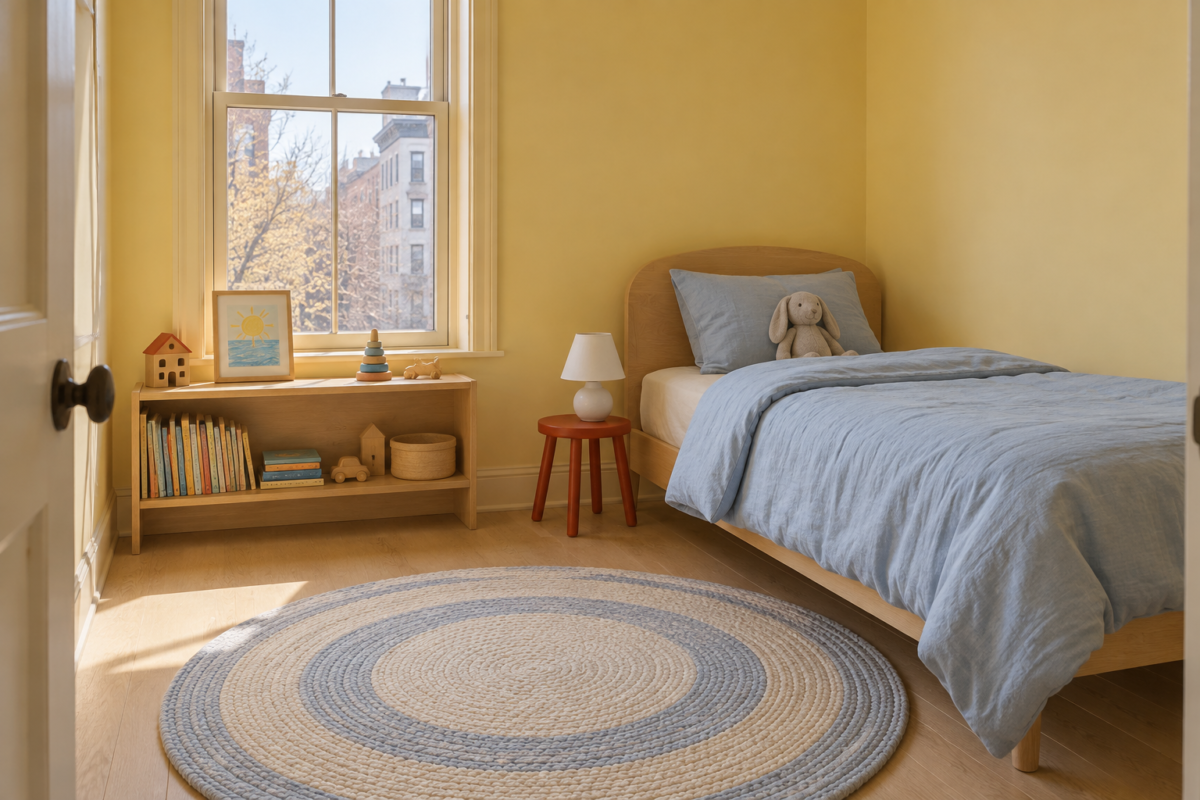
A four-year-old’s room and a twelve-year-old’s room ask for different things. The four-year-old needs a low bed, toys within reach, and a dark room at 7 p.m. in midsummer. The twelve-year-old needs a desk, somewhere for a friend to sit, and shelves for a growing pile of books, chargers, and whatever the current hobby involves. Most children’s rooms go through both, usually with much of the same furniture.
It helps to sort the room into two groups. The bed frame, closet, shelving, window lining, and wall paint are expensive or tiresome to replace, so they’re worth choosing to last. Bedding, art, rugs, and the height of a clothes rod are cheap to change, so they can follow whatever the child loves this year. Two ideas below are about safety, anchoring tall furniture and setting up bunk beds, because those are the parts of a child’s room that can’t wait for them to grow into it.
Buy a Bed Big Enough for the Next Ten Years
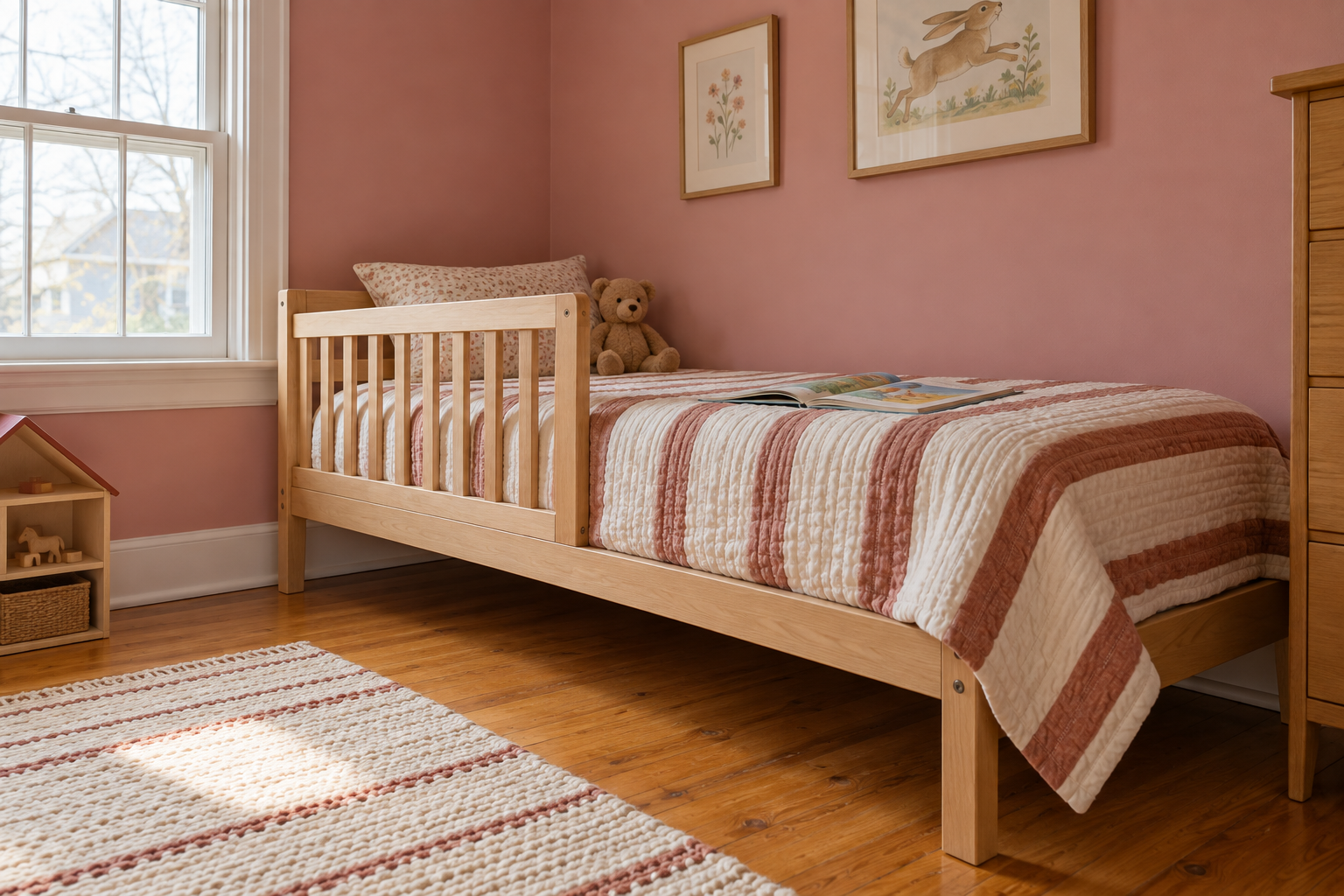
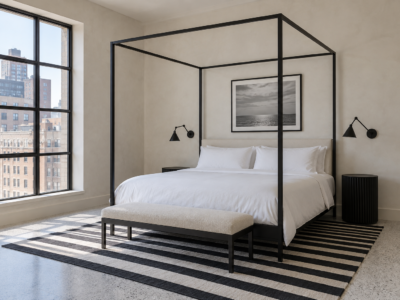
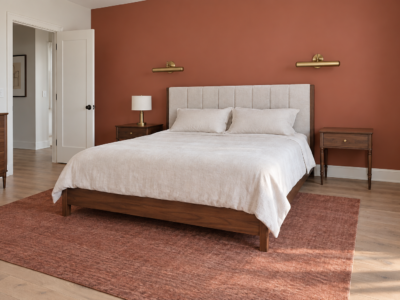
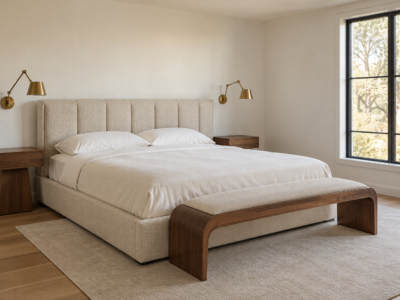
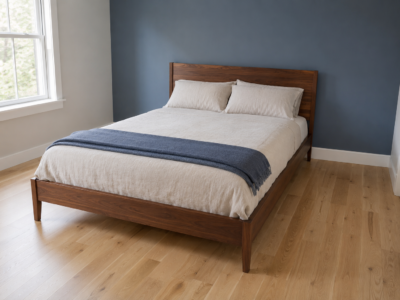
When a child leaves the crib, a toddler bed is tempting because it’s low and small. It also uses the crib mattress and is outgrown in two or three years. A twin bed, 38 by 75 inches, lasts most children into their teens, and a full, 54 by 75 inches, leaves room for a parent at story time or a friend at a sleepover if the room can spare the extra 16 inches.
Keep the frame low while the child is small, and fit a guardrail along the open side until they stop rolling out in their sleep. A plain frame in solid wood or painted metal will suit a teenager too, which a bed shaped like a car or a castle won’t. The bed size guide covers how much floor each size needs around it.
Hang Clothes Where a Child Can Reach Them
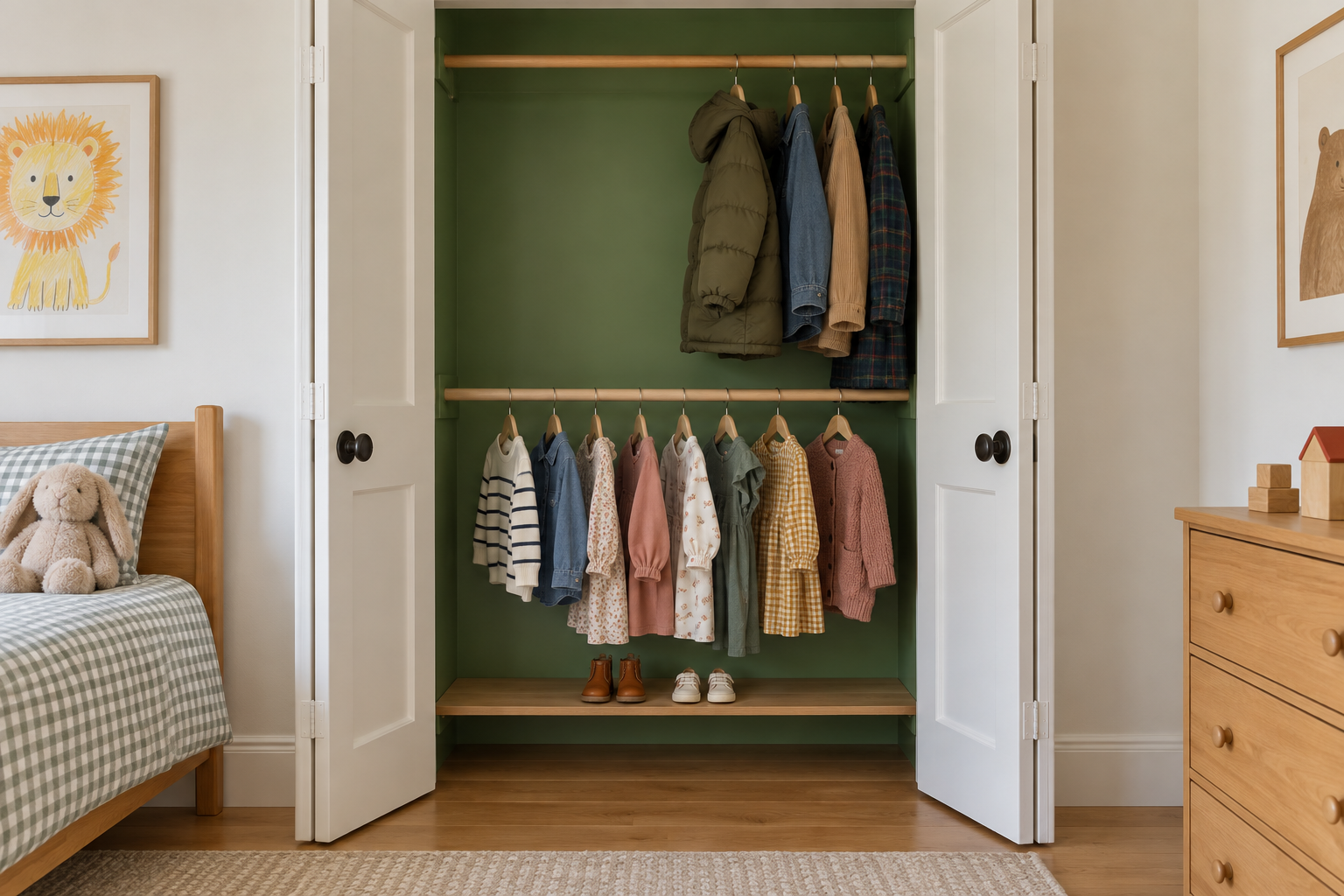
A standard closet rod hangs around 66 inches from the floor, out of a child’s reach until the early teens. A second rod hung lower, or an adjustable one, brings everyday clothes down to roughly 40 to 48 inches, where a young child can choose a shirt and put it back. As they grow, raise the rod. The closet itself doesn’t need rebuilding.
Drawers follow the same logic. Everyday clothes go in the lowest drawers, spares and out-of-season things in the top ones. Shallow drawers suit small hands better than one deep drawer where everything sinks to the bottom, and a few rules for keeping a drawer organized hold at any age.
Store Toys in Low, Open Bins
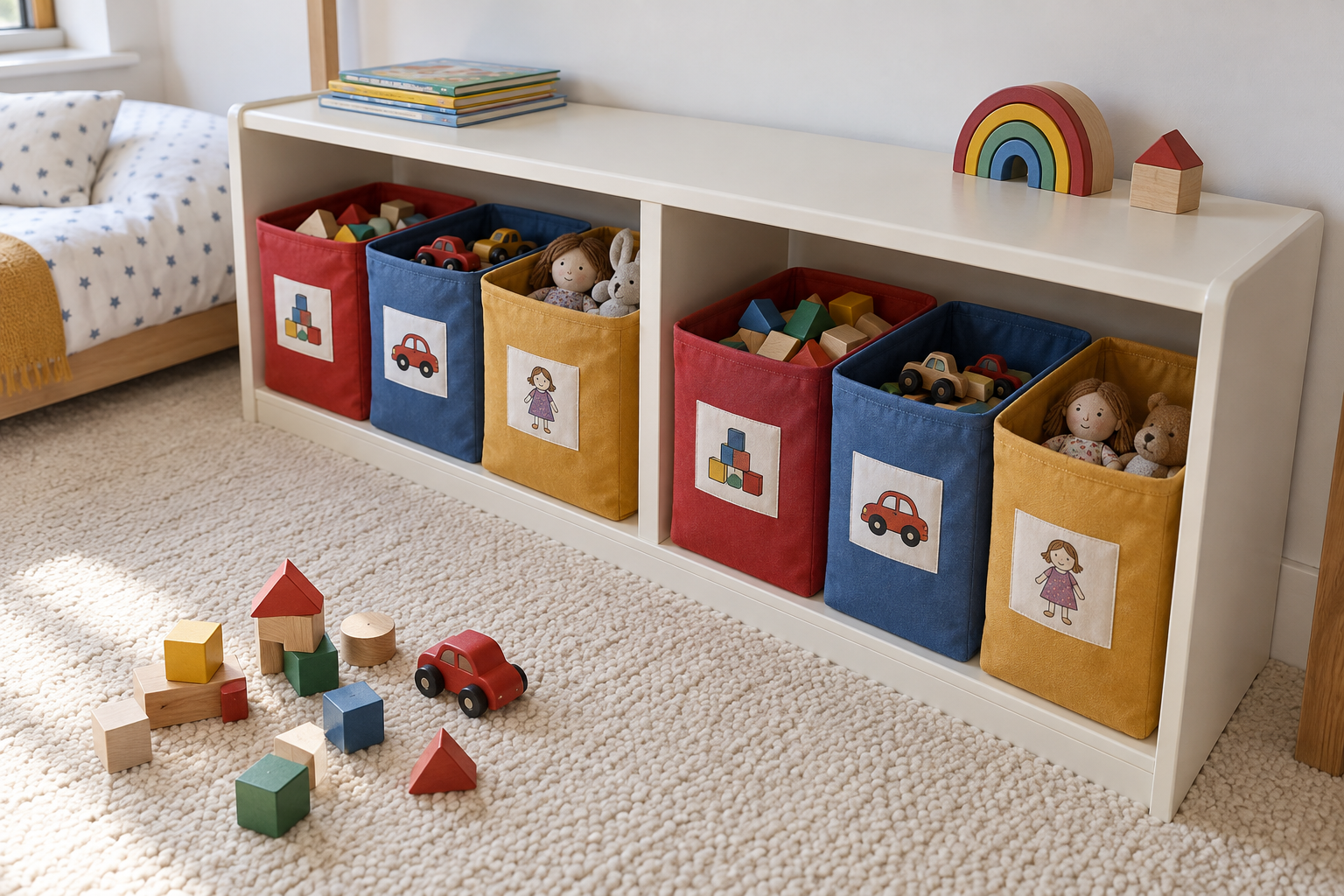
Children put things away when it takes one motion. A low shelf, 24 to 36 inches tall, with lidless bins that slide out, lets a child see what’s inside and drop things back in without lifting a lid. Sort by type (blocks in one, cars in another, dolls in a third), and put a photo or simple drawing of the contents on the front for a child who can’t read yet.
Keep the toys to what the bins hold. When they overflow, put half in a closet and swap them in a month later, which makes old toys feel new again. The shelf will outlast every toy on it and go on to hold books, a speaker, or sports gear.
Choose a Wall Color That Outlasts the Phase
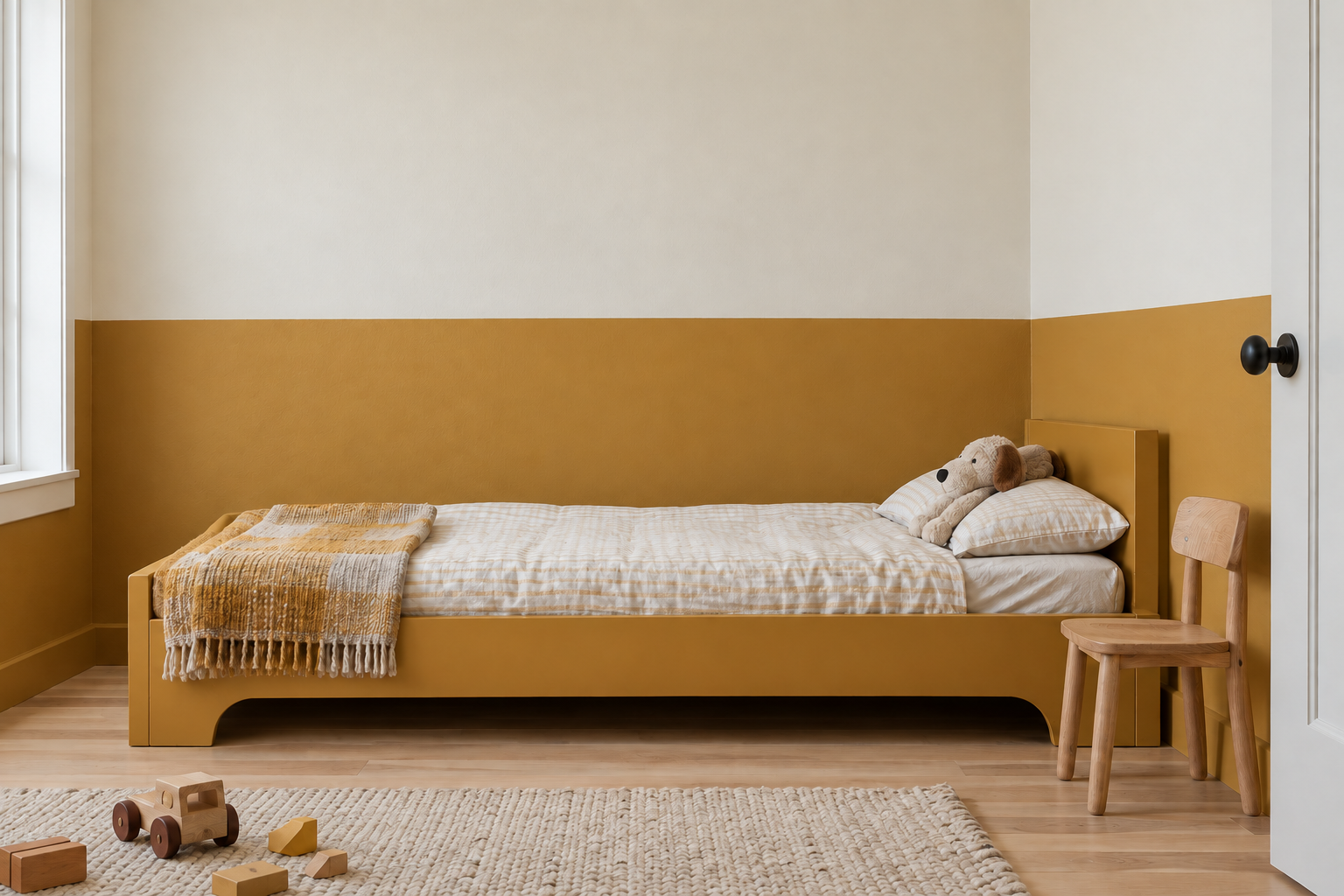
A room painted around dinosaurs at four looks dated by seven, and repainting a bedroom every few years costs a weekend each time. Put the theme into what’s easy to swap, like bedding, a poster, or a lampshade, and choose a wall color the child likes that will still suit the room when the posters change.
The color can be strong. A clear butter yellow, a deep green, or a warm pink holds up longer than a mural because it doesn’t depend on a subject. Use eggshell or satin instead of flat, since crayon, fingerprints, and scuffs wipe off a slightly glossier surface without taking the paint with them, and the difference between sheens explains why. If the marks gather along one band of the wall, paint the lower third in a deeper, tougher color and keep the upper wall lighter.
Put Up a Rail for Their Drawings
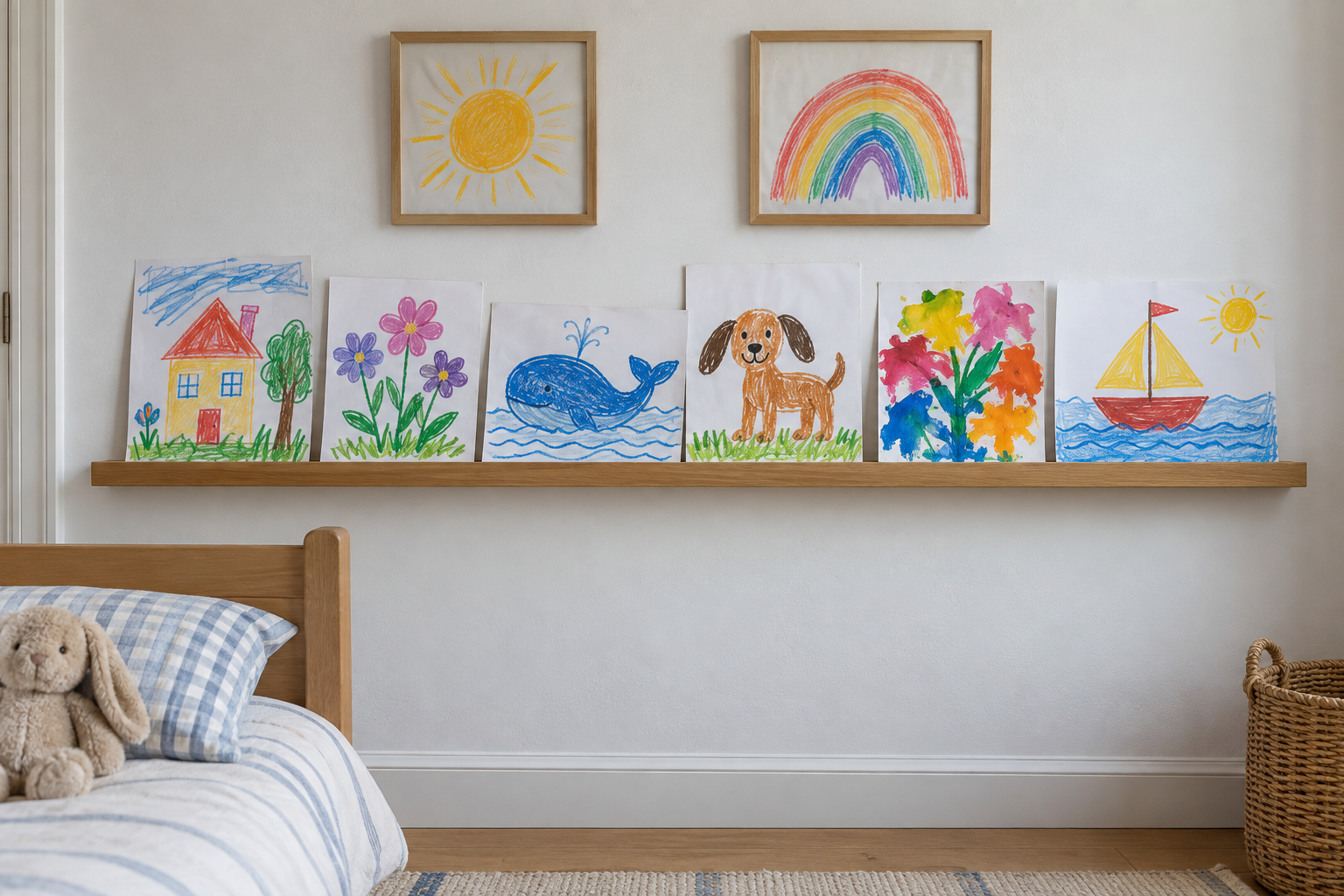
Children’s drawings arrive faster than any wall can frame them. A picture ledge or a taut wire with clips along one wall, at the child’s eye level, lets new pieces go up and old ones come down without nails or tape on the paint. Hung where the child can reach it, it becomes their own wall to arrange.
For a few favorites that stay, use the same simple frame for each so very different drawings sit well together. Hang them lower than you would in a living room, since the viewer is shorter. How high to hang art gives the adult measurements to adjust down from.
Make a Reading Corner With Its Own Light
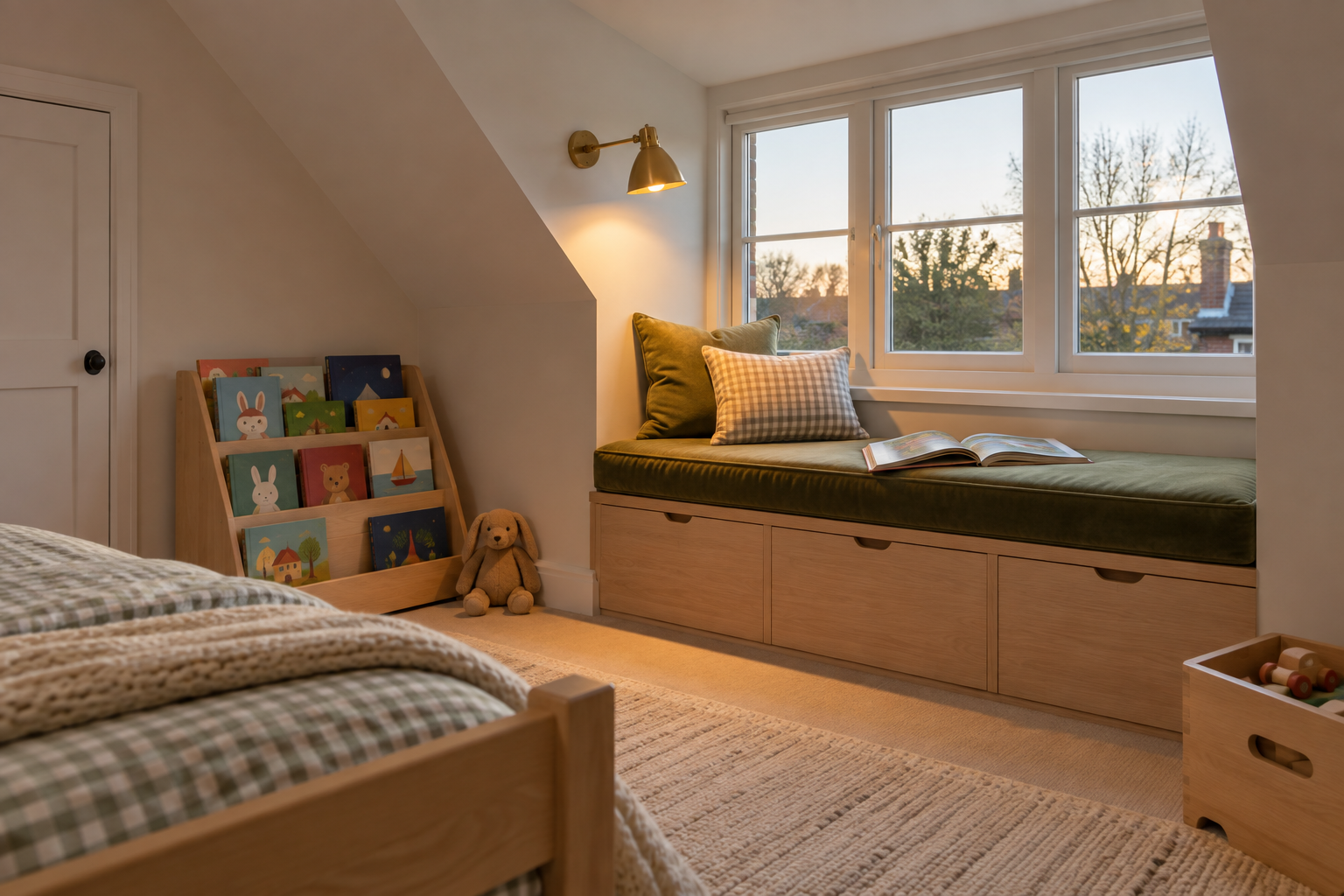
A reading corner can be as small as a floor cushion in the corner of the room. What makes it work is light aimed at the page and books within reach. A wall light or a small lamp beside the seat lights the book directly, while the ceiling light puts the page in the reader’s own shadow. A low shelf or rack with covers facing out gets picture books picked up far more often than a row of spines.
The corner grows with the child. The cushion becomes a window seat or a small armchair, the picture books become novels, and the light stays where it is. In a small room, a wall light over the bed turns the bed itself into the reading corner.
Plan Room for a Desk Before Homework Starts
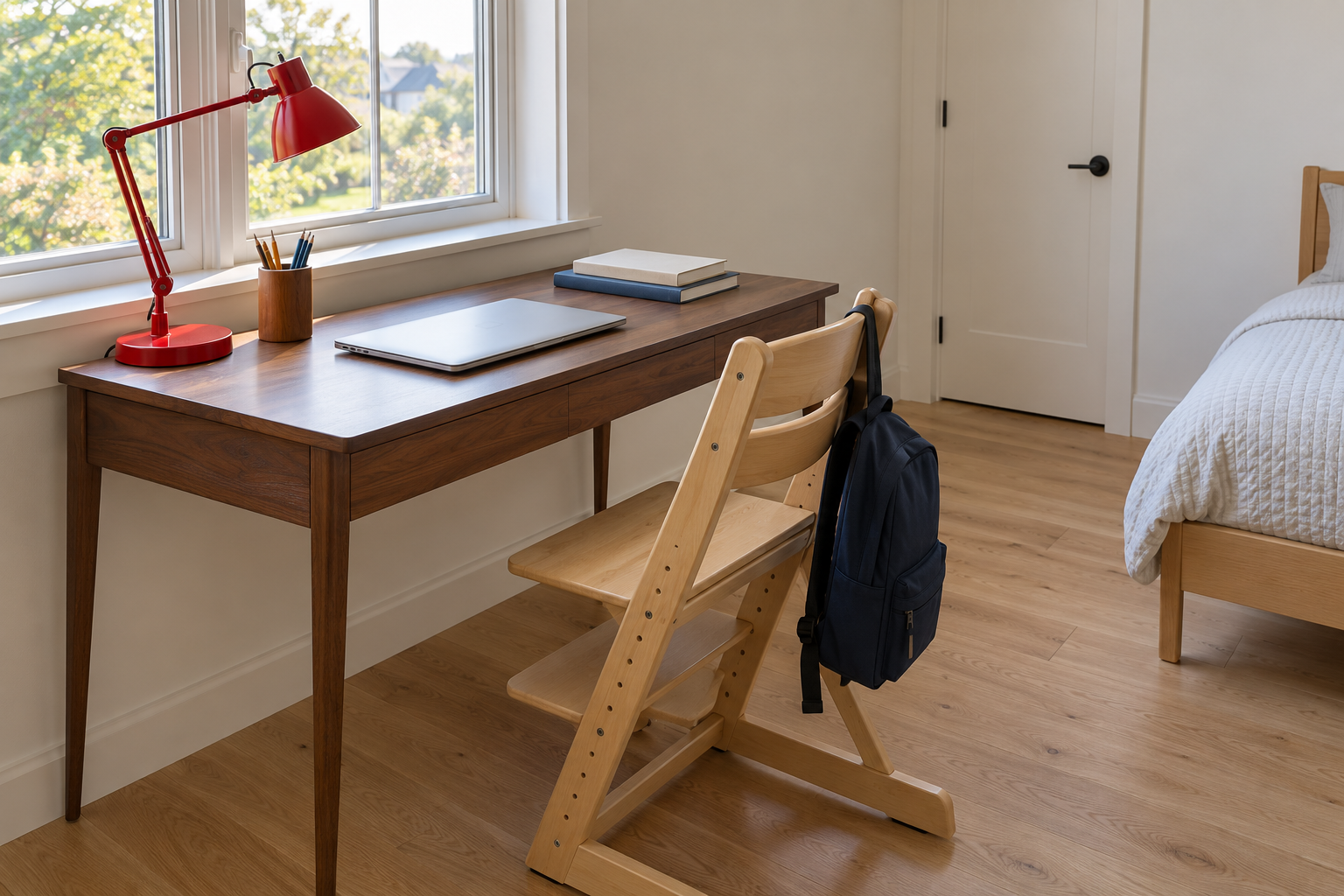
Homework tends to start at the kitchen table, and it stays there if the bedroom has no place for a desk. A desk about 40 to 48 inches wide and 20 to 24 inches deep fits most children’s rooms and holds a laptop, books, and a lamp. Leave about 3 feet clear behind it so the chair can pull out without hitting the bed.
A chair with an adjustable seat, or a footrest under a standard one, keeps a child’s feet flat on something as they grow. Set the desk beside or under a window so daylight falls across the page, and give it a task lamp for winter afternoons. For a teenager’s setup, how much room a desk needs covers depth and clearances in more detail.
Line the Curtains for Early Bedtimes
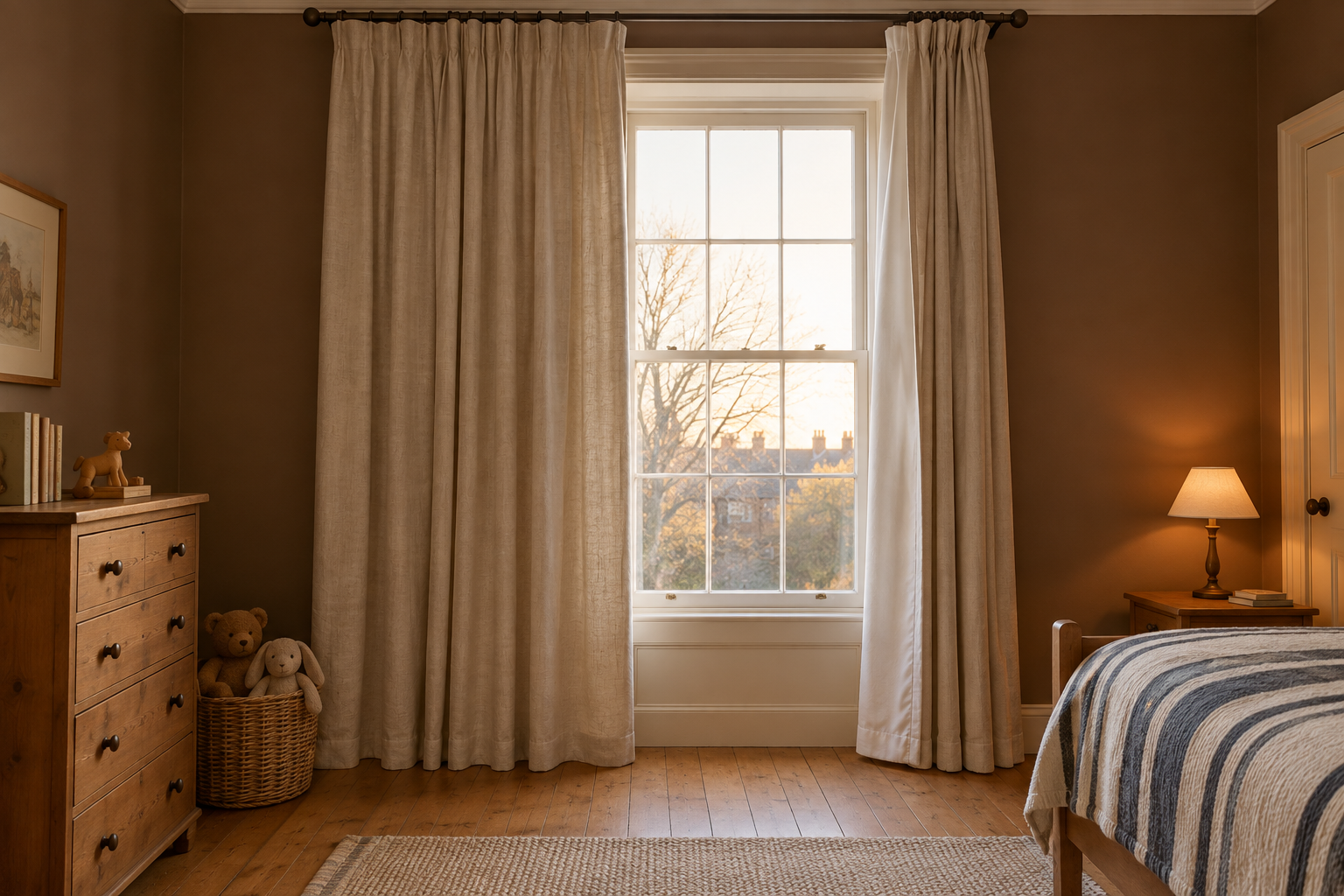
In midsummer, a 7:30 bedtime can come two hours before dark, and summer sunrise comes early too. Blackout lining on the curtains, or a blackout roller shade mounted behind them, keeps the room dim enough to sleep. Light leaks in around the edges, so hang the rod higher and wider than the window frame and let the curtains reach the floor.
Choose the fabric for the room and the lining for the light. Lined linen or cotton in a color that suits the walls lasts through years of other changes, while curtains printed with a character need replacing when the child moves on from it. Around young children, choose cordless shades and blinds, since loose cords are a strangulation risk. Curtains or blinds, room by room weighs the two.
Anchor Tall Furniture to the Wall
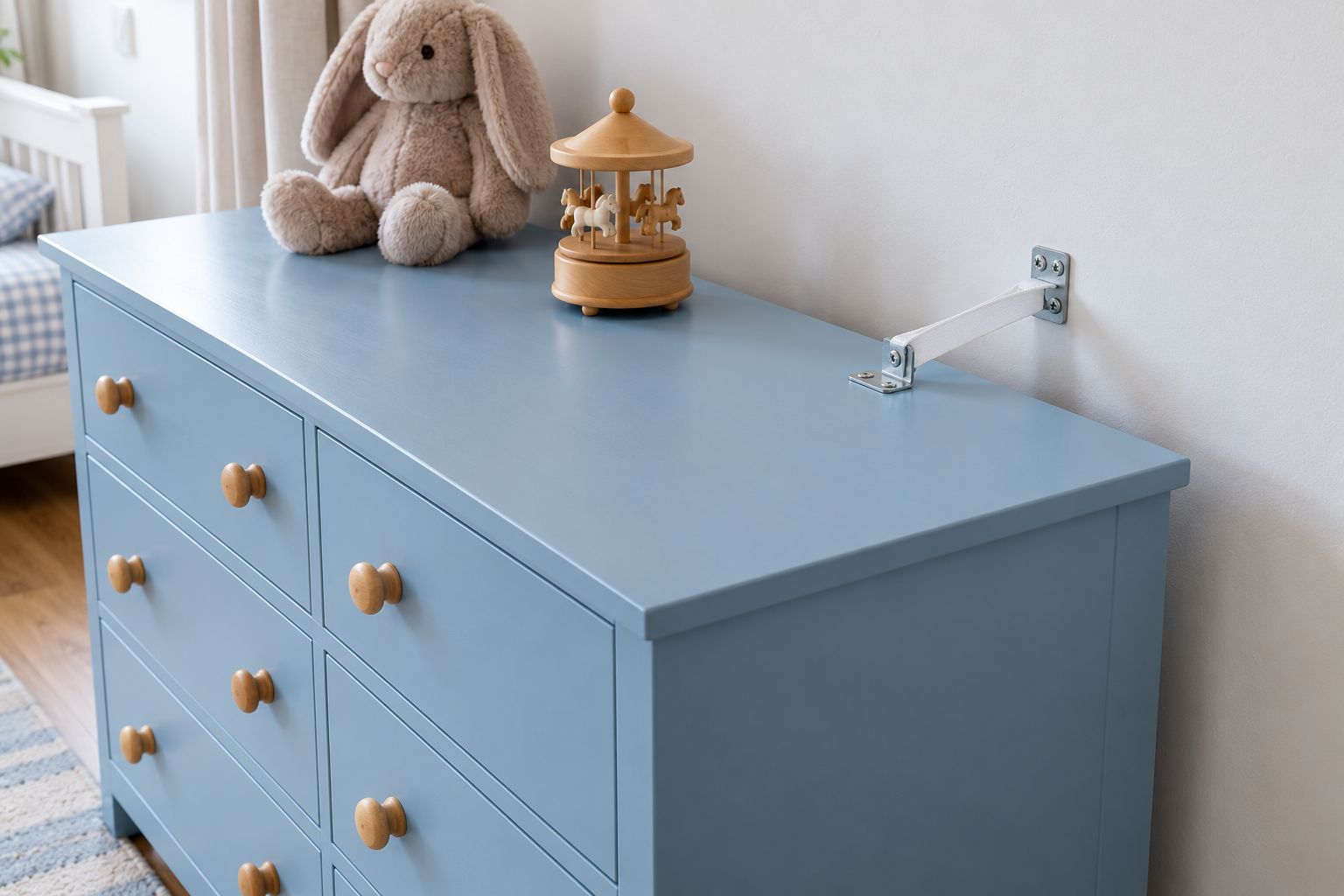
Children climb dressers and bookcases, using open drawers as steps, and a tall piece can tip forward onto them. Fix every dresser, bookcase, and wardrobe to the wall with the anti-tip kit that came with it, or a furniture strap, screwed into a stud or into anchors suited to the wall. It takes a few minutes per piece and matters most in a child’s room.
Put heavy things in the lowest drawers and on the lowest shelves. Keep a television off the top of a dresser. If there’s a TV in the room, mount it on the wall or set it on a low, wide stand that’s anchored too. Keep favorite toys off high shelves, since what a child wants is what they climb for.
Give Each Child a Side in a Shared Room
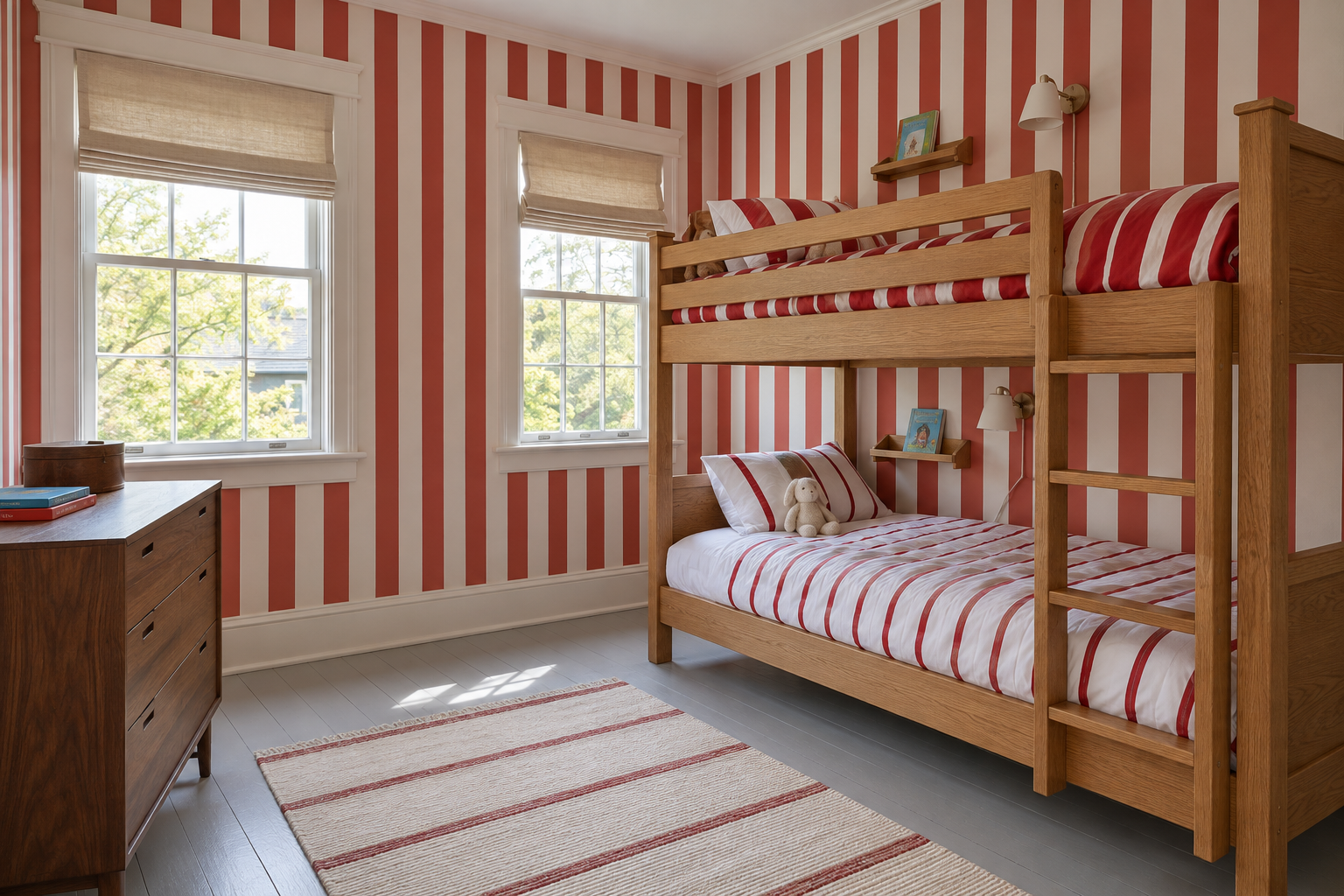
A shared room works better when each child has something in it that’s clearly theirs. That can be a bed on each wall with a shelf and a light above it, or each level of a bunk bed with its own small shelf and wall light. Bedding in the same two colors, reversed, marks each side without splitting the room in half.
Bunk beds save floor, but the top bunk isn’t for children under 6. It needs guardrails on both sides, even against a wall, and a ladder fixed to the frame. Check the ceiling as well. A child sitting up on the top bunk should have about 30 inches or more above their head.
Pick a Rug You Can Wash or Replace
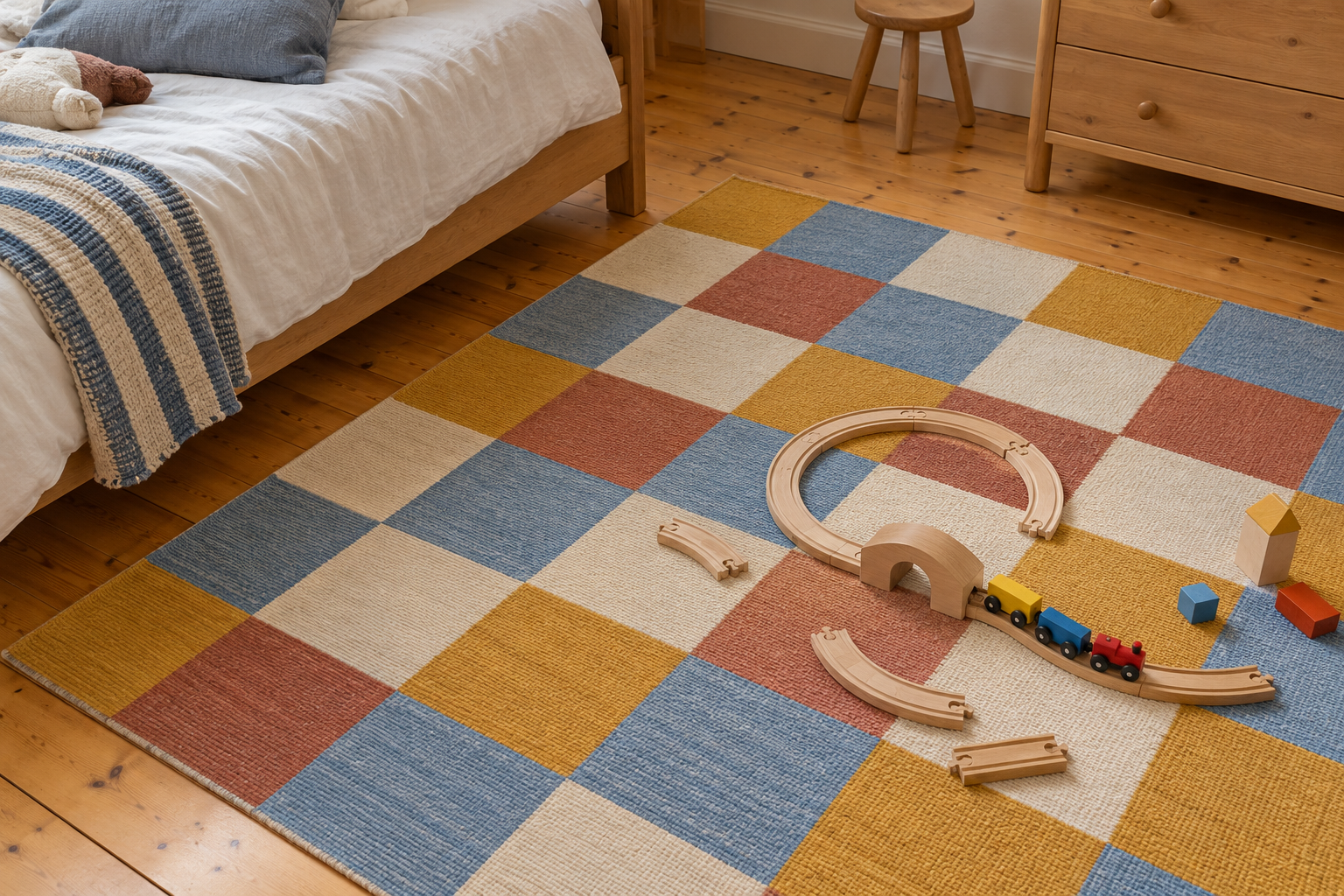
A rug softens falls and warms a hard floor for play, and in a child’s room it will take juice, paint, and worse. A washable rug, or a cotton or wool flatweave cheap enough to replace, suits this better than a thick pile that needs professional cleaning. Keep it low, with no long pile for small pieces to vanish into, and put a pad underneath so it doesn’t slide.
Size it to the play space more than to the bed. A rug that runs from beside the bed into the middle of the room gives soft floor to step onto in the morning and a clear area to spread out on. Where a rug goes in a bedroom covers the other layouts.
Keep the Middle of the Floor Open
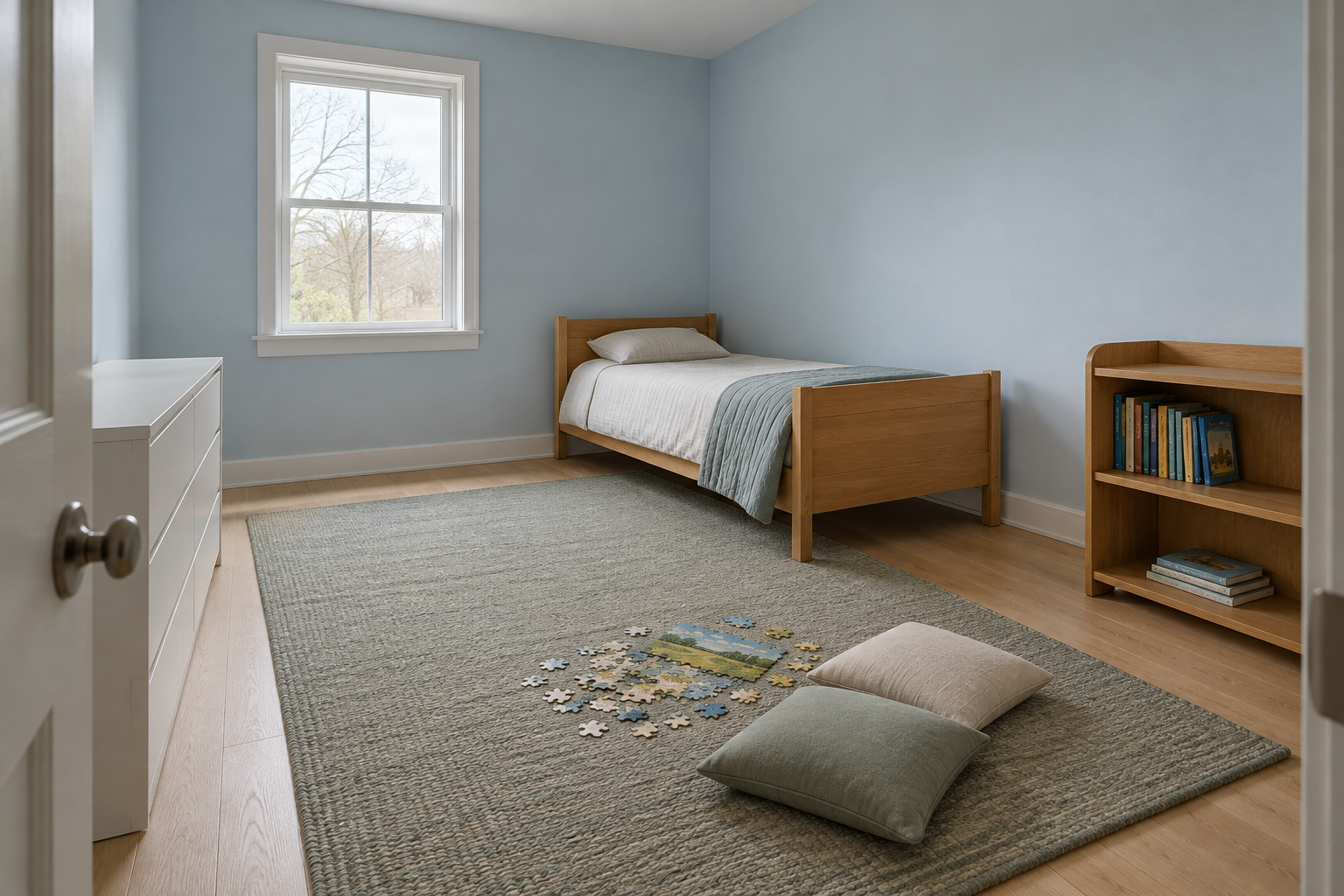
Children play on the floor, and furniture in the middle of the room leaves them nowhere to spread out. Put the bed, dresser, and shelves against the walls, and in a small room push the bed into a corner with its long side on the wall. That frees the most floor, and a young child sleeps with a wall on one side.
Later, the same open floor is where friends sit, and a couple of floor cushions or a beanbag is all it needs. The layout doesn’t have to change, only what’s on the rug. Laying out bedroom furniture walks through arrangements for other room shapes.