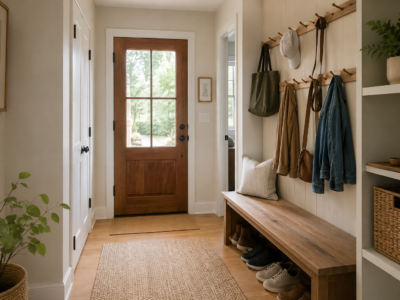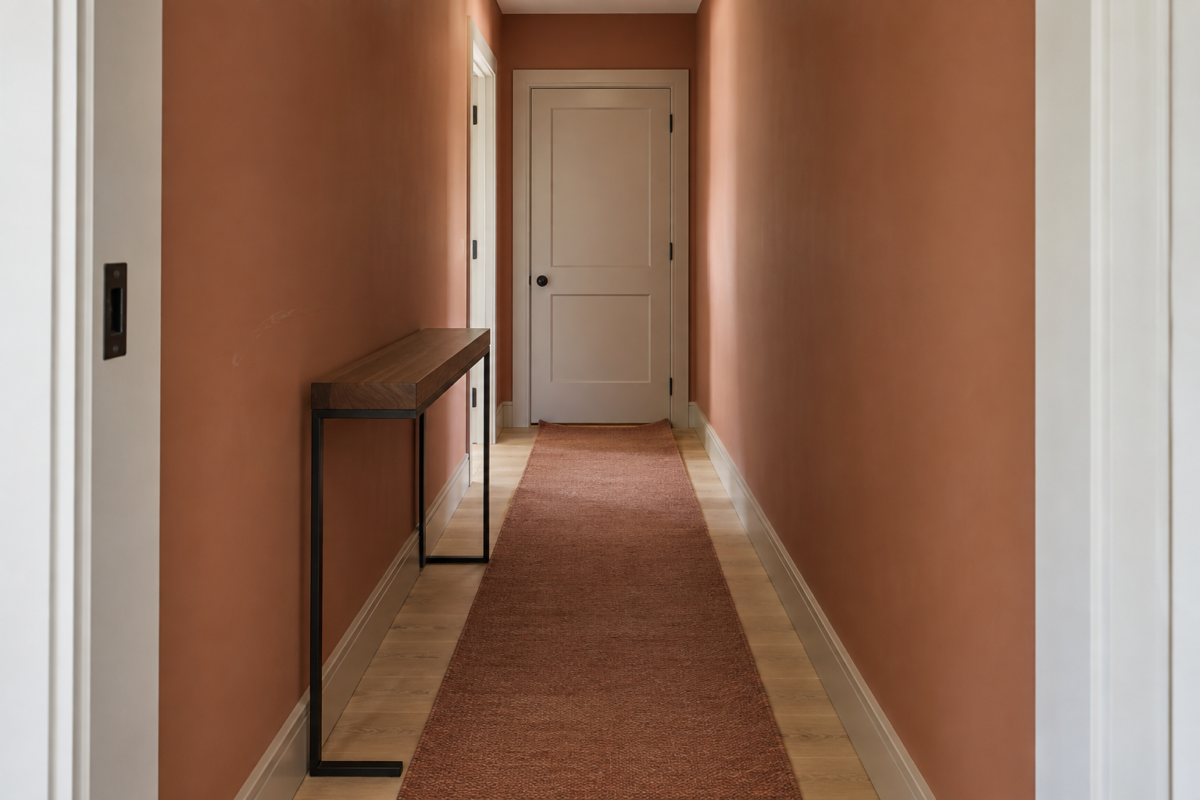
Most console table advice leads with height and length, since those are the numbers a retailer lists first. Depth barely gets a mention, and depth is usually the number that decides whether the table works at all. A table that is two or three inches deeper than the hallway can spare turns a walkway into something people sidestep every day, no matter how good the proportions look in a listing photo.
This is a clearance problem before it is a styling one, and a scale problem no generic chart can solve, because a narrow entryway in one house measures nothing like a narrow entryway in another. Once the shoes-keys-mail scramble at the door is sorted, a console table is usually the next thing people want to add, and the piece most likely to get sized by its length first instead of the dimension that matters most.
Depth Decides Whether the Table Works at All
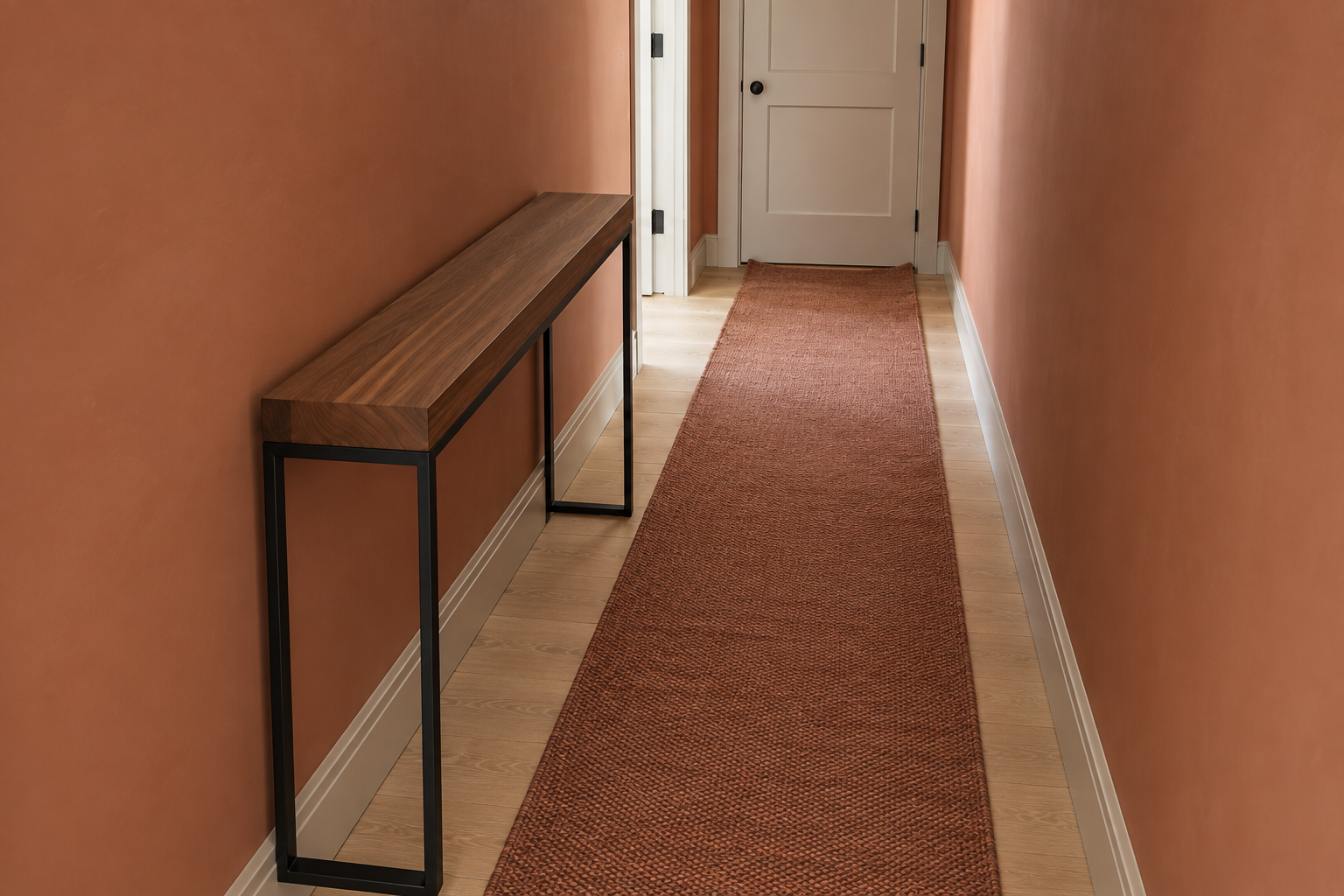
Most console tables run somewhere between 12 and 18 inches deep, and that range is a reasonable planning guideline, not a target to hit blindly. The number that actually matters is what is left over: the hallway’s own width, minus the table’s depth, minus a comfortable margin for a person to walk past without turning sideways.
Measure the hallway itself before measuring tables. A comfortable walking path is usually at least 24 to 30 inches wide as a starting point, though a hallway that’s already tight may only allow less, and that is the real number to protect. If an 18-inch-deep table leaves less than that, a 12-inch table earns its place even if the wider option looks more substantial in a photo. Depth is the dimension a chart cannot solve for a specific house, because it depends entirely on the hallway doing the sizing, not the table.
Match the Length to the Wall Section
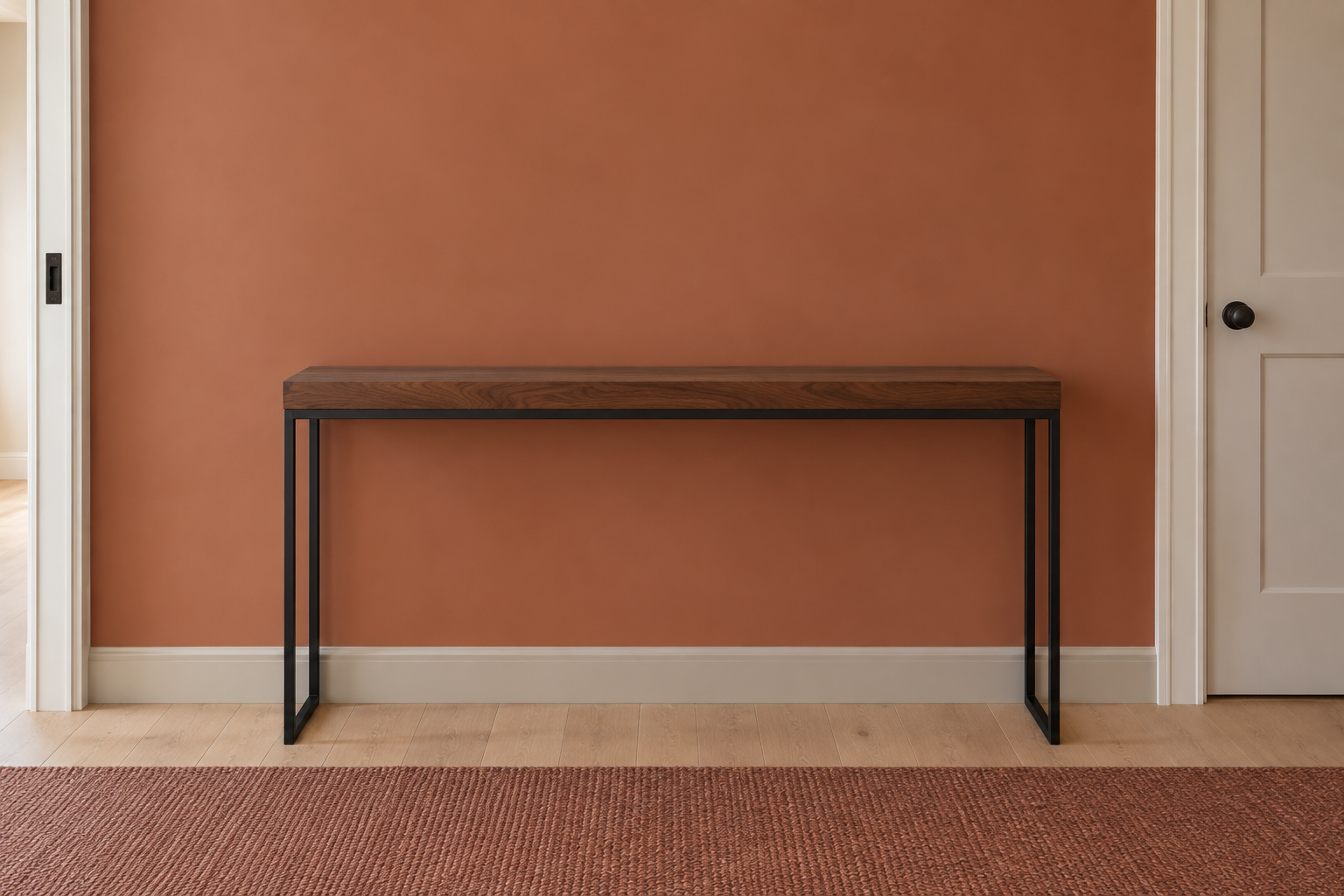
Once depth is settled, length is a proportion question rather than a clearance one. A console table that runs roughly two-thirds the length of the wall section it sits against tends to look intentional, neither lost against a long wall nor crowding a short one.
The wall section is the operative phrase. Measure the usable stretch of wall, not the whole wall, since a door casing, a light switch, or a thermostat can eat several inches nobody accounts for until the table arrives. A table sized for an 8-foot wall with a door swing eating into it will either overhang the doorway or sit awkwardly off-center. Check the real, uninterrupted wall section first, then let two-thirds of that number set the length.
Height Is the Easiest Number to Get Right
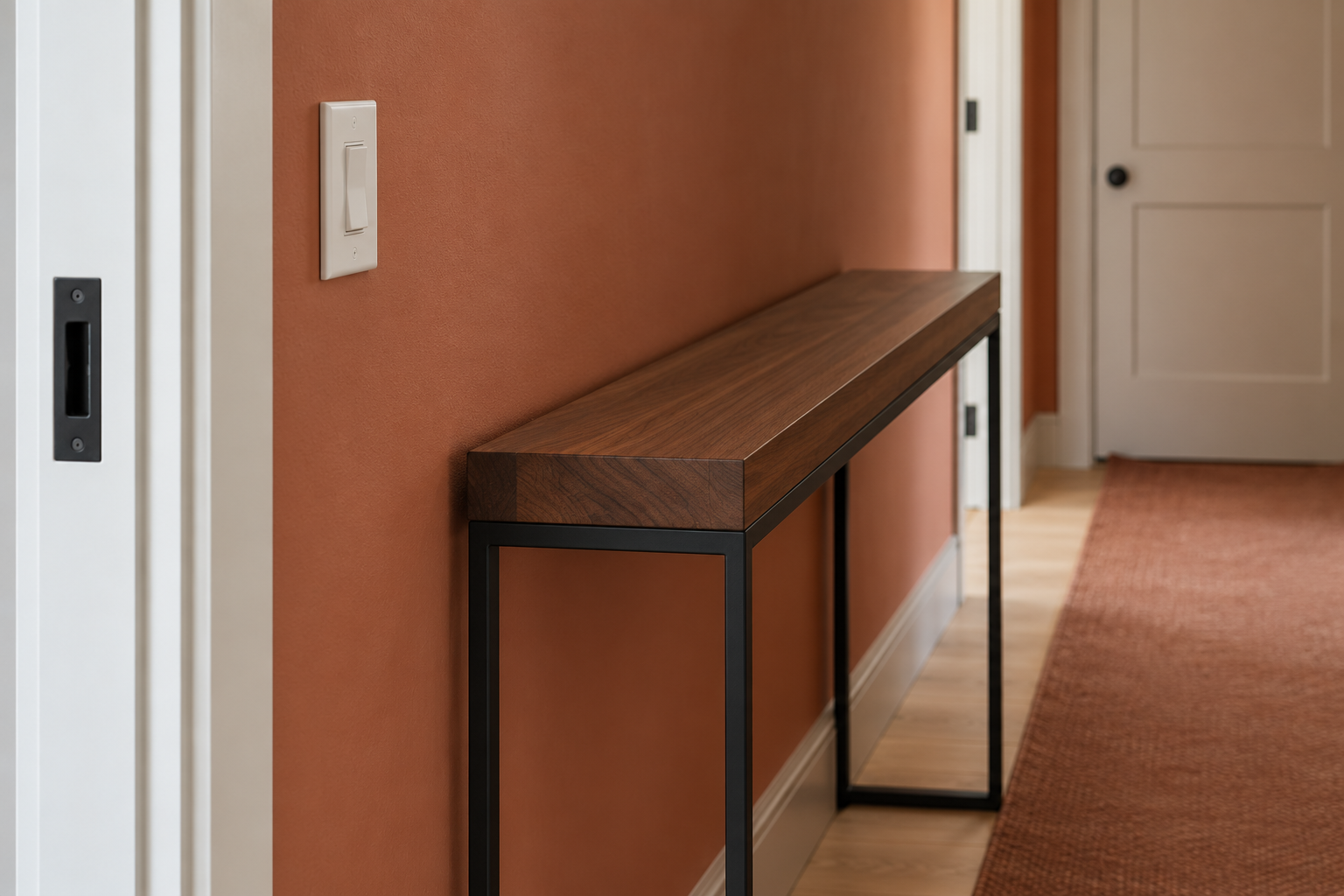
Console tables mostly land between 30 and 34 inches tall, and within that range, height rarely causes the problems depth and length do. It is close enough to countertop height that almost any table in that window reads as correctly scaled, whether the room is formal or plain.
Height starts to matter more once something is going above the table. Getting that hanging height right is its own separate decision, one that follows from wherever the console’s own top lands, not the other way around.
Check depth against the real hallway first, length against the real wall second, and treat height as the one number likely to already be fine. That order runs backward from how most people shop for the piece, and it is the order that prevents a console table from becoming the thing everyone in the house learns to walk around.
Frequently Asked Questions
Can a console table be too shallow to be useful?
Yes, at some point. Below roughly 10 to 11 inches deep, a table mostly stops being able to hold anything beyond a lamp or a small tray without things overhanging the edge. In a hallway that narrow, that tradeoff is usually still worth it: a shallow table that clears the walkway does its job, while a deeper one that blocks it does not, regardless of how much more it can hold.
What if no console table fits the space?
That happens in some hallways, and it is a legitimate outcome, not a failure to shop harder. A wall-mounted floating shelf or a slim ledge, with no legs or frame taking up floor depth at all, solves the same landing-spot need without asking the hallway for clearance it does not have.
Does the table need to match the width of the front door?
No. The door’s width is not the relevant measurement. What matters is the wall section the table sits against, which is often a different length than the door itself, especially once a door swing or trim is accounted for.