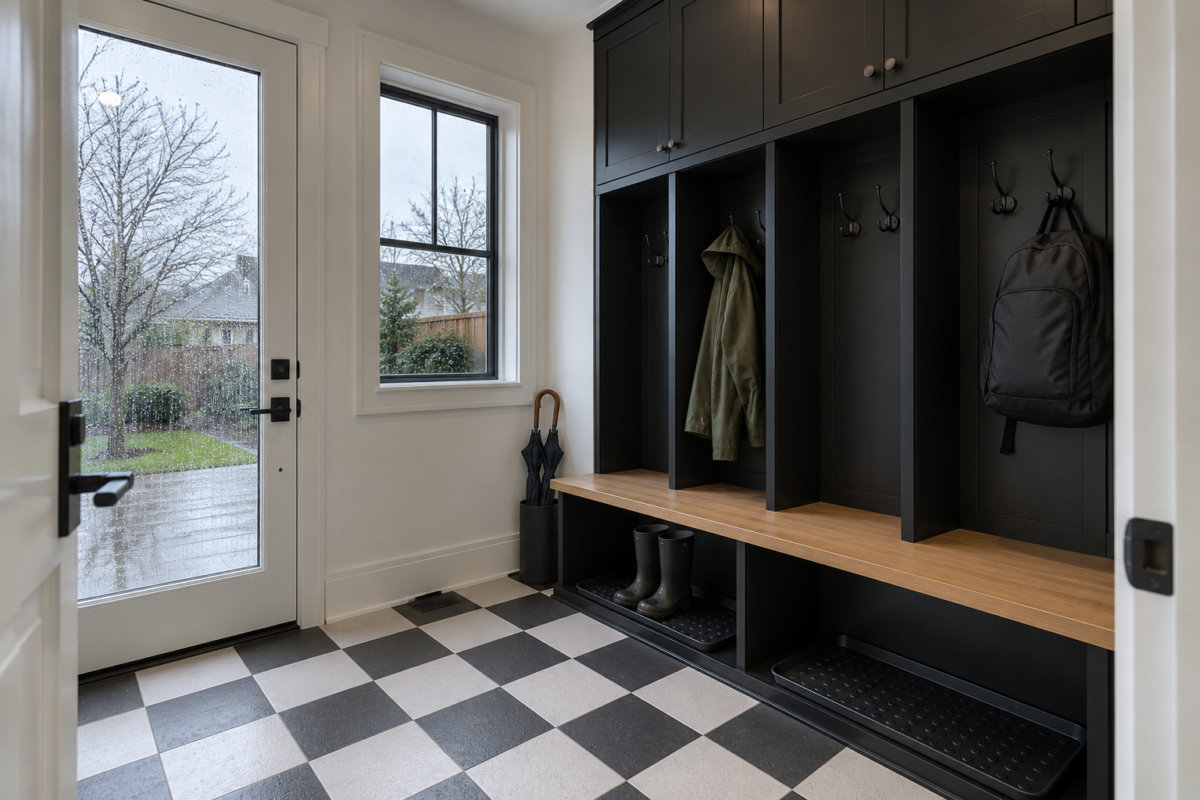
By late winter, the floor inside the back door shows whether a mudroom works. A room that doesn’t has a gray line of dried salt across the tile, a heap of boots with no pairs in it, and coats piled on the bench because every hook is already taken. Whatever has no place near the door ends up down the hall.
That makes a mudroom mostly a matter of surfaces and spacing: a floor that can take water, a bench at the right height, hooks far enough apart for wet coats to dry. The ideas below start with the walkway, since everything else has to fit around it, then work from the floor up to the ceiling light. For a front hall with no room to build in, these entryway ideas are a better place to start.
Measure the Walkway Before Building Anything
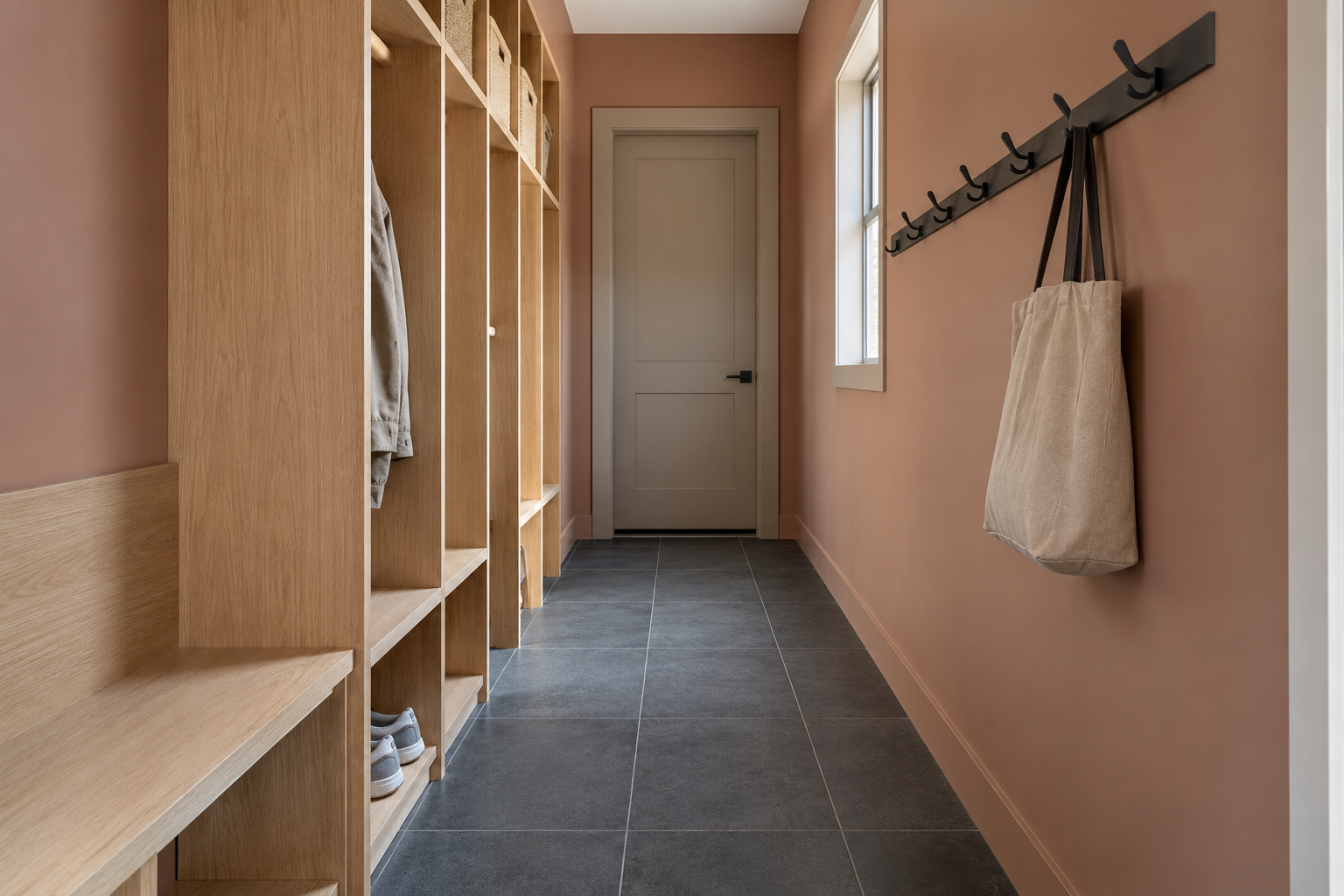
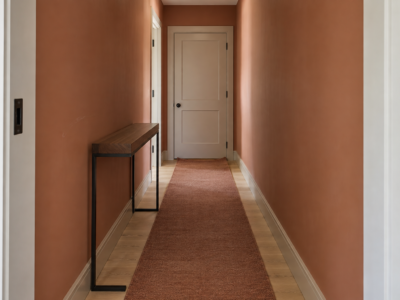
Most mudrooms put the bench and lockers along one wall and leave a path along the other. Built-ins run about 15 to 20 inches deep, and the path needs about 36 inches clear for someone carrying bags, more if two people come in at once. That makes a comfortable mudroom roughly 5 feet wide. In a narrower room, build shallower, with 12-inch cubbies on the wall and a bench only near the door, where people sit to take boots off.
Check the doors before settling the layout. The exterior door and the door into the house each need their whole swing clear of the bench and the boot tray. A bench placed under a door’s swing gets hit every time someone comes in.
Lay a Floor That Can Take Water and Grit
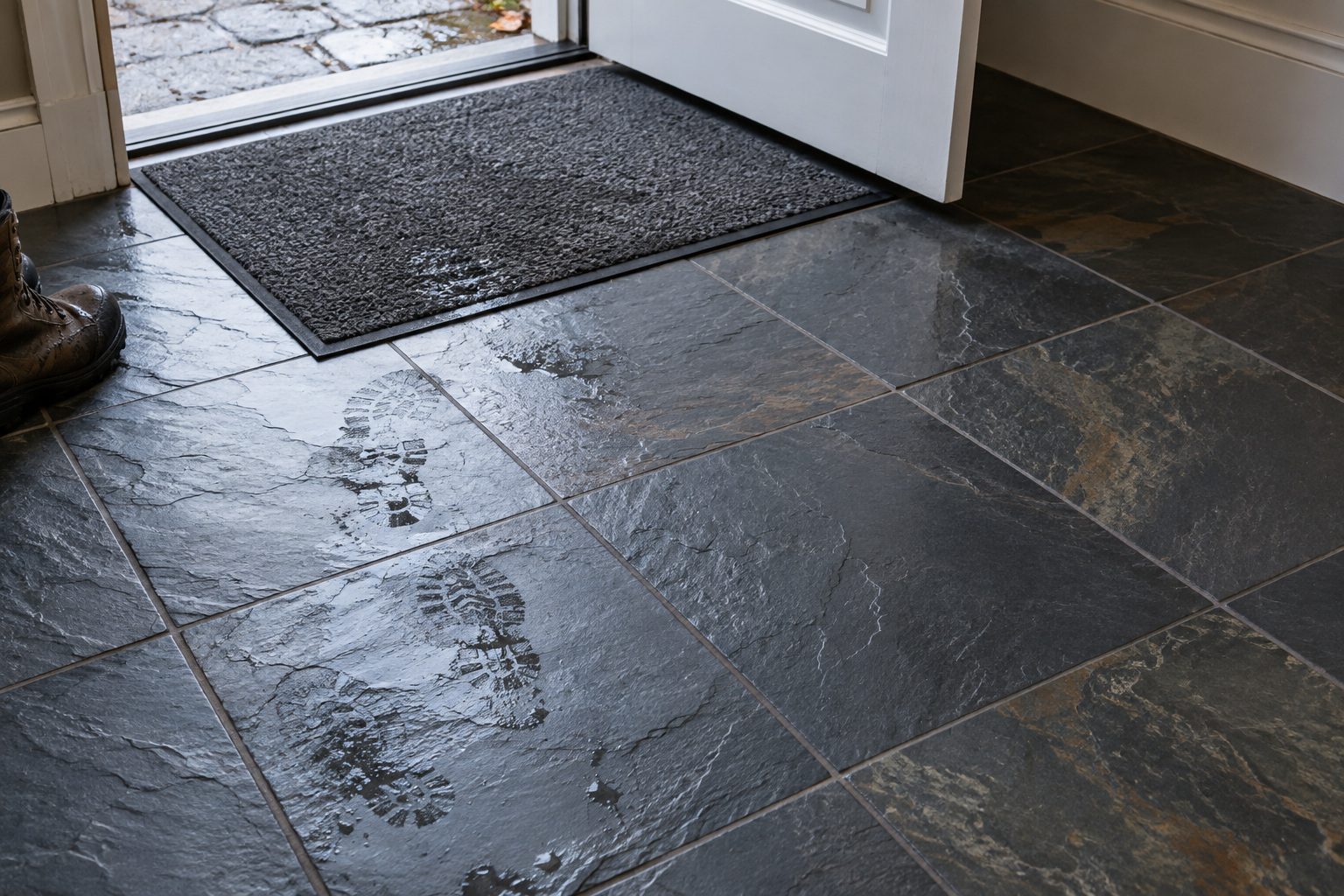
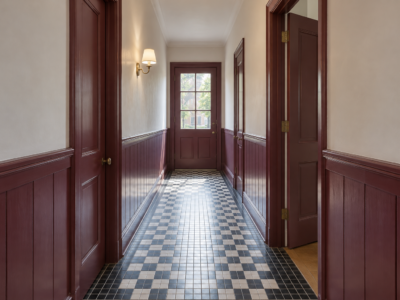
Snow, road salt, sand, and rainwater come in on boots and sit on the floor until they dry. Porcelain tile, slate, sealed concrete, and good vinyl can take that. Solid wood and laminate swell and stain when water stands on them for hours. A textured or honed surface is less slippery when wet than a polished one.
Pale grout shows every trace of grit by the end of the first winter, and mid or dark grout hides it, which is why grout color changes a floor as much as the tile does. Put a rough mat outside the door and an absorbent one inside, so most of the grit and water stops in the first two steps.
Stand Boots in a Tray That Holds the Water
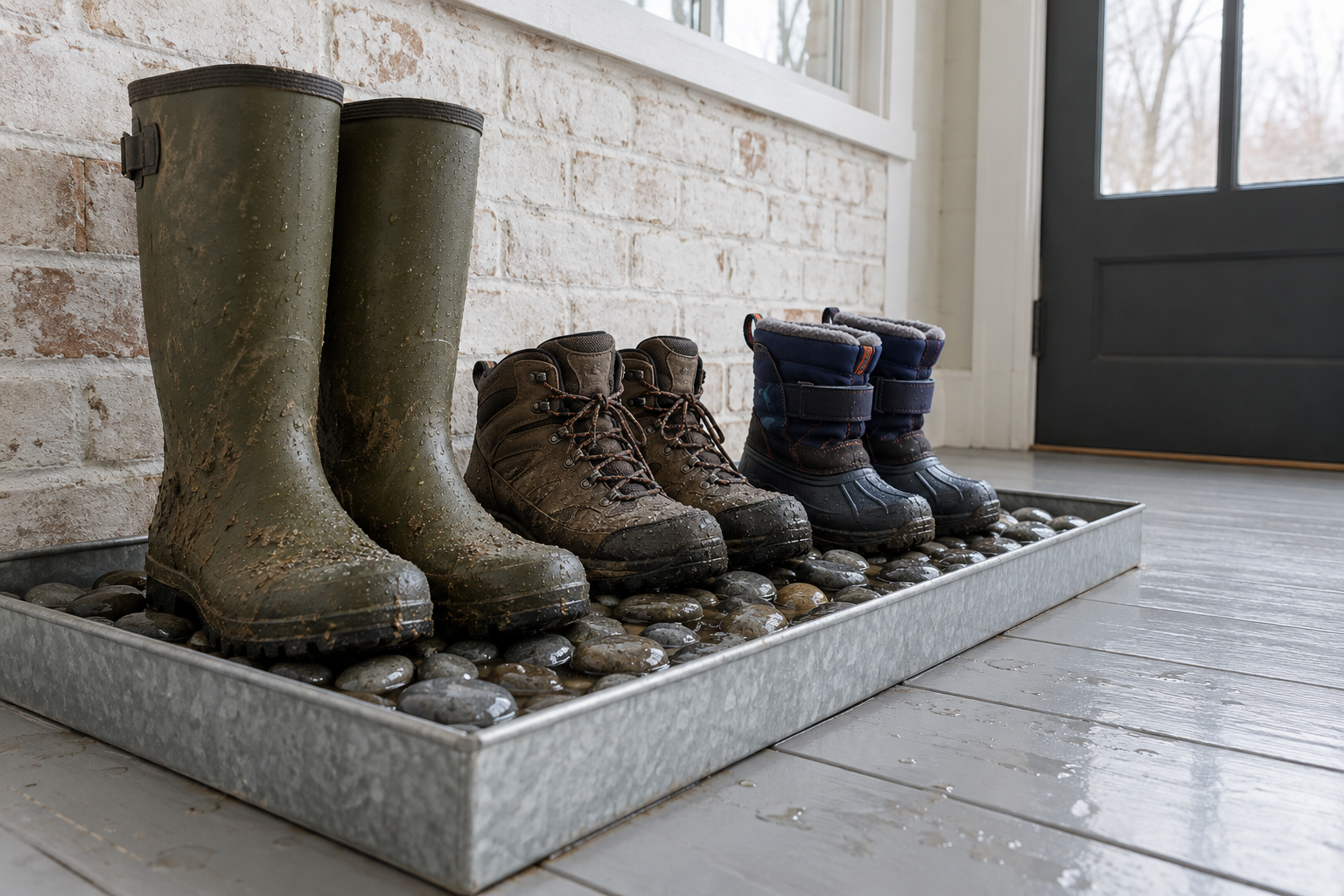
Wet boots on bare tile leave a puddle that spreads under the next pair. A boot tray with a raised rim holds the meltwater, and a slatted rack or a layer of smooth river stones inside it lifts the boots out of the water so they can dry. Put the tray right where boots come off, under the bench or beside the door.
Size it for the worst week of winter. One tray for every two or three people is usually enough, and trays that slide under the bench keep the walkway clear.
Build the Bench at Chair Height
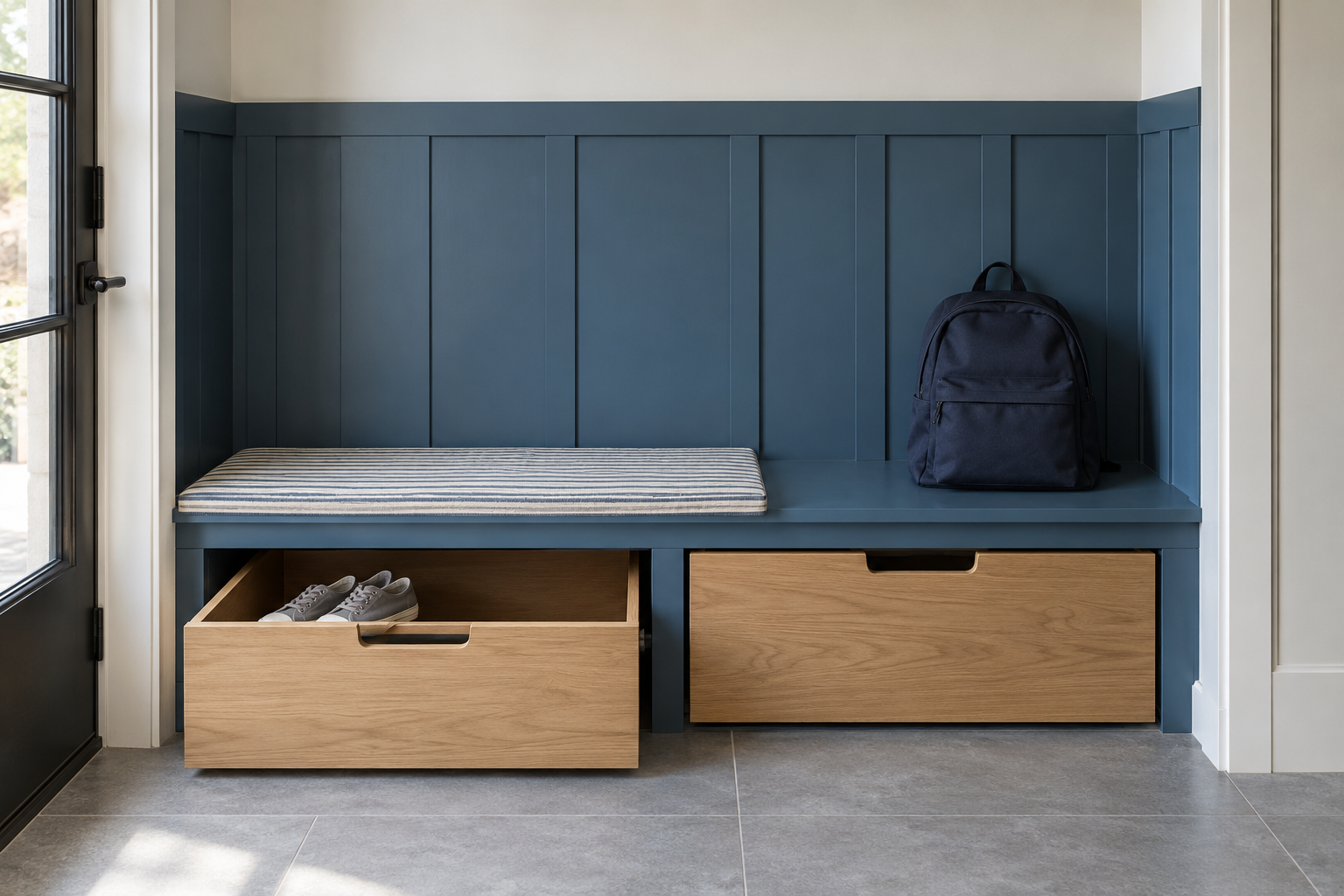
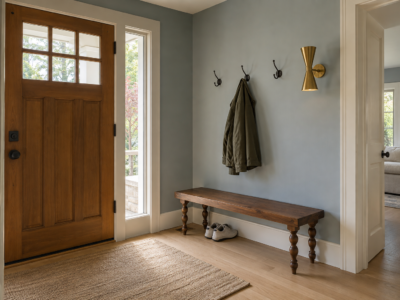
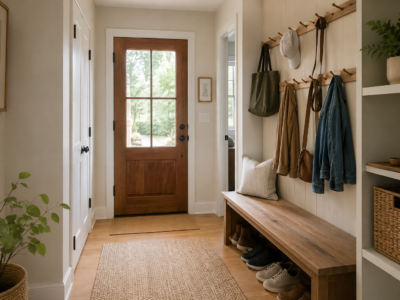
People sit on a mudroom bench for a minute at a time, to pull boots on and off. It should be about the height of a dining chair, 17 to 19 inches, and 15 to 18 inches deep. Much lower, and an adult struggles to stand up with a bag in hand. Much deeper, and it eats into the walkway.
Leave the space under the seat open for boot trays and wet shoes, or fit it with pull-out bins for dry ones. Closed cupboards under the seat trap damp. A cushion makes the bench more comfortable and also soaks up water and dirt, so choose one with a removable cover that can be washed, or leave the wood bare.
The wall behind the bench takes muddy backs, bags, and boot heels. Flat paneling, tile, or an eggshell or semigloss paint up to about 4 feet wipes clean where flat paint scuffs and stains.
Space the Hooks So Wet Coats Can Dry
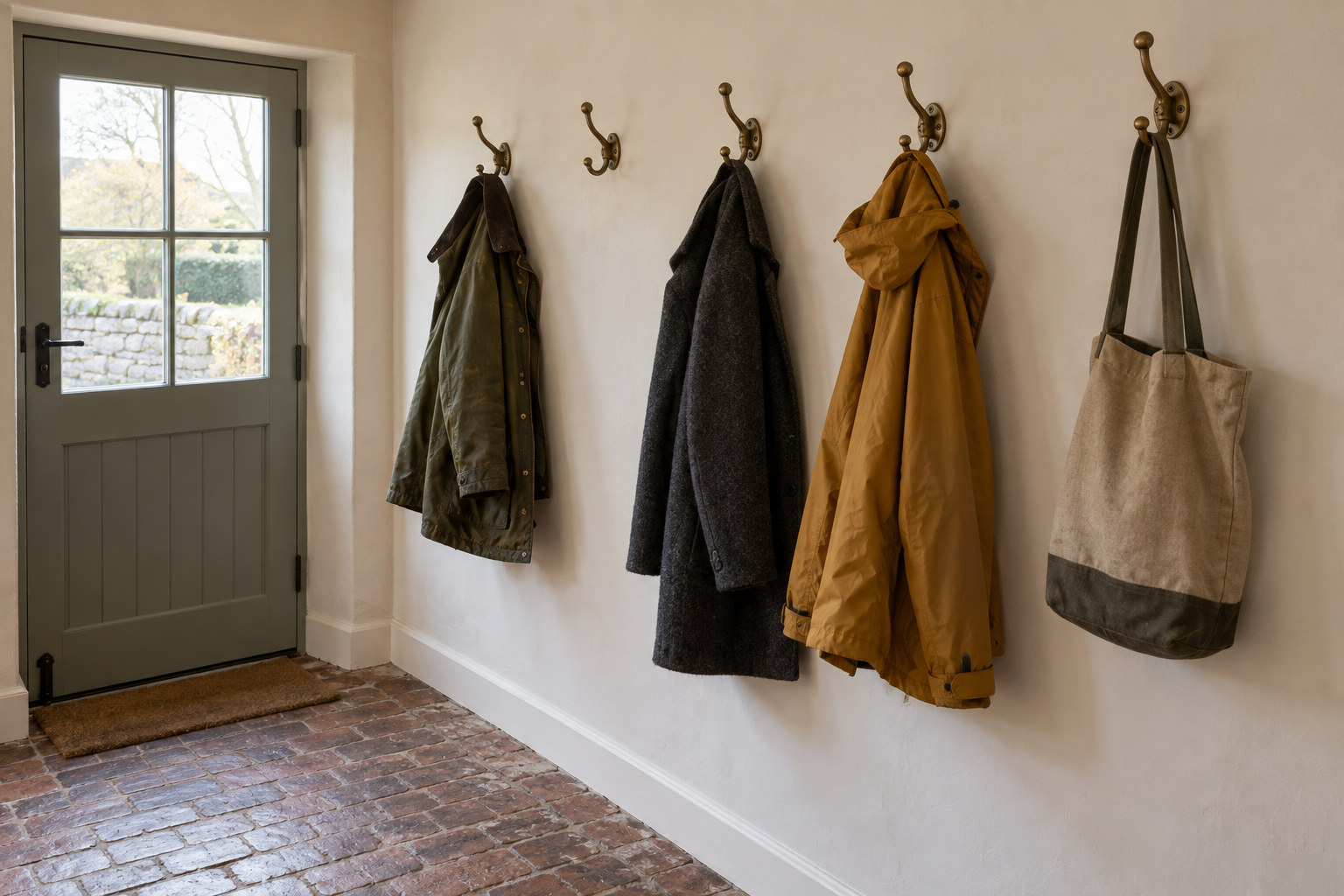
A wet coat pressed between two others stays wet and dampens the coats on either side. Space hooks about 8 to 12 inches apart so coats hang without touching, and give each person two, one for a coat and one for a bag. Keep to a single row where the wall allows it. Two rows of hooks look tidy when empty and end up with coats three deep.
Height matters as much as spacing, with adult hooks around 5 feet and a lower row for children. Hooks at two heights covers the same question for a front entry.
Assign Each Person a Locker
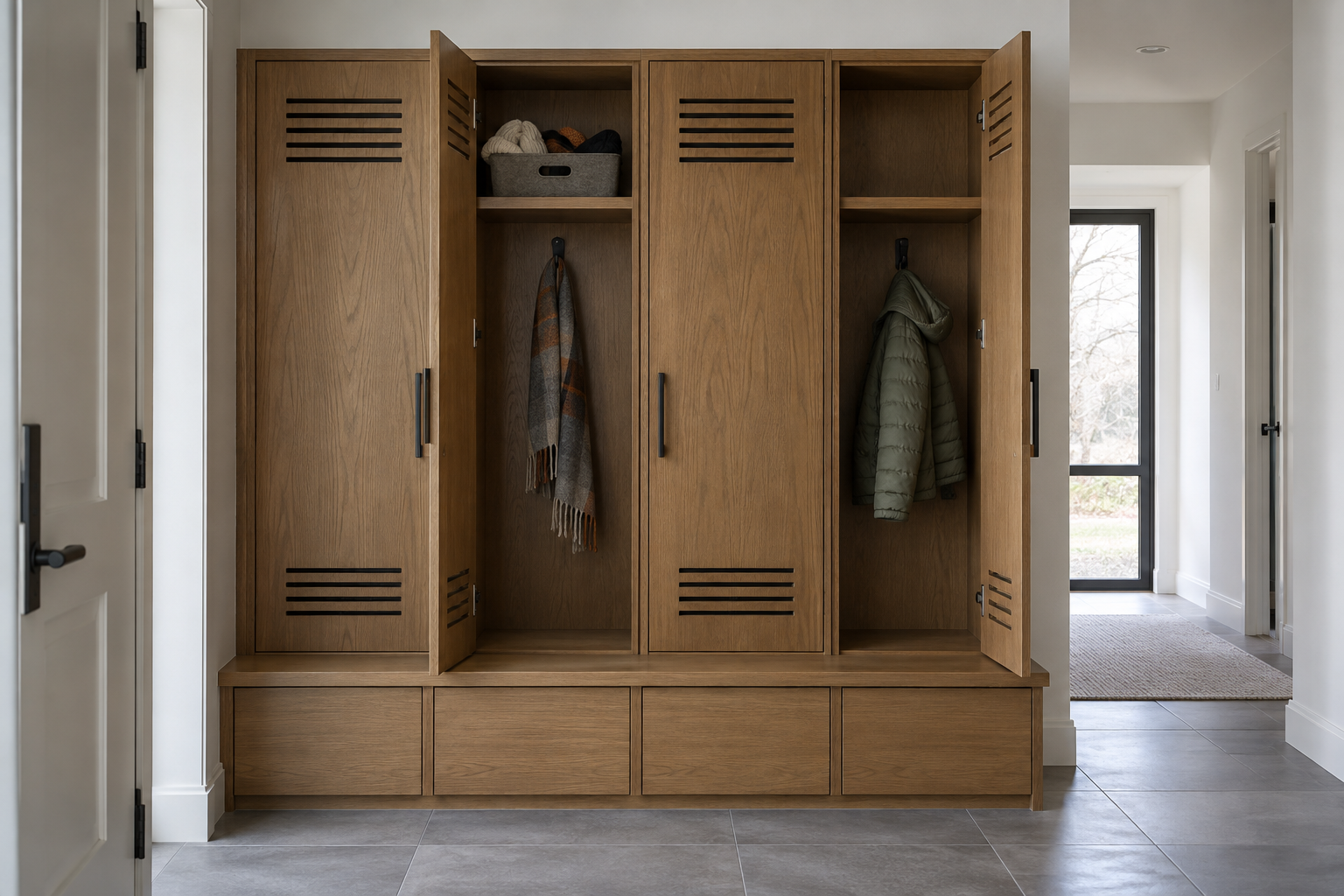
Open lockers, one per person and about 15 to 18 inches wide, turn a shared pile into several small ones. Each locker gets a hook or two, a shelf at the top for hats and gloves, and its own stretch of bench below. When a glove goes missing, there’s only one place to look.
Leave the fronts open, or choose doors with vent slots. A solid door closed over a damp coat traps the moisture, and the cabinet starts to smell. Young children find their own locker faster with a color or a picture on it than with a name.
Add a Sink If the Plumbing Is Close
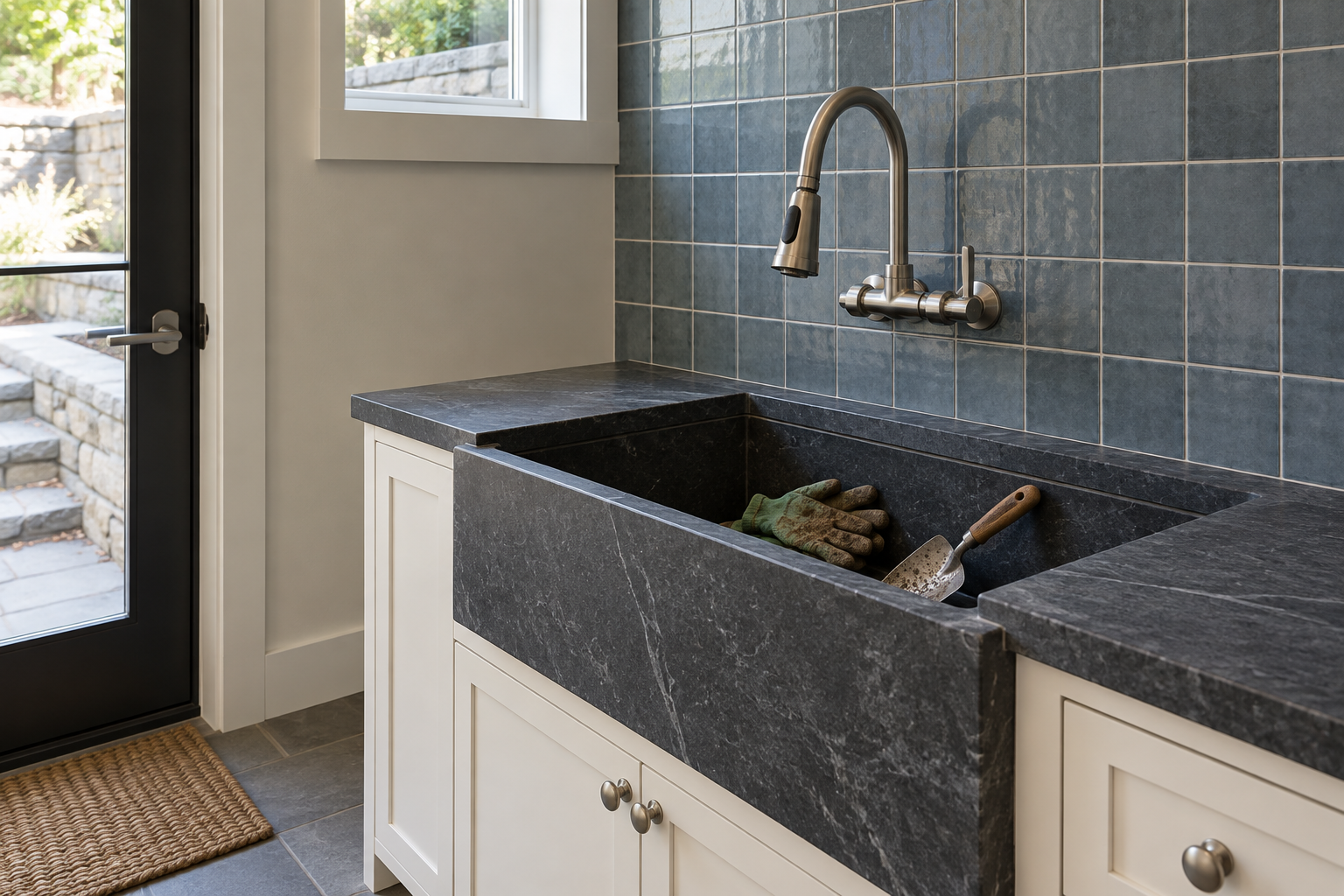
A utility sink by the back door takes muddy hands, garden tools, and a dog’s paws before any of them reach the kitchen. It’s most worth adding when the mudroom shares a wall with a kitchen, bathroom, or laundry, since bringing a supply and drain from across the house costs far more. A deep single bowl with a tall faucet or a pull-down sprayer handles boots and buckets that won’t fit under a normal tap.
When the mudroom is also the laundry, one sink serves both, and organizing a laundry room covers the layout around it.
Set Up a Corner for the Dog
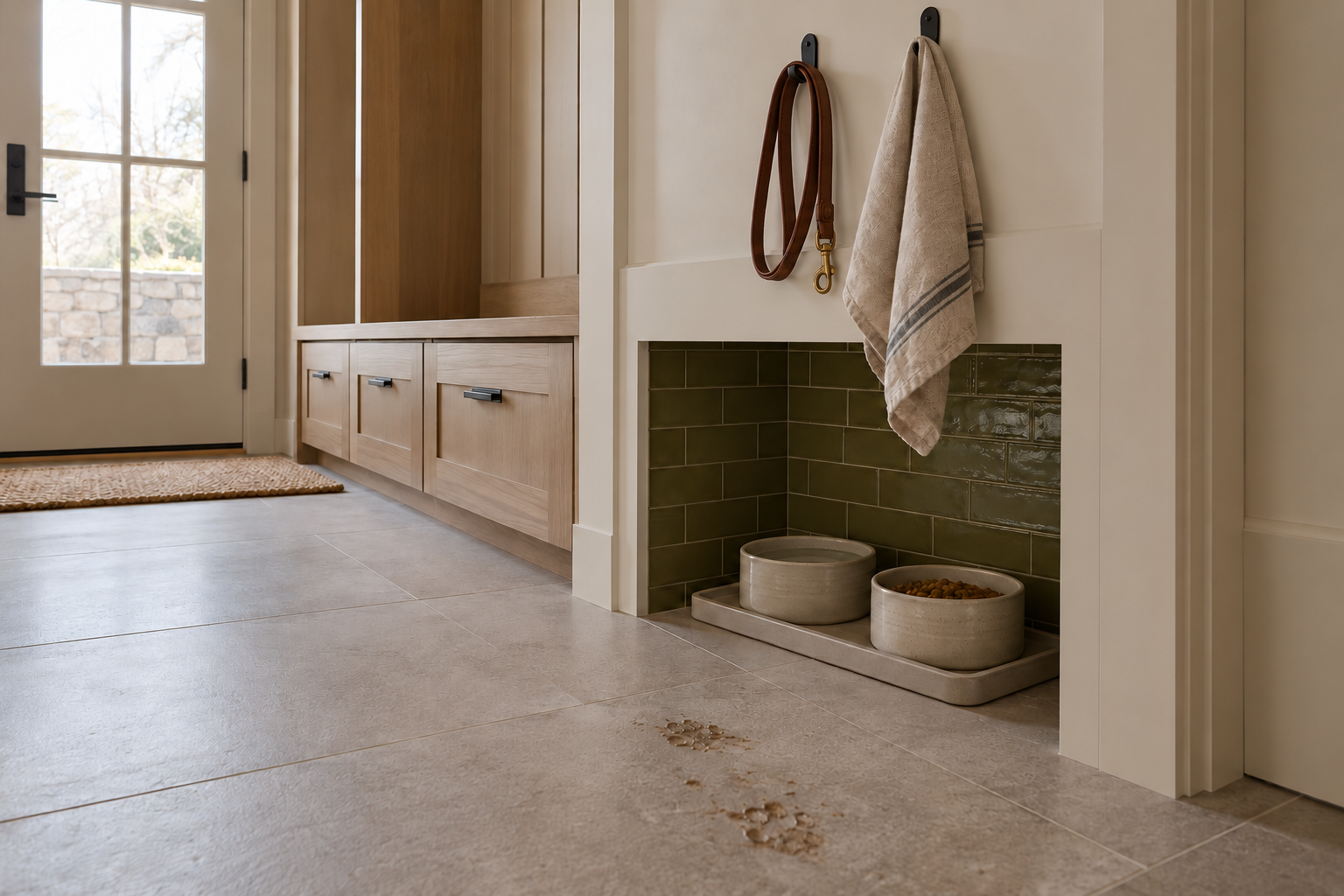
A dog that comes in wet needs a towel before it reaches the rest of the house. Hang the towel and the leash on hooks right by the door, and keep a small bin of bags and treats on a shelf above. Some mudrooms fit a low shower tray or a raised wash basin for a large dog, which is far easier on the back than kneeling at a bathtub.
Keep food and water bowls out of the walkway, in a corner or a niche at the end of the bench, where nobody kicks them on the way in. A crate or a dog bed fits under a deep bench if the dog sleeps there.
Move Off-Season Gear to the Top Shelf
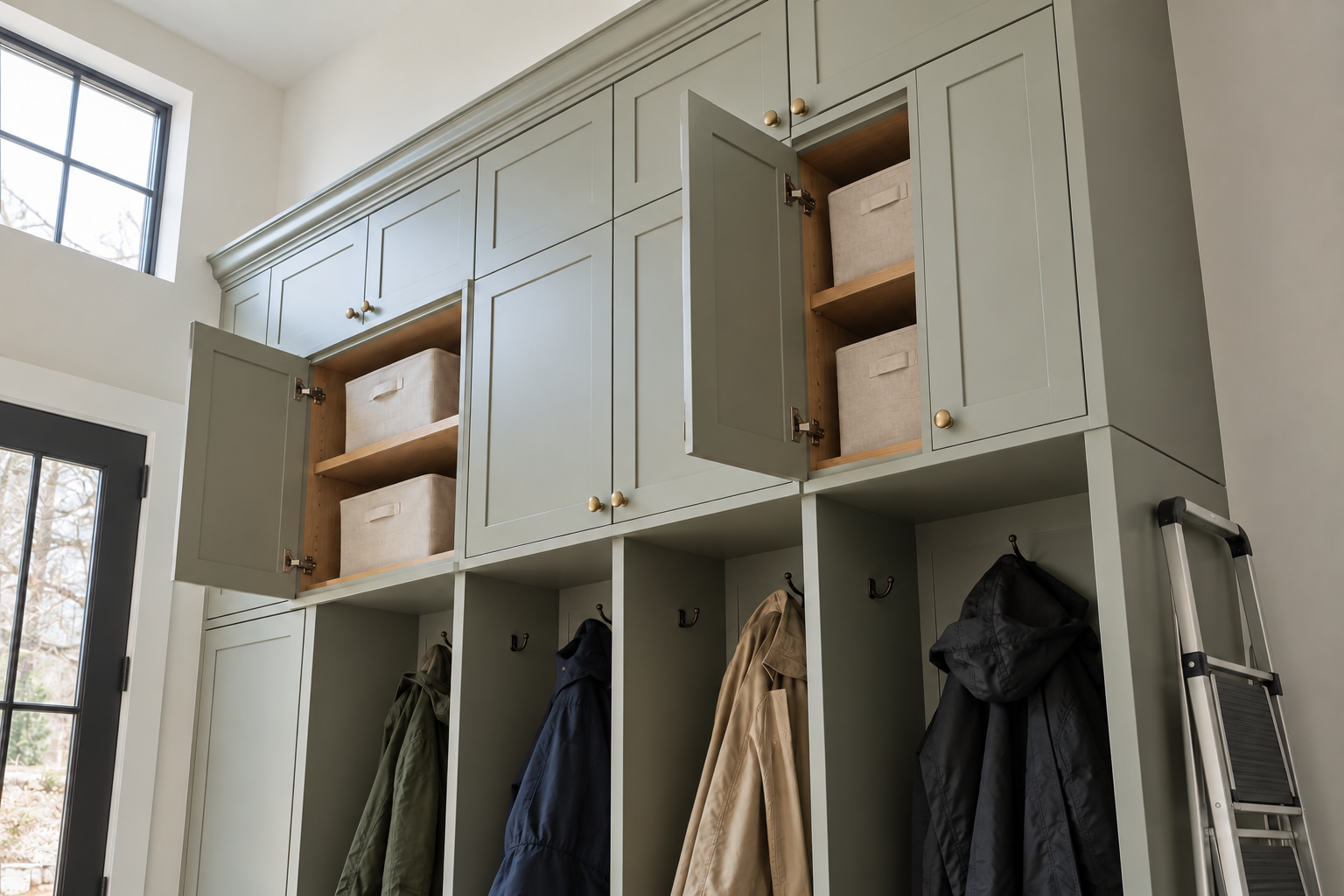
Mudrooms fill with things that are only needed for part of the year: snow boots and sleds in winter, sunscreen and water bottles in summer. Keep the current season’s gear in the lockers at easy heights, and move the rest into bins on a top shelf or in cabinets above the lockers, up to the ceiling if the room allows.
Swap them twice a year, in spring and fall. The bins that come down replace the ones that go up, and the lockers only hold what’s in use. Keep a folding step stool in the mudroom for reaching the top.
Light the Room From the Door and Vent the Damp
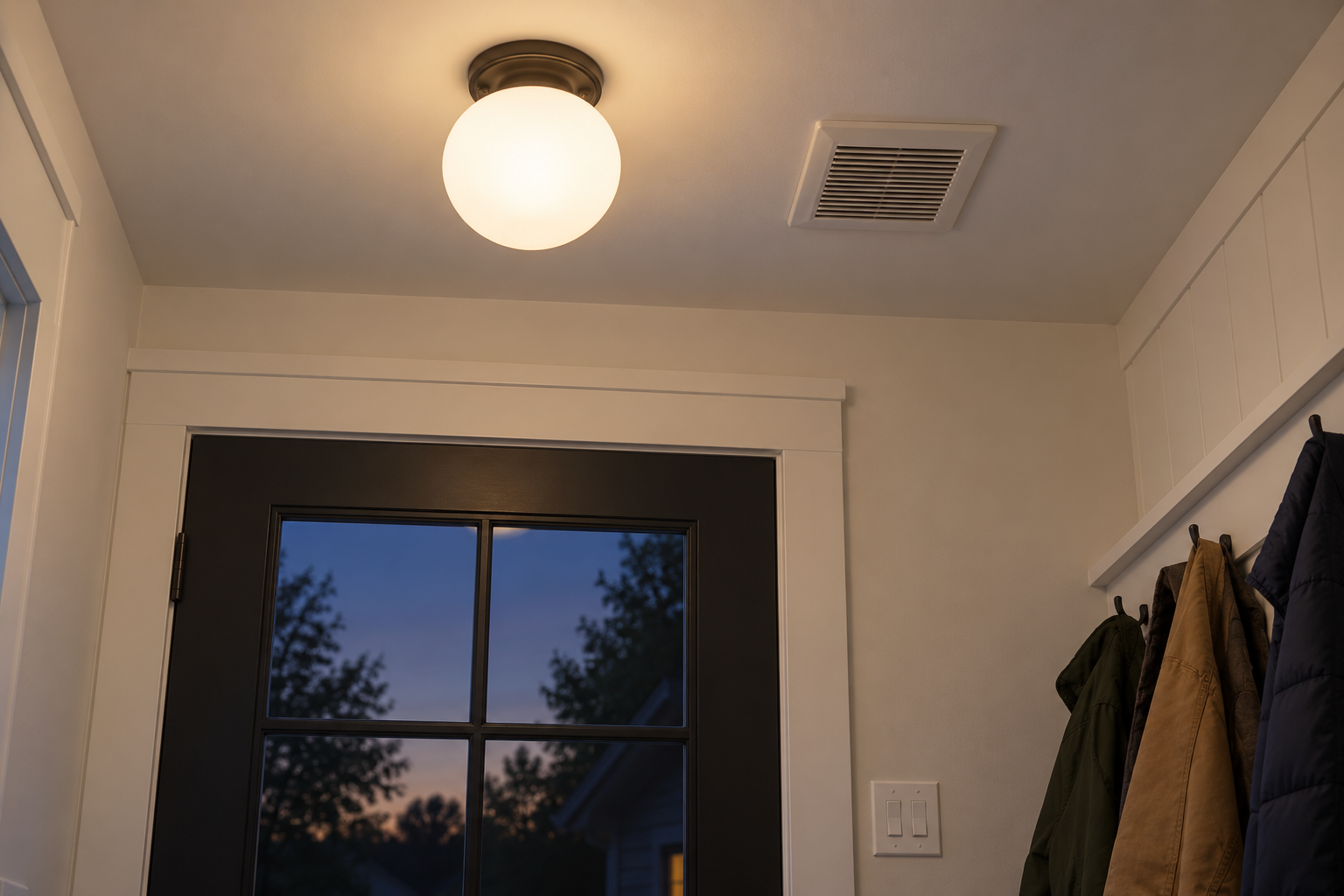
Someone coming in with full arms needs a light switch beside the exterior door. A ceiling light over the walkway, with a second light over the lockers or bench, is enough to find a glove at the back of a shelf.
A mudroom holds a lot of damp in winter, from coats, boots, and whatever the dog brings in. A window that opens, or an exhaust fan on a timer, clears the humidity before it turns into a musty smell in the lockers. In a cold room, a heated floor or a small radiator near the bench dries boots and gloves overnight.