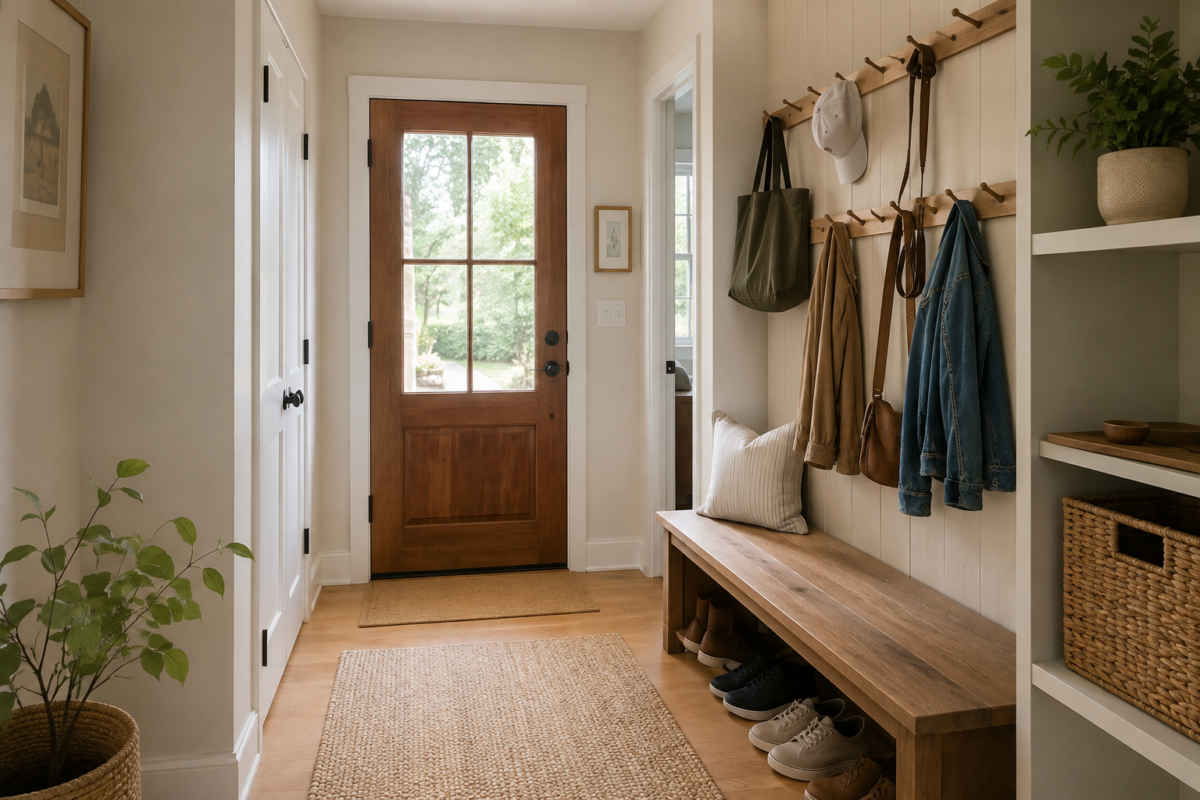
An entryway rarely fails because it lacks storage. It fails because everyone in the house is sharing one hook, one tray, and one flat surface, and none of it was ever assigned to a specific job. The result looks like clutter, but it’s really a sequencing problem: shoes, keys, mail, and bags all competing for the same six square feet with no order of operations.
This guide treats the entryway as a small system rather than a decorating project. Five fixes, in the order that matters most, starting with the one change that does the most work: giving each person in the house their own landing spot instead of one shared catch-all.
Give Every Person a Landing Spot, Not a Shared Hook
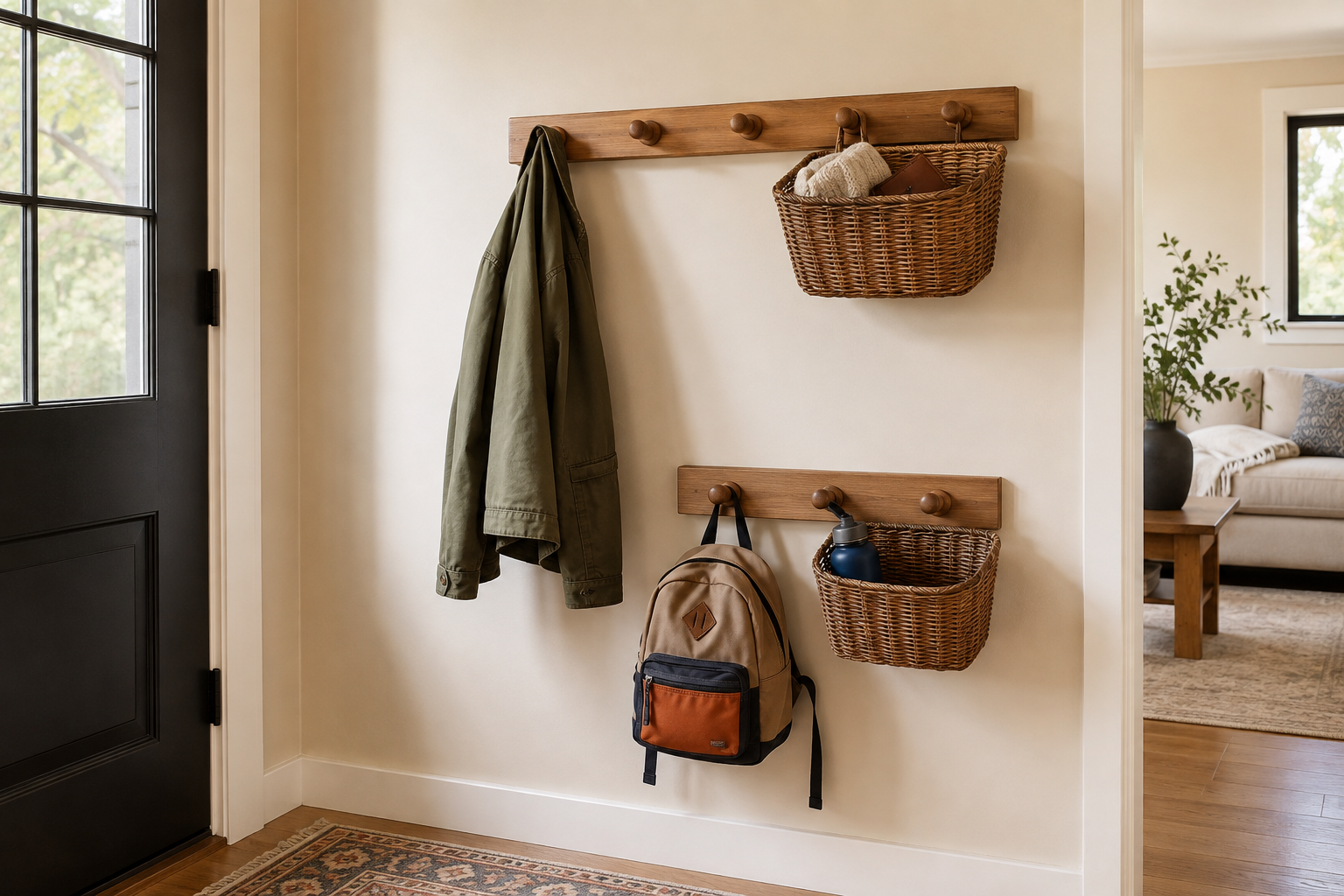
A single hook by the door works for one person and creates a pileup for everyone else, since whoever gets there first claims the good spot and everyone after them improvises. Assigning each household member their own hook, basket, or shelf section, even a narrow six-inch strip, turns a shared free-for-all into a system where everything has an owner. This matters more in a small entry than a large one, since there’s no spare surface for the overflow to spread onto. A basket that’s clearly “someone’s” gets used the way a shared one rarely does.
Put a Bench or Low Shelf Where Shoes Actually Land
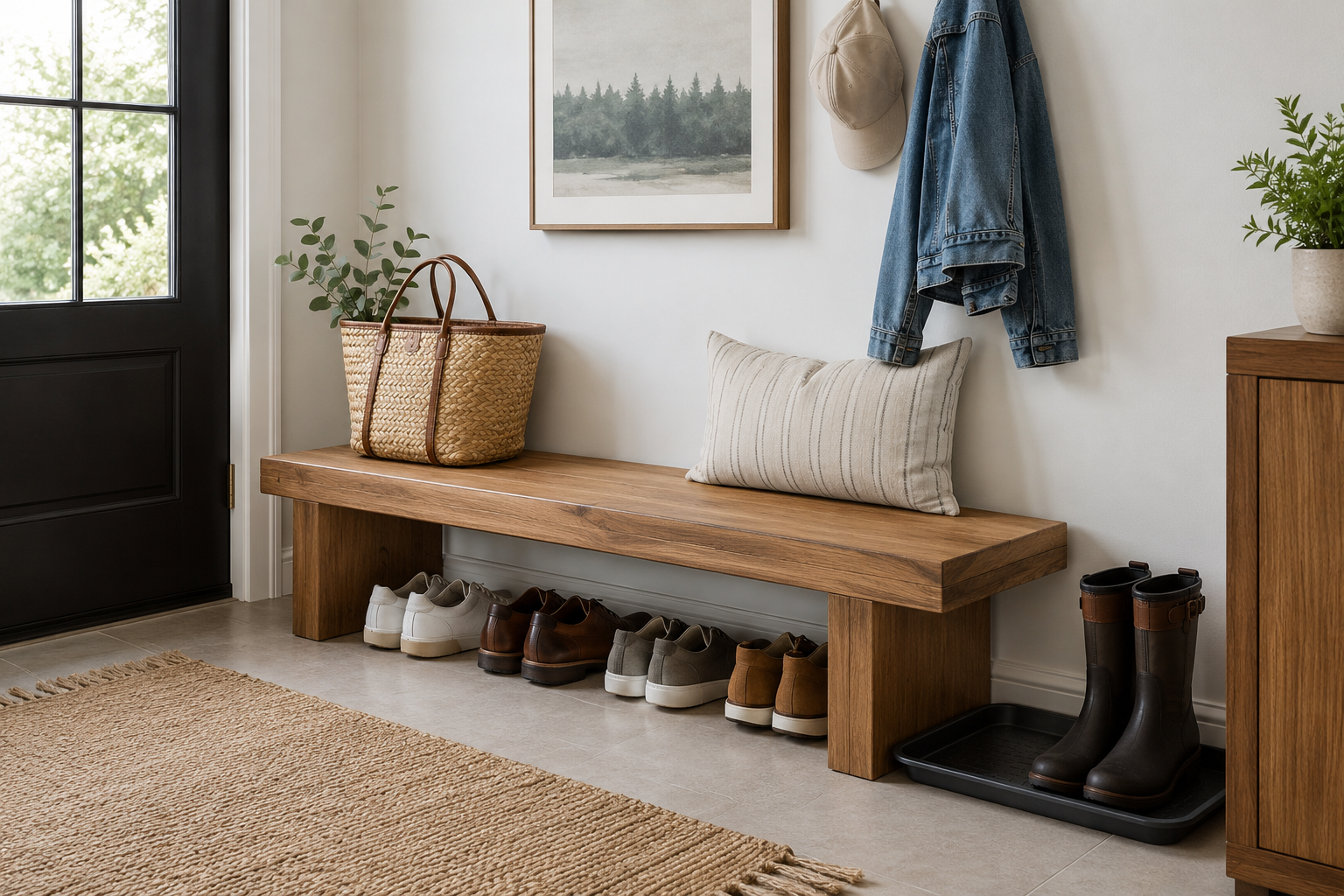
Shoes are the single highest-friction item in any entryway, since they come off at the door whether or not there’s somewhere for them to go. A low bench or shelf placed exactly where people naturally sit or lean to remove shoes intercepts them before they end up scattered across the floor. A boot tray at one end contains wet or muddy pairs separately from the rest. The bench doesn’t need much depth, twelve to fourteen inches is usually enough, since its job is catching shoes, not becoming a second seating area.
Use a Closed Container for Mail and Keys, Not an Open Tray
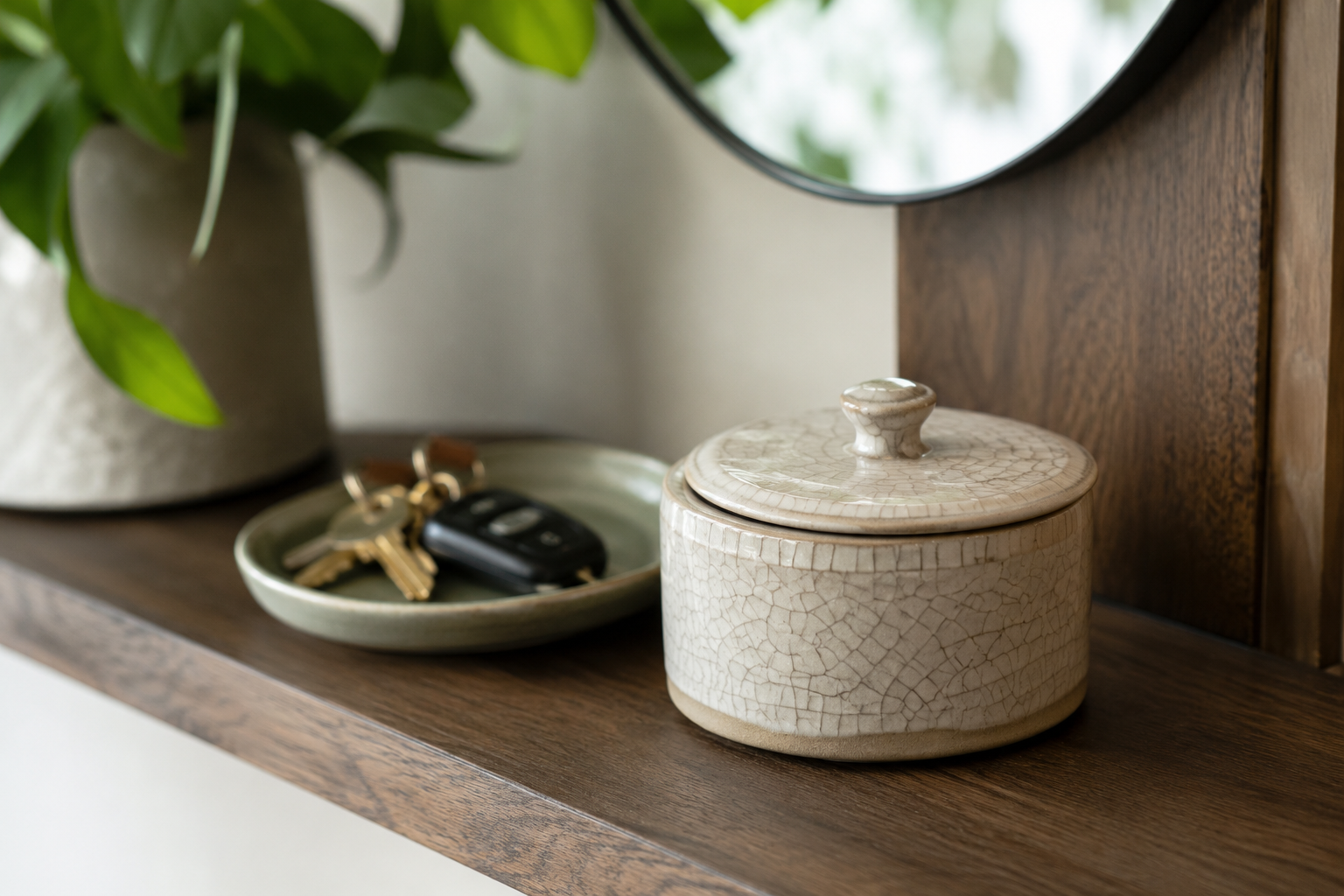
An open tray for mail and keys looks organized for about a week and then becomes a small, permanent pile, since nothing about an open surface discourages more paper from landing on it. A closed box or a shallow drawer does more real work: it holds the same items but removes the visual cue that invites more clutter to accumulate. Sort the box weekly rather than letting mail live there indefinitely, since a closed container that’s never emptied just becomes a hidden version of the same pile.
Hang Hooks at Two Heights, Not One
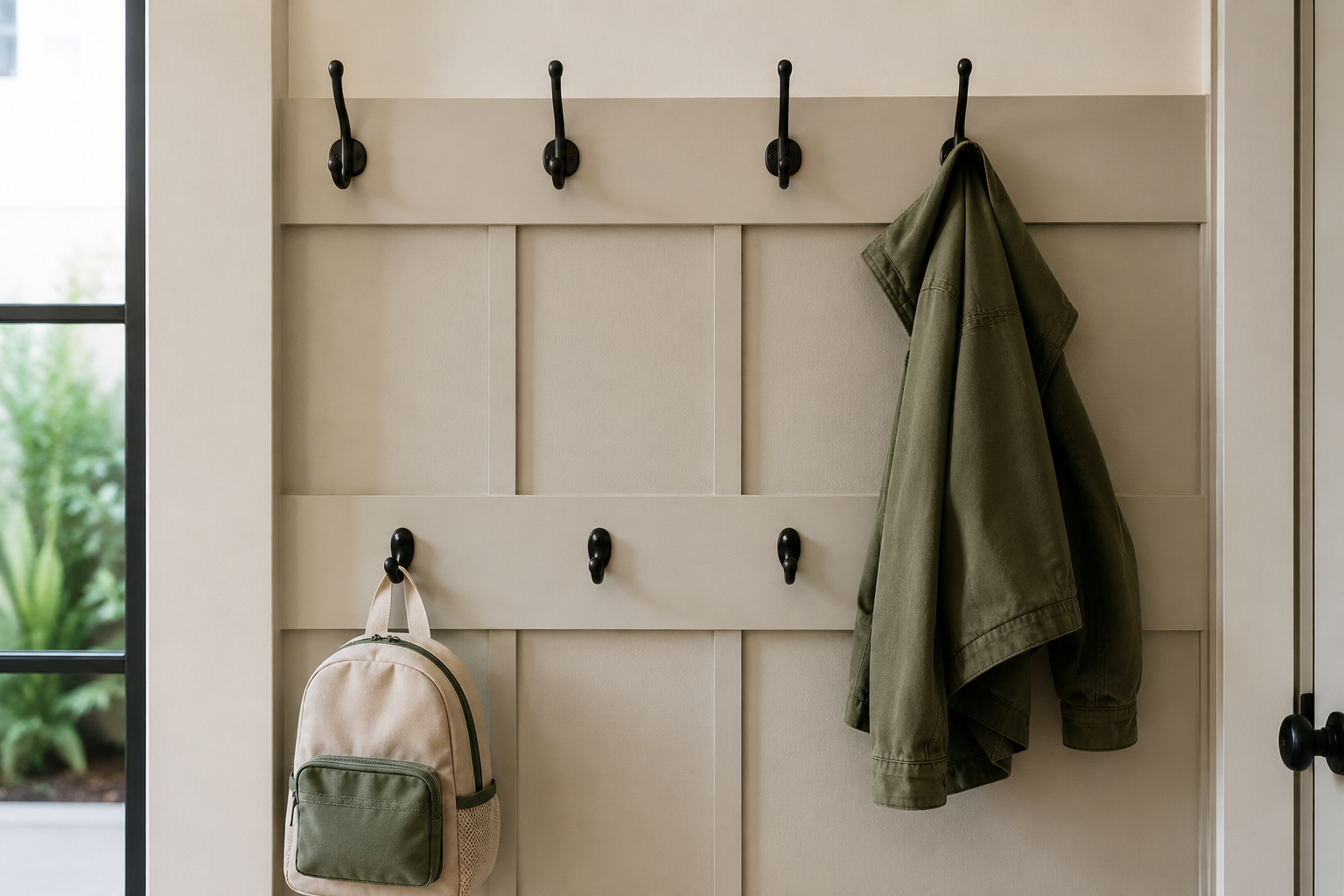
A single hook height works for adults and fails for kids, who either can’t reach it or use it as an excuse not to bother. A second, lower row solves this without adding floor space or furniture, and it’s a five-minute change if the wall studs allow it. This also separates coats from smaller daily items like bags or leashes, since the two rows can be assigned to two different categories instead of one crowded row holding everything.
Keep One Small Zone for What’s Leaving the House
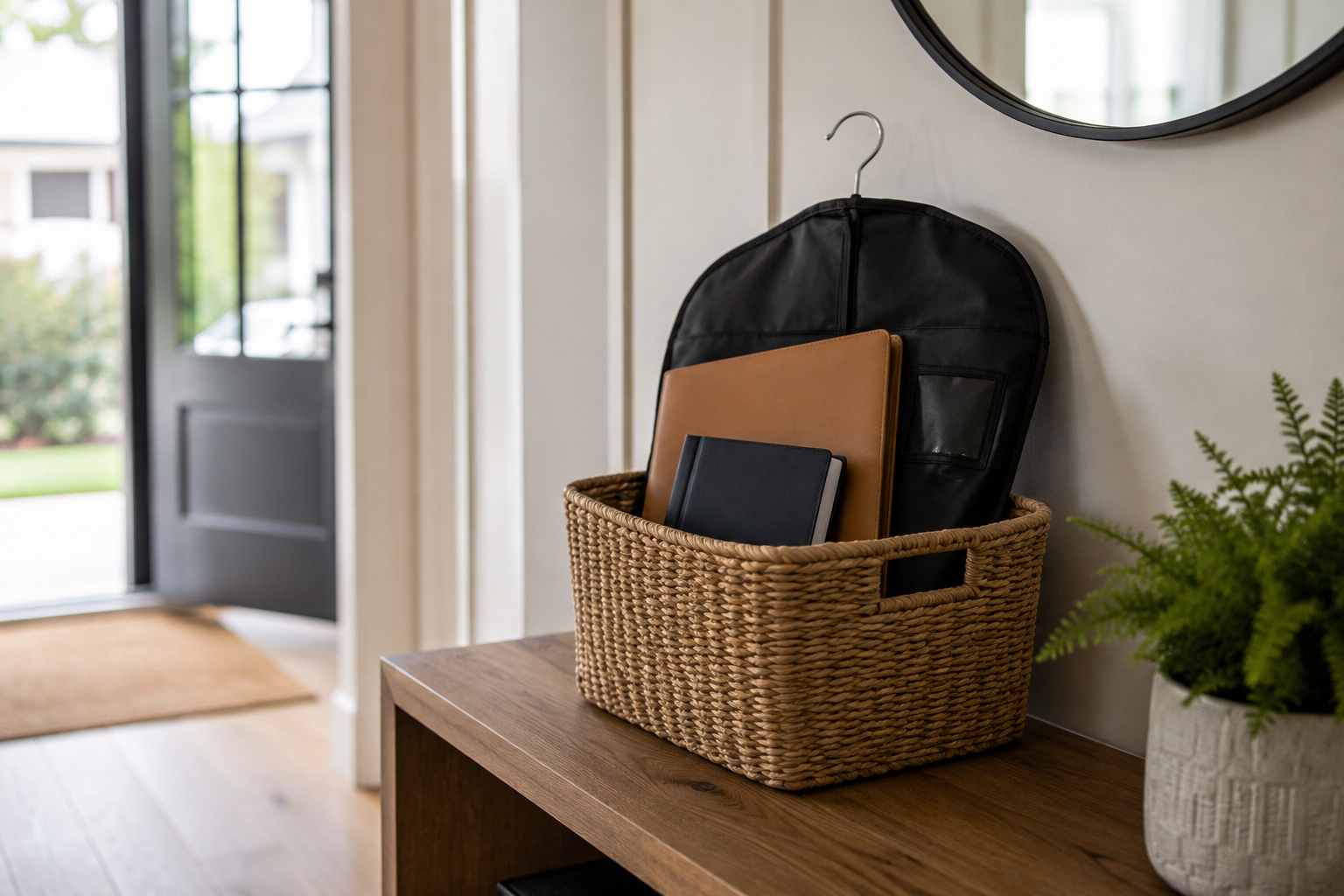
Most entryway systems handle what’s coming in and ignore what’s going out, which is why library books, dry cleaning, and forgotten forms tend to pile up on the floor near the door instead of anywhere useful. A small dedicated basket or shelf section for outbound items, kept physically separate from the inbound mail container, solves this with almost no added effort. The rule is simple. If it needs to leave the house, it goes in this spot the moment that becomes true, not the morning it’s needed.
None of these five fixes require a renovation or new furniture beyond a bench and a few hooks. What they require is assigning a specific job to a specific spot, so the entryway stops relying on everyone remembering where things are supposed to go.
Frequently Asked Questions
What if there’s no room for a bench at all?
A low, narrow shelf works almost as well as a bench for shoe containment, even without a seat. The goal is a dedicated landing surface at floor level, not a place to sit; a 10-inch-deep floating shelf or a slim boot tray alone can do the same job in a genuinely tight entry.
Can this work in a rental where hooks can’t be drilled into the wall?
Yes. Adhesive hook strips rated for the coat/bag weight involved hold up well for this use, and a freestanding coat rack accomplishes the same “landing spot per person” principle without any wall damage. The organizing logic doesn’t depend on permanent hardware, only on each zone being assigned to someone.